Minnesota charms with lakes and trails, yet the state hides a curious playlist of rules that can trip up an unsuspecting vocalist.
Belt the wrong tune in the wrong place and you might meet an ordinance instead of applause.
I traveled across Minnesota to map the places, moments, and quirks where a song can cross a legal line.
Before you hum along, skim this list so your chorus does not end in a citation.
1. Late-Night Serenade vs. City Quiet Hours
Minneapolis and St. Paul pulse with music, but neighborhoods across Minnesota draw a line when the sun goes down. Many cities restrict loud or plainly audible noise during night hours, and that includes enthusiastic street singing. If your voice carries past porches and into bedrooms, a noise complaint can arrive faster than your final note.
As a traveler, I plan evening walks around parks and rivers, saving my humming for daytime. In the North Loop, I keep vocals low while admiring the brick warehouses and public art. Over in Cathedral Hill, I let the architecture take the lead and keep the soundtrack in my head.
Local ordinances are posted on city sites, and they vary, so a quick check prevents an awkward chat with an officer. I use quiet plazas for a soft whistle and choose busier daytime hours for livelier riffs. Minnesota welcomes music, but the volume knob matters after dusk.
2. Courthouse Steps Are Not a Stage
County complexes are photogenic, especially the Richardsonian Romanesque towers in places like Stillwater and Winona. Yet official buildings frequently limit amplified sound and disruptive performances. Singing on courthouse steps during proceedings can be treated as disorderly conduct if it disturbs the peace.
I love framing exterior shots of stone arches and wide staircases, but I keep my voice down. A gentle hum might pass unnoticed, though the safer choice is silence while court is in session. Security staff typically prefer quiet entrances, and signs often remind visitors about conduct rules.
For a musical outlet, I step off the property and find a public plaza where ambient city noise masks a soft tune. Minnesota’s civic architecture deserves admiration, and it is easy to enjoy it without turning the entryway into a stage. Respect the setting, capture the façade, skip the chorus.
3. Traffic Lights, Windows Down, and a Loud Chorus
Rolling through Minnesota with music on is a ritual, but vehicle noise standards still apply. If a performance in your car projects loudly into nearby homes or sidewalks, an officer can cite noise violations. Singing at an intersection with windows down can carry farther than you expect.
When I cruise along Summit Avenue to admire mansions and trees, I keep the volume mellow. The Minnesota Pollution Control Agency sets statewide limits that cities apply through local rules. A strong falsetto might not break decibel readings alone, yet combined with speakers it can push the threshold.
I save my big notes for scenic pullouts, like river overlooks where ambient sound spreads. Park, step out, and enjoy the view without blasting a chorus across a quiet block. It is still Minnesota, after all, where calm streets are part of the charm.
4. Memorial Day Silence Near Ceremonies
Minnesota observes solemn quiet around Memorial Day exercises, and that applies to music. Within the vicinity of ceremonies, games and noisy activities can be prohibited during specific hours. Bursting into song near a procession or speaker risks a citation and disapproving glances.
I schedule my visits to veterans memorials early in the morning or late in the afternoon when programs are not active. Places like the Minnesota State Veterans Cemetery grounds in Little Falls merit hushed respect. Even a soft tune can feel out of place when families gather to remember.
Check local announcements before planning a stop, then enjoy the grounds with a silent stroll. If you want music, head to a public park outside the restricted area after the event concludes. A thoughtful pause costs nothing and keeps your trip respectful and fine free.
5. National Anthem Rules at Public Events
Minnesota codifies how the Star Spangled Banner may be rendered in public settings. Ornamented versions or medleys can run afoul of laws that expect a straightforward performance. You will not see officers at open mic nights, but a formal event has clearer expectations.
When I attend games or civic ceremonies around the state, I sing respectfully if invited and avoid creative twists. Organizers usually post schedules and guidelines, and the anthem is set apart from other music. Treat it as its own composition, then enjoy the rest of the program however you like.
Travelers who perform should confirm event rules before stepping to a microphone. A short conversation with staff keeps everything smooth and compliant. Minnesota’s pride in ceremony is evident, and your careful rendition will fit the moment.
6. Pop-Up Busking Without a Permit
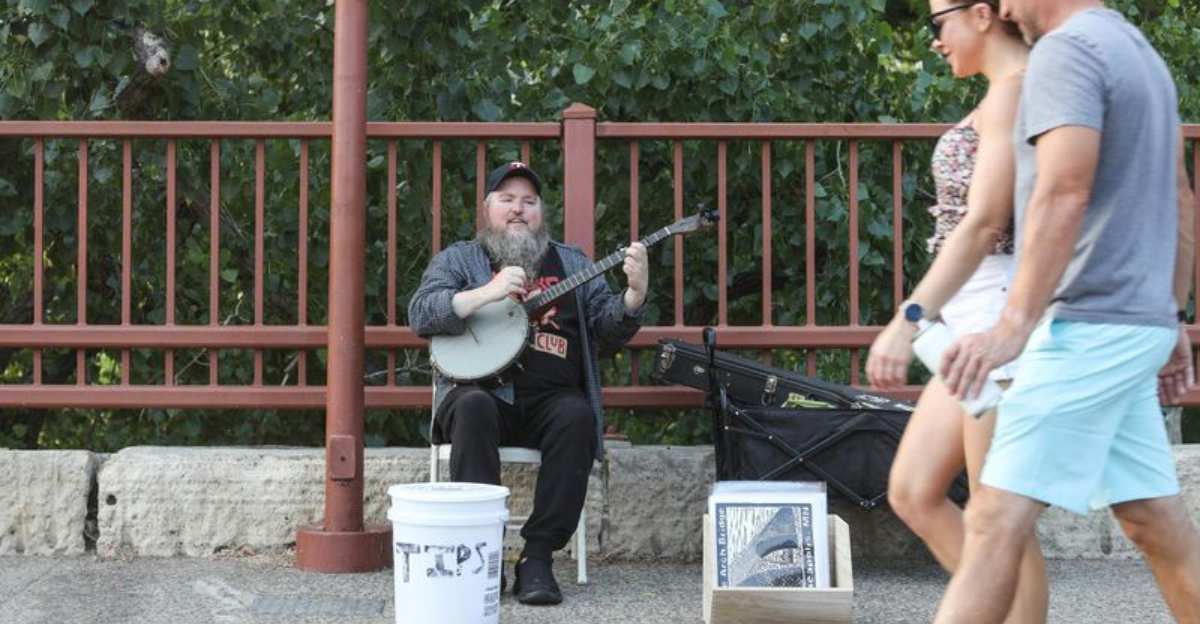
Street performance energy suits warehouse districts and college towns, yet some Minnesota cities require permits or licenses for live entertainment. Sidewalk singing near patios or plazas may fall under local rules. Skip the paperwork and you might meet a citation instead of a tip jar.
Before I scout a corner in Duluth’s Canal Park or near Rochester’s Peace Plaza, I check the city code. Some places want you to pick a specific zone, others limit amplification. The best strategy is to email a city clerk or visit the municipal website for quick clarity.
Audiences enjoy buskers, and clear permission keeps the mood light. I choose wide sidewalks with comfortable sightlines and keep gear compact. In Minnesota’s busiest districts, a permitted set creates smiles, not complaints.
7. Library Whispers Beat Power Ballads
Public libraries across Minnesota enforce quiet zones to protect study time. A spontaneous ballad between stacks risks a reminder from staff and, if refused, a disorderly conduct issue. Acoustic spaces carry sound in surprising ways, and even a short chorus can echo.
I visit the George Latimer Central Library in St. Paul for architecture and reading rooms, not for vocals. The atrium is beautiful, and a quiet photo captures the design without disrupting visitors. Staff posts house rules, which are easy to follow if you switch songs for silence.
When the urge to sing hits, I step outside to a plaza or riverside path. The mood shifts instantly from hush to open air, which is better for everyone. Respect the library’s calm and your itinerary stays on track.
8. Parade Routes and the Permit Puzzle
Festivals across Minnesota fill streets with marching bands and cheers, but performers are usually coordinated and permitted. Jumping into a route with your own chorus can interfere with traffic control. Officials may consider it a disturbance if it disrupts a planned event.
When I explore summer parades in small towns or along St. Paul’s avenues, I enjoy the spectacle from the curb. If I want to participate, I contact organizers well ahead for instructions. They often assign staging areas and time slots so music flows safely.
Unscheduled singing can tangle with crowd management and emergency lanes. Stay a spectator unless you have approval, then sing under the event’s umbrella. Minnesota events run on careful planning, and your voice fits best within that framework.
9. Private Patios, Public Sidewalks, and Thin Lines
Mixed-use blocks blend private terraces with public right of way, and the boundary can be subtle. Singing from a building entrance or patio that is posted as private can draw a trespass complaint. Even a public sidewalk can be subject to nearby noise limits that kick in quickly.
In neighborhoods like Uptown Minneapolis and along Grand Avenue in St. Paul, I watch for signage. A simple rail or planter does not always mark where private space begins. When in doubt, I ask a staff member or find a fully public square to avoid confusion.
Respecting property lines keeps the vibe friendly and prevents calls to nonemergency numbers. It also helps maintain good relations between visitors and residents. Minnesota hospitality stays warm when performances happen in the right place.
10. Youth Performances and Permission Slips
Traveling families sometimes plan small shows, and Minnesota has rules to protect minors in public entertainment. Organizers may need authorization before a young performer takes a stage, especially at formal venues. Skipping the paperwork can lead to penalties for adults in charge.
When I cover community stages in places like Mankato or Moorhead, I see clear sign-up sheets and guardian forms. Staff explain rehearsal expectations and performance windows, which keeps kids safe and schedules tidy. It is not about stifling creativity, it is about responsible hosting.
Families can still enjoy music together in parks and along trails without turning it into a show. If a program is official, ask about youth requirements before the first note. Minnesota values both artistry and safeguards, and a quick check keeps everyone smiling.
Dear Reader: This page may contain affiliate links which may earn a commission if you click through and make a purchase. Our independent journalism is not influenced by any advertiser or commercial initiative unless it is clearly marked as sponsored content. As travel products change, please be sure to reconfirm all details and stay up to date with current events to ensure a safe and successful trip.
