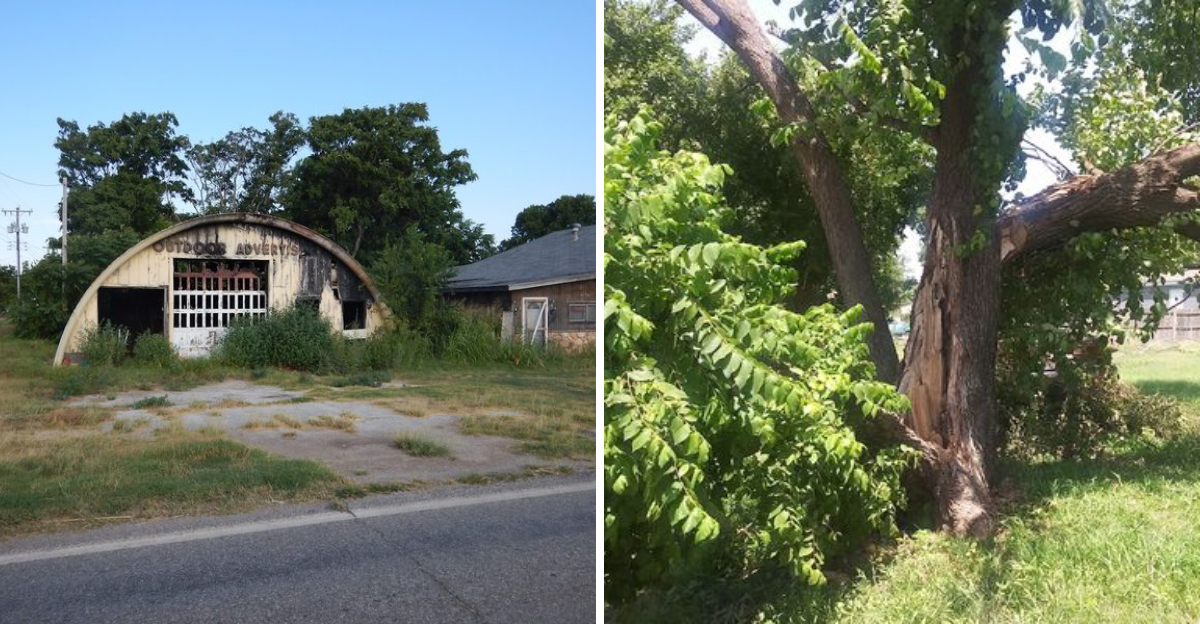
A town frozen in time does not announce itself. It simply sits there, quiet and patient, waiting for someone curious enough to notice.
This place, a small Oklahoma town that once bustled with commerce and county seat pride, is now a near-silent collection of crumbling storefronts and empty homes.
The railroad tracks that brought prosperity have been overtaken by weeds, and the old courthouse stands like a monument to a century that has long since moved on.
The silence here is heavy, but not threatening. It is the kind of quiet that invites you to imagine what life must have been like when the streets were full of people and the stores were open for business.
You can almost hear the echoes of conversations, the clatter of horse-drawn wagons, the whistle of trains arriving from distant cities.
This is not a tourist attraction with souvenir shops and guided tours. It is a real place, slowly being reclaimed by the land around it.
The Quiet Streets Feel Like a Living Time Capsule
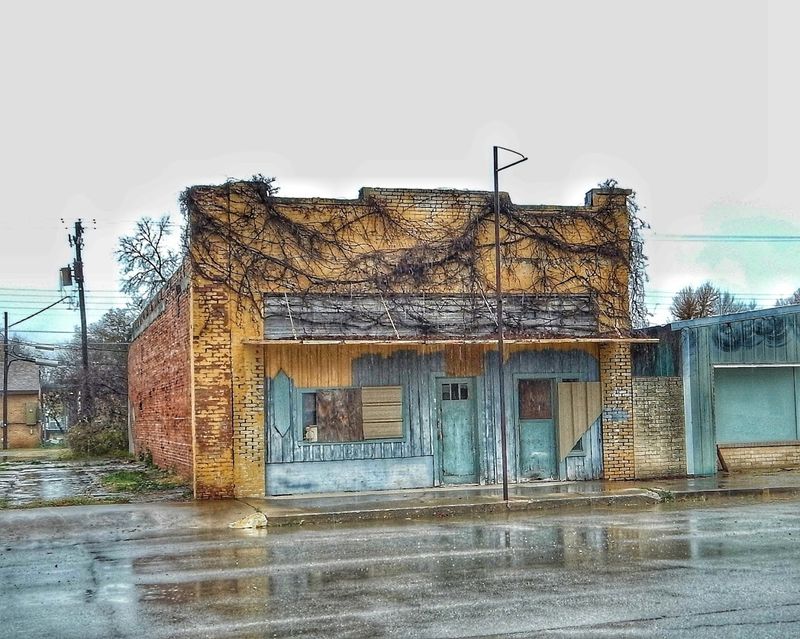
Walking down the main stretch of Maysville, Oklahoma, feels like someone pressed pause on a Tuesday afternoon sometime in the mid-20th century and nobody ever pressed play again.
The brick facades still carry the shapes of businesses long gone. Paint peels in just the right places to look almost intentional, like an art installation nobody commissioned.
There is something deeply unusual about a town that wears its age so openly. Most small towns in Oklahoma either reinvent themselves or fade into the fields.
Maysville does neither.
Instead, it holds its ground with a kind of stubborn dignity. The sidewalks are cracked but swept.
The storefronts are empty but not abandoned-looking.
What strikes me most is the silence. Not the uncomfortable kind, but the settled, unhurried kind that makes you slow your walk without meaning to.
Every corner seems to hold a breath of something older, something patient.
This town in south-central Oklahoma genuinely feels like it is waiting for something, though nobody seems to know what. And honestly, that mystery is exactly what makes it worth a stop.
A History Rooted Deep in Oklahoma Soil
Maysville was established in the late 1800s, growing up alongside the railroad lines that were threading their way across what would soon become the state of Oklahoma.
The town was officially incorporated and began pulling in settlers, farmers, and merchants who were eager to plant roots in the new territory. For a time, it thrived with the energy of a place that believed it had a big future ahead.
Oklahoma became a state in 1907, and Maysville was already a functioning community with its own identity. It sat comfortably across Garvin and McClain counties, serving the agricultural heartland around it.
The town grew cotton, grain, and community in equal measure. Schools were built.
Churches followed. A sense of permanence settled in like good topsoil.
But as highways shifted and industries changed, Maysville stopped growing and started simply existing. That transition from boom to stillness is written into every old building and every overgrown lot.
Understanding this history is key to understanding why the town feels the way it does today. It is not a place that failed.
It is a place that paused, and the pause just never ended.
The Railroad Era Left Its Mark Everywhere
The railroad was the heartbeat of towns like Maysville, Oklahoma, during the late 19th and early 20th centuries. When the trains ran through, goods moved, people arrived, and money circulated.
The physical evidence of that era is still visible if you know where to look. Old loading areas, the layout of streets designed to funnel traffic toward now-quiet depots, and the general orientation of the town itself all speak to a time when the train schedule was the most important thing in town.
As rail travel declined across rural Oklahoma and roads took over, towns that had built their identity around the railroad found themselves stranded. Maysville was among them.
The shift was gradual enough that no single moment stands out as the turning point. One decade the trains came less often, and the next decade barely at all.
What remains is a town shaped by infrastructure that no longer functions the way it once did. The bones of the railroad era are still there in the street grid and in the way certain blocks cluster together as if still waiting for cargo.
Few places in Oklahoma give you such a clear picture of how deeply the railroad shaped the land.
Garvin and McClain Counties Frame the Town in a Unique Way
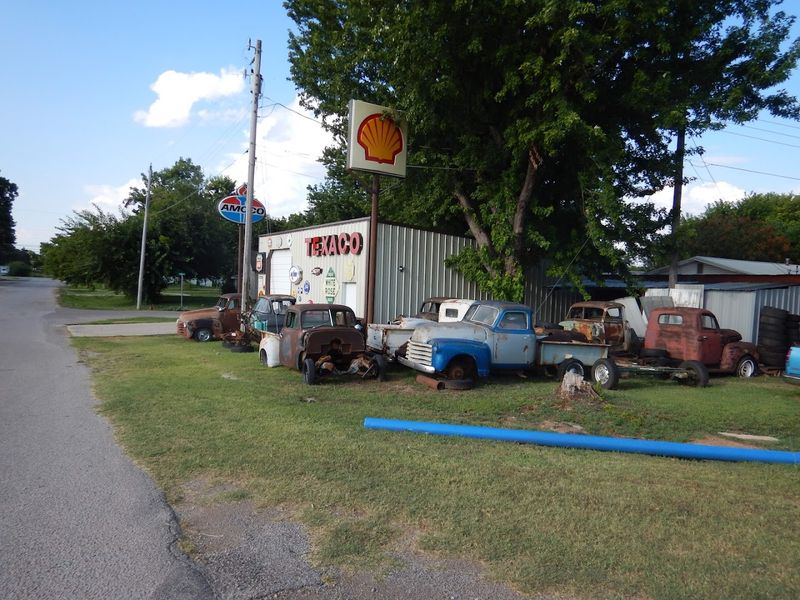
One of the quirks that makes Maysville, Oklahoma, genuinely unusual is its position straddling two counties. Sitting across both Garvin and McClain counties, the town has a split identity that is more interesting than it sounds.
County lines in Oklahoma carry real administrative weight. Different services, different local governments, different tax structures.
A town sitting across that line has to navigate a kind of dual citizenship that most places never deal with.
For residents, this is just everyday life. But for an outsider paying attention, it adds another layer to the already layered strangeness of Maysville.
The landscape around the town is classic south-central Oklahoma. Flat to gently rolling farmland, scattered stands of post oak and blackjack oak, and a sky so wide it feels almost theatrical.
Driving into Maysville from any direction, you get a sense of how exposed and open this part of the state is. There are no mountains to hide behind, no forests to disappear into.
Everything is visible. The town sits out in the open, honest about what it is and where it stands.
In a state full of dramatic landscapes and hidden corners, that openness is its own kind of statement.
The Population Story Tells a Bigger Oklahoma Tale
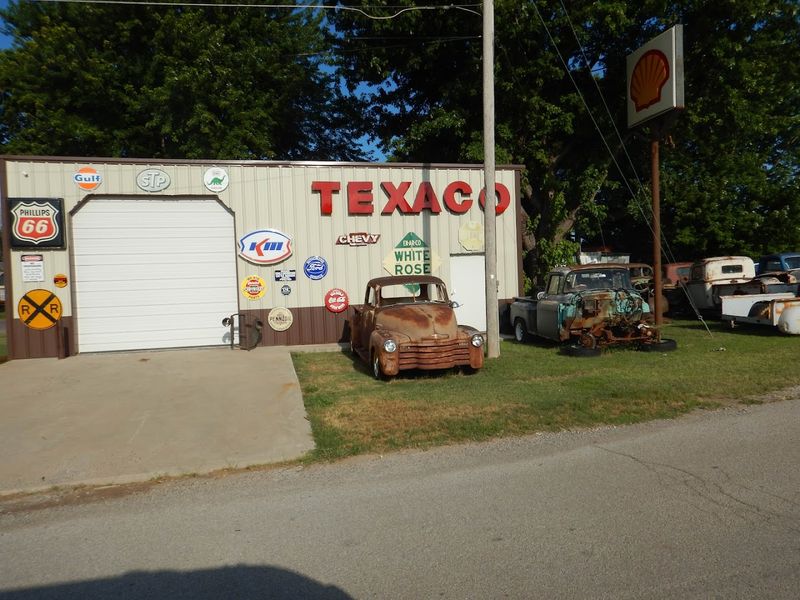
Numbers have a way of telling stories that words sometimes cannot. Maysville, Oklahoma, recorded a population of 1,232 in the 2010 census.
By 2020, that number had dropped to 1,087.
That is not a dramatic collapse, but it is a steady drift. About 145 people fewer in a decade.
In a town this size, that represents a meaningful shift in the texture of daily life.
Fewer people means fewer kids in the school hallways, fewer cars in the parking lot at the grocery store, fewer voices at community events. The town feels it even if the numbers look small on paper.
This pattern is not unique to Maysville. Across Oklahoma, rural towns have been quietly losing residents for decades as younger generations move toward cities in search of jobs and opportunity.
What makes Maysville interesting is how it carries this reality without drama. The town does not feel defeated.
It feels deliberate, as if the people who stayed made a conscious choice to be exactly here.
There is something worth admiring in that kind of quiet commitment. Oklahoma has hundreds of towns like this, but Maysville wears its situation with an unusual kind of grace.
Architecture Frozen Between Then and Now
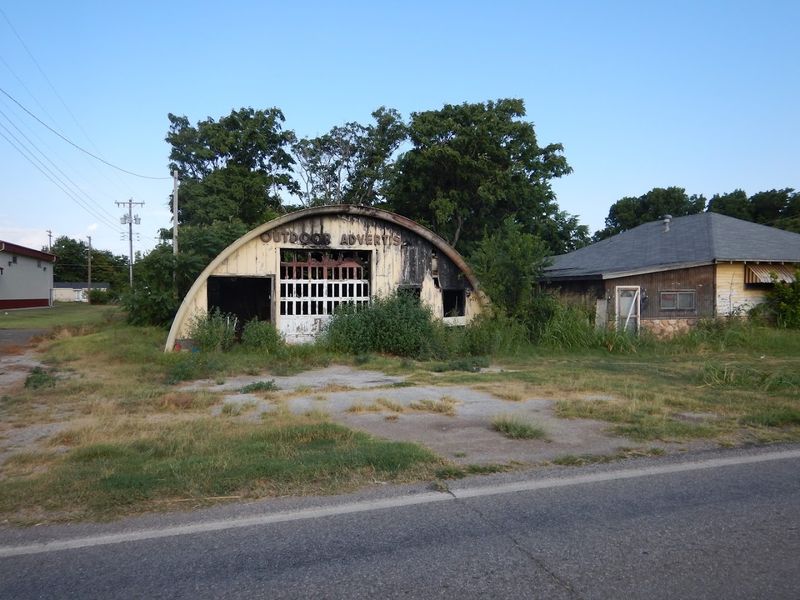
If architecture is the autobiography of a place, then Maysville, Oklahoma, is writing a very long, very slow chapter. The buildings here are a layered record of ambition and adaptation.
Early 20th century commercial blocks sit next to mid-century additions that were clearly meant to modernize things. Neither era dominates.
They coexist in a kind of accidental harmony that no urban planner would have designed on purpose.
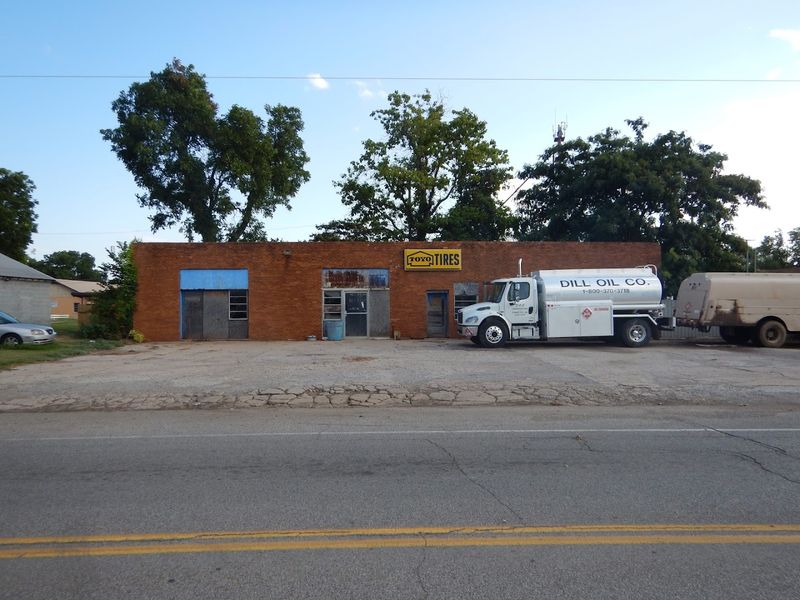
The brick work on the older buildings is the kind that takes on a rich, almost orange warmth in the late afternoon sun. Faded painted signs, some barely legible, cling to the sides of buildings like whispered reminders of past commerce.
Windows that once displayed goods now show empty interiors, the occasional folding chair or cardboard box the only sign that someone was recently there. It is photogenic in a way that feels earned rather than staged.
What I find compelling about this architecture is its honesty. Nobody has tried to dress it up or tear it down.
The buildings stand as they are, somewhere between preservation and neglect, and the result is a streetscape that feels genuinely authentic.
Oklahoma has its share of restored historic districts, but Maysville offers something rawer and more real.
The Surrounding Countryside Rewards a Slow Drive
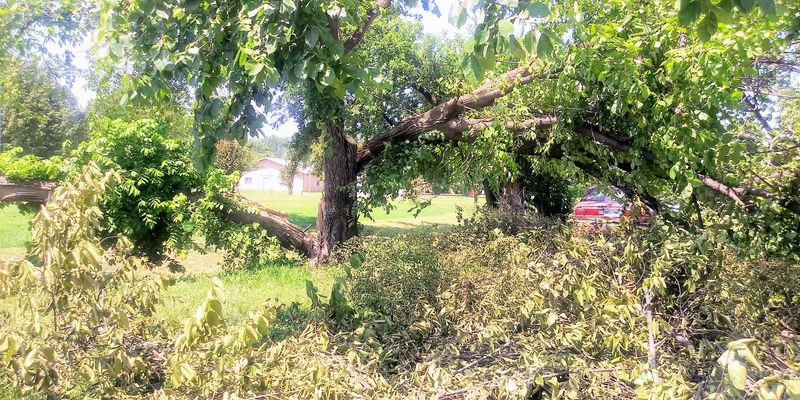
The land around Maysville, Oklahoma, is the kind that rewards patience. You have to be willing to slow down and actually look at it, because it does not announce itself.
The terrain here is gently rolling, with shallow creek beds cutting through fields of native grass and scattered stands of oak. In spring, everything goes green in a way that feels almost aggressive after a dry winter.
By late summer, the fields turn gold and amber, and the light in the late afternoon hits the landscape at an angle that makes even ordinary fence posts look interesting. This part of Oklahoma has a visual rhythm all its own.
Driving the back roads around Maysville is genuinely enjoyable. The roads are quiet, the views are long, and there is always something small and unexpected to catch your eye.
An old barn leaning at a suspicious angle. A pond reflecting clouds.
A stand of trees that seems to have no business being there.
The countryside around the town is the context that makes Maysville make sense. It is an agricultural community at its core, connected to the land in ways that are still visible in the day-to-day rhythm of the place.
The land here speaks quietly, but it does speak.
Why Visiting Maysville Feels Different From Other Small Towns
Plenty of small towns in Oklahoma market themselves as charming or historic or worth a detour. Maysville does not market itself at all, and that is precisely what makes it feel different.
There is no visitor center handing out brochures. No curated walking tour with numbered plaques.
No seasonal festival designed to pull in weekend tourists. What you get instead is the town as it actually is, unfiltered and unperformed.
That rawness is rare. Most places, even very small ones, have learned to present a version of themselves for outside consumption.
Maysville has not done that, or at least not yet, and the result is an authenticity that is hard to manufacture.
Arriving here feels like showing up somewhere you were not expected. The town goes about its business.
You are welcome to look around, but nobody is going to put on a show for you.
For a certain kind of traveler, this is exactly the point. The reward is proportional to the attention you bring.
The more carefully you look, the more Maysville gives back.
Oklahoma has no shortage of towns with similar bones, but few carry themselves with quite this level of unself-conscious genuineness. Maysville is the real thing, and real things are getting harder to find.
