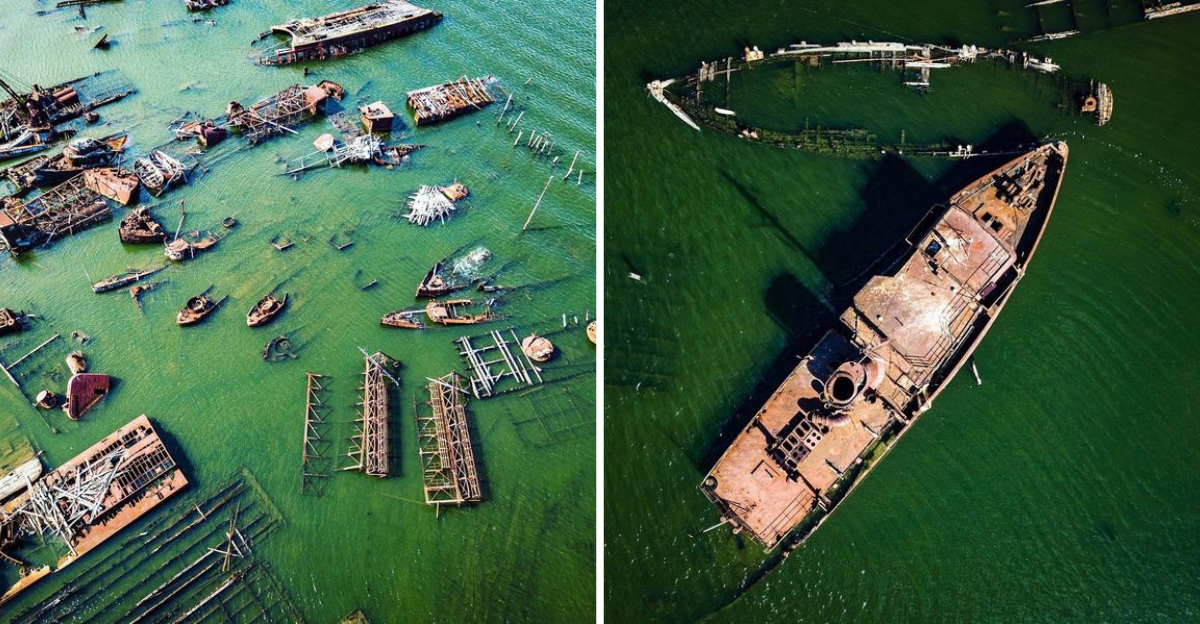
Massive steel hulls sit half-submerged in muddy shallows on the west side of Staten Island, New York, their rusted frames rising out of the water like the bones of something enormous and long-forgotten.
I had heard about that place for years before finally making the trip, and nothing quite prepared me for the scale of it.
Tugboats, ferries, car floats, and even military vessels from across the entire 20th century rest there, their histories so significant that historians have called the site an accidental marine museum.
I stood at the water’s edge watching the tide move around those silent hulls, wondering what stories they could tell if they could still speak.
Strange, a little eerie, and completely unforgettable.
A Scrapyard That Became Something Much More
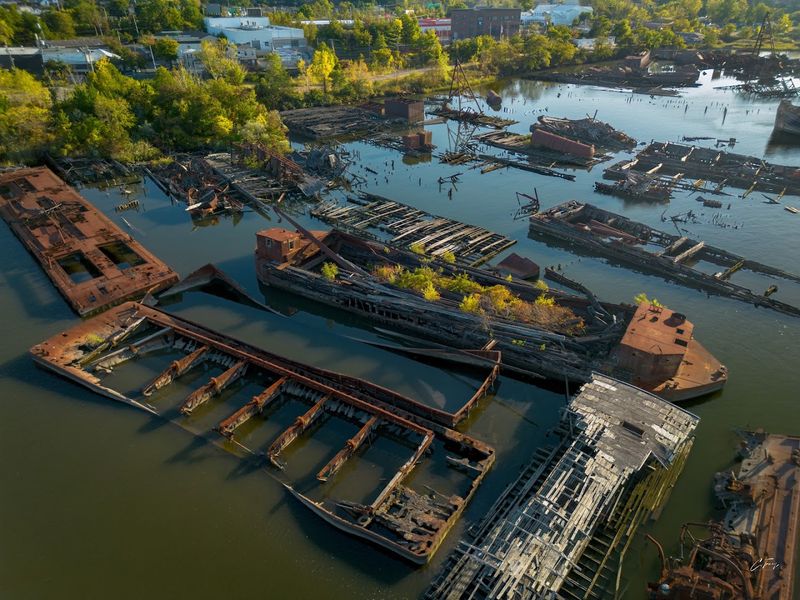
John J. Witte founded this marine scrapyard back in the 1930s, and for decades it quietly did exactly what scrapyards do.
Boats came in, parts were stripped, and the rest was left to rust. Nobody imagined it would one day attract photographers, historians, and curious travelers from across the country.
After World War II, the volume of obsolete vessels overwhelmed the operation. Tugboats, ferries, and car floats piled up faster than they could be dismantled.
Some had toxic materials on board, like old lead paint, that made salvage too complicated and too costly to bother with.
Witte ran the yard until his death in 1980, and his son-in-law Joe Coyne took over, comparing it to an automobile salvage yard where boats served as a source of spare parts. Today, Arnold Witte, John’s son, oversees the operation.
What once housed as many as 400 vessels now holds somewhere between 25 and 100, depending on the season and the most recent count. Each remaining hull is a frozen moment in maritime history, sitting in the mud with nowhere left to go.
Rusted Giants of the Arthur Kill
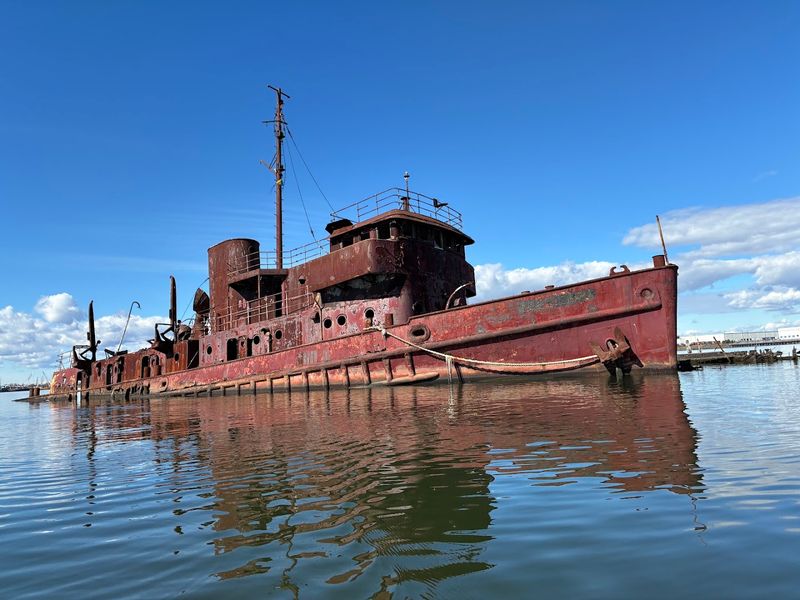
The sheer size of these vessels is the first thing that hits you. From the shore, you are looking at steel structures several stories tall, their hulls split open in places, their decks caved in, their smokestacks leaning at angles that defy gravity.
It is hard to believe anything this massive could just be left here.
Most of the abandoned ships are cargo vessels and tugboats that worked New York Harbor throughout the 20th century. A few are car floats, the flat-decked barges that once carried railroad cars across the water before bridges and tunnels made them unnecessary.
Their working lives ended, and this muddy stretch of the Arthur Kill became their final destination.
Some hulls have sunk so deeply into the silt that only their upper structures remain visible. Others still sit relatively upright, their outlines clear enough to imagine what they once looked like in active service.
Hurricane Sandy in 2012 took out some of the more fragile skeletal remains, pushing already weakened frames beneath the surface for good. What is left today is a smaller but still deeply impressive collection of industrial-era ghosts that refuse to disappear quietly.
Ships With Stories Worth Remembering
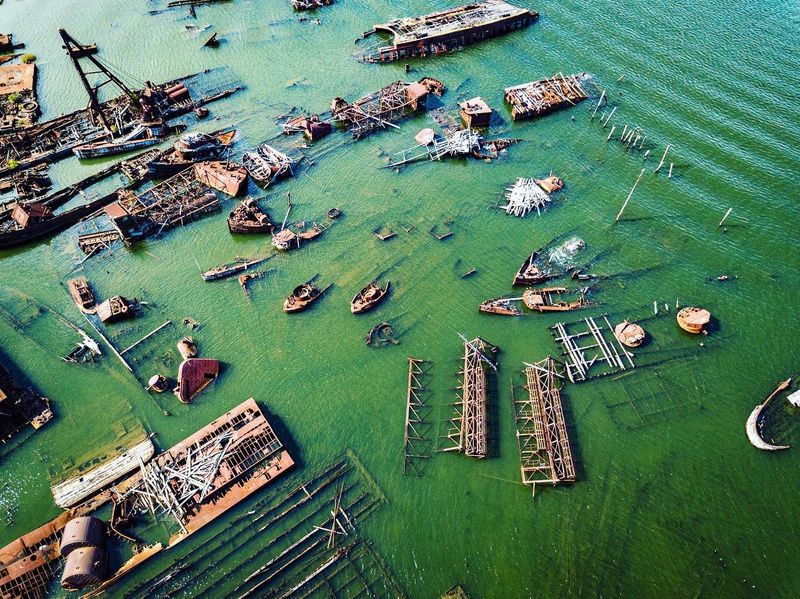
Not every boat here is just a nameless wreck. The USS PC-1264 is one of the most historically significant vessels on the site.
It was the first World War II U.S. Navy ship to be commanded and crewed almost entirely by African American sailors, a remarkable chapter in the history of American military service that deserves far more recognition than it typically gets.
Another vessel with a powerful past is the New York City Fire Department fireboat Abram S. Hewitt.
During the 1904 sinking of the PS General Slocum, one of the deadliest maritime disasters in American history, the Hewitt served as a floating command post for emergency operations. Over a thousand people lost their lives in that tragedy, and this fireboat was right in the middle of the response.
Finding these vessels here, slowly dissolving into the mud, carries a weight that is hard to shake. There is something deeply human about the idea that ships carrying such significant histories ended up forgotten in a New Jersey-facing marsh.
Historians who study this site often describe it as a place where American maritime memory is quite literally sinking, one tide at a time.
How to Actually Get There and What to Expect
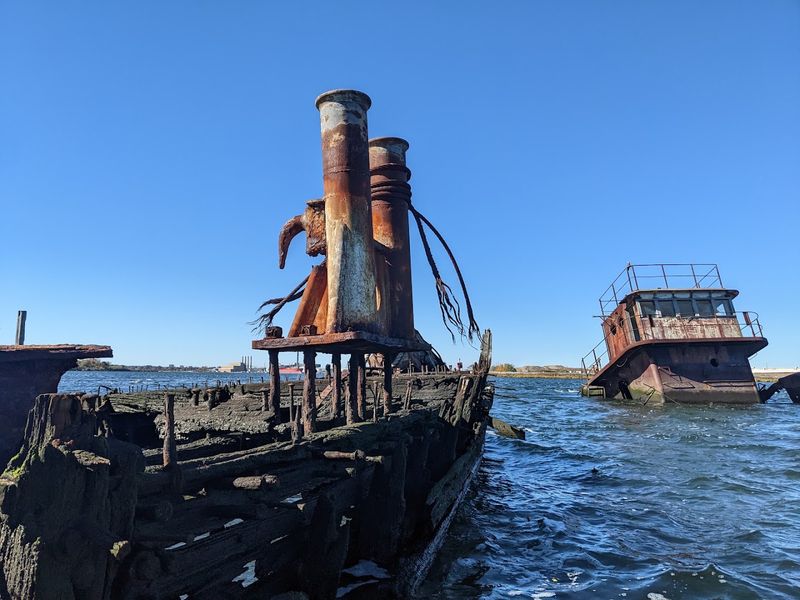
Getting to this place is not as simple as pulling into a parking lot. The graveyard sits on private property, and the approaches involve some real effort.
Many visitors park near the Blazing Star Cemetery, also known as the Sleigh Family Graveyard, which sits adjacent to the site along Arthur Kill Road. From there, a rough path leads through thorny brush and marshy grassland down to the shore.
Rubber boots are not optional here, they are essential. The ground near the water is soft and unpredictable, and the path through the marsh can be genuinely muddy even in dry weather.
The best seasons for a visit are reportedly March through April or October through November, when the vegetation is lower and the footing is slightly more manageable.
The most rewarding way to experience the graveyard is by water. Kayakers regularly launch from the Carteret Boat Launch across the Arthur Kill in New Jersey, paddle across the channel, and get right up alongside the hulls.
Drone photography is also popular here, offering a perspective that ground-level viewing simply cannot match. Whatever approach you choose, plan for the unexpected, because this place does not make anything easy, and that is honestly part of the appeal.
Photography and the Pull of Beautiful Decay
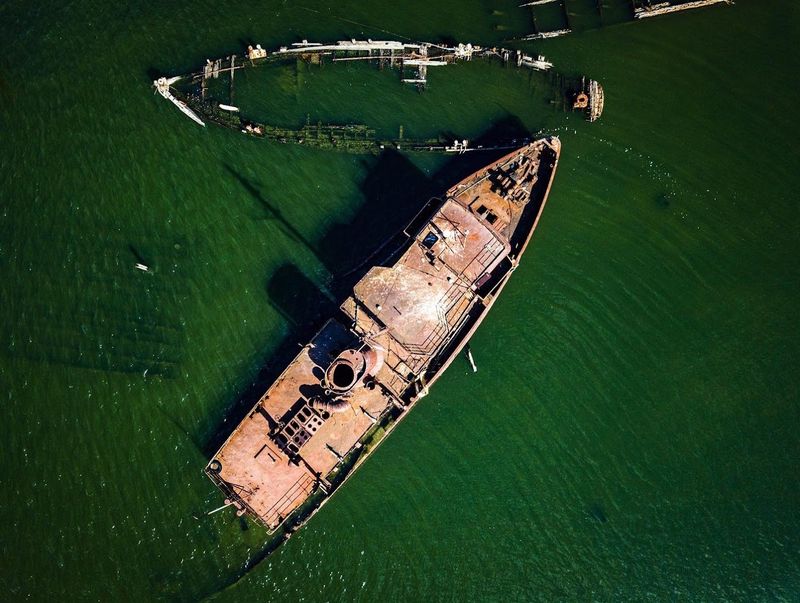
There is a reason photographers keep coming back to this place. The combination of industrial decay, open water, and unpredictable light creates conditions that are almost impossible to replicate anywhere else.
At sunset, the rusted orange of the hulls seems to glow, and the reflections on the shallow water turn the whole scene into something that looks almost painted.
The graveyard has appeared in art projects, documentary films, and photography books over the decades. Its visual texture is genuinely one of a kind.
Peeling paint layers reveal colors from different eras of a ship’s life, and the way plants grow through rusted decks gives the whole scene a quality that sits somewhere between ruin and garden.
Drone footage of the site has become particularly popular in recent years, and it is easy to see why. From above, the full scale of the yard becomes clear in a way that ground-level viewing cannot capture.
The scattered hulls, the winding tidal channels, the surrounding marsh, it all reads as a single extraordinary composition. If you are bringing a camera of any kind, morning light and low tide together create conditions that serious photographers tend to describe as genuinely special.
Wildlife, Silence, and the Unexpected Calm of the Place
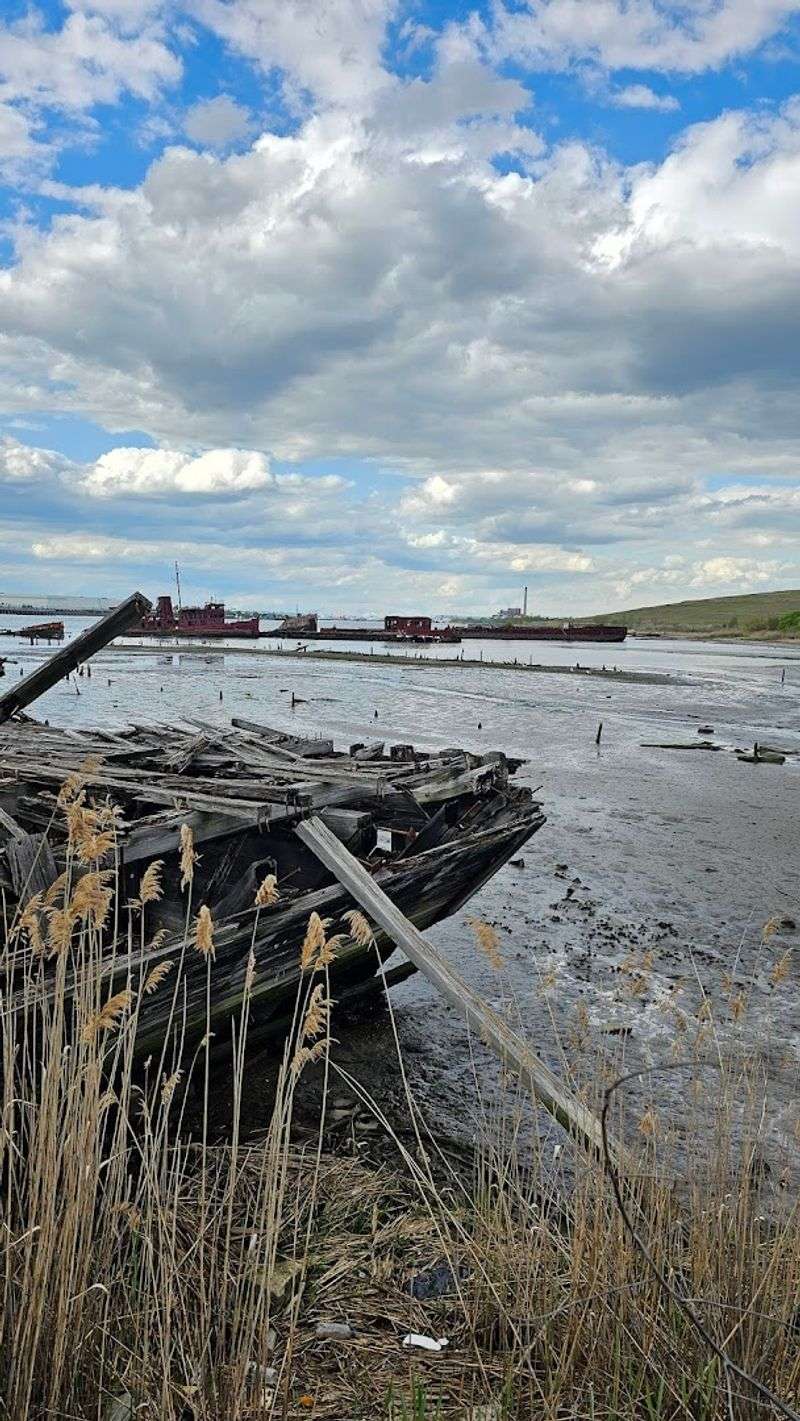
One thing that surprises almost everyone on a first visit is how quiet it is. Given that this is technically New York City, the stillness feels almost surreal.
The only sounds are the water moving around the hulls, the occasional distant engine from the shipping channel, and a lot of birds.
The marshy wetlands surrounding the graveyard are genuinely good habitat for shorebirds and wading birds. Great blue herons are a common sight, often perched directly on the rusting metalwork as if they own the place, which in some ways they probably do.
The site has been noted by local birdwatchers as a surprisingly productive spot, especially during migration seasons in spring and fall.
The combination of industrial history and thriving wildlife gives the graveyard a layered quality that is hard to find anywhere else in the city. It is not manicured or managed for visitors.
It simply exists, doing its own thing, indifferent to whether anyone shows up or not. That lack of performance is refreshing in a city that often feels like it is always putting on a show.
Some visitors describe the atmosphere as meditative, and after spending time there, it is easy to understand why.
Why This Forgotten Corner of New York Still Matters
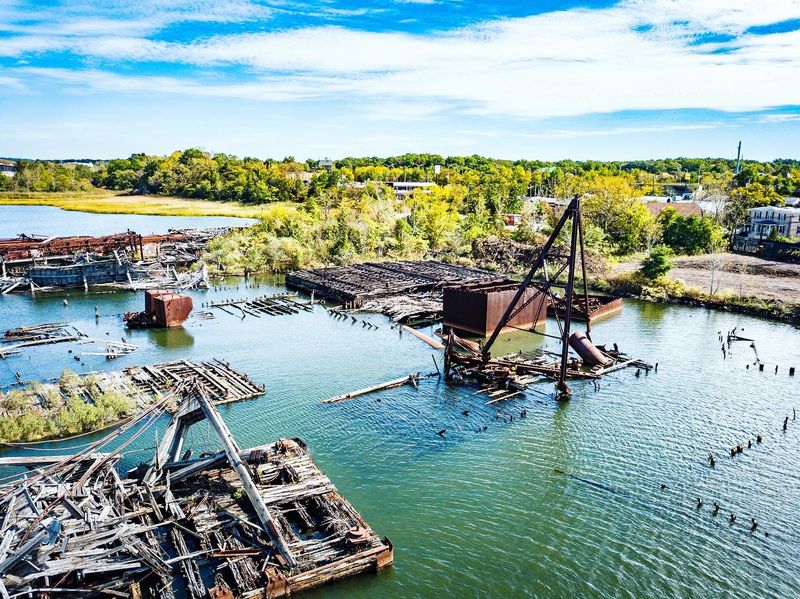
Places like this one are genuinely rare. Most cities scrub away their industrial past as quickly as possible, replacing it with condominiums and waterfront parks.
Staten Island, for better or worse, never got around to that with this particular stretch of the Arthur Kill, and what remains is an accidental archive of 20th-century American maritime life.
The vessels here represent an entire era of New York Harbor activity that is completely gone now. The tugboats, the ferries, the car floats, these were the working machines of a port that was once among the busiest on earth.
Their presence here, even in decay, keeps that history visible in a way that no museum exhibit quite manages to replicate.
There is also something worth appreciating in the honesty of the place. It does not pretend to be more than it is.
The signs say no trespassing, the path is muddy, the boats are falling apart. None of it is packaged or presented.
You either make the effort to find it and engage with what it actually is, or you do not. For those who do make the trip, the reward is a New York experience that feels completely unlike anything else the city has to offer.
Address: Arthur Kill Rd, Rossville, Staten Island, New York
