That white dome rising out of the California scrub made me slow the car down, just to make sure I was not imagining it. It sits alone in the desert, a parabolic structure that looks a little like a spacecraft that quietly settled into the sand and decided to stay.
The dome is 38 feet tall and 50 feet in diameter, built entirely of wood without a single metal nail, and the acoustics inside are unlike anything I have ever experienced.
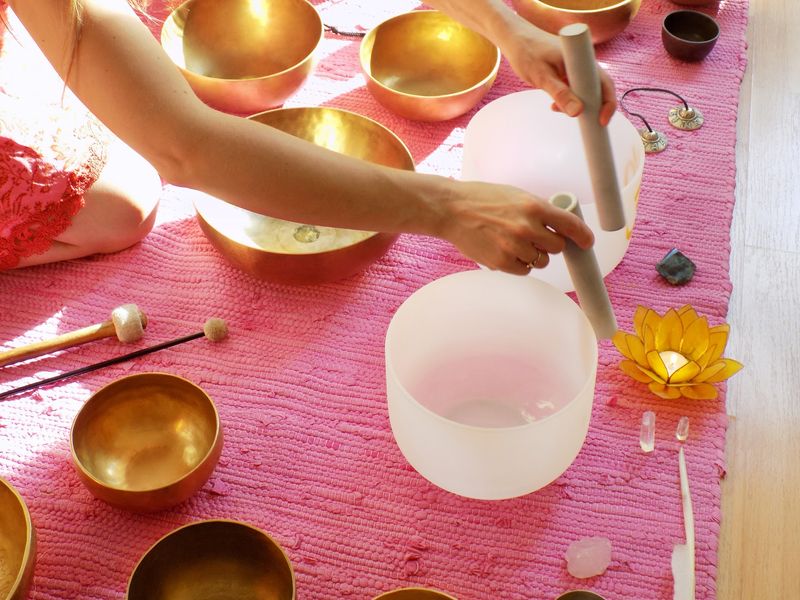
People lie on mats while quartz crystal bowls are played, and the room does something strange and wonderful with the sound, the tones seem to come from everywhere and nowhere at once.
I went in curious and came out oddly loose-limbed, like my whole body had been rinsed out. Some visitors say they feel the vibrations in their teeth, their fingertips, even in the backs of their knees.
The builder was an aeronautical engineer who claimed the plans came from Venus, and he spent years constructing the dome as a place for energy work and healing. I sat on the floor after the session ended, not wanting to leave, and the silence afterward felt as full as the sound had been.
Whatever you believe about it, this place is one of the most genuinely unusual spots I have ever spent an afternoon.
A White Dome That Looks Like It Landed Here
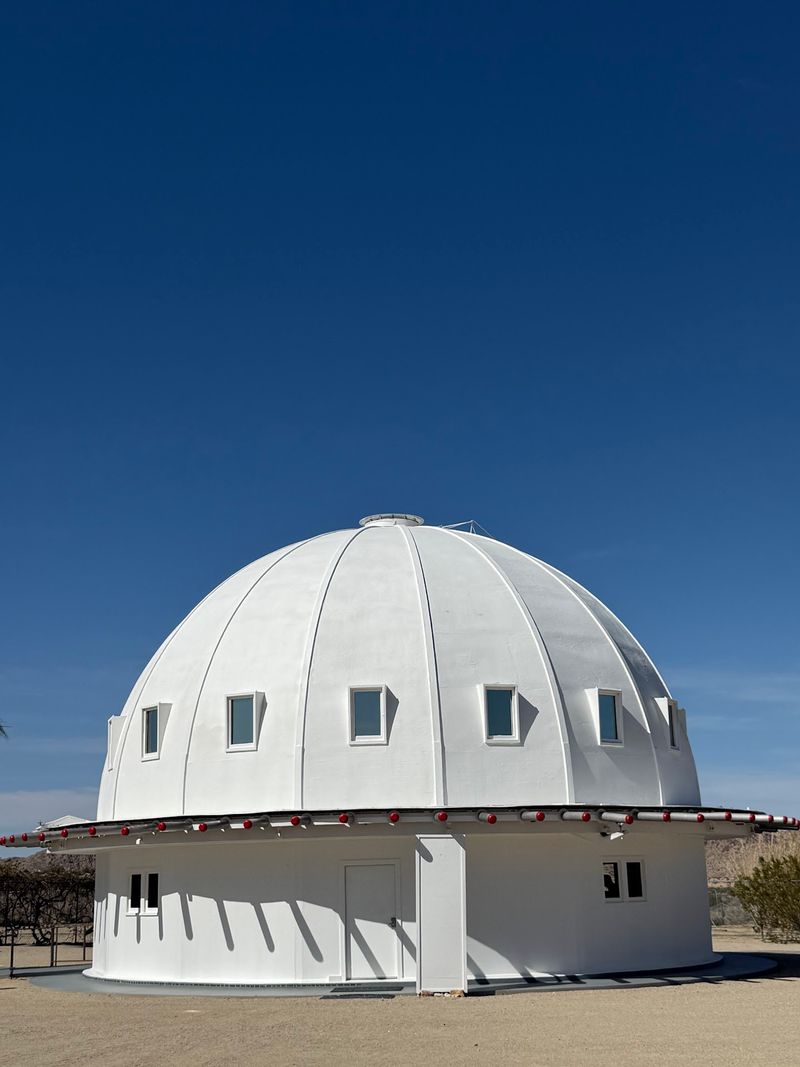
My first impression from the dirt road was that someone had parked a flying saucer in the desert and walked away. The dome stands 38 feet high and 55 feet across, painted bright white against a landscape of sand, creosote and far-off mountain ridges.
Up close, the illusion softens and you start noticing the woodwork instead.
The whole structure is wood and fiberglass, and here is the part that still gets me: it was built without nails or any metal fasteners. Wood dowels, glue and a heavy concrete ring at the very top hold it all together.
George Van Tassel wanted nothing metallic interfering with what he believed the building could do.
Photographers love the exterior, and honestly it photographs better in the late afternoon when the light goes golden and the shadows stretch across the sand. Morning works too, though the white can blow out in harsh midday sun.
Give yourself a few minutes to just circle the building before anything else begins.
The scale sneaks up on you. From a distance it looks almost toy-sized against the desert, then you walk closer and realize how much handwork went into every curved beam.
George Van Tassel and the Story Behind the Build
Here is where the backstory gets wonderfully odd. Van Tassel wasn’t a mystic by trade, he was an aircraft mechanic and flight inspector who had worked for Douglas, Hughes and Lockheed before moving out to the desert.
In 1953, he said, everything changed while he was meditating beneath a massive boulder called Giant Rock.
According to his account, he received both telepathic and in-person contact from visitors he described as coming from Venus, including a being named Solgonda and a group he called The Council of Seven Lights. They supposedly handed him a formula for a machine that could rejuvenate human cell tissue.
He got to work in 1954 and kept building for close to two decades.
Money came from donations, from Howard Hughes among others, and from the annual Spacecraft Conventions Van Tassel hosted out at Giant Rock. Those gatherings drew thousands of curious people into the middle of nowhere.
He also drew on ideas from Nikola Tesla and Georges Lakhovsky, plus the proportions of Moses’ Tabernacle.
Whether you buy the origin story or not, the man clearly meant every bit of it.
Lying Down for the Sound Bath
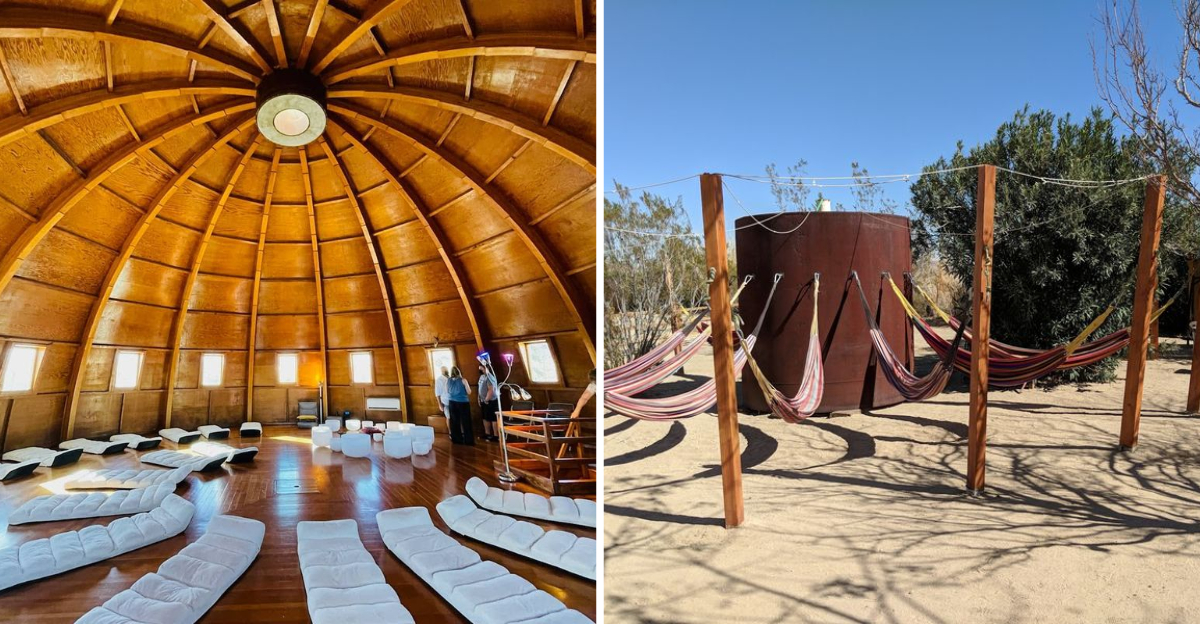
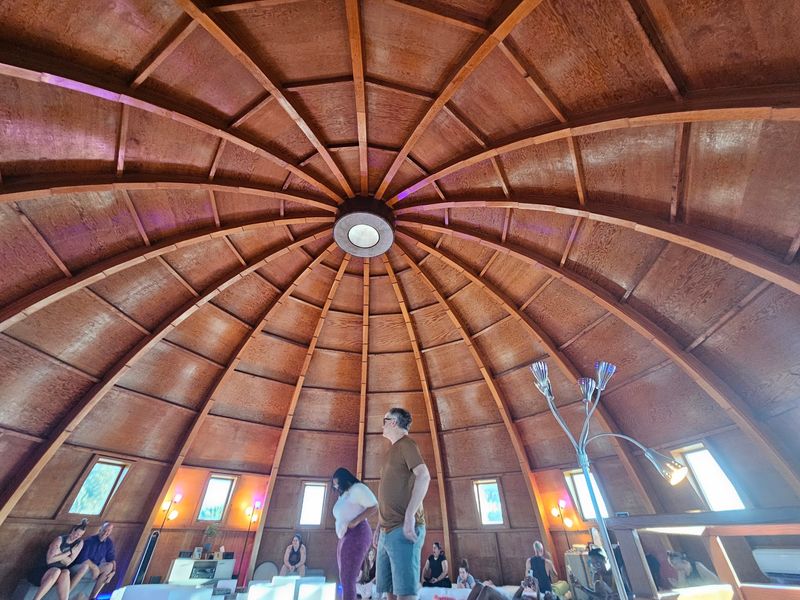
You climb a ladder-like staircase to the upper chamber, and the first thing that hits you is how warm and hushed the wood feels after the glare outside. Mats fan out from the center like spokes on a wheel, with blankets and small pillows waiting.
A practitioner sits in the middle with a ring of quartz crystal singing bowls.
The session itself runs 40 minutes, though almost nobody agrees on how long it felt. Some people swear it flew by in ten minutes, others come out convinced they were in there for hours.
Between 20 and 22 bowls are played in sequence, each one tuned to a different energy center in the body.
Sound doesn’t behave normally in that room. It circles, layers over itself and seems to arrive from directions that don’t match where the bowls actually are.
My advice: bring an extra layer. The dome holds the desert chill and it is genuinely hard to relax when your feet are cold.
Book well ahead too, because sessions fill up fast, especially on weekends near Joshua Tree.
The Vibrations People Struggle to Describe
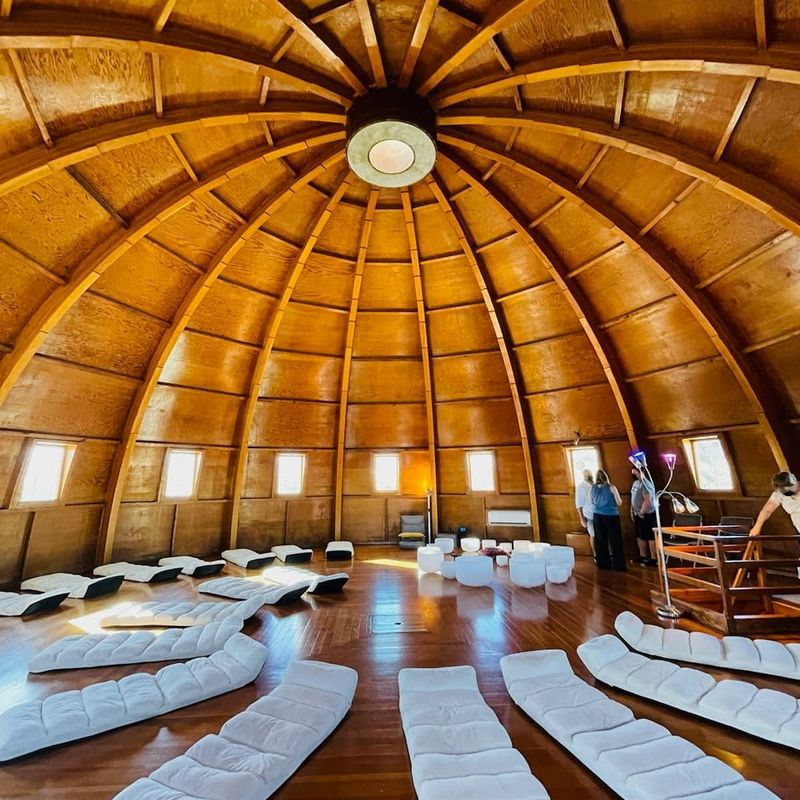
Ask ten people what they felt and you will get ten different answers, which is half the fun of this place. Plenty describe a buzzing that starts in the chest and spreads outward, others notice it most in their teeth or along their forearms.
A few say their skin tingled from scalp to toes.
Deep relaxation is the most common report by far. People talk about drifting into that half-awake state where thoughts stop stacking up and the body finally lets go of whatever it was gripping.
Some compare the drifting sensation to a psychedelic experience without anything involved beyond sound.
Not everyone lands there, and I appreciate that the staff are upfront about it. Certain visitors feel restless, a little bored, or oddly unsettled, and that is a perfectly normal outcome too.
What seems consistent is the afterglow. Walking back out into the desert light, I felt slower in the best way, like someone had turned down the volume on my whole nervous system.
Give yourself unhurried time afterward instead of racing straight to your next stop.
Whispers That Travel Across the Room
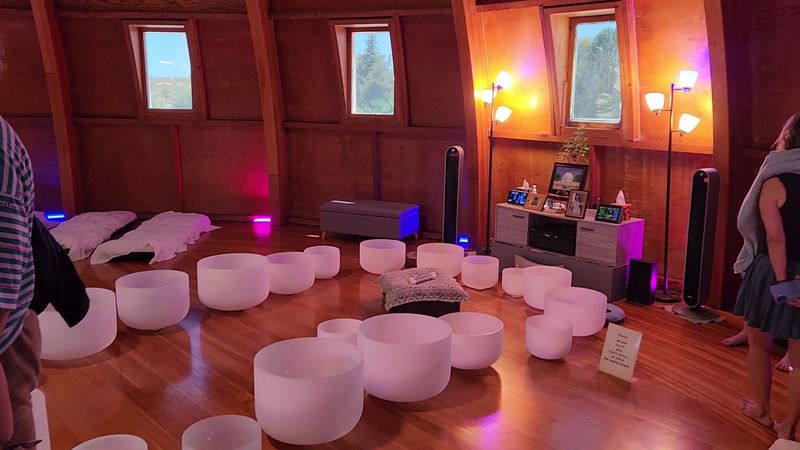
Before the bowls start, staff usually demonstrate the dome’s acoustic party tricks, and they are genuinely startling. Stand directly beneath one of the ceiling beams and whisper, and a person standing at the matching beam clear across the room hears you like you are speaking into their ear.
No amplification, no gimmick, just geometry doing its thing.
The center of the dome is even stranger. Speak or sing a single note while standing at the exact middle point, and your own voice comes back to you swollen and shimmering, wrapped around itself.
Nobody else in the room hears what you hear.
I tried it and felt a bit silly right up until the sound came back, at which point I understood why people get quiet about this building. The effect isn’t subtle, it is immediate and slightly disorienting.
All of it comes down to the parabolic shape and the way sound waves reflect off that curved wooden ceiling.
If tours are running, take one. The acoustic demonstration alone justifies the drive out into the sand.
Hammocks, Courtyard Shade and the Wall of Visitors
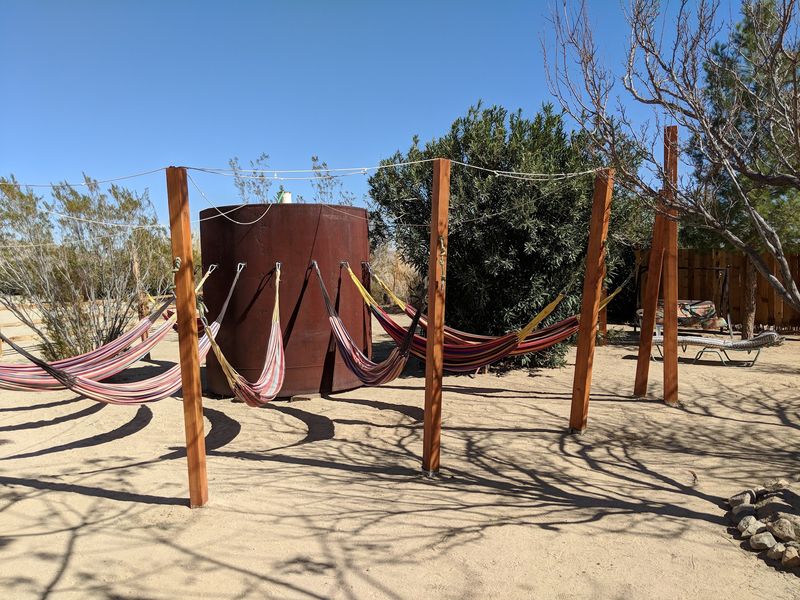
Some of my favorite time here happened outside the dome entirely. The grounds have hammocks strung up in the shade, picnic tables scattered around a small courtyard, and enough quirky desert art to keep you wandering.
People stretch out and stay put for a while after their session.
There is a wall where visitors write down where they traveled from, and reading it turns into an accidental hobby. Names of towns from all over the world crowd together in handwriting of every size.
It makes the middle of nowhere feel surprisingly connected.
Pack a lunch if you can, because there is nothing nearby and the tables are begging to be used. I regretted not bringing more water, which in the Mojave is a rookie mistake I only make once.
The gift shop is small, well curated and worth a browse before you leave.
Staff here are family-run friendly, happy to answer questions about the history without rushing you along. That warmth is a big part of why so many visitors end up returning.
Arrive early rather than right on time.
Giant Rock, the Drive and Making a Day of It
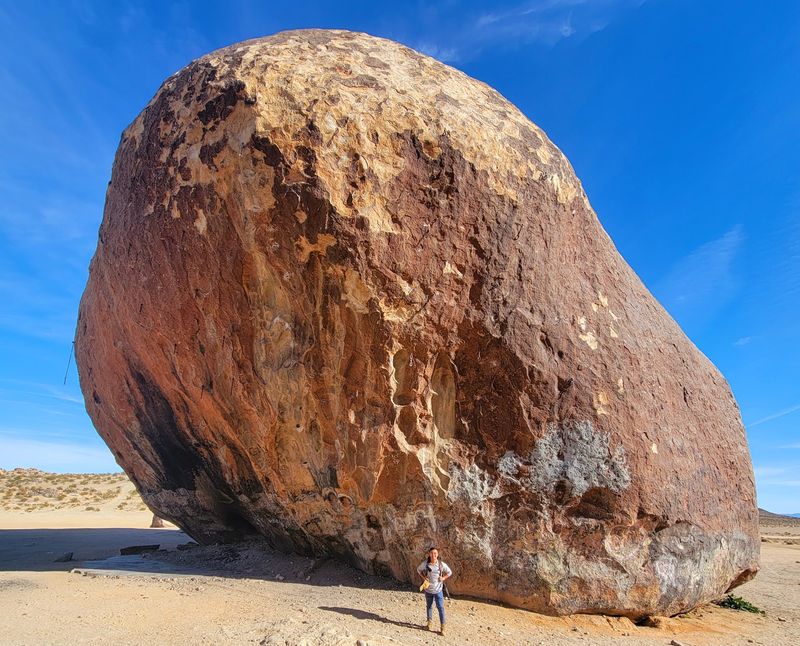
Three miles up the road from the dome sits California’s Giant Rock, the enormous freestanding boulder where Van Tassel’s whole story began. Getting there involves a rough dirt track, so a higher-clearance vehicle makes life easier.
The boulder is genuinely massive and worth the bumpy detour.
Plan the driving realistically. Landers is remote, roughly twenty miles north of Joshua Tree National Park, and cell service gets patchy as you go, so download your directions before setting off.
Fill your gas tank in Yucca Valley on the way through.
The Integratron joined the National Register of Historic Places in 2019, and the Karl sisters, who bought it back in 2000, have spent years restoring and caring for the structure. Van Tassel himself died in 1978, reportedly just weeks before the machine was due for its first real test.
His notes and equipment vanished afterward, which only deepens the mystery.
Pair it with a park drive, sunset somewhere open, and you have a full desert day that feels nothing like ordinary sightseeing.
Address: 2477 Belfield Blvd, Landers, California 92285
