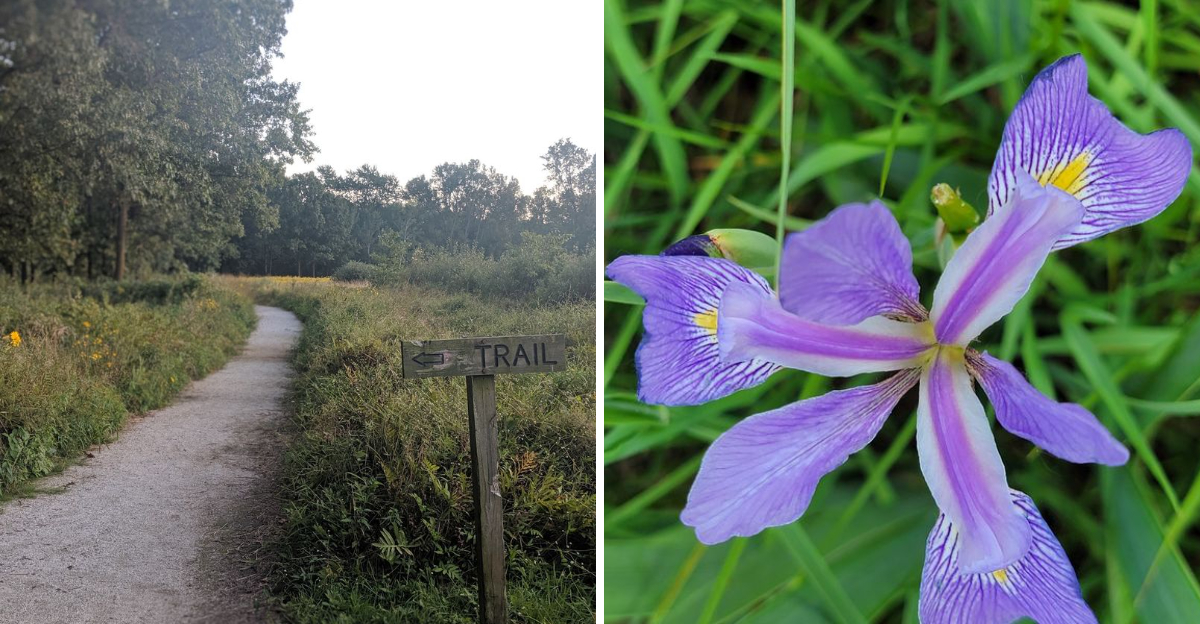
I almost stepped right over it. Not the trail.
The orchid. It was sitting there among the grass, small enough to miss and rare enough that most people in Indiana will never see one in the wild.
That is the strange thing about this place. Nothing looks particularly dramatic at first.
There is grass. There are trees.
There is a little marsh. But this patch of prairie was never plowed, which makes it a surviving piece of the landscape that once covered much more of the state.
The trail takes less than a mile to walk. Take your time.
The interesting things are easy to miss.
Ground That Has Never Known a Plow
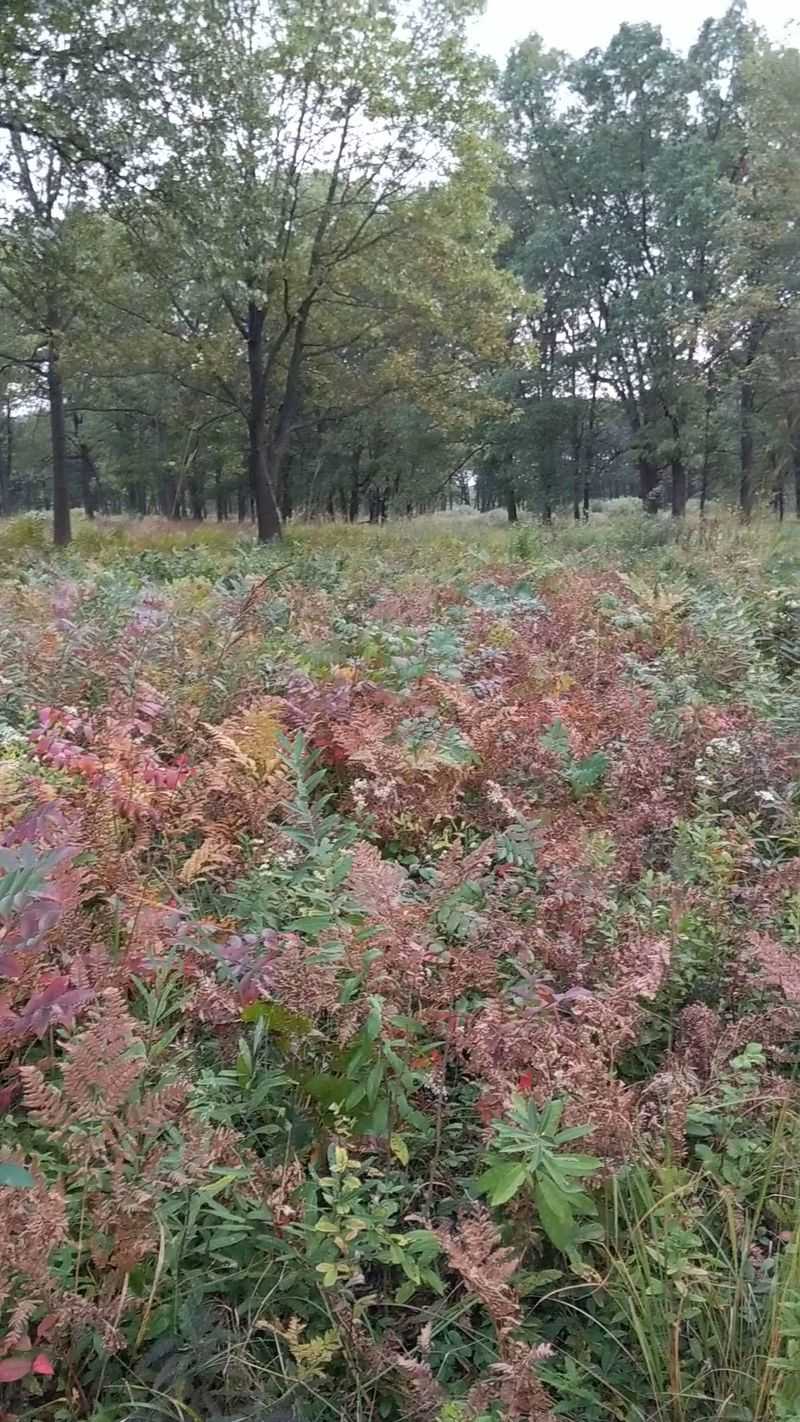
Very little original prairie survives anywhere in the Midwest, which makes the ground underfoot here genuinely uncommon. Hoosier Prairie counts as a virgin prairie, meaning the soil was never broken by farm equipment or worn down by heavy grazing.
Sandy soils left behind by ancient glacial shorelines shaped the whole place. Those sands create dips, ridges, and damp hollows, and each one supports a slightly different mix of plants.
The result is a landscape that reads like a topographic puzzle. Walk twenty steps and the vegetation shifts from dry oak barren to moist sedge meadow without any obvious warning.
Preservation did not happen by accident. Local advocates pushed hard through the 1970s to protect the site while surrounding land in Lake County was being developed for industry and housing.
Their effort paid off in a way visitors can feel. Standing among grasses that have grown in the same spot for thousands of years puts modern Indiana in a strange, humbling perspective.
Interpretive markers along the route explain what makes each section distinctive, and a brochure at the sign-in station matches numbered posts to short explanations. Grabbing one before setting off turns a pleasant walk into something closer to a guided lesson.
Stay on the path. The whole point of an unbroken prairie is that it stays unbroken.
Look for Wild Orchids Rarely Found Elsewhere in Indiana
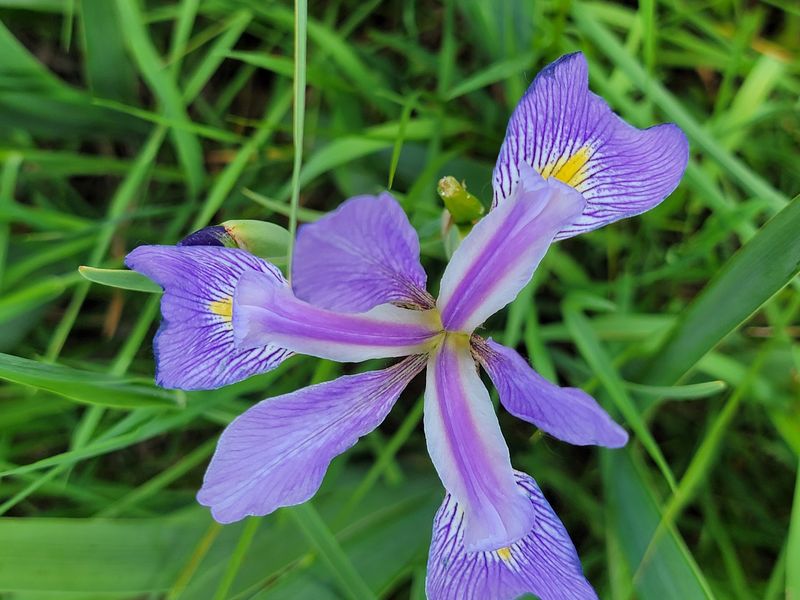
Orchids sound tropical, yet Indiana has its own native species, and several of the rarest cling to habitats exactly like this one. A pink orchid appears along the Savanna Trail, small and easy to miss unless someone slows down and really looks.
Finding one takes patience. Blooms are short-lived, tucked low among grasses, and they do not announce themselves the way a sunflower does.
The preserve supports more than 350 native plant species, and 43 of those are considered uncommon or rare within the state. Orchids sit near the top of that fragile list.
What keeps them alive is the specific mix of moisture, sandy soil, and open light that this prairie still provides. Drain the wet spots or shade them out with brush, and the orchids vanish.
Because of that fragility, picking flowers is strictly off limits, and stepping off the trail can crush seedlings nobody can see. A photograph is the only souvenir worth taking.
Late spring into early summer offers the strongest odds for spotting a bloom, though timing shifts year to year with weather.
Other rare plants share the stage, including white wild indigo, prairie parsley, and Indian paintbrush. Even without an orchid sighting, that lineup makes the walk worthwhile.
A Wildflower Show That Changes Every Few Weeks
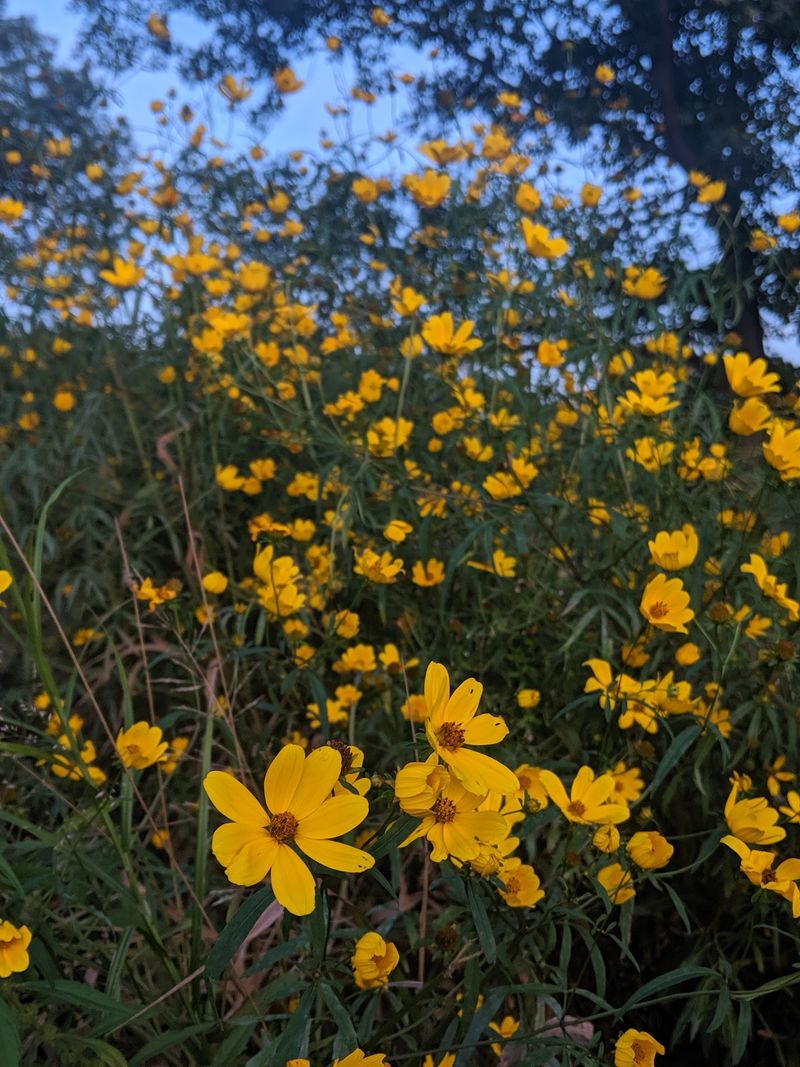
Color arrives in waves at Hoosier Prairie rather than all at once. Early spring brings modest blooms close to the ground, and by July the tall species take over completely.
Marsh blazing star throws up purple spikes near the wetter edges. Prairie sundrops glow yellow in the openings, while marsh phlox adds soft pink where the ground stays damp.
Indian grass grows tall enough by late summer to brush against shoulders along the narrower stretches of path. That leaning-in feeling is one of the more memorable parts of the walk.
Habitat variety explains the range. Dry black oak barrens, mesic sand prairie openings, wet prairies, sedge meadows, and prairie marshes all exist within this one small preserve.
Each of those settings favors different plants, so a hundred yards of walking can deliver an entirely new palette. Photographers tend to move slowly here for exactly that reason.
Autumn shifts everything toward gold, rust, and bronze as the grasses cure. Seedheads catch low light beautifully in the late afternoon.
Repeat visits reward the curious. A trail walked in May looks like a different property in September, which is a rare thing for a loop under one mile long.
Bring a plant guide or a phone app. Identifying even three species deepens the whole experience.
Birds, Frogs, and Deer in a Suburban Pocket
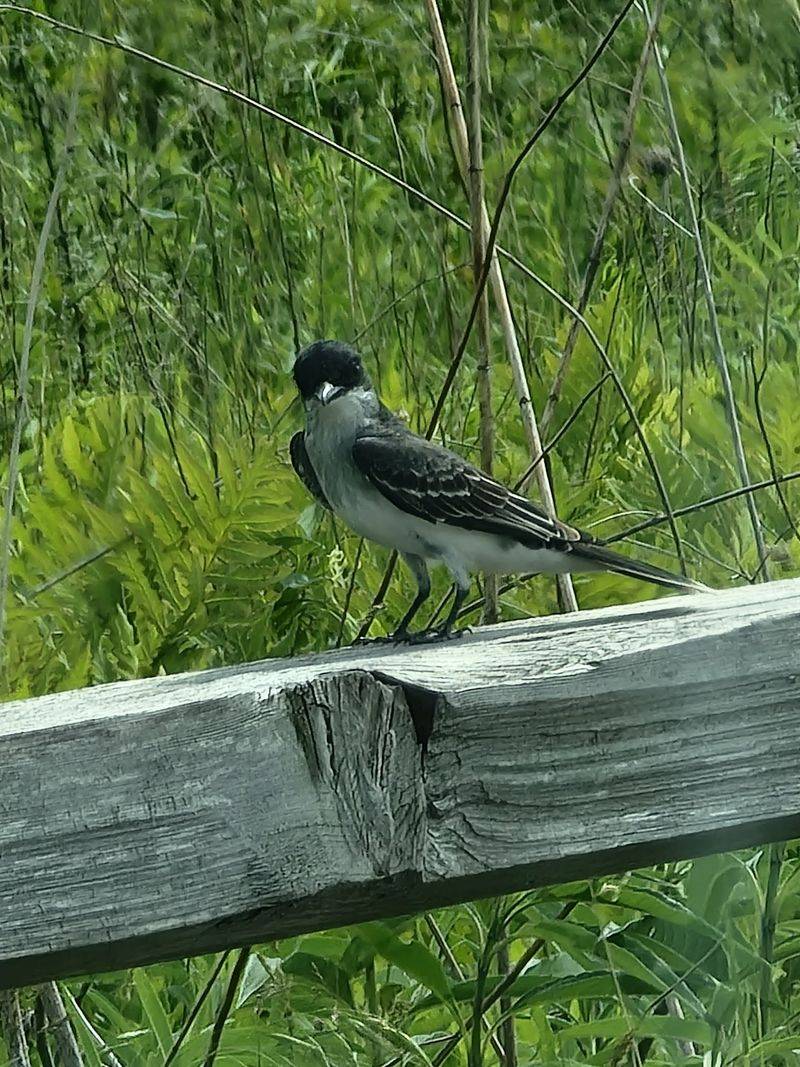
Frog song carries surprisingly far across the marsh sections in spring, loud enough to become the main soundtrack of an evening walk. Chorus after chorus rolls out from the shallow prairie potholes that hold water most of the year.
Birders do well here too. Red-headed woodpeckers favor the oak barrens, sedge wrens work the marshier ground, and goldfinches swarm the seedheads once summer winds down.
Eastern wood pewees and northern flickers turn up regularly along the wooded edges. Early morning is the productive window, before nearby road traffic picks up.
Deer move through the preserve often, usually at dawn or dusk. Sightings are common enough that regular walkers stop being surprised by them.
Butterflies and other insects fill the daytime hours, feeding on the same native plants that make the prairie unusual. Every rare flower here supports a small web of creatures nobody notices at first glance.
One practical note: deer bring ticks. Checking clothing and skin after a visit is simply part of the routine, especially between spring and early fall.
Long pants help, and so does staying centered on the trail rather than brushing through tall grass.
For a preserve wedged into a developed corner of Lake County, the amount of visible life here is genuinely impressive.
Short Loops With Room for Wheels and Slow Feet
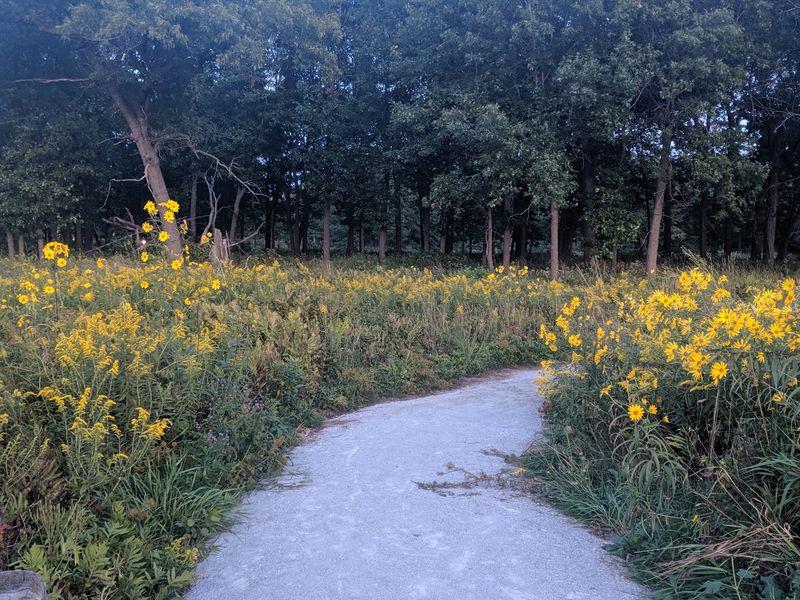
Distance is not the draw here, and that turns out to be a strength. The main loop covers roughly 0.7 to 0.8 miles across flat, forgiving terrain, making it perfect for a casual afternoon.
The first stretch from the parking lot features a wide, level gravel path and a short wooden boardwalk, allowing easy access to the prairie’s edge. Past that opening, the surface transitions into a combination of natural packed dirt, sand, and mowed grass paths.
The trail narrows to single file as late-summer big bluestem and Indian grass lean across the path, creating an immersive green tunnel effect. Two named loops seamlessly connect.
The Prairie Marsh Trail runs between tallgrass and wetland, while the Savanna Trail adds a stretch through widely spaced, historic oaks. Most people finish the full circuit in twenty to forty minutes at an unhurried pace, though naturalists with cameras can easily stretch it far longer.
Because this ecosystem is incredibly fragile and protects sensitive ground-nesting birds, pets are strictly prohibited inside the preserve. Additionally, amenities are completely minimal; there are no trash cans on-site, so you must pack out whatever you pack in.
The preserve has no locking gates and is open daily from sunrise to sunset, making it easy to catch the beautiful golden hour light.
Glacial History Written in Sand
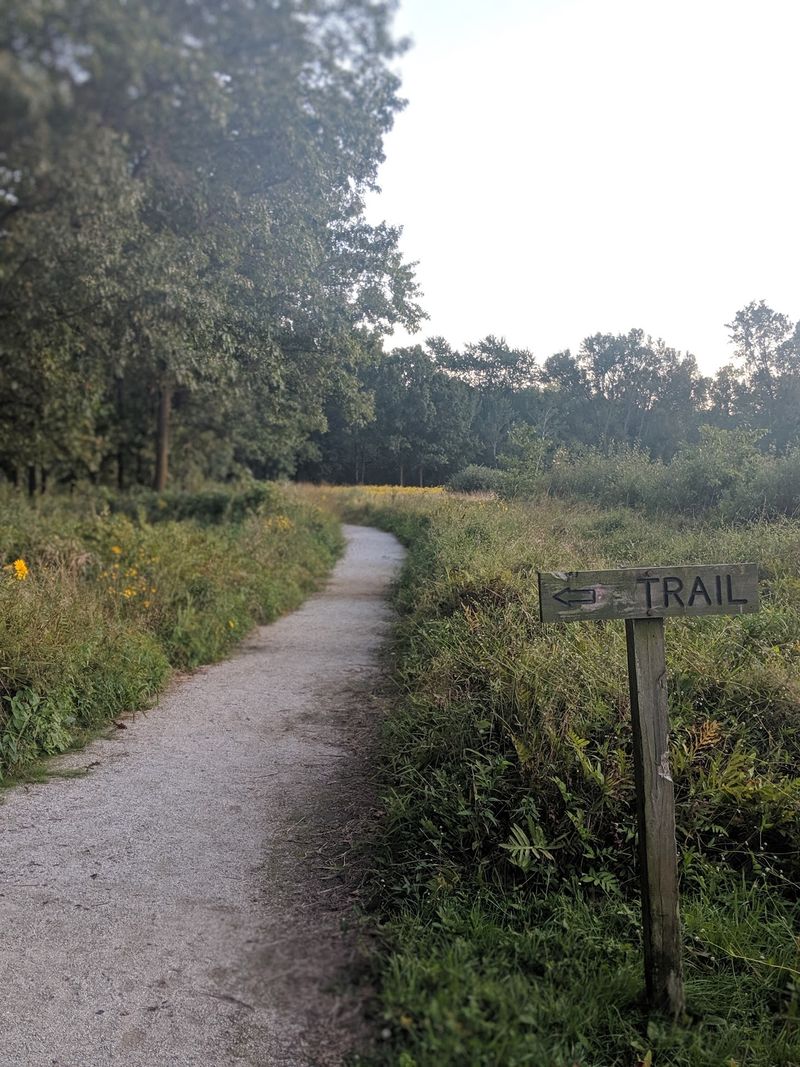
Roughly 13,000 years ago, waves from an ancient version of Lake Michigan piled sand along a shoreline that no longer exists. Part of that formation, known as the Glenwood Spit, sits beneath this preserve.
That geological detail makes Hoosier Prairie the oldest relic shoreline connected to the Indiana Dunes area. Water has long since retreated north, but the sand stayed put.
Everything growing here traces back to that sand. Its drainage, its low nutrients, and its warmth in summer determine which plants survive and which never gain a foothold.
Recognition followed the science. The site earned National Natural Landmark status in 1974 and became a State Nature Preserve in 1977, protecting the topographic and biological diversity of the sand plains north of the Valparaiso Moraine.
Fire plays a role too. Controlled burns are conducted periodically to imitate the wildfires that historically swept these grasslands, knocking back woody brush and giving fire-adapted prairie species room to rebound.
Visitors who arrive shortly after a burn sometimes find blackened ground, which looks alarming but signals healthy management. Green shoots return within weeks.
Understanding the burn cycle changes how the landscape reads. What appears wild is actually maintained with considerable care and long-term planning.
Four Seasons, Four Completely Different Walks
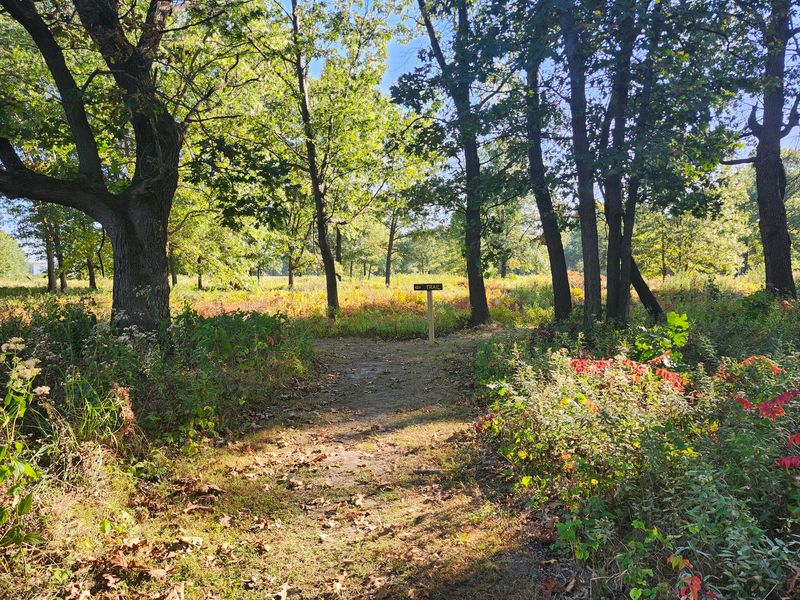
Timing shapes the entire visit. Late April into early May delivers migrating birds alongside the first strong wildflower activity, arguably the busiest stretch for anyone carrying binoculars.
Summer pushes the grasses skyward and fills the marsh with sound. Heat and mosquitoes come along with it, so early morning outings work best.
By mid October the prairie turns the color of old pennies, and the surrounding oaks add their own reds and yellows. Cooler air makes the loop feel effortless.
Fall visitors often have the trail largely to themselves, which suits a place built for quiet observation. Seedheads rattle in the wind, and the light angles low across the grass.
Winter strips everything down to structure. Snow-dusted stems, dark oak silhouettes, and animal tracks crossing the path give the preserve a spare, sculptural quality worth seeing at least once.
Road noise from nearby traffic is audible in every season, a reminder that this remnant survives inside a working, industrial corner of northwest Indiana. Many visitors find that contrast makes the protection feel even more meaningful.
Whatever the month, sturdy footwear and a willingness to walk slowly matter more than distance covered.
Address: 135 E Main St, Schererville, IN 46375
