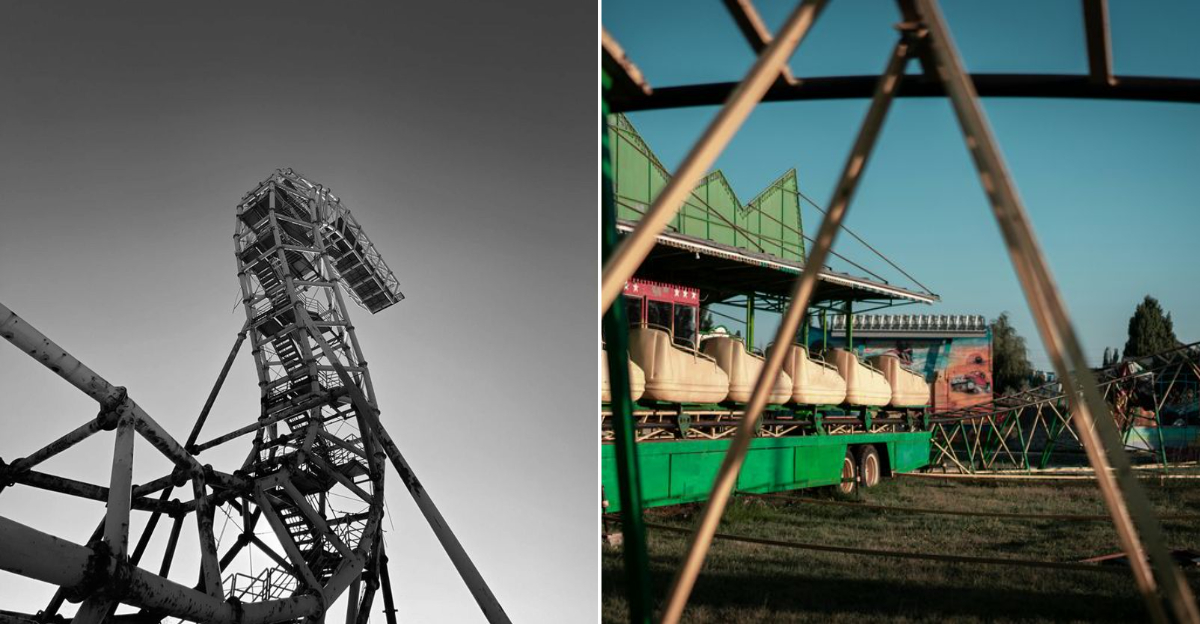
Did you know New Mexico once had a full-blown carnival that’s now buried under desert sands? Locals called it Little Beaver Town, and for a while it was the kind of place families drove hours to visit.
There were rides, games, and the kind of old-school fun that made summer nights feel endless. But over time, the desert had other plans.
Little Beaver Town didn’t vanish overnight. It slowly faded, piece by piece, until the shifting sands covered what was left.
Today, most travelers don’t even realize they’re passing by the site of a carnival that once buzzed with laughter and neon lights.
For those who remember, it’s a bittersweet story: a reminder of how quickly something lively can disappear when nature takes over.
What makes it stick in people’s minds isn’t just the rides or the food. It’s the memory of a place that felt larger than life, now reduced to whispers in the desert.
So next time you think of New Mexico’s wide-open landscapes, remember: somewhere beneath those sands lies a carnival that time couldn’t keep alive.
A Theme Park That Vanished Into The Desert
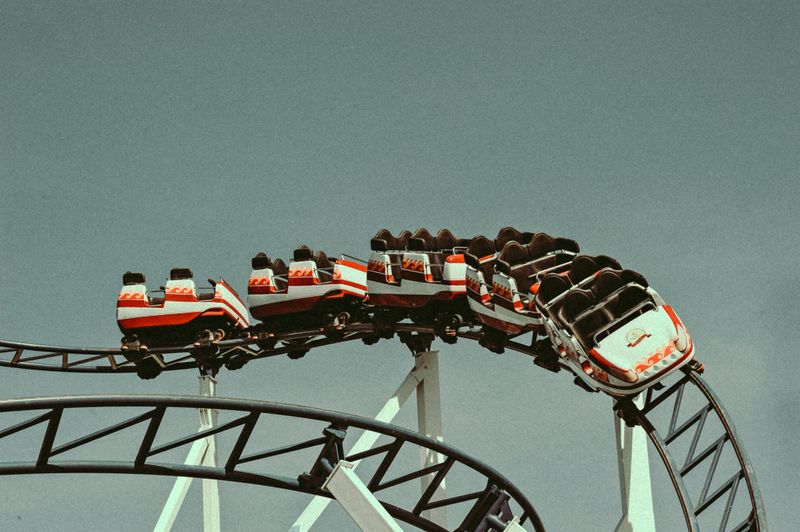
Here is the weird part: you pull up and there is no gate, no ticket booth, just open land at 14600 Central Ave SE, Albuquerque, NM 87123.
The air feels like the kind that keeps secrets, and the ground shows hints that a story tried to stand here.
Little Beaver Town was supposed to be a Western scene come to life, the kind you stroll through, nodding at painted facades, while the highway hums nearby.
Instead, what survives is a scatter of bones, a stage without actors.
Look close and your eyes adjust. Low foundations flatten into the scrub, and broken edges catch the sun.
You start piecing shapes together like a memory puzzle.
It is not a museum, it is not curated or fenced or polished. That contrast hits you, because the desert respects silence more than signs.
What you feel is a little tug. I feel like New Mexico has this way of letting the wind do the storytelling.
You may not find a single perfect marker. Still, the setting draws a clean outline where the buildings used to be.
The show is gone, but the stage never clocked out, and that is why this stop works. The carnival you picture is more of a mood than a map.
You fill in the missing pieces, and somehow that feels better than any brochure.
Route 66 Gave It The Perfect Audience
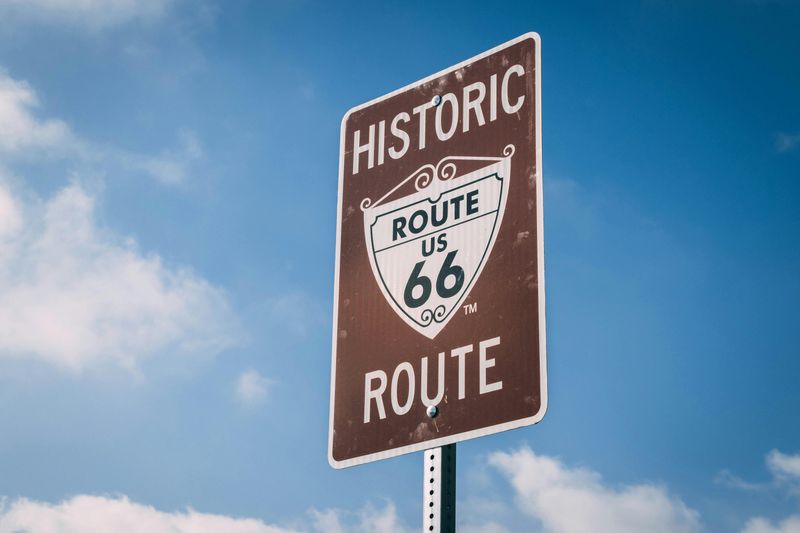
Think about the flow back then. Route 66 carried a steady stream right past this spot, like a moving audience that never stopped.
All someone had to do was wave them over with a little color and a promise.
The highway here still hums in a lower key. You can stand on the edge of the open space and hear tires roll, a quiet echo of who used to pull in and wander.
I think it was a clever pitch: stretch your legs, step into a pocket Western world, then slide back onto the road with a story to tell. That rhythm feels so American Southwest.
The season changed though, route culture drifted, travel patterns bent another way, and the easy crowd thinned. Without a constant stream, the place lost its scaffolding.
You can almost see the old entrance in your mind: a sign, some props, a promise of five minutes turned to memory. Now the ground speaks in shorter sentences.
You arrive for the legend and find the outline. The highway did the advertising, but time edited the message down to a whisper.
Opened Big, Closed Fast
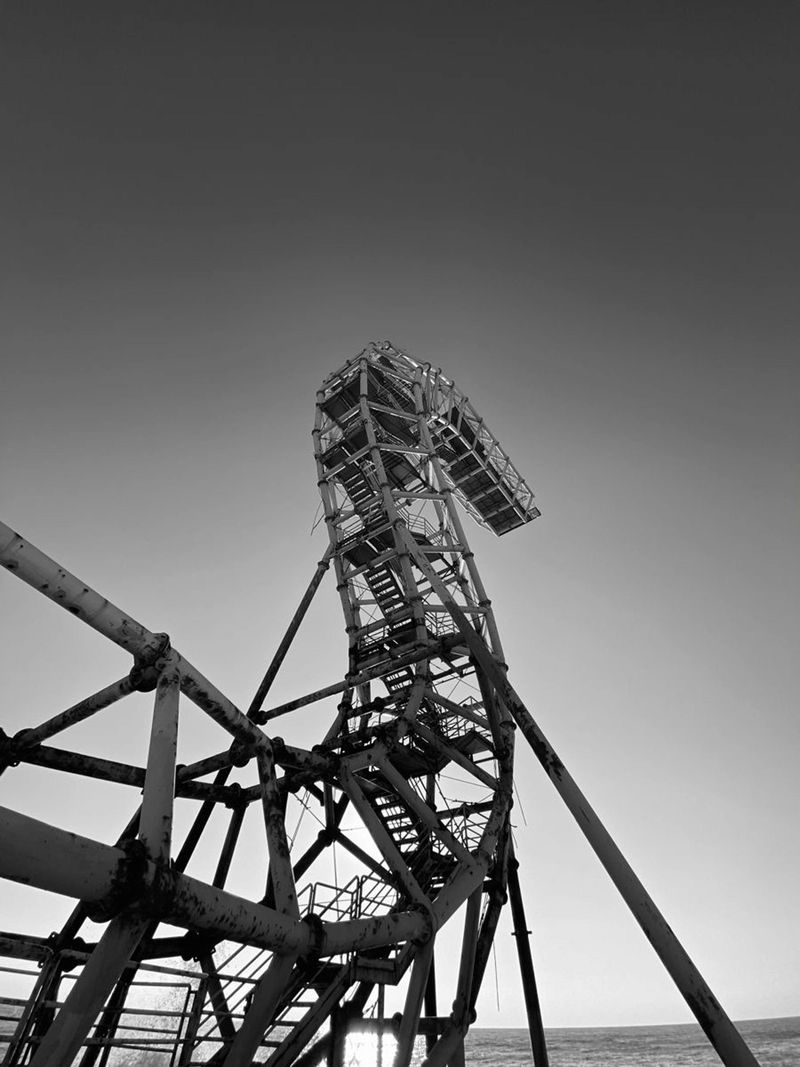
The arc here is a quick rise and a quiet fade. You imagine a big opening, a rush of traffic, and then the music turning low before anyone adjusted the volume.
The whole thing feels like a scene change that never got a second act.
Stand in the dust and you can sense momentum still hanging in the air. The pads and fragments look like exclamation points dropped mid-sentence, and that gap is what draws you in.
Little Beaver Town came on strong with theme-park energy. It put on a smile and waved at Route 66, then the curtain fell sooner than anyone planned.
Short runs leave strange footprints, they are sharper, brief, and kind of sparkly in memory. You can almost hear the departing cars clicking their blinkers.
In New Mexico the sun watches everything and tells no lies. The elements flatten the loud parts and keep the bones.
What remains at this site is a fast-forward button pressed by time. You get the gist, not the whole script, and the feeling is more rumor than record.
Somehow that speed makes it memorable in my opinion. A short life turns into a question you carry down the trail.
Maybe quick stories echo longer because there is more room for imagination.
The Sage City Plot Twist
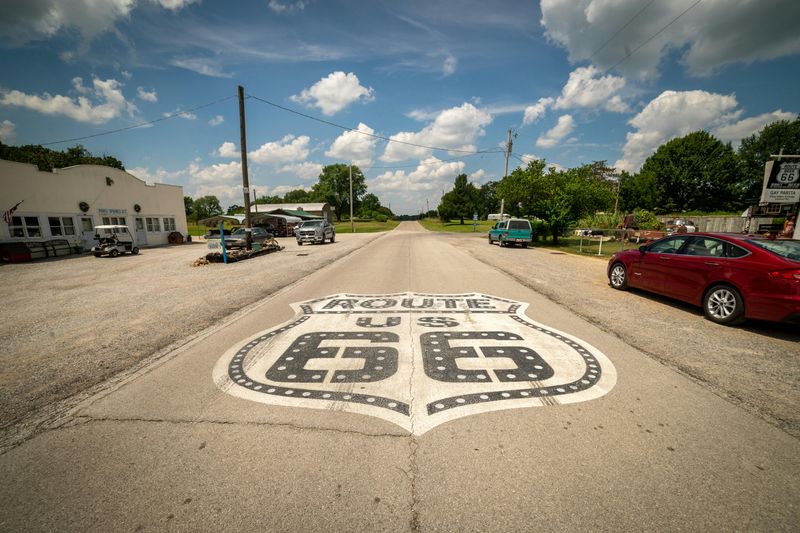
Here is the twist I like. After the main act stumbled, the place tried on a new name and kept breathing for a bit.
It is like changing costumes when the crowd has already left.
You stand there and picture a fresh sign, a few new props, maybe a different angle on the same stage. The ground does not care about names, it holds whatever story you plant.
For a while the site took on side gigs, like filming and small events. The desert nodded and let it happen, but every borrowed role has a clock.
With less traffic, the effort spread thin.
This state has a way of keeping only the sturdy parts. If paint cannot defend itself, sun and dust will finish the sentence, so the shapes fade to basics.
Looking at the remnants now, the rebrand feels like a bright idea scribbled in the margin. You can respect the hustle, and you can also see why the land won.
I would say that sometimes the second name is just a softer goodbye. And that is fine, because the place still tells the story if you listen.
Fire And Time Did The Rest
When a place sits unguarded, the usual trio shows up: weather, mischief, and the long clock. That combination edits a site down to its bones.
Reports talk about damage over time, including scorched patches and broken bits. You can see the aftermath even if you missed the moment.
Here at the edge of Albuquerque the light is honest, it lays across the fragments and does not dramatize. What is left is exactly what is left.
I like that clarity, actually. New Mexico is good at simple truths, and the landscape never oversells.
The result is a flattened ghost of structures like pads, footings, and a few stubborn shapes. The rest folded back into sand and scrub.
When you visit, expect quiet, and that means no big reveal, no tidy plaque telling you what to feel. Just space, history, and a steady breeze.
That might be the best ending for a roadside attraction. The show closes, the audience goes home, and the desert cleans the stage without making a fuss.
What You’ll Actually See On The Ground
Let us set expectations right now. You are not walking into preserved storefronts or tidy exhibits, you are walking into a memory that went minimalist.
Count on concrete pads, trimmed rebar, and odd pieces that look like they once had a job. The site spreads out quietly, so take a slow lap, and your eyes will start catching patterns.
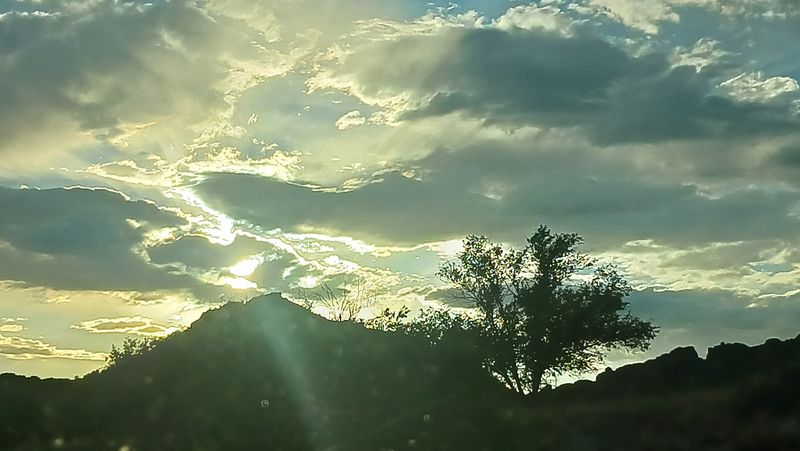
The terrain around the mouth of Tijeras Canyon keeps it interesting. Slopes, scrub, and a big sky show off the scale, and the mood sits somewhere between roadside and backcountry.
If you have a good sense of maps, pull one up and trace the layout. You will notice how the pieces align with old pathways.
New Mexico light changes everything by the hour. I feel like even the smallest shadow helps the shapes pop.
Here is my favorite part: you end up talking through guesses and pointing at lines in the dirt. It turns into a friendly little treasure hunt.
That is the fun in places like this. The story is half found and half imagined, and the quiet lets you keep both parts without hurry.
The Red Ryder Connection Is Real
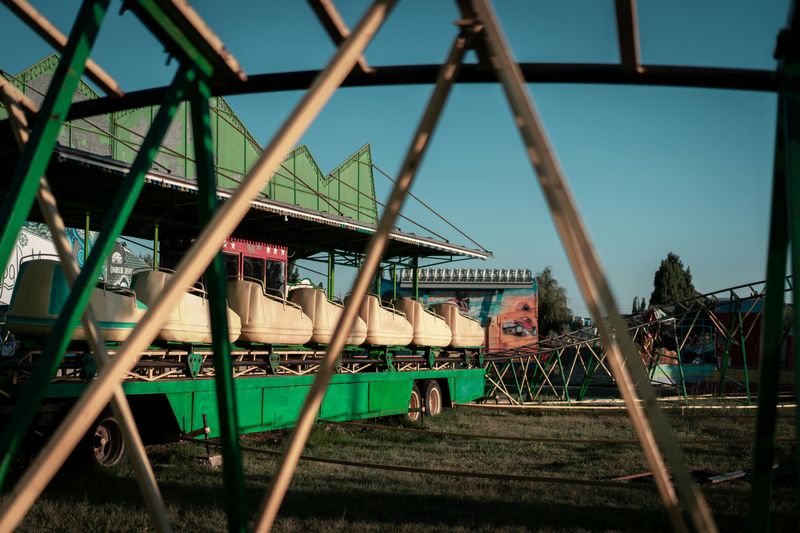
Here is where pop culture taps the shoulder. The idea came from a Western comic world, then jumped into real dirt and lumber, and that leap feels very mid century and very road trip.
Standing on the pads, you can imagine painted storefronts and character cutouts. The land still holds their outlines, even if the details are gone.
It is nostalgia without props, trust me.
I like how the setting does the heavy lifting, this state looks like a film frame most days. Point a camera and something classic appears.
The comic-to-park route feels bold and a little sweet to me. Take a story people knew and build it beside the highway, let travelers step into a panel for a minute.
Over time the drawings faded back into landscape, but the connection remains a thread in the dust. You can tug on it while you walk.
It is not about exact replicas now, it is about the tone that lingers, a Western echo in real sun. That mix lands surprisingly well.
If you love road history, this nook rewards patience. The references are quiet, not staged, which is exactly why they feel true out here.
It’s Now A Public Open Space
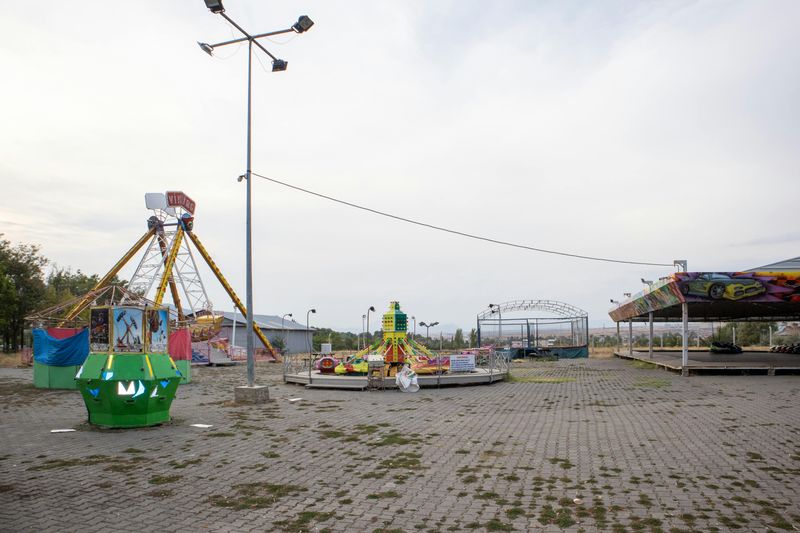
This is not a paid gate or a managed theme zone, it is part of a public open space network around Route 66. So you show up ready to walk, not to queue.
There might be basic access points and room to wander. Expect informal paths, not a guided route.
I got the impression that the site wants you to set your own pace.
On the ground, the experience feels like a low-key desert stroll. You are here for context and quiet, and the city’s edge sits close, but the mood is simple.
I like that shift. New Mexico balances history with landscape, and it usually picks landscape first.
That choice keeps places like this breathing.
Think respectful exploring, keep footprints light and eyes open for the small stuff. The rewards are subtle and satisfying.
Know that no turnstiles means no script, you write the narrative while you walk. The remains are more conversation starter than display.
It is a different kind of Route 66 stop, and I think that is the appeal. You get freedom, a little mystery, and a sense that the desert is the real host.
The Setting Makes It Feel Extra Unreal
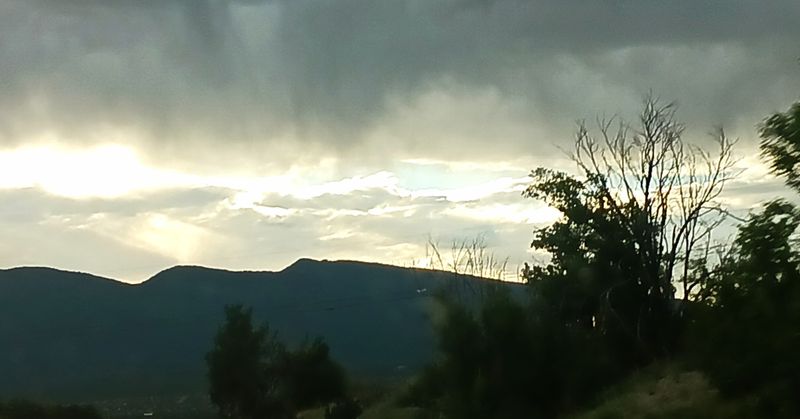
Some places work because of the backdrop, and this one leans hard on the canyon and the sky. You look up, then down, and the scale shift does the trick.
The site sits near Carnuel and the approach to Tijeras Canyon. Hills rise, traffic whispers, and the wind carries a dry rustle, it is just enough sound to feel alive.
That is why the phrase about shifting sands sticks. The ground looks like it is gently pulling everything inward.
This state knows how to lower the volume without going silent. The light softens late in the day, and shadows sketch lines where walls used to be, which I really like.
Stand still for a moment and breathe, the place starts to make sense when you stop trying to force the picture. It is calmer than the legend.
From certain angles you get that movie set vibe. The horizon fills the frame and the remnants shrink to props, and it reads unreal but feels honest.
That tension is the whole mood in my opinion: big sky, small clues, long memory. You leave feeling like you stepped behind the curtain for a minute.
The Desert Wins, And That’s The Point
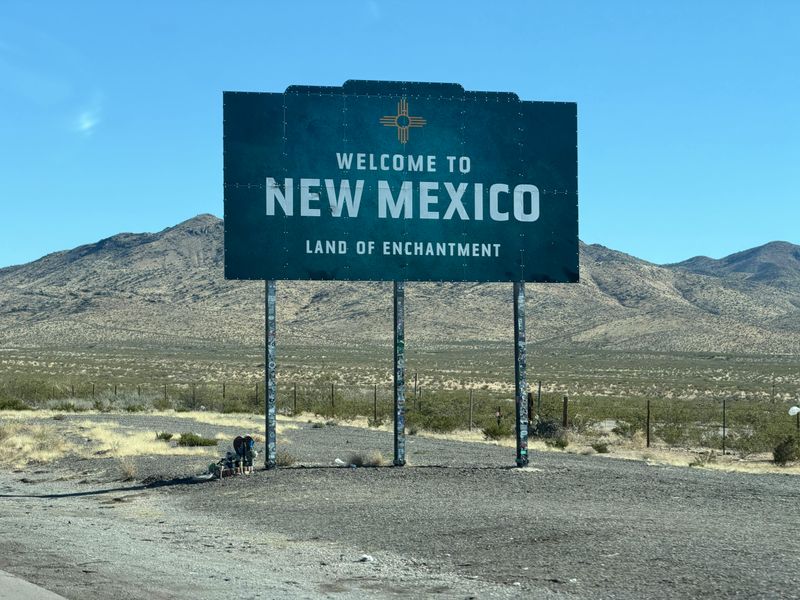
Out here the ending is gentle: no alarms, no fences, just time doing its work. The land has plenty of patience.
Walk a few minutes and you see how the edges round off. Concrete softens at the margins, and plants step in with quiet confidence.
I feel like this state makes that process look elegant. The light forgives rough patches, and the wind writes clean lines where chaos used to sit.
What started as a show finishes as a whisper, and the carnival idea returns to dust and shade. The stage stays, in case a new story shows up someday.
I really like that honesty. Not everything needs to be preserved to be real, some places teach more by fading.
When you leave, take the pace with you. Drive slow for a mile and let your thoughts settle into the road.
Trust me, the mood hangs on your shoulders in a good way.
And if someone asks what you found, you can smile. You found the desert winning, which is exactly right.
Sometimes the best souvenir is a quieter voice in your head.
Dear Reader: This page may contain affiliate links which may earn a commission if you click through and make a purchase. Our independent journalism is not influenced by any advertiser or commercial initiative unless it is clearly marked as sponsored content. As travel products change, please be sure to reconfirm all details and stay up to date with current events to ensure a safe and successful trip.
