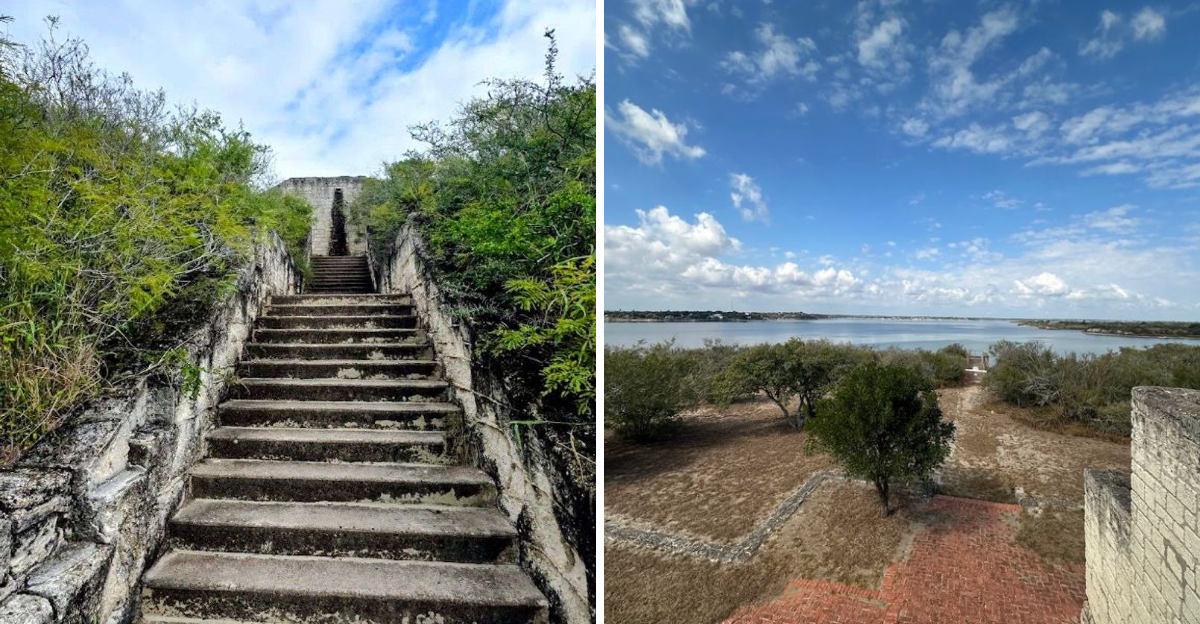
You do not expect to find a castle in a Texas park, but here it is. The stone stairs wind upward, worn smooth by years of footsteps and curiosity.
Each step makes you wonder what is waiting at the top, a tower, a lookout, maybe just more stairs. Then you reach the top, and the lake suddenly appears like it was hiding on purpose.
The water spreads out in front of you, calm and wide, a reward for the climb you just made. You can stand there for a while, catch your breath, and pretend you are a knight surveying your kingdom.
It is unexpected, a little magical, and proof that Texas parks still have surprises up their sleeves.
The Castle: A CCC Masterpiece With a Storied Past
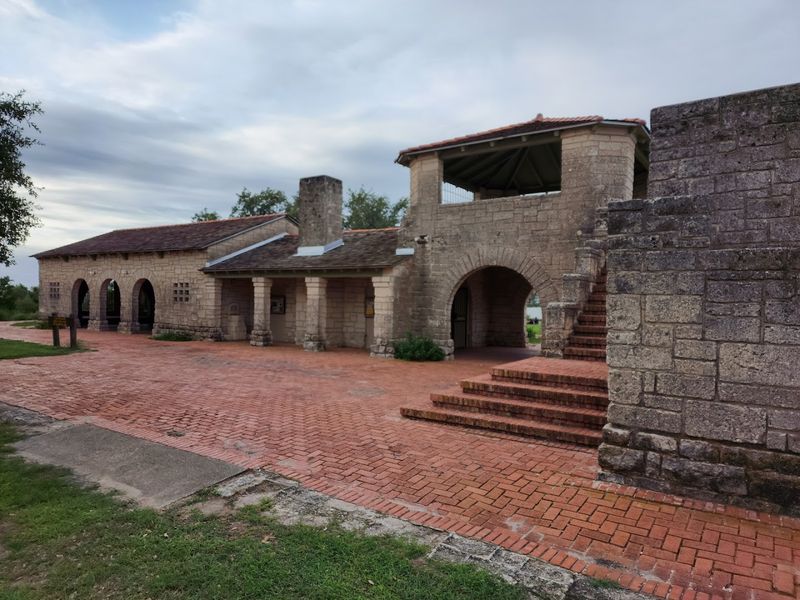
There is something quietly powerful about a building that has outlasted nearly a century of Texas summers. “The Castle” is actually the refectory, built between 1934 and 1936 by Civilian Conservation Corps Company 886. It is the only CCC-built structure still standing in the park, and that fact alone gives it a weight that you feel before you even read the historical marker.
Architect Olin Boese designed the building with real intention. The walls are made of cast caliche blocks, sourced from local materials and arranged in a random ashlar pattern that mimics cut limestone.
Up close, you can see the craftsmanship in every block, every arch, every carefully placed stone.
Back in the 1930s, this building was the heart of the park’s social life. Dances, community gatherings, and celebrations filled the space regularly.
Today it serves as the park headquarters, but the spirit of that earlier era still clings to the walls. Visiting it feels less like touring a historic site and more like stumbling into a place that simply refused to be forgotten.
It is genuinely one of the most underrated architectural gems in the entire Texas state park system.
Cast Caliche Blocks: The Building Material That Tells a Local Story
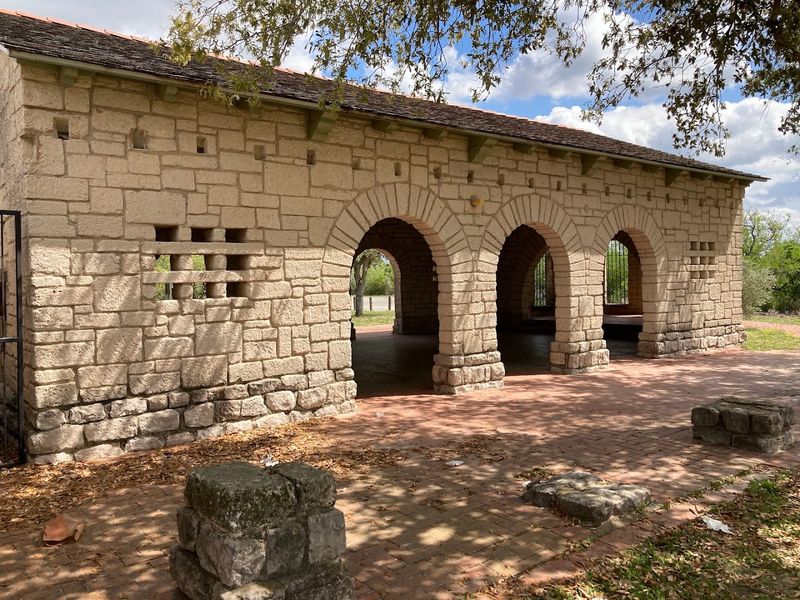
Not every building gets to be made from the land it stands on, but this one does. The cast caliche blocks used to construct the refectory were made from local materials, giving the structure an organic connection to its South Texas surroundings.
Caliche is a sedimentary rock common to this region, and the CCC workers knew exactly how to shape it into something lasting.
The random ashlar pattern they chose is clever. It creates the visual impression of hand-cut limestone, which is why so many visitors assume the building is made from something far more expensive or imported.
The texture catches light differently depending on the time of day, making the walls look almost golden in the late afternoon sun.
What I find most interesting is that this material choice was both practical and creative. Resources were limited during the Great Depression, so using what was already underfoot made perfect sense.
But the workers did not just stack blocks carelessly. They arranged them with real artistry, producing a surface that still looks refined nearly ninety years later.
The walls of this building are essentially a love letter to South Texas geology, written by workers who were proud of what they were building.
The Grand Staircase: Stone Steps That Deliver a Jaw-Dropping Payoff
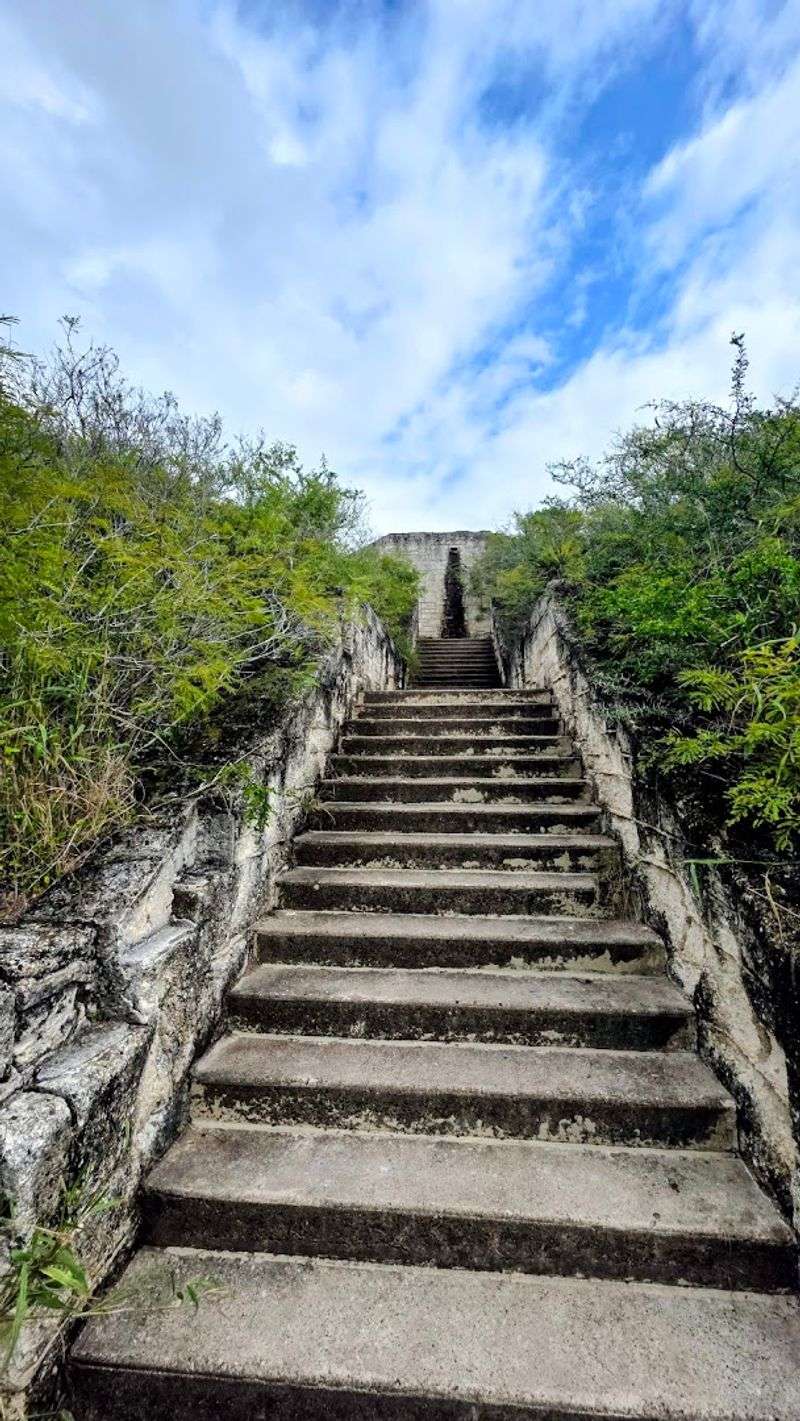
The staircase does not announce itself. You round a corner near the refectory, and suddenly there it is: a wide, sweeping set of cast-stone steps descending toward the lake.
It has the kind of quiet drama that makes you slow your pace without even realizing it.
Each step feels deliberate, like the people who built it wanted you to take your time. As you descend, the view opens up gradually.
First you see treetops, then the rocky shoreline, and then the full expanse of Lake Corpus Christi spreading out in front of you. It is the kind of reveal that rewards patience.
The Grand Staircase connects the refectory’s elevated grounds to the trails that wind along the lake below. It is also just a genuinely beautiful piece of construction, the kind of outdoor stonework that modern parks rarely bother to create anymore.
Families tend to linger here, taking photos and letting kids run their hands along the stone edges. Honestly, even if the view at the bottom were ordinary, the staircase itself would be worth the visit.
The fact that it leads to one of the best lake perspectives in the park makes the whole experience feel almost theatrical in the best possible way.
The Lookout Tower: Where the Lake Opens Up Completely
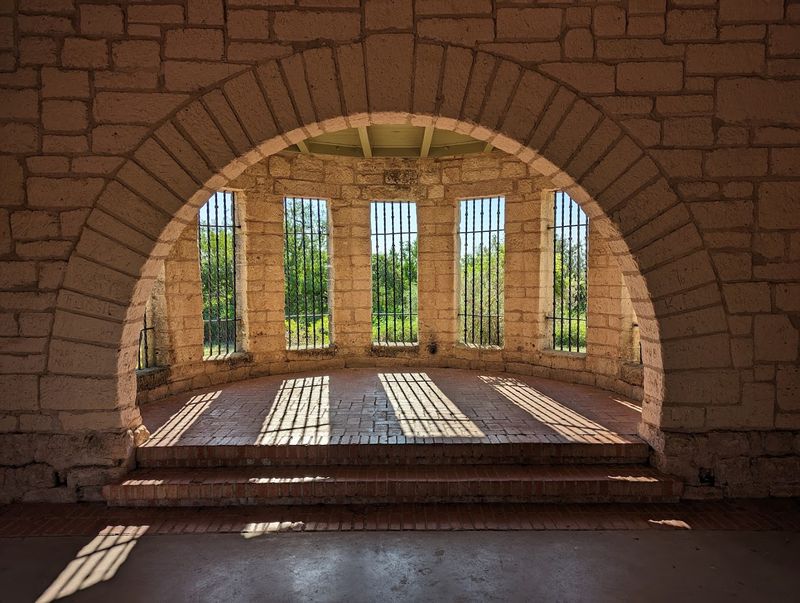
The lookout tower rising above the refectory is the detail that earns the building its nickname. From ground level, it gives the structure a castle-like silhouette against the South Texas sky.
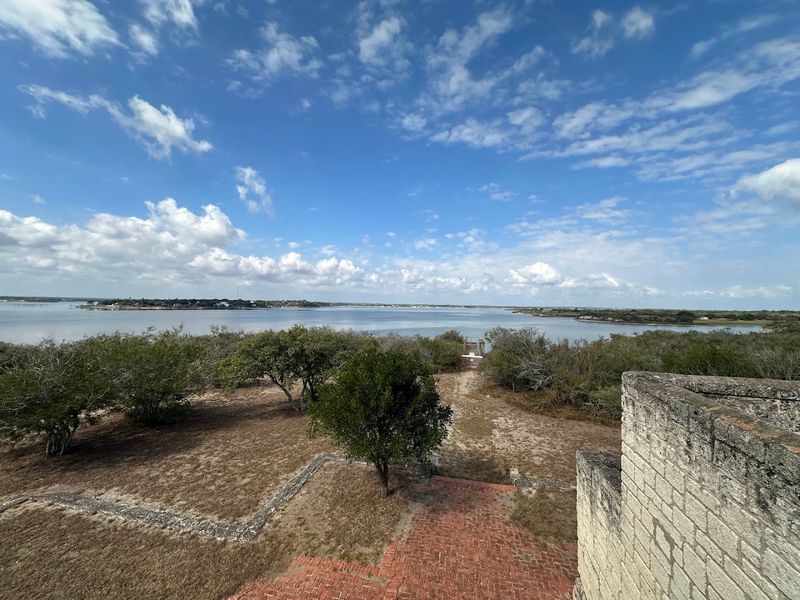
From the top, the payoff is a sweeping view of Lake Corpus Christi that feels genuinely earned once you have climbed to it.
The lake stretches wide in every direction from up there. On a clear day, the water shifts between deep blue and pale green depending on the angle of the light.
The rocky peninsula the park sits on becomes visible below you, and you start to understand the geography of this place in a way that flat ground never quite allows.
I spent longer up there than I expected to. There is something about an elevated perspective that slows everything down.
The wind picks up slightly at that height, and the surrounding brush and mesquite trees rustle in a way that feels almost rhythmic. Visitors often come specifically for the Grand Staircase view, but the tower offers something different: a bird’s-eye sense of how the park, the peninsula, and the lake all fit together.
It is a small climb with a big reward, and it is completely free once you are inside the park.
The Rocky Peninsula: A Landscape That Sets the Whole Scene
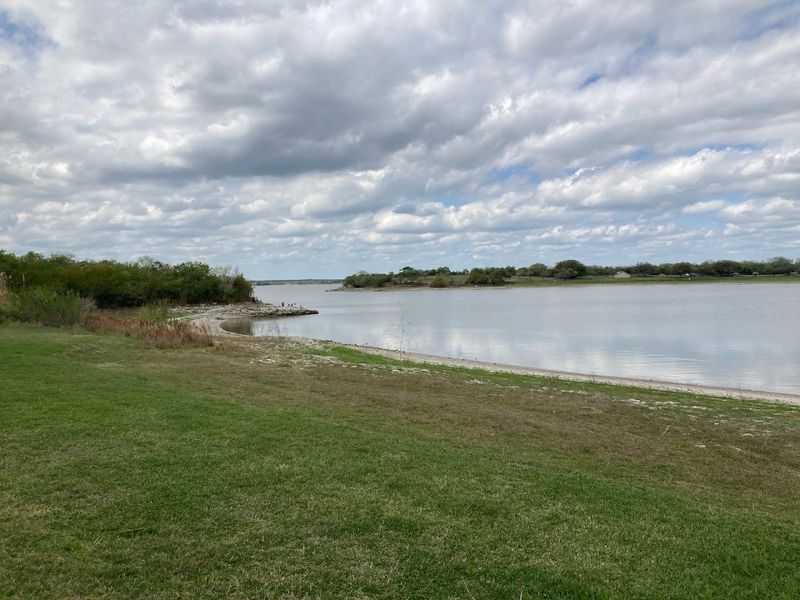
The park’s position on a rocky peninsula is not just a geographical detail. It shapes the entire experience of being here.
Water surrounds you on multiple sides, and the land itself has a rough, unmanicured quality that feels refreshingly honest compared to more polished park settings.
South Texas brush covers much of the peninsula: mesquite, prickly pear cactus, and low scrub that turns surprisingly green after rain. The rocky ground crunches underfoot on the trails, and the shoreline drops away in jagged edges rather than smooth, sandy beaches.
It is the kind of terrain that rewards careful footing and a little curiosity.
What makes the peninsula setting special is the way it frames the lake. No matter which trail you take, the water is never far from view.
You might be walking through dense brush one moment and then break into a clearing with an unobstructed lake panorama the next. That constant interplay between land and water gives the park a dynamic energy that keeps the hike interesting from start to finish.
The peninsula also creates natural wind channels, so even on a warm day, there is usually a breeze moving through. For a park in South Texas, that is a genuinely welcome feature.
Lake Corpus Christi: The 21,000-Acre Backdrop That Steals the Show
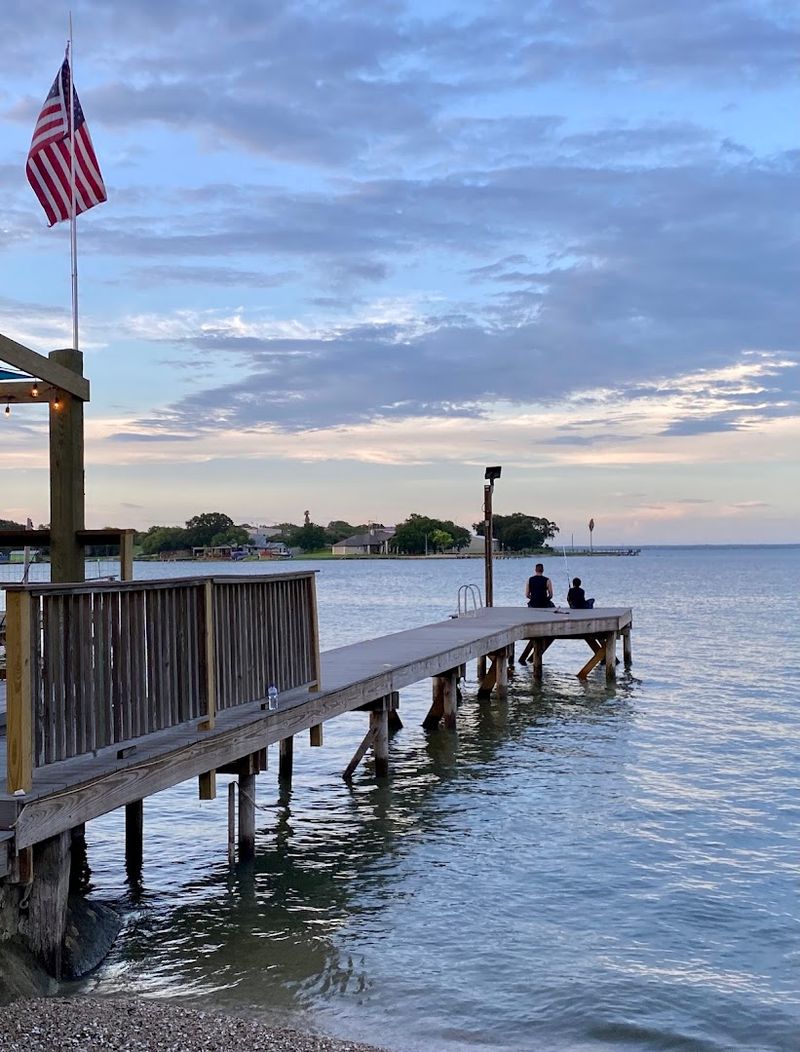
Lake Corpus Christi is not a small pond you walk past. It covers 21,000 acres and is formed by an impoundment of the Nueces River, making it one of the more significant reservoirs in South Texas.
The sheer scale of it becomes clear the moment you reach any elevated point in the park.
Fishing is a major draw here. Largemouth bass, catfish, and white bass are all part of the lake’s ecosystem, and anglers set up along the shoreline and on the water regularly.
Boating and swimming are also popular, and the park has areas set aside specifically for water access.
What strikes me most about the lake is how different it looks depending on the weather and time of day. Early morning light turns the surface into a kind of hammered copper color.
By midday it goes a clear, bright blue. Late afternoon brings out deeper greens near the shore.
The lake is essentially a living canvas, and the park gives you multiple vantage points to appreciate it from. Even if you never touch the water, just being near something that large and that quiet has a noticeably calming effect.
It is the kind of place that makes city noise feel very far away, even when it is not.
The Pavilion, Dance Terrace, and Stage: History You Can Almost Hear
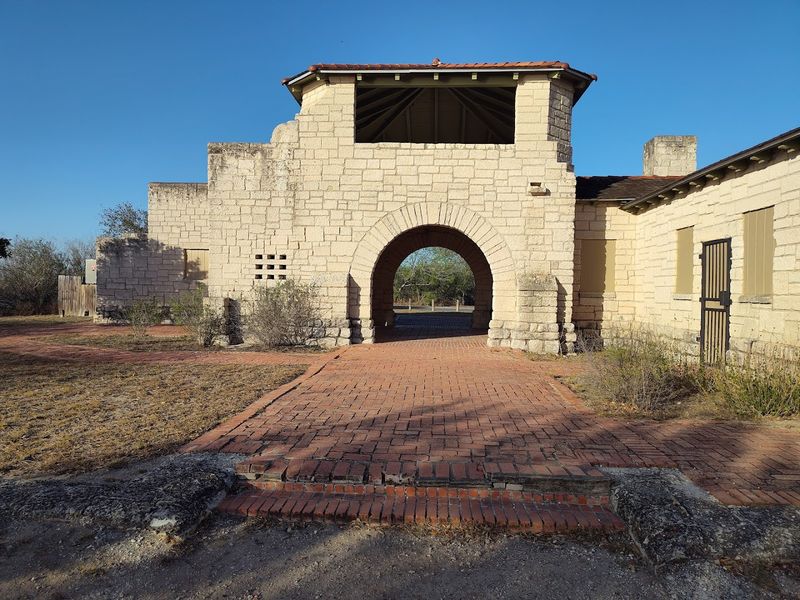
The refectory’s grounds include a pavilion, a dance terrace, and a stage that together paint a vivid picture of what this place used to be.
In the 1930s, when the building was newly finished, these spaces hosted community dances and social events that brought people together during a genuinely difficult time in American history.
The dance terrace still has a particular character to it. The stone surface, the open-air design, and the way the space is oriented toward the lake all suggest that whoever planned it wanted the setting to feel festive.
Even on a quiet weekday, you can almost imagine the sound of music drifting across the water on a summer evening decades ago.
Today, these spaces are available for group events and gatherings, which means the building has not just been preserved as a museum piece. It is still actively used, still hosting people, still serving its original social purpose in a modern context.
That continuity feels meaningful. A lot of historic structures end up behind ropes and glass.
This one still has chairs pulled up to it. Visiting during a calm afternoon when the space is empty gives you a rare chance to just sit with the history of it, quietly and without distraction.
Wildlife and Nature Along the Trails: More Than Just Scenery
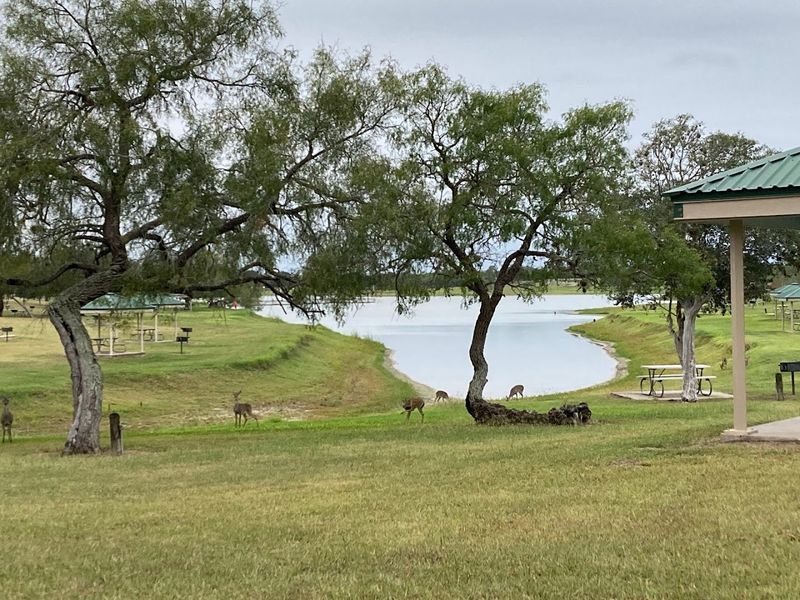
The trails at Lake Corpus Christi State Park are not just corridors between viewpoints. They are genuinely active wildlife corridors, and if you move quietly, the park rewards you for it.
White-tailed deer are common sightings, especially in the early morning and near dusk when they move through the brush with an unhurried confidence.
Birdwatching is excellent here too. The lake draws waterbirds like great blue herons, cormorants, and various egrets that wade the shallows with impressive patience.
Inland, you might spot painted buntings, roadrunners, or the flash of a vermilion flycatcher cutting through the mesquite. South Texas has a surprisingly rich bird list, and this park sits in a productive zone for it.
The trails themselves range from easy lakeside walks to slightly more rugged paths through the brush. None of them are technically demanding, but the terrain keeps things interesting.
Loose rock, root systems, and occasional mud after rain mean you should wear solid shoes rather than sandals. I spotted a large green anole lizard on a trailside rock during my visit, doing that slow push-up display they do when they feel territorial.
Small moments like that are exactly what makes hiking here feel alive rather than just scenic.
Camping at the Park: Sleeping Close to the Castle
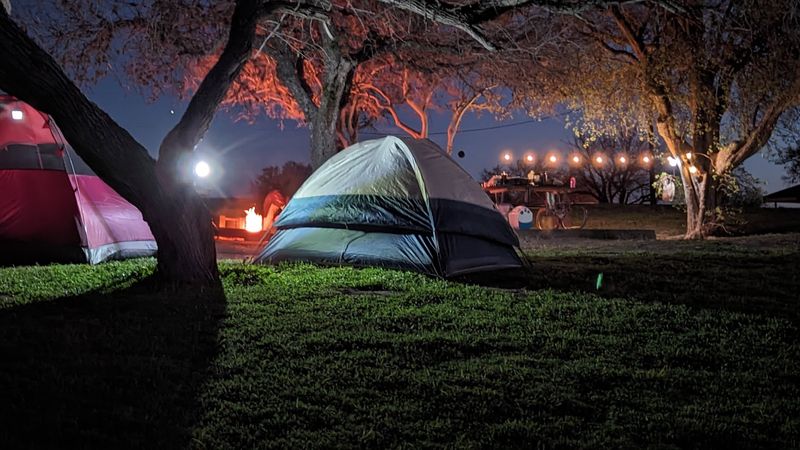
Spending a night at Lake Corpus Christi State Park changes the experience significantly. The park offers camping options that put you close to both the lake and the historic refectory, and waking up to the sound of water and birdsong before the day gets busy is a genuinely different kind of morning.
Campsites come with water and electricity hookups for those bringing RVs, and there are also more basic tent camping spots for visitors who prefer a simpler setup. The park is not enormous, so no campsite feels terribly far from the lake or the main historic area.
That proximity is part of what makes an overnight stay feel worthwhile rather than just convenient.
Evenings at the park have their own rhythm. The light on the lake during sunset shifts through amber and pink tones that are hard to photograph well but easy to remember.
Once it gets dark, the sky over South Texas opens up considerably, especially on nights without a full moon. The park sits far enough from major urban centers that light pollution is noticeably reduced.
Stargazing from near the dance terrace, with the old stone castle silhouetted nearby, is the kind of experience that sounds almost too picturesque until you are actually there doing it.
Planning Your Visit: What to Know Before You Go
Lake Corpus Christi State Park is located at 23194 Park Rd 25, Mathis, TX 78368, roughly 35 miles northwest of Corpus Christi. The drive in takes you through classic South Texas ranchland, which is part of the experience.
The park entrance is clearly marked and easy to find once you are on Park Road 25.
The park is open year-round, though spring and fall tend to offer the most comfortable temperatures for hiking and outdoor exploration. Summer visits are absolutely doable, but South Texas heat is real, so early morning starts are strongly recommended.
Bringing more water than you think you need is always a good idea in this climate.
The Texas State Parks Pass is accepted here and provides good value if you plan to visit multiple parks during the year. Reservations for campsites can be made through the Texas Parks and Wildlife website, and booking ahead is smart for holiday weekends when the park sees higher traffic.
Day visitors can simply pay at the entrance. The refectory and its grounds are accessible to all park visitors, and the Grand Staircase is an easy walk from the parking area.
Give yourself at least half a day to really appreciate everything the park offers.
Address: 23194 Park Road 25, Mathis, Texas
