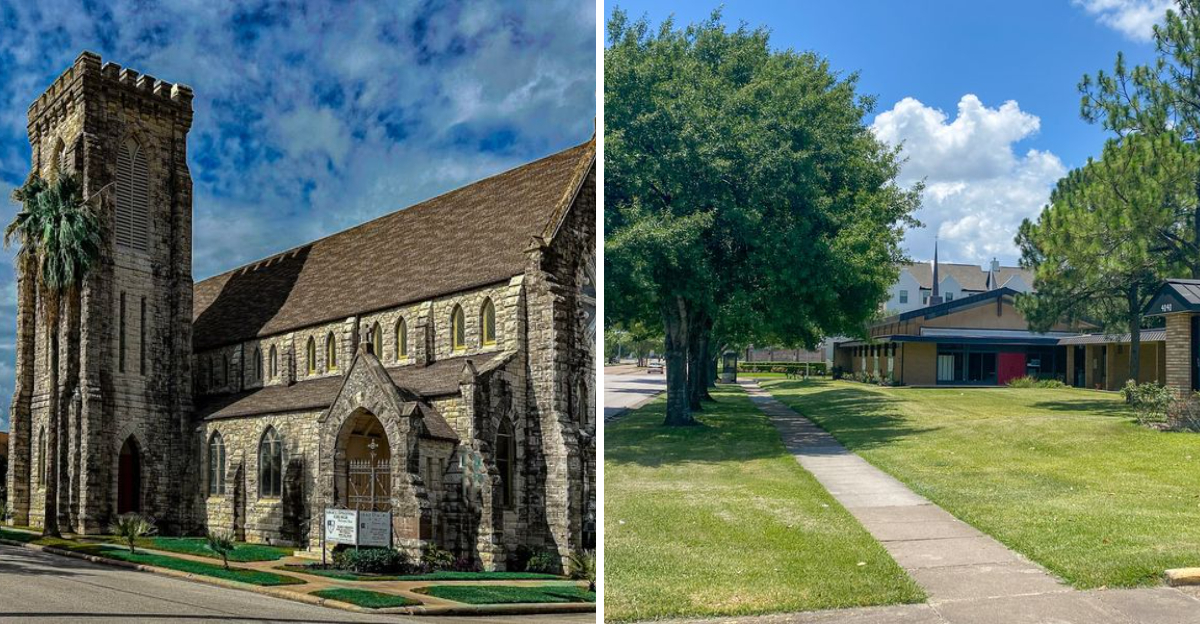
Towering oak trees and coastal breezes give this small chapel a peaceful presence the moment you see it. The historic building sits quietly beneath wide branches that create a natural canopy over the grounds.
Texas has many beautiful churches, but settings like this stand out for the way nature and architecture come together. In Texas, places like this often become quiet landmarks where visitors pause to admire both the scenery and the sense of history.
The calm atmosphere makes it feel like a hidden retreat tucked into the landscape.
The Massive Oak Trees That Make This Place Unforgettable
The oak trees at Grace Episcopal Church are not just a backdrop. They are a full experience on their own.
These are not young, politely trimmed trees. These are massive, gnarled, ancient live oaks with branches that twist outward in every direction, creating a canopy that feels almost protective over the church grounds.
On a warm Galveston afternoon, the shade those trees provide is genuinely welcome. The coastal humidity can be intense, and stepping under those broad branches feels like the temperature drops a few degrees immediately.
The light filters through in soft, dappled patterns that make the whole property feel cinematic.
Live oaks are one of the most iconic features of the Texas Gulf Coast landscape, and seeing them at this scale, right next to a 19th-century limestone church, creates a combination that is hard to find anywhere else.
The grounds cover about one acre, and the trees use every inch of that space to their full dramatic advantage.
Photographers, architecture lovers, and casual visitors all tend to stop and look up at these trees at some point. It is one of those places that earns its reputation just by existing.
A Gothic Revival Gem on the Texas Gulf Coast
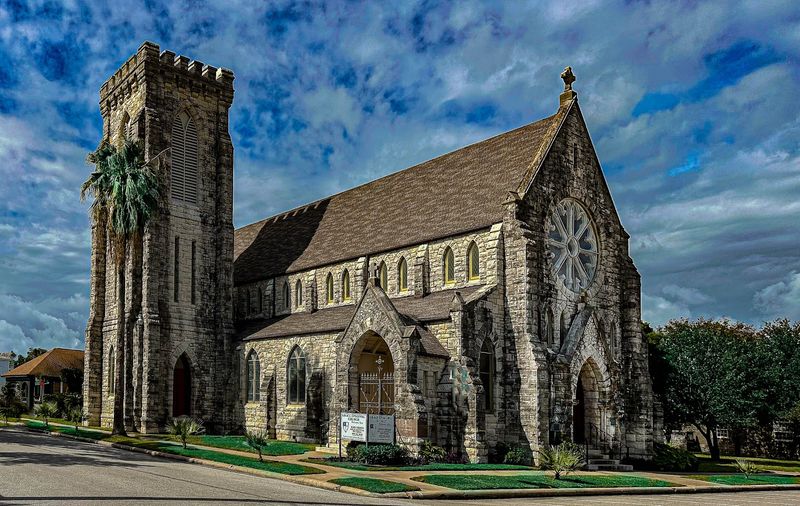
Few buildings in Galveston carry the kind of architectural presence that Grace Episcopal Church does. Designed by Nicholas J.
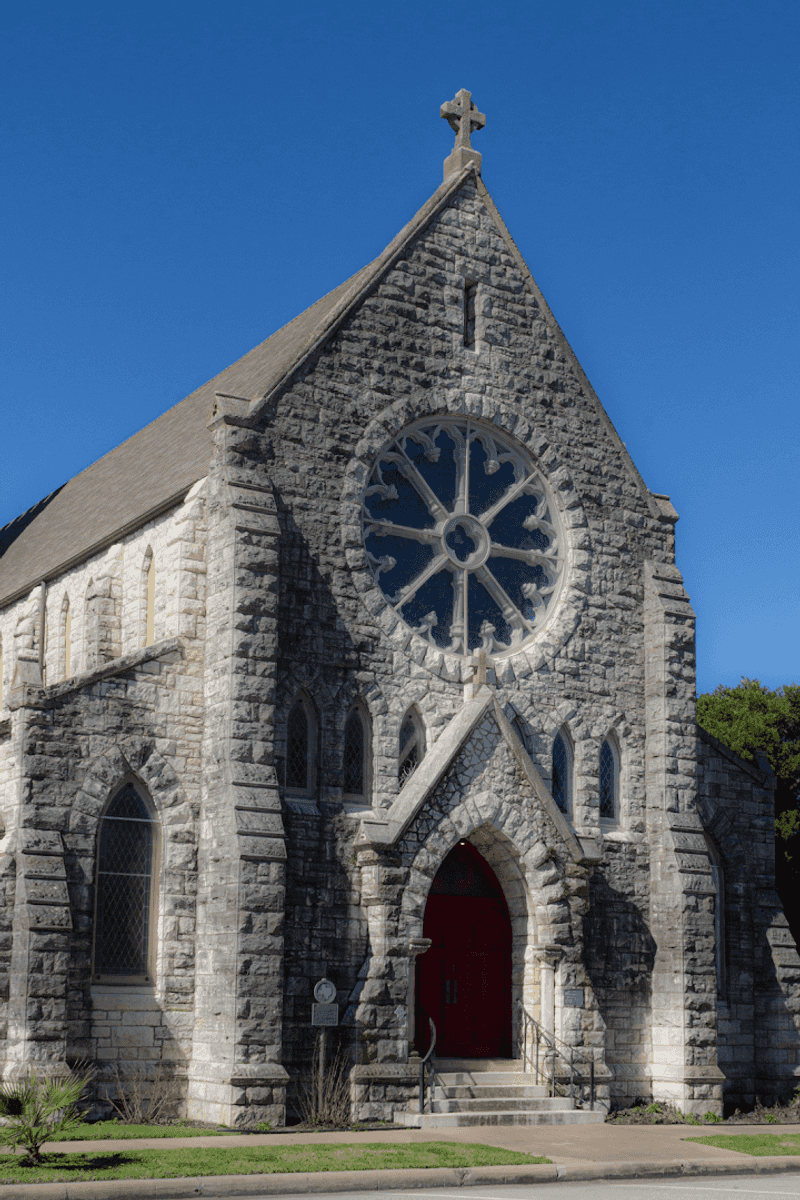
Clayton, one of the most celebrated architects in 19th-century Texas, the church was consecrated in 1895 and has stood as a landmark ever since. Clayton had a gift for Gothic Revival design, and this building shows exactly why he was so respected.
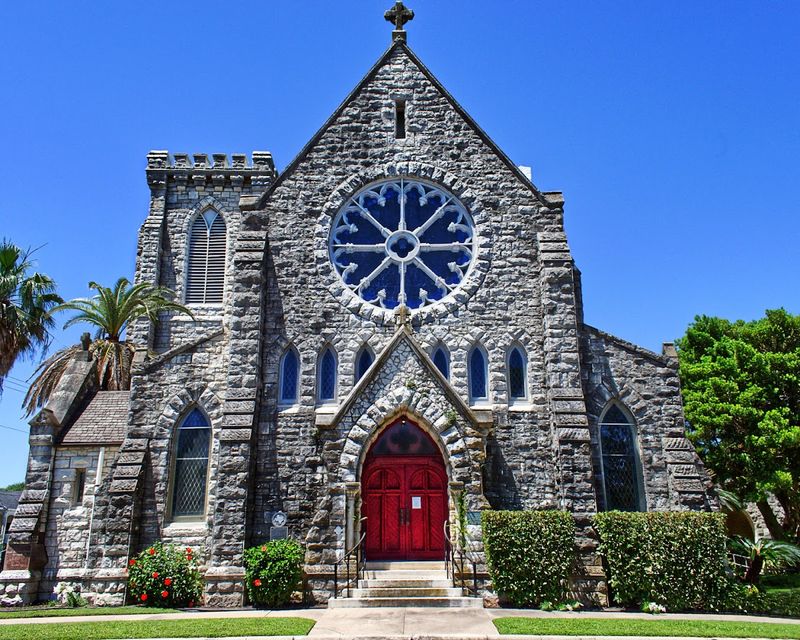
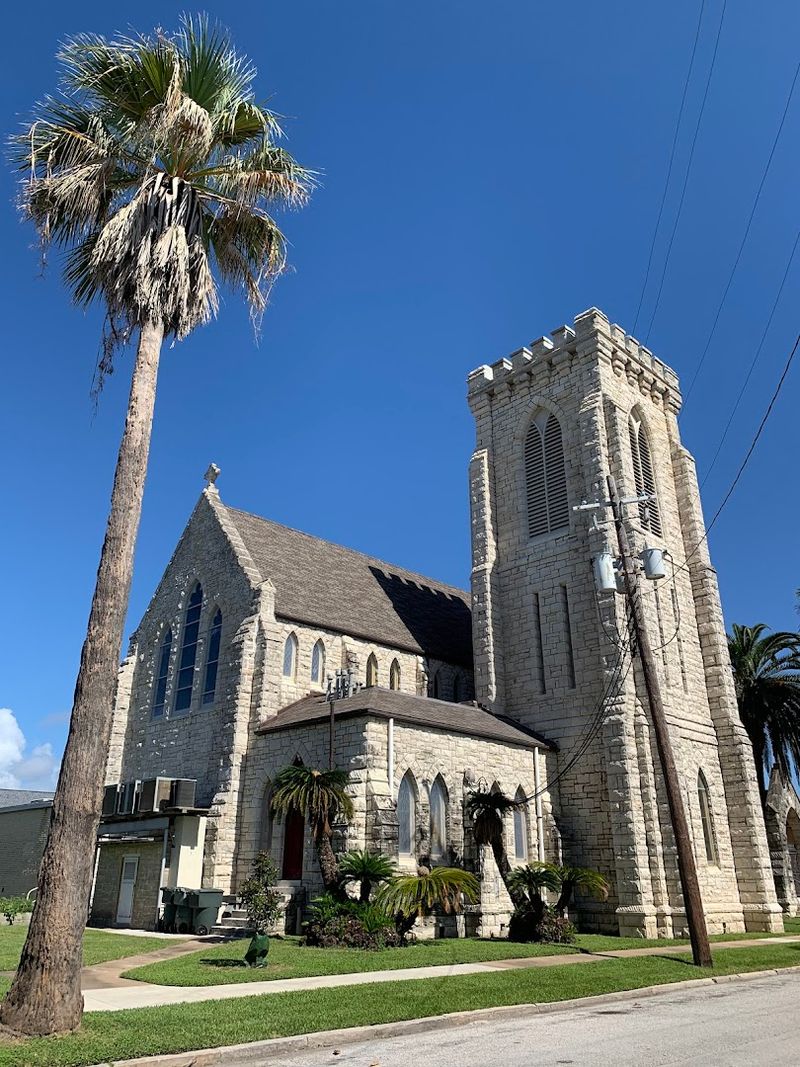
The white limestone exterior catches the light beautifully, especially in the late morning when the sun hits the stone at just the right angle. The pointed arches, the tall narrow windows, and the careful stonework all come together to create something that feels genuinely timeless.
It does not look like a replica or a nod to European Gothic style. It feels like the real thing.
For anyone who appreciates historic architecture, this church is an easy highlight of any Galveston visit. You do not need to be religious or even particularly interested in churches to appreciate what Clayton built here.
The craftsmanship alone is worth the detour. The building sits quietly on its one-acre lot, surrounded by those enormous oaks, looking every bit as impressive today as it must have in the late 1800s.
The 1900 Storm Survivor With a Story to Tell

Galveston’s 1900 Storm is one of the deadliest natural disasters in American history, and Grace Episcopal Church lived through it. The fact that this building is still standing, still serving its congregation, and still looking this good is remarkable when you understand what that storm did to the island.
Entire neighborhoods were erased. Thousands of lives were lost.
The church’s survival is not just a matter of luck or solid construction, though both certainly helped. It speaks to the resilience of the community that gathered here and refused to let the building or its purpose disappear.
After the storm, Galveston rebuilt, and the church was part of that recovery story.
More than a century later, the church faced another major challenge when Hurricane Ike struck in 2008. Again, Grace Episcopal Church endured.
There is something quietly powerful about visiting a place that has been tested so severely and come through intact. The limestone walls have seen things.
The oak trees have bent in winds most people will never experience. That history is not displayed on a sign or dramatized for visitors.
It just lives in the fabric of the place, and you feel it when you are there.
Nicholas J. Clayton and the Architecture Behind the Beauty
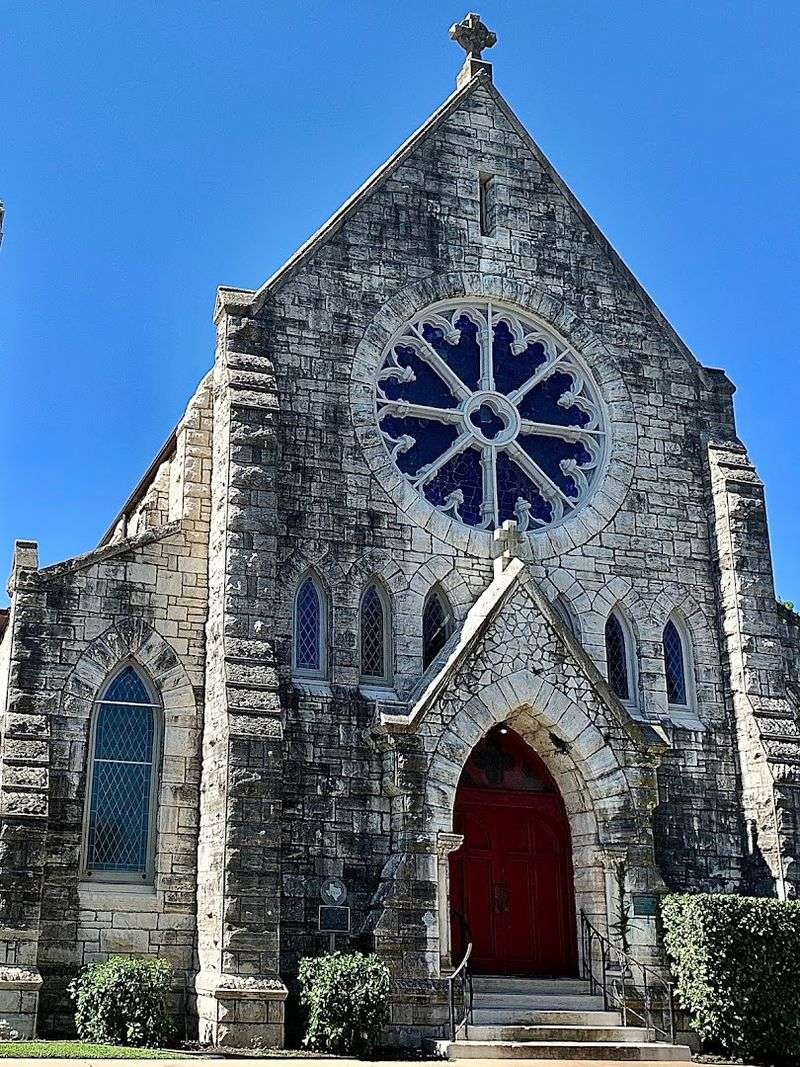
Nicholas J. Clayton is a name that comes up often when exploring Galveston’s historic architecture, and with very good reason.
He designed dozens of significant buildings across the city during the late 19th century, and his work at Grace Episcopal Church is considered among his finest. Clayton had a deep understanding of Gothic Revival principles, and he applied them here with precision and care.
The details are worth paying attention to. The pointed arches over the windows and doorways, the verticality of the overall structure, the way the limestone seems to glow rather than just sit there, all of these are hallmarks of Clayton’s approach.
He was not simply copying European models. He was interpreting them for the Texas Gulf Coast climate and context.
Clayton’s reputation has only grown over time, and Galveston has done a good job of honoring his legacy through preservation efforts. Grace Episcopal Church stands as one of the best examples of what made him such an important figure in Texas architectural history.
If you are visiting with any interest in historic buildings, spending time studying the exterior of this church is genuinely rewarding. The craftsmanship rewards a slow, careful look rather than a quick glance.
The Hand-Carved Altar and Reredos Inside
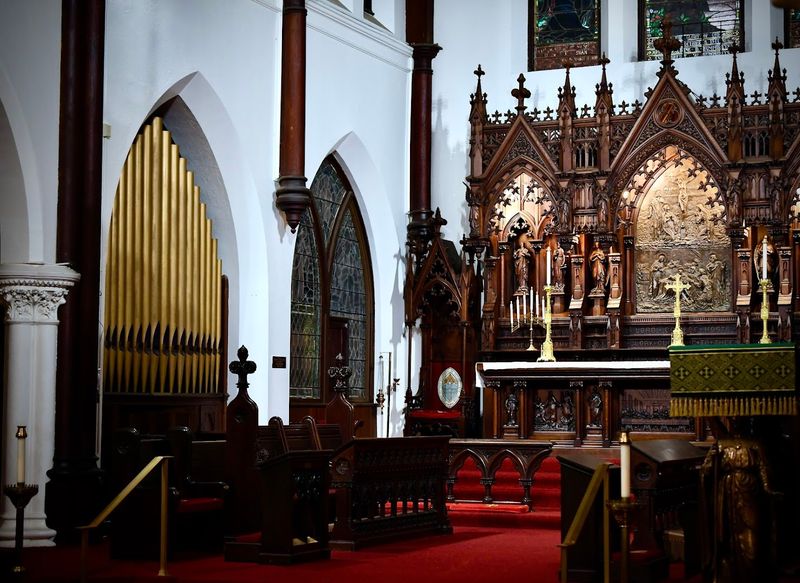
The exterior of Grace Episcopal Church is stunning, but the interior holds its own surprises. The hand-carved altar and reredos are among the most striking features inside the building, and they were gifts from Mrs. Mollie Rosenberg, a name connected to Galveston’s philanthropic history.
The craftsmanship on display here is the kind that takes years to complete and even longer to fully appreciate.
Reredos, for those unfamiliar, refers to the decorative screen or panel that sits behind the altar in many traditional churches. At Grace Episcopal, the reredos features intricate carved details that complement the Gothic Revival style of the building itself.
The interior and exterior feel like a unified vision rather than two separate design decisions.
Visiting the inside of the church, when it is open to visitors, adds a whole new layer to the experience. The light that comes through the windows creates a particular atmosphere that is hard to describe but easy to feel.
The carved woodwork has a warmth that contrasts beautifully with the cool limestone of the walls. It is one of those interiors that invites you to slow down, look carefully, and appreciate the level of intention that went into every surface.
Worship Life and Weekly Services at Grace
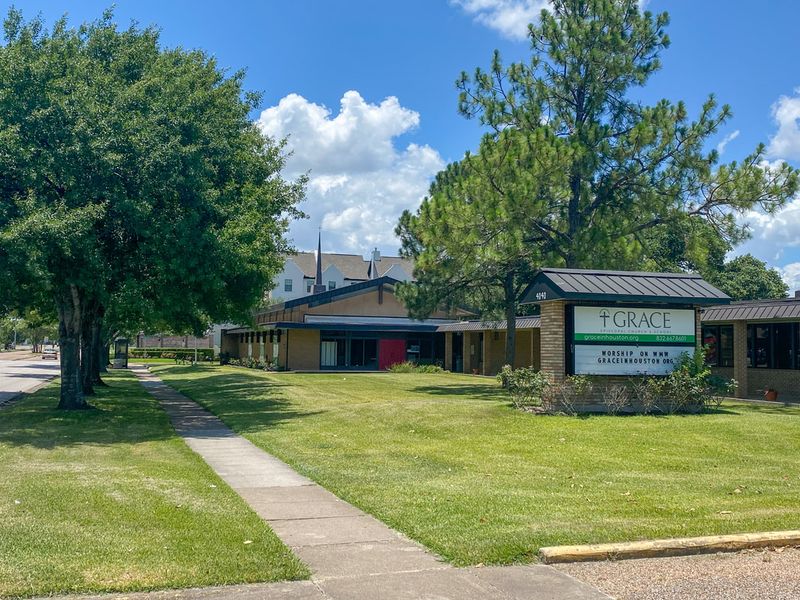
Grace Episcopal Church is not a museum. It is an active, living congregation that holds regular services throughout the week, and that energy is part of what makes a visit here feel different from touring a preserved historic building.
Sunday services are held at 8:00 a.m. and 10:30 a.m., giving visitors and locals alike options that fit different schedules.
Morning Prayer takes place on Tuesdays and Thursdays at 8:30 a.m., and a Healing Eucharist is offered on Tuesdays at 5:30 p.m. The variety of services reflects a congregation that takes its spiritual life seriously while remaining welcoming to people from different backgrounds and traditions.
The Episcopal tradition has always had a reputation for being inclusive, and Grace seems to carry that spirit genuinely.
For travelers who want to experience the church not just as a landmark but as a place of community, attending a service is a meaningful option.
The acoustics inside the limestone building are remarkable, and hearing music or spoken word in that space adds a dimension that photographs simply cannot capture.
Even if organized religion is not your usual scene, there is something grounding about sitting in a space that has held community gatherings for well over a century.
A Venue With Deep Roots in Galveston’s Community
Beyond its role as a house of worship, Grace Episcopal Church has long been woven into the fabric of Galveston’s community life. The church has hosted weddings, memorials, and community gatherings for generations of island families.
That kind of long-term community presence gives a place a particular texture that newer buildings simply do not have.
The grounds themselves are a big part of the appeal for events. One acre of land shaded by those enormous oaks creates a setting that feels both grand and intimate at the same time.
For weddings especially, the combination of the historic limestone building and the natural canopy overhead is genuinely hard to match anywhere else on the island.
Galveston has a strong sense of local identity, and institutions like Grace Episcopal Church are part of why that identity holds together over time.
The church has seen the island change dramatically, from its 19th-century peak as a major port city to the storm devastation and subsequent rebuilding, through decades of tourism growth and neighborhood evolution.
Through all of it, the church has remained a consistent presence. That kind of staying power is not just about bricks and mortar.
It is about the people who keep showing up.
Why Grace Episcopal Church Deserves a Spot on Your Galveston Visit
Galveston has plenty of reasons to visit, from the beach and the Seawall to the Strand Historic District and the amazing Victorian architecture scattered across the island. Grace Episcopal Church belongs on that list, and it often gets overlooked by visitors who stick to the more obvious highlights.
That is a shame, because this place offers something genuinely distinctive.
The combination of Gothic Revival architecture, historic significance, extraordinary trees, and active community life makes Grace Episcopal Church more than just a pretty building.
It is a place that tells a real story about Galveston, about resilience, craftsmanship, faith, and the kind of deep community roots that outlast storms and decades.
Spending even thirty minutes here, walking the grounds, looking up at the oaks, studying the limestone facade, and maybe stepping inside if the timing works, leaves an impression that lingers.
Galveston rewards visitors who look a little past the obvious, and Grace Episcopal Church is exactly the kind of discovery that makes a trip feel like more than just a beach weekend.
It is the kind of place you find yourself telling people about when you get home, which is usually the best sign that a visit was worth it.
Finding the Church: Location and Easy Access
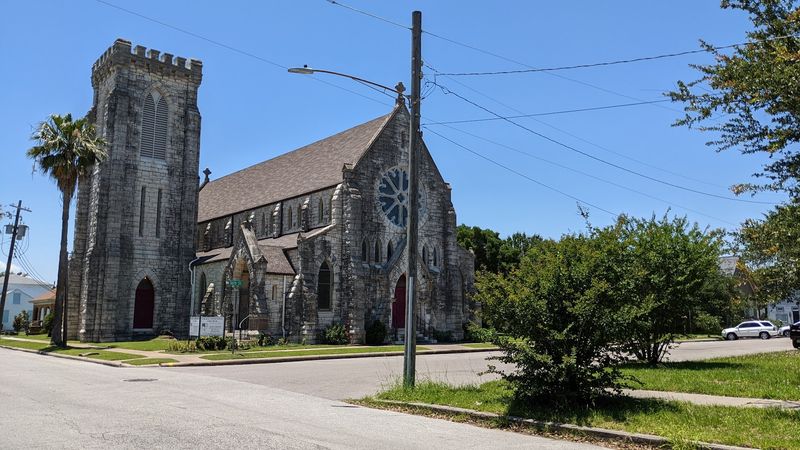
Getting to Grace Episcopal Church is straightforward, which is part of what makes it such an easy addition to a Galveston itinerary. The church sits at 1115 36th Street, just two blocks south of Broadway, between Avenues K and L.
Broadway is one of Galveston’s main corridors, so navigating from there requires almost no effort at all.
The neighborhood around the church has its own character worth noticing. Galveston’s historic residential streets have a quiet, unhurried feel that is quite different from the busier tourist areas near the Seawall.
Arriving by car is easy, and parking in the surrounding blocks is generally manageable. The church grounds are visible from the street, and the oak trees announce the location before you even see the building clearly.
For visitors exploring Galveston on foot or by bicycle, 36th Street is a pleasant route. The relatively flat terrain of the island makes cycling accessible, and the neighborhood’s tree-lined streets make the journey enjoyable.
Whether you are coming from the historic Strand District or heading inland from the beach, Grace Episcopal Church fits naturally into a broader exploration of what makes Galveston such a layered and interesting destination to spend time in.
Dear Reader: This page may contain affiliate links which may earn a commission if you click through and make a purchase. Our independent journalism is not influenced by any advertiser or commercial initiative unless it is clearly marked as sponsored content. As travel products change, please be sure to reconfirm all details and stay up to date with current events to ensure a safe and successful trip.
