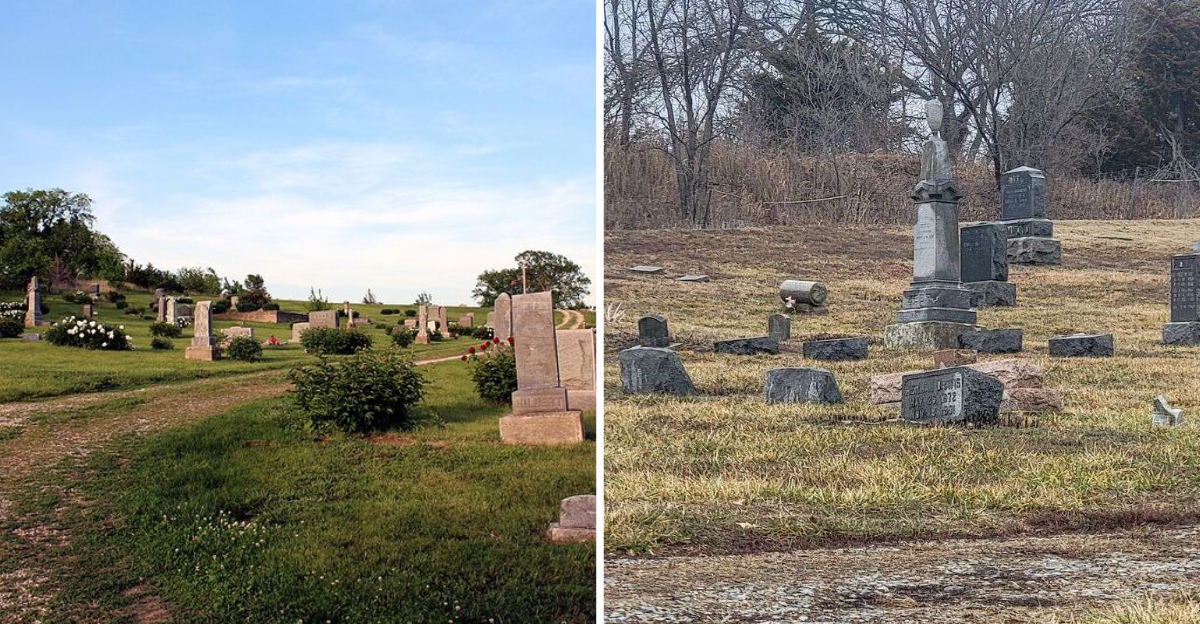
There is a small patch of Kansas land that sits quietly between cornfields and gravel roads, looking like nothing more than an old forgotten graveyard. But this cemetery carries a reputation that stretches far beyond its crumbling headstones. Legends say this ground is so unholy that a pope once refused to fly over it.
The claim that stuck the hardest is that this is one of only seven gateways to Hell on Earth. People whisper about stone staircases descending into darkness, the Devil appearing on Halloween night, and a witch buried beneath a grave marked Wittich. I had heard the stories for years before I finally made the drive out there, half curious and half skeptical.
What I found was something more layered and strange than any ghost story could capture. The place feels heavy even on a bright afternoon.
No matter you believe the legends or not, this cemetery has a pull that is impossible to ignore.
A Town That Almost Disappeared From the Map
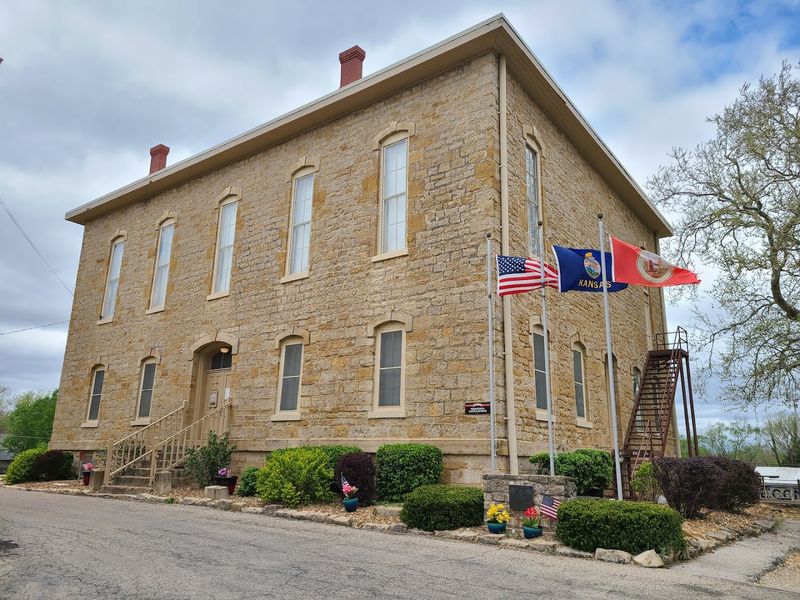
Most people have never heard of Stull, and honestly, that makes sense. The town is barely a dot on a Kansas map, sitting quietly in Kanwaka Township in Douglas County, with nothing much to mark it except a few old structures and a whole lot of open land.
It was originally called Deer Creek when Pennsylvania Dutch settlers first arrived in the mid-1800s, drawn by the promise of fertile farmland and a fresh start far from the crowded East Coast.
The name Stull came later, and the community that grew around the area was modest by any measure. A post office, a church, a cemetery, and a handful of families made up the whole of it.
Over time, the town shrank as people moved on and the years passed.
What is remarkable is that Stull probably would have faded into complete obscurity if not for a single newspaper article published in November 1974 in The University Daily Kansan, the student paper at the University of Kansas. That piece lit a slow fuse under the town’s quiet reputation.
Suddenly, a forgotten rural settlement was being discussed in dorm rooms and late-night conversations across the state.
The legends attached themselves fast and grew wild. Today, Stull exists in a strange in-between space, part real historical community, part folklore phenomenon.
The people who actually live nearby often find the whole thing frustrating, which is completely understandable given what the attention has brought with it.
The Old Stone Church That Started It All
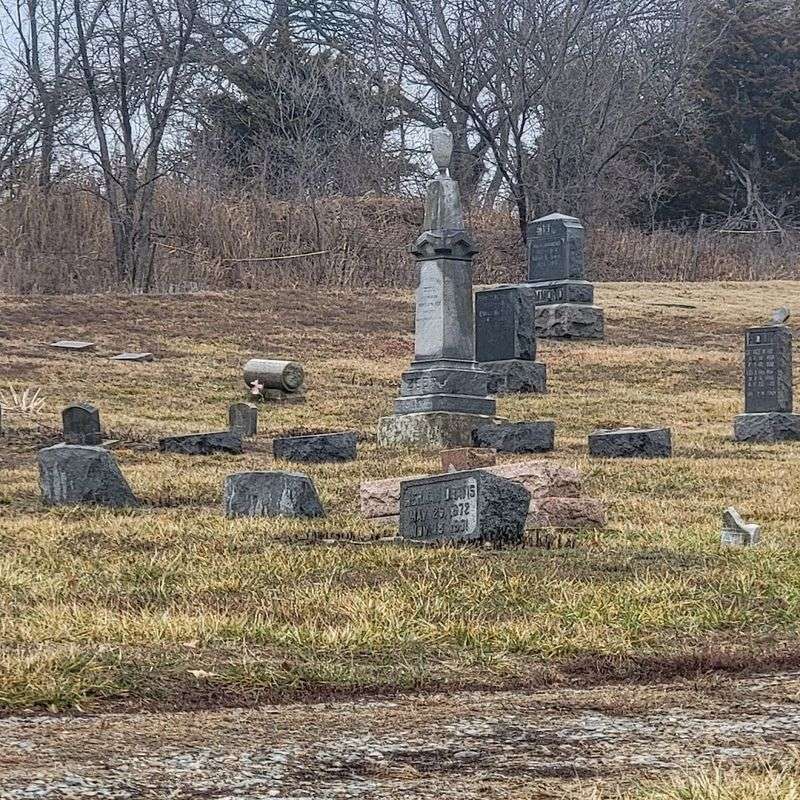
The centerpiece of nearly every Stull legend was a crumbling stone church that stood inside or beside the cemetery for well over a century. The Evangelical Emmanuel Church was organized in 1859, and a stone building was constructed in 1867, followed by the cemetery the following year.
For a long time, it was just a place of worship for a small rural community doing its best to build something lasting.
But as the legends grew, the old church became the focus of some seriously dark stories. People whispered about stone staircases inside the ruins that supposedly descended straight into Hell.
Tales of Satanic rituals and pagan gatherings spread through college campuses and beyond, fueled by imagination and the building’s increasingly deteriorated appearance.
The reality is that the church fell into ruin simply because the congregation dwindled and upkeep became impossible. Abandoned buildings in rural areas rarely survive decades of weather and neglect.
What was left by the late twentieth century was a roofless stone shell that looked genuinely eerie, especially at night.
In March 2002, the old church was demolished. The landowner arranged the teardown due to safety concerns and the relentless vandalism that had plagued the site for years.
Thrill-seekers had been breaking in, stealing pieces of the structure, and causing real damage. The demolition was meant to end the chaos, though the legends, of course, lived on without the building to anchor them.
Seven Gateways and a Very Stubborn Legend
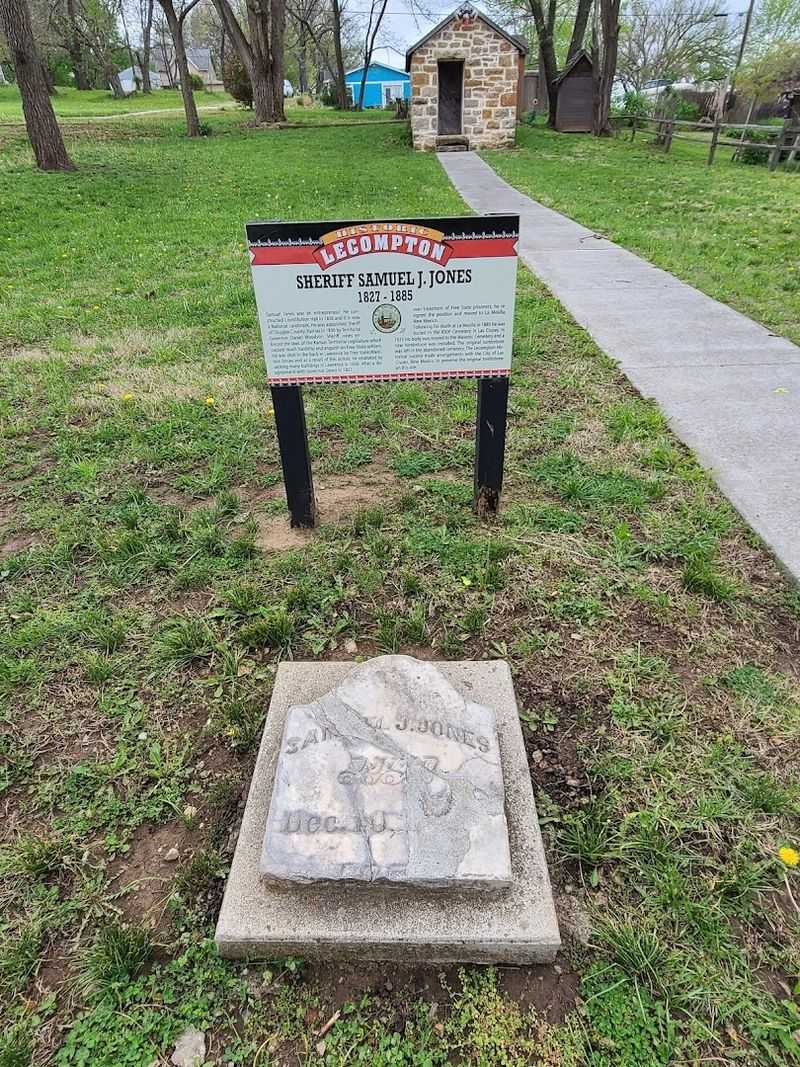
The claim that put Stull Cemetery on the paranormal map is a bold one. According to the legend, Stull is one of only seven gateways to Hell on Earth, sometimes called a Hellmouth.
The idea sounds like something out of a horror novel, and in many ways it is, because the origin of this specific claim is murky at best.
What made it stick was the 1974 University Daily Kansan article, which presented local lore in a way that caught student imaginations at exactly the right moment. The story spread through word of mouth, then through early internet forums, and eventually into books and television segments about haunted places across America.
Each retelling added new details and smoothed out the inconsistencies.
The most dramatic version of the legend says the Devil himself appears at Stull twice a year, on the Spring Equinox and on Halloween, to visit the graves of his child and a witch he once loved. A gravestone bearing the name Wittich is often pointed to as the resting place of that witch, though there is no historical evidence to support any supernatural connection to the name.
Local historians and residents have pushed back on these stories for decades. The legends are frustrating to people who see the cemetery as a real burial ground for real families.
But folklore rarely cares much for corrections, and the gateway to Hell story has proven remarkably resistant to facts, common sense, and time.
The Pope, the Plane, and the Unholy Ground Rumor
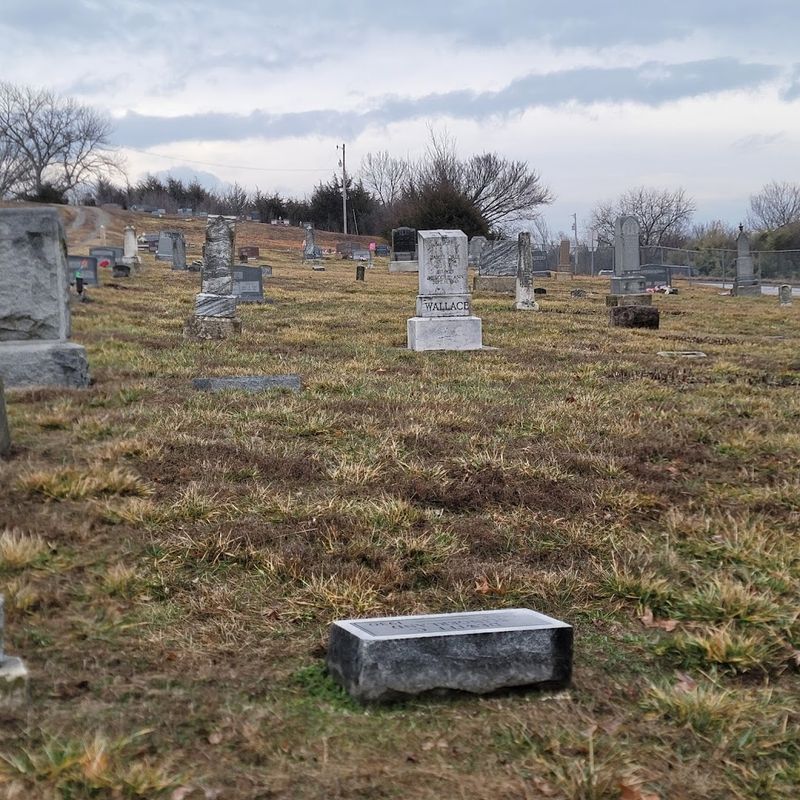
Of all the stories attached to Stull Cemetery, the one involving Pope John Paul II is probably the most outrageous, and somehow, it is also one of the most repeated. The rumor goes like this: at some point in the 1990s, the Pope was traveling through the region by private plane and supposedly ordered the pilot to reroute the flight path specifically to avoid flying over Stull, because he did not want to pass over what he considered unholy ground.
It is a striking image, a head of state and spiritual leader of over a billion Catholics going out of his way to avoid a tiny Kansas cemetery. The story has a cinematic quality that makes it easy to repeat at parties or around a campfire.
That quality is probably why it spread so effectively.
Academics, local historians, and journalists who have looked into the claim consistently find zero evidence that it ever happened. There are no flight records, no Vatican statements, no credible sources of any kind to support it.
The story appears to have grown organically out of the existing legend ecosystem surrounding Stull, borrowing authority from a famous name to make the supernatural claims feel more legitimate.
Still, the rumor has taken on a life of its own. It gets cited in paranormal blogs, YouTube videos, and ghost tour scripts regularly.
The lack of evidence has done almost nothing to slow it down. That persistence says a lot about how powerfully a good story can outlast the facts.
Halloween Chaos and the Sheriff Who Shows Up Every Year
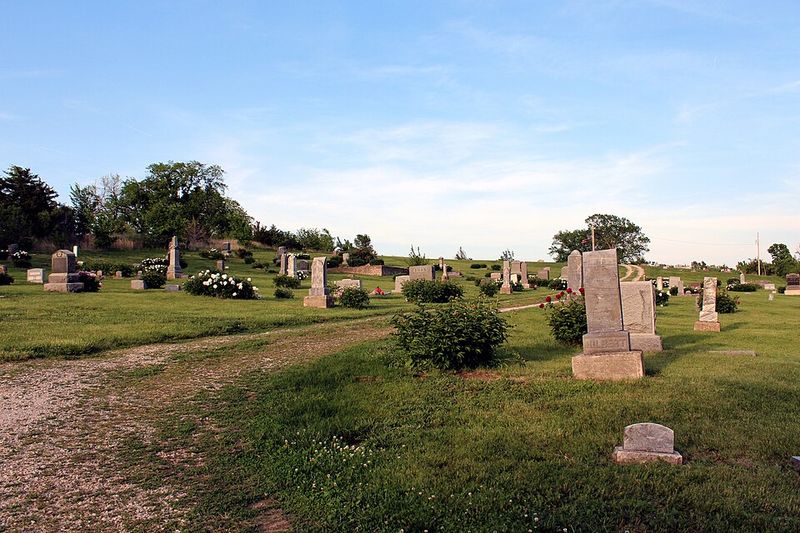
Every Halloween, and to a lesser extent every Spring Equinox, something predictable happens near Stull Cemetery. People show up.
Lots of them. They come from Lawrence, from Kansas City, from college campuses, and sometimes from much farther away, all drawn by the idea that something supernatural might happen at the spot where the Devil supposedly walks the earth twice a year.
What actually happens is considerably less dramatic. The Douglas County Sheriff’s office stations deputies near the cemetery on those nights, ready to issue citations and make arrests for trespassing.
The cemetery is fenced, posted with no trespassing signs, and actively monitored. Getting caught on the property is not a paranormal experience.
It is a legal one, and not a fun kind.
The vandalism that built up over the decades before enforcement tightened was genuinely destructive. Headstones were broken, graffiti was sprayed across old stone surfaces, litter was left scattered through the grounds, and pieces of the old church were carried off as souvenirs.
The families whose ancestors are buried there had to watch their loved ones’ resting place get treated like a theme park attraction.
Local residents have made their feelings clear over the years. The attention is not welcome, and the disruption it causes is real.
The cemetery today is a much more controlled and protected site than it was in its wilder years, but the annual pilgrimage of curious visitors has never fully stopped. Some legends are just too sticky to shake.
What It Actually Feels Like to Visit the Area
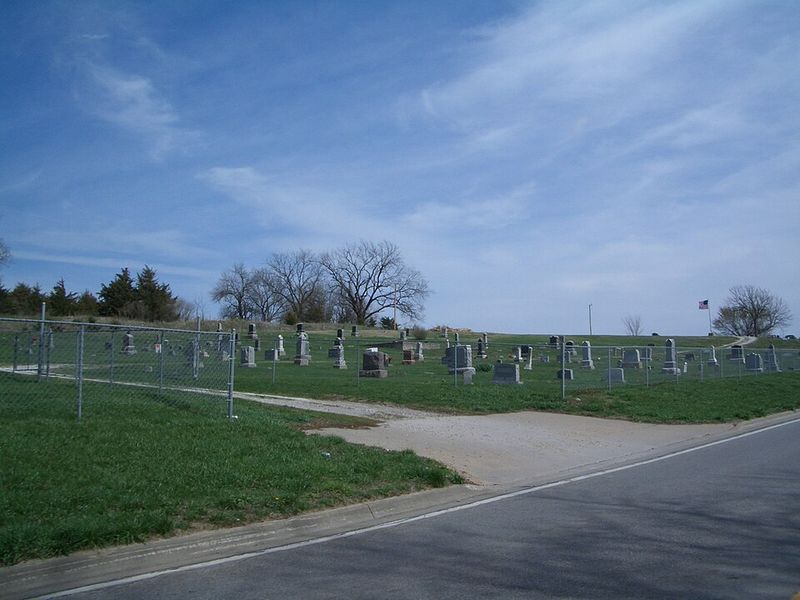
The drive out to the Stull area is genuinely beautiful in a flat, wide-open Kansas kind of way. Gravel roads cut through fields of corn and winter wheat, and the sky feels enormous overhead.
There is a stillness out there that is hard to find closer to town, the kind of quiet where you notice the sound of wind moving through dry stalks.
When you get close to the cemetery, the first thing you notice is the fence. It is not subtle.
The no trespassing signs are clearly posted and mean exactly what they say. You can see some of the older headstones from the road, and a few trees shade the interior of the grounds.
It looks like many small rural Kansas cemeteries, modest and old and cared for in a basic way.
What makes the experience strange is knowing the weight of story that has been layered onto such a quiet place. There is nothing visibly menacing about it on a Tuesday afternoon.
The air smells like dirt and grass. Crows sometimes sit in the nearby trees.
It feels less like a gateway to another dimension and more like a place where people were buried a long time ago, which is exactly what it is.
The real value of visiting the area is the landscape itself, and the reflection it invites about how legends form and what they say about the people who keep telling them. Stull is a mirror as much as it is a destination.
Address: Kanwaka Township, KS 66050
