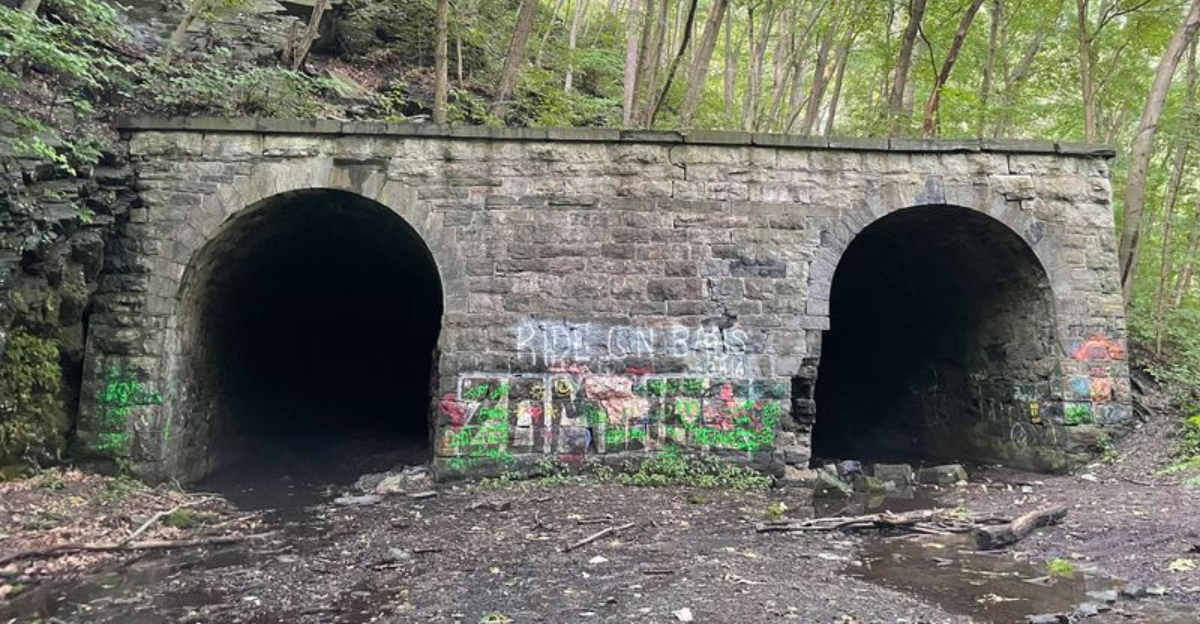
Some places are creepy by reputation. This New Jersey tunnel is creepy because of what is inside, or rather, what has been inside for generations.
Water. Dark, still water that has filled these twin bores for decades.
The tunnels were built in the 1800s and abandoned long ago, but the flooding began even earlier. A creek was diverted when the railroad went in, and it never stopped leaking.
The water in one tunnel is regularly knee-high or deeper. The ceiling collapsed in sections.
The other bore is flooded too. Urban explorers come prepared with boots, flashlights, and a strong sense of adventure.
It is a creepy place for a visit. Bring a friend.
And prepare to get wet.
New Jersey’s Flooded Portal to the Past
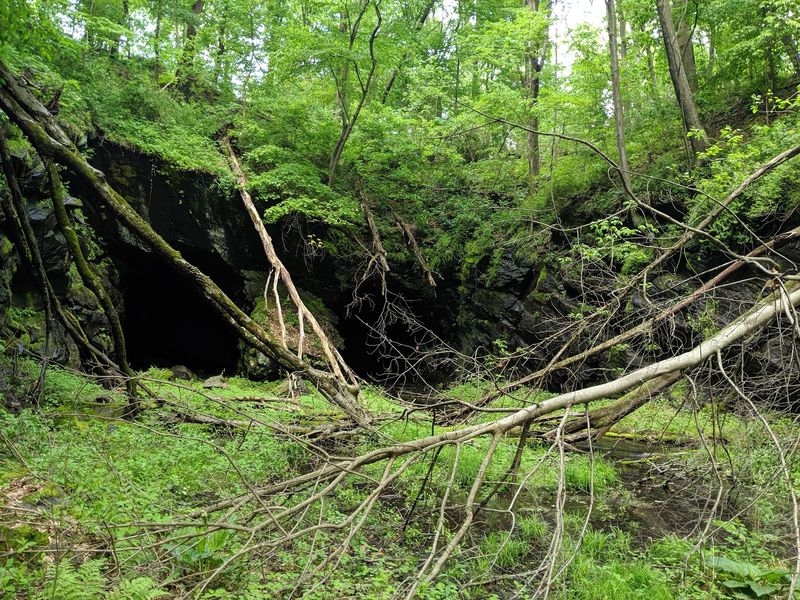
Walking up to the north portal feels like stepping into a photograph nobody bothered to finish. The stonework is still there, still holding its shape, even though trains stopped rolling through generations ago.
Back in 1856, this bore opened as part of the Warren Railroad, a link that helped the Delaware, Lackawanna and Western move coal and iron from Pennsylvania toward eastern markets. A second tunnel joined it by 1869, turning the passage into a double-tracked artery.
Things shifted when the Lackawanna Cut-Off opened in 1911 and pulled traffic away from the older main line. Passenger service faded, the corridor dropped to a single track in 1948, and by April 1970 the tunnels were officially abandoned.
What remains now is honestly more interesting than a working railroad. Water pools at the threshold, ferns crowd the edges, and the arch frames a darkness that swallows sound.
If you go, boots are not optional and a headlamp beats a phone light every single time.
Where History Lies Beneath the Water
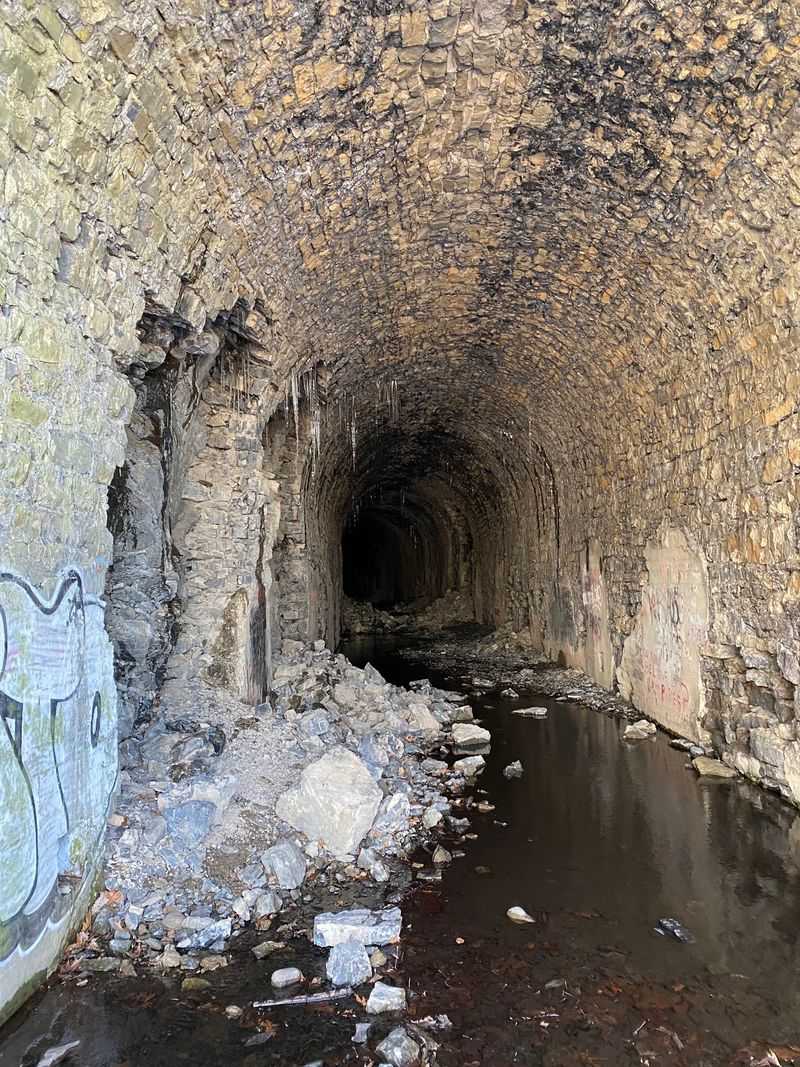
Under all that murky water sits a whole layer of New Jersey railroad history, quietly buried in silt.
This route once carried anthracite coal from Scranton toward Newark and Jersey City, and the Manunka Chunk depot served as a busy junction where travelers changed trains. Hard to picture now, standing in the quiet with water lapping at stone.
Flooding wrote much of the story here. A cloudburst in 1913 tore up the line, and Hurricane Diane did serious damage in 1955, washing out banks and battering the surrounding infrastructure.
Those repeated soakings helped push the corridor toward abandonment, and the water never really left.
Ties, ballast, and old drainage details are still down there somewhere, just hidden under sediment and standing water that hides its own depth remarkably well.
A practical tip: probe ahead with a walking stick instead of trusting your eyes, because the bottom is uneven and softer than it looks. Daylight hours give the entrance a lovely glow for photos.
The Twin Tunnels That Never Stay Dry
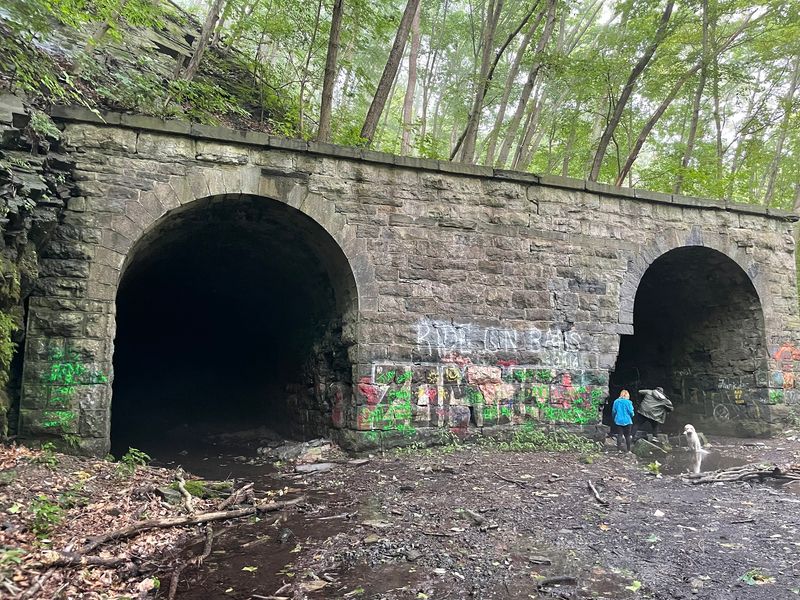
Two portals, side by side, both wet. That symmetry is the first thing that grabs you.
The twin bores run parallel through the hill, and dampness has been part of their personality almost since the beginning. The eastern approach flooded readily during heavy rain, a weakness baked in from the 1856 opening.
Catherine’s Run deserves much of the credit, or blame. The small tributary has long flowed near and sometimes straight through the passage, and storm overflow has caused washouts more than once.
Nobody maintains drainage anymore, so the right-of-way leading in can back up with water too. Some visitors reach the portals and find the approach itself has turned into a shallow pond.
Gear matters here more than courage. Tall rubber boots, a hard hat, and a backup light will get you further than sneakers and optimism ever will.
Honestly, the constant wetness is part of the charm, giving the stone a glossy sheen that photographs beautifully in soft afternoon light.
An 800-Foot Underground Relic
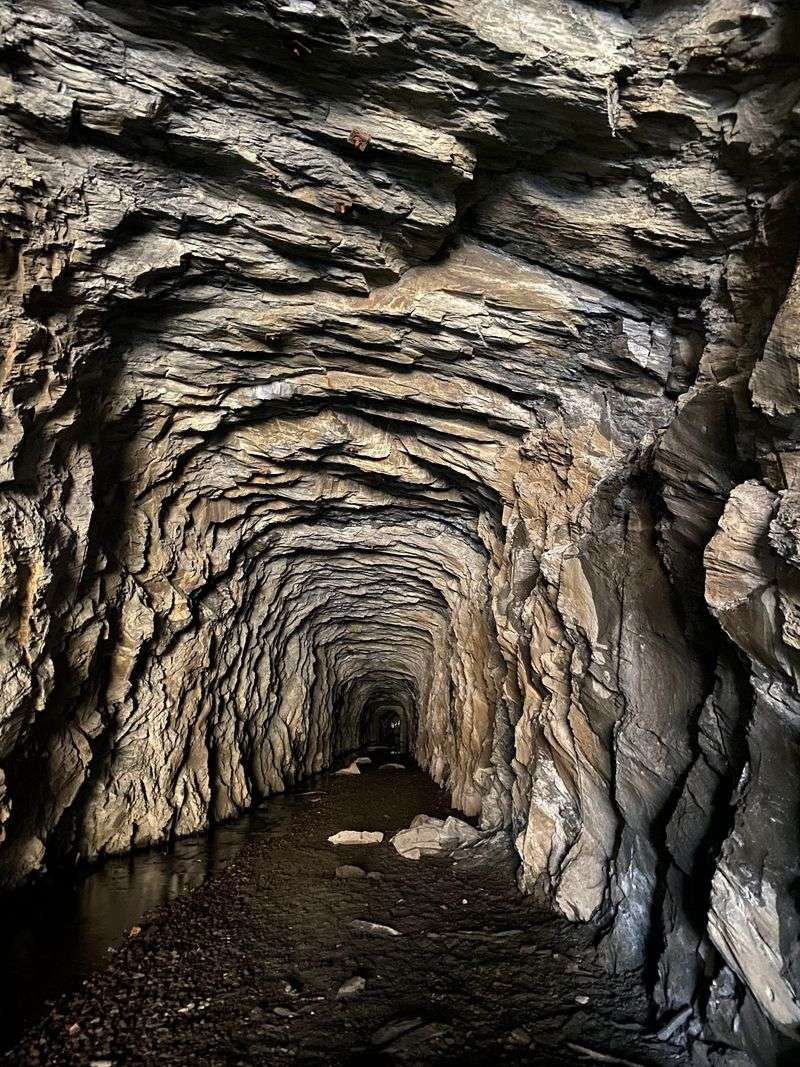
Roughly 800 feet, though nobody agrees exactly. Some accounts push the figure closer to 900 or even 975 feet, which tells you how tricky measuring a flooded ruin can be.
Construction moved fast for the era. Crews cut through soft shale and finished the original single-track bore in about two years, opening it in 1856, then added the second bore by 1869 to double capacity.
Each bore runs roughly 300 yards, and there is a gentle bend inside that does something wonderfully eerie. Walk in a short distance and the daylight behind you slips out of sight, leaving nothing but your beam and the drip.
That same soft shale that sped up digging has not aged gracefully, which explains the crumbling ceilings and loose rock.
Bring more light than feels reasonable. The darkness here is the thick kind, and a single dying flashlight turns an adventure into a very slow walk back.
Weird NJ’s Favorite Water-Filled Wonder
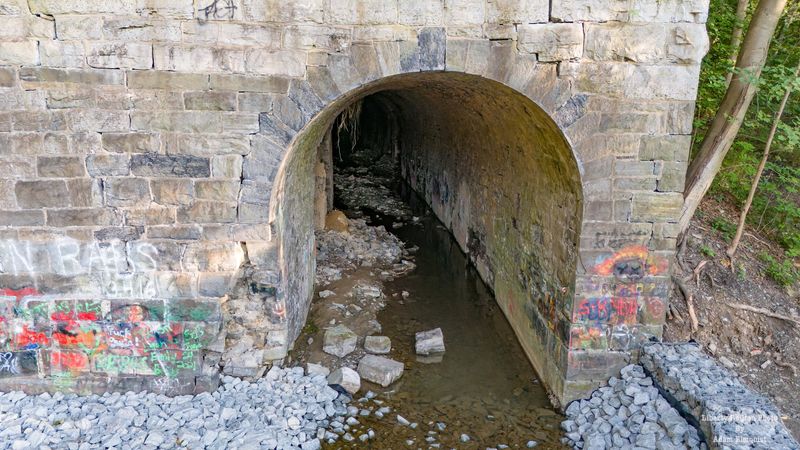
Some places earn their legend, and this one got it printed. The tunnels became a recurring favorite in Weird NJ, the publication devoted to the state’s strangest corners.
Being featured there turned a forgotten rail relic into a pilgrimage stop for people who love abandoned structures. Word spread, photos circulated, and the reputation stuck.
Descriptions tend to land on the same few words: creepy, crumbling, old, wet. All fair.
The dampness, the darkness, and the ever-present water combine into something genuinely atmospheric rather than merely rundown.
Urban explorers arrive with hard hats and headlamps, and even the ones who only reach the threshold usually leave grinning.
What makes it special is honesty. Nothing here has been dressed up for visitors, no railings, no plaques, no lighting.
Just stone, water, and a story that keeps getting retold. Go on a clear day, keep your visit sensible, and let the place do its slightly spooky work on you.
The Tunnel That Refuses to Drain
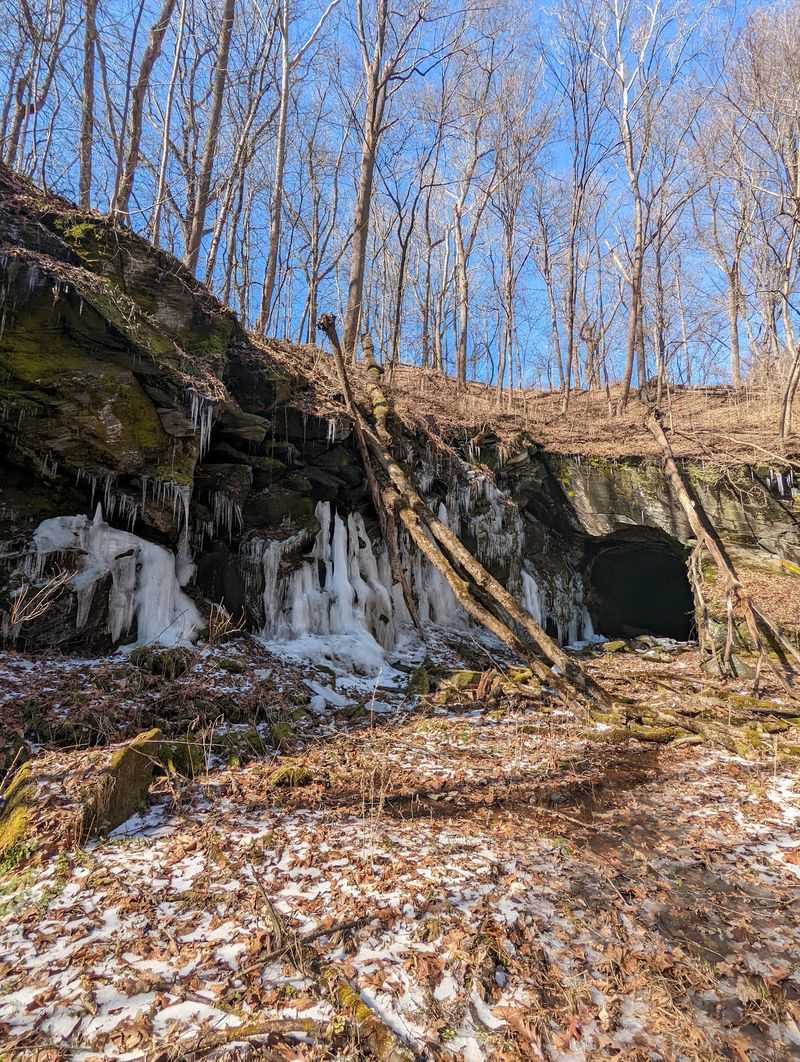
Generations of standing water. That is the headline fact, and it holds up.
The eastern approach has always collected water, and Catherine’s Run now finds its way directly through the bores. Once railroad crews stopped managing flood control after abandonment, nature took over the plumbing entirely.
The result underfoot is not just water but mud, thick and grabby, reaching knee height and in spots closer to waist level. People describe it as almost quicksand-like, which is a fun sentence to read and a less fun one to experience in sneakers.
Because water keeps flowing in, the tunnels never get a chance to dry out between storms.
It is a strange kind of victory for the landscape, reclaiming something built to cut straight through it.
Practical advice: waders beat boots, go with a companion, and set a turnaround time before you start. Plenty of visitors stop where the mud deepens and still come away thrilled by the view back toward daylight.
A Century of Collapses and Floods
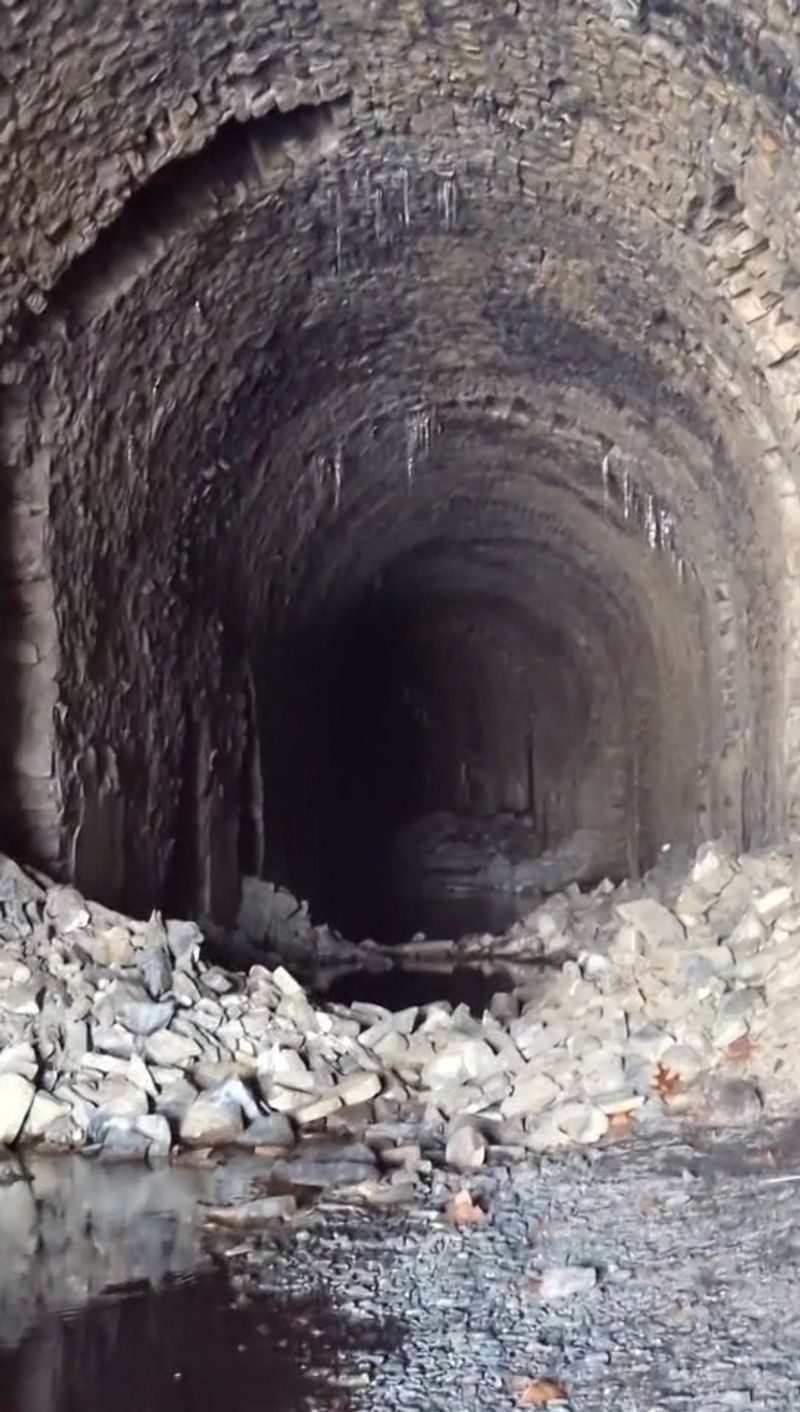
Soft shale builds quickly and fails slowly, and this hillside proves both halves of that sentence.
Speedy construction in the 1850s came with a long-term cost, since the rock never offered much stability. Add water and time, and the ceiling starts letting go.
Big weather events left marks that are still readable. The 1913 cloudburst caused washouts, and Hurricane Diane in 1955 collapsed railroad banks and toppled the station and tower nearby.
Those blows weakened the whole operation long before the official 1970 abandonment.
Since then, more of the structure has given way, especially in the westbound bore, where debris now blocks sections of the passage.
Rockfall continues, and in winter, ice falls add another hazard to the list.
So treat the interior with real respect. A hard hat is the bare minimum, and staying near the portals still delivers dramatic views of arched stone, hanging roots, and water reflecting whatever light manages to sneak inside.
The Most Favorite Geocache in the State
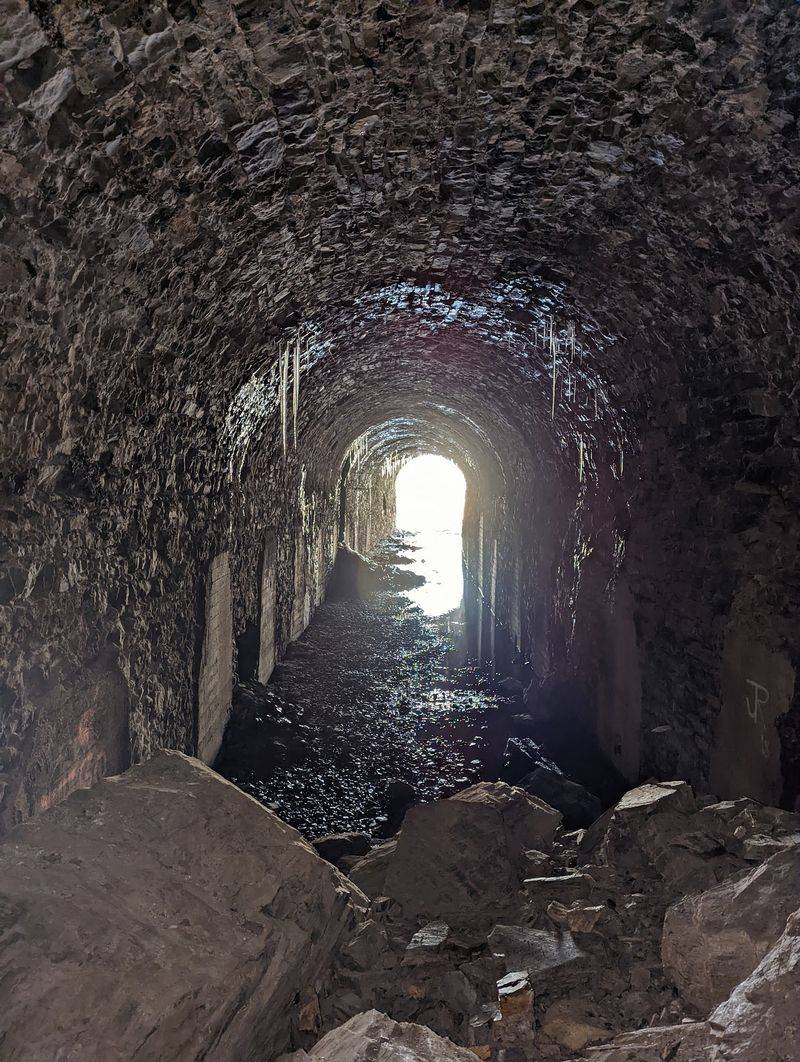
Here is a fun wrinkle: the tunnels host GC82B5, a geocache once ranked the most favorited in all of New Jersey.
That title was earned the hard way. Reaching the cache means committing to darkness, deep mud, and sometimes ice, which filters out casual seekers pretty efficiently.
Successful finders tend to describe the same kit list, and it is worth copying. Mud-proof boots, multiple flashlights, and a decent amount of nerve.
What makes the hunt memorable is the setting rather than the container itself. Few caches sit inside an 1850s railroad bore that has been quietly filling with water for decades.
Families sometimes turn the walk in into the whole adventure, stopping short of the wet sections and still getting the thrill.
Log your visit, leave the place exactly as you found it, and skip anything that feels beyond your comfort level. The tunnel has waited this long and will happily wait for your next attempt.
Abandoned, Flooded, and Utterly Fascinating
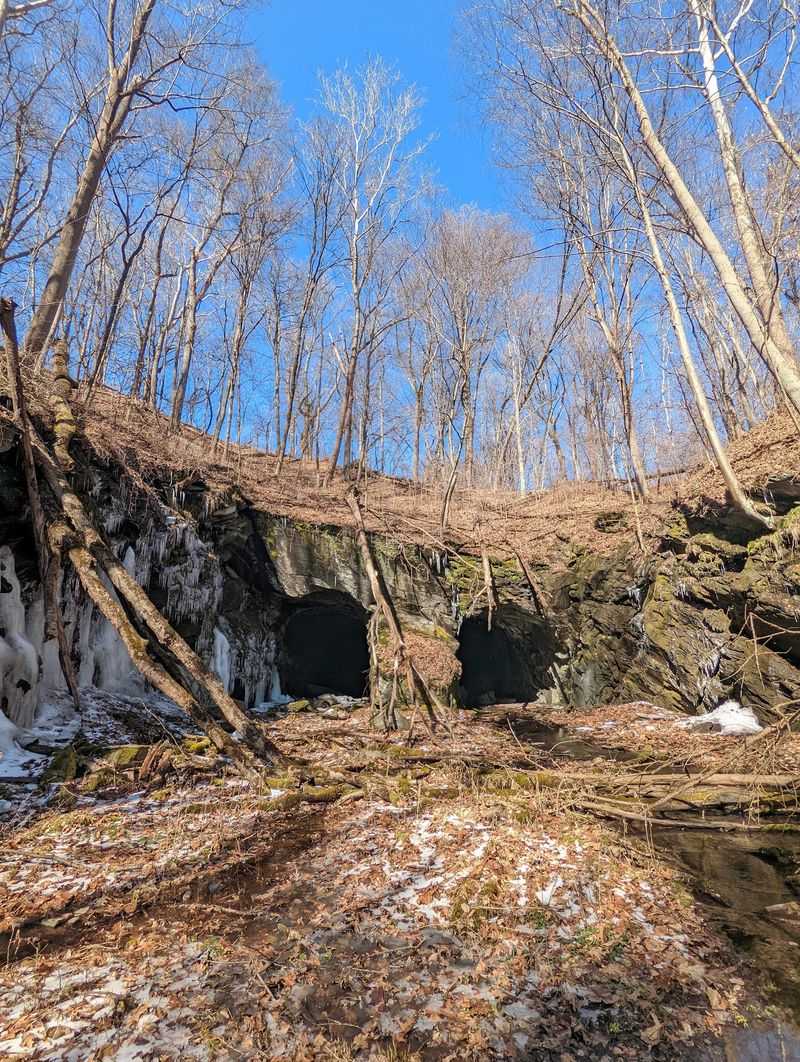
Beauty shows up in odd places, and this hillside makes a strong case.
Once a working artery for coal and commerce, the twin bores now sit silent and waterlogged, decorated with algae blooms and pale mineral streaks that look almost painted on.
The contrast at the entrance is the part that sticks with people. Bright green leaves and dappled sunlight give way, within a few steps, to a darkness so complete it feels solid.
Every surface tells you time is winning. Stones shift, roots push through joints, water finds new paths.
There is something oddly calming about watching nature slowly file down human engineering, no rush, no drama, just steady work.
For photographers, the north portal is a gift, especially when soft light hits the wet stone and doubles itself in the still water.
Come curious, keep your footing, and give yourself a few quiet minutes at the arch before turning back toward the trail.
New Jersey’s Creepiest Submerged Secret
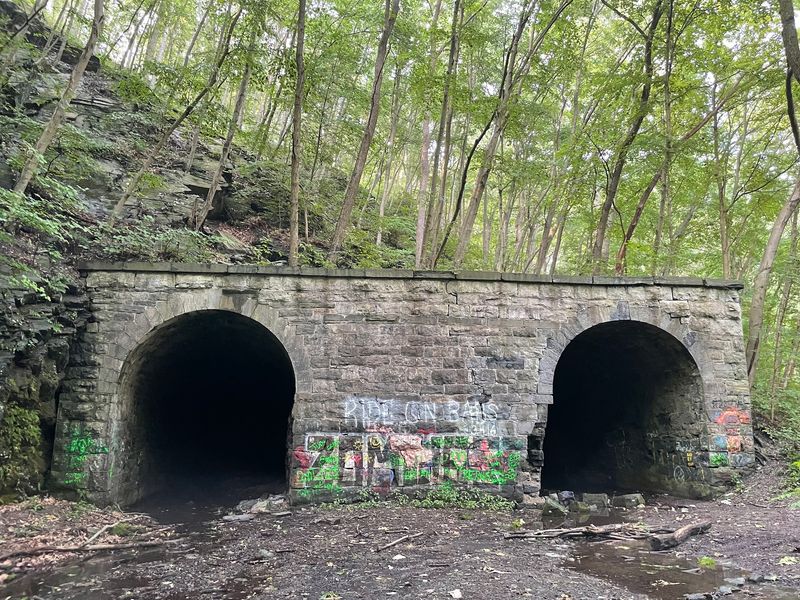
Creepy is doing a lot of work in the nickname, and the tunnels absolutely earn it.
Inside, the quiet is not empty. Water drips at uneven intervals, echoes bounce oddly off curved stone, and shadows stretch along damp walls in ways that make you double-check your light.
People who have gone deep report muffled sounds and strange acoustics, which is exactly what you would expect in a long, bending, half-flooded passage. Knowing the science does not make it less unsettling.
Add visible collapse scars and standing water of uncertain depth, and the whole place hums with a low, pleasant unease.
The site stays open around the clock, though daylight is the smart choice for both safety and photos.
Park legally, respect private property boundaries near the corridor, and stick to established access routes so the spot stays welcoming for everyone.
Address: US-46, Columbia, NJ 07832, United States
