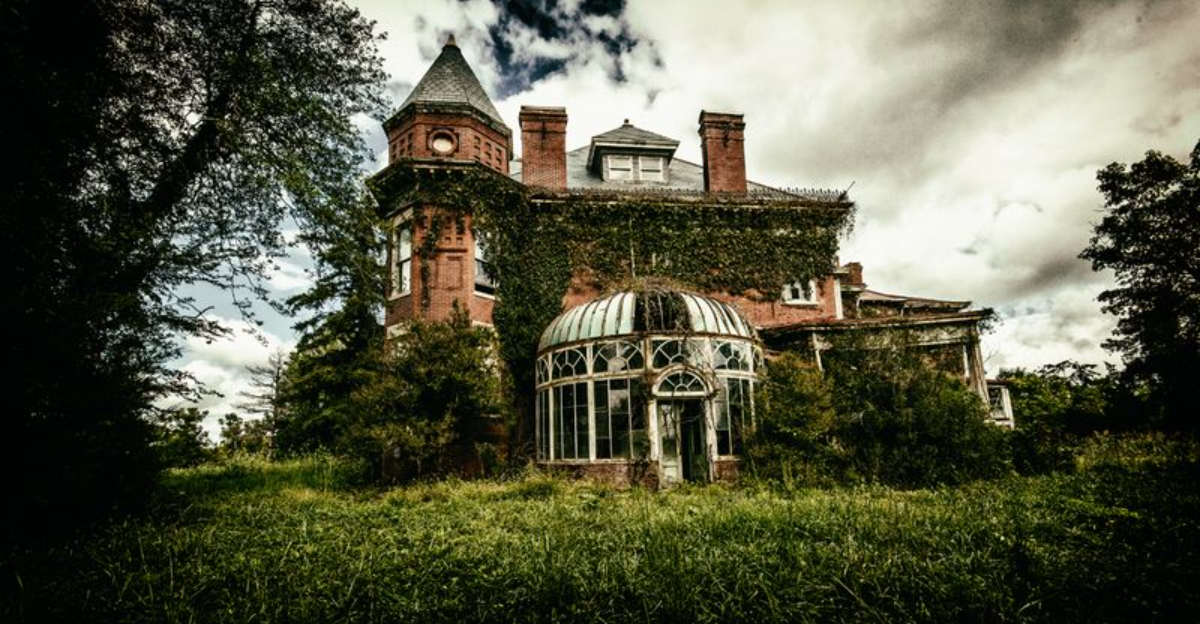
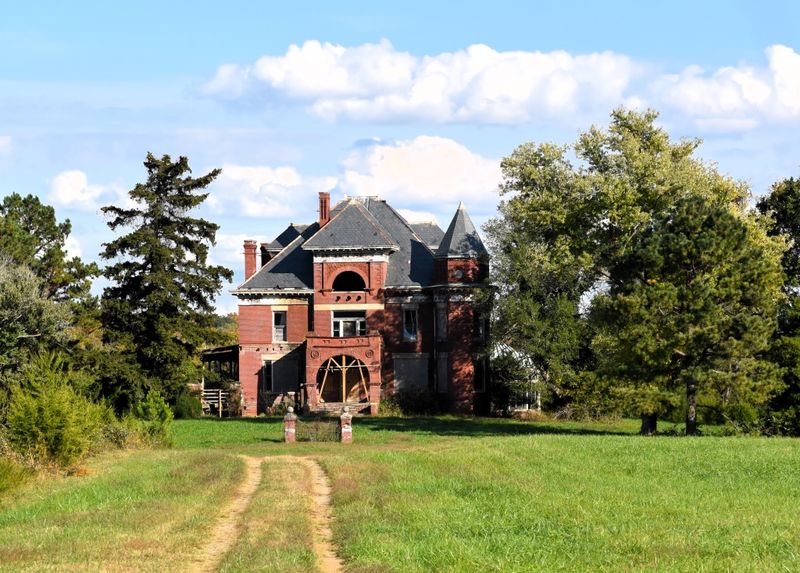
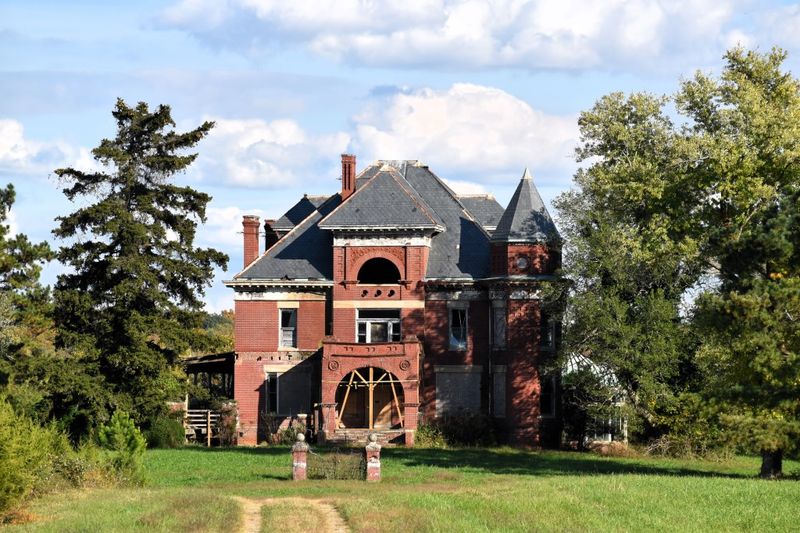
It appears without warning, rising from the fairway like a forgotten relic that refuses to disappear. In Virginia, a Victorian mansion is slowly giving way to time, its crumbling walls and ivy-covered brick hinting at a past that once felt grand and permanent.
A narrow tower still stands, adding to the eerie presence that catches anyone passing nearby off guard. It is the kind of sight that makes you pause and wonder how something so striking could end up overlooked.
Set within a golf course, it feels almost out of place, yet impossible to ignore. Virginia has many historic estates, but few carry this sense of quiet drama and lingering mystery.
A Tobacco Magnate’s Grand Vision
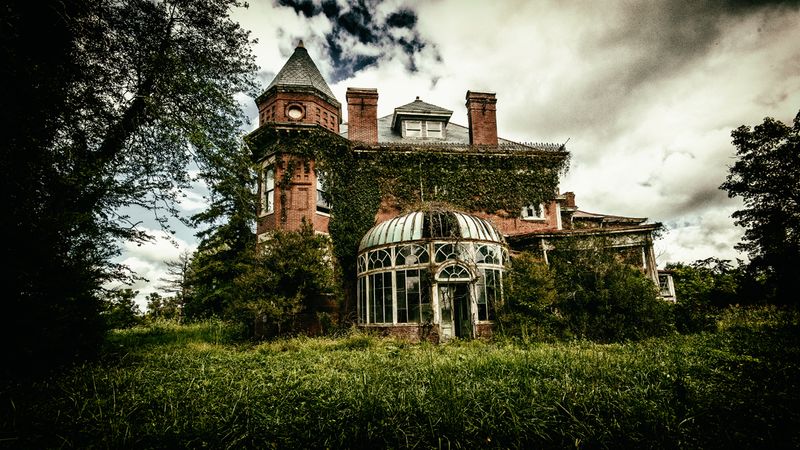
Walter Dunnington was not a man who did things halfway. When he took ownership of the property in the late 1800s, he looked at a modest four-room wooden farmhouse and saw something far more ambitious.
He transformed the structure into a sprawling 14-room showpiece, complete with a Romanesque Revival front entrance that announced his wealth to anyone who approached. The Victorian tower rising above the roofline was not just decorative.
It was a statement.
Dunnington had made his fortune in tobacco, and this mansion was his crown jewel. Every architectural detail spoke to an era when Virginia’s landed gentry spared nothing on their estates.
The craftsmanship visible even in today’s ruins suggests extraordinary attention to detail. Stone archways, intricate woodwork, and bold proportions set it apart from anything else in the region.
Standing on the golf course and looking up at what remains, you can still feel the ambition baked into every brick. It is a monument to one man’s desire to leave a mark on the Virginia landscape, and remarkably, he succeeded far beyond his own lifetime.
The Origins: A Property Born in the 1700s
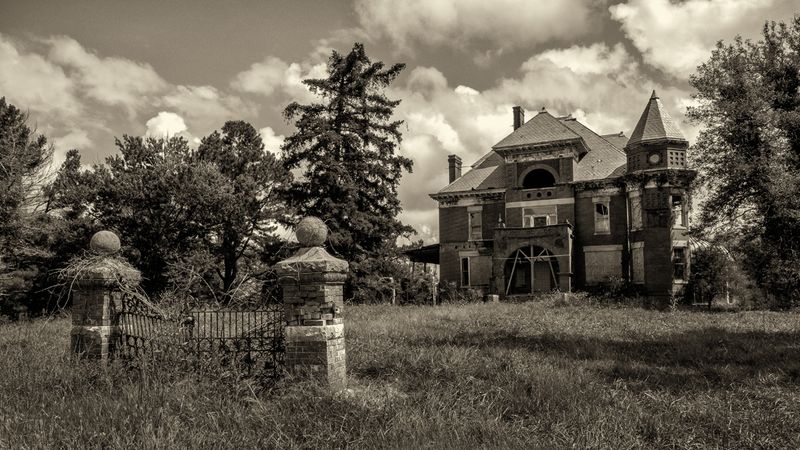
Long before Walter Dunnington ever set foot on the property, the land had its own story. Richard Woodson established the estate back in 1748, making it one of the older continuously occupied properties in this part of Virginia.
The original structure was simple and practical, a four-room wooden house that reflected the frontier pragmatism of colonial life. There was nothing fancy about it, just sturdy construction designed to last.
Over the following century and a half, the property passed through several hands, each owner shaping the land in their own way. By the time Dunnington arrived, the bones of something special were already in place.
The surrounding acreage was fertile and generous, perfectly suited for farming and eventually cattle grazing. Virginia’s Piedmont region offered rich soil and a mild enough climate to support ambitious agricultural ambitions.
What makes the Dunnington Mansion story so compelling is how many lives this single piece of land has touched across nearly three centuries. Each era left its fingerprints, and the ruins standing today are the sum of all those overlapping histories pressed together into one extraordinary, weathered structure.
India Dunnington: The Woman Who Outlived an Era
Some people are so connected to a place that the building itself seems to breathe differently once they are gone. India Dunnington was exactly that kind of person.
After Walter Dunnington passed away in the early 1920s, India stayed right where she was. She lived in the mansion for decades more, watching Virginia change around her while the rooms she called home remained frozen in an earlier time.
She passed away in 1960 at the remarkable age of 103. Think about that for a moment.
She was born during the Civil War era and lived long enough to see the dawn of the space age, all from within those Victorian walls.
Her presence in the mansion gave it continuity and purpose. As long as India was there, the house remained a home rather than a relic.
Once she was gone, however, the property entered a new and less certain chapter. Ownership transferred, purposes shifted, and the grand rooms that had hosted generations of family life began their slow drift toward abandonment.
India Dunnington’s story is the emotional heartbeat of this entire property, and her memory deserves to be told alongside every brick and beam.
From Cattle Farm to Golf Course: The Unlikely Journey
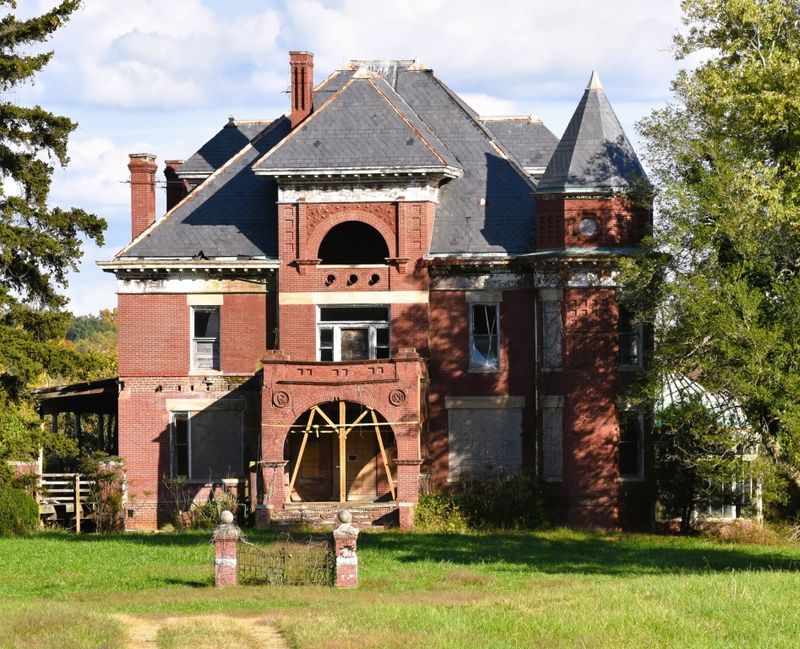
After India Dunnington’s passing, the estate went through changes that would have startled its original owners. The Bolt family acquired the property and converted it into a working cattle farm, a practical pivot that kept the land active even as the mansion’s grandeur faded.
Cattle grazed where formal gardens may once have bloomed. The shift from aristocratic estate to agricultural operation was jarring but understandable given the economics of mid-century rural Virginia.
Then came the most surprising chapter of all. Investors purchased the property around the turn of the millennium with plans to build The Manor Golf Club, a championship-level course that would use the mansion as its dramatic centerpiece.
The concept was genuinely inspired. Imagine teeing off with a crumbling Victorian tower looming in your peripheral vision.
That combination of sport and Gothic atmosphere is something money usually cannot buy.
Financial difficulties eventually derailed the full development plan, but the golf course itself was completed and remains operational today. The mansion, meanwhile, was left unoccupied, sitting in the middle of those manicured fairways like a forgotten guest at an otherwise perfectly planned party.
The Architecture That Still Demands Attention
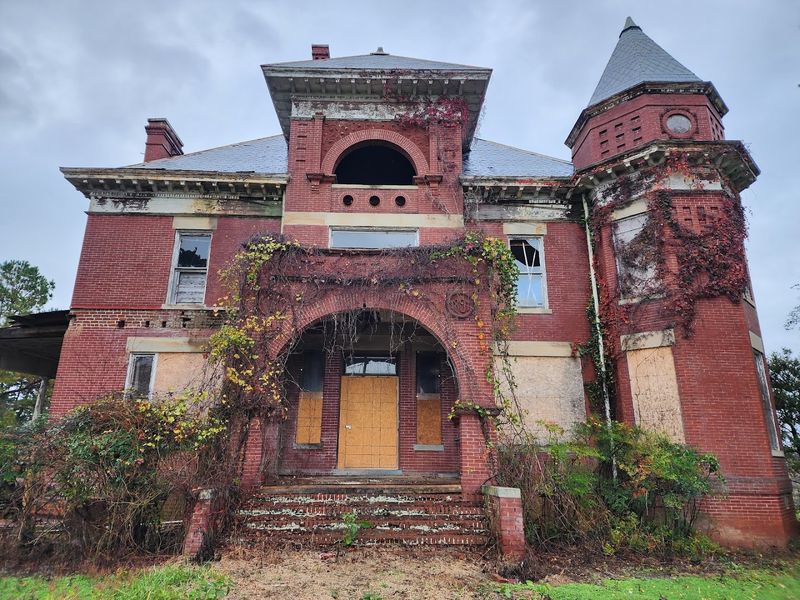
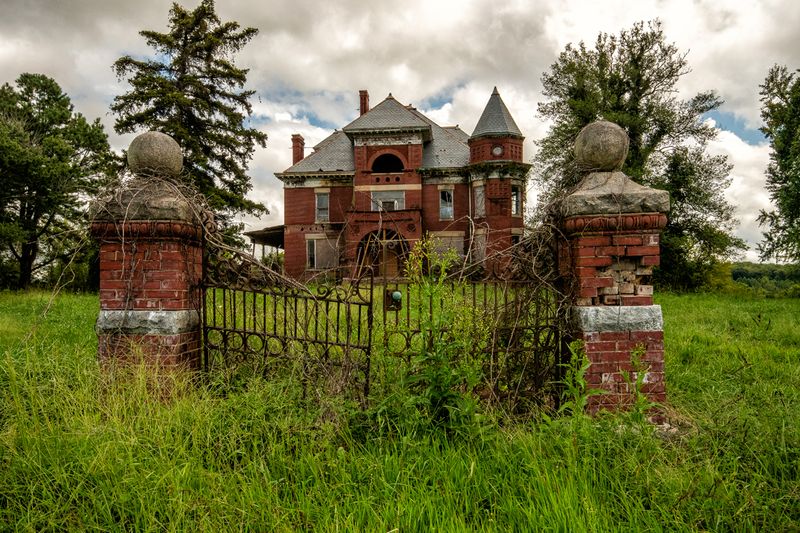
Even in its deteriorated state, the Dunnington Mansion commands respect. The Romanesque Revival front entrance is the kind of architectural gesture that stops you cold, a bold stone arch framing a doorway that once welcomed Virginia’s social elite.
The Victorian tower, still partially standing, rises above the surrounding tree line with an authority that newer buildings rarely achieve. Towers like this were designed to be seen from a distance, and this one still delivers on that promise.
Fourteen rooms spread across the structure, each one now open to the elements in ways no architect ever intended. Collapsed ceilings reveal floor joists.
Missing windows frame views of overgrown Virginia countryside. The whole scene feels like a stage set for something dramatic.
What strikes me most is the quality of the original construction. Despite decades of neglect, key structural elements remain surprisingly intact.
The bones are strong, which is exactly why preservation advocates believe the building can still be saved.
Every crumbling cornice and weathered brick is a conversation between past craftsmanship and present entropy. The mansion does not beg for sympathy.
It simply stands there, daring you to look away, knowing full well that you cannot.
Abandonment and the Slow March of Decay
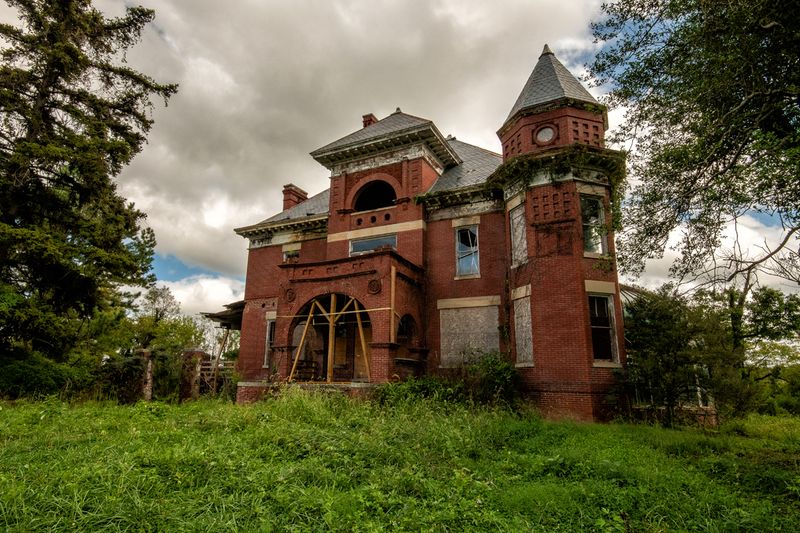
Abandonment has its own timeline, and the Dunnington Mansion has been living on that clock since the mid-2000s. Once the development plans collapsed, the building was left without the regular maintenance that any structure of this age desperately needs.
Virginia’s climate is not gentle with neglected buildings. Hot, humid summers accelerate wood rot.
Winter freeze-thaw cycles attack masonry. Within just a few years of vacancy, the decline became visible and then dramatic.
Roofing failures allowed water to penetrate deep into the structure. Floors weakened.
Plaster ceilings surrendered to gravity. The interior spaces that once hosted family gatherings transformed into open-air chambers full of debris and wildlife.
There is something genuinely melancholy about walking the golf course fairways and seeing the mansion from a distance, knowing exactly what is happening inside those walls. Time moves slowly but it moves relentlessly.
The irony is that the very setting that makes the mansion so visually striking, surrounded by immaculate greens and well-trimmed fairways, makes its deterioration even more poignant. The contrast between the manicured course and the crumbling structure says everything about what happens when grand plans meet financial reality in rural Virginia.
The Dunnington Mansion Foundation Rides to the Rescue
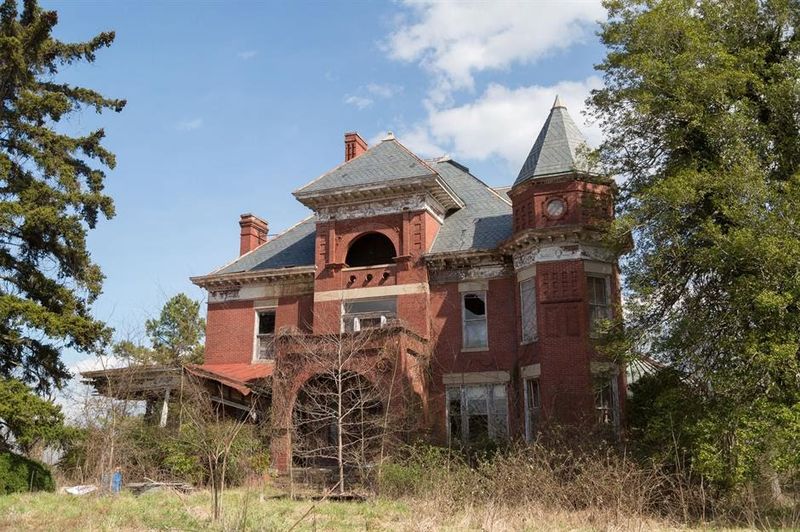
Not everyone is willing to watch history crumble without a fight. The Dunnington Mansion Foundation was established in 2021, bringing organized energy and genuine purpose to a property that had been drifting toward irreversible loss.
The foundation’s mission is straightforward but ambitious: preserve the mansion’s history, promote its rehabilitation, and ultimately restore it for adaptive reuse as an event and education center. For a rural Virginia community, that kind of anchor institution can mean a great deal economically and culturally.
One of the most thoughtful aspects of the foundation’s approach is its openness to difficult historical conversations. The property’s history includes the realities of slavery and plantation life, and the foundation has committed to acknowledging that full story rather than presenting a sanitized version.
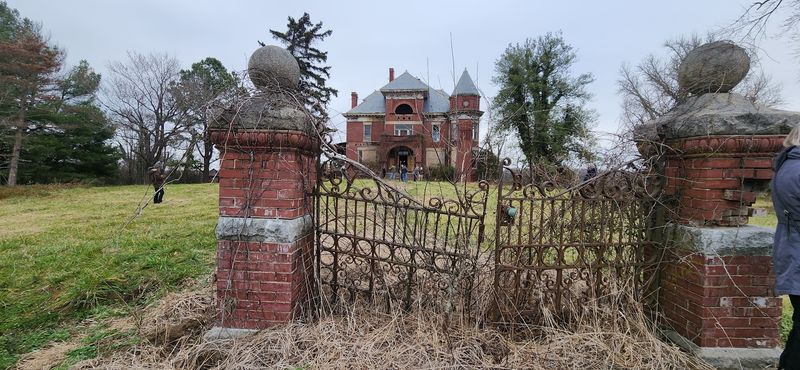
Scheduled tours and private rental opportunities for artists and creatives give the public a legal, safe way to experience the mansion’s haunting atmosphere. These visits fund ongoing preservation efforts while building community connection to the site.
Following the foundation on social media is genuinely worth your time if you care about historic preservation in Virginia. Their updates document both the ongoing deterioration and the hopeful steps being taken to reverse it, one fundraiser and one brick at a time.
Trespassing Temptations and Why You Should Resist Them
Let me be completely direct about something. The Dunnington Mansion sits on privately owned property and is monitored by round-the-clock security.
Trespassing is not a gray area here, and the consequences of getting caught are real.
The golf course setting adds another layer of complication. The Manor Golf Club is an active, well-maintained facility, and unauthorized wandering across its fairways is unwelcome regardless of your interest in the mansion.
Beyond the legal issues, there is a genuine safety concern. Abandoned Victorian mansions are not tourist attractions in the traditional sense.
Unstable floors, compromised ceilings, and unpredictable structural conditions make unsupervised exploration genuinely dangerous.
The good news is that you do not need to sneak around. The Dunnington Mansion Foundation offers organized tours that give you legitimate, guided access to the property.
These tours are the right way to experience the site, and your participation directly supports preservation efforts.
Virginia has a long tradition of protecting its historic properties, and this one deserves that same respect. Show up through the proper channels, support the foundation’s work, and you will come away with a richer experience than any trespassing adventure could ever deliver.
Do it right.
Farmville, Virginia: The Town That Frames the Story
Farmville is the kind of Virginia town that rewards slow exploration. Situated in Prince Edward County, it carries a deep historical weight that extends well beyond the Dunnington Mansion, though the mansion certainly adds a dramatic chapter to the local narrative.
The Appomattox River runs nearby, and the surrounding Piedmont landscape offers the kind of rolling, pastoral beauty that makes Virginia so persistently appealing to road-trippers and history enthusiasts alike.
Longwood University gives the town a lively, youthful energy that balances its historical gravitas. The campus architecture and surrounding neighborhoods make for pleasant wandering between historical site visits.
Downtown Farmville has a genuinely walkable character, with independent shops and local businesses occupying historic storefronts that reflect the town’s agricultural and commercial heritage. It feels lived-in and authentic rather than curated for tourism.
Planning a visit to the Dunnington Mansion is most rewarding when combined with a broader exploration of Farmville itself. The town provides essential context for understanding why this particular estate matters so much to the community and why so many people are fighting to save it.
Virginia’s small towns often hold its biggest stories, and Farmville proves that point beautifully.
Plan Your Visit: What to Know Before You Go
Planning a visit to the Dunnington Mansion requires a bit more preparation than your average road trip stop. This is not a walk-up attraction with a ticket booth and a gift shop.
Proper access comes through the Dunnington Mansion Foundation, and booking in advance is strongly recommended.
The foundation’s official website at dunningtonmansion.org is your starting point. Tour availability, rental opportunities for photographers and artists, and general information about the preservation mission are all detailed there.
Following their social media channels keeps you updated on special events and new tour dates.
Comfortable shoes are non-negotiable. The grounds are uneven, and portions of the tour involve navigating areas that require sure footing.
Bring insect repellent, especially during warmer months, because the Virginia countryside surrounding the property is lush and buggy in equal measure.
The mansion is located at 971 Manor House Drive, Farmville, VA 23901, right within the grounds of The Manor Golf Club. Budget extra time to explore the surrounding area and appreciate how the crumbling structure looks against the manicured fairways.
This is one of those Virginia experiences that stays with you long after you have driven home. Go with an open mind, respect the space, and support the foundation’s important work.
Dear Reader: This page may contain affiliate links which may earn a commission if you click through and make a purchase. Our independent journalism is not influenced by any advertiser or commercial initiative unless it is clearly marked as sponsored content. As travel products change, please be sure to reconfirm all details and stay up to date with current events to ensure a safe and successful trip.
