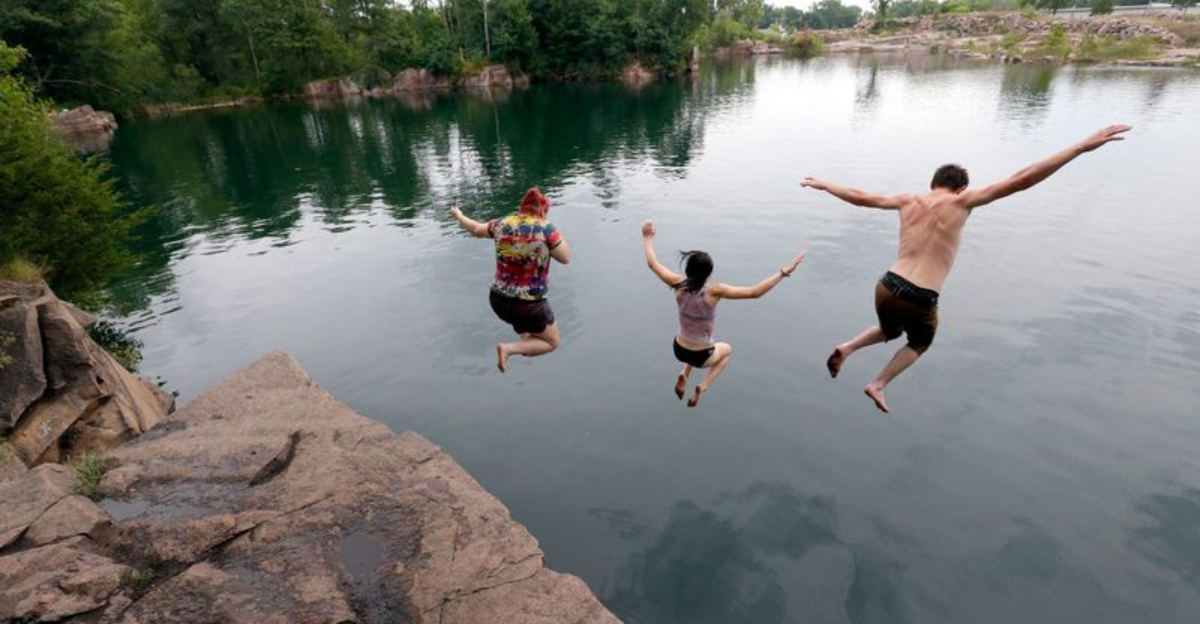
Cliff jumping in Wisconsin is becoming a perilous pursuit, drawing thrill-seekers to its hidden cliffs and quarries. Despite the breathtaking landscapes, the activity is fraught with risks and is often illegal.
This post explores the locations, hazards, and regulations that travelers must heed to enjoy Wisconsin safely.
The Temptation of Wisconsin’s Hidden Cliffs
Amidst the serene beauty of Wisconsin’s landscapes, hidden cliffs offer a siren call to adventurers. The allure of plunging into crystal-clear waters has captured the imagination of many tourists. Yet, beneath the picturesque surface lies a risky endeavor that’s capturing headlines.
Social media fuels this trend, with adrenaline-seekers sharing daring jumps and scenic vistas. While the thrill might seem inviting, the reality is far more complex. The spots often tempt those unfamiliar with the local terrain and its hidden perils.
These cliffs are tucked away in areas not meant for public jumping. Despite their appeal, they are not designed for such activities. It’s a growing concern that needs addressing, as more visitors venture beyond designated paths in search of excitement.
Why Cliff Jumping Is Illegal in Many Areas
Cliff jumping might seem like an exciting way to interact with nature, but it’s often prohibited across Wisconsin. Laws and park rules strictly ban the activity in many regions. Safety is a prime concern, as the potential for accidents is high.
These regulations are not arbitrary. The unseen hazards include unpredictable water depths, submerged rocks, and strong currents. Protecting visitors from these risks is a priority for park authorities.
Moreover, conservation plays a role in these restrictions. Cliff jumping can cause significant environmental disturbances, eroding fragile formations and disturbing wildlife. By enforcing these rules, Wisconsin aims to preserve its natural beauty for generations to come.
The Most Common Tourist Hotspots for Illegal Jumps
Certain areas in Wisconsin are notorious for attracting illegal jumpers. Places like Devil’s Lake State Park and Redgranite Quarry are frequent hotspots. These locations offer dramatic landscapes that lure those seeking adventure beyond the beaten path.
Despite signs and park rules, these sites have become infamous for unauthorized jumping activities. The thrill of discovering hidden spots often overshadows the potential dangers they harbor.
Park officials continuously battle this trend, often needing to intervene to prevent accidents. These picturesque spots are best enjoyed from designated viewing areas, ensuring safety and compliance with local laws. The challenge lies in balancing adventure with respect for nature and regulations.
What Tourists Don’t Realize About the Risks
Beneath the placid waters of Wisconsin’s cliffs lie unseen threats. Sharp rocks, uneven depths, and swift currents pose serious risks to jumpers. Many tourists, unfamiliar with the terrain, overlook these hazards in their quest for thrills.
Unlike regulated swimming areas, these natural spots lack safety measures. The novelty of jumping off cliffs can quickly turn dangerous without proper knowledge or precautions.
Understanding these risks is essential, as even experienced swimmers and jumpers can be caught off guard. Awareness campaigns aim to educate visitors about potential dangers, encouraging them to think twice before taking the plunge. Safety must always take precedence over adventure.
How Local Rangers Handle the Problem
Local rangers play a vital role in managing the cliff jumping issue. Their efforts focus on education and prevention rather than punishment. By patrolling popular parks, they aim to stop illegal jumps before they happen.
Rangers often engage with tourists, explaining the dangers and legal implications of cliff jumping. Their presence serves as a deterrent, ensuring that visitors remain on marked paths.
While enforcement is a crucial aspect, the emphasis is on fostering respect for nature. Informative signs, brochures, and interactive sessions help in spreading awareness. The goal is to balance enjoyment of Wisconsin’s natural beauty with adherence to safety and conservation guidelines.
The Environmental Damage Tourists Don’t Consider
Wisconsin’s cliffs are sensitive ecosystems, and repeated jumping can lead to significant environmental damage. The impact of human activity on these natural formations is often overlooked by thrill-seekers.
Cliff jumping contributes to erosion, which alters the landscape and affects habitats. The continual impact of human feet and bodies can degrade these natural wonders over time.
Wildlife, too, suffers from disruptions caused by illegal jumping. Birds, plants, and aquatic life can be displaced or harmed by increased human presence. Protecting these environments requires awareness and respect for regulations designed to preserve them for future generations.
Legal Alternatives for Thrill Seekers
For those seeking adventure without breaking the rules, Wisconsin offers numerous legal alternatives. Scenic swimming holes and majestic waterfalls provide thrilling experiences within the confines of the law.
Designated areas allow visitors to enjoy swimming and exploring safely. Park lookouts and guided tours offer breathtaking views and the chance to appreciate the landscape without risking safety or legality.
These locations are equipped to handle visitors, providing amenities and ensuring safety. By choosing these options, thrill-seekers can indulge their adventurous spirit while respecting local regulations and natural environments. It’s a win-win for both travelers and nature.
Respecting Wisconsin’s Wild Beauty
Wisconsin’s natural beauty is a treasure that demands respectful enjoyment. By adhering to local laws and guidelines, tourists can ensure that they contribute positively to the preservation of these areas.
Responsible adventure means understanding and respecting the delicate balance of the ecosystem. Travelers are encouraged to stay informed and make choices that prioritize safety and conservation.
Enjoying Wisconsin’s wilderness responsibly ensures that its beauty remains for future generations. By taking the time to learn and respect the rules, visitors can experience the thrill of nature without causing harm. The goal is to leave the natural world as pristine as it was found.
Dear Reader: This page may contain affiliate links which may earn a commission if you click through and make a purchase. Our independent journalism is not influenced by any advertiser or commercial initiative unless it is clearly marked as sponsored content. As travel products change, please be sure to reconfirm all details and stay up to date with current events to ensure a safe and successful trip.
