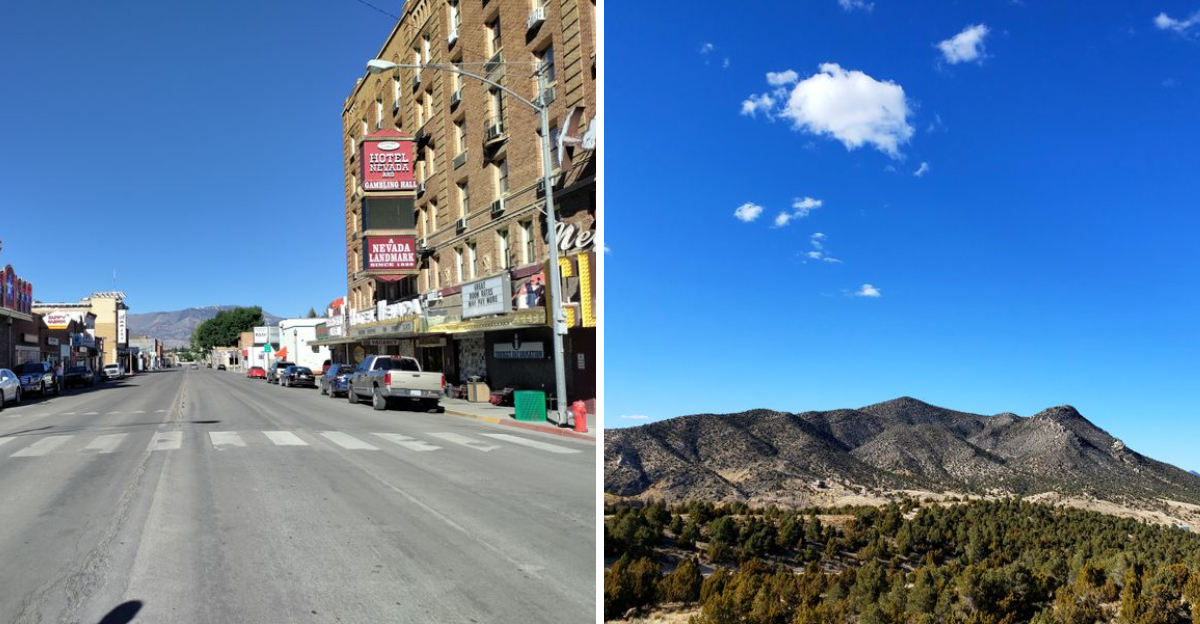
Ely, Nevada sits in the high desert of White Pine County, a place that travelers often pass through without a second glance.
Some call it quiet, even dull, but locals know better.
There is something different here, an energy that hums beneath the surface, felt more than explained.
The Railroad That Refuses to Die
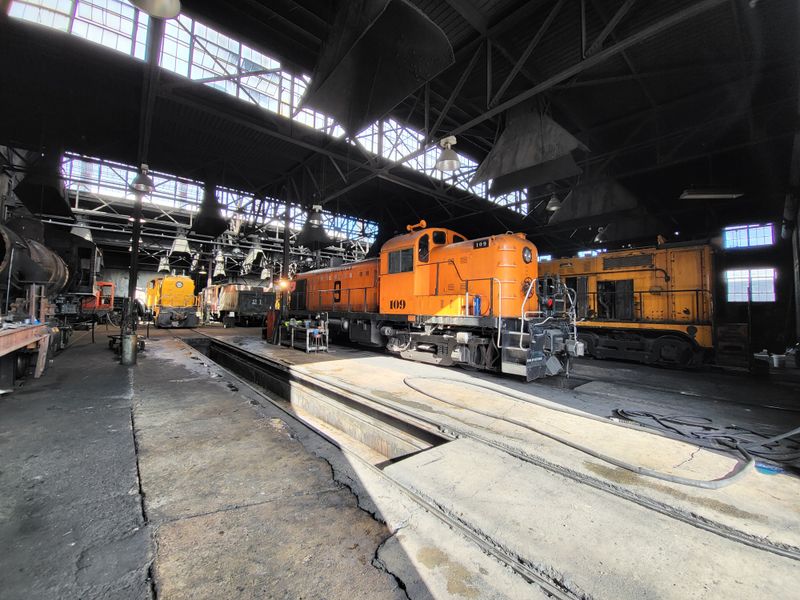
Copper built this town, and the railroad carried it out.
When mining operations slowed and then stopped, the Nevada Northern Railway could have faded into memory like so many industrial relics across the American West.
Instead, it became something else entirely.
Today, the railway operates as a living museum, one of the most complete and authentic railroad complexes still standing.
Steam engines still fire up, their whistles echoing across the valley just as they did more than a century ago.
Volunteers and staff maintain the engines, the depot, and the machine shops with a reverence that borders on devotion.
Visitors can ride vintage trains through landscapes that have changed little since the first ore cars rolled through.
The experience is not polished or theme-park slick.
Grease stains mark the floors, tools hang where workers left them decades ago, and the smell of coal smoke drifts through the rail yard.
Some say the place feels alive in ways they cannot quite articulate.
Late at night, when the engines are silent, there are stories of footsteps in empty corridors and the distant clang of metal on metal.
Whether those sounds come from the past or the present is a question locals do not always answer directly.
The railway embodies Ely’s refusal to disappear quietly.
It stands as a monument to persistence, to the idea that some things are worth preserving even when the world moves on.
Riding those rails feels like traveling through time, and for many, that journey is where the odd energy of Ely first makes itself known.
Mountains That Hold Secrets
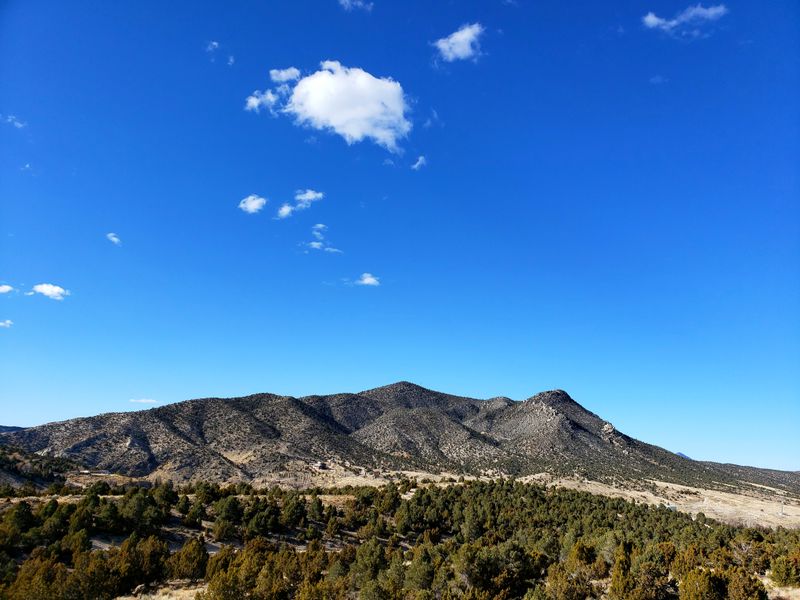
The Egan Range rises to the west, the Schell Creek Range to the east, and the White Pine Range stretches north.
Ely sits cradled between these ancient formations, their peaks cutting sharp lines against the sky.
These mountains are not the dramatic, snow-capped giants that draw crowds.
They are older, worn down by time, covered in pinyon pine and juniper, their slopes scarred by old mining roads.
But locals speak of them with a certain respect, as if the ranges hold more than rock and dirt.
Hikers who venture into the backcountry sometimes report feelings of being watched, though they see no one.
Shadows move in ways that do not quite match the sun’s position.
Sounds carry strangely, voices seeming to come from directions where no person stands.
These are not ghost stories told for entertainment.
They are quiet observations shared over coffee, mentioned in passing, acknowledged with a nod.
The mountains have witnessed everything this valley has endured: the arrival of settlers, the boom of mining, the slow decline, the stubborn survival.
Perhaps that history leaves an imprint, a residue that sensitive visitors can feel.
Or perhaps the landscape itself possesses a quality that defies easy explanation.
Either way, those who spend time in the ranges around Ely often come back changed in small ways.
They speak more quietly.
They look at the horizon differently.
The mountains do not give up their secrets easily, but they make their presence felt.
In Nevada, where so much land remains empty and untouched, these ranges remind us that emptiness is not the same as absence.
Art That Blooms in Unlikely Places
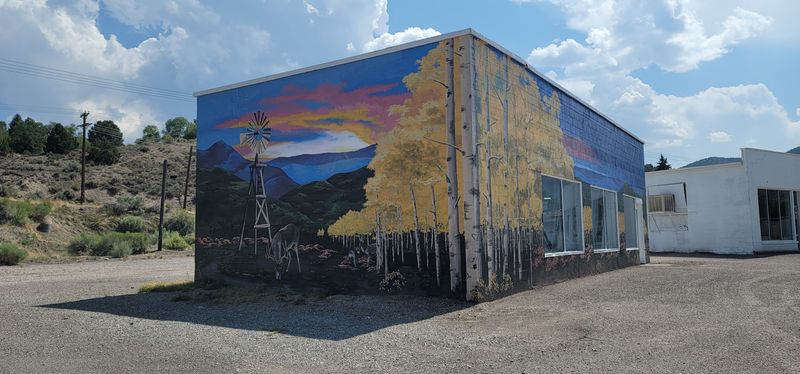
Walk through downtown Ely and you will find art where you least expect it.
Murals cover brick walls, sculptures stand in empty lots, and painted utility boxes brighten street corners.
This is not a wealthy arts district or a carefully curated gallery scene.
It is grassroots creativity, born from residents who refuse to let their town fade into beige anonymity.
The Renaissance Society, a local arts organization, has championed this transformation for years.
They host exhibitions, workshops, and events that draw artists from across Nevada and beyond.
What makes Ely’s art scene unusual is its context.
In a town where economic hardship is real and opportunities are limited, the commitment to creative expression feels almost defiant.
It suggests that beauty and imagination matter even when, perhaps especially when, times are tough.
Some pieces reflect the town’s mining heritage, depicting workers and machinery in bold, graphic styles.
Others are abstract, splashes of color that seem to challenge the desert’s muted palette.
A few installations incorporate found objects, rusted metal and weathered wood transformed into something new.
Visitors often comment on the unexpected sophistication of the work.
They arrive expecting rustic charm and instead encounter genuine artistic vision.
Locals describe the creative energy here as something almost tangible, a current that runs through the community.
Artists say they feel inspired in Ely, that the isolation and the landscape open up space for ideas to develop.
The odd energy people talk about may be partly this: a place where creativity thrives against the odds, where art becomes an act of resistance against irrelevance.
In Nevada’s vast emptiness, Ely’s art scene is a bright, stubborn flame.
The Cave That Breathes Ice
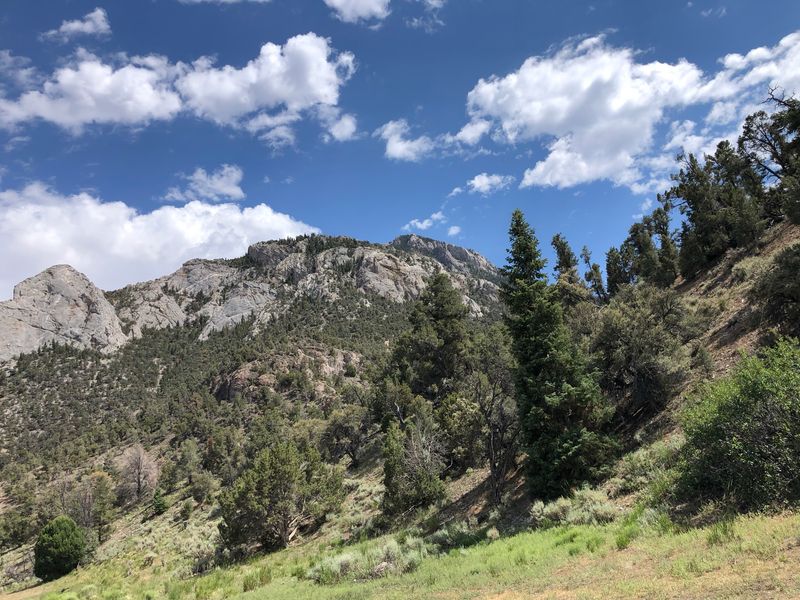
Just outside Ely, though technically within Great Basin National Park, Lehman Caves draws visitors into a subterranean world that feels entirely separate from the desert above.
The caves are not vast by spelunking standards, but their formations are exceptionally delicate and varied.
Stalactites, stalagmites, helictites, and rare shield formations create an otherworldly landscape underground.
Tours wind through narrow passages and open chambers, guides pointing out features with names like the Parachute Shield and the Inscribed Ceiling.
The temperature inside remains constant year-round, cool and damp, a stark contrast to the dry heat outside.
But what strikes many visitors is not just the geological beauty.
It is the feeling of the place, the sense of entering a space that exists outside normal time.
Sound behaves differently here, absorbed by stone or echoing unexpectedly.
Light from headlamps and fixtures creates shifting shadows that play tricks on perception.
Some people report feeling disoriented, not in a frightening way, but as if the usual anchors of direction and distance have loosened.
The caves were formed over millions of years, water slowly dissolving limestone and depositing minerals in fantastical shapes.
That immense timescale is palpable somehow, a reminder that human concerns are brief flickers against the backdrop of deep geological time.
Locals who visit regularly say the caves feel alive, though they struggle to explain what they mean by that.
Perhaps it is the constant dripping of water, the faint movement of air, the subtle changes in the formations over the years.
Or perhaps it is something less tangible, an energy that ancient, hidden places sometimes hold.
Lehman Caves offers a glimpse into the hidden depths beneath Nevada’s surface, both literal and metaphorical.
A Hotel Where the Past Lingers
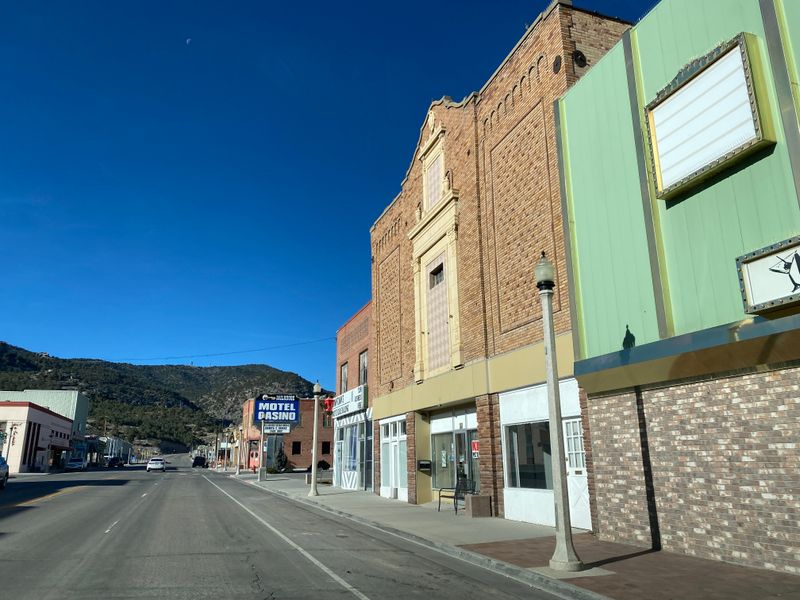
The Hotel Nevada has stood in downtown Ely since 1929, a six-story landmark that once represented the height of local prosperity.
When it opened, it was Nevada’s tallest building, a point of pride for a town riding the copper boom.
The lobby still retains much of its original character, with vintage furnishings and photographs documenting Ely’s history.
Rooms are simple, clean, functional, not luxurious but comfortable in an old-fashioned way.
What draws attention, however, are the stories that cling to the building like dust.
Guests and staff report unexplained phenomena with surprising frequency.
Doors open and close on their own.
Footsteps echo in empty hallways.
Cold spots appear in certain rooms without apparent cause.
Some visitors claim to see figures in period clothing, there for a moment and then gone.
The hotel does not advertise itself as haunted, but it does not deny the stories either.
The most commonly mentioned presence is a woman in a long dress, seen on the upper floors, her face sad or perhaps just distant.
No one knows who she might have been, though theories abound: a miner’s wife waiting for a husband who never returned, a performer passing through, a tragedy lost to time.
Skeptics attribute the reports to old building quirks, drafts, and the power of suggestion.
Believers point to the consistency of the accounts, the fact that strangers describe similar experiences without prior knowledge.
Whether the Hotel Nevada is genuinely haunted or simply atmospheric, it undeniably contributes to Ely’s reputation for odd energy.
Staying there feels like sleeping in history, with all the weight and strangeness that implies.
In Nevada, where ghost towns outnumber living ones, perhaps it is no surprise that the past refuses to stay buried.
Starlight That Drowns the Darkness

Ely sits at an elevation of over six thousand feet, surrounded by mountains and far from major cities.
Light pollution here is minimal, and on clear nights, the sky transforms into something almost overwhelming.
The Milky Way stretches overhead in a dense band, so bright it casts faint shadows.
Planets appear as steady points of light, easily distinguished from the twinkling stars.
Meteors streak across the darkness with surprising frequency.
For visitors from urban areas, the experience can be disorienting.
The sheer number of visible stars challenges the brain’s ability to process them.
Constellations become difficult to pick out against the crowded backdrop.
Some people feel awe, others unease, and many report both at once.
Locals grow up with these skies, but even they speak of certain nights when the stars seem closer, more present, almost watchful.
There is a quality to the darkness here that feels different from simple absence of light.
It is a living darkness, deep and textured, filled with subtle gradations and movements.
Coyotes call from the hills, their voices carrying across miles.
The wind moves through sagebrush with a sound like whispered conversations.
Standing under Ely’s night sky, it becomes easy to understand why ancient peoples saw gods and stories written in the stars.
The heavens feel close enough to touch, vast enough to swallow you whole.
Astronomers and astrophotographers prize locations like this, but for those sensitive to atmosphere, the experience goes beyond scientific observation.
The night sky here connects you to something larger, older, and fundamentally mysterious.
In Nevada, where the land stretches empty in all directions, the stars provide both beauty and a reminder of how small we are.
Mining Scars That Tell Stories
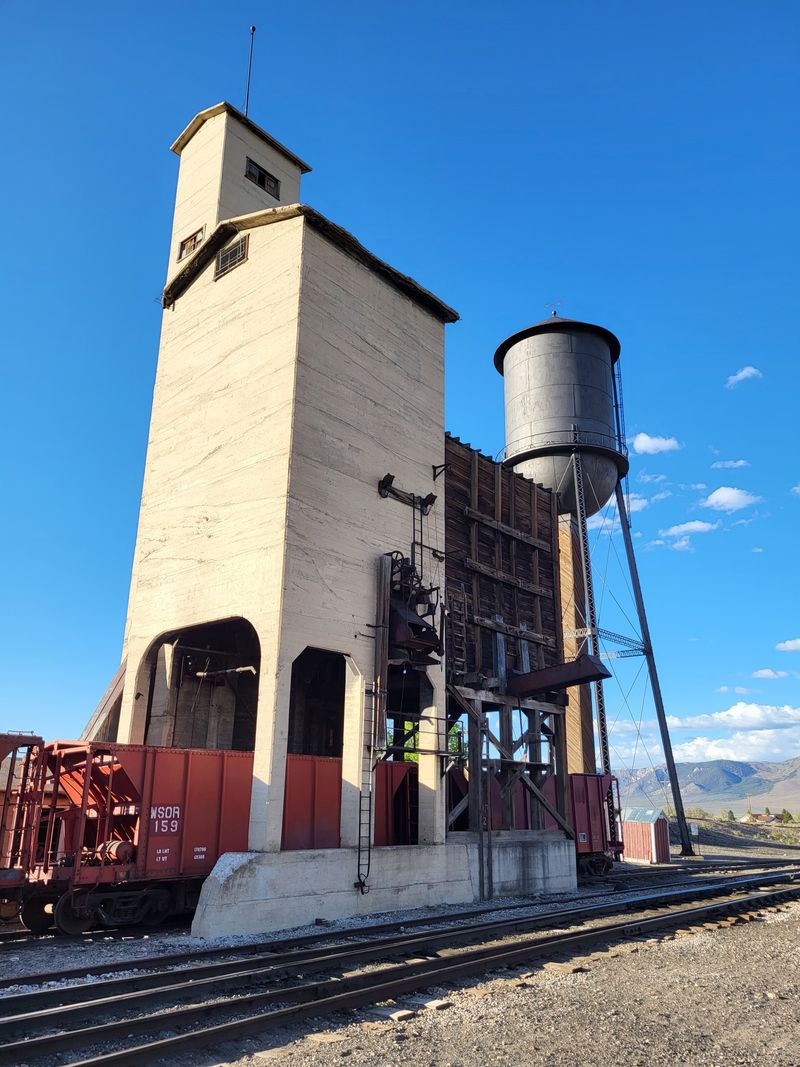
Drive the backroads around Ely and you will see the legacy of mining everywhere.
Open pits scar the hillsides, their walls striped in colors that range from rust red to chemical green.
Abandoned structures lean at precarious angles, their wood weathered gray and their metal rusted to lace.
Tailings piles spread across the landscape like artificial dunes, barren and oddly geometric.
These are not pretty ruins.
They are industrial wreckage, evidence of an economy that extracted wealth and left behind environmental damage.
Yet they possess a strange magnetism, a pull that draws photographers, historians, and curious visitors.
Part of the fascination is purely visual: the contrast between natural desert beauty and human-made decay creates compelling compositions.
But there is something else at work here, too.
Walking among these ruins, you can almost feel the presence of the thousands of workers who labored here.
The heat they endured, the danger they faced, the hopes they carried.
Mining was brutal work, and not everyone survived it.
Accidents were common, conditions harsh, and the toll on bodies cumulative.
Some locals believe the old mine sites hold the imprint of that suffering, an energy that never quite dissipated.
Others see the ruins as monuments to human ambition and folly, cautionary tales about the cost of progress.
Either way, they are impossible to ignore.
The mining scars around Ely are not hidden or cleaned up.
They remain visible, raw, a part of the landscape that refuses to heal or fade.
In Nevada, where mining shaped so much of the state’s history and identity, these sites serve as uncomfortable reminders of what was gained and what was lost.
The odd energy people sense in Ely may be partly this: the weight of history made visible in stone and metal.
A Town That Refuses to Quit

Ely should be a ghost town by now.
The logic is simple: when the mines closed, the jobs disappeared, and in most cases, the people followed.
Nevada is littered with such places, empty shells where wind blows through broken windows and sagebrush reclaims the streets.
But Ely persists.
The population is small, the economy fragile, but the town continues.
Businesses open, schools operate, community events happen.
There is a stubbornness here, a refusal to accept decline as inevitable.
Locals speak of Ely with a fierce loyalty that outsiders sometimes find puzzling.
Why stay in a place with limited opportunities, harsh winters, and isolation?
The answers vary: family ties, love of the landscape, a sense of belonging, or simply the conviction that this place matters.
Some mention the energy again, that intangible quality that keeps them rooted.
They describe feeling connected here in ways they cannot replicate elsewhere.
The town’s survival depends on creativity and adaptation.
Tourism helps, with visitors drawn to the railway, the nearby national park, and the dark skies.
Small businesses find niche markets.
Residents take on multiple roles, wearing many hats to keep the community functioning.
There is a resourcefulness here born of necessity, a practical ingenuity that solves problems without waiting for outside help.
Ely’s persistence is itself a form of resistance, a rejection of the narrative that rural places are doomed.
The town’s energy, odd or otherwise, may simply be the accumulated determination of people who refuse to leave.
In Nevada, where boom and bust cycles have shaped every community, Ely’s survival is both ordinary and remarkable.
It stands as proof that some places hold on, not because they are thriving, but because they will not let go.
The Silence That Speaks
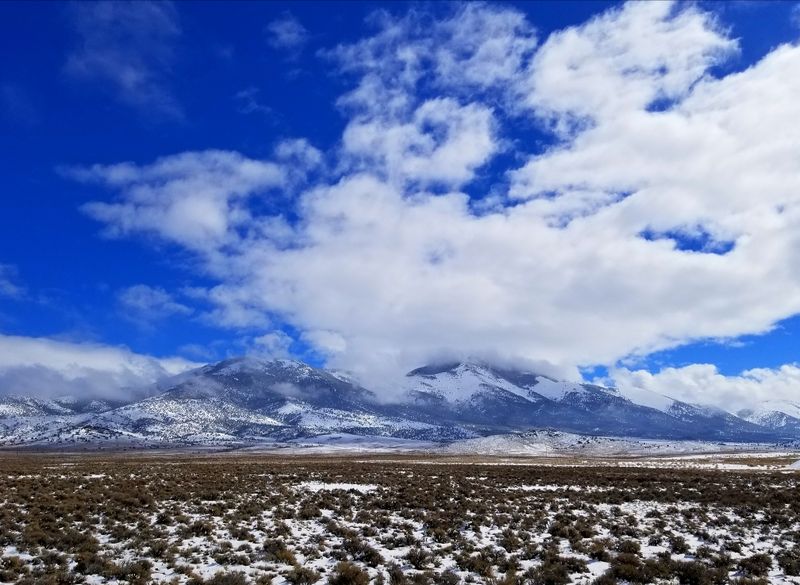
Spend any time in Ely and you will notice the silence.
Not the absence of sound, exactly, but a quality of quietness that feels different from what most people know.
There are no traffic jams here, no constant hum of machinery, no urban white noise.
Instead, there is space for sound to exist and then fade.
Wind moves through the valley, sometimes gentle, sometimes fierce.
Birds call, their voices sharp in the clear air.
Occasionally a vehicle passes, its engine noise rising and falling like a wave.
Then the silence returns, deeper for the interruption.
For visitors from noisy cities, this quietness can be unsettling.
The brain searches for the familiar background sounds and finds nothing.
Some people struggle to sleep the first few nights, paradoxically kept awake by the lack of noise.
Others find the silence deeply restorative, as if it allows something inside them to settle and calm.
Locals say you learn to listen differently here.
You become attuned to subtle sounds: the rustle of sagebrush, the distant call of a coyote, the creak of old wood expanding and contracting.
You hear your own breathing, your own thoughts, with unusual clarity.
The silence is not empty.
It is full of possibility, of presence, of things just beyond the edge of perception.
This may be at the heart of Ely’s odd energy: the way silence opens up space for awareness.
In the absence of distraction, you notice more.
You feel more.
You sense the weight of the landscape, the depth of the sky, the passage of time.
In Nevada, where vast distances separate small towns, silence is not just a feature of the landscape.
It is a defining characteristic, a force that shapes how people think and feel and live.
Dear Reader: This page may contain affiliate links which may earn a commission if you click through and make a purchase. Our independent journalism is not influenced by any advertiser or commercial initiative unless it is clearly marked as sponsored content. As travel products change, please be sure to reconfirm all details and stay up to date with current events to ensure a safe and successful trip.
