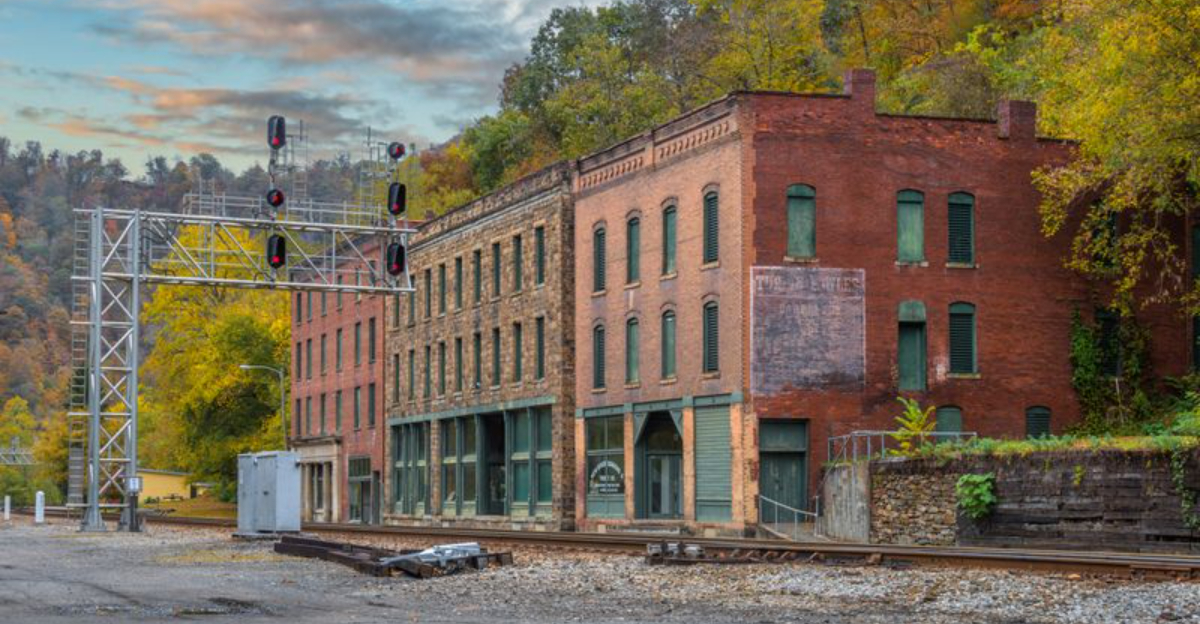
Tucked away in the rugged heart of Fayette County, West Virginia, Thurmond sits along the New River like a forgotten whisper from another era.
With a population that barely reaches five residents, this once-thriving railroad town has become one of the most hauntingly preserved relics of Appalachian history.
Travelers seeking an authentic glimpse into early 20th-century coal country are drawn to Thurmond’s eerie stillness, where abandoned buildings and rusting railroad tracks tell stories of boom times long past.
The town’s atmosphere feels suspended in amber, offering visitors a rare chance to walk through history without the distractions of modern commercialization or tourist crowds.
The Ghost Town Railroad Legacy
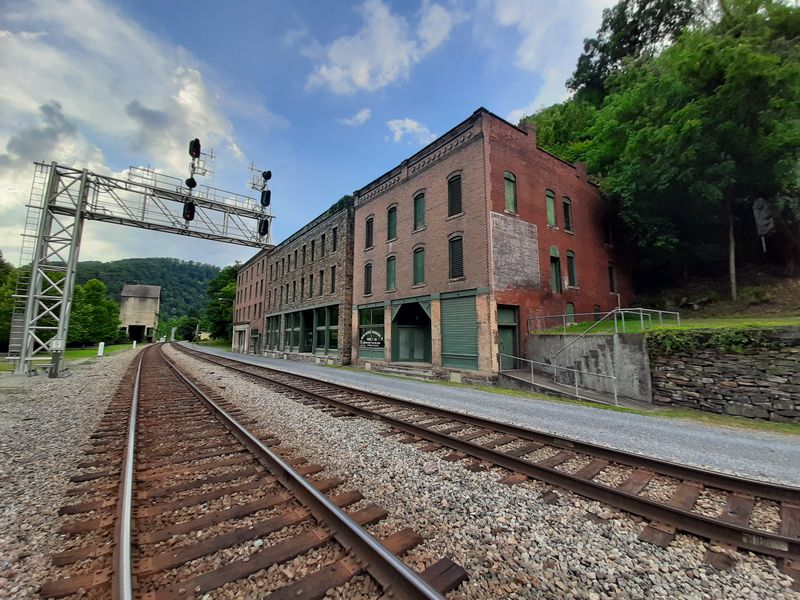
Railroad tracks snake through Thurmond like veins carrying memories of a bygone industrial age.
The Chesapeake and Ohio Railway once made this tiny settlement one of the busiest freight stations in the entire country during the early 1900s.
Coal trains rumbled through day and night, their whistles echoing off the steep gorge walls that cradle the town on both sides.
Walking along the old platform today feels like stepping onto a movie set where time simply stopped.
Weeds push up between the wooden planks, and the silence is so complete you can almost hear the phantom sounds of steam engines and shouting workers.
The depot building still stands, weathered but dignified, its windows dark and empty.
During its peak years, Thurmond processed millions of tons of coal heading to markets across America.
The town earned a reputation for wild living, with stories of gambling, saloons, and rough characters who came with the railroad life.
Now the National Park Service maintains what remains, preserving these structures as part of the New River Gorge National Park and Preserve.
Visitors can walk freely among the buildings, imagining the hustle and energy that once filled these now-silent streets.
The contrast between past vitality and present emptiness creates an atmosphere that feels almost supernatural.
Photography enthusiasts find endless inspiration in the decaying architecture framed against the lush Appalachian wilderness reclaiming its territory.
This railroad legacy defines everything about Thurmond’s identity and explains why it feels so profoundly frozen in time.
The Five Remaining Residents
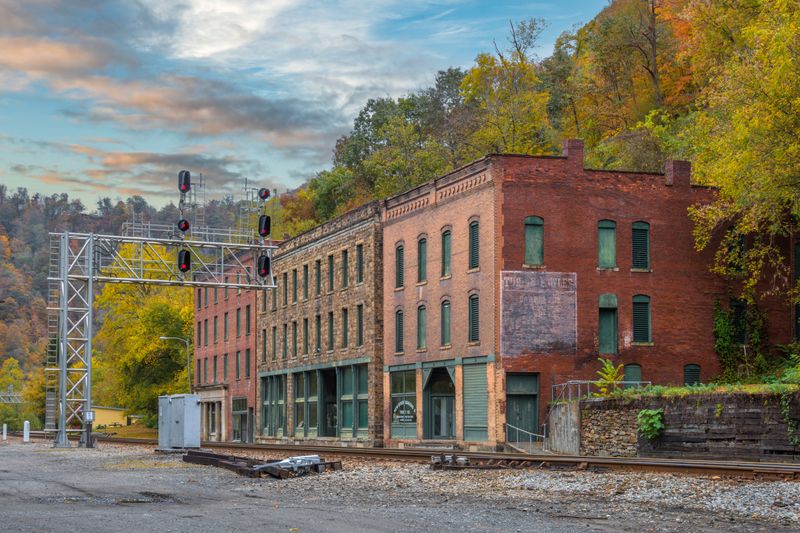
Imagine living in a town where you can count every neighbor on one hand.
Thurmond’s 2020 census recorded exactly five people calling this isolated community home, making it one of the smallest incorporated towns in the entire United States.
These hardy souls have chosen to remain in a place most people abandoned decades ago.
Their daily existence unfolds in near-total solitude, surrounded by empty buildings that once housed hundreds of families.
No grocery stores, no gas stations, no schools or churches remain open for business.
The nearest services require a winding drive through the gorge to other small towns that themselves feel remote.
Living here demands a special kind of resilience and appreciation for quietude that most modern Americans cannot fathom.
The residents become almost invisible to the occasional visitors who wander through, preferring their privacy in this most unusual of circumstances.
Their reasons for staying vary, from deep family roots to a love of the profound peace that only true isolation can provide.
Some maintain the few occupied homes with care, creating small pockets of life amid the overwhelming abandonment.
The experience of encountering one of these residents feels like meeting a character from a different century.
They move through their routines against a backdrop that would seem post-apocalyptic to outsiders but represents home to them.
This tiny population underscores just how completely Thurmond has retreated from the bustling hub it once was.
The New River Setting
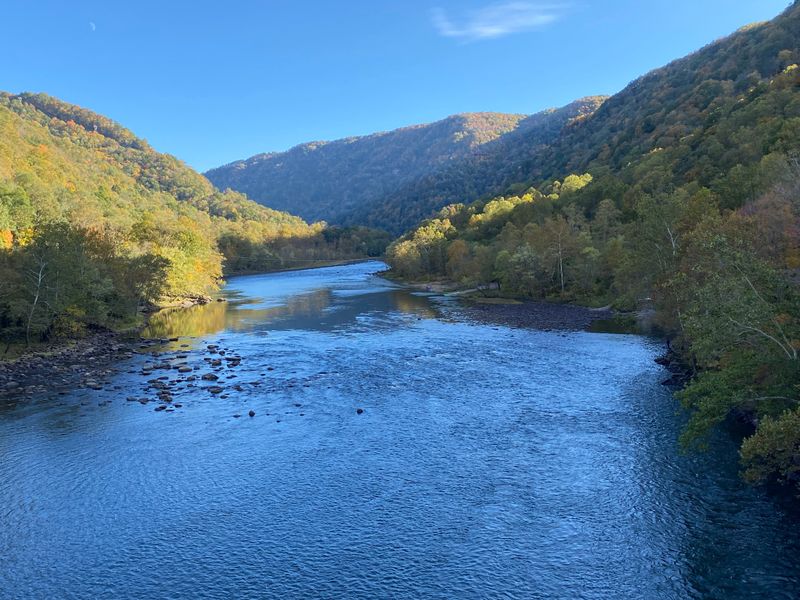
The New River carves through ancient rock formations, creating a gorge so deep and dramatic that Thurmond feels hidden from the outside world.
This waterway, despite its misleading name, ranks among the oldest rivers on Earth, having flowed through these mountains for millions of years.
Its dark waters move with steady purpose past the town, indifferent to human fortunes rising and falling along its banks.
Steep hillsides covered in dense hardwood forest rise sharply on both sides, creating a natural corridor that channels sound and amplifies the sense of isolation.
During spring, the river swells with snowmelt, its currents growing swift and powerful enough to reshape the shoreline.
Summer brings lower water levels that reveal rocky shoals where patient fishermen cast their lines.
Autumn transforms the surrounding forest into a blazing tapestry of orange, red, and gold that reflects beautifully in the river’s surface.
Winter strips the trees bare, exposing the raw bones of the landscape and making Thurmond visible from vantage points across the gorge.
The river provided the essential transportation route that made Thurmond’s existence possible, allowing coal to move downstream toward larger markets.
Today it serves primarily as a destination for whitewater rafters and kayakers seeking adventure through one of America’s premier outdoor recreation areas.
These modern visitors often float past Thurmond without realizing the historic settlement sits just yards from their rafts.
The contrast between the river’s eternal flow and the town’s frozen decay creates a poignant meditation on permanence and change.
The Decaying Hotel Structures
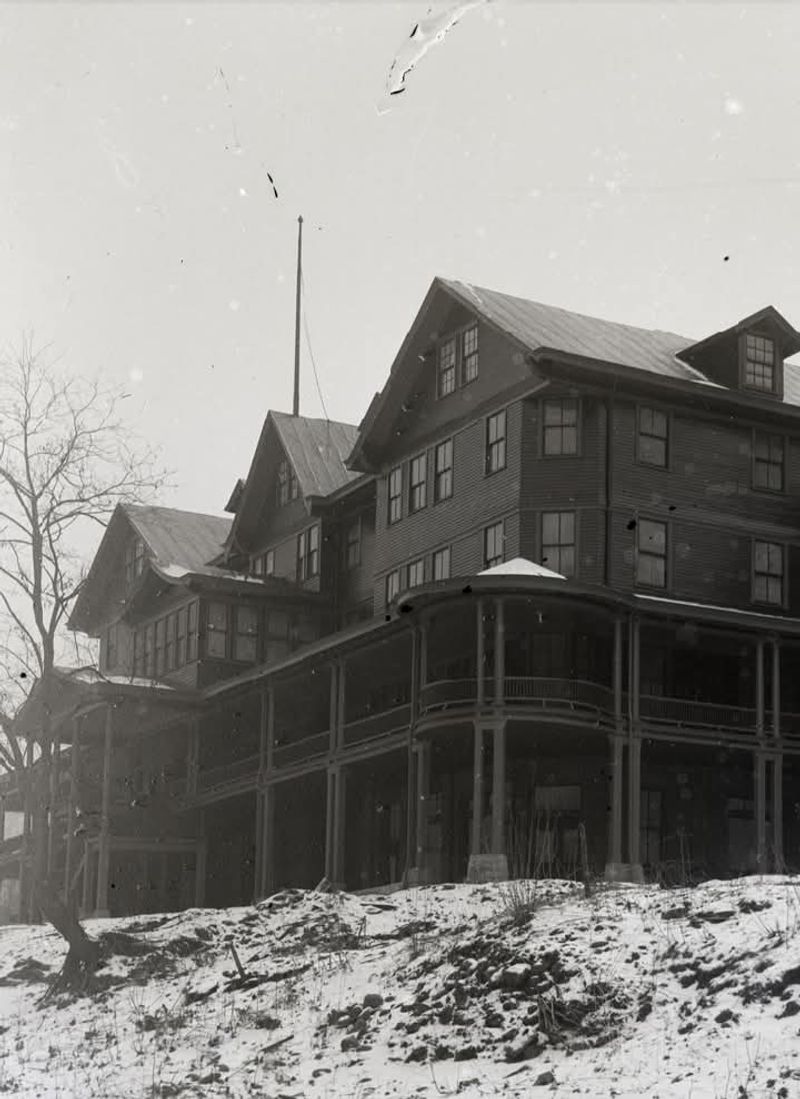
Several hotel buildings once catered to the constant stream of railroad workers, traveling salesmen, and coal company executives passing through Thurmond.
These establishments offered varying levels of comfort, from basic lodging for laborers to more refined accommodations for businessmen.
The Dun Glen Hotel stood as the most famous, a substantial structure that hosted countless transactions and celebrations during the boom years.
Stories circulated about the wild parties, high-stakes poker games, and deals worth millions conducted within these walls.
Now the hotels stand in various stages of collapse, their wooden frames sagging under decades of neglect and weather damage.
Porches that once welcomed weary travelers now tilt at dangerous angles, their railings missing or broken.
Paint has long since peeled away, leaving bare wood to silver and crack in the elements.
Windows broken by vandals or simply fallen from rotted frames create dark openings that give the buildings an unsettling appearance.
Interior walls have collapsed in places, exposing room layouts and allowing vegetation to grow inside what were once sleeping quarters.
Visitors walking past these ruins can almost hear phantom voices and music drifting from the empty rooms.
The National Park Service has stabilized some structures to prevent total collapse, but restoration remains impossible given the extensive damage.
These hotel ruins serve as powerful symbols of hospitality industries that vanished along with the economic activity that supported them.
Photographing them requires careful attention to both aesthetic composition and personal safety around unstable structures.
The Isolated Access Road
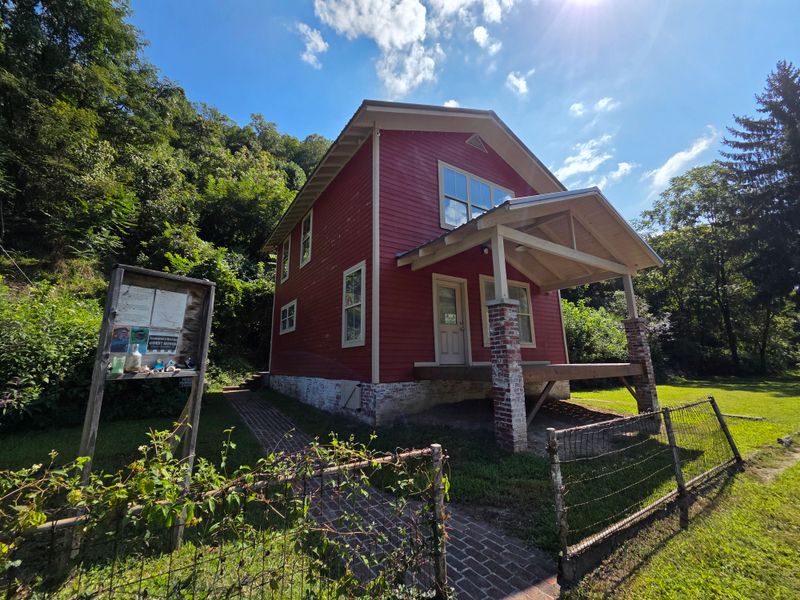
Reaching Thurmond requires commitment, as the access road winds down the gorge wall in a series of tight switchbacks that test driver nerves.
This narrow route represents the only vehicular connection between the town and the modern world above.
The pavement shows its age, cracked and patched repeatedly over decades of freeze-thaw cycles and minimal maintenance.
Guardrails appear sporadically, and in some sections, nothing separates the road edge from steep drops into the forest below.
During winter, ice and snow can make the descent treacherous or completely impassable for days at a time.
This isolation contributed significantly to Thurmond’s decline, as improving the road never seemed economically justified for such a tiny population.
The journey down creates a sense of leaving civilization behind, descending into a pocket of the past preserved by geographical circumstance.
Cell phone signals fade and disappear as the gorge walls block transmission, adding to the feeling of disconnection.
Visitors often report a slight anxiety about the return trip, knowing they must navigate the same challenging route in reverse.
The road’s condition and location perfectly symbolize Thurmond’s relationship with the outside world: technically connected but practically remote.
Local residents during the boom years relied heavily on the railroad rather than roads, as trains could navigate the gorge more easily than wheeled vehicles.
Today the difficult access actually helps preserve the town by limiting casual visitors and discouraging vandalism through sheer inconvenience.
Driving this road becomes part of the authentic experience of understanding why Thurmond remains so profoundly stuck in time.
The Preserved Train Depot
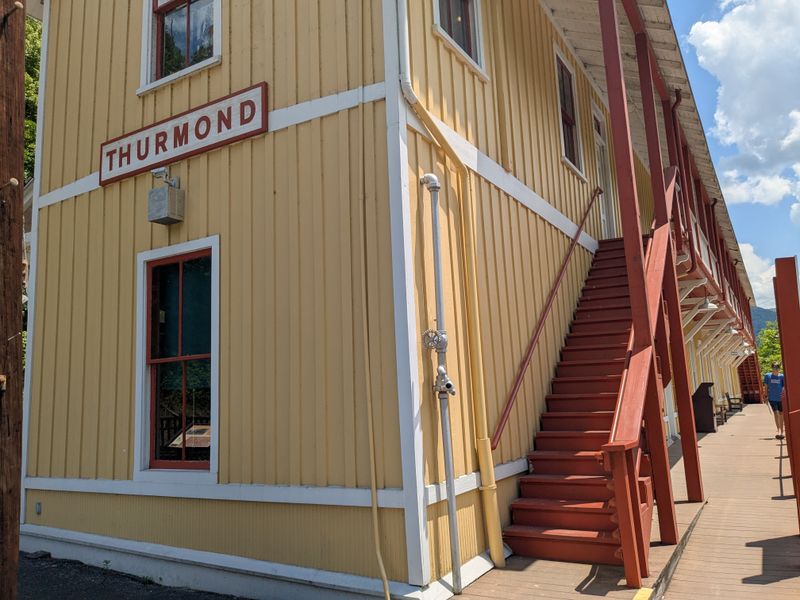
The train depot stands as Thurmond’s most intact and recognizable structure, maintained by the National Park Service as a visitor center during limited seasonal hours.
Its wooden siding has been repainted to approximate the original colors, giving visitors a sense of how the building appeared during its working years.
The covered platform extends along the tracks, providing shelter where passengers once waited for trains that arrived with clockwork regularity.
Inside, exhibits tell the story of Thurmond’s rise and fall through photographs, artifacts, and interpretive displays.
Old railroad equipment, ticket windows, and period furnishings help recreate the atmosphere of a busy small-town station.
The depot’s preservation offers a stark contrast to the decay surrounding it, showing what Thurmond might look like if resources existed to restore the entire town.
During open hours, park rangers share stories about the railroad workers, coal miners, and colorful characters who passed through this building.
Many visitors find the depot’s well-maintained condition almost jarring after walking past so many ruins.
It serves as both museum and memorial, honoring the thousands of people whose labor built the coal industry that powered America’s industrial age.
The building’s architecture follows standard Chesapeake and Ohio Railway designs, making it representative of hundreds of similar depots that once dotted the rail network.
Standing on the platform, visitors can easily imagine the scene when a loaded coal train rumbled through, its weight making the ground tremble.
The depot functions as Thurmond’s anchor to reality, preventing the entire town from slipping completely into forgotten obscurity.
The Eerie Silence and Atmosphere
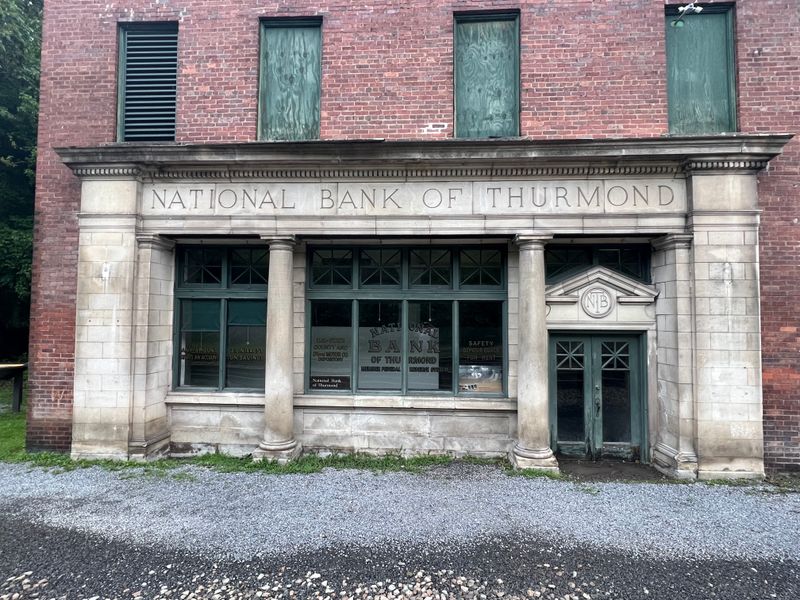
Silence blankets Thurmond like a physical presence, so complete that visitors instinctively lower their voices to whispers.
The absence of normal town sounds creates an atmosphere that feels almost supernatural in its intensity.
No traffic noise, no voices from nearby homes, no machinery or commerce disturbs the profound quiet.
Only natural sounds penetrate this stillness: wind moving through empty buildings, birds calling from the forest, the distant murmur of the river.
This quietude affects people differently, with some finding it peaceful while others experience genuine unease.
The human mind expects certain ambient noises in any settlement, and their absence triggers primitive instincts about abandoned places.
Fog often fills the gorge during mornings and evenings, reducing visibility and amplifying the ghostly feeling.
Shadows seem deeper here, and the play of light through broken windows creates effects that momentarily suggest movement where none exists.
Walking alone through Thurmond can feel like trespassing in a place where you are not entirely welcome.
The atmosphere becomes particularly intense during overcast days when gray skies match the weathered buildings.
Some visitors report feeling watched, though they encounter no other people during their entire visit.
This sensation likely stems from the town’s rich history pressing on the consciousness, making the past feel uncomfortably present.
The eerie quality has attracted paranormal enthusiasts who believe such abandoned places retain energy from their former inhabitants.
Whether supernatural or simply psychological, Thurmond’s atmosphere creates an unforgettable experience that lingers in memory long after leaving.
The Seasonal Transformations
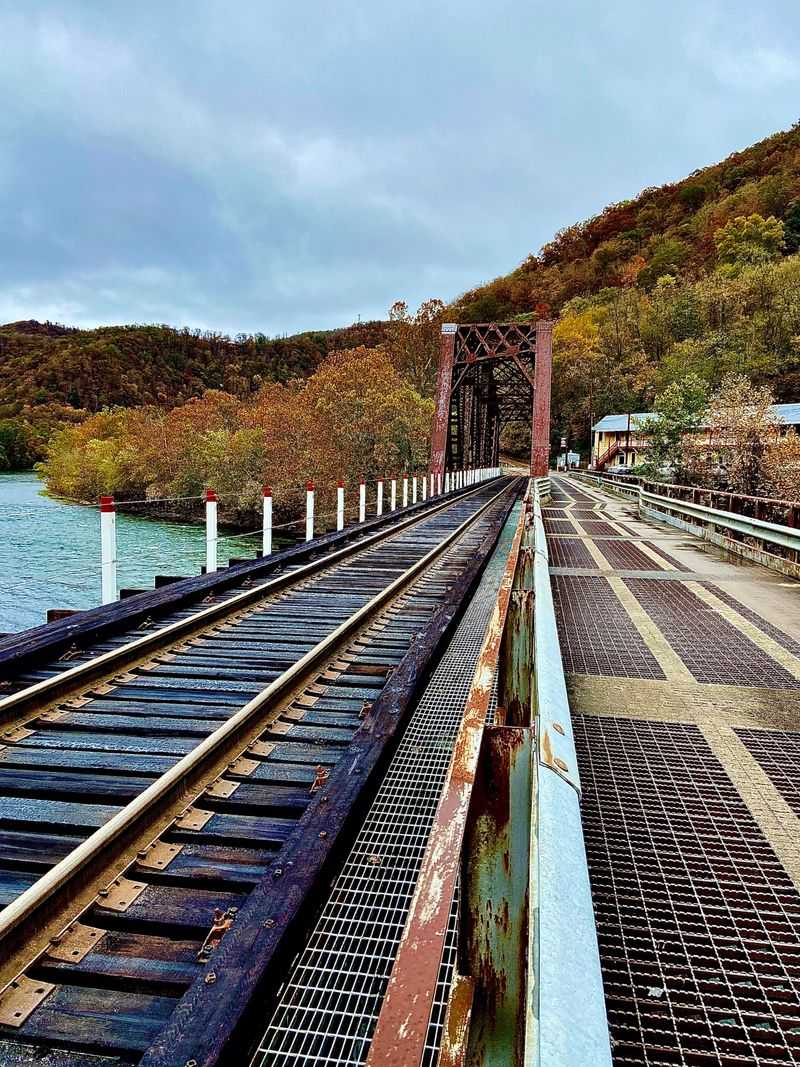
Spring arrives late in the gorge, with wildflowers finally blooming in May when the canopy above allows sufficient sunlight through.
Delicate blossoms push up around building foundations, creating poignant contrasts between natural renewal and human abandonment.
The New River runs high and fast with snowmelt, its increased volume adding a constant rushing sound to the town’s soundscape.
Summer brings oppressive heat and humidity that settles in the gorge like a blanket, with temperatures climbing higher than on the plateau above.
Vegetation grows with almost tropical intensity, vines and weeds threatening to swallow the remaining structures entirely.
The thick foliage makes Thurmond nearly invisible from across the river, hidden in green shadow.
Autumn transforms the experience completely, as the surrounding forest erupts in spectacular color that draws photographers from across the region.
The town’s gray and brown buildings provide perfect contrast to the blazing hillsides, creating compositions that seem almost too dramatic to be real.
Cooler temperatures make exploration more comfortable, and the thinning canopy allows more light to reach the streets.
Winter strips away all softening elements, leaving Thurmond at its most stark and honest.
Snow accumulates on collapsed roofs and empty streets, creating beautiful but melancholy scenes.
Ice forms along the river’s edge, and the bare forest reveals the full extent of the gorge’s dramatic topography.
Each season offers different perspectives on abandonment and persistence, showing how nature continues its cycles regardless of human presence or absence.
The National Park Preservation Efforts
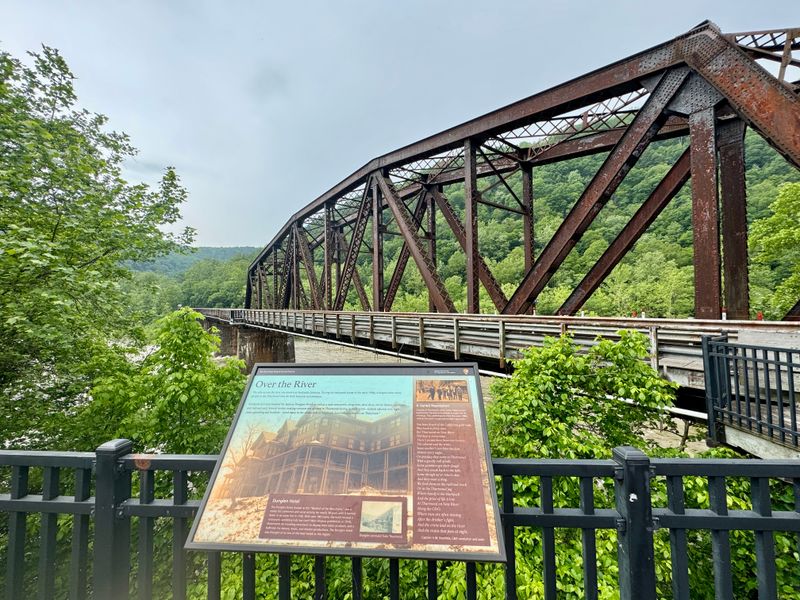
Thurmond’s inclusion in the New River Gorge National Park and Preserve saved it from complete obliteration.
Without federal protection, the remaining buildings would likely have collapsed entirely or been demolished as safety hazards.
The National Park Service acquired most of the town’s structures through purchases and donations during the 1970s and 1980s.
This intervention came just in time, as many buildings had already reached critical states of decay.
Park staff face ongoing challenges in deciding which structures to stabilize and which to allow to deteriorate naturally.
Limited budgets mean preservation efforts focus on the most historically significant or publicly accessible buildings.
The depot receives the most attention and resources, while other structures get only minimal stabilization to prevent sudden collapse.
This approach creates a hierarchy of preservation that some historians debate, questioning which elements of Thurmond’s story deserve saving.
Interpretive signs throughout the town provide context about buildings and the community’s history.
These educational efforts help visitors understand what they are seeing rather than simply wandering past ruins without comprehension.
The park service also maintains trails and viewing areas that allow safe exploration while protecting both visitors and fragile structures.
Preservation philosophy here leans toward arrested decay rather than full restoration, maintaining authenticity while preventing total loss.
This middle ground allows Thurmond to serve as an outdoor museum where the past remains visible but not artificially recreated.
Future generations will be able to witness this remarkable example of Appalachian industrial history thanks to these ongoing preservation efforts.
Dear Reader: This page may contain affiliate links which may earn a commission if you click through and make a purchase. Our independent journalism is not influenced by any advertiser or commercial initiative unless it is clearly marked as sponsored content. As travel products change, please be sure to reconfirm all details and stay up to date with current events to ensure a safe and successful trip.
