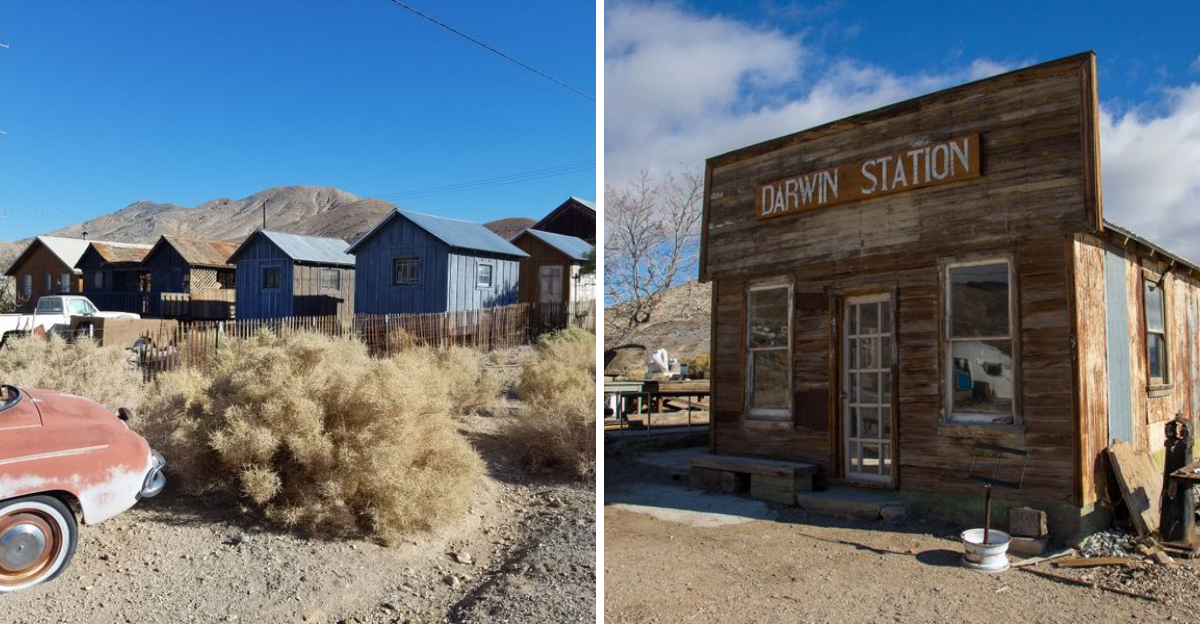
Darwin, California, sits at the edge of nowhere, where the desert stretches endlessly and the only sound is the wind whistling through abandoned buildings.
This tiny community in Inyo County might be one of the quietest spots in the entire state, with fewer people than your average classroom.
Once a booming mining town filled with thousands of hopeful prospectors, it now stands as a living relic of the Old West, home to just a handful of souls who prefer solitude over city noise.
If you are curious about what life looks like when modern conveniences disappear and silence becomes your closest neighbor, Darwin offers a fascinating glimpse into a world that time almost forgot.
1. A Population Smaller Than Your Classroom
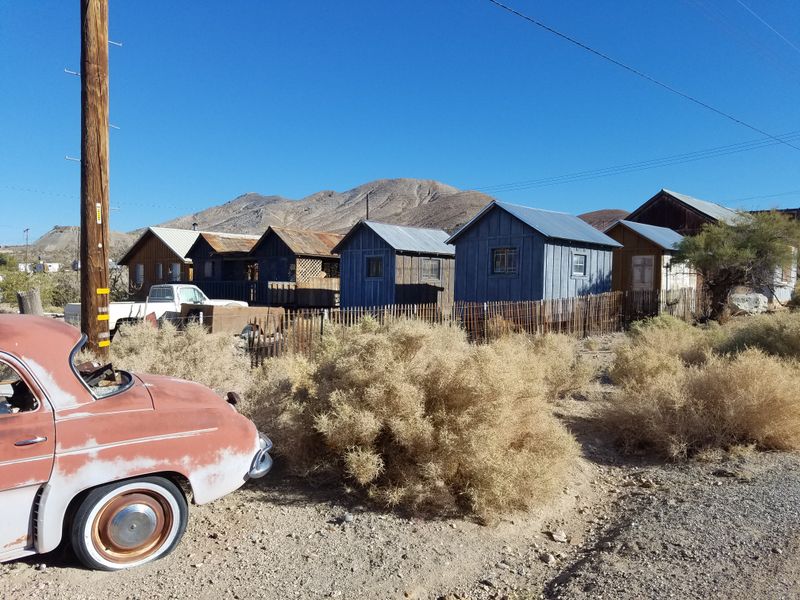
Walking through Darwin feels like stepping into a place where everyone has simply vanished.
The 2020 census counted only 36 residents living in this remote corner of California, a dramatic drop from the thousands who once called this mining town home.
Every face becomes familiar quickly when your entire community could fit inside a school bus.
This extreme isolation attracts a particular type of person: those who crave distance from crowded cities and constant noise.
Neighbors know each other not just by name but by the specific sound of their truck engines approaching down the dirt roads.
The population has been steadily declining for decades, making Darwin one of the smallest inhabited communities in the state.
Some buildings stand completely empty, their windows boarded up and their stories forgotten.
Yet the few who remain have created a tight bond, relying on each other in ways that city dwellers rarely experience.
Life here moves at a different pace, measured not by traffic lights or schedules but by sunrise and sunset.
Darwin, California proves that you do not need crowds to build a community, just commitment.
2. Born From Silver and Lead Dreams
Picture hundreds of miners arriving in the desert with pickaxes and dreams of striking it rich.
That was Darwin in 1874, when prospectors discovered valuable silver and lead deposits in the surrounding hills.
Almost overnight, a tent city sprang up, transforming barren desert into a bustling community.
At its peak, between one thousand and three thousand five hundred people crowded into this remote location, building saloons, boarding houses, and supply stores.
The mines operated around the clock, with ore wagons constantly rumbling through the streets.
Darwin became one of many California boomtowns where fortunes could be made or lost in a single day.
Miners worked in dangerous conditions deep underground, hoping each swing of their tools would reveal a rich vein.
The town had everything a frontier settlement needed: blacksmiths, doctors, and even a newspaper.
But like most mining communities, Darwin’s prosperity depended entirely on what lay beneath the ground.
When the ore eventually ran out, so did most of the people, leaving behind the skeleton of what once thrived.
3. A Doctor’s Name Lives On
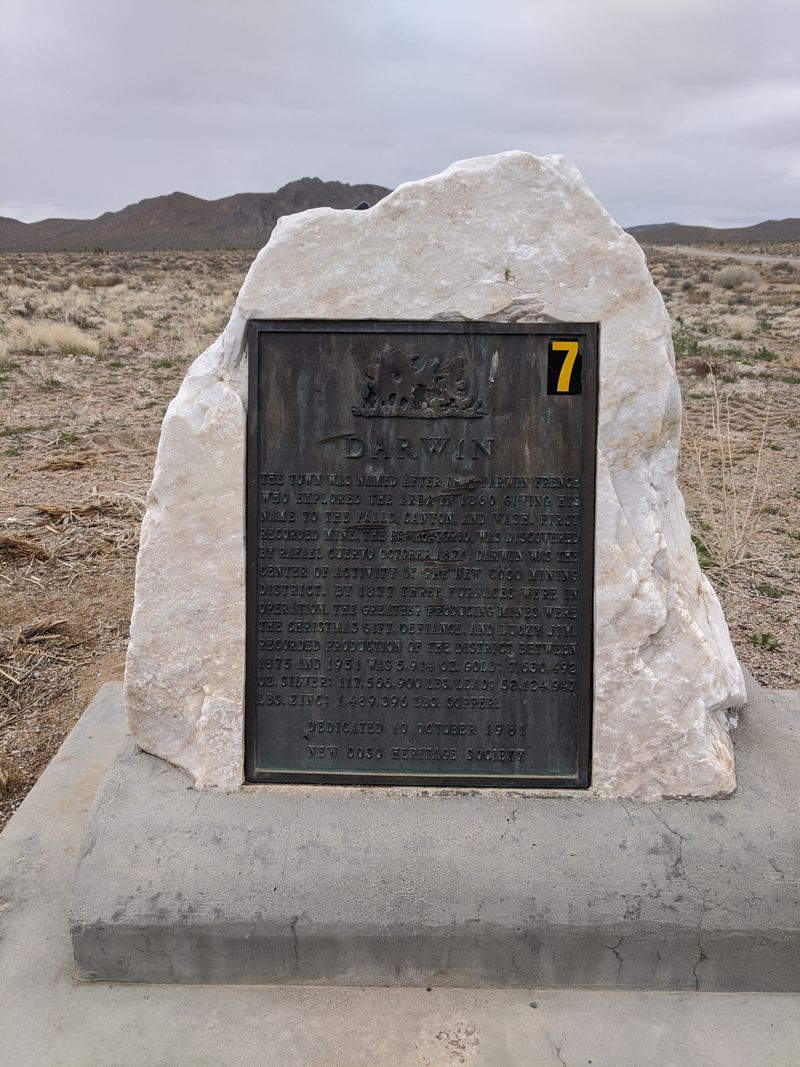
Most towns get named after geographical features or founding fathers, but Darwin took its name from a frontier doctor with an adventurous spirit.
Dr. Darwin French was not just a physician but also a rancher, miner, and explorer who roamed California’s wildest territories.
He led a prospecting expedition through the region during the 1850s, long before anyone discovered the valuable minerals that would create the town.
His reputation as a skilled doctor and fearless explorer made him a respected figure throughout the territory.
When miners finally struck silver and lead in the area, they honored his early exploration by naming their new settlement after him.
Dr. French represented the type of hardy, multi-talented individual who thrived on the frontier, someone equally comfortable setting broken bones or swinging a pickaxe.
His legacy lives on in the town’s name, even though few current residents know the full story behind it.
Darwin, California reminds us that history often celebrates individuals who refused to stay in one place or limit themselves to one profession.
The doctor never lived to see the town that bore his name reach its peak population.
Yet his spirit of exploration perfectly captures what draws people to such remote places even today.
4. Where Roads End and Isolation Begins
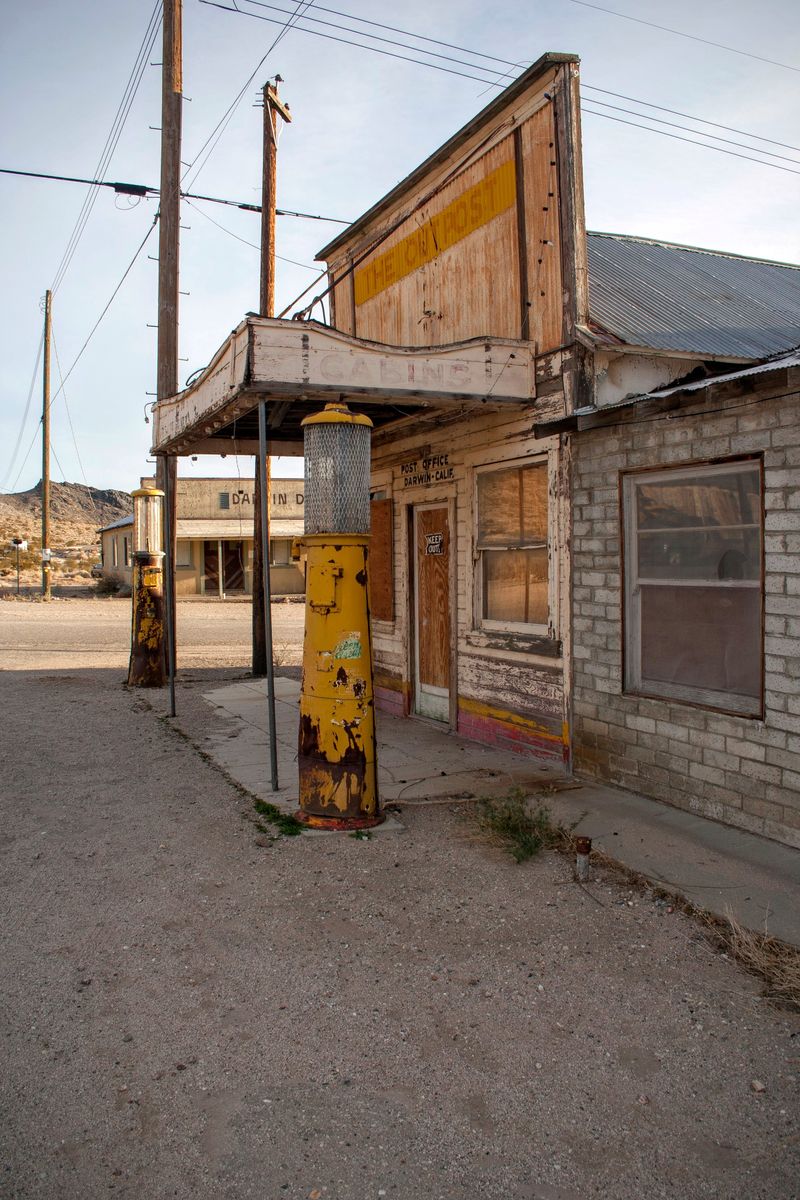
Getting to Darwin requires commitment and a vehicle built for punishment.
The town sits at the end of a rutted, unpaved road 22 miles southeast of Keeler, itself hardly a metropolis.
Modern highways pass Darwin by completely, a situation that became permanent when a new route bypassed the town in 1937.
That decision essentially sealed Darwin’s fate as one of California’s most isolated communities.
Visitors bounce along the rough road, wondering if their GPS has led them astray as civilization seems to disappear in the rearview mirror.
There are no road signs counting down the miles, no billboards promising food or gas ahead.
Just endless desert, scattered Joshua trees, and the occasional jackrabbit darting across the path.
This extreme remoteness protects Darwin from casual tourists and keeps away anyone not serious about experiencing true isolation.
Cell phone signals vanish miles before you arrive, cutting off the digital world completely.
For residents, this distance means planning every trip carefully since running out for milk requires an all-day expedition.
The location at Darwin, California 93522 feels like the edge of the world.
5. No Gas, No Groceries, No Problem
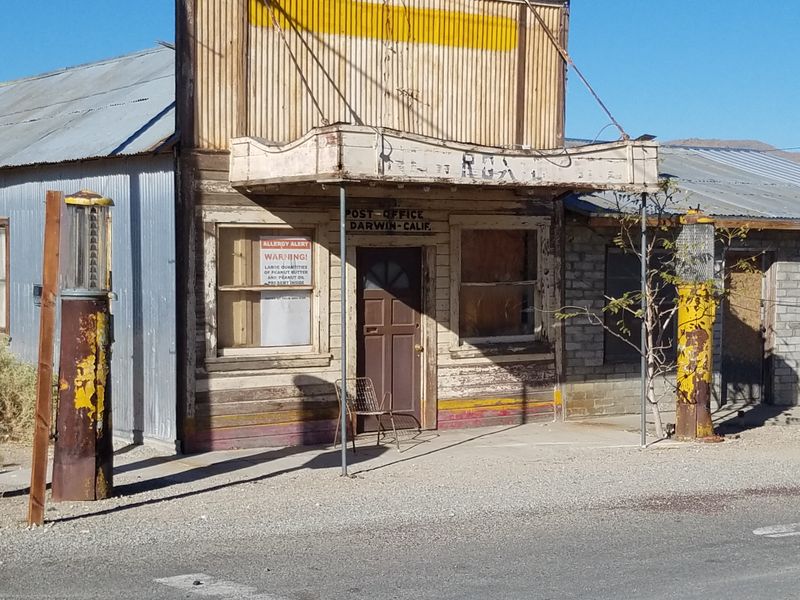
Forget stopping for a quick snack or filling up your tank in Darwin.
This community operates without a single gas station, grocery store, restaurant, or even paved street.
Residents must be completely self-sufficient, stocking up on supplies during trips to distant towns.
The nearest place to buy food or fuel sits dozens of miles away over rough roads.
Living here means planning weeks ahead, keeping pantries stocked, and maintaining backup supplies of everything essential.
There are no convenience stores for forgotten items, no restaurants for nights when you do not feel like cooking.
Every resident becomes an expert at making do with what they have and fixing things that break.
The lack of commercial activity gives Darwin an eerie, frozen-in-time quality that fascinates visitors.
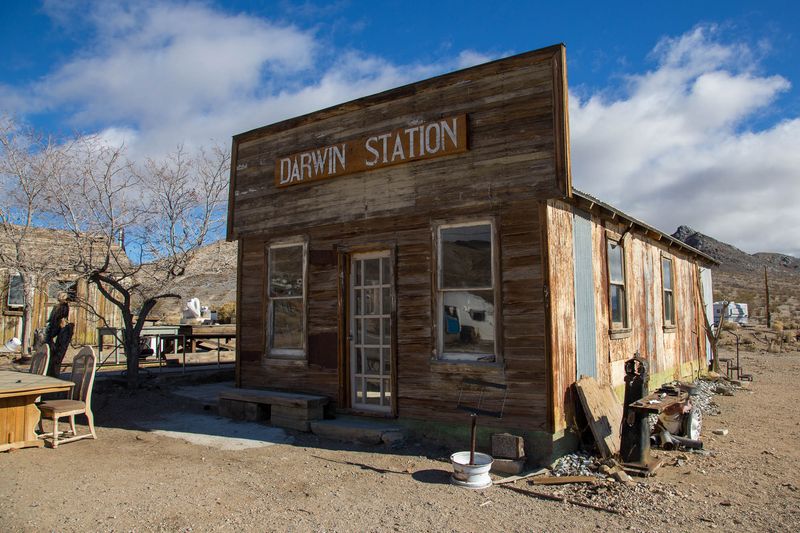
Empty storefronts line the unpaved main street, their windows dark and their purposes long forgotten.
Yet this absence of commerce also creates freedom from the constant advertising and consumption that defines modern life.
People here measure wealth differently, valuing independence and peace over convenience and shopping options.
Darwin, California proves that humans can thrive without the endless array of services most of us consider essential.
6. The Post Office That Refuses to Quit
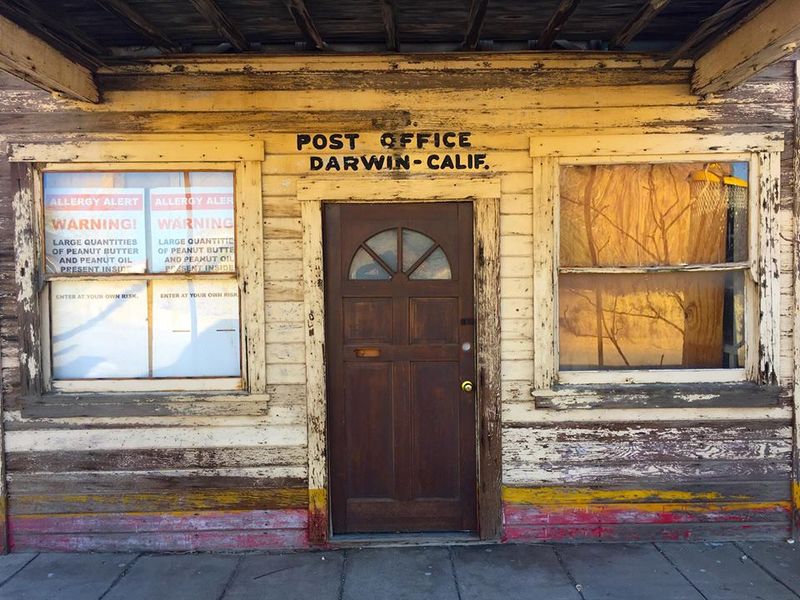
Among the abandoned buildings and quiet streets, one institution keeps Darwin connected to the outside world.
The U.S. Post Office continues operating, serving as one of the few active services in this remote community.
Mail delivery might seem like a small thing, but in a place without internet or cell service, it becomes a lifeline.
Residents check their boxes regularly, not just for bills and packages but for the human connection that letters represent.
The post office also serves as an unofficial community center where neighbors catch up on local news.
Its continued operation demonstrates the federal commitment to serve even the smallest, most isolated American communities.
Postal workers make the long journey over rough roads to ensure Darwin stays connected.
For artists and writers living here, the post office enables them to ship their work and maintain professional connections.
It also allows elderly residents to receive medications and essential supplies without making dangerous trips.
The simple existence of this small building represents hope and persistence in a place that many have abandoned.
Darwin’s post office proves that some services matter too much to ever disappear completely.
7. Where Artists Find Their Muse in Silence
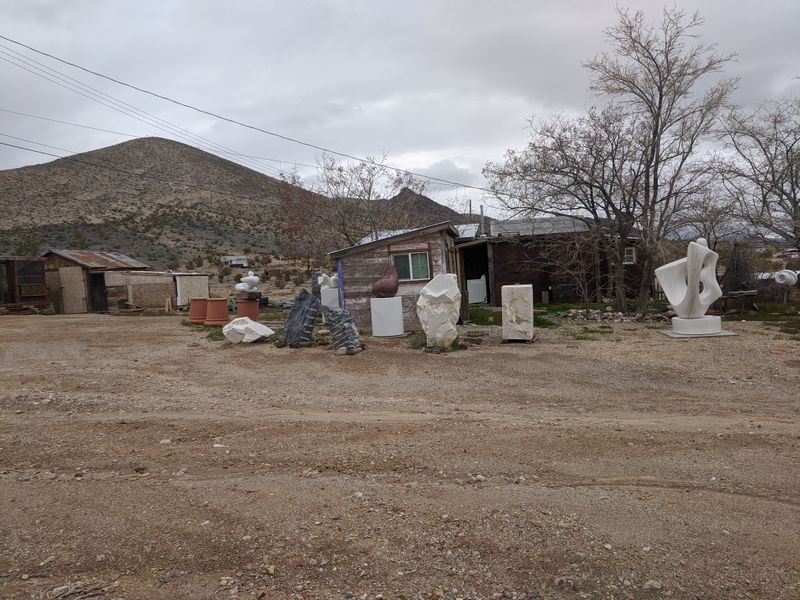
Strange sculptures emerge from the desert landscape, unexpected bursts of creativity in an otherwise barren setting.
Many current Darwin residents are artists, writers, and musicians who deliberately chose isolation over inspiration found in crowded cities.
They have transformed the town into an unlikely art colony, decorating empty lots with installations made from desert debris and mining remnants.
Sculpture gardens sprout between abandoned buildings, featuring works that blend seamlessly with the harsh environment.
These creative individuals found something valuable in Darwin’s silence: the mental space to work without distraction.
No traffic noise interrupts their concentration, no crowds demand their attention.
The extreme isolation that drives most people away becomes their greatest asset.
Musicians can practice at any hour without bothering neighbors, writers can work through the night without streetlights glaring through windows.
The town has become a canvas where artists express themselves freely, unburdened by regulations or neighborhood associations.
Visitors wandering through Darwin encounter unexpected art around every corner, from painted rocks to elaborate metal sculptures.
This creative community proves that inspiration does not require museums or galleries, just freedom and space to create.
California’s art scene extends far beyond Los Angeles and San Francisco.
8. Freedom From Government and Authority
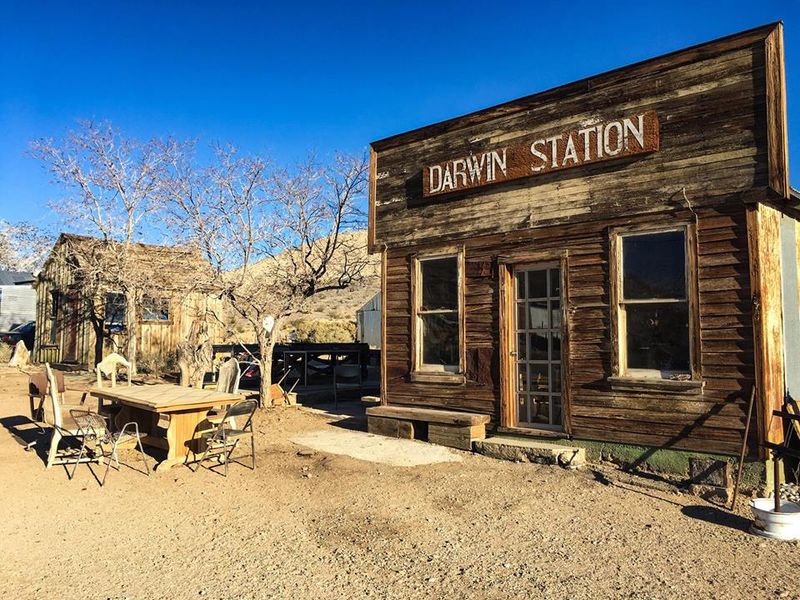
Imagine living somewhere without police patrols, city councils, or building inspectors.
Darwin reportedly operates without formal local government or law enforcement presence.
Residents govern themselves through informal agreements and mutual respect rather than written ordinances.
This absence of official authority attracts people who value independence above all else.
Disputes get settled neighbor to neighbor, without lawyers or court dates.
Property owners can build, modify, or decorate however they choose without permits or inspections.
This freedom comes with responsibility, though, as residents must handle their own conflicts and emergencies.
The nearest sheriff’s deputy might be hours away, making self-reliance essential.
For some, this lack of government oversight represents the ultimate American freedom.
For others, it would feel dangerously chaotic and unprotected.
Darwin’s residents clearly fall into the first category, choosing personal liberty over the security that organized government provides.
This arrangement works because the tiny population consists of like-minded individuals who respect each other’s space and independence.
Life here resembles the frontier days when communities operated on handshake agreements rather than legal contracts.
Darwin, California offers a rare glimpse into what society looks like without layers of bureaucracy.
9. A Ghost Town That Breathes
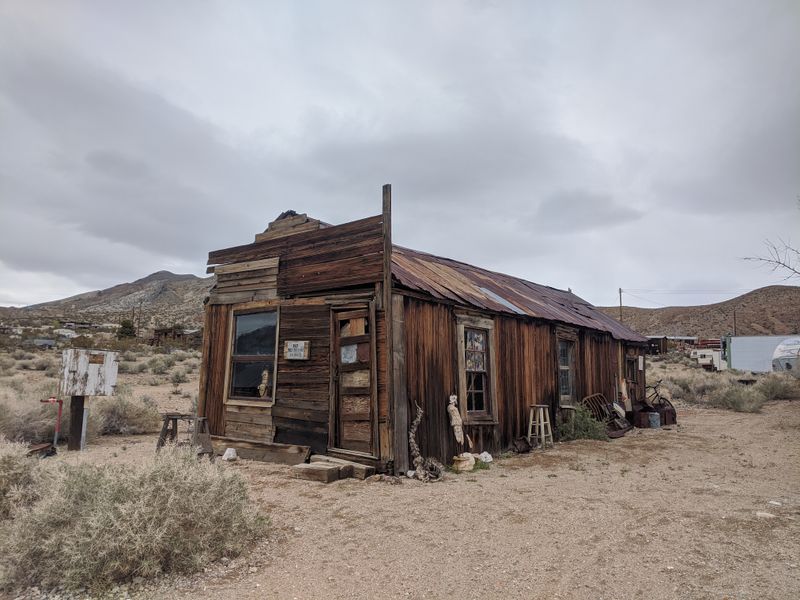
Most ghost towns are completely dead, nothing but crumbling walls and faded memories.
Darwin occupies a strange middle ground, earning its nickname as a living ghost town.
Many buildings stand empty and boarded up, their roofs sagging and their paint long stripped away by desert winds.
Yet among these ruins, a core community maintains active households, keeping the town from disappearing entirely.
This blend of abandonment and habitation creates an eerie atmosphere that fascinates photographers and history enthusiasts.
One house might show clear signs of life with curtains in windows and a truck parked outside, while the building next door slowly collapses into dust.
The contrast captures Darwin’s unique position between past and present, death and survival.
Residents have learned to coexist with the ghosts of the town’s mining heyday, preserving what they can while accepting what time has claimed.
This living ghost town status attracts curious visitors who want to experience a genuine piece of Old West history that has not been sanitized into a tourist attraction.
Darwin refuses to become a museum or completely fade away, instead existing in its own category.
The town’s Wild West past blends seamlessly with modern desert life, creating something entirely unique in California.
10. Famous Enough for Film
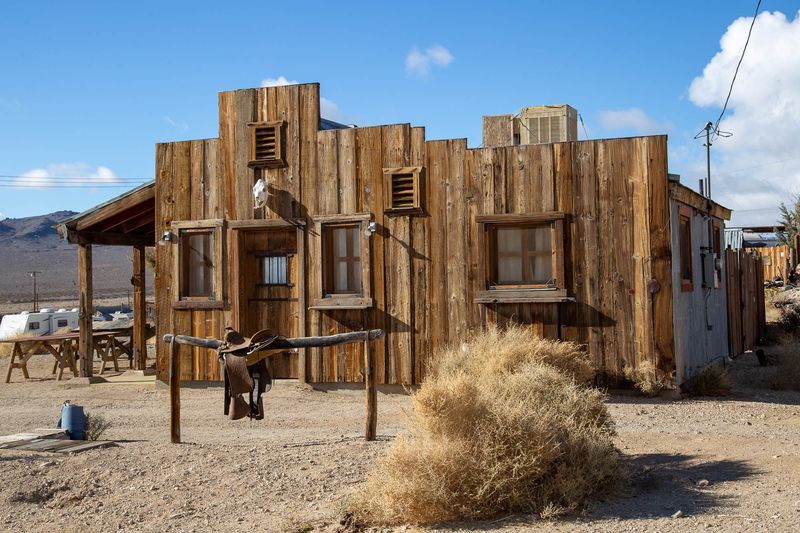
Darwin’s unusual nature eventually caught the attention of documentary filmmakers.
A 2011 film simply titled Darwin explored the town and its eccentric residents, bringing international attention to this isolated community.
The documentary captured daily life in a place where normal rules do not apply and people live according to their own philosophies.
Filmmakers interviewed artists, survivalists, and free spirits who explained why they chose extreme isolation over conventional society.
The movie showcased Darwin’s strange beauty: the art installations, the abandoned buildings, and the vast empty desert surrounding everything.
It also highlighted the challenges of living without basic services and the strength required to thrive in such harsh conditions.
After the documentary’s release, Darwin experienced a brief surge of curious visitors wanting to see this unusual place for themselves.
Some residents welcomed the attention, while others felt it threatened the privacy and isolation they had specifically sought.
The film preserved a moment in Darwin’s ongoing story, documenting a community that might not exist in another generation.
For viewers worldwide, it offered a window into a lifestyle most could never imagine living themselves.
Darwin proved fascinating enough to warrant professional documentation, cementing its place in California’s collection of unusual communities.
Dear Reader: This page may contain affiliate links which may earn a commission if you click through and make a purchase. Our independent journalism is not influenced by any advertiser or commercial initiative unless it is clearly marked as sponsored content. As travel products change, please be sure to reconfirm all details and stay up to date with current events to ensure a safe and successful trip.
