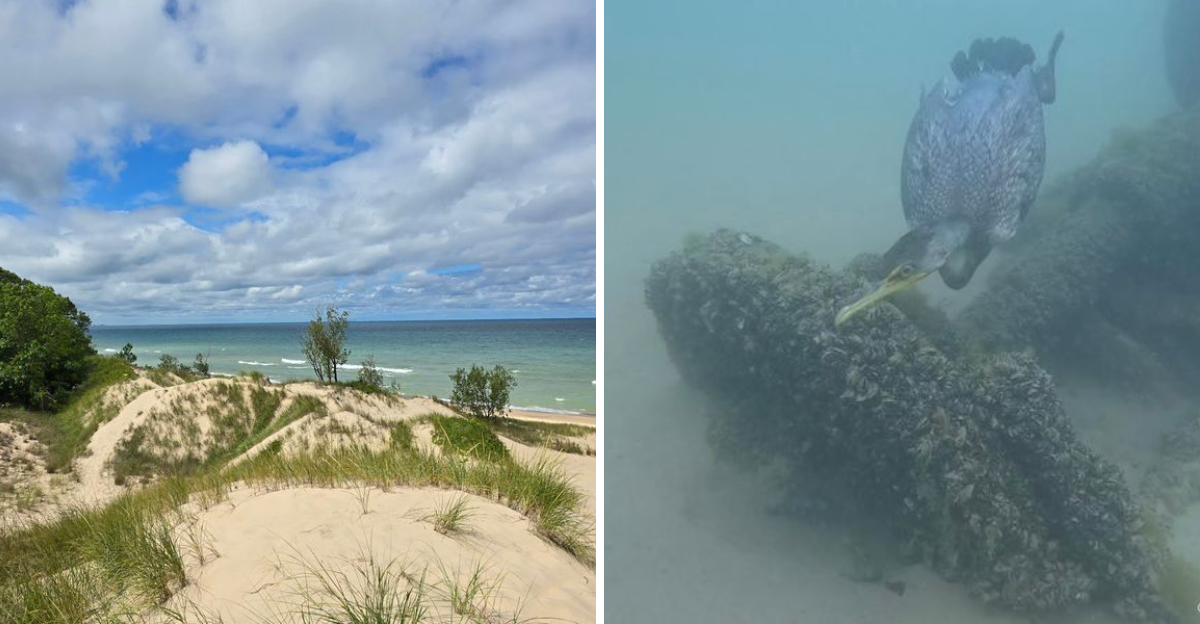
I never expected Indiana to have an underwater shipwreck preserve, and yet here we are. Just a short distance off the shoreline of a state park along Lake Michigan, beneath the cold, clear water, the remains of a century-old steamship rest in quiet stillness.
This submerged preserve is one of the most unexpected and genuinely thrilling places in the entire state, and most Hoosiers have never even heard of it.
Whether you are a history lover, an adventurous diver, or simply someone who enjoys discovering places that feel like a well-kept secret, this spot has something that will stop you in your tracks and make you want to stay a little longer.
Indiana’s First and Only Underwater Nature Preserve
Most people think of Indiana as a landlocked state, and technically that is almost true. But the state does claim a small but significant stretch of Lake Michigan coastline, and in 2013, Indiana made history by establishing its very first underwater nature preserve right here.
That alone deserves some attention.
The J.D. Marshall Nature Preserve was created by the Indiana Department of Natural Resources to protect the shipwreck site and the surrounding underwater ecosystem.
It is a designated historical landmark, sitting at coordinates just off Indiana Dunes State Park in Chesterton. The preserve status means the wreck is legally protected from disturbance, ensuring that future generations can experience it just as visitors do today.
What is especially interesting is how this designation changed the conversation about Indiana’s relationship with Lake Michigan. Before 2013, most people would not have associated Indiana with maritime heritage at all.
The preserve flipped that script entirely. It acknowledged that Indiana has a real underwater history worth protecting and celebrating.
For locals who grew up visiting the dunes without knowing what lay just beneath the surface offshore, learning about the preserve for the first time tends to feel a little like discovering a hidden chapter in a book you thought you already knew. The address for the preserve on land is 1600 N 25 E, Chesterton, IN 46304, which connects visitors to the Indiana Dunes State Park entry point.
Accessible Diving for Beginners and Seasoned Divers Alike
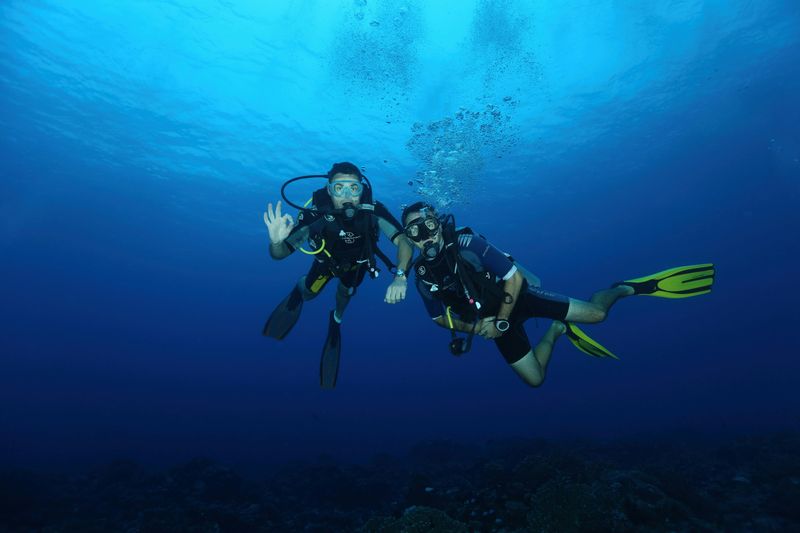
Not every shipwreck is accessible to recreational divers, but the J.D. Marshall is a genuine exception.
The wreck rests at a depth of 30 to 35 feet, which puts it comfortably within reach for divers at multiple skill levels. That depth is deep enough to feel genuinely immersive but shallow enough that newer divers can experience it with proper preparation.
Cold water training is strongly recommended before visiting. Lake Michigan does not warm up the way a Caribbean dive site does, and the temperature differences between surface and depth can catch unprepared divers off guard.
Anyone planning to explore the wreck should make sure they are comfortable with cold water conditions and have the right exposure protection for the season they plan to visit.
For those who have done their preparation, the reward is remarkable. Visibility in Lake Michigan can be surprisingly good, and the structural remains of the J.D.
Marshall create a genuinely eerie and beautiful underwater landscape. Beams, hull sections, and mechanical remnants form the kind of scene that sticks with you long after you surface.
Divers who have explored saltwater wrecks often remark on how well-preserved Great Lakes shipwrecks tend to be, thanks to the cold, fresh water. The J.D.
Marshall is a strong example of that. If you have been looking for a reason to finally use that open water certification, this is a pretty convincing one.
Rich Marine Life Hiding Beneath the Surface
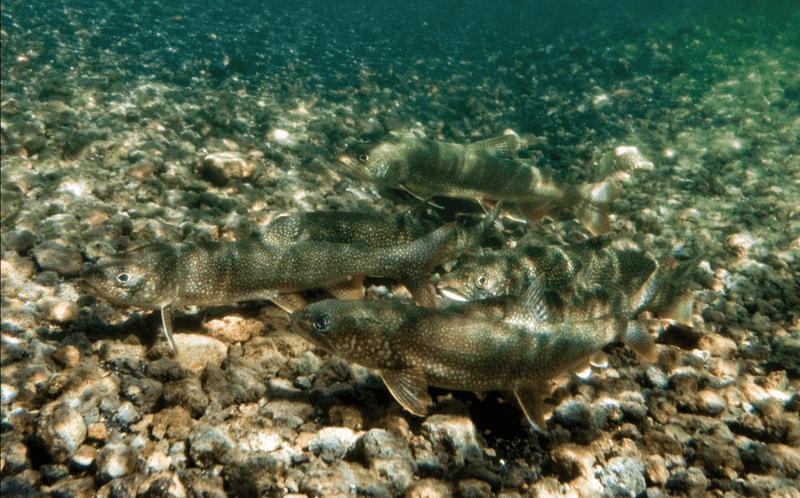
People sometimes assume that freshwater lakes do not offer the same underwater wildlife experience as ocean dives. Lake Michigan will quickly change that assumption.
The waters surrounding the J.D. Marshall wreck support a genuinely impressive variety of fish species that have made the structure their home over the decades.
Salmon, smallmouth bass, and lake trout are among the species divers commonly encounter at the site. The wreck itself acts as an artificial reef of sorts, providing structure and shelter that attracts fish in numbers you would not find in open water.
That dynamic makes every dive slightly different depending on the season and water conditions.
Even for visitors who are not diving, knowing that this kind of underwater ecosystem exists just offshore adds a layer of appreciation to standing on the beach and looking out at the water. Lake Michigan is not just a backdrop.
It is a living system, and the J.D. Marshall preserve sits right at the intersection of history and nature in a way that feels genuinely special.
Anglers and wildlife enthusiasts who spend time along the Indiana Dunes shoreline often do not realize how much is happening beneath the surface just a few hundred yards out. The preserve protects not only the wreck but also the natural habitat that has grown around it, making conservation and recreation feel like one and the same thing here.
A Steamship With a Remarkable Story
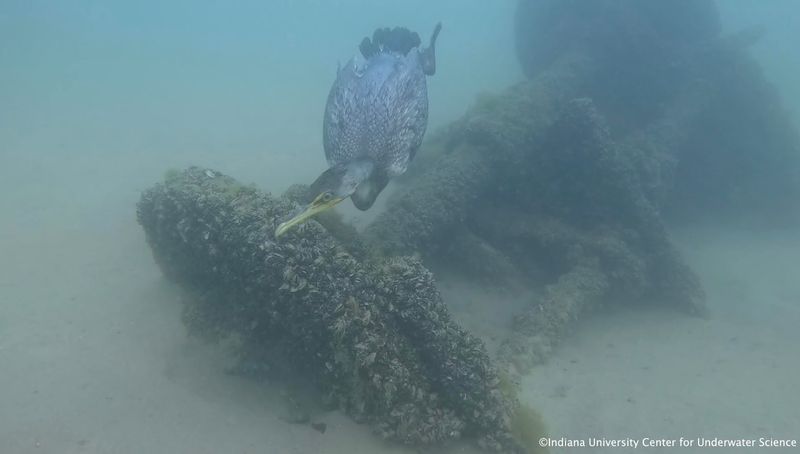
Some shipwrecks are just accidents. The J.D.
Marshall feels more like a story that refused to be forgotten. Built in 1891, this steamship spent its early years hauling lumber across the Great Lakes, back when that kind of trade was the lifeblood of the region.
It was a working vessel, built for purpose and pushed hard through rough northern waters.
By 1910, the ship had been refitted and repurposed as a sand barge, a quieter role for an aging hull. Then on June 11, 1911, a sudden storm swept across Lake Michigan and capsized the vessel just off what is now the Indiana Dunes shoreline.
The wreck settled in 30 to 35 feet of water, where it has remained for well over a century.
What makes this story so compelling is how much of the ship actually survived. The hull structure, machinery remnants, and scattered artifacts still paint a picture of what life aboard a Great Lakes working vessel looked like in the early 1900s.
Indiana does not have a long coastline, but the history packed into that short stretch of Lake Michigan shoreline is genuinely impressive. Knowing that a real working steamship rests just a few hundred yards from the beach gives the whole area a quiet, almost cinematic weight that is hard to shake once you feel it.
A Virtual Tour for Those Who Cannot Dive
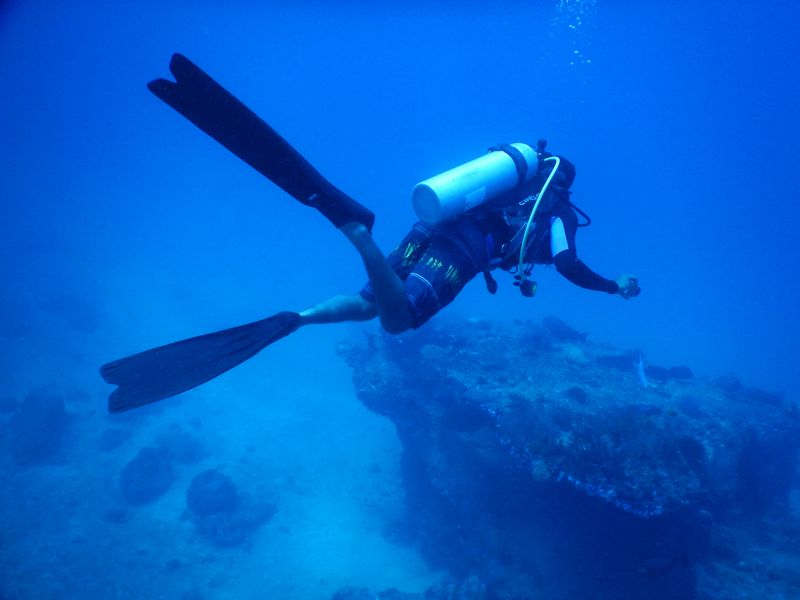
Not everyone is ready to strap on a tank and jump into cold Lake Michigan water, and that is completely understandable. What is wonderful about the J.D.
Marshall Nature Preserve is that the Indiana Department of Natural Resources thought about those visitors too. A 3D virtual tour of the shipwreck is available online, giving anyone the ability to explore the site from wherever they happen to be sitting.
The virtual tour uses detailed imaging to recreate the wreck in a way that feels genuinely immersive. You can navigate through the structure, get a sense of the scale of the vessel, and see the condition of the remains without ever getting your feet wet.
For families with younger children, people with mobility considerations, or anyone who simply wants a preview before committing to a full dive, this is a thoughtful and impressive resource.
It also works as a powerful educational tool. Schools and community groups have used the virtual tour to introduce students to maritime history and underwater archaeology without needing to organize a field trip to the lakeshore.
The technology behind it reflects how seriously Indiana takes the preservation and accessibility of this site. I find it genuinely refreshing when a state agency invests in making a natural and historical resource available to as many people as possible, not just those with specialized skills or equipment.
The virtual tour does exactly that, and it is worth exploring even if you plan to dive the wreck in person afterward.
Educational Programs at Indiana Dunes State Park Nature Center

History is always more interesting when it is presented well, and the Indiana Dunes State Park Nature Center does a solid job of bringing the J.D. Marshall story to life for visitors of all ages.
The center offers interpretive programs and displays specifically related to the shipwreck, giving context to what lies just offshore in a way that is accessible and genuinely engaging.
For families visiting the dunes, stopping at the Nature Center before or after a beach trip adds a meaningful layer to the experience. Kids who might not immediately connect with the idea of a century-old shipwreck tend to respond differently once they see visual displays, hear the story told well, and understand the scale of what happened just a few hundred yards from where they were playing in the sand.
That shift in perspective is one of the best things a good interpretive program can offer.
Beyond the J.D. Marshall programming, the center covers the broader ecology of the dunes and Lake Michigan shoreline, so there is plenty to explore even if you visit with a group that has mixed interests.
The combination of natural history, maritime heritage, and outdoor recreation in one compact location makes this part of Chesterton worth a full day trip, not just a quick stop.
A Living Commitment to Preserving Indiana’s Maritime Heritage
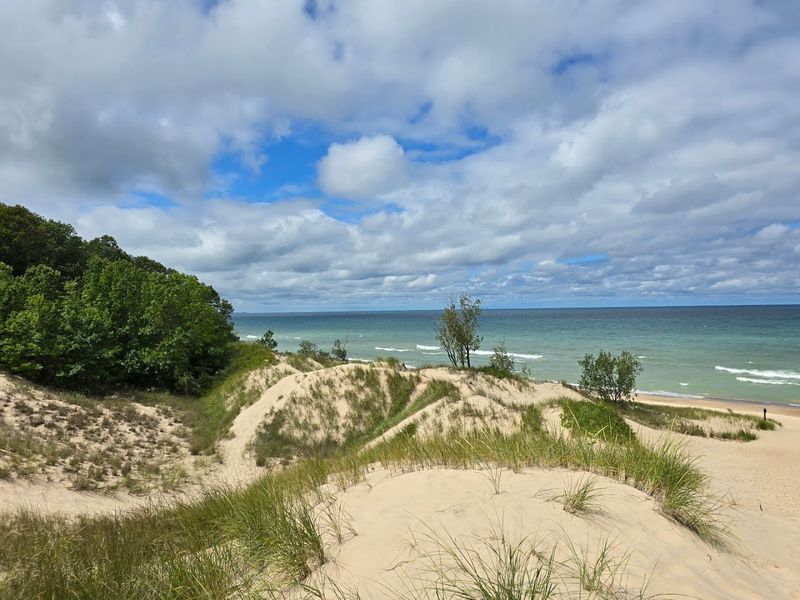
There is something quietly powerful about the fact that Indiana chose to protect this shipwreck rather than simply let it fade into obscurity. The establishment of the J.D.
Marshall Nature Preserve in 2013 was a deliberate act of recognition, an acknowledgment that Indiana has a maritime history worth honoring and that the Great Lakes are as much a part of the state’s identity as its cornfields and covered bridges.
Preservation efforts like this one tend to ripple outward in ways that are hard to measure. When a site is officially protected, it attracts researchers, divers, educators, and curious travelers who might otherwise never have reason to visit.
That attention generates awareness, and awareness generates care. The preserve has already contributed to ongoing underwater archaeology research through Indiana University, adding scientific value to what is already a historically significant site.
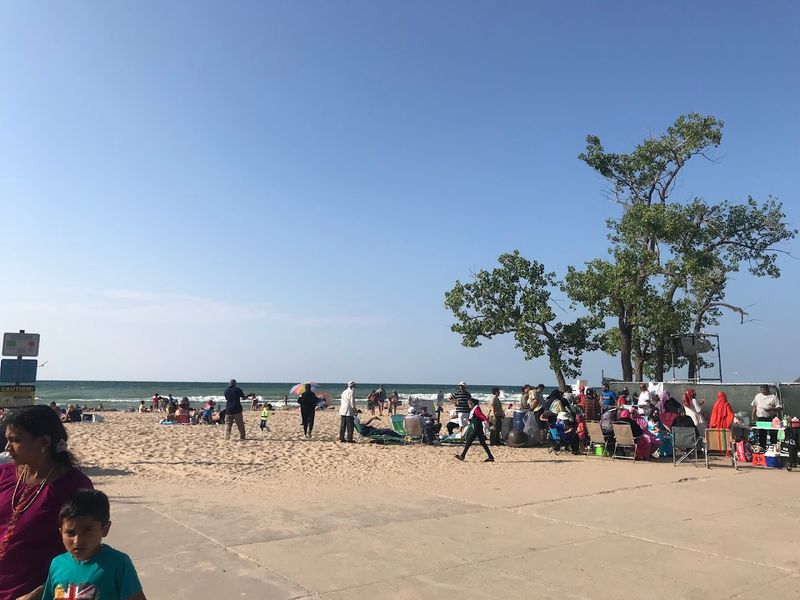
For Indiana locals, the preserve is a reminder that remarkable things are sometimes hiding in plain sight. You can stand on the beach at Indiana Dunes State Park on any given summer afternoon, surrounded by families and beach towels and the smell of sunscreen, and know that just 300 yards out, a 130-year-old steamship rests in cold silence on the lake floor.
That contrast is striking every single time I think about it. Nearby, the Dunes Learning Center at 700 Howe Rd, Chesterton, IN 46304 offers additional programming that complements a visit to the preserve beautifully.
Dear Reader: This page may contain affiliate links which may earn a commission if you click through and make a purchase. Our independent journalism is not influenced by any advertiser or commercial initiative unless it is clearly marked as sponsored content. As travel products change, please be sure to reconfirm all details and stay up to date with current events to ensure a safe and successful trip.
