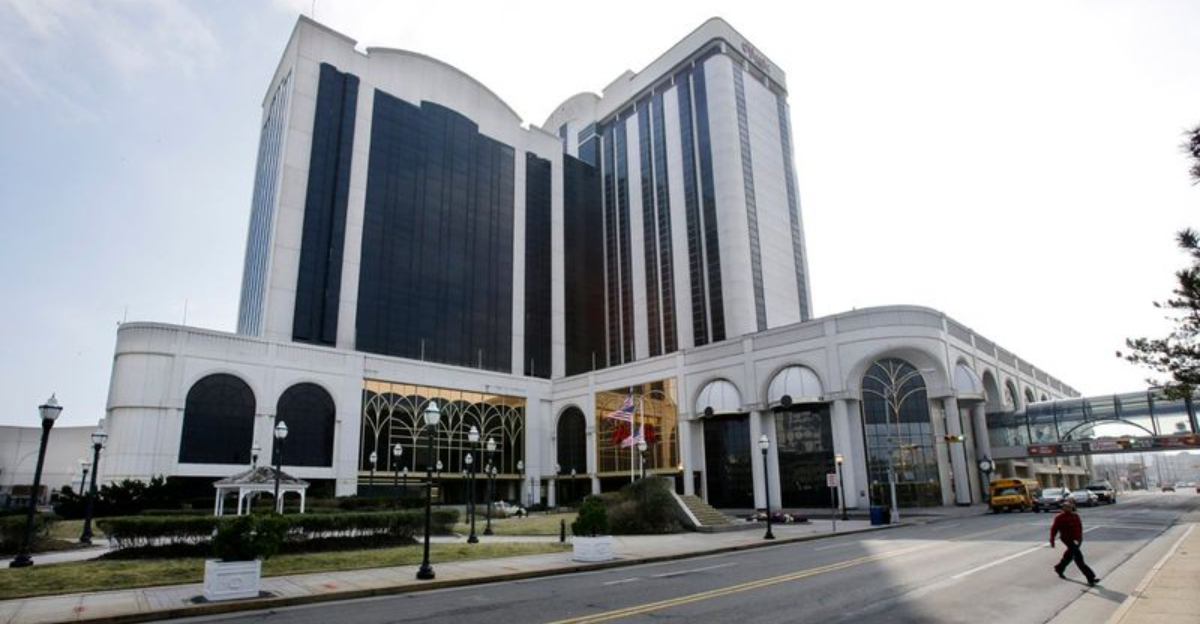
Locals in Atlantic City walk past the long-quiet Atlantic Club Casino Hotel as if it were another dune, yet visitors pause at sunset when the glass catches fire with color. The building sits on the southern end of the Boardwalk, a reminder of New Jersey’s shifting fortunes and the coastline’s constant pull. Travelers come to study its architecture, trace the Boardwalk’s history, and photograph the golden hour reflections that ripple across its facade. If you are planning a thoughtful visit to the New Jersey shore, this guide offers context, nearby highlights, and practical ways to explore with respect.
1. The Atlantic Club Casino Hotel: A Quiet Giant on the South Boardwalk
Set on the southern stretch of the Atlantic City Boardwalk in New Jersey, the former Atlantic Club Casino Hotel stands sealed and silent, yet visually compelling. Opened in the late twentieth century under earlier names, it closed in 2014 and has remained unused while proposals have surfaced and faded.
Its coastal position, steps from the sand, gives sunset viewers a reflective canvas as the windows glow in evening light. While the property is closed to the public, you can still appreciate its exterior from the Boardwalk and beach, where security patrols and posted notices signal that entry is prohibited. Travelers interested in urban change find a living case study here, where market shifts, redevelopment hurdles, and flood considerations intersect.
The site’s presence helps explain why New Jersey’s shore towns are constantly weighing restoration, reuse, and resilience planning. Bring a patient eye and a respect for boundaries, and let the light do the talking.
2. Reading the Facade: Architecture and Coastal Weathering
Seen up close from the public walkway, the building’s massing and stepped volumes tell a story of expansion and rebranding through different eras. The exterior shows typical coastal weathering found along New Jersey’s Atlantic frontage, where salt air and wind etch small marks into metal and concrete over time.
Photographers can capture clean lines by shooting from the beach at low tide or framing angles from the dune crossovers. During late afternoon, the glass reflects shifting color bands across the horizon, creating a layered effect. Because the structure is not open, all observations should be made from public areas where security and city rules apply.
The combination of vintage signage remnants and modernized sections helps visitors read the site as a palimpsest. It pairs well with a walk north toward active properties, letting you contrast a quiet shell with renovated neighbors. Taken together, the facade becomes a field guide to Atlantic City’s changing skyline.
3. Sunset Ritual: Where to Stand and When to Arrive
Sunset is the time when visitors gravitate to this corner of New Jersey, and a few simple choices improve the experience. Arrive with enough time to walk from Albany Avenue toward the Boardwalk seawall, then step onto the beach for a low, open perspective.
If the tide is moderate, wet sand mirrors the structure and the sky, giving you a natural reflection pool. On breezy days, position yourself slightly inland to reduce spray on your camera lens or phone. Check publicly available sunrise and sunset times, and account for clouds, which often add texture rather than block the show.
Staying on marked paths protects the dunes and keeps your footing stable. When the light fades, street lamps make safe exit points easy to spot. The result is a calm, unhurried view that highlights the building’s lines without stepping beyond public access areas.
4. Context Matters: A Short History You Can Trace on Foot
The Atlantic Club’s past unfolds across a compact walking route that links the southern Boardwalk to historic piers northward. Start by noting the closed entrances and signage remnants, then continue toward the newer developments to see how ownership cycles and capital flows have shaped Atlantic City.
Public records and local reporting outline the property’s former names, shifts in branding, and the 2014 closure. Reading these accounts before your visit helps you connect the building’s shell with broader trends in New Jersey tourism, including transportation changes and coastal hazard planning. On the ground, you can compare older architectural choices with recent glass-forward designs nearby.
Along the way, interpretive markers on the Boardwalk give layers of local history that put the site in perspective. This approach makes the walk more than a photo stop, turning it into a compact field lesson in regional economics and planning.
5. Practical Photography Tips Without Crossing Any Lines
Good images come from patience rather than proximity, and the public spaces around the Atlantic Club are enough for compelling shots. Use the Boardwalk rail as a stable rest for low-light photos, or step to the beach for symmetrical reflections.
Keep gear simple and protected with a microfiber cloth, as salt spray and fine sand can settle quickly. Watch for joggers and cyclists before setting up a tripod on the Boardwalk, and move aside when traffic appears. If you prefer people-free frames, wait for gaps rather than blocking paths. Overcast days can be surprisingly rich, pulling out detail in concrete and glass that harsh sun can wash away.
Most importantly, respect posted barriers and private property so your visit remains smooth and safe. You will walk away with images that are both lawful and evocative of New Jersey’s coastal character.
6. Nearby Open Landmarks to Round Out Your Visit
A thoughtful itinerary pairs the Atlantic Club’s quiet exterior with open, operating sites that give contrast and context. The Atlantic City Boardwalk Hall, with tours and events scheduled throughout the year, showcases engineering and cultural history.
The Absecon Lighthouse, farther north, offers views of New Jersey’s barrier coastline from its observation area when open. The Steel Pier and the active stretch of the Boardwalk provide lively scenes and public seating. These places are within reach by foot or public transit, allowing you to balance a contemplative stop with engaging, staffed venues.
Checking official hours and event calendars before setting out will help maximize your time. This blend keeps the day grounded in both the region’s past and its current energy.
7. Respecting the Shore: Safety, Access, and Local Norms
Visitors who treat the area with care keep the Boardwalk experience pleasant for everyone. Stay on public walkways and marked beach entrances, which protect dunes and reduce erosion. Heed posted rules near the Atlantic Club and avoid any attempt to enter or climb barriers, as the building remains closed.
Local patrols are present and helpful if you need directions or updates about beach conditions. Pack out trash, use the public bins, and keep noise levels modest near residential streets. Weather can change quickly on the New Jersey coast, so light layers and a simple windbreaker are smart even in mild seasons.
With these habits, your sunset visit remains relaxed, safe, and considerate of the community that calls this shore home.
8. Planning Your Route: Getting There and Moving Around
Reaching the south end of the Atlantic City Boardwalk is straightforward using public transit or rideshare, and parking facilities exist within walking distance. From the jitney routes and rail connections, you can transfer to stops that place you near Albany Avenue for a short stroll to the ocean.
Cyclists can use marked lanes and racks along popular access points, and walkers will find wide paths with frequent benches. Bring a simple day plan that includes time for the Atlantic Club exterior, a Boardwalk landmark, and a lighthouse or pier visit, all within the same day.
New Jersey’s coastal towns reward unhurried pacing, so allow buffers for weather shifts and tide timing. With a flexible approach, you will capture the sunset glow and still have energy for an evening walk along the lights of the shore.
Dear Reader: This page may contain affiliate links which may earn a commission if you click through and make a purchase. Our independent journalism is not influenced by any advertiser or commercial initiative unless it is clearly marked as sponsored content. As travel products change, please be sure to reconfirm all details and stay up to date with current events to ensure a safe and successful trip.
