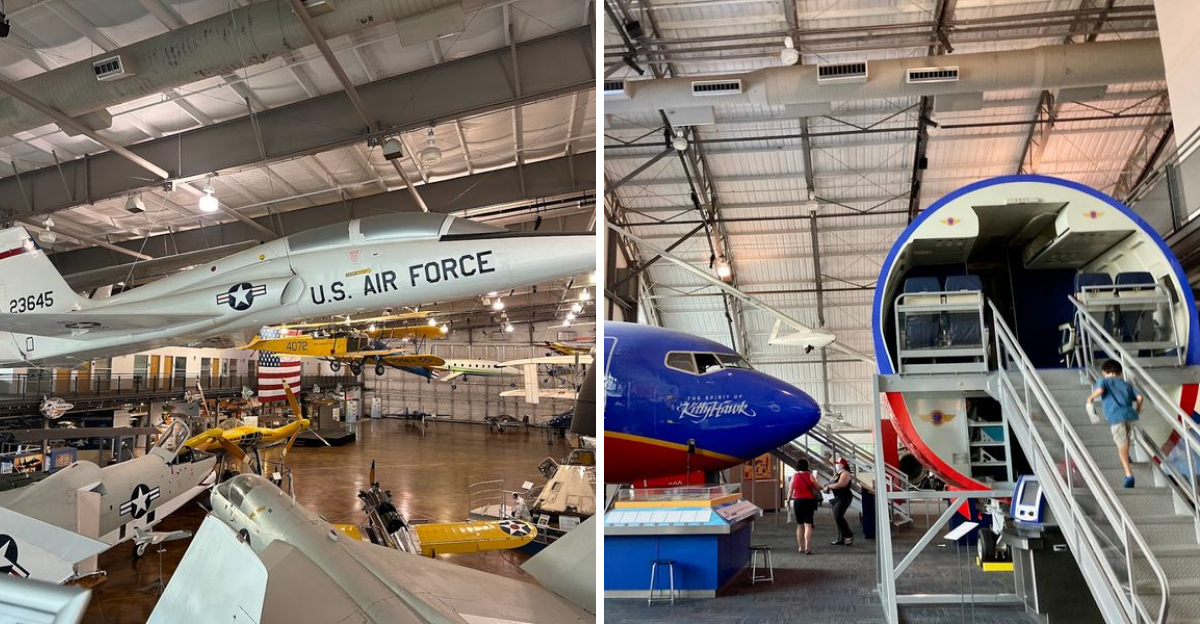
You have probably driven past it a hundred times and never once thought to stop. That is a mistake.
This aviation museum hides behind a busy airport, full of planes and spacecraft that have real history attached to them. There is an Apollo 7 command module that actually went to space, still scorched from reentry, just sitting there waiting for you to stare at it.
You can climb inside a DC-3 from the 1920s and slide into the pilot seat, pretend you are flying mail across the country. The place is packed with retired pilots telling stories, old propellers, and exhibits that make you feel like a kid again.
It is quiet, it is cheap, and it is one of the best afternoons you did not see coming.
The Apollo 7 Command Module and Space Flight Gallery
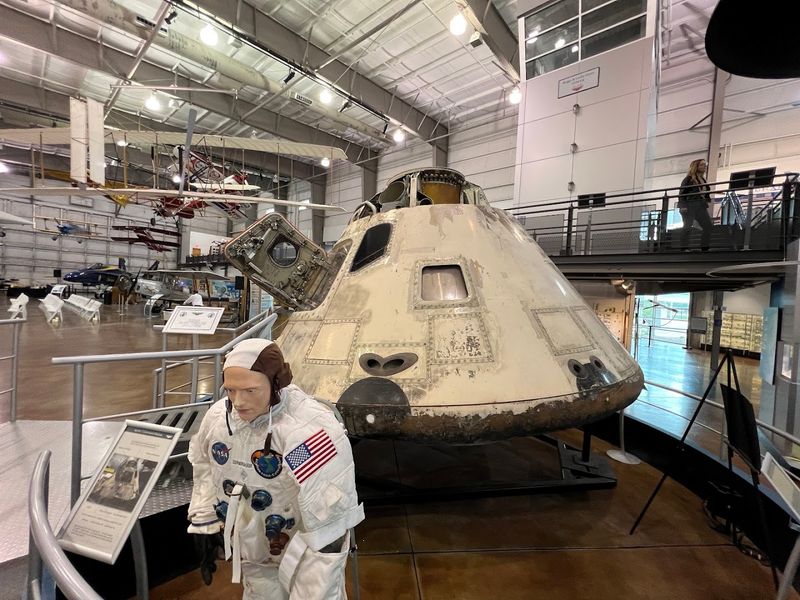
Few things in a museum hit you the way a real spacecraft does. The Apollo 7 Command Module sits in the Space Flight Gallery at the Frontiers of Flight Museum, and it is genuinely one of the most striking objects you will encounter in any Texas museum.
This is not a replica. It is the actual capsule that carried astronauts into orbit in 1968.
Alongside the module, you can see astronaut Donn Eisele’s space suit and Neil Armstrong’s glove molds. These are artifacts that connect you to one of humanity’s most extraordinary chapters.
The gallery also features pieces from the Mercury and Gemini programs, tracing the full arc of early American spaceflight.
One detail that surprises a lot of visitors is the moon rock. This museum holds the only moon rock on public display in all of North Texas.
It is small, ancient, and quietly extraordinary. The Space Flight Gallery does not try to overwhelm you with flashy presentations.
Instead, it lets the objects speak, and they have a lot to say. Give yourself extra time here because most people end up staying much longer than they planned.
The 1903 Wright Flyer Full-Size Model
There is a moment when you look up at the Wright Flyer model and realize just how fragile it looks. Wood, wire, and fabric.
That is essentially what two brothers from Ohio used to change the world. The Frontiers of Flight Museum has a full-size model of the 1903 Wright Flyer, and it is one of the most thought-provoking things in the entire building.
It is easy to take flight for granted today, with jets crossing continents in hours. But this aircraft reminds you that powered flight was once a dream that most people thought was impossible.
The model is displayed with enough context around it to help you understand the technical challenges the Wright Brothers faced and solved.
Kids especially tend to stop and stare at this one, trying to figure out how something so basic could actually fly. That curiosity is exactly what the museum is designed to spark.
The Wright Flyer section connects naturally to nearby exhibits about the Golden Age of Flight, so the story flows from this early invention forward through decades of progress. It is a genuinely satisfying way to begin exploring the museum’s larger narrative.
World War I and World War II Aircraft Exhibits
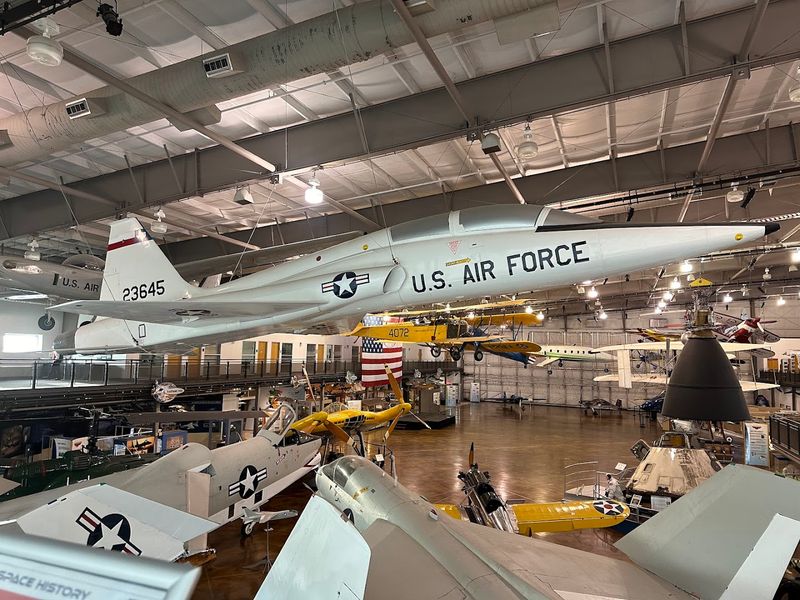
Military aviation history gets serious attention at this museum, and it shows. The World War I section features a Sopwith Pup replica that looks almost too elegant for something built for combat.
Seeing it up close gives you a new appreciation for how quickly aviation technology evolved once it became essential to warfare.
The World War II collection is even more expansive. Over 200 aircraft models fill the exhibit space, covering everything from Allied fighters to bombers that shaped the outcome of the war.
Each model is detailed and paired with historical context that makes the collection feel educational without being dry.
What makes this section memorable is not just the hardware but the human stories woven through it. The museum includes exhibits honoring the Tuskegee Airmen, the pioneering Black pilots who fought racial barriers alongside enemy forces during World War II.
Their story is told with respect and depth. You leave this section with a fuller picture of what aviation meant during those years, not just as a military tool but as a force that shaped culture, identity, and history in ways that still echo today.
It is history told with real weight.
The Southwest Airlines Exhibit and Boeing 737 Walkthrough
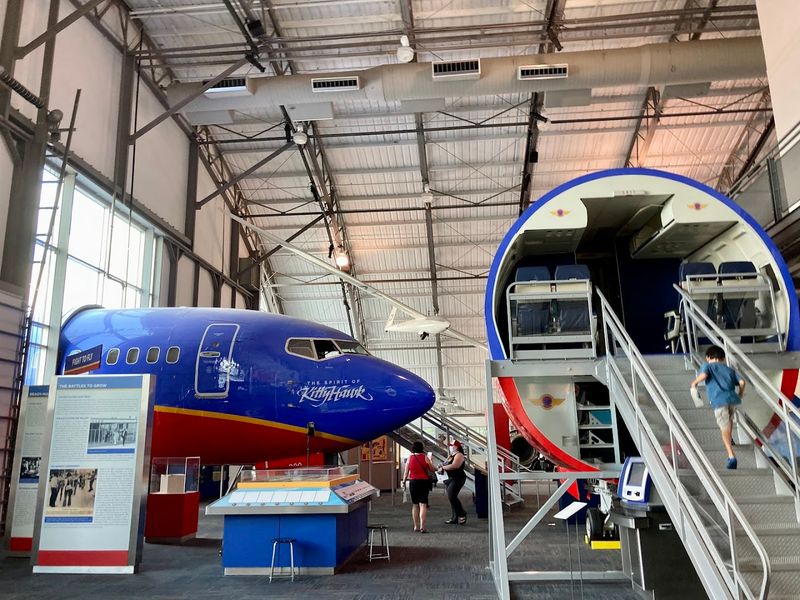
Southwest Airlines has deep roots in Dallas, and this museum gives that story the space it deserves. The Southwest Airlines exhibit is one of the most detailed airline history displays you will find anywhere in the country.
It covers the carrier’s scrappy origins, its early legal battles to even get off the ground, and its eventual rise into one of the most recognized brands in American aviation.
The real highlight, though, is the Boeing 737 walkthrough. A full-size Southwest Airlines 737 is set up so visitors can actually board and walk through the cabin.
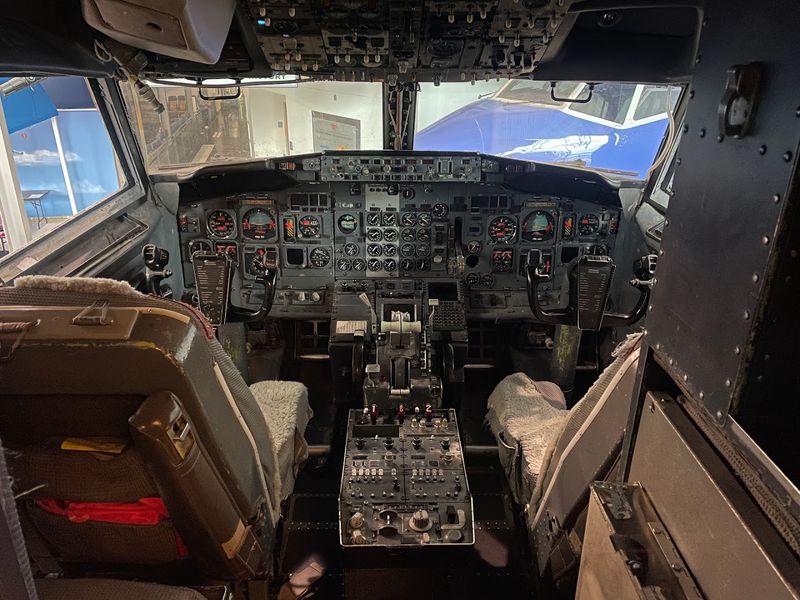
There is also a 737-200 nose section where you can peer into the cockpit and get a feel for what pilots actually see and work with.
For anyone who has ever wondered what goes on beyond the cockpit door, this is a genuinely cool experience. It is the kind of hands-on access that makes a museum visit feel like more than just reading plaques.
The exhibit also touches on how the 737 became one of the most widely flown commercial aircraft in history, which adds a nice layer of technical appreciation to what is otherwise a very accessible and fun section of the museum.
The Chance Vought V-173 Flying Pancake
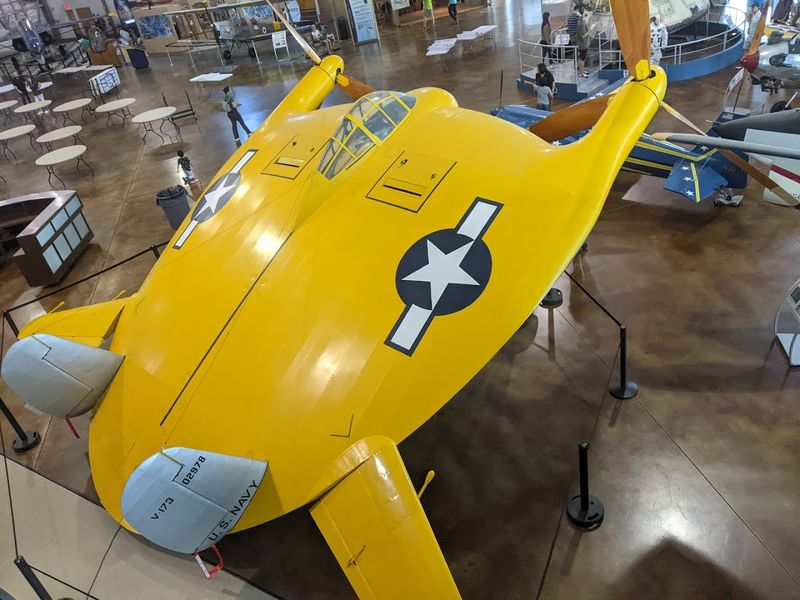
Honestly, nothing quite prepares you for seeing the V-173 in person. Nicknamed the Flying Pancake, this experimental aircraft looks like something a child drew when asked to imagine what a plane might look like.
It is round, flat, and genuinely unlike anything else in the building. That is exactly what makes it so fascinating.
The Chance Vought V-173 was developed during World War II as an experimental naval fighter concept. The idea was that its unusual circular wing design would allow for incredibly short takeoff and landing distances.
It was never mass-produced, but the fact that it flew at all is remarkable.
The museum’s example is an iconic piece, and aviation enthusiasts often seek it out specifically. Even visitors with no particular interest in aircraft history tend to stop and spend a few minutes puzzling over its shape.
It sparks conversation in a way that more conventional planes simply do not. The Flying Pancake is a perfect example of what makes this museum worth visiting.
It does not just show you where aviation succeeded. It shows you where engineers took bold, unconventional swings, and sometimes got airborne anyway.
That spirit of experimentation is genuinely inspiring.
The Golden Age of Flight Exhibit and Aviation Pioneers
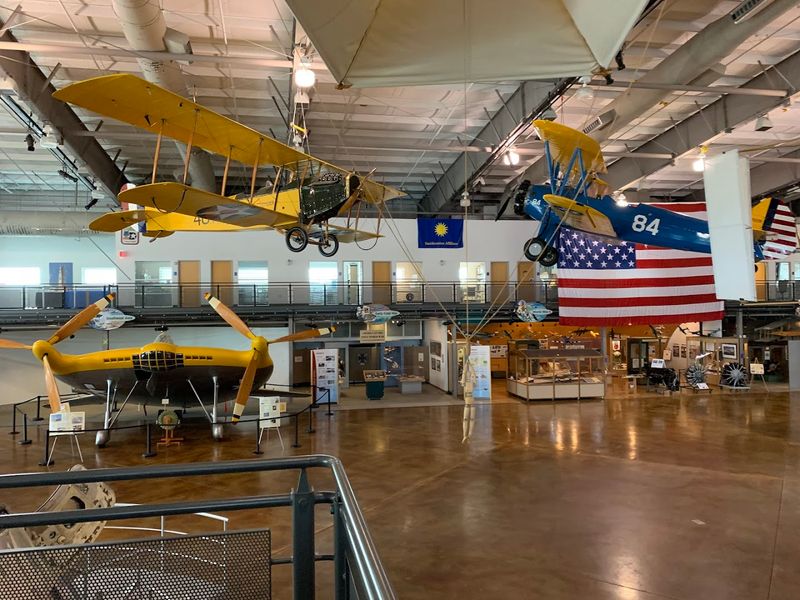
The period between the two world wars was one of the most romantic and daring eras in aviation history. The Golden Age of Flight exhibit at the Frontiers of Flight Museum covers the years from 1919 to 1939, and it captures that spirit beautifully.
This was the era of record-breaking flights, daring solo crossings, and pilots who became household names almost overnight.
Charles Lindbergh’s transatlantic crossing, Amelia Earhart’s boundary-breaking flights, and Richard Byrd’s polar expeditions all get meaningful coverage here. But one of the most compelling profiles belongs to Bessie Coleman, the first African American woman to earn a pilot’s license.
Her determination to find training abroad after being refused at home in the United States is a story that deserves to be far better known.
The exhibit does a good job of showing both the glamour and the very real danger of flying during this period. Aircraft were improving rapidly, but the risks were enormous.
Pilots were celebrated as heroes partly because what they did genuinely required extraordinary courage. This section of the museum feels less like a history lesson and more like meeting people whose ambition quietly reshaped the world.
It lingers with you long after you leave.
Cold War and Vietnam War Aircraft Including the F/A-18 Hornet and Huey Helicopter
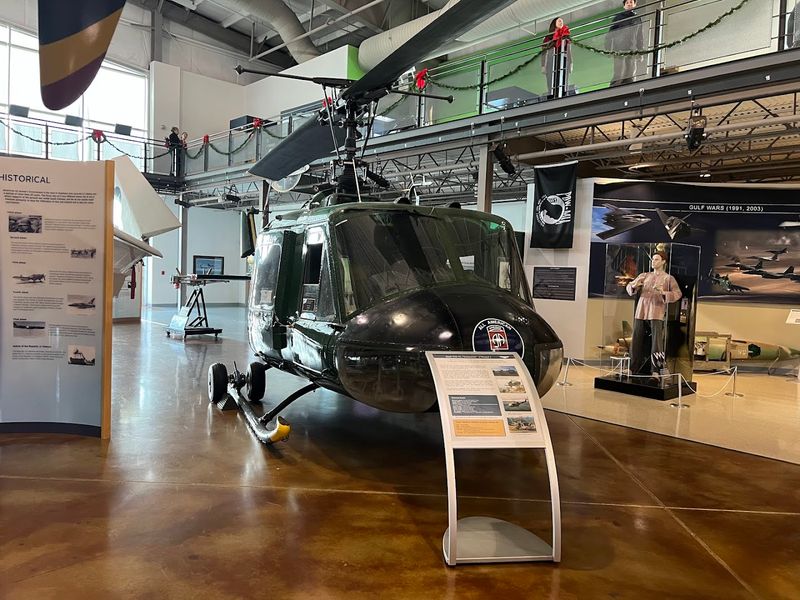
Moving through the Cold War and Vietnam War sections of the museum feels like a shift in atmosphere. The aircraft here are larger, louder-looking, and carry a different kind of weight than the earlier exhibits.
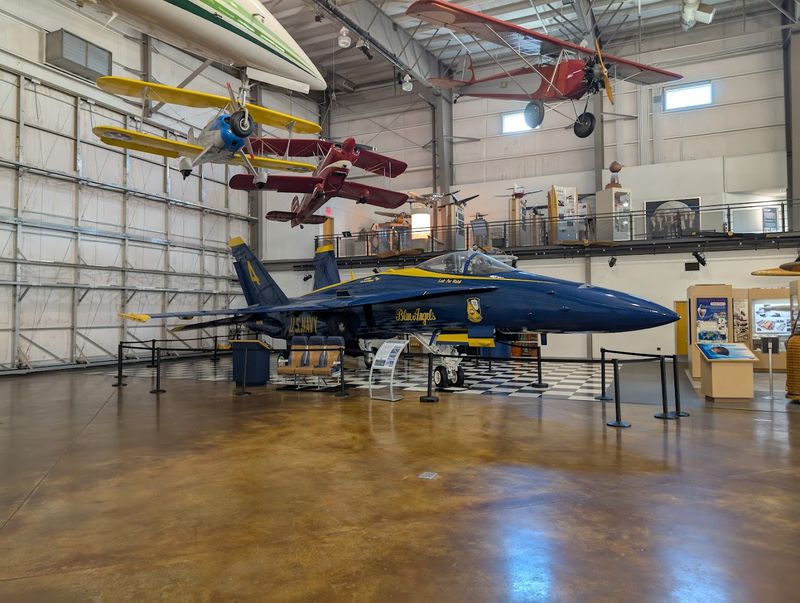
The F/A-18 Hornet is a stunning machine up close, all sharp angles and raw mechanical purpose.
The Huey Helicopter is another standout. For anyone who grew up watching Vietnam War films or documentaries, seeing an actual Huey in person is a striking experience.
The helicopter became one of the defining symbols of that conflict, used for everything from troop transport to medevac missions. Its presence in the museum feels significant rather than just decorative.
The contextual information surrounding these aircraft is thoughtful and balanced. The museum does not sensationalize military history but instead focuses on the technological advancements, the human stories, and the broader historical forces that shaped this era of aviation.
There is also a real sense of scale in this part of the building. These are big machines, and being near them reminds you that aviation during the Cold War was as much about geopolitics as it was about engineering.
It is a section that rewards slow, careful attention rather than a quick pass-through.
Flight Simulators, STEM Programs, and the Children’s Discovery Section
Not every great museum moment happens in front of a historical artifact. Some of the best energy at the Frontiers of Flight Museum comes from the interactive areas, especially the flight simulators and the children’s discovery section.
These spots have a completely different vibe from the rest of the building, louder, more kinetic, and full of genuine excitement.
The flight simulators let visitors get a feel for what it is actually like to control an aircraft. For kids especially, this is a highlight that they talk about long after the visit ends.
The children’s discovery section is designed to spark curiosity in younger visitors through hands-on activities and age-appropriate exhibits about science and aviation.
The museum’s STEM curriculum programs connect with local schools, making it a resource for Dallas-area educators as well as a destination for families. Being a Smithsonian Affiliate adds credibility to these educational efforts.
The museum is also a KultureCity Certified Sensory Inclusive Venue, which means it has taken meaningful steps to be welcoming to visitors with sensory sensitivities. Free parking, wheelchair accessibility, and complimentary loaner wheelchairs make practical visits easier for everyone.
Address: 6911 Lemmon Ave, Dallas, TX 75209.
