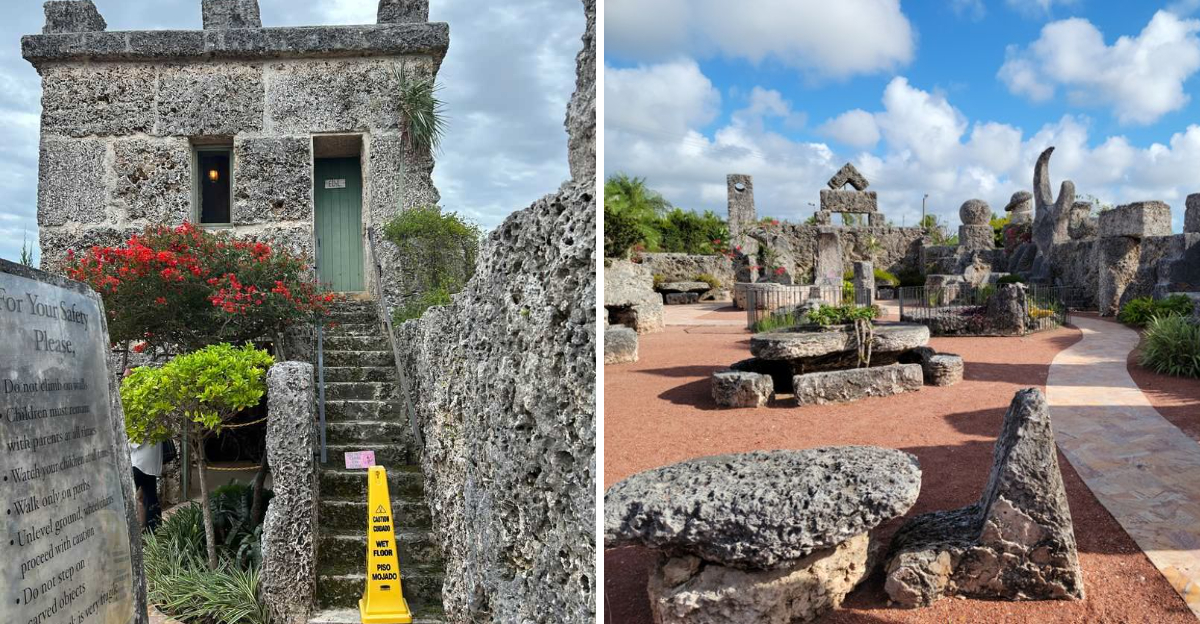
You arrive in Homestead and the first glimpse of towering coral blocks hints that something wondrous is tucked behind the gate.
Curiosity sharpens as you learn one man shaped more than a thousand tons of stone using methods that still spark debate.
The story feels intimate, yet the scale pulls you into a grand mystery that Florida keeps proudly on display.
By the time you step closer, the details begin whispering their secrets, and you want to follow each whisper to the end.
The surprises unfold best when you move slowly, listen closely, and let the site guide your steps.
Start at the Gate, Then Meet the Legend
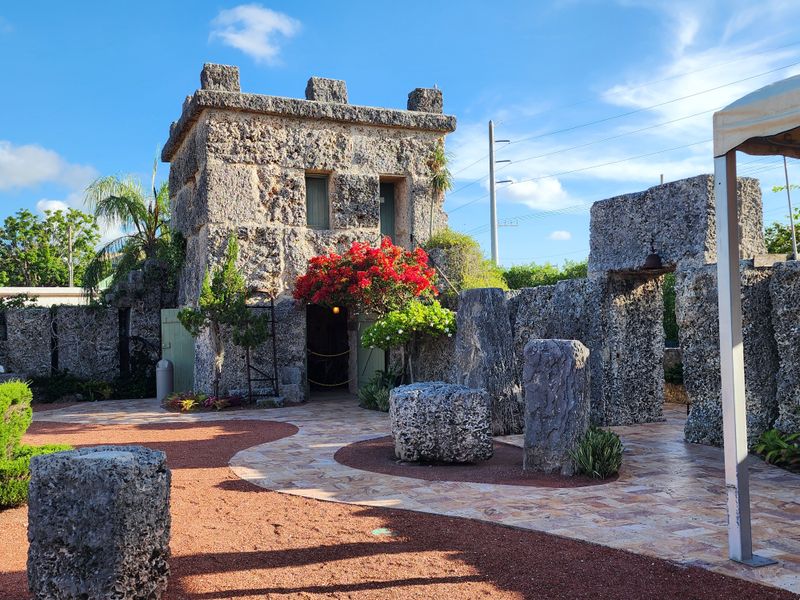
Walk through the gate at Coral Castle, 28655 S Dixie Hwy, Homestead, FL 33033, and the first feeling is awe wrapped in quiet curiosity.
The coral blocks rise like sentinels, their rough textures glowing under Florida sun as you pause to take in the layout.
Guide maps are available near the entrance, but you may prefer to drift and let the space set the pace.
This museum sits outdoors, so the experience changes with light and weather, and each pass reveals new carvings and lines.
Docents sometimes begin with a short orientation that highlights timings and sections, which helps if you plan photos of interiors and seating areas.
You will find rest benches facing key features, and these become helpful anchors for slow, careful exploration.
The legend of Edward Leedskalnin is introduced with care, framing his journey from Latvia to Florida and his decades of labor.
Staff remind visitors that many stories around his methods are labeled as lore, and the museum distinguishes known facts from rumor.
You can read interpretive signs that summarize dates, estimated weights, and the ways quarried oolite was moved on site.
The site opens at 9 AM most days, so an early arrival keeps crowds light and shadows soft for photography.
Audio guides add detail without breaking the contemplative mood, and they pair well with the measured walking route.
If you like puzzles, keep an eye out for alignment lines that some guests say point to stars, presented clearly as visitor speculation.
The entrance sets up a calm rhythm, and from here you can branch toward the tools display or the tall obelisks.
Take a breath, set your intentions, and let the story unfold section by section.
The gate is both threshold and promise, and the promise is real.
How One Man Moved a Thousand Tons
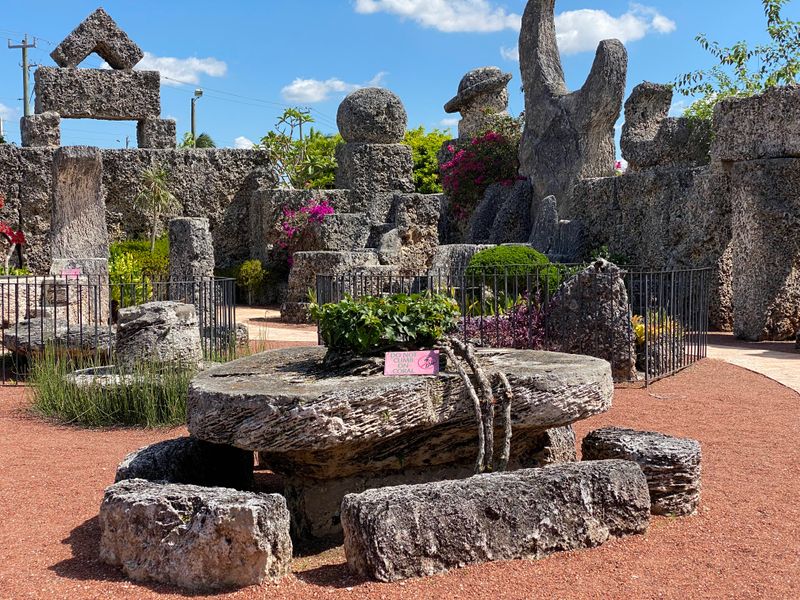
Standing near the larger monoliths, you begin to understand the scale and the patience behind each raised block.
Historical notes explain that Edward Leedskalnin quarried and positioned oolite limestone using hand tools, tripods, and chains visible in reproductions.
No verified blueprint survives for every step, so the museum carefully separates documented practices from legends that circulate widely.
You will see simple devices, such as block and tackle arrangements, that demonstrate mechanical advantage without electricity.
Some visitors imagine hidden engines, while staff state that no proven motorized system has been confirmed on site.
Photos from mid twentieth century show tripods made of wooden poles and metal hardware, which guided lifts and precise swings.
The coral itself is not ocean coral but ancient fossilized limestone, porous yet heavy, and quarried nearby.
Placards list estimated weights that reach several tons per piece, inviting you to test your sense of scale with each sculpture.
The effect is less about brute force and more about incremental motion, levers, and careful balancing.
Florida humidity adds texture to the stone, and tiny shells within the rock sparkle when sunlight angles across the surface.
Lean close to see chisel marks that sketch repeating rhythms, each notch like a timestamp in the long construction timeline.
If you tour with kids, guides often pose simple physics questions that turn the garden into a hands on classroom.
When the breeze moves through the courtyard, tripod silhouettes frame the sky like an open workshop.
What you take away is a respect for patience, practice, and the quiet math of leverage.
The mystery remains, but the mechanics feel more tangible with every step.
The Polaris Telescope and Star Talk
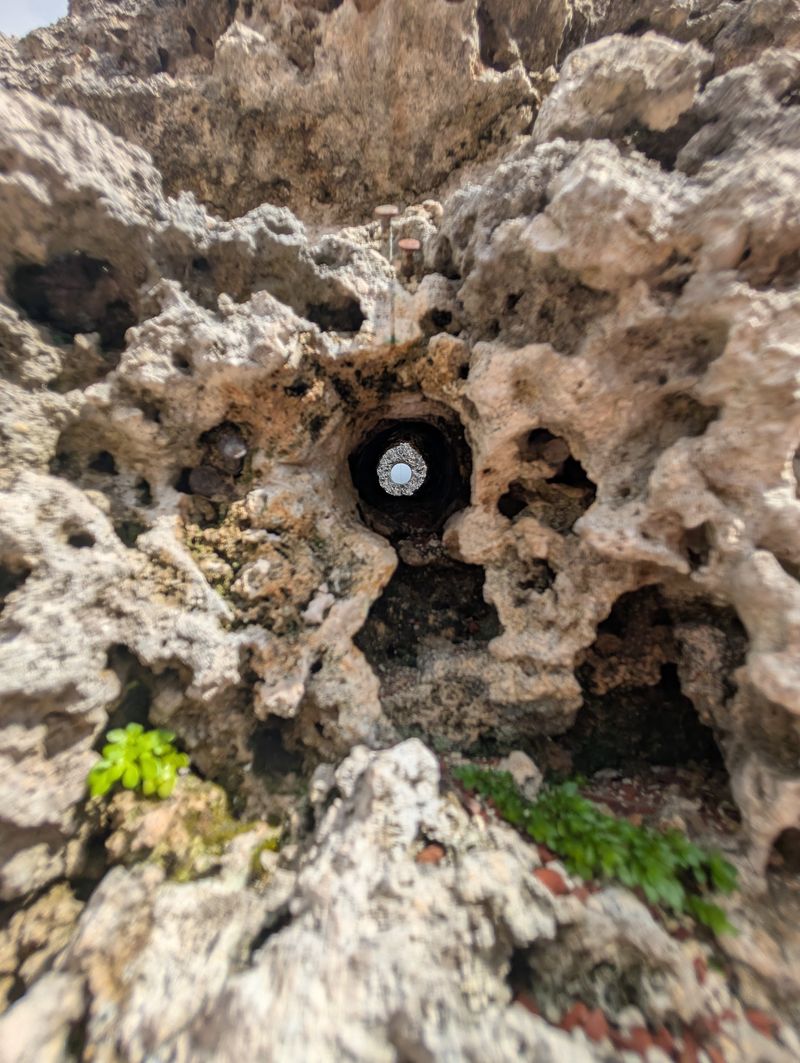
One of the most talked about features is the stone telescope that many guests associate with Polaris and simple sky watching.
The museum presents it as a carved sighting tube aligned for basic observation rather than precise astronomical measurement.
On clear evenings during special events, staff offer star talks that explain navigation concepts using visible constellations.
The lore around cosmic alignments is acknowledged as local storytelling, and signage asks visitors to treat those claims cautiously.
You can stand at the eyepiece and frame a tight view that suggests how simple tools turn the sky into a guide.
Children enjoy tracing lines from the telescope to marker stones, building a memory of geometry that sticks.
The setting is gentle and quiet, and the pathways glow under safe lighting when programs are scheduled.
Daytime views still reveal the intended axis, with shadows pointing out how the tube channels light.
Florida’s big skies add drama, and clouds move like slow curtains over the stone instruments.
Audio commentary notes that sailors long used Polaris for heading references, which reinforces the educational vibe.
If you enjoy photography, dusk brings a soft gradient that flatters carved edges without harsh contrast.
Tripods should be used carefully to avoid blocking paths, and staff can suggest respectful spots for setup.
The telescope becomes a conversation starter that bridges curiosity about science with the romance of the night.
You may leave with a renewed taste for looking up and noticing how orientation shapes daily movement.
Small details here remind you that wonder can be engineered with simple means.
The Nine Ton Gate Story
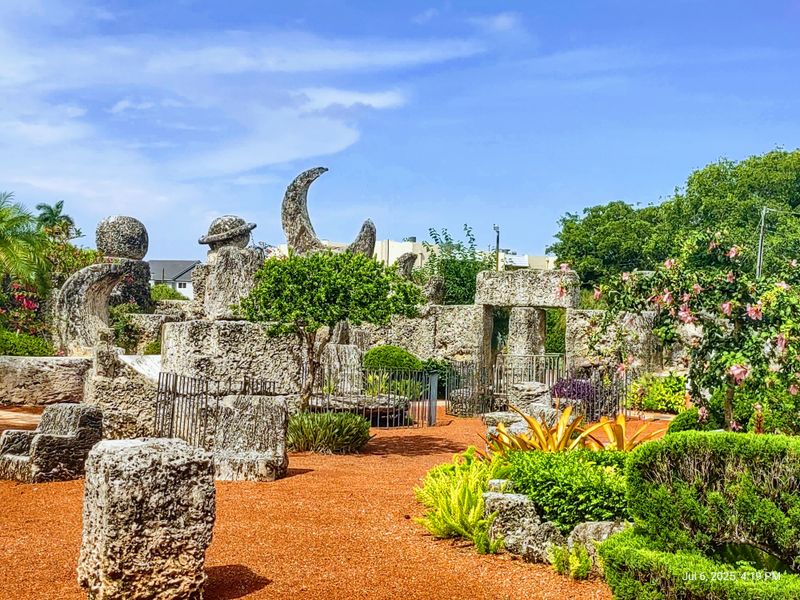
The nine ton gate draws gasps because it once pivoted with a gentle push, creating a signature wow moment for guests.
Historical notes explain that the original gate used a central bearing with a drilled shaft, which eventually seized and required repairs.
The museum now presents the story with photos, diagrams, and updates that clarify mechanical changes across the years.
Guides frame the gate as a lesson in balance and friction rather than a claim of secret powers.
You can see how a precise center of mass allows smooth motion when parts are new and tolerances tight.
Later replacements involved modern bearings to restore function, which the site describes transparently in interpretive materials.
Visitors sometimes ask if the gate still swings freely, and staff share current status based on safety and preservation needs.
Even when static, the slab commands attention and encourages quiet thinking about problem solving under simple constraints.
The narrow clearance between stone and wall highlights fine cutting that kept edges surprisingly true.
Florida air adds a faint mineral scent to the corridor, and the acoustics change when you step under the lintel.
Look for small grooves that hint at adjustments made during installation, proof of patient iteration.
The tale has grown through retellings, and the museum labels older claims that cannot be verified as folklore.
Stand to one side and study the mass, then imagine the careful math required to keep movement safe.
It is humbling to see engineering distilled to a single decisive axis.
The gate earns its fame by mixing spectacle with clear physics.
Tools, Tripods, and Quiet Ingenuity
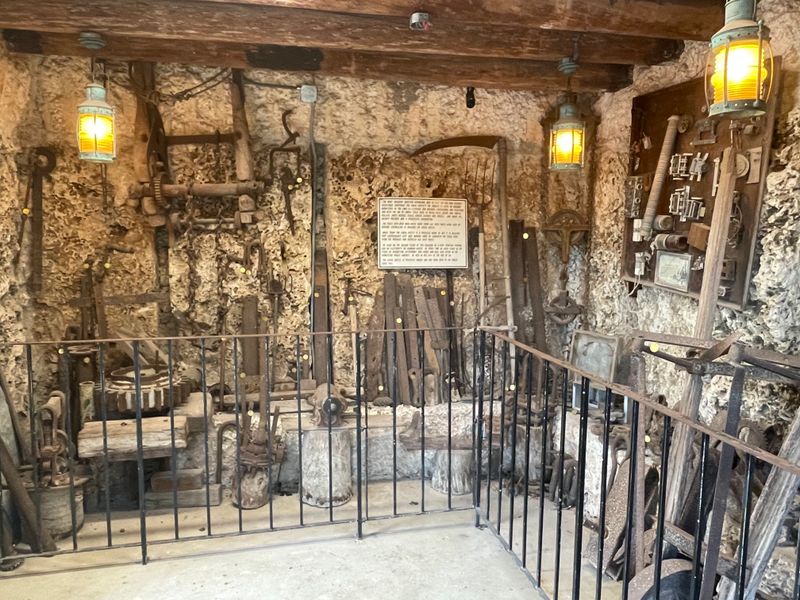
The tools display helps ground the big story in small details that feel surprisingly approachable.
You will find wrenches, chains, and hand carved blocks arranged with labels that explain how each part fits the process.
Reconstructed tripods show leg angles and rigging points used for raising and lowering heavy stones safely.
There is no claim of electricity fueling the work on site, and the museum presents that point clearly and consistently.
Simple levers appear in diagrams that simplify concepts without drifting into grand theories.
Kids love trying miniature pulley demos that demonstrate how a single person can redirect weight with patience.
Florida heat can make this corner feel like an open workshop, so shade breaks keep the visit comfortable.
Photos from different years highlight how the collection has been preserved and curated to prevent loss of context.
Placards quote Edward’s own words about effort and careful planning, sourced from published pamphlets and interviews.
The arrangement invites you to slow down and notice wear patterns that tell stories about repeated use.
Rust and patina do not read as decay here, but rather as signatures of time and human touch.
Guides encourage questions and are honest when sources are thin, keeping speculation separate from fact.
You will leave this area with a clearer sense of method, not myth, and that clarity enriches the rest of the tour.
The modest scale of each tool contrasts with the scale of the finished walls in a satisfying way.
Small means can move big things when alignment and patience do the heavy lifting.
Romance, Lore, and The Sweet Sixteen
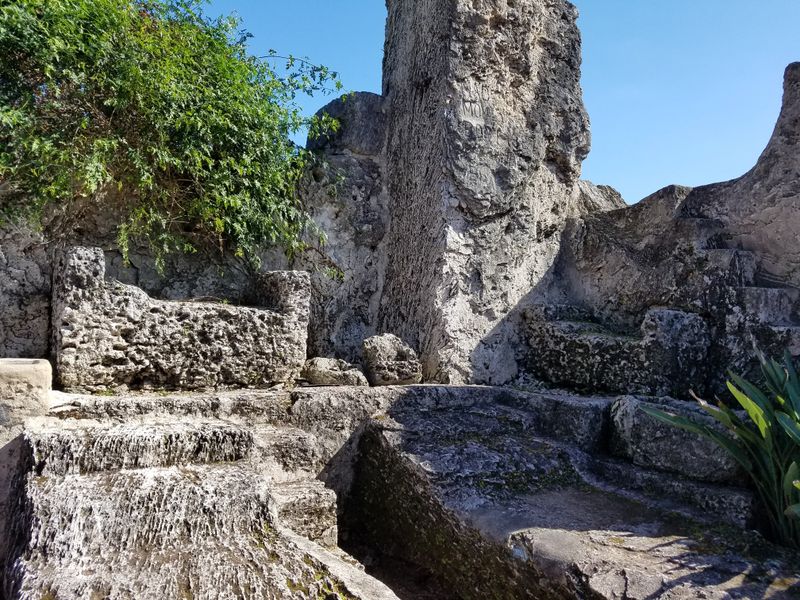
Part of the appeal is the romantic thread that visitors call the Sweet Sixteen story, often retold with creative embellishments.
The museum labels much of this narrative as lore, encouraging guests to enjoy the tale without taking every detail as proven fact.
Displays present Edward’s migration, his heartbreak, and his years of work, while noting where documentation becomes sparse.
You can see heart shaped motifs and seating nooks that support a theme of devotion and longing.
This area is quieter than the main courtyard, which suits the reflective tone of the story.
Florida breezes filter through carved openings, and shadows turn the heart shapes into moving silhouettes.
Audio guides separate quotations from third party hearsay, creating a helpful boundary between record and romance.
Visitors often leave handwritten notes of admiration in designated spots, which the staff curates with care.
If you appreciate folklore, you will enjoy the balanced approach that preserves charm while guarding accuracy.
The heart chair and the moon fountain become favorite backdrops for photos that focus on ambiance rather than myth.
Look for small arrows carved near seating, subtle details that hint at guided sightlines.
The narrative grows gentler the longer you linger, and you may find yourself considering dedication in your own projects.
The museum never oversells the legend, which keeps trust intact and conversation open.
This section bridges human emotion with stonework, giving the site more than technical interest.
Romance lives here as a story about purpose and persistence.
Reading Stone Like a Book
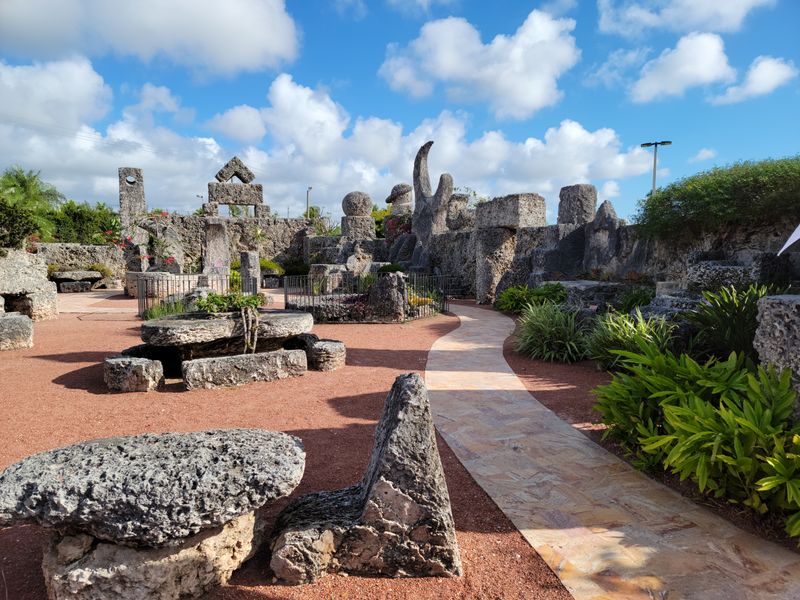
Lean close to the walls and the rock reveals tiny fossils embedded in porous limestone that resembles coral honeycomb.
Text panels explain that this oolite formed from ancient marine deposits that hardened into the building blocks used here.
The stone remains surprisingly workable with hand tools, yet finished surfaces can read as crisp and architectural.
You will notice subtle tool chatter that repeats along long edges like a patterned rhythm.
Moisture darkens the pores after a rain, creating maps of shadow that help you read the carving sequence.
Florida light makes textures pop, and the same surface changes character hour by hour.
Take a moment to compare saw cuts with chiseling, because each technique leaves a footprint you can trace.
Guides encourage respectful touch on designated samples to feel the difference between rough and polished faces.
The museum balances preservation with access, keeping key sculptures roped while offering learning stones for hands on study.
Stone benches show how mass can be shaped into comfort with careful curves and supportive angles.
When you shift to the compass corner, you can test alignment lines that staff present as interpretive features.
The park map suggests a loop that builds knowledge from texture to structure in a satisfying arc.
You may catch yourself thinking in layers as you move, stacking observations like pages of a book.
The experience rewards attention and returns a deeper respect for patient craftsmanship.
Every surface invites another question and another look.
Planning Your Visit With Confidence
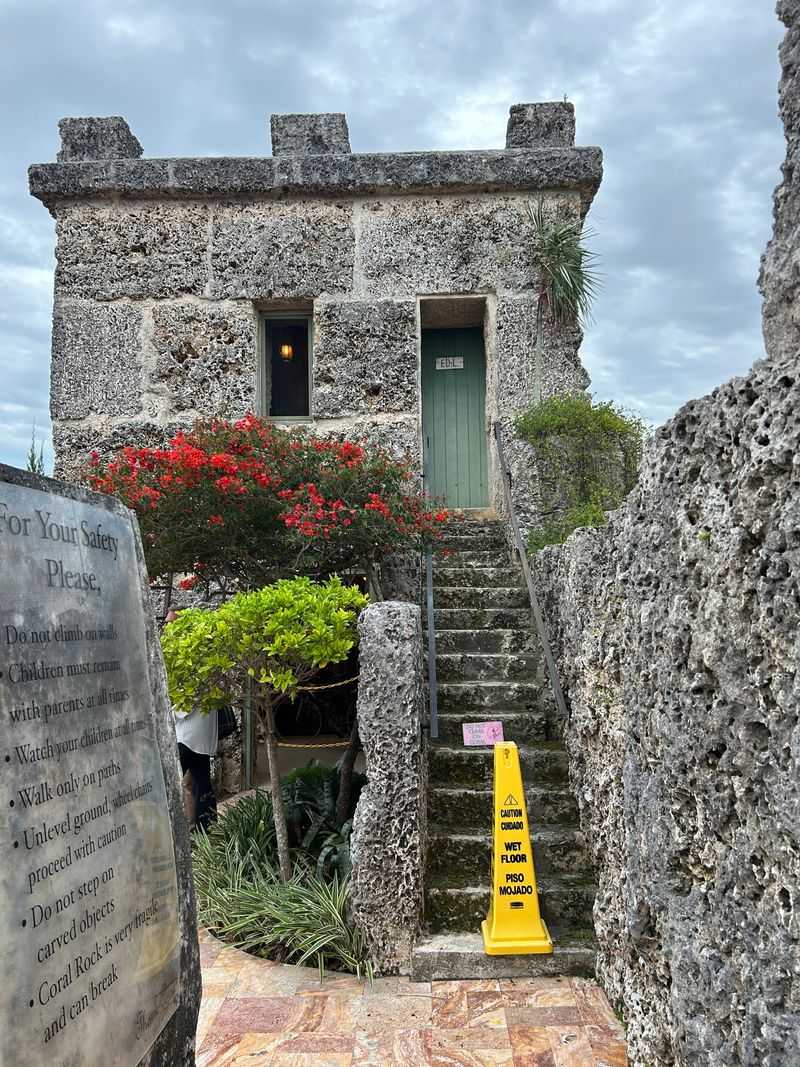
Coral Castle operates as a museum with posted hours noted as 9 AM to 7 PM daily as of 2025, with final entry times subject to change.
Confirm the schedule by calling +1 305-248-6345 or checking the official site at https://coralcastle.com for updates.
The address is 28655 S Dixie Hwy, Homestead, FL 33033, which places you near major routes through southern Florida.
Parking is on site, and attendants guide cars toward marked rows that keep entry paths clear.
Tickets are sold at the booth near the gate, and digital payment options are commonly accepted.
Guided talks rotate through the day, and you can ask staff about the next session when you arrive.
Sun protection, comfortable shoes, and water make the outdoor experience easier in warm seasons.
Photography is welcome with respect for other guests, and tripods are allowed in designated areas.
Image suggestions here focus on exteriors, interiors, seating, and ambiance rather than any food or drink.
Families will find rest areas and shaded benches that help pace the visit for kids.
Accessibility information is provided at the entrance, and staff can advise on the smoothest routes.
Florida weather can shift quickly, so brief showers may pass and leave beautiful reflections on stone.
Plan ninety minutes for a relaxed loop, or linger longer if you enjoy reading every panel.
The museum store carries books and educational materials that extend the learning at home.
Leave time at the end to circle back to any features that captured your attention.
A Quick Historical Timeline
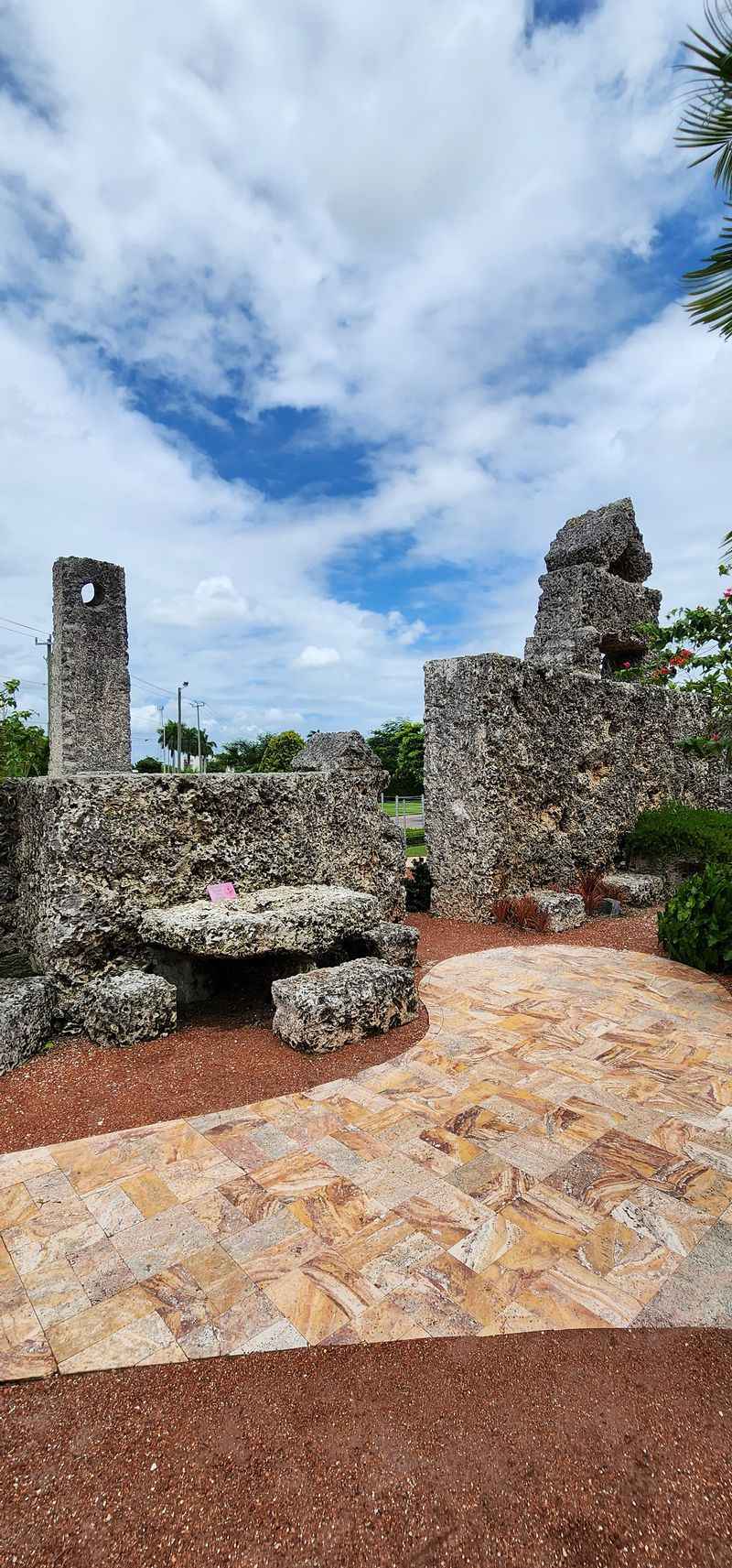
The timeline begins with Edward Leedskalnin’s early twentieth century arrival in the United States and his eventual move to southern Florida.
He first built in Florida City, then relocated the site to Homestead where Coral Castle took on its present form.
Archival images show the shift in layout and the evolution of features that visitors see today.
Newspaper clippings document public curiosity and occasional tours even while construction continued for years.
The museum emphasizes that Edward worked largely alone, and that claim is based on available records and interviews.
Tools and equipment purchases appear in period sources, painting a practical picture of resourceful sourcing.
Postwar attention grew, and the site gained traction as a roadside wonder during the rise of American car culture.
Ownership transfers after Edward’s death are presented with dates and stewardship milestones that preserved the landmark.
Historic preservation efforts stabilized structures and improved visitor safety without altering key artistic elements.
Interpretive text threads facts together while labeling uncertain memories as oral history rather than hard data.
The present day museum continues research, adding scanned documents and photographs as they surface in public archives.
Visitors can explore these materials in displays that invite careful reading and comparison.
The timeline reinforces how persistence can shape a place over decades with steady focus.
It also shows that community interest and conservation keep the site alive for new generations.
Every date anchors the myth in a real world context that you can trust.
Photography Tips For Stone And Light
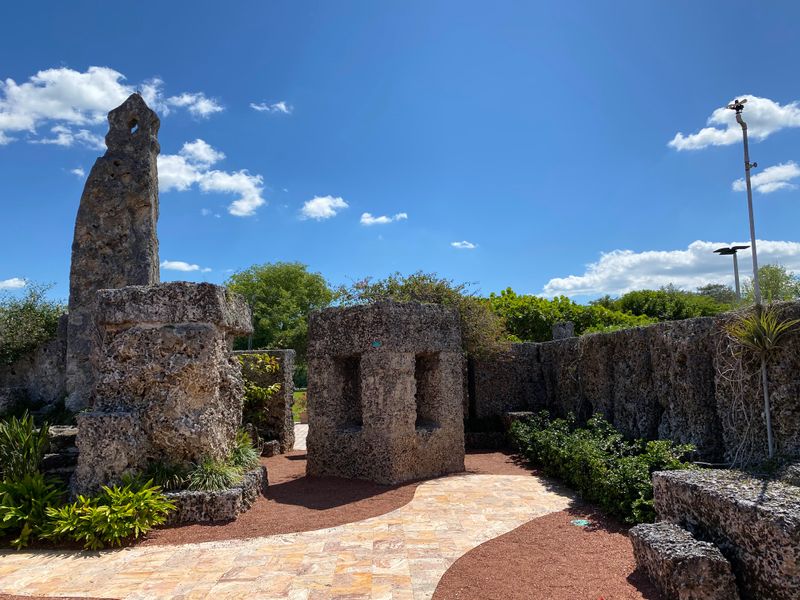
Arrive early or late for soft light that grazes stone and reveals pores, fossils, and tool marks with gentle contrast.
Walk the perimeter first to scout angles, then return to foreground details that add scale and context.
Benches and archways frame subjects cleanly, and you can layer depth by shooting through carved openings.
Respect any roped areas and keep gear compact so pathways stay comfortable for everyone.
Reflections after light rain create luminous patches that make textures sparkle against darker joints.
Florida skies often build dramatic clouds that balance heavy stone with bright air.
Switch from wide to short telephoto to tighten compositions around inscriptions and compass features.
Interior exhibits work best with steady hands or a small tripod where permitted, avoiding flash to protect materials.
Image themes should emphasize architecture, seating, and ambiance rather than any food or drink.
Look for leading lines that pull the eye toward the telescope or the tall obelisks.
Consider monochrome edits that highlight form over color when midday light turns harsh.
Ask staff about best times for fewer crowds, and be ready to move politely if others need the view.
Compose patiently and let movement settle so the scene reads calm and focused.
You will leave with images that carry texture and quiet drama to friends back home.
The stone rewards careful attention more than flashy techniques.
Nearby Essentials Without Leaving The Mood
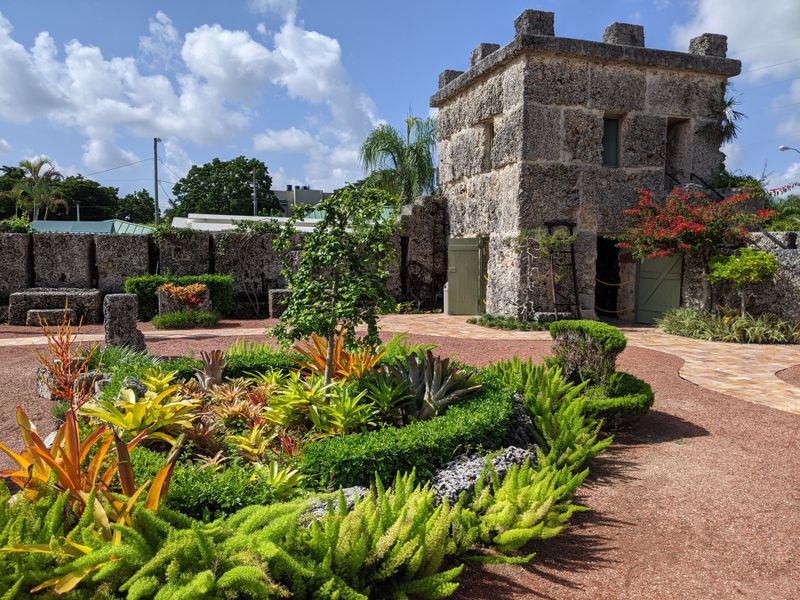
The museum sits on South Dixie Highway with convenient access, yet the grounds feel insulated once you pass the gate.
Restrooms and shaded seating inside the property help you extend your visit without breaking the reflective mood.
The staff can point you to nearby services without steering you far from the area if you plan a quick return.
If you need a break, the parking lot flows smoothly and reentry is simple with a valid ticket and current policies.
Families appreciate the calm pace, and the site keeps pathways clear for strollers and small groups.
Florida sun can be strong, and free water refill points may shift, so ask on arrival for the latest details.
Shops at the exit offer books, postcards, and prints that focus on architecture and history.
A small seating corner near the store lets you review maps and compare notes before heading back out.
Local information racks carry brochures for other cultural stops in the region without pulling focus from the castle.
Wayfinding signs make departure simple, and traffic usually moves steadily along the highway.
When you are ready to leave, take one final look at the skyline of stone and the tidy pathways.
You will likely notice some detail you missed earlier, which is part of the charm here.
The site invites repeat visits because the light and the mood never settle into sameness.
Keep your ticket handy until you are fully out, and double check personal items before you drive away.
The last glance usually turns into a promise to return for one more quiet walk.
Dear Reader: This page may contain affiliate links which may earn a commission if you click through and make a purchase. Our independent journalism is not influenced by any advertiser or commercial initiative unless it is clearly marked as sponsored content. As travel products change, please be sure to reconfirm all details and stay up to date with current events to ensure a safe and successful trip.
