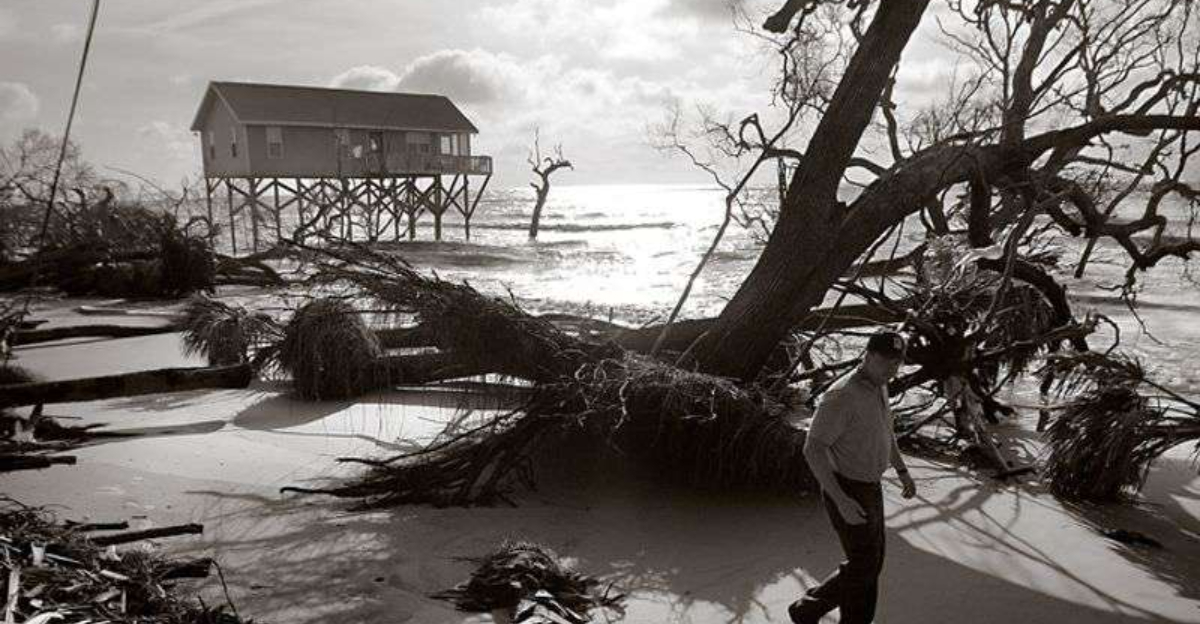
Salt wind slips through palmettos as the surf mutters beyond the dunes. Along a remote stretch of Hunting Island, weathered cabins sit quiet, their porches softened by sand and sea spray.
Locals keep their distance, saying the island itself has closed the doors. Step closer and the story of a lost retreat unfolds with both beauty and unease.
A Forgotten Corner of South Carolina’s Coast
Hunting Island rests off the coast of Beaufort, wrapped in maritime forest and long beaches. The state park protects shifting sands, tidal creeks, and a shoreline that moves with every season. Visitors find a wild barrier island unlike busier resort towns.
Along less traveled paths, old cabins linger at the forest edge. Their silhouettes hide behind cabbage palmetto and live oak. Salt air paints the walls, and sand collects on stoops.
Official park history notes eras of recreation and preservation. The lighthouse, trails, and boardwalks invite daytime exploration. Yet the cabins draw quieter attention, often from a distance.
Few signs announce them, and fewer maps encourage a look. Nature does the talking through wind and tide. The coast reclaims what people leave behind.
The Cabins That Once Welcomed Summer Travelers
Decades ago, simple cabins offered shade and a bed near the surf. Families arrived for shelling, fishing, and sunrise walks. The structures were plain, built for breezes and easy cleanup.
Records from park publications describe early lodging linked to coastal recreation. The cabins stood near maritime trees and sandy clearings. Screened porches faced wind and water.
Summer days brought laughter, coolers, and suntan lotion scents. Nights settled with crickets and the hush of tide. It felt like the coast belonged to anyone willing to slow down.
Over time, maintenance needs grew with salt and storms. Access shifted as the shoreline kept moving. What once felt permanent revealed its fragile bones.
How Hunting Island Became a Retreat Lost to Time
Barrier islands rarely sit still. Hunting Island formed and reformed as currents shaped the coast. Parks adapt around that constant motion.
State documents and interpretive signs explain erosion and habitat change. Trails shift, boardwalks move, and facilities are rebuilt or retired. Cabins became harder to maintain in the face of change.
Visitors followed newer amenities inland or to stable ground. The old cluster slipped into quiet. Absence settled into the rafters.
Memories remained in local stories and family photos. The island kept working, growing marsh here, carving beach there. A retreat turned into a memory, and then into legend.
Storms, Tides, and the Slow Work of Nature
Salt eats paint, wind loosens shingles, and tide lifts foundations grain by grain. On this island, weather writes the rules. The cabins learned that lesson each passing season.
Park and coastal studies discuss overwash and dune migration. Storms push sand inland, then it slides back to sea. Anything fixed becomes a marker for the next wave.
Small maintenance lapses became larger repairs. After high water, the cabins needed attention that outpaced budgets and time. Nature kept winning quiet victories.
Now the buildings stand like study pieces for coastal change. Their edges blur into grass and vine. You can read the wind in every board.
The Empty Rooms That Locals No Longer Visit
Local boaters and beach walkers know the cabins by outline and shadow. Many avoid stepping inside, out of respect and caution. The structures are not maintained for entry.
Park guidance encourages staying on marked routes. Safety and preservation shape that advice. The cabins sit outside the rhythms of current facilities.
From porches, you can imagine bunks and lantern light. Silence fills the doorways where voices once traded plans. Gulls provide the only chatter now.
Fear mingles with practicality. Floors may be weak, and wildlife uses the space. Distance feels like the right kind of care.
Whispers of Stories Left Behind in the Sand
Every cabin holds traces of summer plans and early departures. A nail in a post, a hook by a door, a number once stenciled. These small details spark the imagination.
Local histories mention family trips and simple gear. The island provided the rest: ocean, wind, and sky. Stories multiplied like shells along the wrack line.
With abandonment, rumor filled the gap. People spoke of eerie sounds and sudden chills. The coast often sounds that way on any empty day.
Nature never explains. It keeps moving, whispering through fronds and pine needles. Footprints fade as quickly as they arrive.
Why the Cabins Became a Local Legend of Fear
Isolation shapes feelings on this shore. When fog drifts between trees, the cabins look like stage sets. Many residents say the wind carries voices.
Park literature frames the mood as natural acoustics and wildlife. Crabs rustle leaves, owls call, and branches scrape wood. The mind assembles a tale from small sounds.
Caution also grows from real hazards. Old nails, soft floors, and shifting sand demand distance. Practical advice turns into folklore over time.
So the legend endures without a single cause. Fear keeps the buildings quiet and mostly untouched. In that quiet, the island breathes.
Nature Taking Back the Island Inch by Inch
Vines lace porch rails, and sea oats lean into stairways. Sand piles against skirting and slips through slats. The cabins turn into habitats as seasons pass.
Park biologists highlight maritime forest resilience. Palmetto, oak, and wax myrtle reclaim every opening. Birds perch on rooflines like temporary tenants.
What seemed abandoned becomes useful to wildlife. Shade, cover, and perches gather around old wood. Nature writes new chapters in the same frames.
From the trail, the change looks gentle. Up close, it is relentless and sure. The coast takes everything at its own pace.
The Beauty That Hides an Uneasy Silence
Light on the dunes softens every rough edge. The cabins sit within a scene that photographers love. Beauty and decline share the same frame.
Interpretive panels around the park celebrate natural splendor and change. Visitors learn how beaches migrate and forests recover. The cabins become visual footnotes to that lesson.
Silence collects under the eaves during calm days. Only surf and breeze interrupt it. The effect can feel peaceful or unsettling.
That mix holds attention longer than any thrill. It invites a thoughtful walk and a careful step. Respect keeps the setting intact.
What These Abandoned Cabins Say About Time and Memory
The cabins teach through absence. They show how quickly a popular place can pass into quiet. Time moves faster near the tide line.
Park history and coastal research agree on one truth. Change defines this island more than any building. Preservation often means letting nature lead.
Visitors leave with layered feelings. Wonder mixes with a hush that lingers after departure. Memory keeps the cabins occupied in another way.
Stand on the path and listen. The island’s lesson arrives in waves and wind. Nothing holds the shore for long.
Dear Reader: This page may contain affiliate links which may earn a commission if you click through and make a purchase. Our independent journalism is not influenced by any advertiser or commercial initiative unless it is clearly marked as sponsored content. As travel products change, please be sure to reconfirm all details and stay up to date with current events to ensure a safe and successful trip.
