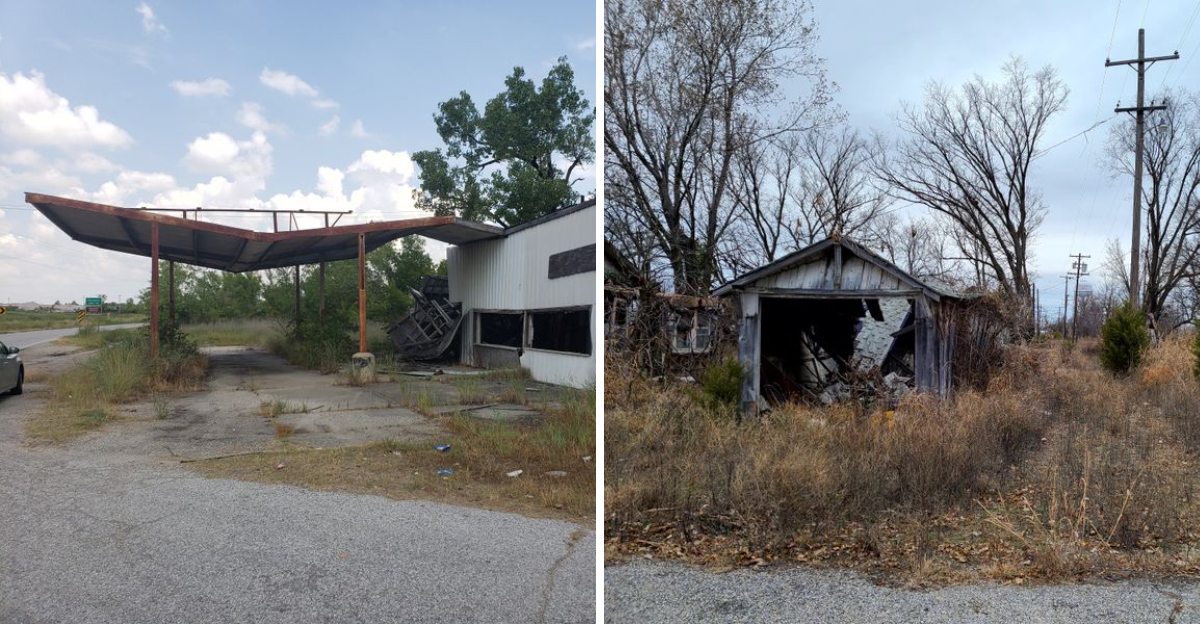
Picher, Oklahoma sits in the far northeast corner of the state like a cautionary postcard that never faded. You come for the ghostly quiet, the towering chat piles, and the way wind seems to carry memory across empty blocks. Every corner hints at a boom that roared, a crash that echoed, and a community that held on as long as it could. Walk in with open eyes, because this place tells the truth without raising its voice.
Lead and Zinc Mining Hub
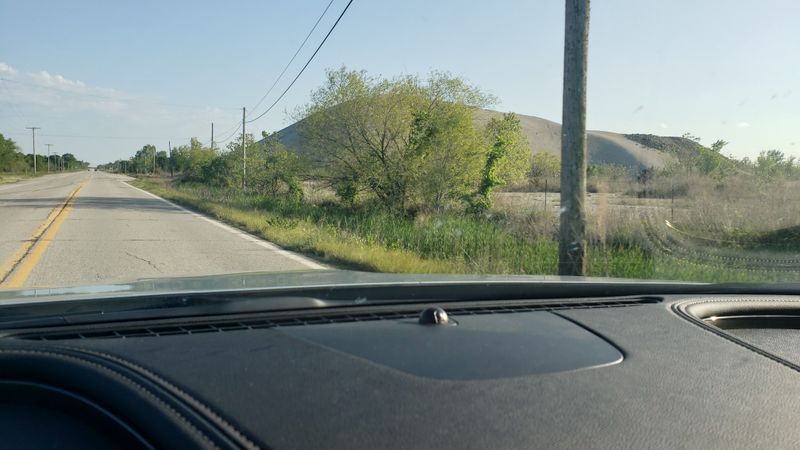
The ground beneath Picher, Oklahoma reads like a ledger of ore pulled from impossible depths, and the streets still tell that story in whispers.
This former hub anchored the Tri State Mining District, where miners followed veins of lead and zinc that fed factories, rail lines, and distant cities.
You see the scale of extraction not in museum cases, but in the altered landforms and the subtle tilt of old foundations.
The town once thrummed with hoists and crushers, and the clatter of rail cars stitched the shift changes together.
Across Ottawa County, roads still align with the geometry of shafts and haul routes, a quiet map of former urgency.
Locals and historians mark shafts by memory, and survey stakes sometimes reappear after storms, hinting at networks still mapped underground.
The mining legacy remains visible along service corridors that cut toward Tar Creek, where tailings shimmer pale under bright Oklahoma sun.
Old headframes are gone, yet their footprints hold the weight of stories that never asked for monuments.
You will not find interpretive centers on every block, so you read the landscape itself, and the landscape answers plainly.
Stand at Oklahoma 74360, coordinates 36.9870116, minus 94.8307844, and watch the light change across chat peaks like frozen surf.
The view teaches how industry can build a town quickly, then leave a long echo that still shapes the wind.
Peak Population Memories
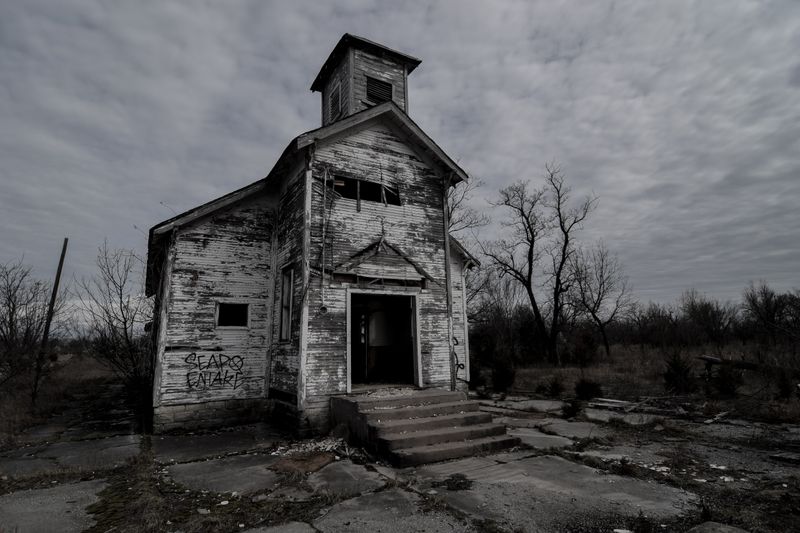
On quiet days in Picher, Oklahoma, it is easy to imagine sidewalks crowded with shift workers and schoolkids pacing toward storefronts along the grid.
The town once held a dense concentration of miners, families, and small businesses, which stitched daily life between whistles and supper bells.
You can trace the old rhythm in the spacing of empty lots, where porches used to angle toward evening breezes.
Every block near Oklahoma 74360 carries the shape of vanished neighbors, a pattern of mailboxes and gardens that survives in patches of lilac and elm.
Main corridors once ran steady with carts and trucks, and the depot area funneled motion toward smelters and supply yards.
Survivor trees mark backyards, and their roots still follow the straight lines of fences long since gone.
From the ridge near the chat piles, the town’s former bustle feels almost audible, a chorus layered with wheels, boots, and distant dogs.
Historic surveys list block numbers and lot dimensions, and those measurements feel like ghosts you can still step around in the dust.
At dusk, the prairie light flattens the scene, and the empty streets look briefly like they are waiting.
The grid remains a map of where people stood to talk, work, argue, and plan the next season.
Walk slowly along the old business strip, and the faint outlines of storefront thresholds appear like invitations.
The memory of a peak population lingers, not as a myth, but as a pattern stamped into soil that still holds it.
War Effort Footprints
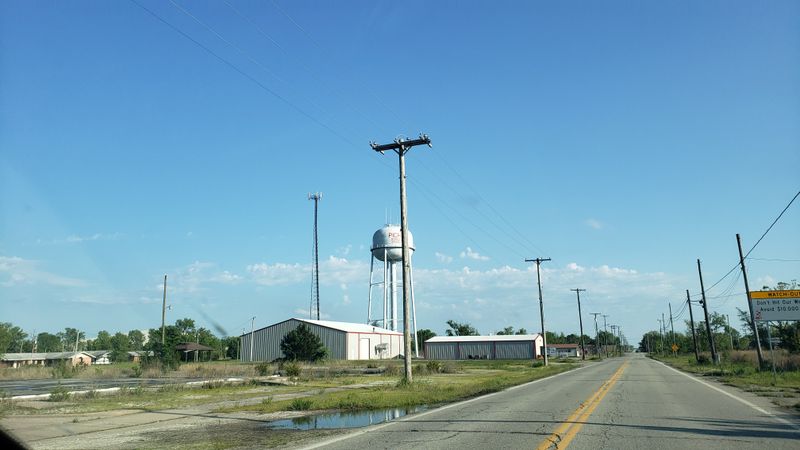
The ore pulled from Picher, Oklahoma did not stay long, it left in railcars headed to mills that forged parts the world urgently needed.
War production depended on lead and zinc, and this small corner of the state became a quiet engine behind distant assembly lines.
Standing near the old rail spurs, you feel how extraction linked to national logistics, then returned as pride pinned on coats and letters.
Historic documents describe the constant loading at sidings that once crossed Oklahoma 74360, where sparks jumped beneath metal wheels at dusk.
Markers are sparse, yet the story is anchored in freight routes, invoices, and shipping records archived across regional repositories.
Even the ballast stones under track beds seem to carry memory of weight, bearing witness to trains pushing night schedules.
Veterans who grew up nearby often mention how the town’s labor supported families and faraway crews, a chain of hands and steel.
The prairie held its breath during those years, trading silence for production and the hum of coordinated motion.
When wind skims the chat piles, it sounds a bit like grain sliding, a reminder of raw material feeding mills elsewhere.
In Picher, the geography became an instrument, tuned to demand and paced by whistles that set time for everyone.
The coordinates 36.9870116, minus 94.8307844 now feel calmly still, yet the rails’ alignment remains etched into the terrain.
Here, the war effort is not a plaque, it is the shape of ground that remembers the direction freight once flowed.
Environmental Reckoning at Tar Creek
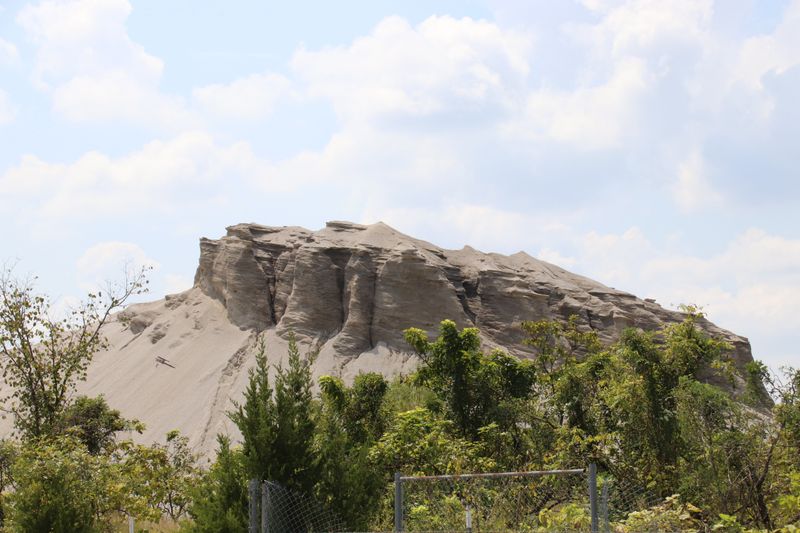
What looks like pale sand dunes in Picher, Oklahoma are chat piles, mine tailings stacked into unnatural hills that glitter under strong sun.
Standing close, you notice the fine texture and the way wind runs along the slopes, lifting dust that settles in thin veils.
Tar Creek moves nearby, and the water bears stains that speak clearly about chemistry, velocity, and time.
Scientists and agencies documented contaminated soils and streams, which shaped land use, health outcomes, and the long cleanup road.
From the edge of Oklahoma 74360, the altered landscape is not abstract, it is a physical presence that defines horizon and air.
Warning signs and occasional fencing signal that beautiful views may hold risks the eye cannot quickly detect.
The scale of tailings, pits, and channelized flow explains why environmental decisions here carry weight beyond any single parcel.
When wind rises, the chat emits a faint hiss, and the sound sticks in memory like a cautionary whisper.
Cleanup plans evolved over years, adapting to lessons from monitoring wells, flood events, and community health studies.
This valley holds a record of choices made fast during boom times, then revisited carefully during restoration.
At 36.9870116, minus 94.8307844, the terrain asks for patience, clear data, and steps that prioritize safe soil and water.
You leave with respect for the land, because recovery here is work that measures progress in careful increments.
Superfund Designation and What It Means

Picher, Oklahoma sits within the Tar Creek Superfund site, a federal designation that turns long term cleanup into a structured, public process.
That label does not erase history, it organizes it, aligning studies, remediation, and monitoring under a transparent framework.
When you stand near Oklahoma 74360, the coordination becomes visible in capped areas, posted notices, and mapped priority zones.
Superfund status connected local concerns to larger resources, linking agencies, tribes, and researchers across the watershed.
You see collaboration in the way sampling teams revisit wells and soils, building a timeline that guides careful decisions.
The designation also communicates risk clearly to visitors, encouraging awareness about where to walk, pause, or avoid.
Neighborhood blocks that once held homes now function as corridors for restoration and access for equipment and testing.
It is unusual tourism, but learning on site helps the eye separate scenic from safe, and scenic from unsafe.
Superfund work can feel slow, yet the pace reflects the complexity of geology, hydrology, and legacy waste.
In Picher, patience is not passive, it is the path toward measurable, lasting improvements that hold through seasons.
At coordinates 36.9870116, minus 94.8307844, the signs and fences are part of a larger promise to monitor, adjust, and inform.
You leave reminded that federal designations are not abstractions, they are commitments printed on land where people once lived.
Health Warnings Written In Dust
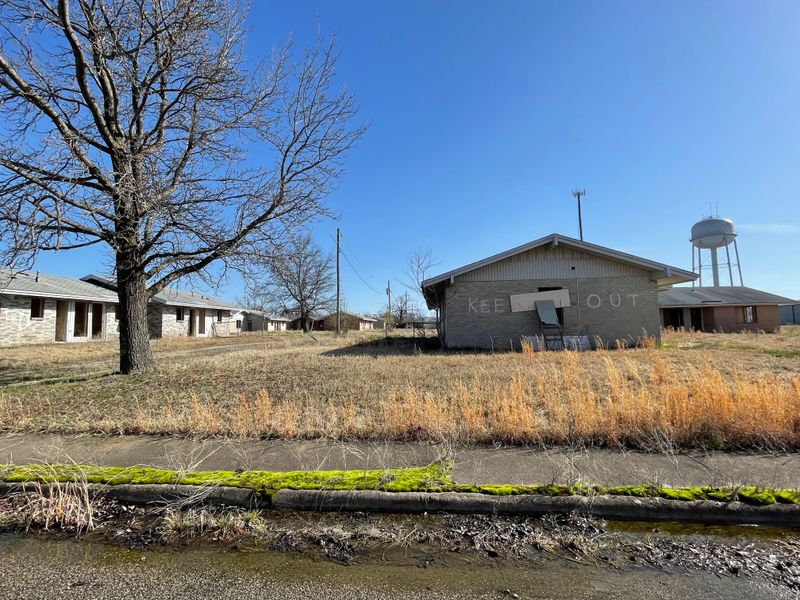
Visitors to Picher, Oklahoma quickly learn that beauty and risk can share the same view, especially where dust moves easily.
Public health assessments linked soil and water contamination to outcomes that shaped families and schools across the former city.
You notice the absence of playgrounds and the presence of posted guidance that frames even a short walk as a mindful activity.
Wind patterns drive fine particles, and low spots can trap residues that are not obvious until tested carefully.
Near Oklahoma 74360, empty lots look calm, and that calm asks you to respect guidance about contact, footwear, and lingering.
Health workers and researchers built outreach programs that explained exposure pathways in practical, everyday terms.
Those efforts are part science briefing, part neighborly advice, and they still guide how people move through specific blocks.
You will not see dramatic markers at every boundary, so personal caution becomes a steady companion as you explore.
Small choices add up, like staying on paved routes, avoiding dusty slopes, and washing gear after a visit.
The landscape teaches that harm can be invisible, and that prevention often looks like simple, repeatable routines.
At coordinates 36.9870116, minus 94.8307844, still air can feel kind, yet it sometimes holds more than breeze.
Carry respect for Oklahoma’s wind, because here it is both storyteller and courier, and it needs your attention.
Why The Evacuation Happened
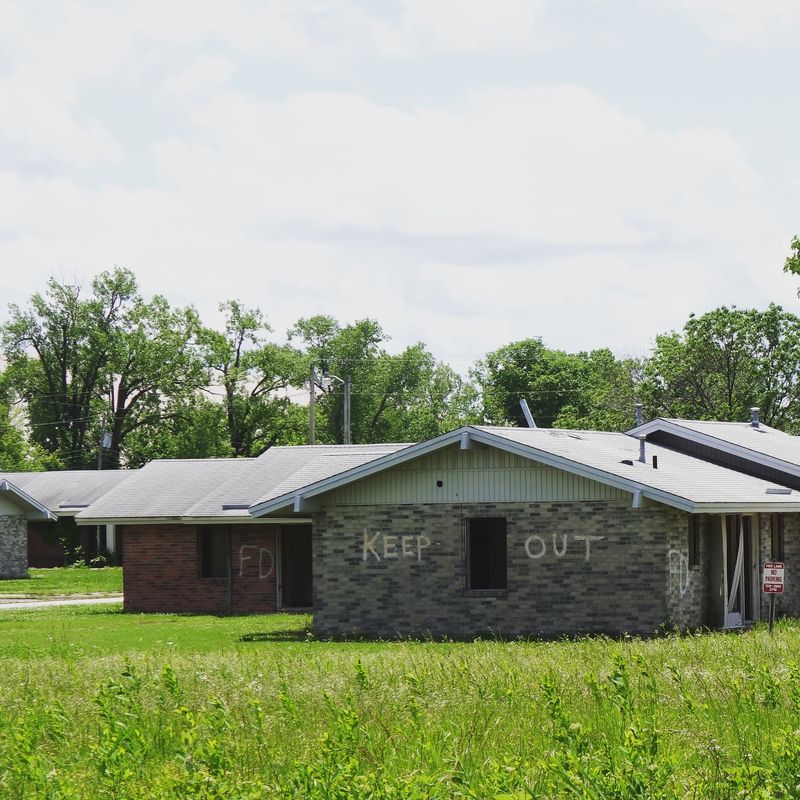
In Picher, Oklahoma, the decision to relocate residents was not sudden, it followed data about subsidence risk, contamination, and storm damage.
Underground voids created by historic mining undermined streets and foundations, turning everyday structures into potential hazards.
Engineers mapped risk zones, and those maps reshaped the future of entire blocks with a sober certainty.
Walking near Oklahoma 74360 today, you notice wide open spaces where homes once stood, a physical record of difficult choices.
Buyout programs met families at kitchen tables, then turned keys into paperwork that promised safer ground elsewhere.
The relocation story is about care as much as departure, a community choosing health and stability over sentiment.
Evidence guided every step, from structural surveys to geotechnical readings that described stress where eyes saw only grass.
Vacant parcels function now as buffers that reduce risk and allow monitoring vehicles to access critical points.
Local roads feel oversized for the level of traffic, and that empty width underlines the scale of change.
In conversation with former residents, you hear pragmatism, grief, and a clear understanding of why the plan moved forward.
At 36.9870116, minus 94.8307844, the landscape holds space for memory while prioritizing safety under Oklahoma skies.
You leave thinking about how relocation can be an act of preservation, protecting life even as it closes a chapter.
Tornado On A Fragile Grid
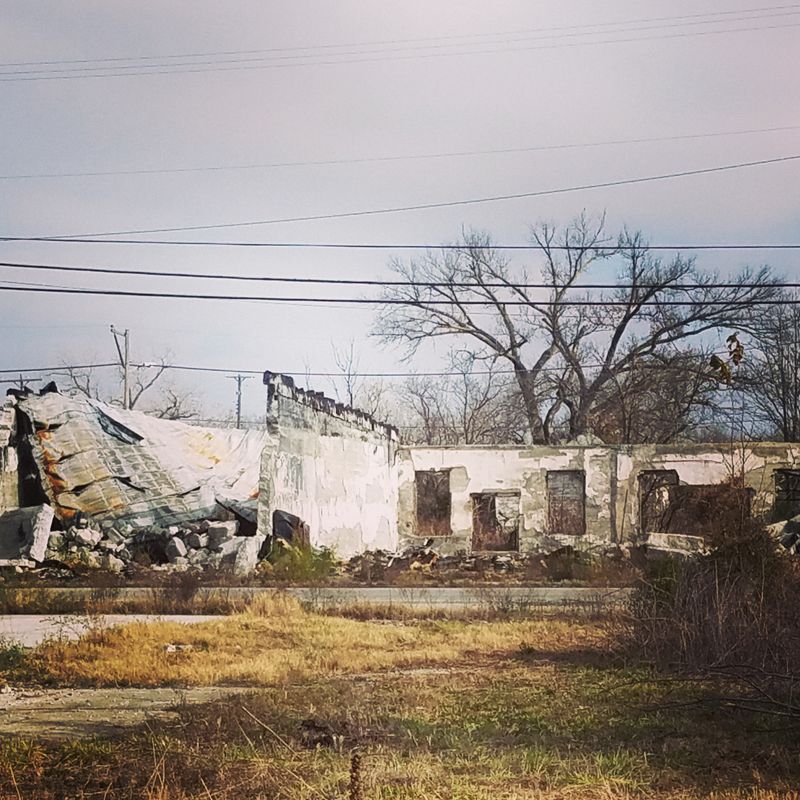
When severe weather crossed Picher, Oklahoma, it struck a town already burdened by unstable ground and stressed structures.
The storm path carved through neighborhoods, and the damage magnified existing weaknesses that years of mining had created.
What remained afterward looked like a blueprint erased by rough hands, a grid with corners torn away.
Near Oklahoma 74360, you can still see where streets end abruptly, as if the map forgot what came next.
Emergency crews moved through debris while residents weighed choices that were already heavy before the skies darkened.
Documentation from that period shows a choreography of response, assessment, and long looks at the horizon.
Storm tracks intersect with geologic maps here, and that overlay tells a story no single photo can capture.
On site, the silence after wind becomes part of the place, a hush that lingers even on calm mornings.
What once were rooms and porches became outlines on foundations, and those shapes cling to the earth like shadows.
In Oklahoma, storms are part of life, but in Picher the context turned a hard moment into a turning point.
Coordinates 36.9870116, minus 94.8307844 anchor you to a ground that has held so much motion, then so much stillness.
Walking away, you feel respect for the people who faced that day, and for the landscape that carries the memory.
After Disincorporation, What Remains
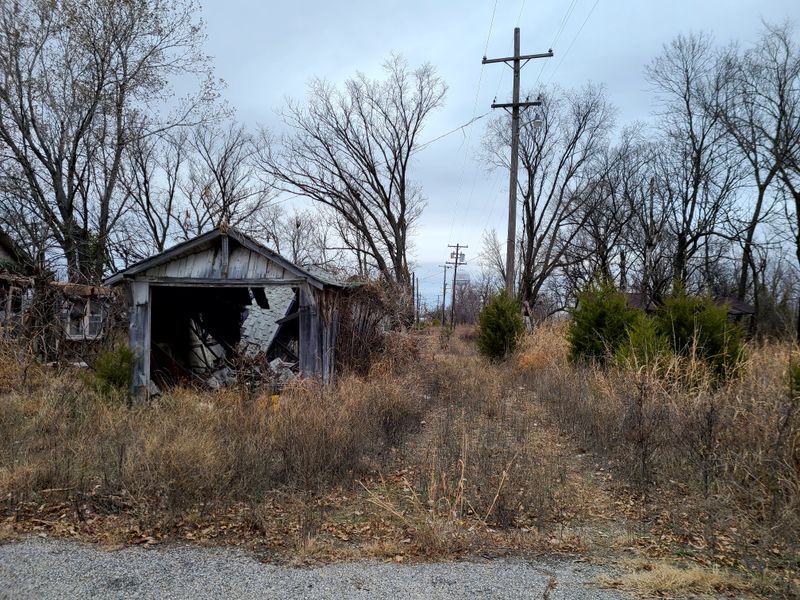
Picher, Oklahoma no longer functions as a city government, yet the place persists in roads, coordinates, and responsibilities that continue.
Disincorporation changed how services, oversight, and maintenance are handled, shifting tasks among county, state, and federal partners.
On the ground, you see it in road grading, signage, and access gates that manage safety and monitoring.
Addresses remain part of maps, and Oklahoma 74360 still guides navigation for responders and researchers.
Fewer structures stand, but the grid keeps its logic, helping visitors orient across broad, open parcels.
You notice survey posts, culverts, and drainage ditches that speak to the ongoing work of caring for land.
The absence of storefronts creates space for sky, and the sky answers by pouring light on everything left.
Disincorporation did not erase history, it clarified the boundary between memory and municipal obligations.
There is dignity in that clarity, because it acknowledges both the value of the past and the duties of the present.
Traveling here teaches that place identity can live without a city seal, carried by maps, stories, and terrain.
At 36.9870116, minus 94.8307844, the signage is spare and the message is careful, keep moving with respect.
You depart knowing that what remains is not an absence, it is a quieter form of stewardship under Oklahoma light.
The Pharmacy That Stayed Open
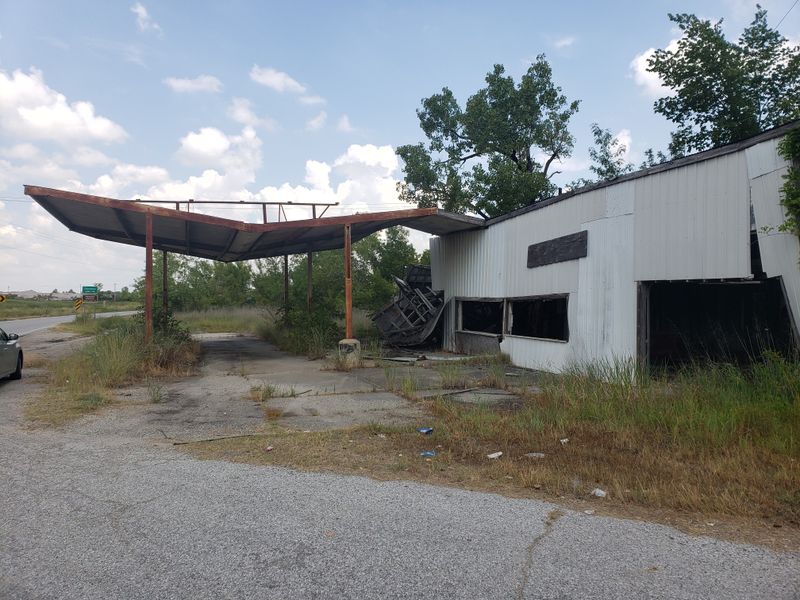
In Picher, Oklahoma, one storefront held the line longer than most, a pharmacy that stayed lit while the town dimmed.
Its story anchors a human scale to a landscape often described by geology, engineering, and policy documents.
People came for medicine and conversation, and those two needs met at a counter that weathered long years.
The address sat within Oklahoma 74360, and the short walk from nearby blocks felt like a small vote of confidence.
Photographs show shelves, a bell on the door, and a seating area where neighbors compared notes on the day.
Inside, you see the familiar geometry of a Main Street business, with jars, labels, and neat rows that say welcome.
The pharmacy bridged the town’s transition, serving residents through relocations, storms, and final paperwork.
Its endurance turned into a symbol of care, a reminder that service can be a place as much as an action.
Today, the storefront is part of a story told with gratitude, a chapter that residents repeat with steady voices.
It proves that even when maps change, human ties draw their own boundaries and keep them well.
Stand at 36.9870116, minus 94.8307844, and picture the door opening, the bell, and the quiet nods that followed.
You leave appreciating how one shop became a lantern, casting a circle of light across a difficult evening.
How To Visit With Care Today
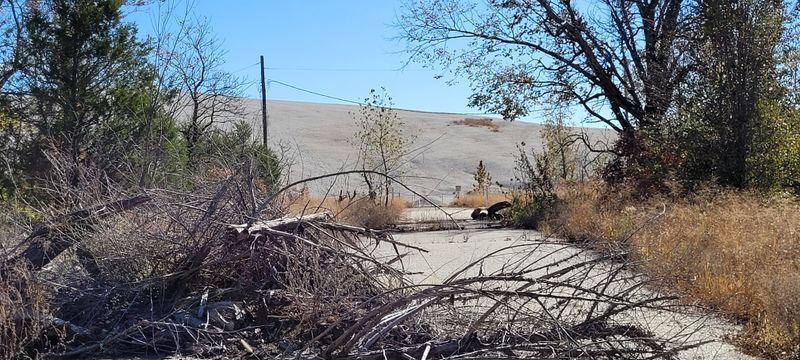
If you go to Picher, Oklahoma, plan the visit like a respectful field trip, with awareness as the first item on your list.
Start by checking official sources for access guidance, closures, and recommended routes that avoid sensitive ground.
Wear sturdy shoes, stay off chat piles, and keep to paved or well packed surfaces where dust is less likely to rise.
Photography works best from public rights of way, where you can frame the landscape without crossing fences or barriers.
Bring water, a map, and a simple plan that includes how long you will stay and where you will park.
Avoid collecting rocks or soil, and choose memories in the form of notes and images rather than souvenirs.
Use Oklahoma 74360 for navigation, and set the destination to 36.9870116, minus 94.8307844 for a clear starting point.
Give space to monitoring crews and equipment, since their work keeps the path toward recovery steady.
Travel with someone who appreciates quiet, because the landscape asks for listening as much as looking.
When wind stiffens, consider leaving earlier than planned, and clean shoes and gear when you return to your car.
Share what you learn respectfully, emphasizing safety, history, and the ongoing work by agencies and neighbors.
Oklahoma holds many stories, and this one benefits from visitors who carry care along with curiosity.
Dear Reader: This page may contain affiliate links which may earn a commission if you click through and make a purchase. Our independent journalism is not influenced by any advertiser or commercial initiative unless it is clearly marked as sponsored content. As travel products change, please be sure to reconfirm all details and stay up to date with current events to ensure a safe and successful trip.
