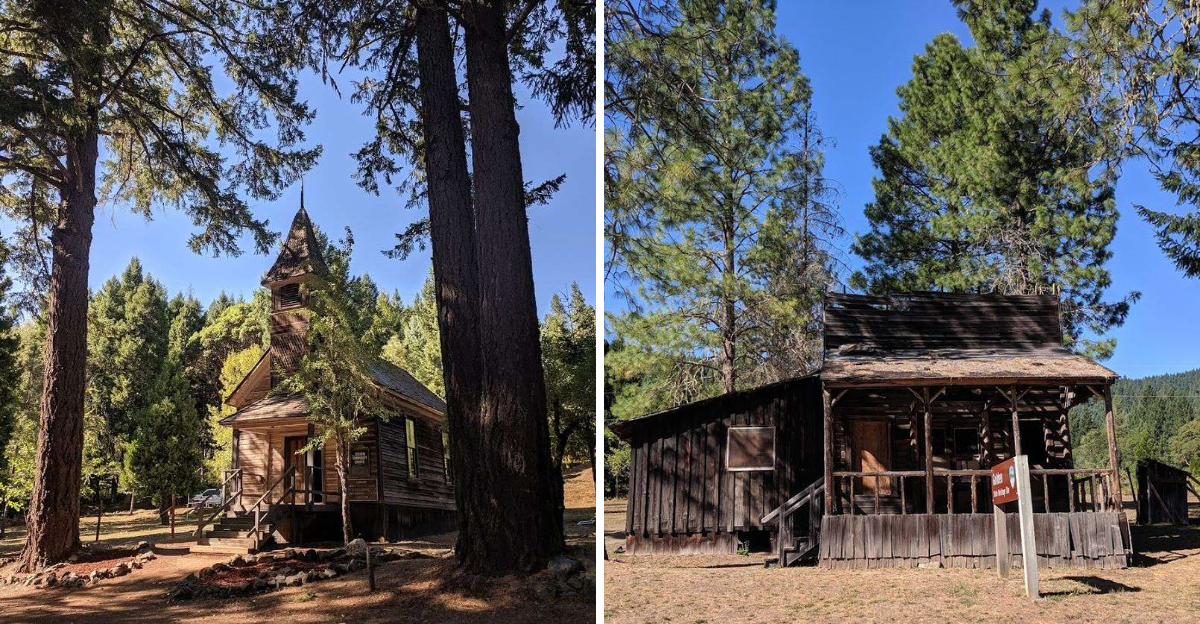
A hidden valley in Oregon holds something most people don’t even realize is still out there – a forgotten ghost village where silence replaces signal bars. The moment you step into it, even the idea of cell service feels like it belongs to another world entirely.
I didn’t expect the stillness to feel so heavy, but the absence of noise and connection makes every sound around you sharper. Old structures sit quietly against the landscape, like they’ve been waiting far longer than anyone can remember.
There’s a strange pull to the place, part curiosity and part unease, like you’re walking through a story that paused mid-sentence. I kept moving slowly, almost instinctively, as if rushing would break something fragile in the air.
And leaving it feels less like exiting a place and more like slipping back into the modern world too quickly.
The Story Behind Golden’s Rise and Fall
Golden was not always quiet. Back in the late 1800s, this small settlement buzzed with miners, families, and ambition.
It grew up fast around gold and copper mining activity in the hills of Josephine County.
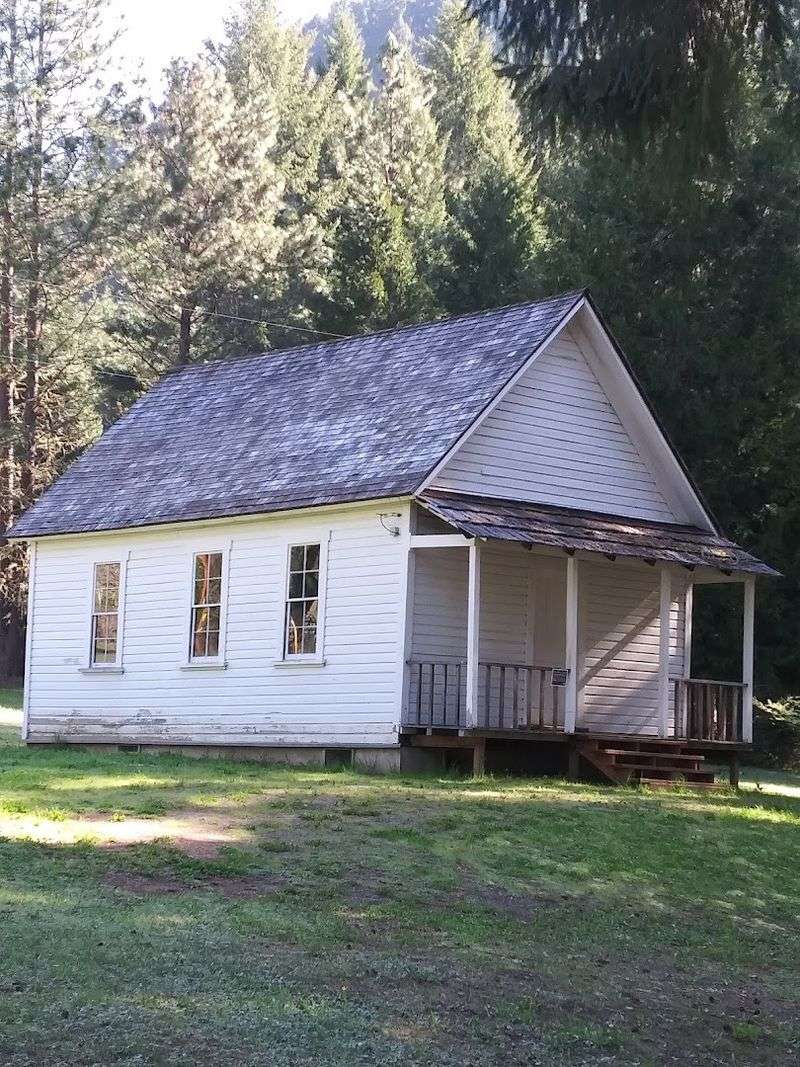
The town had a church, a school, a post office, and homes. Real life happened here.
People raised kids, held Sunday services, and built routines in this remote Oregon valley.
But the mines slowed down. The economy shifted.
Families packed up and moved on, one by one, until almost nobody was left. By the mid-20th century, Golden was officially a ghost town.
What makes this history so striking is how complete the abandonment feels. No one repurposed the buildings.
No one converted the church into a gift shop. The town just stayed exactly as it was, frozen in place.
That kind of raw, untouched history is genuinely rare to find anywhere in Oregon today.
Getting There Without GPS
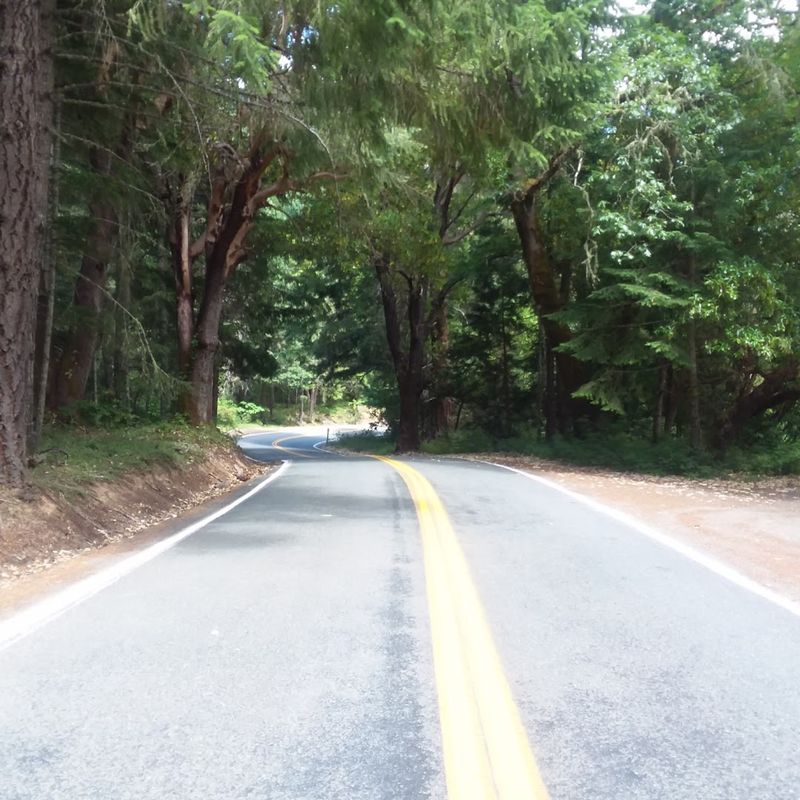
Getting to Golden is part of the whole experience. The drive takes you off paved roads and onto gravel paths that wind through thick forest.
Cell service disappears fast out here.
I checked my phone three times before accepting the silence. Bringing a printed map or downloading an offline version beforehand is genuinely smart.
You will not regret that small bit of preparation.
The route travels through parts of Josephine County that feel completely removed from modern life. You pass creeks, tree lines, and stretches of road where you might not see another car for miles.
Golden sits near Coyote Creek, and the road leading in follows the natural curves of the land. It feels like the valley is slowly revealing itself as you get closer.
The journey itself sets the mood perfectly. By the time you arrive, you already feel like you have traveled back in time, not just in miles but in atmosphere and headspace too.
What Remains Standing Today
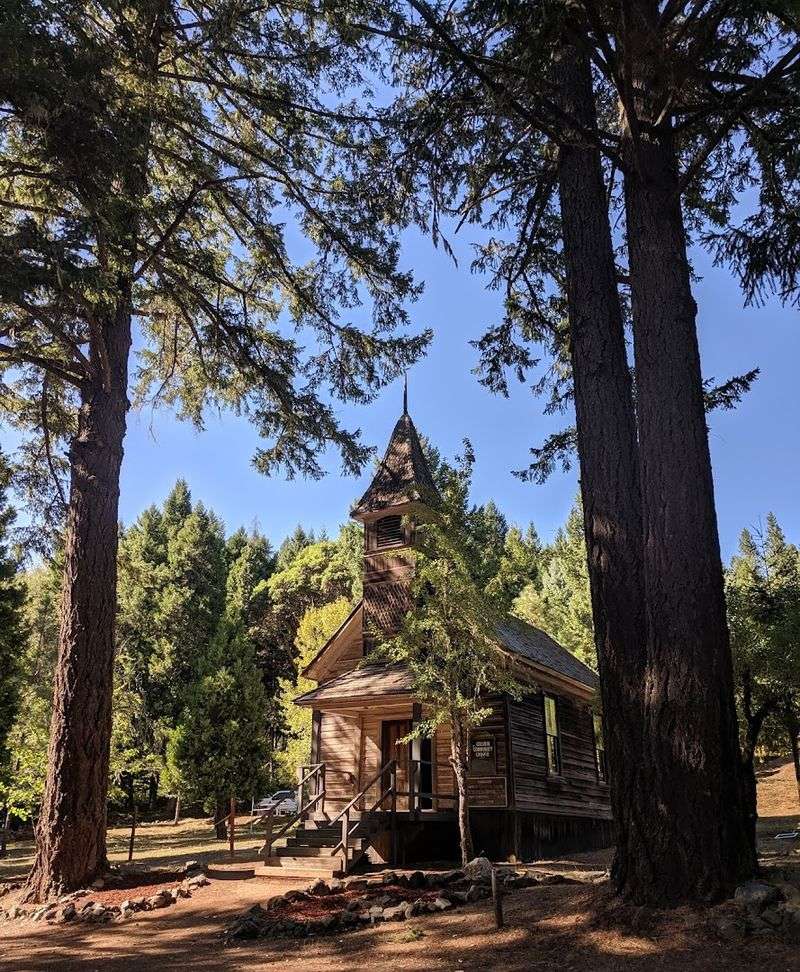
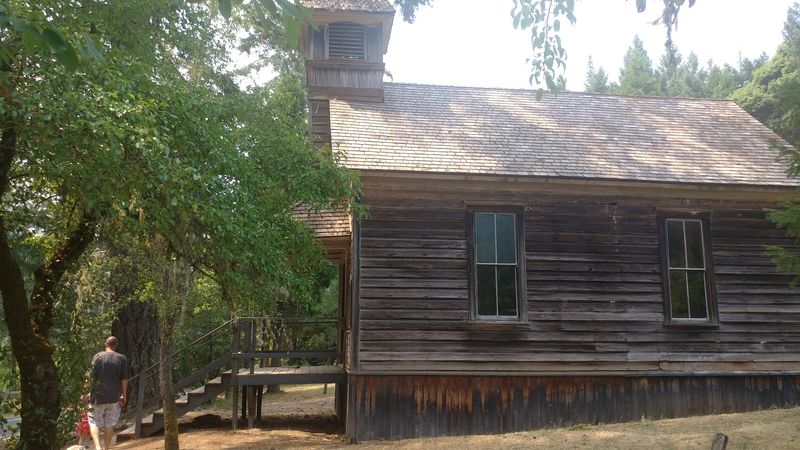
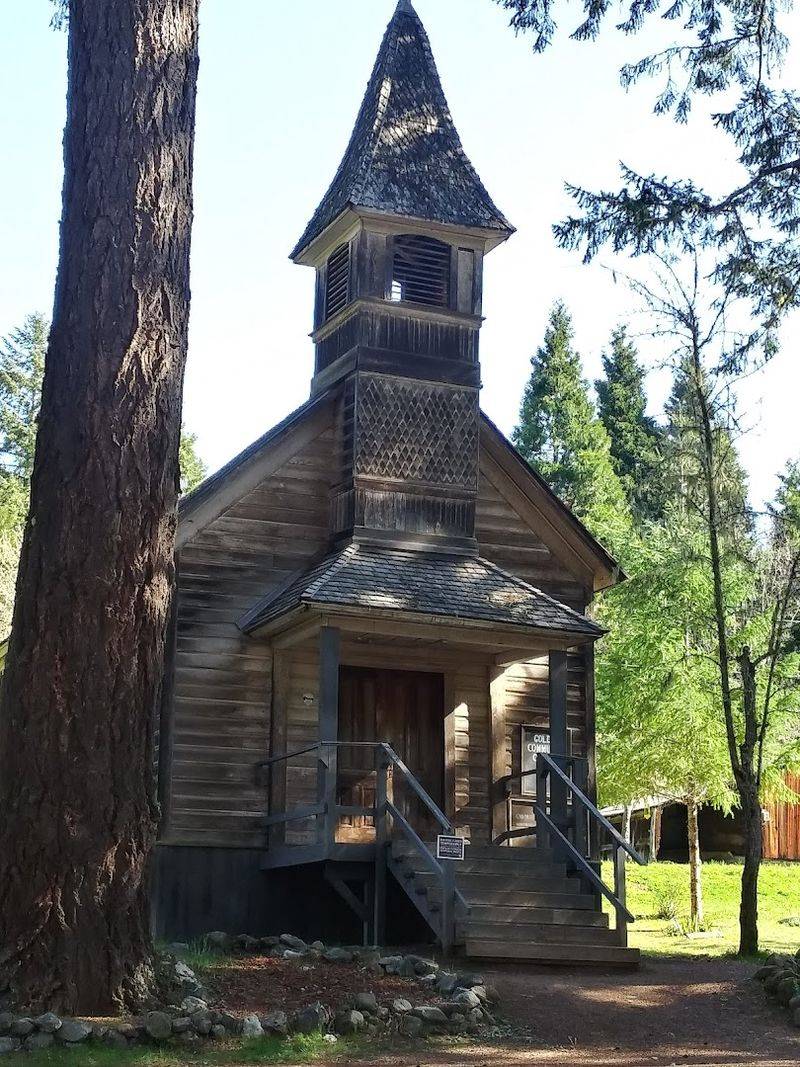
A few structures still stand in Golden, and they are remarkably well-preserved for buildings that have been empty for decades. The old church is the most recognizable.
Its white paint has faded, but the shape is still solid.
There is something deeply moving about standing in front of that church. It was clearly the center of this community once.
You can almost imagine the sound of voices filling it on a quiet Sunday morning.
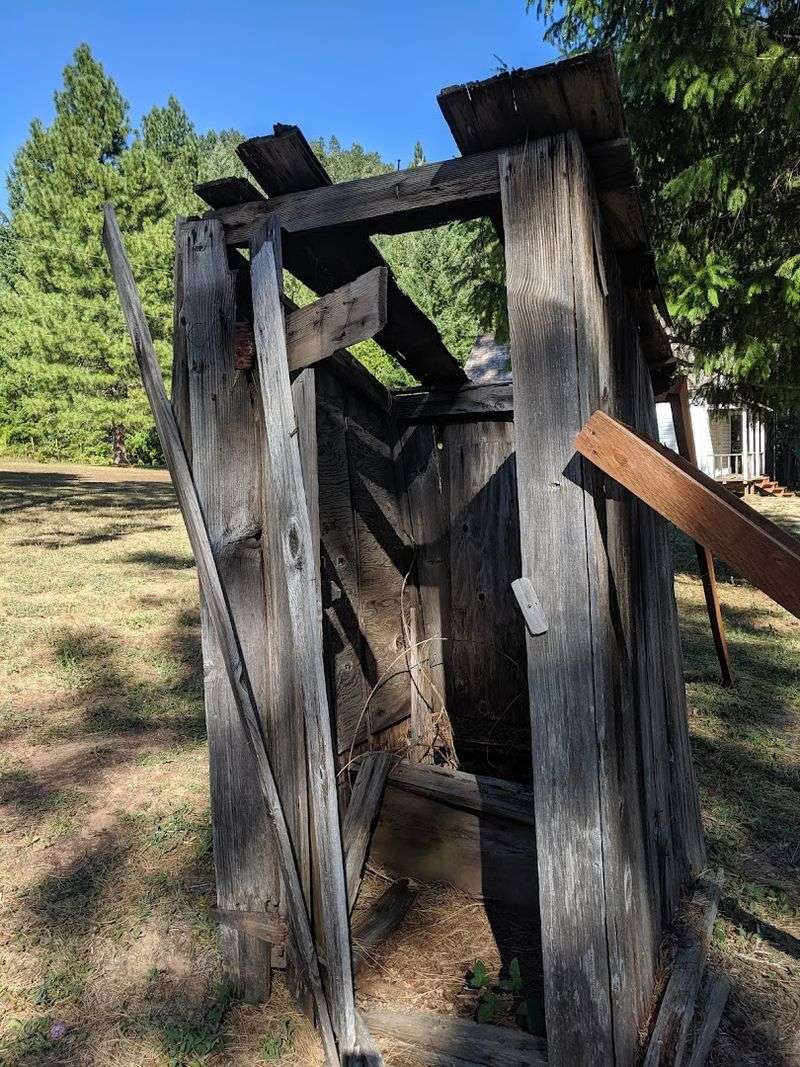
Other remnants dot the area, including foundations, old fencing, and the outlines of what were once homes. Not everything survived the years, but enough remains to tell the story clearly.
Oregon State Parks has worked to preserve what is left at Golden. The site is protected, which means visitors are expected to look but not touch or remove anything.
That rule matters. Every piece of weathered wood and rusted hinge is part of a story that deserves to stay intact for future visitors to experience just as honestly.
Coyote Creek and the Valley Setting
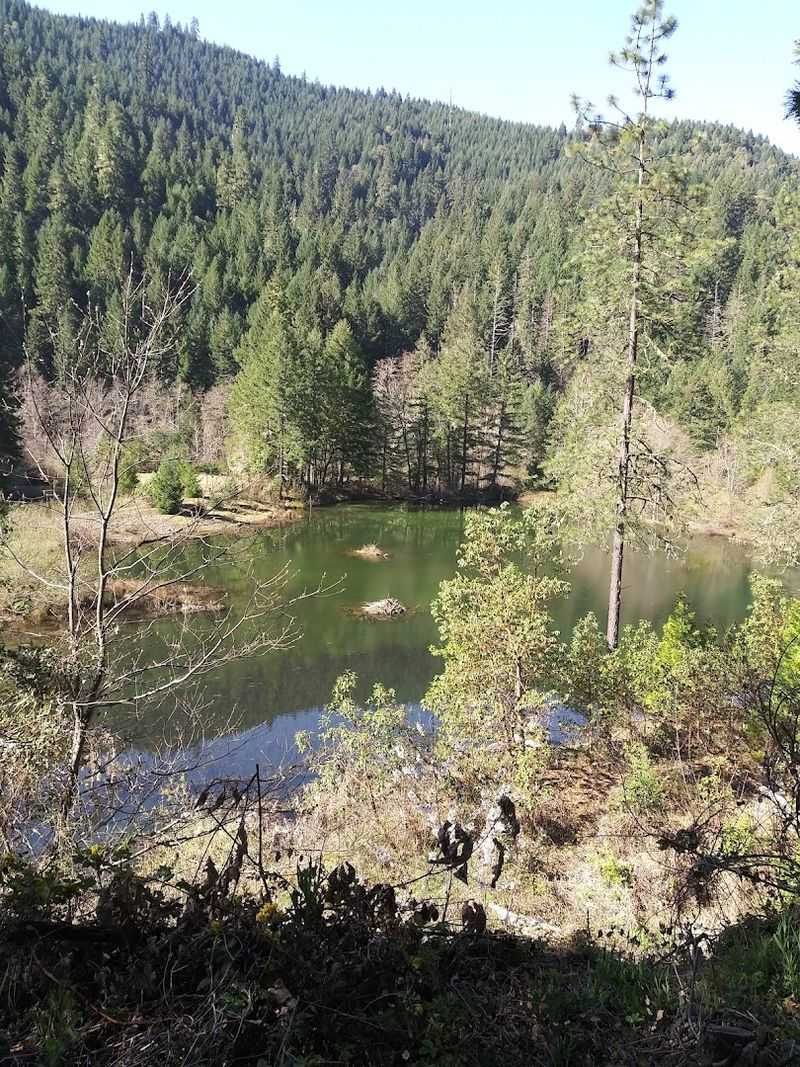
Coyote Creek runs close to the Golden townsite, and it adds something really special to the whole visit. The sound of moving water gives the place a living quality, even though the town itself is long gone.
The valley that holds Golden is naturally beautiful. Tall Douglas firs and other Pacific Northwest trees create a dense canopy overhead.
In spring, the green is almost overwhelming in the best possible way.
I sat near the creek for a while and just listened. No notifications buzzed.
No background noise from roads or towns. Just water, birds, and wind through the trees.
It felt genuinely restorative.
The creek was likely a key reason settlers chose this location. Fresh water, shelter from the valley walls, and proximity to the mineral-rich hills made it practical.
Now, those same natural features make it peaceful. The land has quietly reclaimed much of what the town left behind, and the result feels surprisingly harmonious and calm.
No Cell Service: A Feature, Not a Bug
Losing cell service used to feel stressful to me. Out at Golden, it felt like relief.
There is something clarifying about being in a place where your phone simply cannot compete for your attention.
The dead zone starts before you even reach the townsite. Most of the road in has zero bars.
It forces a kind of presence that is hard to manufacture anywhere with a working signal.
Visitors who embrace this tend to enjoy the experience far more. Bring a notebook, a camera that does not need a connection, and curiosity instead of a scrolling habit.
There is a growing group of travelers who specifically seek out places like this. Off-grid destinations where the absence of connectivity becomes the actual draw.
Golden fits that perfectly. It was not designed to be a digital detox retreat.
It just ended up being one naturally, by geography and history. That accidental quality makes it feel more honest than any intentional wellness destination could manage.
Oregon State Parks and Site Protection
Golden is managed as part of the Oregon State Parks system. That protection is the main reason the site still looks the way it does.
Without it, the remaining structures would likely have been vandalized or removed long ago.
The state has worked to stabilize certain buildings without fully restoring them. That balance is thoughtful.
Restoration would erase the authentic decay that makes Golden feel real. Stabilization just keeps it from disappearing entirely.
Visiting a protected historic site comes with responsibilities. Stay on marked paths.
Do not take souvenirs, even a small piece of wood. Do not climb on old structures.
These rules exist because fragile history needs active respect to survive.
Golden is a day-use area. There are no camping facilities at the townsite itself, so plan your visit accordingly.
Arriving in the morning gives you the best light and the most quiet time before any other visitors arrive. Weekdays tend to be noticeably less crowded than weekends, which makes the experience feel even more personal and unhurried.
What to Bring on Your Visit
Preparation makes a real difference here. Golden is remote, and there are no services anywhere nearby.
No gas stations, no cafes, no cell signal to pull up a delivery option if you forgot something important.
Water is essential. Bring more than you think you need.
The walk around the townsite is not strenuous, but the drive in can be long and dusty depending on the season and road conditions.
Sturdy shoes are smart. The ground around the old buildings can be uneven.
Roots, rocks, and soft soil patches are common. Good footwear keeps the experience comfortable instead of frustrating.
A camera with a full battery is worth its weight out here. The light in the valley shifts beautifully throughout the day, especially in the late afternoon when it filters through the trees and catches the texture of the old wood.
A journal is also a great addition. Some places just make you want to write things down, and Golden is absolutely one of them.
Best Time of Year to Visit Golden
Timing your visit matters more than you might expect. The road to Golden can become difficult in winter, especially after heavy rain or snowfall.
Mud and poor visibility make the gravel route genuinely challenging.
Late spring through early fall is the most reliable window. May and June bring green, lush vegetation and comfortable temperatures.
The creek runs full and the whole valley feels vibrant and alive.
Fall is my personal favorite time. October light in an Oregon valley is something else entirely.
The trees shift into warm amber and rust tones, and the old buildings look even more atmospheric against that backdrop.
Summer weekends can bring more visitors than usual, though Golden never gets truly crowded. Even on a busy day, the remoteness keeps the numbers manageable.
If solitude is your priority, aim for a Tuesday or Wednesday in September. You might have the entire townsite to yourself, which turns a good visit into an unforgettable one.
The Old Church at Golden
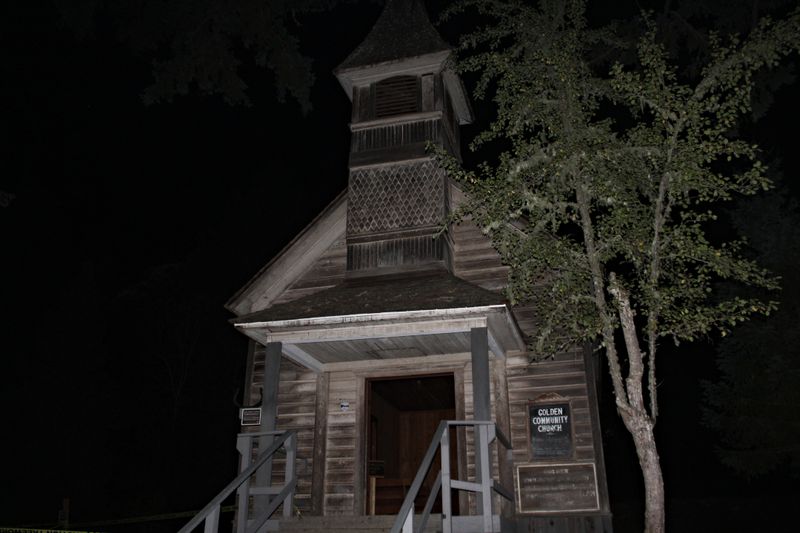
The church at Golden is the most photographed structure on the site, and it earns that attention completely. It stands with a quiet dignity that feels almost defiant against the decades of abandonment surrounding it.
Built in a simple, practical style common to rural Oregon settlements of the era, the church does not try to impress with ornate details. Its power comes from its presence and its age.
It just stands there, holding its ground.
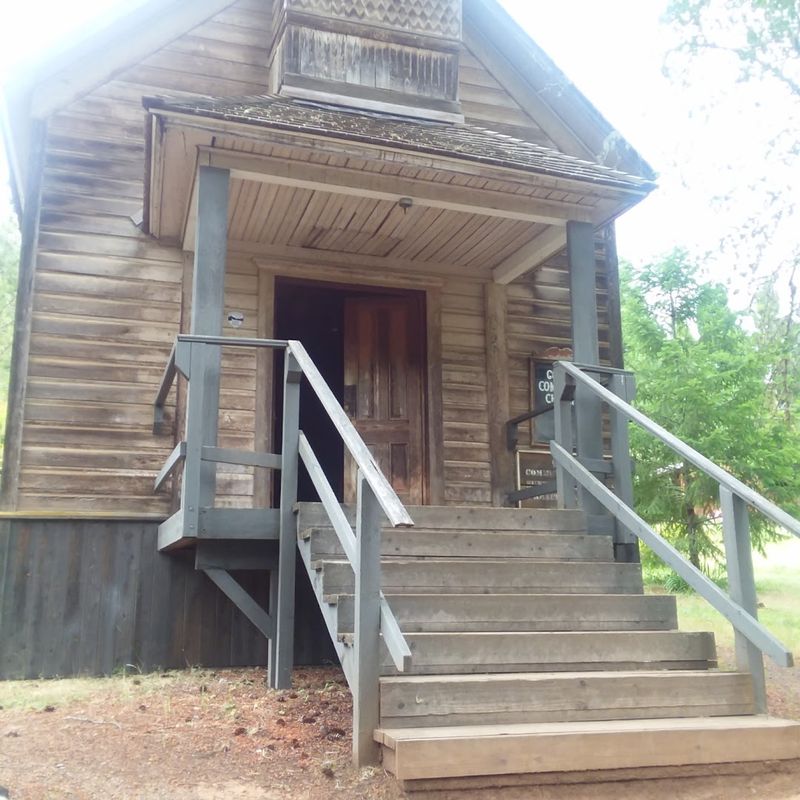
Walking up to it slowly is the right approach. The closer you get, the more texture you notice.
Cracked paint. Weathered wood grain.
Window frames that have warped slightly over time but still hold their shape.
The interior is not open to the public for safety reasons, but the exterior alone is worth the trip. Standing beside it in the morning quiet, with no background noise and no signal pulling your attention elsewhere, feels genuinely affecting.
It is one of those moments that travel sometimes delivers when you least expect it.
Why Golden Deserves More Attention
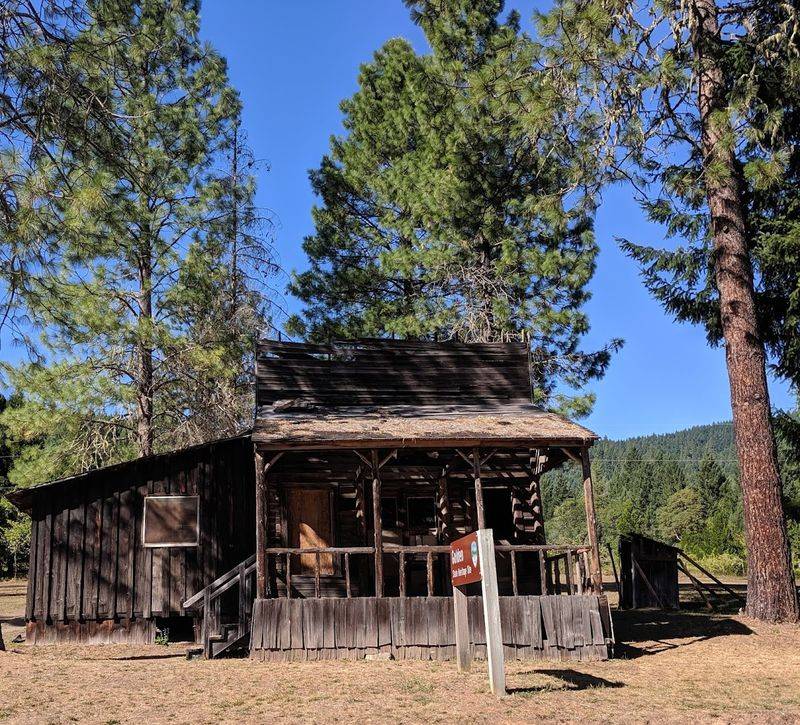
Most Oregon travel lists skip Golden entirely. The popular spots get all the attention, while places like this sit quietly in valleys that most people never think to explore.
That overlooked quality is exactly what makes Golden worth seeking out.
It is not a curated experience. Nobody designed it to be Instagram-ready or tourist-friendly.
It is just a real place with a real history that happened to survive long enough for us to visit it.
That honesty is increasingly rare. So many historic sites get polished and packaged until the rawness disappears.
Golden avoided that fate, partly by being too remote and too small to attract that kind of investment.
Sharing this place with others feels important. Not to flood it with visitors, but to remind people that Oregon holds stories far beyond its famous coastline and well-worn hiking trails.
Dear Reader: This page may contain affiliate links which may earn a commission if you click through and make a purchase. Our independent journalism is not influenced by any advertiser or commercial initiative unless it is clearly marked as sponsored content. As travel products change, please be sure to reconfirm all details and stay up to date with current events to ensure a safe and successful trip.
