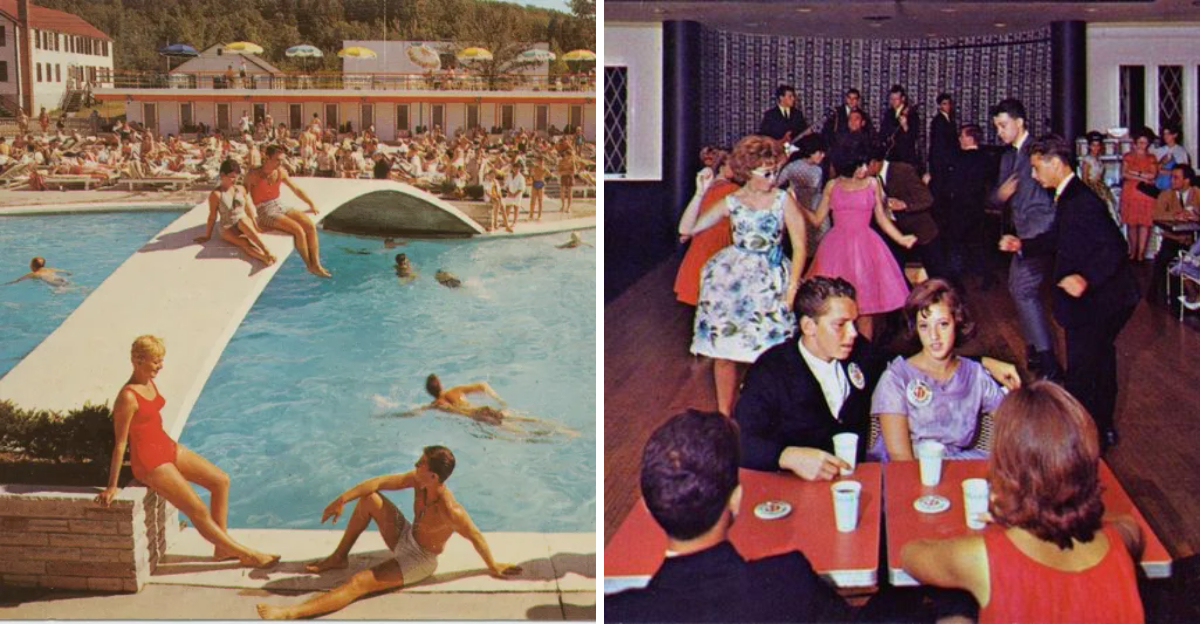
The Borscht Belt was a magical slice of the Catskill Mountains where Jewish families escaped the summer heat and found laughter, entertainment, and community.
From the 1920s through the 1970s, these resorts transformed quiet New York towns into bustling vacation destinations filled with comedy shows, dancing, and unforgettable meals.
Though most of these grand hotels have faded into memory, their influence on American culture and comedy remains powerful and fascinating.
Grossinger’s Resort: The Crown Jewel
Grossinger’s stood as the most famous resort in the entire Borscht Belt region. Jennie Grossinger transformed her family’s small boarding house into a sprawling 1,200-acre paradise that welcomed thousands of guests each summer.
The resort featured everything from indoor and outdoor pools to its own post office, airstrip, and even a ski slope for winter visitors.
Celebrities flocked to Grossinger’s, making it a hotspot for star sightings and glamorous entertainment. Jackie Robinson trained there, and countless honeymooners chose it as their romantic getaway destination. The resort’s dining room served mountains of traditional Jewish food that became legendary across the region.
Sadly, changing vacation trends led to Grossinger’s closing in 1986. The buildings now stand abandoned, but the memories of golden summers and endless entertainment live on in the hearts of former guests.
The site remains a powerful symbol of the Borscht Belt’s glory days.
Comedy Legends Were Born Here
Before they became household names, comedians like Jerry Lewis, Sid Caesar, and Joan Rivers honed their craft in Borscht Belt resort showrooms.
These intimate venues gave young performers a chance to test new material night after night before supportive audiences. The rapid-fire, self-deprecating humor that emerged here would shape American comedy for generations.
Mel Brooks worked as a drummer and comedian at various resorts during his early career. Rodney Dangerfield, Woody Allen, and countless others followed similar paths to stardom. The Borscht Belt circuit became the ultimate training ground where timing, delivery, and audience connection were perfected.
Resort owners competed fiercely to book the funniest acts and newest talent. Shows often ran multiple times per night, giving comedians invaluable stage experience.
This unique entertainment ecosystem created a comedy revolution that still influences stand-up performers today across the entire entertainment industry.
All-You-Can-Eat Feasts Every Single Day
Meals at Borscht Belt resorts weren’t just food – they were spectacular events that guests talked about for years. Breakfast, lunch, and dinner featured endless courses of traditional Jewish cuisine prepared by skilled chefs. Brisket, chicken soup, blintzes, and fresh-baked challah appeared alongside modern American dishes to satisfy every palate.
Waiters hustled between tables carrying massive trays piled high with delicious offerings. Guests never left hungry, and seconds (or thirds) were always encouraged with a warm smile. The dining rooms buzzed with conversation, laughter, and the clinking of silverware as families bonded over shared meals.
Sunday brunches became legendary affairs that could last for hours. Dessert tables groaned under the weight of cakes, cookies, strudels, and pastries that seemed to multiply magically. Food was love, hospitality, and entertainment all rolled into one unforgettable experience that defined the Borscht Belt vacation.
The Catskill Mountains Setting
Sullivan County’s Catskill Mountains provided the perfect escape from sweltering New York City summers. Cool mountain breezes, fresh air, and stunning natural beauty attracted families seeking relief from urban heat and crowded tenements.
The landscape featured rolling hills, pristine lakes, and dense forests that offered endless opportunities for outdoor recreation and relaxation.
Resorts took full advantage of the gorgeous surroundings by building lakefront beaches and scenic walking trails. Guests could swim in crystal-clear waters, hike through shaded woodlands, or simply relax in rocking chairs while admiring mountain views.
The peaceful environment provided a stark contrast to city life’s hustle and bustle.
Each season brought its own special magic to the mountains. Summers offered warm days perfect for outdoor activities, while autumn painted the hillsides in brilliant reds and golds. The natural setting became as much a part of the Borscht Belt experience as the entertainment and food that made these resorts famous.
Social Directors Kept Everyone Entertained
Every resort employed enthusiastic social directors who orchestrated non-stop activities from sunrise to bedtime. These tireless entertainers organized games, contests, dance lessons, and special events that kept guests engaged and laughing throughout their stay. Their energy and creativity transformed ordinary vacation days into unforgettable adventures filled with fun and friendship.
Simon Says competitions, relay races, and talent shows brought guests together across generations. Social directors knew everyone’s names and made sure shy visitors felt included in the action. They acted as hosts, comedians, coaches, and friends all wrapped into one dynamic personality.
Evening entertainment often featured the social staff performing elaborate shows they’d rehearsed between daytime activities. Their dedication to guest satisfaction set the standard for hospitality and entertainment that other vacation destinations tried desperately to match.
These unsung heroes made the Borscht Belt experience truly magical for countless families year after year.
Matchmaking and Romance Flourished
Parents hoped their children would meet nice Jewish partners at the resorts, and many romances indeed blossomed under the Catskill stars. Dance halls and moonlit walks provided perfect settings for young people to connect and fall in love. Countless marriages began with a chance meeting by the pool or a shared laugh during a comedy show.
Resorts understood their role as matchmaking venues and created opportunities for singles to mingle. Special dances, social hours, and group activities brought young adults together in relaxed, fun atmospheres. The informal environment made it easy to strike up conversations and get to know potential partners.
Many couples returned year after year to celebrate anniversaries at the same resort where they first met. Honeymoon packages became popular offerings as newlyweds wanted to start their marriages in these special places.
The Borscht Belt’s reputation as a romance destination added another layer to its cultural significance and enduring appeal.
Championship Sports and Recreation
Athletic facilities at Borscht Belt resorts rivaled those of exclusive country clubs and attracted sports enthusiasts of all skill levels. Tennis courts, golf courses, handball courts, and swimming pools gave guests countless ways to stay active during their vacations.
Professional instructors offered lessons to beginners while competitive tournaments challenged experienced players.
Olympic-sized pools became centerpieces where families gathered throughout the day. Kids splashed in shallow areas while adults swam laps or played water volleyball. Poolside lounging areas provided perfect spots for socializing and soaking up the mountain sunshine between activities.
Winter resorts added ice skating rinks and ski slopes to extend the season beyond summer months. Basketball courts, softball fields, and even bowling alleys ensured nobody ever complained about being bored.
The emphasis on physical activity and outdoor fun helped create the healthy, energetic atmosphere that defined the Borscht Belt experience for active families.
Live Music Filled Every Evening
Big bands, orchestras, and musical acts transformed resort nightclubs into sophisticated entertainment venues every single evening. Professional musicians played everything from swing and jazz to contemporary pop hits that kept dance floors packed until late.
The quality of musical entertainment matched what guests might find at top New York City nightclubs.
Many resorts boasted multiple entertainment venues offering different musical styles simultaneously. Families could choose between elegant ballroom dancing, casual folk music sessions, or energetic rock and roll shows. This variety ensured every generation found something that matched their musical tastes and energy levels.
Famous singers sometimes performed at larger resorts before or after their major concert tours. Local bands and talented resort staff also provided entertainment that guests remembered fondly for decades.
Music created the soundtrack for countless memories, first dances, and magical summer nights that defined the golden age of Catskill resort culture.
A Safe Haven During Difficult Times
During an era when discrimination prevented Jewish families from vacationing at many establishments, the Borscht Belt offered welcoming spaces where everyone belonged. Signs reading ‘No Jews Allowed’ appeared at other resorts, but Catskill hotels proudly embraced Jewish culture and traditions.
This acceptance created communities where guests could relax without facing prejudice or uncomfortable situations.
Families found more than just vacation spots – they discovered second homes where their heritage was celebrated rather than hidden. Yiddish phrases peppered conversations, traditional foods filled dining rooms, and Jewish holidays were observed with joy and pride.
This cultural affirmation meant everything to guests who faced discrimination in their daily lives.
The resorts became symbols of Jewish American success and resilience during the mid-twentieth century. They represented safe spaces where community bonds strengthened and cultural identity flourished. This historical significance makes the Borscht Belt story about much more than just entertainment and relaxation.
The Decline and Legacy
By the 1970s, affordable air travel made distant destinations accessible to middle-class families who once relied on Catskill getaways. Florida beaches, Caribbean cruises, and European vacations lured guests away from mountain resorts.
Younger generations sought different experiences than their parents enjoyed, and the Borscht Belt struggled to adapt to changing tastes and expectations.
One by one, grand hotels closed their doors as occupancy rates dropped and maintenance costs soared. Some attempted modernization, but most couldn’t compete with newer vacation options. Buildings that once rang with laughter stood silent and empty, slowly deteriorating into the haunting ruins visible today.
Yet the Borscht Belt’s cultural impact endures in American comedy, entertainment, and Jewish American history. The comedians it launched continue influencing performers today.
Documentaries, books, and museum exhibits preserve its memory for future generations. Those golden summers may be gone, but their legacy remains woven into the fabric of American culture.
Dear Reader: This page may contain affiliate links which may earn a commission if you click through and make a purchase. Our independent journalism is not influenced by any advertiser or commercial initiative unless it is clearly marked as sponsored content. As travel products change, please be sure to reconfirm all details and stay up to date with current events to ensure a safe and successful trip.
