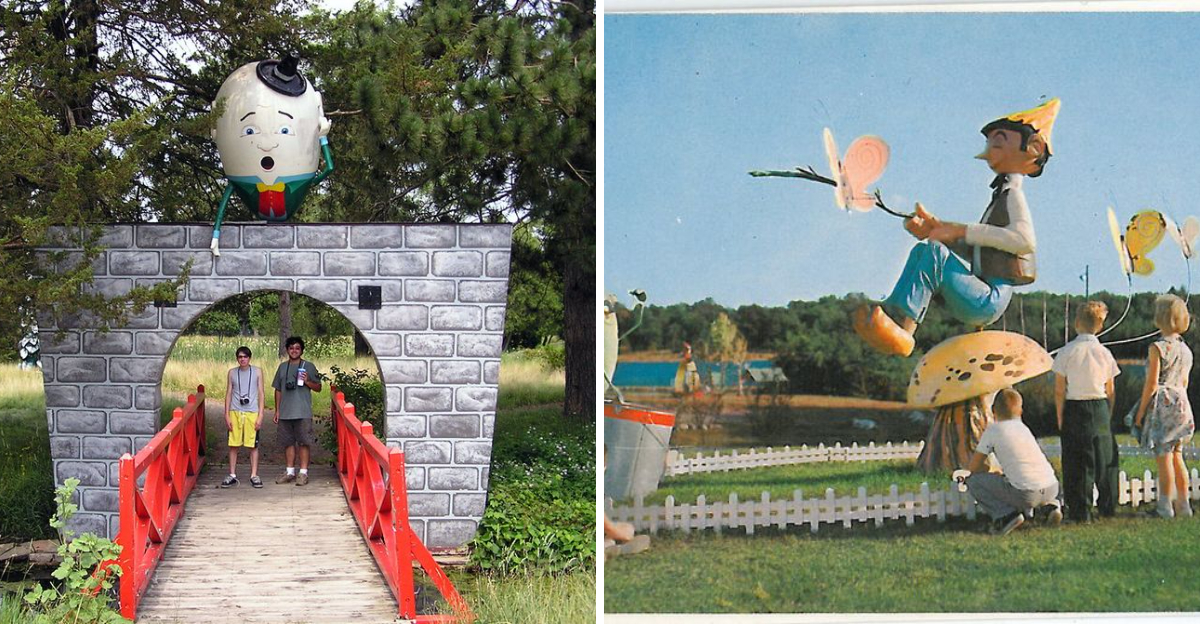
Storybook Gardens in Wisconsin Dells charmed generations with quirky scenes and gentle rides built for small adventures. Though the park closed in 2010, memories linger across Wisconsin, and online forums still trade stories about swan boats and nursery rhyme cottages. What happened to this place, and why do people recall rides swaying after the gates were locked? This guide retraces the history, checks what stands there now, and offers practical ways to explore its legacy with care.
1. Origins: A Fairytale Begins
Storybook Gardens opened in 1956 in Wisconsin Dells, leaning into nursery rhymes, fairy tales, and small-scale adventures that families could share. Instead of thrill machines, the park focused on walk-through scenes, miniature cottages, and slow-moving rides tailored to young children.
Local newspapers from the mid-century frequently highlighted its wholesome appeal, which fit the Upper Midwest’s family road-trip traditions. It grew alongside the Dells’ broader tourist economy, which also included boat tours and quirky roadside attractions. Parents often cited its gentler pace as a reason to visit, especially for kids not ready for larger parks. The look was handcrafted and charming rather than glossy, with fiberglass characters and painted backdrops that felt personal.
Over time, Storybook Gardens became a memory anchor for many Wisconsin families. Visitors returned with their own children, comparing familiar scenes and re-creating photos. The park’s design aged visibly, yet nostalgia carried it for decades. That mix of affection and patina is what people remember most.
2. Signature Scenes And Rides
Many guests recall the park’s storybook cottages, Humpty Dumpty on a wall, and gentle rides like swan boats and small cars that followed a simple track. These attractions were intentionally low-tech, using bright paints, figurines, and audio cues to bring children’s tales to life.
Families often walked at a leisurely pace, pausing for photos beside characters from nursery rhymes. The result felt like an outdoor storybook with occasional ride breaks rather than a standard amusement layout. Local tourism brochures from the late twentieth century highlighted the park as a quiet alternative to bigger thrill destinations in Wisconsin. It was easy to navigate with strollers and multi-generational groups, which made it a dependable stop.
The park’s success hinged on repeat visits from regional travelers who returned year after year. These scenes lacked towering structures or heavy machinery, yet they left deep impressions. Today, those fond snapshots shape how the park is remembered in forums and archives, where the simplest details spark long threads of shared nostalgia.
3. A Midwest Family Ritual
For decades, Storybook Gardens fit perfectly into Wisconsin’s road trip culture. Travelers paired it with boat rides on the Dells and quick detours to scenic overlooks. Parents appreciated a place where young children could safely explore without loud extremes.
Postcards and family photo albums from across Wisconsin and neighboring states document repeat visits over the years. The park became a quiet thread in summer routines, often sandwiched between picnics and scenic drives. Visitor recollections commonly mention low lines, unhurried paths, and a sense that staff knew how to help small kids feel comfortable.
While larger parks nationwide chased cutting-edge attractions, Storybook Gardens leaned into the familiar. Its small scale reduced overwhelm, letting families focus on shared moments instead of logistics. This dynamic helped the park persist for longer than some expected, relying on steady regional loyalty. Even today, older visitors tell younger relatives about the cottages, animal figures, and gentle rides that made the Dells feel welcoming to all ages.
4. The Changing Dells Landscape
As Wisconsin Dells expanded, competition intensified. Waterparks, faster rides, and larger venues reshaped visitor expectations, and smaller attractions had to adapt or fade. Storybook Gardens, with its handcrafted displays, struggled to match the draw of newer complexes that offered more variety.
Maintenance on older installations also posed challenges, from weathering paint to aging ride systems. Tourism data for the region shows a shift toward resort-style stays with on-site entertainment. In this environment, the park’s quiet charm had a harder time standing out. Marketing needed to bridge nostalgia and modern demands, and that balancing act grew tougher each season.
Still, many visitors preferred stopping in for a calm break from busier venues. By the early 2000s, the question was how to keep the park relevant without losing its identity. That tension set the stage for the next chapter, when changes next door brought new traffic but also disrupted the storybook feel.
5. Timbavati Next Door
In 2004, Timbavati Wildlife Park opened adjacent to Storybook Gardens, adding animal exhibits and a different style of attraction. The combined footprint drew attention, yet the contrast between a traditional storybook theme and a wildlife focus proved hard to blend.
Families who favored gentle fairy tale scenes sometimes found the shift jarring, while others welcomed the new variety. Marketing materials positioned the area as a broader destination, but forums from that period reflect mixed reactions about cohesion. The wildlife park itself would later evolve and relocate within Wisconsin Dells, signaling ongoing adjustments to meet visitor expectations.
For Storybook Gardens, the new neighbor changed foot traffic patterns and introduced logistical complexities. Some guests praised the convenience of multiple activities in one stop. Others missed the singular charm of a simple, self-contained storybook world. This divergence foreshadowed the park’s final years and how it would be remembered after closing.
6. Final Seasons And Closure
By the late 2000s, signs of strain were visible. The park’s gentle rides and aging displays faced higher maintenance costs, while travelers increasingly prioritized larger complexes around Wisconsin. Industry trends favored immersive, high-capacity attractions.
Storybook Gardens, rooted in smaller-scale charm, could not easily pivot without losing its identity. Visitor numbers softened, and the business case became difficult to sustain. Around 2010-2011, the attraction closed. Local coverage and forum posts from that time show a mix of sadness and acceptance. Many acknowledged that the park had given generations of memories and that its style no longer aligned with mainstream expectations.
The last season was quiet, and then the gates were locked. For long-time fans, closure didn’t erase the park’s footprint. It lived on in photos, keepsakes, and the particular way Wisconsin families talk about summers in the Dells.
7. Where To Find The Memories
Since physical traces are scarce, digital archives carry the story forward. Look for old brochures on auction sites, scanned postcards, and family photo collections hosted by Wisconsin-focused history groups. Social media posts occasionally resurface snapshots of the park’s cottages, characters, and gentle rides.
Local libraries and historical societies in Wisconsin Dells sometimes hold tourism materials that map out earlier attractions. Forum threads provide personal accounts that fill in gaps left by official records. When possible, cross-check dates and image captions to avoid confusion with other regional parks.
The most detailed recollections often come from people who worked there or visited repeatedly across different decades. Their descriptions of maintenance, seasonal changes, and staffing help readers understand how the park operated. Collecting these pieces turns into an engaging research project, connecting Wisconsin family histories with a beloved destination that has vanished from the landscape but not from memory.
8. Visiting Wisconsin Dells Today
Travelers who loved Storybook Gardens can still craft a thoughtful trip to Wisconsin Dells that honors its spirit. Start with scenic activities that highlight the region’s natural setting, then add smaller attractions that value storytelling and hands-on fun.
Many family-friendly venues prioritize accessibility and low-stress navigation, making it easy to include young children and grandparents. Consider strolls through downtown for historic plaques and locally owned shops that showcase regional heritage. Boat tours remain a signature experience and pair well with casual walks along public viewpoints. Even without the old cottages, the area retains a welcoming, multigenerational rhythm.
The key is balancing a few high-energy stops with quieter moments. This approach mirrors why Storybook Gardens resonated for so long in Wisconsin. You can leave with new memories while tipping your hat to the past, especially if you plan time for photo stops and gentle activities that echo the park’s family-first ethos.
9. Respectful Site Etiquette
If you visit the area where the park once stood, keep safety and respect at the forefront. The site is now an active attraction with its own rules, and some surrounding areas may be private or controlled access. Stay on public paths, follow posted guidance, and avoid trespassing.
Photographers seeking then-and-now shots should plan during operating hours or use public vantage points. If staff are present, a polite question about the location’s history can go a long way. The goal is to honor Wisconsin’s heritage without disrupting current operations. Remember that locals and employees often have valuable context about how the site changed over time.
A courteous conversation may reveal details you will not find in archives. Carry out any trash, be mindful of families using the space, and keep tripods or equipment from blocking walkways. Simple steps like these keep the story accessible to everyone.
10. Why The Memories Endure
Storybook Gardens endures in memory because it offered a style of family time that felt approachable and calm. It was easy to let children lead, linger at a cottage, or loop a simple ride without stress. That rhythm fits many Wisconsin families’ recollections of the Dells before large complexes dominated itineraries.
Nostalgia also comes from the park’s handmade look, where simple figures and bright paint carried more meaning than spectacle. When the gates closed, those qualities transferred to photos and stories that circulate online. Even the phrase rides moving in the wind speaks to a quiet afterlife, when the park briefly stood without crowds.
Today’s travelers may be drawn to bigger thrills, yet there is still room for places that operate at kid scale. Remembering Storybook Gardens encourages balanced trips and respect for attractions that focus on shared moments. That is a legacy worth keeping in view.
Dear Reader: This page may contain affiliate links which may earn a commission if you click through and make a purchase. Our independent journalism is not influenced by any advertiser or commercial initiative unless it is clearly marked as sponsored content. As travel products change, please be sure to reconfirm all details and stay up to date with current events to ensure a safe and successful trip.
