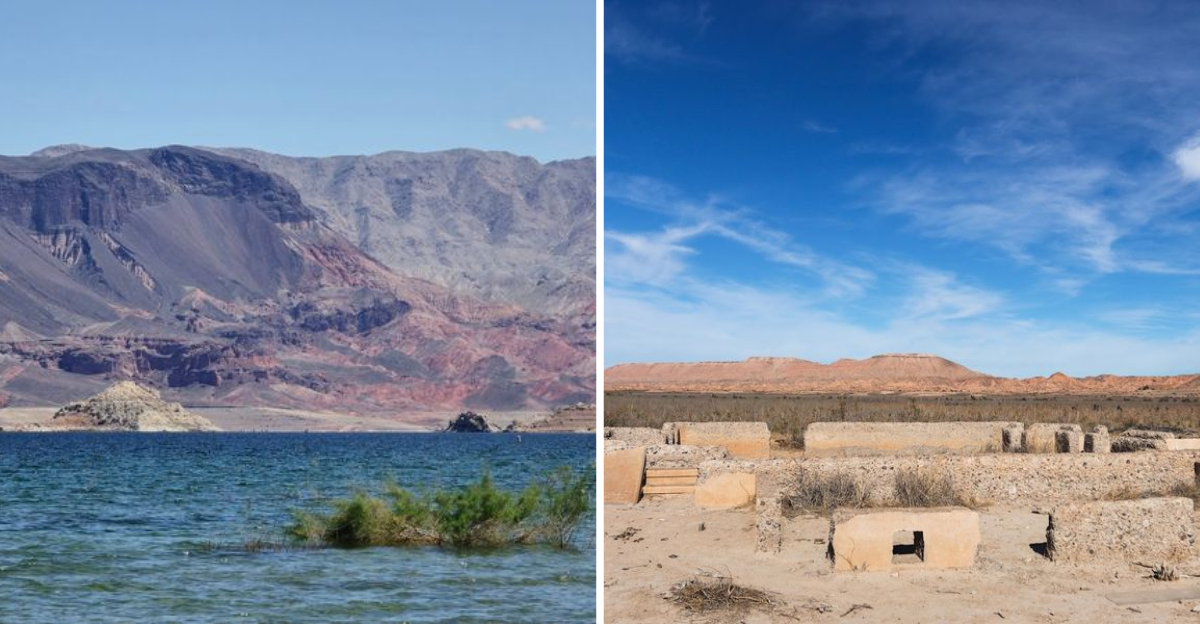
Lake Mead has been shrinking for years. Drought.
Demand. Climate change.
As the water level drops, something keeps coming back. The foundations of St. Thomas, a town that was flooded and abandoned decades ago.
Old walls. Broken sidewalks.
The rusted remains of buildings that people used to live in. It is eerie to walk through. You are standing on what used to be the bottom of a lake, surrounded by the bones of a place that was never supposed to see daylight again.
Some call it a ghost town. Others call it a warning.
Nevada is running out of water, and St. Thomas is proof. The town rose once.
It is rising again.
A Town That Would Not Stay Buried
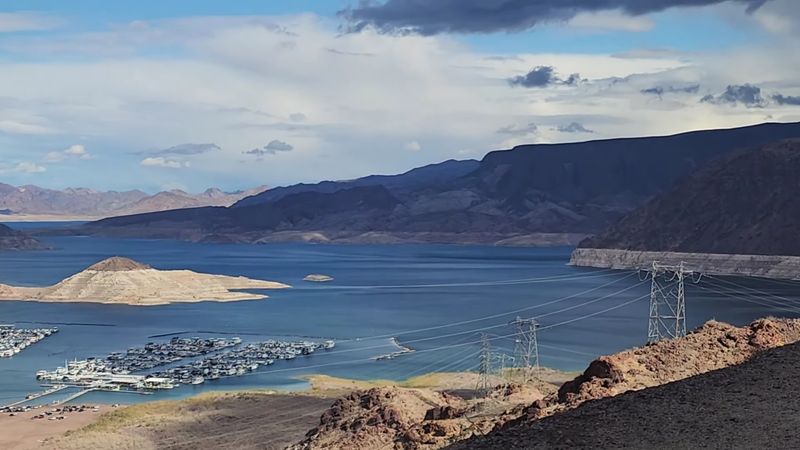
Most ghost towns stay put. St. Thomas does something far more dramatic, appearing and disappearing depending on how thirsty the American Southwest has become.
The ruins first peeked above the waterline in 1947, surfaced again briefly in the 1980s, and then returned more fully starting in 2002 as drought conditions worsened across the region.
What you see when you visit today is genuinely eerie in the best possible way. Cracked cisterns, stone wall fragments, and the ghostly outlines of building foundations stretch across a pale, sun-bleached flat near the edge of the lake.
The National Park Service has placed interpretive signs along a dirt trail from a small parking area, giving context to what would otherwise look like scattered rubble.
The town becomes visible when Lake Mead’s water elevation drops to around 1,165 feet above sea level. At the lake’s historic high point, those same structures sat 60 feet underwater.
That number alone is worth pausing on. It tells you everything about how dramatically the water has retreated.
Visiting St. Thomas is less like exploring a ruin and more like reading a geological diary, one written in receding waterlines and bleached stone. The drive from Overton takes only about 15 minutes, making it an easy and genuinely memorable detour for anyone spending time around Lake Mead National Recreation Area.
How Hoover Dam Changed Everything Forever
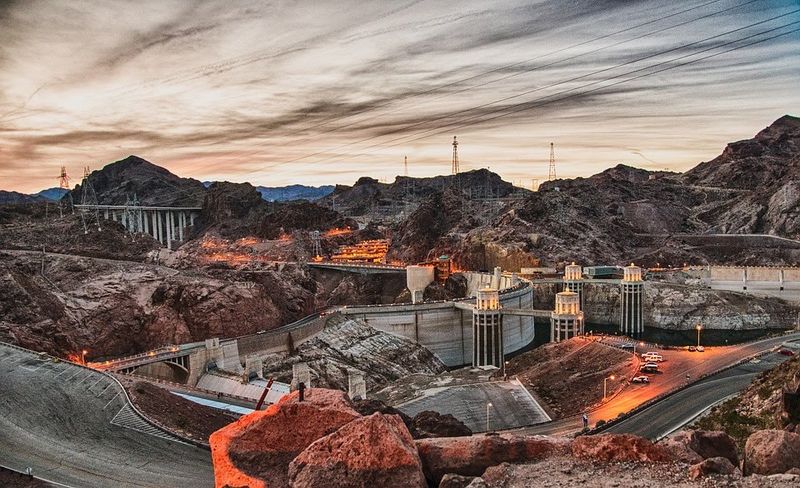
Before Lake Mead existed, the Muddy River Valley was farmland. Congress authorized the Boulder Canyon Project in 1928, and construction on Hoover Dam began shortly after.
Nobody in St. Thomas had much say in the matter. The federal government needed the dam, and the town simply happened to be in the way.
By the time the dam was completed in 1935, the lake was already filling. Residents of St. Thomas were given buyouts and told to leave.
Some held out as long as they could, watching their streets turn to muddy shallows. Hugh Lord became a kind of folk legend for being the absolute last to go, setting his own house on fire before paddling away in a rowboat as the water rose around him in June 1938.
Hoover Dam itself is worth visiting in its own right and sits about 45 minutes southwest of the St. Thomas site near Boulder City. The scale of it is genuinely humbling.
Seeing it helps you understand how a project that large could casually erase an entire community from the map without malice, simply as a side effect of engineering ambition. The dam and the ghost town are two halves of the same story, one about what humans build and what they sometimes have to sacrifice to build it.
Both deserve your attention if you make the trip out here.
Lake Mead and the Drought That Will Not Quit
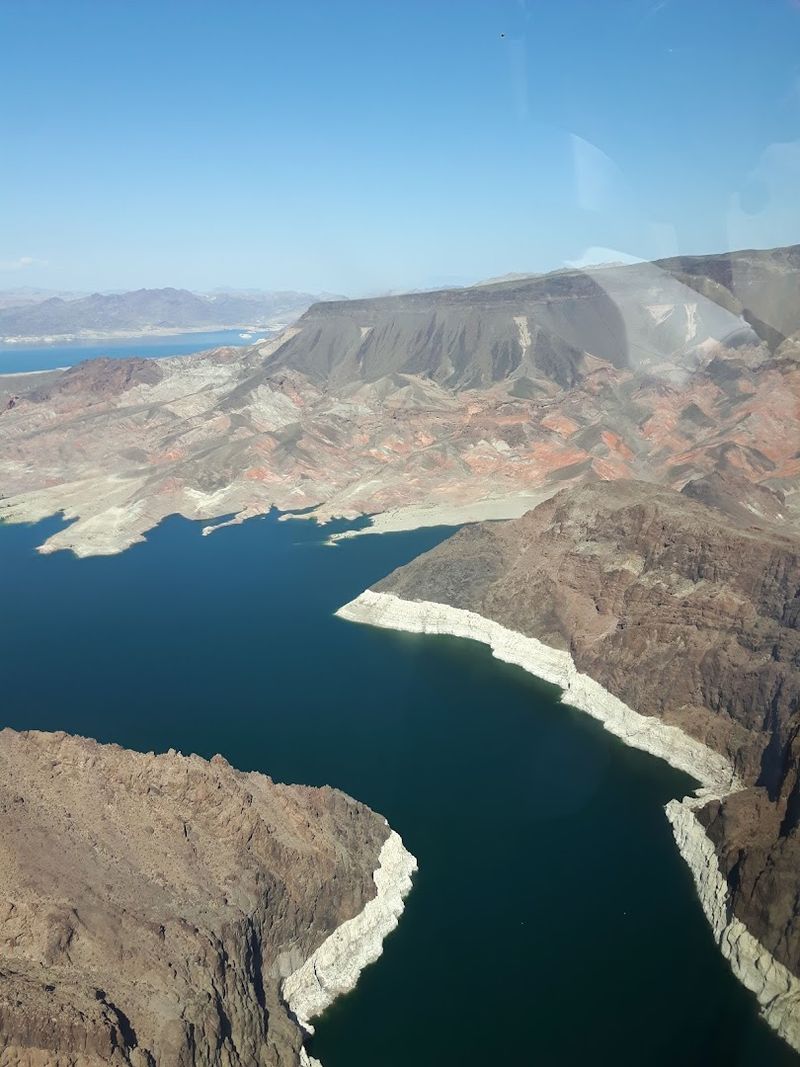
The white ring around the canyon walls at Lake Mead is impossible to ignore. Locals call it the bathtub ring, a thick band of pale calcium carbonate deposits left behind as the water has steadily retreated from its former high-water marks.
It is one of the most visible drought indicators anywhere in the United States, and it is hard not to feel something when you see it in person.
Lake Mead is the largest reservoir in the country by volume. It supplies water to Nevada, Arizona, California, and parts of Mexico, serving tens of millions of people.
In July 2022, it dropped to its lowest level since it first began filling back in 1937. That record low sent serious alarm through water management agencies across the entire Southwest.
Water levels have rebounded somewhat since that 2022 low point, helped along by above-average snowpack in some years. Still, the lake remains below long-term drought thresholds, and the underlying pressures of growing urban populations and warming temperatures have not gone away.
One visitor review noted as recently as February 2026 that the water looked noticeably lower than the year before. The St. Thomas ruins emerging from the lakebed are not just a historical curiosity.
They function as a real-time gauge of how much pressure the Colorado River system is under, a pressure that affects millions of lives far beyond the Nevada desert.
Walking the St. Thomas Trail Near Overton
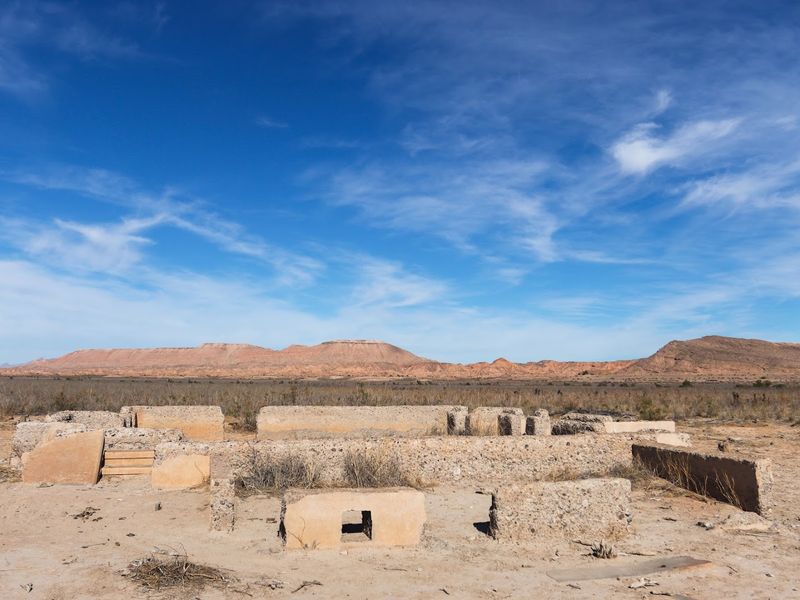
The trail to St. Thomas starts from a modest gravel parking area just off the road near Overton, Nevada. It is a flat, easy walk across sun-hardened desert ground, and the National Park Service has done a thoughtful job marking the path with interpretive signs that explain what you are looking at.
Without those signs, it would be easy to underestimate what the scattered stones actually represent.
Up close, the ruins are more detailed than they appear from a distance. You can make out the shapes of individual rooms, the placement of doorways, and the curve of old cisterns that once held water for families living here more than a century ago.
The ground itself has a strange, almost lunar texture in places, pale and cracked where the lakebed has dried and baked in the desert heat.
Mornings are the best time to visit, before the Nevada sun gets serious about making you regret not bringing enough water. Sturdy shoes matter here because the ground is uneven in spots and there is zero shade once you leave the parking area.
Bring more water than you think you need. The walk itself is short, maybe a mile or so round trip, but the experience feels much larger than that.
There is a stillness to the place that is hard to describe but easy to feel, the particular quiet of somewhere that used to be full of life and now is not.
The Colorado River System and Its Fragile Future
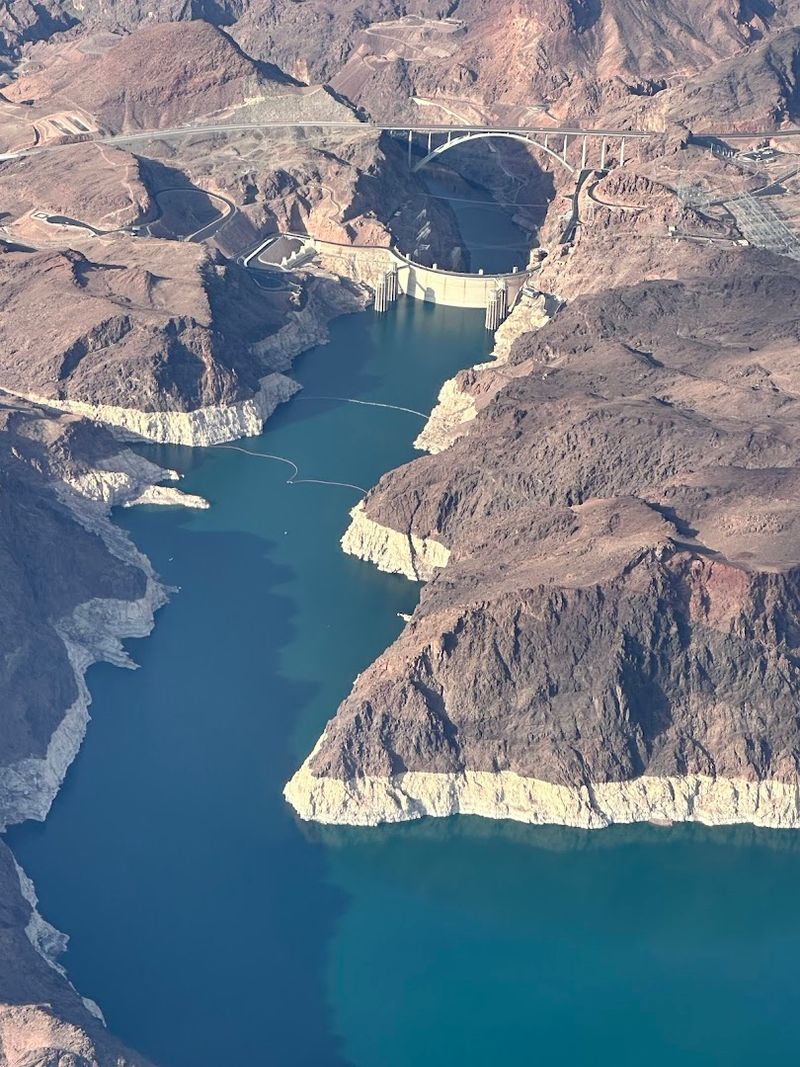
The Colorado River is one of the hardest-working rivers in North America. It provides water to about 40 million people across seven U.S. states and Mexico, irrigates millions of acres of farmland, and feeds reservoirs like Lake Mead and Lake Powell that together form the backbone of water storage for the entire American Southwest.
That is an enormous amount of pressure for one river system to carry.
The problem is that the river has been legally over-allocated for decades. The water rights agreements dividing the Colorado were drawn up in 1922, a particularly wet year, which meant the baseline assumptions about how much water the river actually carries were too optimistic from the very start.
Climate change has since reduced average flows further, and demand has only grown as cities like Las Vegas, Phoenix, and Los Angeles have expanded.
Lake Mead, sitting at the downstream end of the upper basin, is essentially the canary in this particular coal mine. When it drops, everything downstream feels it.
The re-emergence of St. Thomas is a physical manifestation of that math not adding up anymore. It is not just a novelty or a photo opportunity, though it is certainly both of those things too.
It is a signal from the landscape itself, patient and persistent, rising out of the water to remind anyone paying attention that the system sustaining life across the Southwest is under genuine strain.
Things to Do Around Lake Mead Beyond the Ghost Town
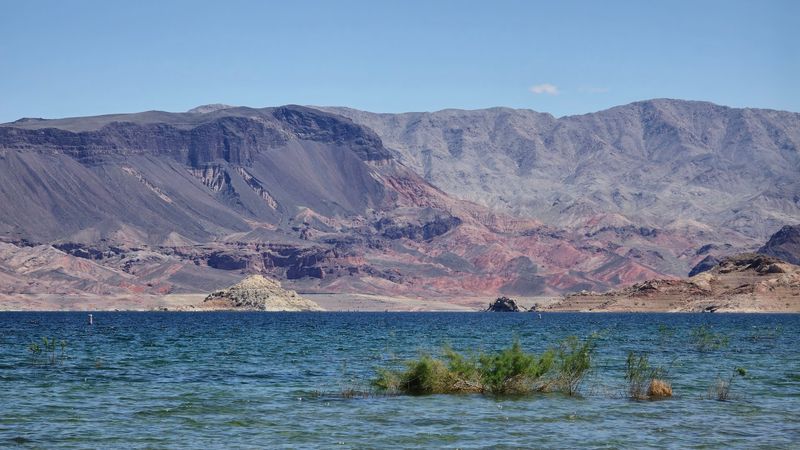
St. Thomas is the kind of place that earns its own visit, but Lake Mead National Recreation Area offers a lot more once you are in the neighborhood. The park covers roughly 1.5 million acres stretching across Nevada and Arizona, and the variety of things to do here is genuinely impressive for a desert landscape built around a reservoir.
On the water, options include kayaking, paddleboarding, swimming, and fishing for striped bass and other species. Several marinas operate within the park, and boat rentals are available for those who want to spend a full day out on the lake.
The Historic Railroad Trail near the Boulder City side of the park is a flat, easy hike that passes through old train tunnels with wide views of the lake, a favorite for families and casual hikers alike.
The Lake Mead Visitor Center is a solid first stop for anyone new to the area. Rangers there are knowledgeable and genuinely enthusiastic, and the junior ranger program is a hit with younger visitors.
The park is open 24 hours, which means early morning arrivals can catch the lake at its most peaceful, before the afternoon heat settles in. The Valley of Fire State Park is nearby as well, adding another layer of dramatic desert scenery to any road trip that includes this corner of Nevada.
Pack sunscreen. Seriously, bring a lot of it.
Why St. Thomas Feels Like More Than Just a Ruin
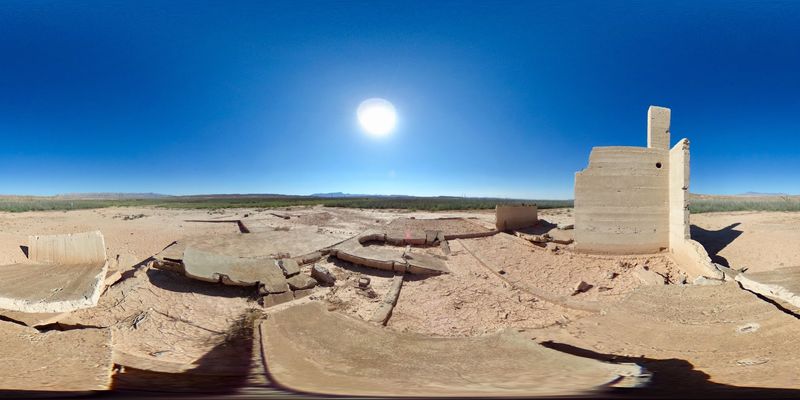
There is a version of visiting St. Thomas where you snap a few photos, read the signs, and move on. But if you slow down and actually sit with the place for a few minutes, something shifts.
The foundations of those old buildings are not just interesting because they are old. They are interesting because of what their visibility tells you about right now, today, and the direction things are heading.
A community of around 500 people built real lives here, farmed the land, raised families, and created something worth staying for. They were forced out not by war or disaster but by a government decision to build infrastructure that millions of people still depend on.
And now the lake that erased their town is shrinking, and the town is coming back, and nobody is entirely sure what that means for the future of water in the West.
That layered quality is what makes St. Thomas stick with you after you leave. It is history and current events at the same time.
It is a reminder that landscapes hold memory, that the land keeps score even when people stop paying attention. Visiting Lake Mead National Recreation Area near Overton gives you access to one of the most quietly powerful places in the American Southwest, a place where the past keeps surfacing to ask uncomfortable questions about the present.
Address: 10 Lakeshore Rd, Boulder City, NV 89005.
