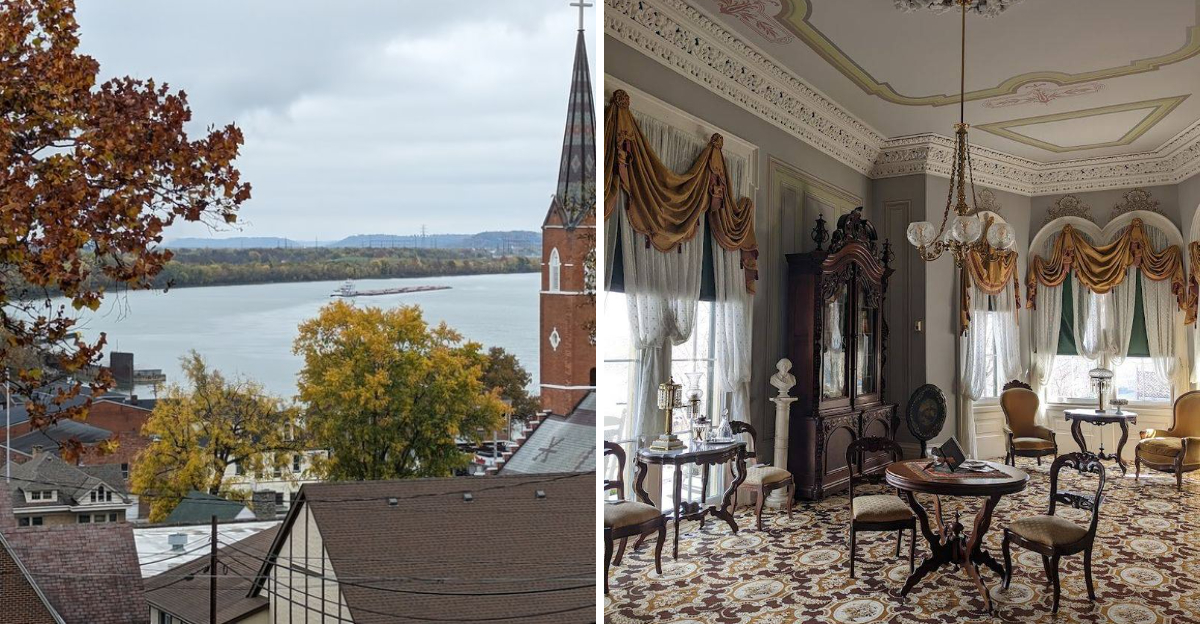
Aurora, Indiana sits quietly along the Ohio River, the kind of small town that holds more history than its size suggests. Rising above the water on a wooded bluff is a striking 19th-century mansion that has overlooked the river for nearly 170 years.
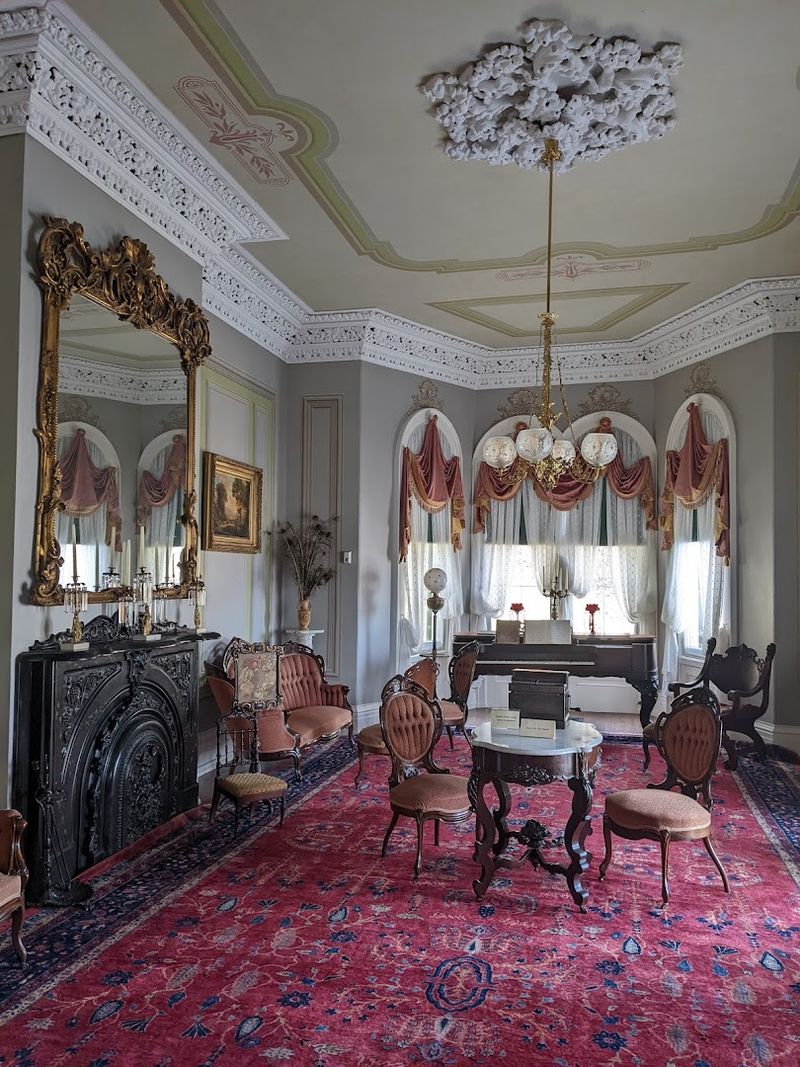
Built in the mid-1800s for an influential industrialist, the home reflects Italian Renaissance design with ornate interiors, period furnishings, and commanding views of the surrounding landscape. Its elevated setting gives it a presence that feels both elegant and slightly mysterious.
Whether you are drawn by architecture, local legends, or simply the scenery, it is the kind of historic place that tends to linger in your memory long after you leave.
Italian Renaissance Steamboat Architecture Unlike Anything Else
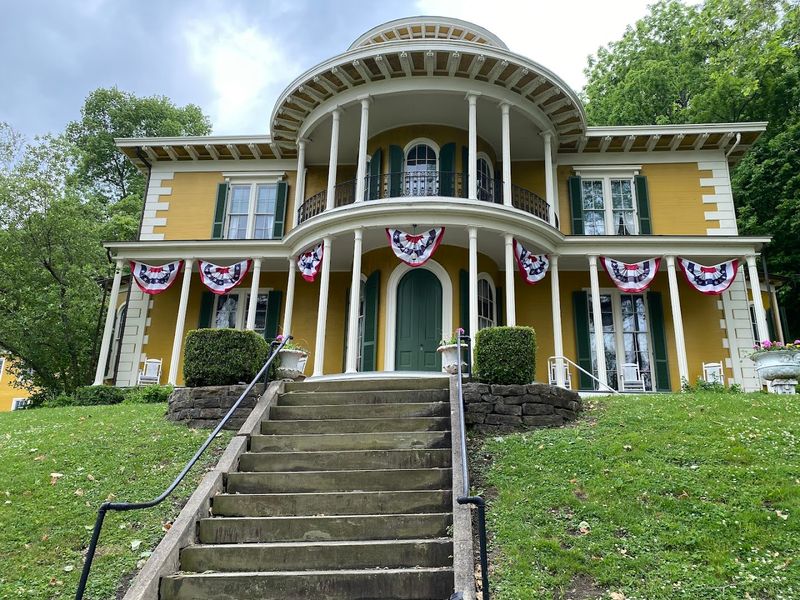
Most historic homes follow familiar patterns, but Hillforest breaks every expectation the moment you see it. Designed by architect Isaiah Rogers, the man often credited as the father of the modern hotel, this 1855 mansion draws its inspiration from Italian Renaissance palaces built into hillsides.
Rogers shaped the home to mirror the world that made Thomas Gaff wealthy: the Ohio River and the steamboats that ruled it.
Look closely at the front of the building and you will notice the wide, curved porch wraps around like the deck of a riverboat. The third-floor belvedere, a small enclosed lookout at the very top, resembles a pilot house sitting above the water.
These were not accidental design choices. They were a deliberate tribute to the industry that built the Gaff family fortune.
Historians consider Hillforest the most pristine surviving example of Isaiah Rogers’ residential work. That alone makes it worth the trip.
The home was designated a National Historic Landmark in 1992, placing it among only 42 such landmarks in the entire state of Indiana. For anyone who loves architecture, design history, or the story of American industry, this building is a rare and genuine treasure sitting at 213 5th St, Aurora, IN 47001.
The Fascinating Life of Thomas Gaff and His Family
Thomas Gaff arrived in America as a Scottish immigrant and built one of the most diverse business portfolios in 19th-century Indiana. His ventures included distilleries, farming operations, mining, foundry and machine works, turnpike and canal construction, and a fleet of steamboats on the Ohio River.
By the time he completed Hillforest in 1855, he had earned the kind of wealth that allowed him to build a home that looked like it belonged in another country entirely.
The Gaff family lived in Hillforest from 1855 all the way through 1926, spanning multiple generations. Walking through the rooms today, you sense that this was not just a showpiece.
It was a lived-in home full of personal history, family milestones, and quiet moments that never made it into any history book. The museum room upstairs holds many of those personal details, and visitors often linger there longer than expected.
One of the more poignant stories tied to the family involves Caroline Gaff, the oldest daughter, who died at just 16 years old from tuberculosis. Her room is still part of the tour, and it carries a stillness that feels different from the rest of the house.
Learning about the Gaff family is not just a history lesson. It is a reminder that behind every grand house is a real family with real losses, and Hillforest holds all of that with quiet dignity.
Ghost Stories and Paranormal Legends That Actually Have Roots
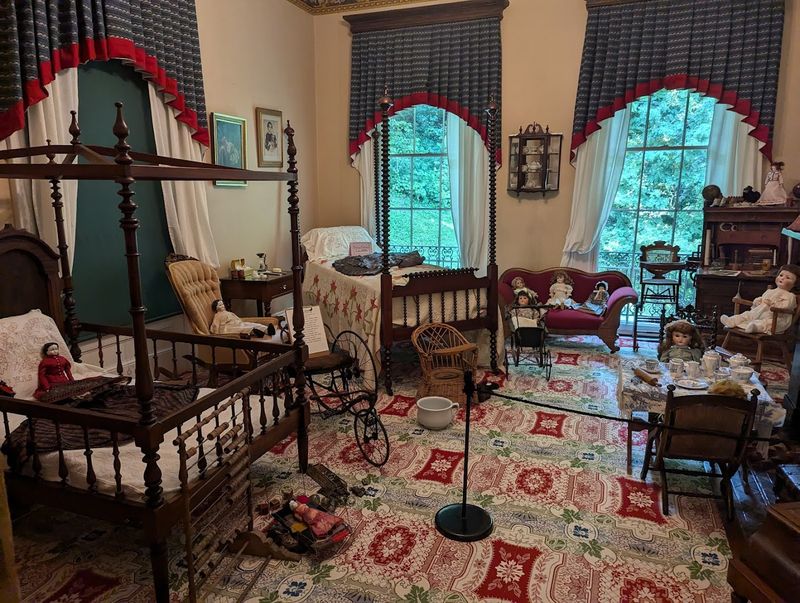
Not every historic house earns its haunted reputation honestly, but Hillforest has a few stories that are hard to brush aside. The most often repeated involves the bedroom of Caroline Gaff, the teenage daughter who died of tuberculosis in the 1800s.
Visitors and staff have reported seeing an unexplained indentation on her bed, as if someone is still resting there. The room has a particular weight to it that even skeptics tend to notice.
Other reported experiences include shadowy figures seen in areas of the house where enslaved people were supposedly held. Some visitors say they have felt a presence rather than seen anything specific, a sensation of being watched or accompanied in rooms that appear empty.
One account describes a man seen in another part of the house, described as unfriendly in energy rather than appearance.
What makes these stories interesting is that they are not manufactured for tourism. They have been reported organically over years by unconnected visitors, and the museum does not oversell the paranormal angle.
The history behind the experiences is what gives them weight. Whether or not you believe in ghosts, the combination of a 170-year-old mansion, a family touched by early death, and a hilltop setting above a dark river makes for an atmosphere that is genuinely atmospheric.
Coming here in the fall or around Halloween adds another layer to an already layered experience.
A Bluff-Top Setting That Commands the Ohio River
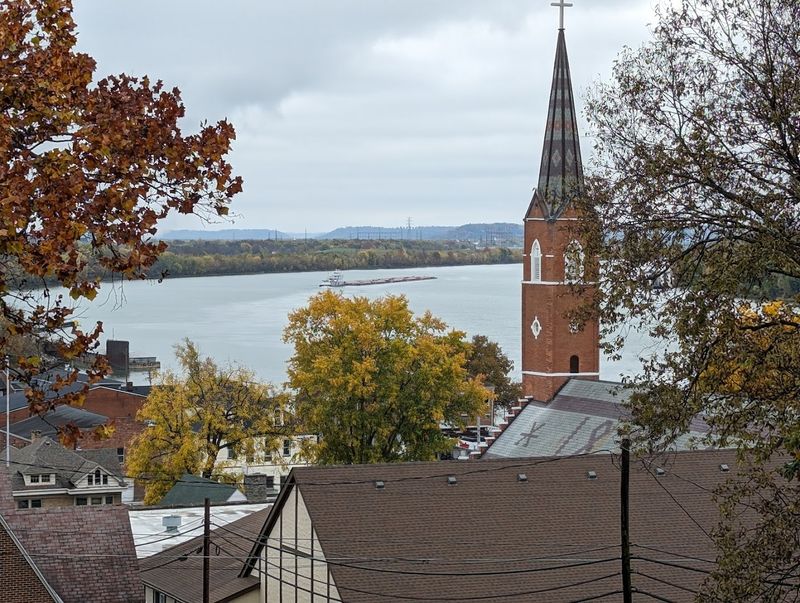
Thomas Gaff did not choose this hillside location by accident. He wanted a home that echoed the grand Italian Renaissance palaces built into mountainsides across Europe, and the bluff above Aurora gave him exactly that canvas.
The elevation also placed him high above the river he depended on, giving the family a commanding view of the Ohio from nearly every upper-floor window.
From the third-floor belvedere, the view stretches across the wide river toward Kentucky. Visitors who have climbed up to that level often describe it as one of the most unexpected and rewarding moments of the tour.
The Ohio River is not a small or quiet thing from up there. It is broad, slow-moving, and powerful, and the perspective from Hillforest makes that clear in a way that standing at the riverbank never quite does.
The hillside setting also shaped how the grounds were developed. The original 10-acre estate, now reduced to 6.9 acres, was designed with terraced garden beds, a formal pond, a grotto, and even a melon cellar carved from glacial rock.
A thoughtfully built water collection system with multiple cisterns kept the property running. The landscape itself tells a story of careful planning and quiet ambition, and walking those grounds today feels like stepping into a world that took its surroundings seriously.
Original Interiors Preserved With Extraordinary Care
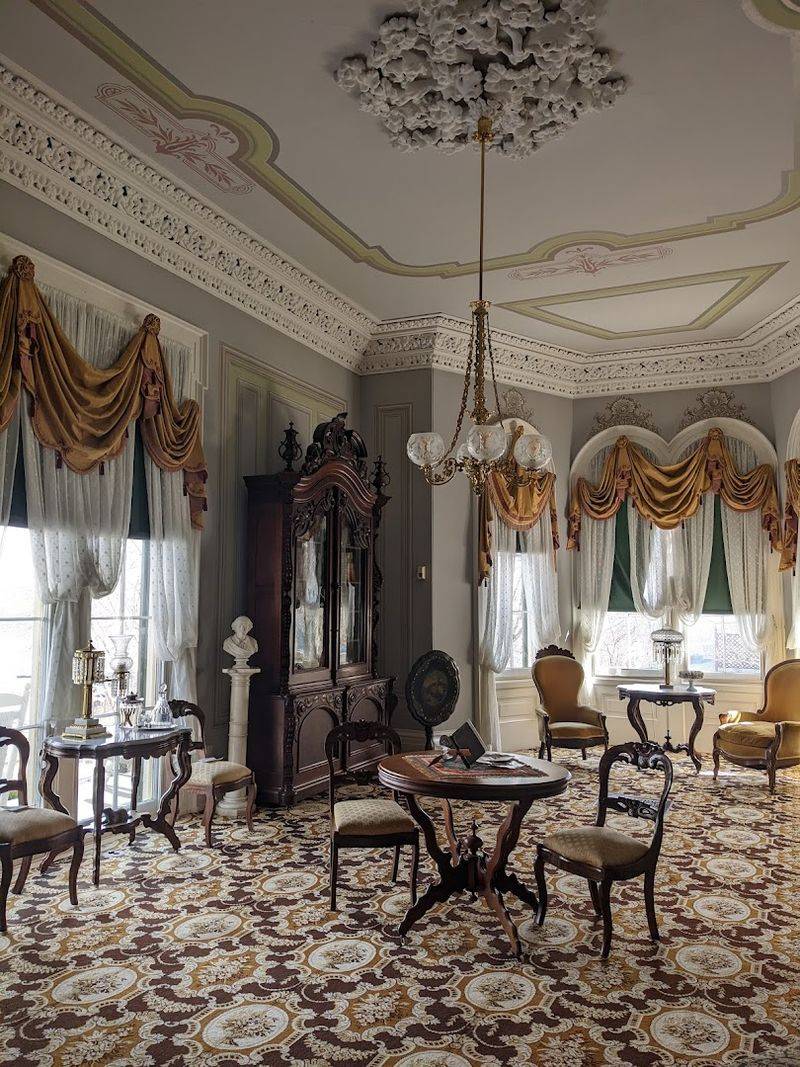
Many historic homes have been so heavily restored that the original feeling is gone entirely. Hillforest is different.
The majority of what you see inside is original, from the period artwork on the walls to the architectural details that have survived nearly 170 years of Indiana seasons. That level of preservation is rare, and it gives the house a texture and authenticity that reproductions simply cannot replicate.
One of the most striking interior features is the trompe-l’oeil artwork painted directly onto walls and ceilings throughout the house. The French term means to fool the eye, and that is exactly what it does.
Flat surfaces are painted to appear three-dimensional, creating an illusion of depth and architectural detail that is both impressive and a little disorienting when you realize what you are actually looking at. It was a fashionable technique among wealthy households of the 1850s, and Hillforest carries some of the best surviving examples in the region.
The suspended staircase is another feature that draws audible reactions from visitors. It appears to float without visible support, an engineering feat that still impresses people today.
Large vestibules, wide hallways, curved doors, and a museum room filled with original family artifacts round out an interior that rewards slow, careful attention. Ask your tour guide about the secret slipper drawer.
It is one of those small, personal details that makes the whole visit feel alive rather than merely educational.
Landscaped Grounds With Hidden History Beneath Them
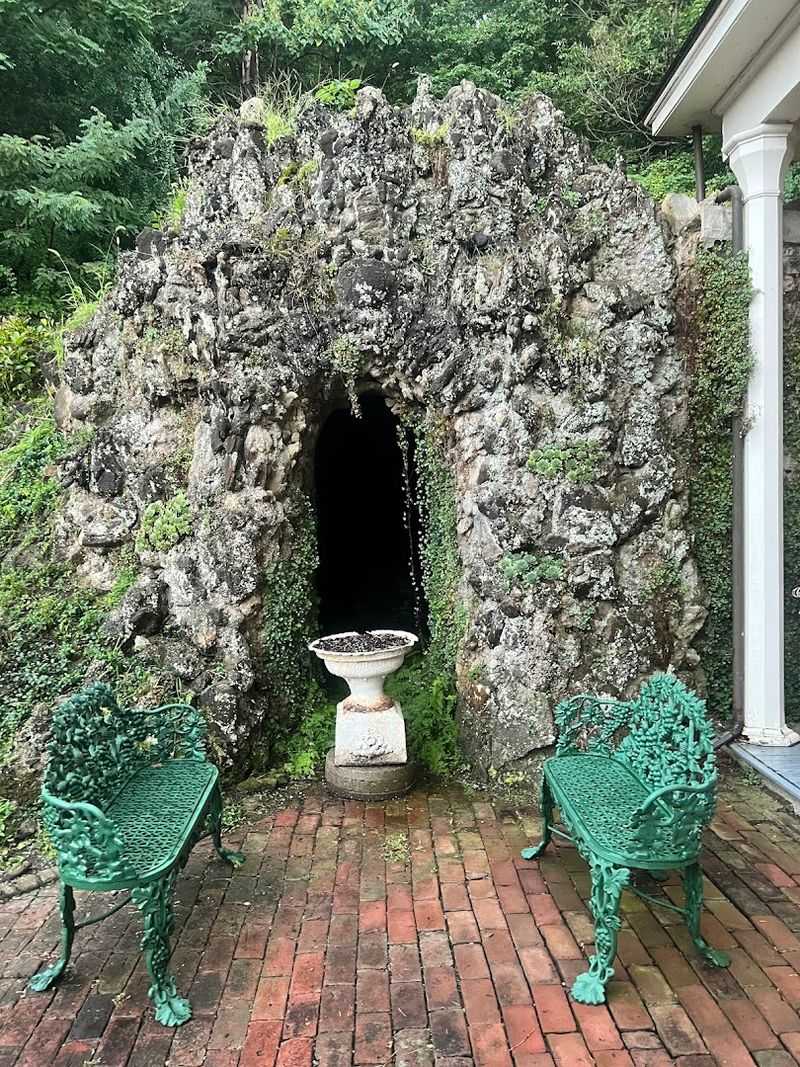
The grounds at Hillforest are easy to overlook when the mansion itself is pulling all your attention, but the 6.9-acre estate has its own story to tell. The original landscape design dates to the 1850s and follows a rusticated style that was popular among wealthy landowners of that era.
Formal garden beds were built in terraced rows down the hillside, working with the natural slope rather than fighting it.
A small formal pond sits on the property, and a grotto made from glacial rock adds a quiet, almost secretive quality to one corner of the grounds. There is also a melon cellar, which was used to store produce in an era before refrigeration.
These practical features existed alongside the decorative ones, reminding you that even a mansion this elegant had to function as a working household. A complex water collection system with multiple cisterns was built into the property to keep everything running through the seasons.
One former visitor mentioned memories of a hidden cave-like space behind the house up in the hillside, a detail passed down through family stories tied to the property’s early days. Whether fully accessible today or not, the grounds carry that same sense of layered history.
Walking them slowly, especially in the warmer months when the plantings are full, gives you a feel for how the Gaff family experienced their home beyond its walls. The whole estate rewards curiosity.
Year-Round Events and Guided Tours That Bring It All to Life
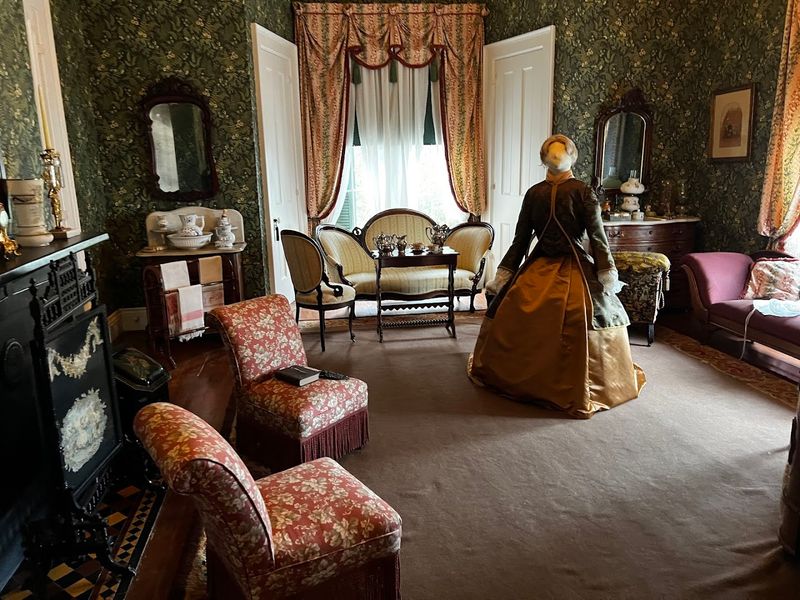
Hillforest is open for guided tours from April 1st through December 31st, with hours running Tuesday through Friday from 11 AM to 3 PM and Saturday and Sunday from 1 to 5 PM. Tours typically run about 45 minutes and cover the main rooms, the upper floors, the belvedere, and the stories that tie the whole house together.
The guides are known for being knowledgeable and genuinely engaged with the material, which makes a real difference in how much you take away from the visit.
Beyond the standard tours, Hillforest hosts a rotating calendar of special events throughout the year. Tea parties, holiday open houses, and seasonal gatherings bring the house to life in ways that a regular tour cannot fully capture.
The Design and Wine evenings have drawn visitors looking for something a little more festive, and the Christmas decorations reportedly transform the interior into something that feels genuinely magical. The mansion has also been used for rehearsal dinners and private events, which speaks to how well the space translates across different occasions.
Admission is affordable, tickets can be purchased at the door, and the museum accepts credit cards. The cost goes directly toward the ongoing restoration and maintenance of the property, which is a meaningful thing to support.
It is worth planning your visit around one of the special events if your schedule allows.
