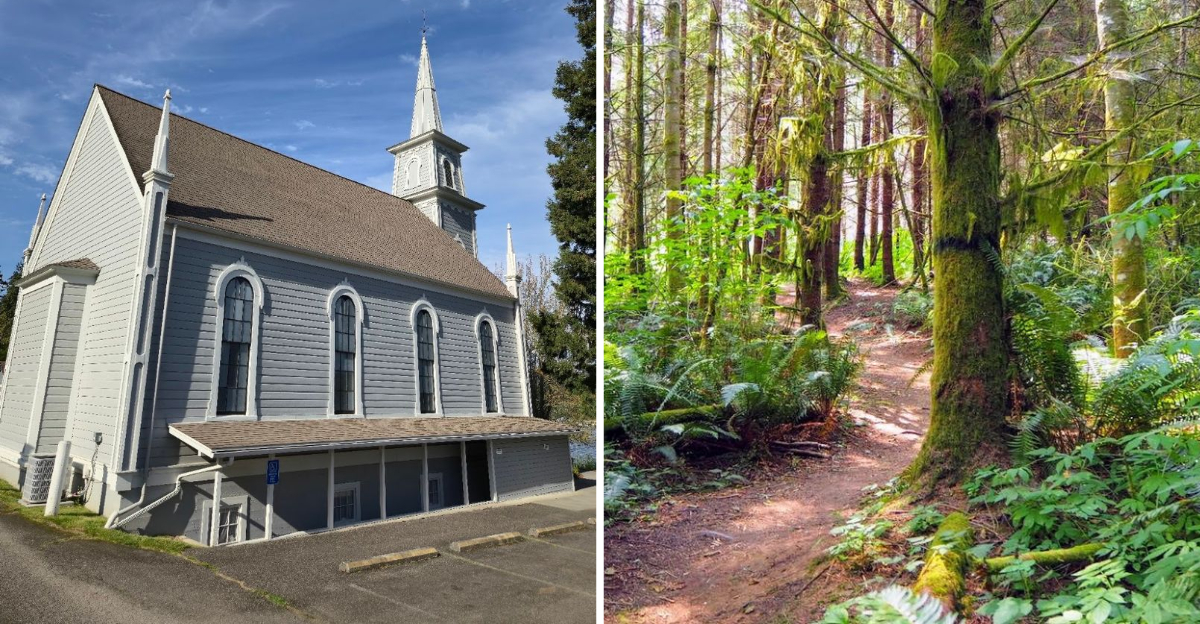
The streets feel older than they look, lined with elm and maple trees that shade perfectly preserved 19th-century homes, and the quiet has a weight to it that is hard to explain.
I remember stepping out of my car and immediately feeling like time had folded in on itself, like the year could just as easily be 1880 as today.
This tiny town on the Kitsap Peninsula was built by New England loggers who wanted a piece of home on the Pacific coast, and they built it to last.
What they may not have expected is that some of its residents would never truly leave. It is widely considered one of the most haunted towns in Washington State, and once you spend a little time here, that reputation starts to feel completely earned.
Just don’t wander the streets alone after dark unless you’re prepared for company.
The Walker-Ames House: Washington’s Most Haunted Building
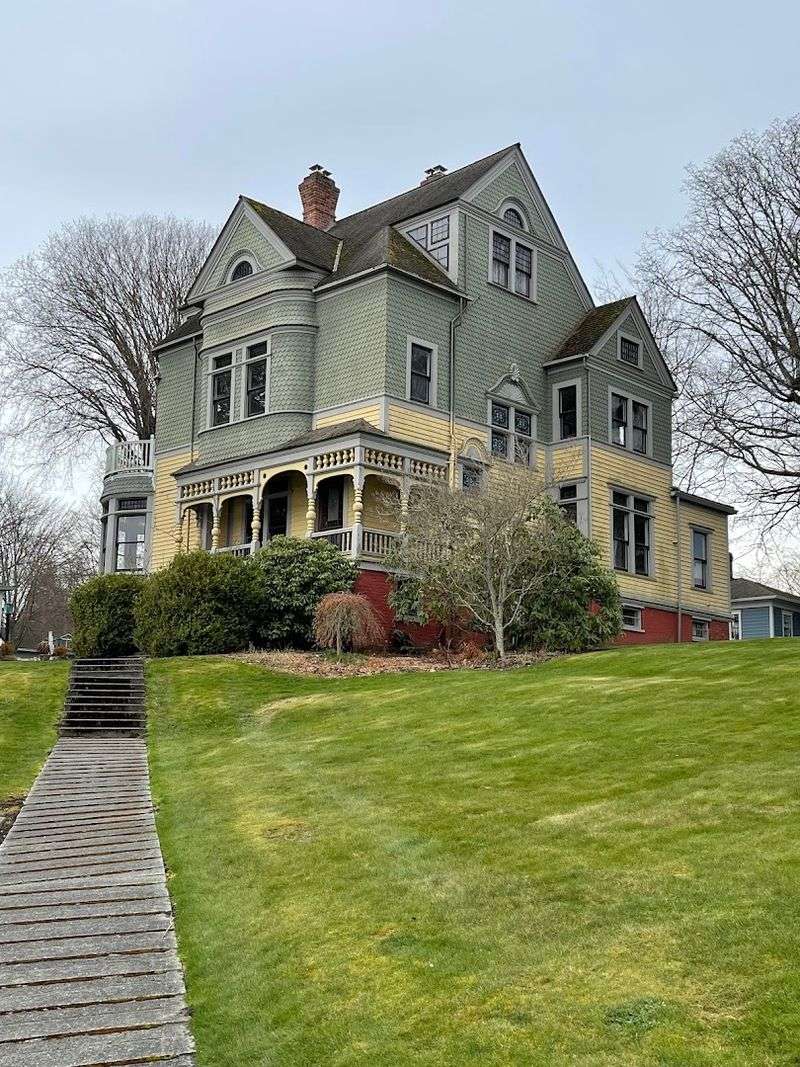
There is a house on the hill in Port Gamble that locals talk about in hushed tones, and once you see it, you understand why. The Walker-Ames House, built in 1889 for the mill’s master mechanic, is widely regarded as the most haunted building in Washington State.
That is not a title handed out lightly in a region full of old, storied places.
Paranormal investigators and curious visitors alike have reported hearing unexplained sounds inside its walls. Slamming doors with no one nearby, disembodied voices echoing through empty rooms, and an overwhelming sense of unease are among the most commonly shared experiences.
Some people have reported seeing ghost-like figures moving through the hallways.
The attic carries its own particular reputation. Many visitors associate it with the playful energy of children’s spirits, and more than a few have reported hearing laughter or footsteps where no child stands.
A nanny ghost is said to appear at the attic window on a regular cycle, peering out over the quiet street below.
What makes the Walker-Ames House so compelling is not just the volume of reported activity but the consistency of the stories across decades and across different visitors. People who arrive skeptical often leave unsettled.
The house does not announce itself dramatically; it simply waits, patient and still, like it has all the time in the world. Visiting it feels like holding your breath without realizing it, and letting it out only once you are back on the sidewalk.
Buena Vista Cemetery and the Sailor Who Never Left
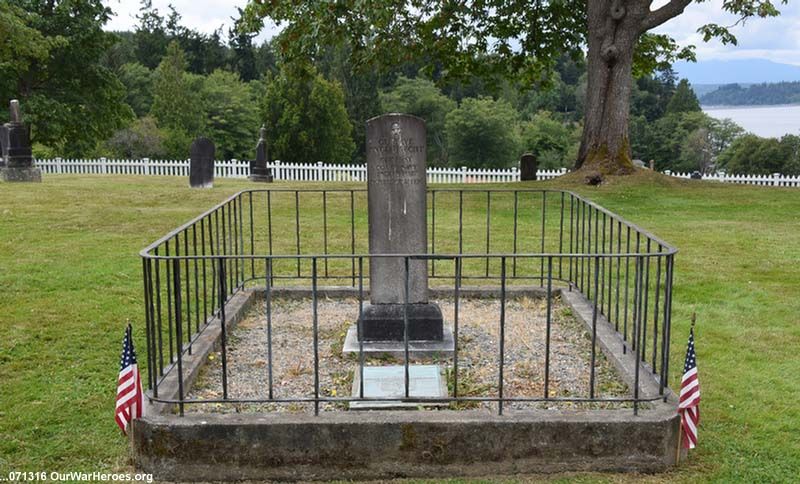
Perched on a bluff above Port Gamble with sweeping views of the bay below, Buena Vista Cemetery is the kind of place that makes you slow down without being told to. The graves here go back to the mid-1800s, and the names carved into the weathered stones read like a roll call of the town’s founding era.
It is peaceful, but it carries a particular kind of weight.
One grave draws more attention than the others. Gustave Englebrecht, a U.S.
Navy sailor, passed away in 1856 while defending the bay from attacking indigenous tribes from British Columbia. His passing made him the first U.S.
Navy sailor to pass away in the Pacific, a fact that gives this quiet hilltop cemetery a remarkable place in American military history.
Reports of paranormal activity at Buena Vista Cemetery stretch back to the 1950s. Visitors have described cold spots, strange sounds, and an odd feeling of being watched even when the cemetery is visibly empty.
Some have captured unexplained lights in photographs taken near the older sections of the grounds.
I walked through on a clear afternoon and still felt a distinct chill that had nothing to do with the breeze. There is something about a place where history is literally buried underfoot that demands a different kind of attention.
The cemetery is free to visit and open to the public, making it one of the most accessible and genuinely atmospheric stops in all of Port Gamble.
The Port Gamble General Store and Sea and Shore Museum
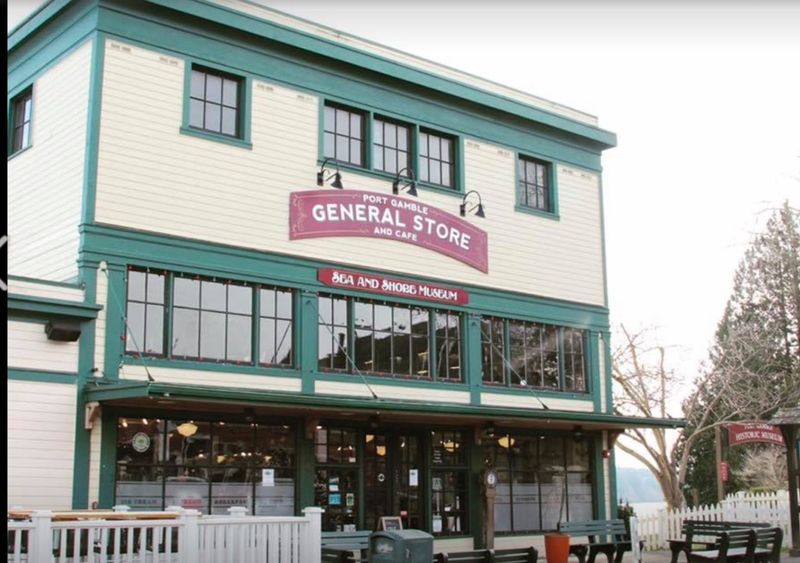
Not everything in Port Gamble deals in shadows and shivers. The Port Gamble General Store and Cafe, established in 1916, is the kind of place that feels like a reward after exploring the town’s spookier corners.
It sits at the heart of the village and has been a gathering spot for locals and visitors for over a century.
Inside, the shelves are lined with locally sourced foods, thoughtful gifts, and seasonal decor that changes throughout the year. The store has a lived-in warmth that immediately puts you at ease, which is a welcome contrast to the eerie energy that lingers elsewhere in town.
Picking up something handmade or locally produced feels like bringing a small piece of Port Gamble home with you.
Upstairs, the Sea and Shore Museum offers free admission and houses one of the largest privately owned shell collections in the world. The display is genuinely impressive, with specimens from oceans across the globe arranged in careful detail.
It is the kind of unexpected gem that reminds you how layered this small town really is.
Down in the basement, the Port Gamble Historic Museum tells the story of the mill that built the town. Photographs, artifacts, and exhibits trace the journey from the first timber cuts in 1853 all the way to the sawmill’s closure in 1995.
Spending time here gives the whole town context, and suddenly the Victorian homes and tree-lined streets start to make a lot more sense. The General Store is located at 32400 NE Rainier Avenue, Port Gamble, WA 98364.
St. Paul’s Church and the Architecture of Longing
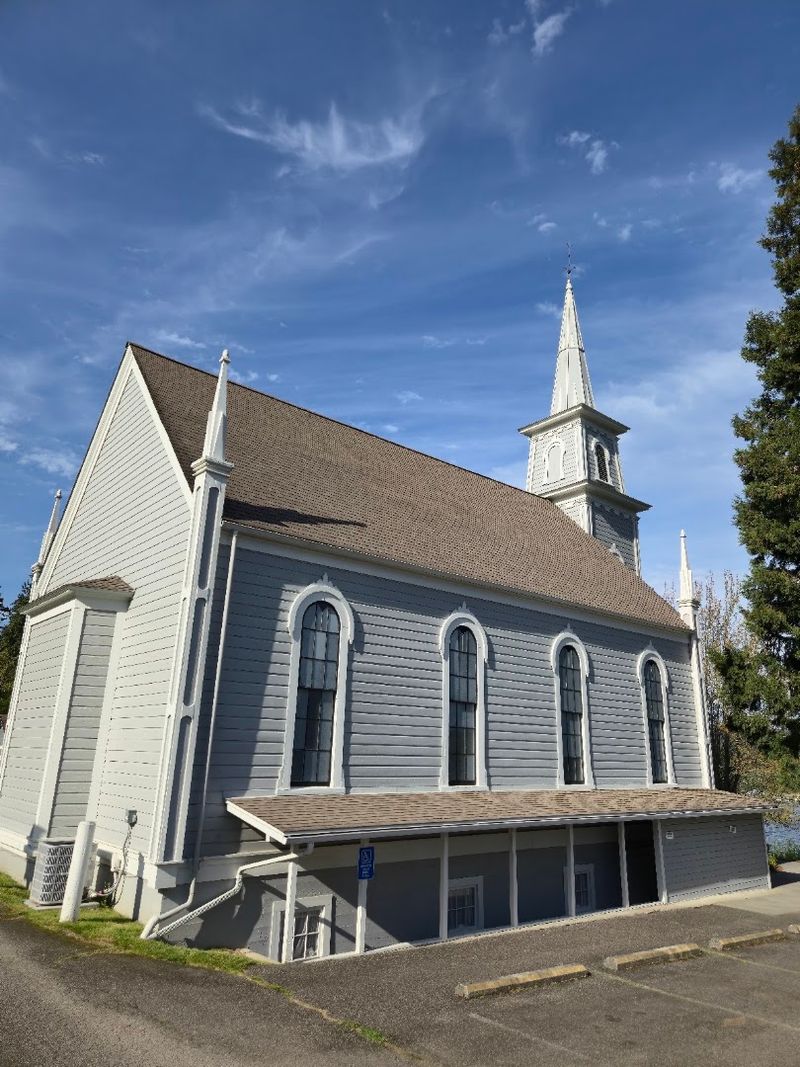
Something about St. Paul’s Church stops you mid-step when you first spot it through the trees. Built in 1878, this white wooden church with its tall steeple looks like it was lifted directly from a small town in coastal Maine and gently set down on the Kitsap Peninsula, which is essentially what happened.
The founders of Port Gamble modeled it after a church from East Machias, Maine, the hometown many of them had left behind.
That act of replication says something deeply human about the people who built this town. They were thousands of miles from home, surrounded by towering Pacific Northwest timber, and they built something familiar to anchor themselves.
The church became a touchstone, a visual reminder of where they came from and who they were.
Today, St. Paul’s is still used for weddings and community events, which means it remains a living part of Port Gamble rather than just a preserved relic. Seeing a church this old still fulfilling its original purpose feels genuinely rare.
The interior is simple and well-kept, with light filtering through windows in a way that feels almost cinematic.
The paranormal community has also taken note of St. Paul’s. The church appears on several lists of reportedly active locations within the town, though its daytime atmosphere feels serene and welcoming.
Whether you come for the history, the architecture, or a quiet moment of reflection, this church delivers something that is hard to name but easy to feel. It is one of Port Gamble’s most quietly powerful spots.
The Annual Port Gamble Ghost Conference
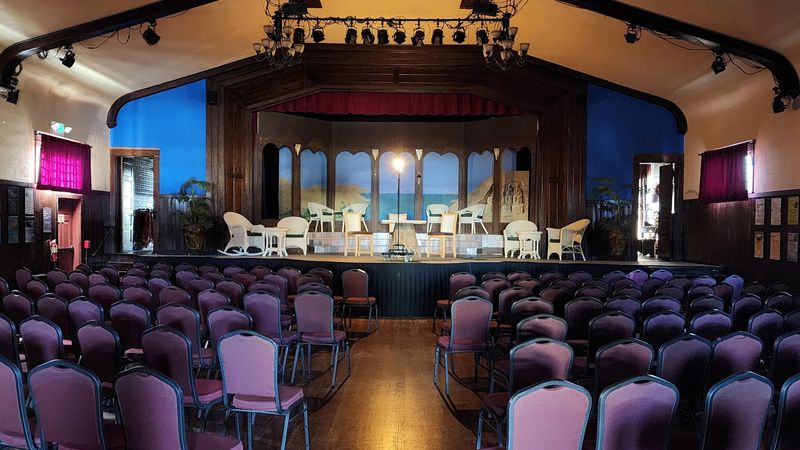
Port Gamble does not just passively accept its haunted reputation. Every year, the town actively celebrates it through the Port Gamble Ghost Conference, an event that draws paranormal enthusiasts, researchers, and the simply curious from across the Pacific Northwest and beyond.
It is one of the most unique annual gatherings in Washington State.
The conference features guided ghost walks through the town’s most active locations, including the Walker-Ames House and Buena Vista Cemetery. Attendees get access to special investigations of buildings that are not typically open to the public at night.
The combination of history, storytelling, and hands-on exploration makes it a genuinely memorable experience rather than a theatrical gimmick.
Pete Orbea, a paranormal investigator and Port Gamble’s town manager, plays a central role in organizing the event and sharing the long-term residents’ stories that give the conference its depth. His involvement adds a layer of authenticity that casual ghost tours often lack.
Nearly 45 of Port Gamble’s more than 50 buildings have documented reports of paranormal activity, which means the conference has no shortage of material to work with.
Even if you arrive with zero belief in the supernatural, the Ghost Conference offers something valuable: a deep, immersive look at the town’s history told through the lens of its most enduring legends. The stories are compelling on their own terms.
Port Gamble earned its reputation one unexplained sound and one flickering light at a time, and the conference is the best way to experience all of it in a single visit.
Forest Trails, Kayaking, and the Quieter Side of Port Gamble
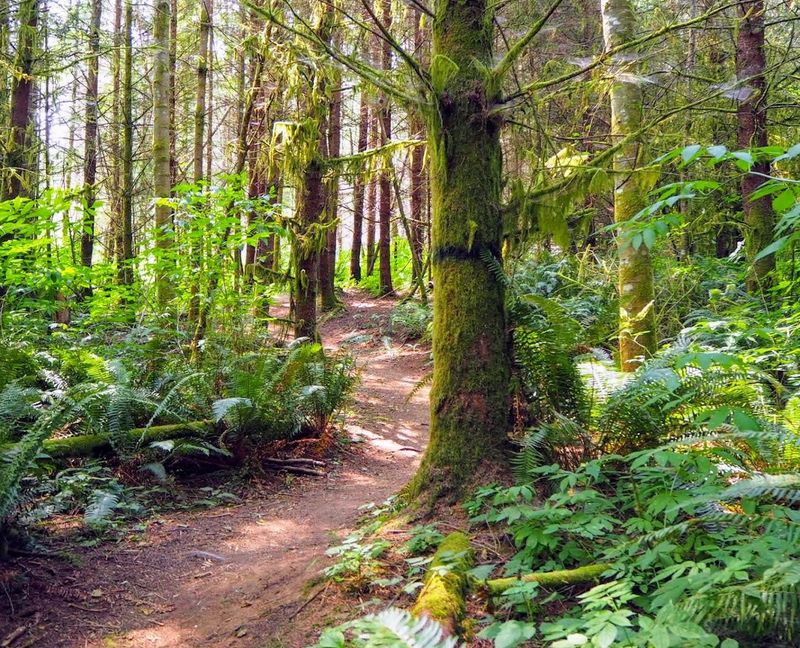
Port Gamble is not only about old ghosts and creaking floorboards. The land around the town offers some genuinely beautiful outdoor experiences that feel like a completely different chapter of the same story.
Port Gamble Forest Heritage Park surrounds the area with miles of well-maintained trails winding through second-growth Pacific Northwest forest.
Hikers and mountain bikers use the trails year-round, and the canopy overhead provides a kind of natural quiet that feels restorative after a morning spent in haunted houses and historic cemeteries. The trails vary in difficulty, making them accessible for families and casual walkers as well as more experienced outdoor adventurers.
Spotting deer or catching a glimpse of the bay through the trees is a regular occurrence out here.
Gamble Bay and Hood Canal offer calm, protected water that is well suited for kayaking. Paddling along the shoreline gives you a completely different perspective on the town, looking back at those preserved Victorian rooftops from the water is a view most visitors never see.
The bay is quiet and the water is cold, but the experience is worth every chilly splash.
The beaches near Port Gamble are equally worth a slow stroll. They are not the dramatic rocky shores of the outer coast; instead, they have a gentle, unhurried quality that matches the town’s overall rhythm.
Coming here after a ghost walk or a museum visit feels like pressing a reset button. Port Gamble rewards the visitor who takes the time to experience all of its layers, not just the ones wrapped in legend.
