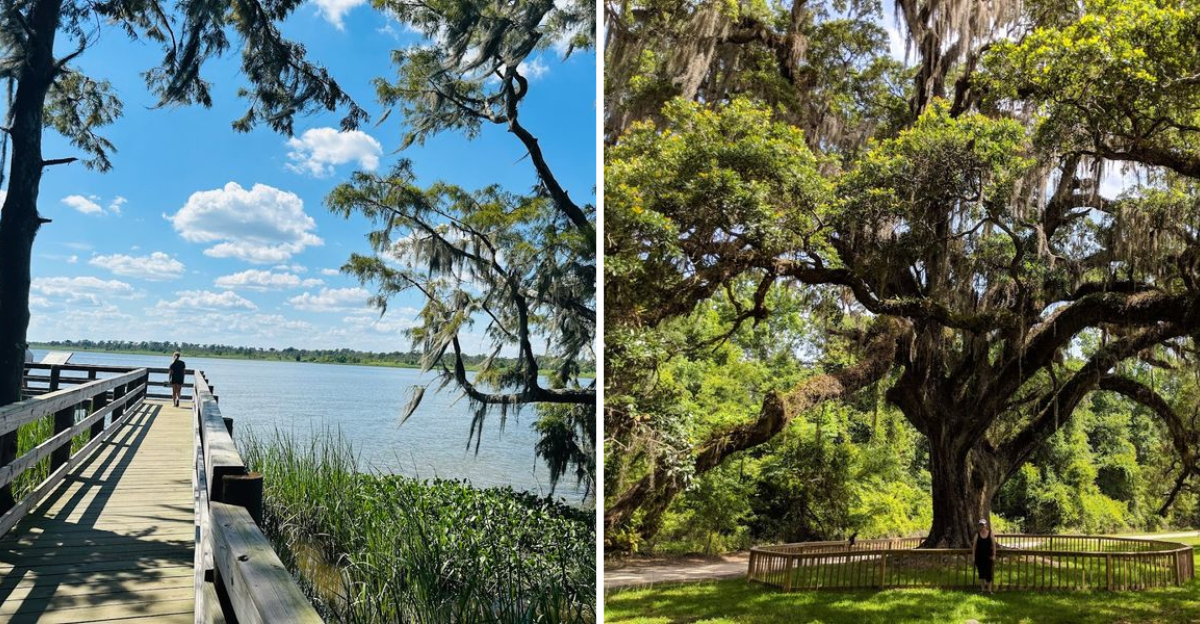
Not every hike leaves you wondering what stood beneath your feet a hundred or two hundred years ago. Alabama has one that turns an ordinary walk into a journey through a long-forgotten town, where quiet trails weave past the remains of streets, buildings, and stories that time almost erased. The scenery is beautiful on its own, but it is the layers of history that keep pulling your attention in.
Every bend feels like another piece of a puzzle waiting to be uncovered, making it surprisingly easy to spend hours exploring without noticing the time.
A Journey into the Mobile-Tensaw Delta
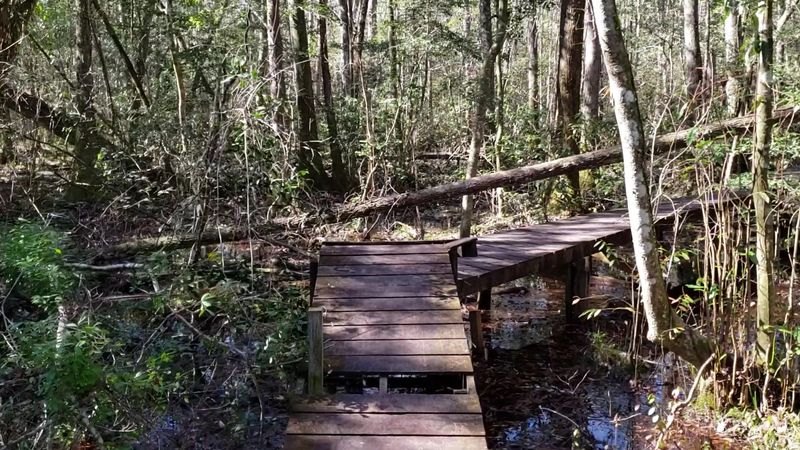
The moment you pass through the park entrance at Historic Blakeley State Park, the outside world genuinely disappears. Baldwin County’s thick forest closes in around you, and the sounds shift from road noise to birdsong almost instantly.
It is the kind of quiet that makes you slow down without even realizing it.
Spanning over 2,100 acres, the park sits at the edge of the Mobile-Tensaw Delta, one of the most ecologically rich river systems in North America. The delta has been shaped over thousands of years by the Tensaw River, creating a landscape of towering hardwoods, marshy lowlands, and winding waterways.
It feels ancient in the best possible way.
Long before European settlers arrived, this region was home to various Indigenous peoples across the Archaic, Woodland, and Mississippian periods. Their presence is preserved within the park’s boundaries, adding a profound depth to an already layered landscape.
Hiking here is not just a walk through nature. It is a walk through thousands of years of human story, all wrapped in the kind of green stillness that Alabama does better than almost anywhere else.
The Rise and Fall of a Rival City
Few people realize that a town once stood in these woods that was bigger than Mobile. Blakeley was founded in 1813 by Josiah Blakeley, a Connecticut entrepreneur who purchased 7,000 acres along the northeastern shores of Mobile Bay.
By 1820, the town had grown to roughly 4,000 residents and served as the Baldwin County seat.
At its peak in the 1820s, Blakeley had homes, businesses, a newspaper, and one of Alabama’s earliest steamboat construction facilities. Its deep natural port gave it a real advantage over Mobile, whose harbor was sometimes blocked by a sandbar.
For a brief window of time, Blakeley looked like it might become one of the most important cities on the Gulf Coast.
Then everything unraveled. Yellow fever epidemics tore through the population in the late 1820s, and economic pressures compounded the loss.
The town shrank steadily, and by the Civil War era its population had dwindled to almost nothing. The post office closed in 1866, and Blakeley lost its county seat status in 1868.
Today, the forest has swallowed nearly everything, but the story remains vivid for those willing to walk through it.
Tracing the Footsteps of History on the Trails
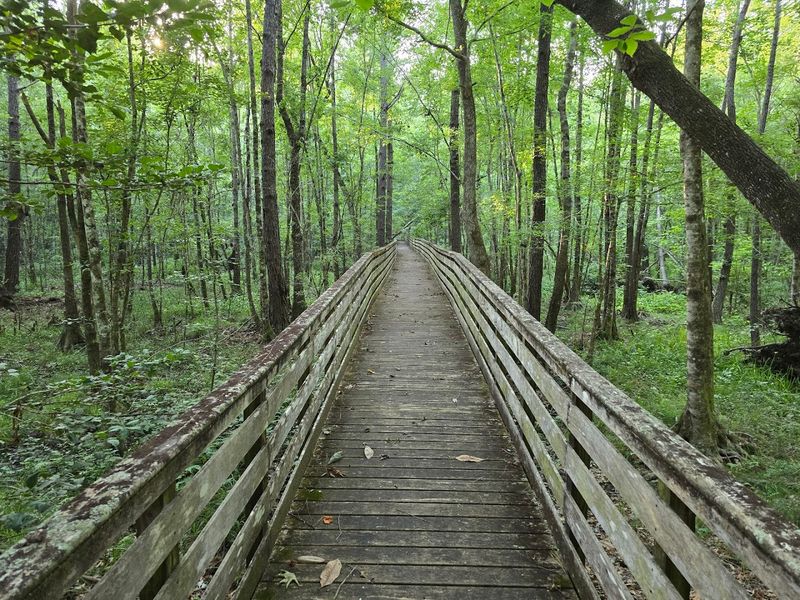
One of the most surreal parts of visiting Blakeley is that the original street grid of the town has been preserved. You can literally walk the same routes that residents once traveled on horseback or foot, now shaded by oaks that have had two centuries to grow enormous.
The forest has become the neighborhood.
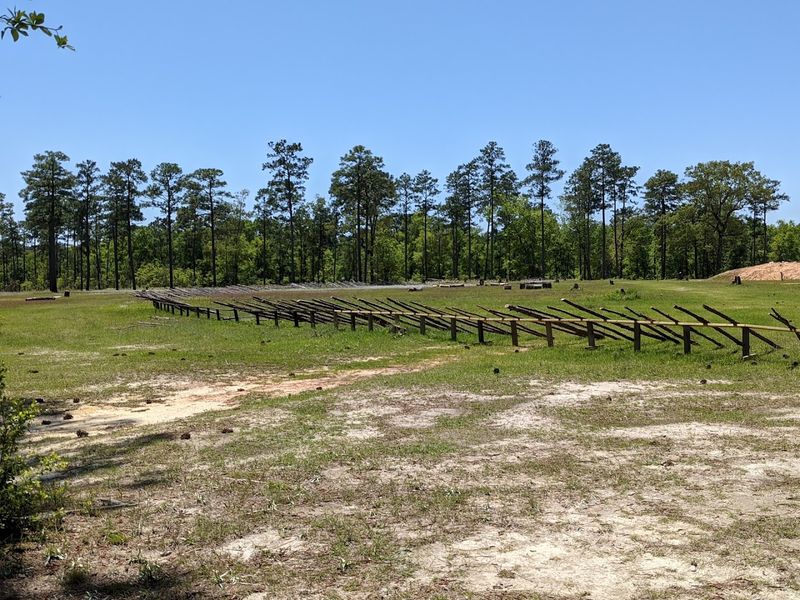
To help visitors visualize what once stood here, the park erected ghost structures in Washington Square, the former civic heart of Blakeley. These open wooden frames replicate the scale and style of 1820s homes and businesses, giving you a real sense of how the town was laid out.
One structure is named after Gabriel F. Mott, the publisher of The Blakeley Sun and Alabama Advertiser, the town’s early newspaper.
Wandering through those open frames, it is easy to let your imagination fill in the walls, the voices, the smell of a working port town. The park has over 20 miles of multi-use trails, so you can cover a lot of ground across a single visit.
Some trails are shared with cyclists and equestrians, so keep an eye out and enjoy the variety of company you might encounter along the way.
A Battlefield Frozen in Time
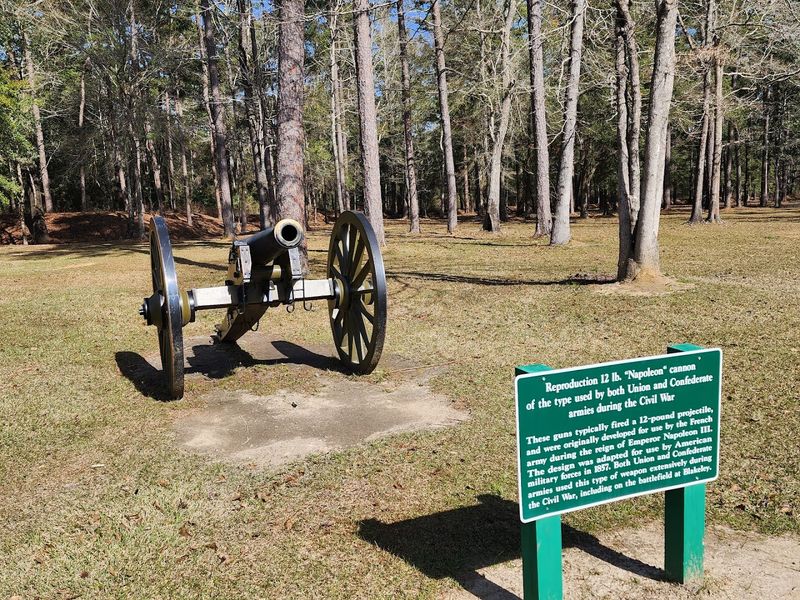
History at Blakeley does not stop with the ghost town. The park is also home to the site of the Battle of Fort Blakeley, fought on April 9, 1865, just hours after Robert E.
Lee surrendered at Appomattox. It stands as one of the final major engagements of the American Civil War, and the weight of that fact is hard to shake when you are standing in the middle of the old fortifications.
The earthworks, trenches, and defensive lines carved into the ground by Confederate and Union soldiers are still remarkably intact. More than 150 years have passed, and yet the landscape holds those scars with quiet dignity.
Walking alongside these earthen structures, you get a visceral sense of the scale and desperation of that final fight.
The Boy Scout Civil War Hiking Trail was specifically designed to guide visitors through the most historically significant portions of the battlefield terrain. QR codes placed along the route let you scan and read deeper context about specific locations.
It is a thoughtful touch that makes the experience accessible without feeling like a classroom. The combination of forest trail and battlefield history creates a hiking experience unlike anything else in the region.
Legends and Whispers of the Jury Oak
Not everything at Blakeley comes from official historical records. Some of the most compelling parts of the park are the stories passed down through local memory.
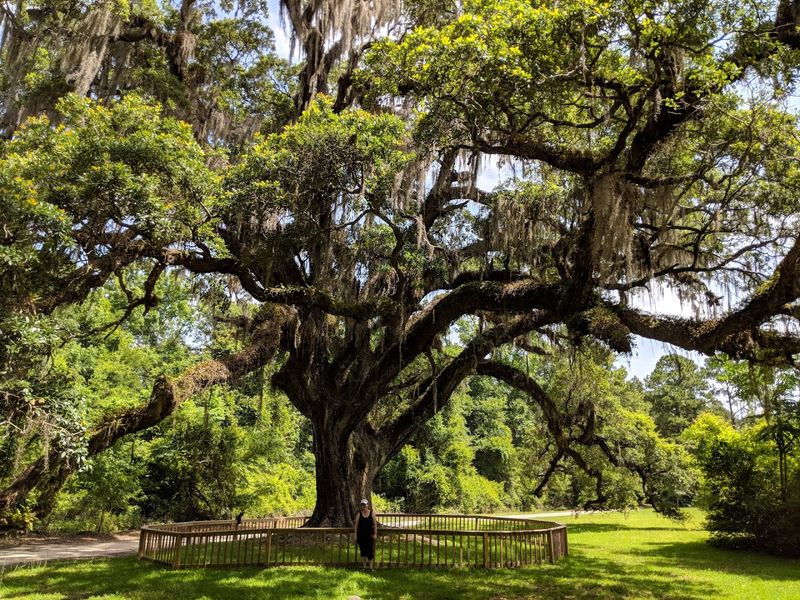
Among the most talked-about are the legends of the Jury Oak and the Hanging Tree, two massive oaks that once stood at the center of the old town.
According to local lore, a judge would climb a limb of the Jury Oak to conduct court proceedings right there in the open air. If a death sentence was handed down, the condemned would reportedly be taken to the nearby Hanging Tree, since the abundance of strong oaks made constructed gallows unnecessary.
It sounds like something from a novel, but the trees themselves were real.
The Jury Oak eventually fell in the 1990s after being damaged by a hurricane in the 1970s, though remnants of the Hanging Tree were still present as of 2021. The old Blakeley cemetery adds another layer of quiet weight to this section of the park.
Gravestones dating back to the 1820s stand under the shade of ancient oaks, marking the lives of settlers, merchants, and families who built something here and then watched it fade.
Nature’s Embrace: Wildlife and Scenic Trails
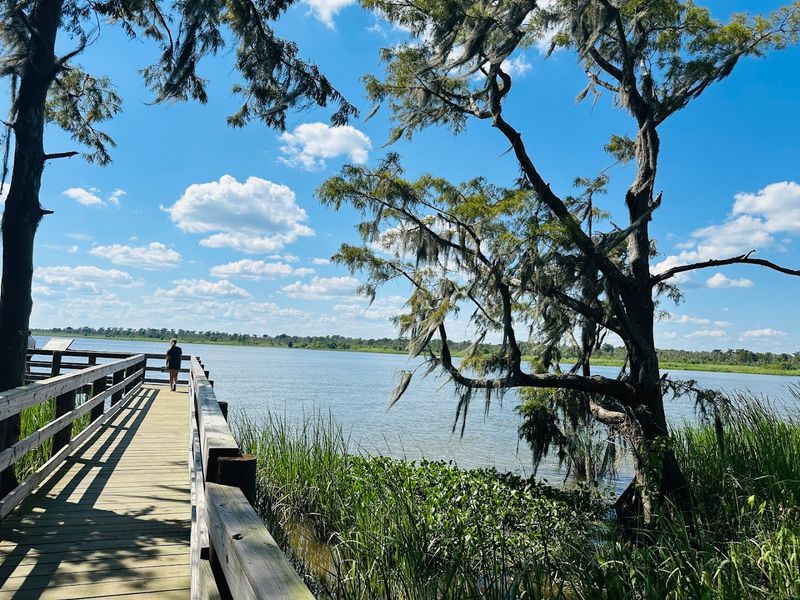
History aside, Blakeley is genuinely one of Alabama’s most beautiful natural spaces. The park sits within a designated stop on the Alabama Gulf Coastal Birding Trail, and the variety of birds you can spot here is remarkable.
Ospreys are common along the Tensaw River, and patient visitors have even reported sightings of Bald Eagles soaring overhead.
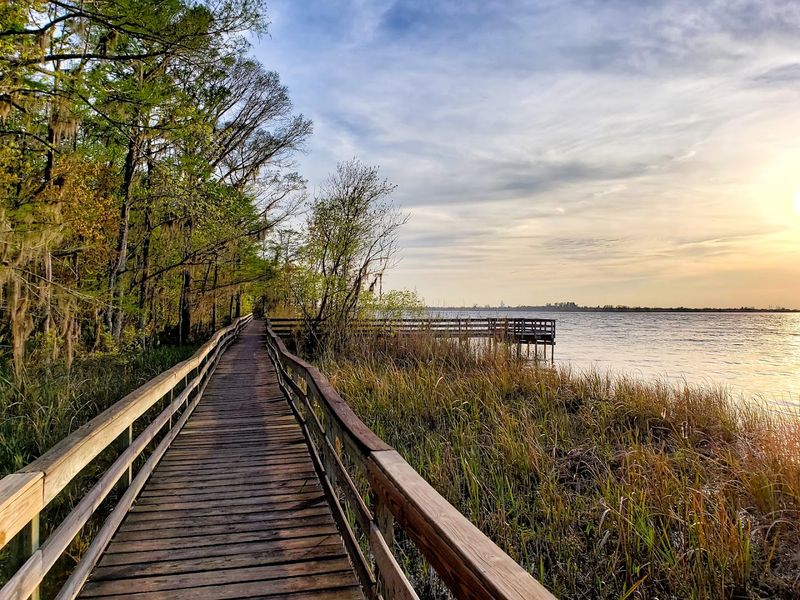
The Old Town Nature Trail is a personal favorite for anyone who enjoys a more relaxed pace. It runs along a boardwalk beside the Tensaw River, offering calm water views and the kind of quiet that feels genuinely restorative.
Herons wade in the shallows, and the occasional splash from beneath the surface keeps things interesting.
Deer are everywhere throughout the park, and reviewers have noted seeing raccoons, frogs, cool lizards, and even the occasional feral hog deeper in the trails. The ecological diversity here matches the historical depth, which makes every hike feel layered and alive.
Spiders are also notably abundant, especially in warmer months, so a trekking pole or a stick to clear webs ahead of you is a genuinely useful piece of gear. Nature here is not curated or tamed.
It is full, wild, and wonderfully unpredictable.
Planning Your Visit to Historic Blakeley State Park
Getting the most out of a visit to Blakeley takes just a little planning, and the payoff is absolutely worth it. The park is open daily from 8 AM to 9 PM, giving you a solid window to explore trails, history, and river views without feeling rushed.
The address is 34745 AL-225, Spanish Fort, AL 36527, and it sits just a few miles from downtown Spanish Fort, making it easy to access from Mobile or the Eastern Shore.
Overnight options include RV sites with full hookups, tent camping spots tucked into wooded areas, and fully furnished cabins that guests consistently rave about. The Kennedy Cabin in particular has earned enthusiastic praise for its cleanliness and comfort.
Staff throughout the park are known for being genuinely friendly and quick to help when needed.
Boat cruises into the Mobile-Tensaw Delta are available through the park, and kayak launches let independent paddlers explore the waterways at their own pace. Trail maps are handed out at the entrance, though a trail navigation app is worth having as backup.
Whether you come for one afternoon or a full weekend, Blakeley delivers a rare combination of deep history, wild nature, and the kind of unhurried peace that is getting harder to find.
Address: 34745 AL-225, Spanish Fort, AL 36527
