Thrift shopping in Maryland is one of those activities where walking in just to look can become a suspiciously full cart twenty minutes later.
This large secondhand store packs in clothing, shoes, accessories, books, housewares, electronics, and plenty of miscellaneous finds that make browsing every aisle feel a little like digging through someone else’s extremely unpredictable attic.
Prices vary by item, so no exact budget guarantees a giant haul, but the whole appeal is spotting useful basics and oddball treasures without buying everything brand new.
It is especially dangerous for shoppers who enjoy saying, “I don’t need this, but for that price…” right before putting it in the cart anyway.
For Maryland bargain hunters, this is the sort of place where patience can pay off and leaving empty-handed requires unusual levels of self-control.
A Former Grocery Store With Room To Roam
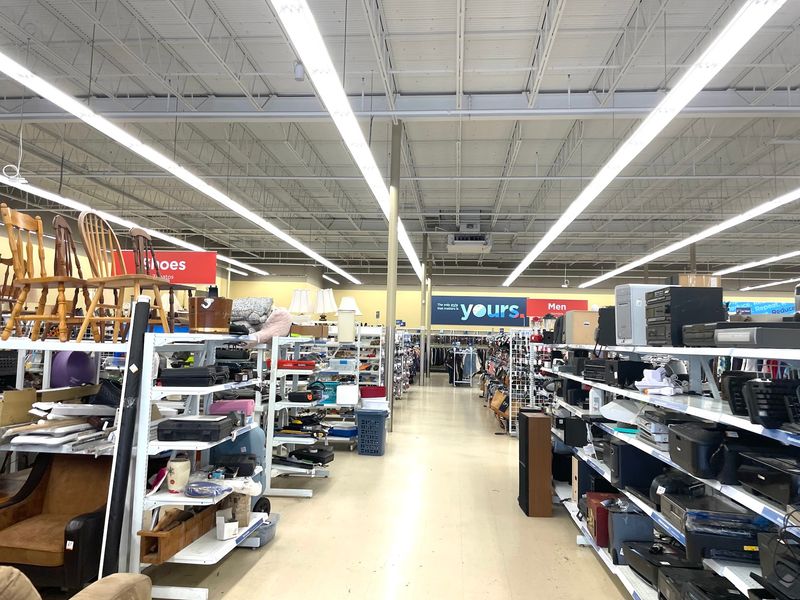
The bones of a supermarket are still obvious once you notice them. High ceilings, exposed ductwork, and those extra-wide aisles that were built for shopping carts and pallet jacks rather than clothing racks.
Savers took over this building in March 2013, and the 39,000 square feet gives the store something most thrift shops never get: breathing room. Nothing is crammed.
Racks sit far enough apart that two people with full carts can pass each other without an awkward shuffle.
That space changes how the shopping feels. Instead of elbowing through a tight maze, you can actually slow down, hold something up to the light, and decide whether you really want it.
Departments are laid out in clear zones, which helps enormously in a place this big. Clothing dominates the middle, housewares and dinnerware line one section, and furniture and larger goods sit toward the back where there is room to walk around them.
Signage overhead points you toward books, toys, electronics, and bedding, so there is no wandering blindly unless you want to. And plenty of people do want to.
What struck me on my first pass was how quiet the floor stayed even with a good number of shoppers inside. Sound spreads out in a building this large.
For anyone who finds thrifting stressful, the sheer scale here works in your favor. There is space to think, space to compare, and space to change your mind twice before heading to the register.
Clothing Racks That Cover Every Family Member
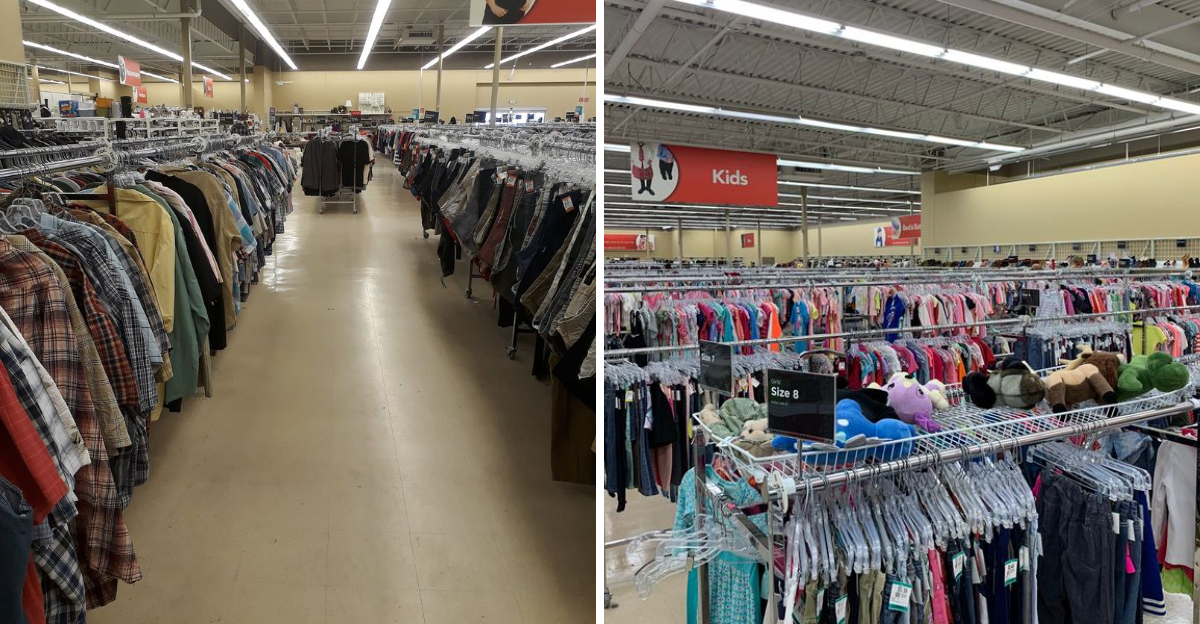
Racks of shirts sorted by color make the clothing floor look almost like a paint sample wall. It is oddly satisfying to walk past.
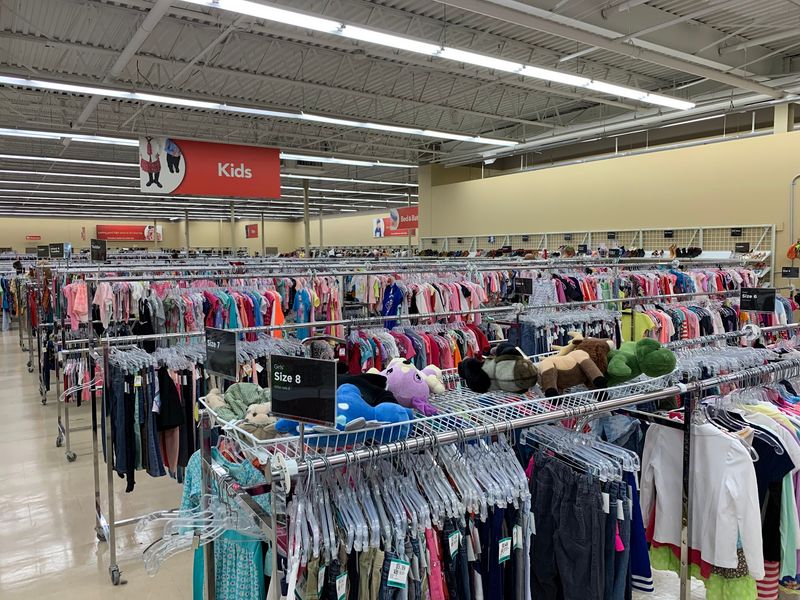
Every age group gets real shelf space here. Menswear, womenswear, kids, babies, outerwear, sleepwear, and workwear all have their own zones, which means a family can shop together without splitting up across the building.
Sizes are grouped on the racks, and that small bit of organization saves a lot of time when you are working through hundreds of hangers.
Name brands turn up regularly, mixed right in with everything else. Nobody separates them out for you, so the fun is in flipping through and spotting a label you recognize on a shirt that still has plenty of life in it.
Denim tends to be one of the strongest sections, with a wide spread of cuts and washes. Jackets and coats also stack up well, especially heading into fall.
A practical tip: bring a tape measure or know your measurements, since secondhand sizing across decades and brands can be wildly inconsistent. A tag that says medium might fit like a large from another era.
Kids clothing moves fast for good reason, because children outgrow things long before they wear them out. Plenty of pieces on those racks look barely used.
Thirty dollars stretches surprisingly far in this department. A handful of tops, a pair of jeans, and maybe a sweater is a realistic haul rather than wishful thinking.
Housewares, Dinnerware And The Mug Wall
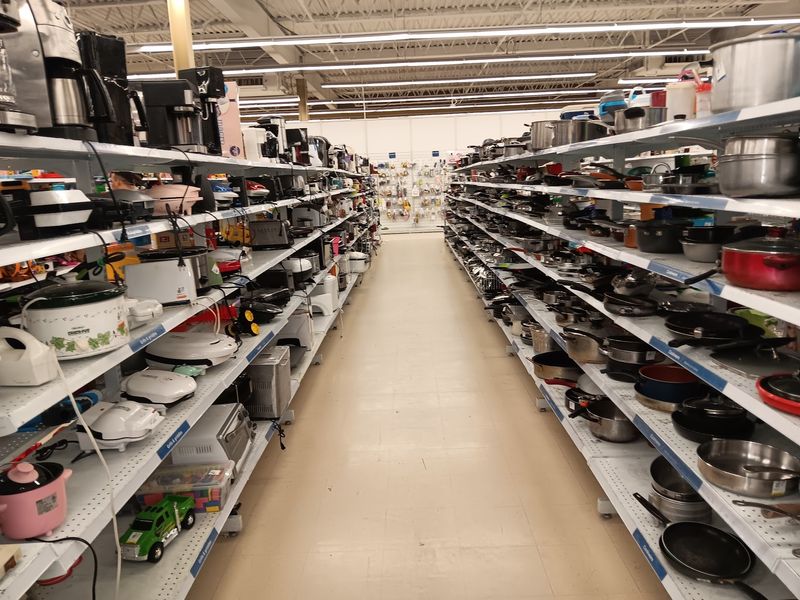
Shelves of mismatched plates and mugs are my personal weak spot, and this store leans into it hard. Rows and rows of glassware, serving bowls, casserole dishes, and coffee cups that all came from somebody else’s kitchen.
Dinnerware is grouped by type rather than pattern, so you might find four matching plates sitting next to a lone dessert dish from a completely different decade. Mixing patterns on purpose has become a whole look, and this is where you build it.
Glass pitchers, cake stands, and cast pans show up often enough that repeat visits pay off.
Small appliances live nearby in the electronics area, and it is worth checking cords and plugs before committing. Staff can usually help you test items if you ask.
Kitchen gadgets fill bins and shelves too, everything from mixing bowls to utensil sets to storage containers. Setting up a first apartment on a tight budget starts to feel genuinely doable here.
Home decor stretches across picture frames, vases, candle holders, baskets, and wall art. Frames alone are worth the trip, since a solid wooden frame costs a fraction of new and can be repainted in an afternoon.
Linens, curtains, and bedding round out the section with sheets, quilts, and throw pillows.
One habit that helps: inspect the rim and base of anything ceramic for chips before adding it to your cart. Most pieces are in good shape, but a quick check takes two seconds and saves regret later.
Fresh Inventory Landing Every Single Day
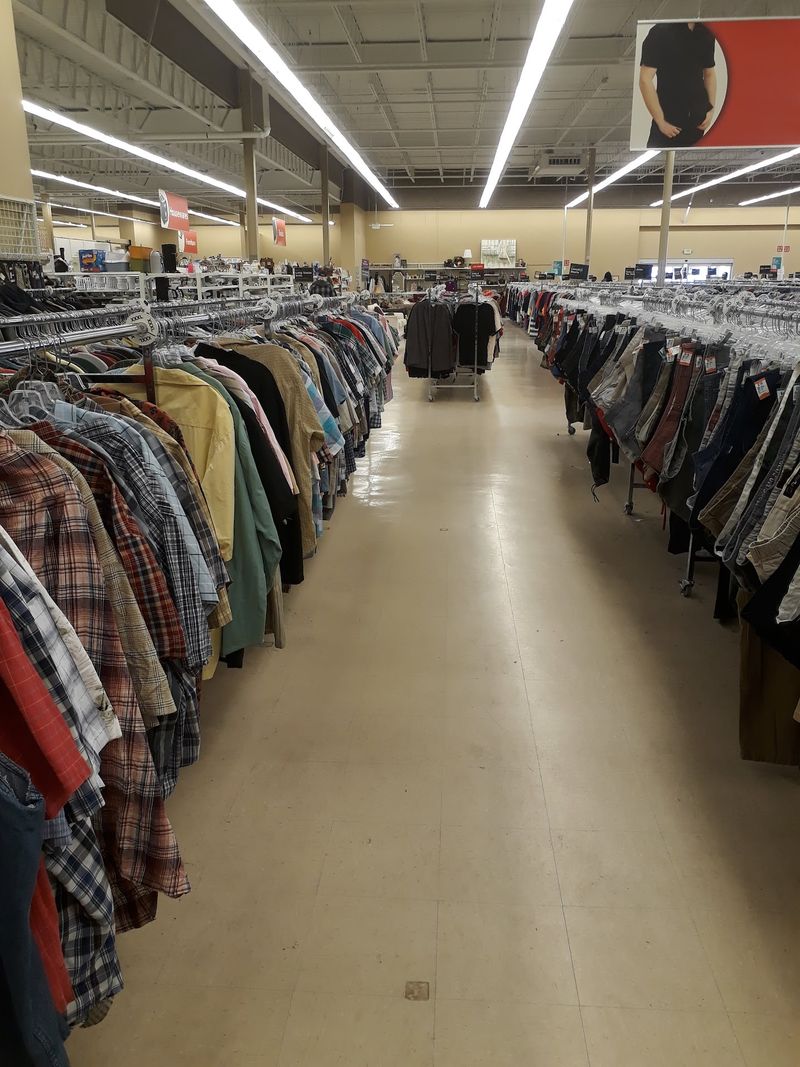
Thousands of new items hit this sales floor daily, which is exactly why regulars treat the place like a rotating exhibit rather than a fixed store. What you saw Tuesday will not be what greets you Friday.
Savers processes an enormous volume of secondhand goods company-wide, roughly a billion pounds in fiscal year 2024, and 291 million individual items were sold to customers that same year. Numbers like that explain the constant churn on the shelves.
Rolling racks appear throughout the day, and watching one get wheeled out is a small event for anyone paying attention.
Because stock refreshes so quickly, the best strategy is frequency over marathon visits. Twenty focused minutes twice a week tends to beat one exhausting three-hour sweep.
Weekday mornings shortly after the 9:00 a.m. opening are calm and often freshly stocked. Evenings work too if daytime is impossible, since the doors stay open until 9:00 p.m.
Monday through Saturday.
Sundays run shorter, from 10:00 a.m. to 7:00 p.m., so plan accordingly.
The unpredictability is genuinely the appeal. Nobody can promise you will find a vintage record player or a cast iron skillet on any given day, and that uncertainty is what makes the discovery feel earned.
Keep a mental list of things you actually want. That way, when something on the list finally appears, you recognize it instantly instead of second-guessing yourself in the aisle.
Books, Toys And The Media Aisles
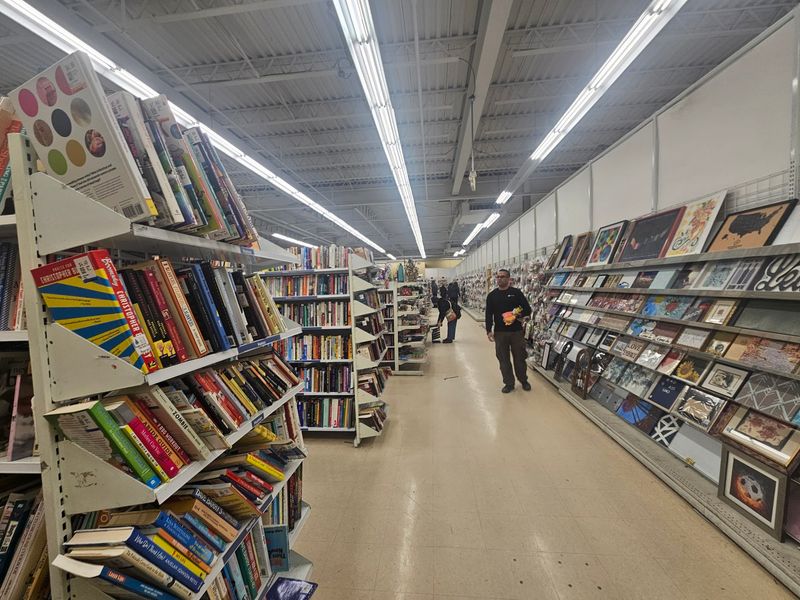
Book lovers, consider yourselves warned. The shelves here run deep with paperbacks, hardcovers, cookbooks, kids’ picture books, and the occasional oddball reference volume nobody expected to see again.
Sorting is loose, generally by rough category and size, which means browsing takes patience but rewards it. Half the joy is stumbling onto something you never would have searched for.
Cookbooks from the 1970s and 80s show up with a certain regularity, complete with photography that is worth the flip-through alone.
Toys occupy their own colorful stretch, and it is a smart place to shop for kids who cycle through interests every few months. Board games, puzzles, action figures, plush animals, and building blocks all rotate through.
Check board game boxes for piece counts when possible, since missing components are the usual risk with secondhand games.
Media fills out the rest of the area with DVDs, CDs, and sometimes vinyl for anyone still running a turntable. Prices make experimenting easy, so grabbing an album by a band you barely know costs almost nothing.
Sporting goods and craft supplies often live near this zone too, with yarn, frames, and half-used kits waiting for a second life.
My honest advice is to hit the books last. Start with clothing or housewares while your energy is high, then settle into the shelves at the end when you can browse slowly without watching the clock.
Furniture Finds And The Loading Area Out Back
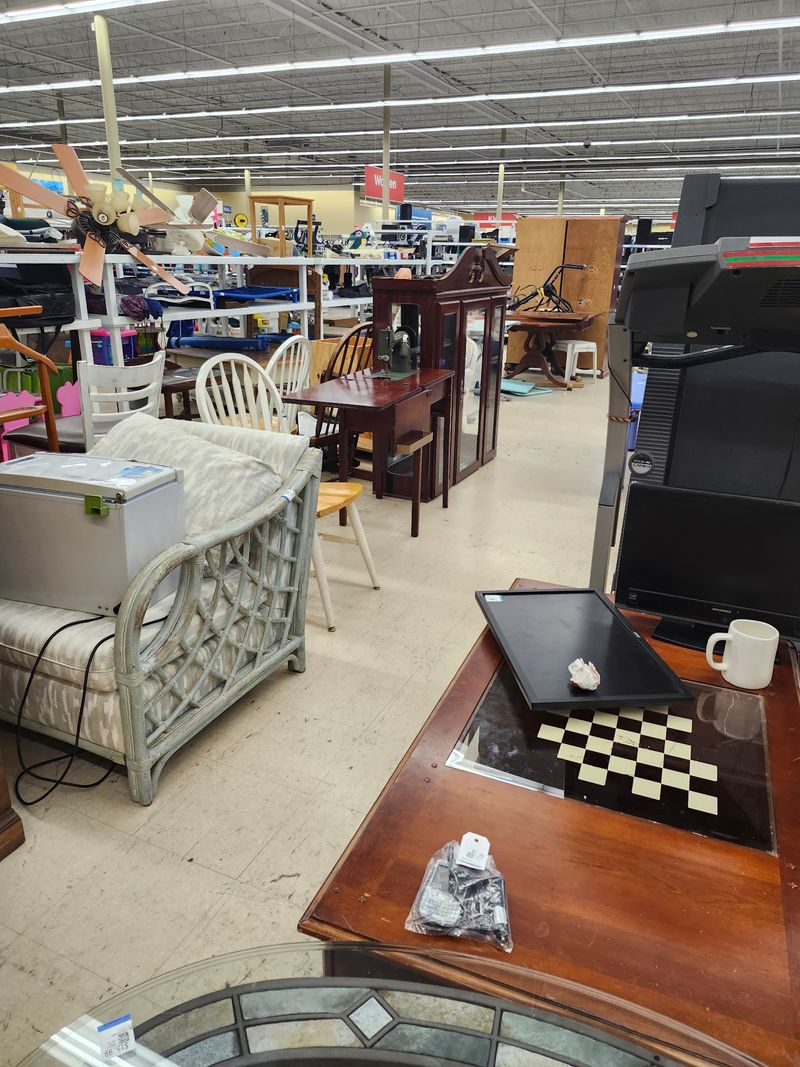
Furniture shopping at a thrift store usually means squeezing past three dressers to see the fourth. Not here, thankfully.
The back portion of the store gives larger pieces actual room, so chairs, side tables, dressers, headboards, and shelving units can be viewed from more than one angle. You can sit in a chair without knocking anything over.
Solid wood turns up often, which matters if refinishing is your hobby of choice.
What makes this location especially practical is the dedicated loading area for big purchases. Instead of wrestling a bookshelf through the front doors and across a busy parking lot, you can pull around and load properly.
Bring measurements of your room, your doorway, and your vehicle’s cargo space. Nothing stings quite like driving home empty-handed because a dresser missed fitting by an inch.
Tie-down straps and an old blanket in the trunk are smart insurance. A furniture dolly helps even more if you have access to one.
Inspect drawers by sliding them fully open and closed, and give chair legs a gentle wobble test. Minor scuffs are easy to fix, but structural problems are a different project entirely.
Small tables and stools are the sleeper hits of this section. They cost little, fit in almost any car, and instantly make a room look more finished.
Anyone furnishing a first apartment or a home office should start here before ever setting foot in a big-box showroom.
Ways To Stretch Thirty Dollars Even Further
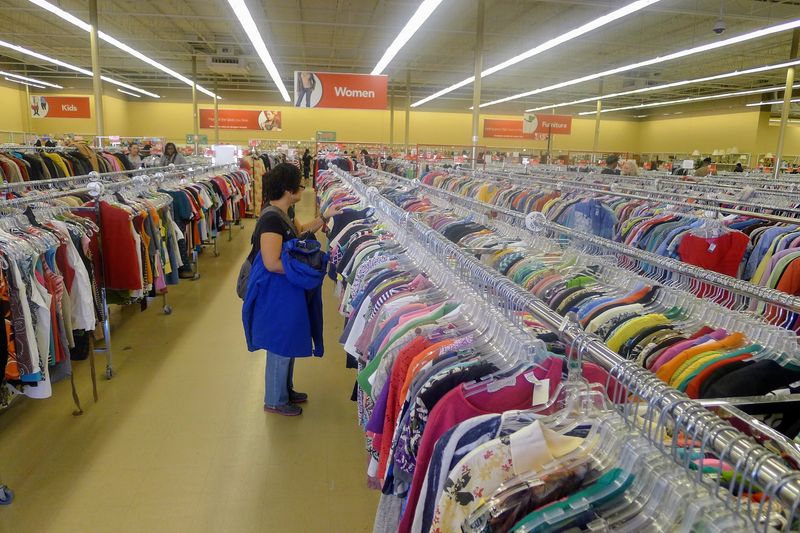
Thirty dollars already goes a long way on this floor, and a few small moves stretch it even more. Savers runs a Super Savers Club, and members get access to discounts plus text-only offers that pop up throughout the year.
Senior Tuesdays are one of the most useful standing deals, offering 30% off for shoppers aged 55 and older. That turns an already reasonable cart into a genuinely surprising total.
Signing up takes a minute at the register, which is time well spent if you plan to return.
Donating is the other lever. Drop off clothing or household items at the in-store Community Donation Center and you typically walk away with a percentage off your next purchase.
Timing matters too. Shopping midweek generally means shorter lines and calmer aisles than weekend afternoons.
Set a budget before you walk in, and consider carrying cash if you tend to lose track. A hard limit keeps the hunt fun rather than expensive.
Try things on when possible instead of guessing. Returning an item you never wore is a hassle you can skip entirely with five minutes in a fitting room.
One more trick: shop off-season. Winter coats in July and swimsuits in November sit quietly on the racks with far less competition.
Stack a club discount with an off-season find and thirty dollars can genuinely fill a cart. That is the whole appeal in one sentence.
Donations, Reuse And Why It All Matters
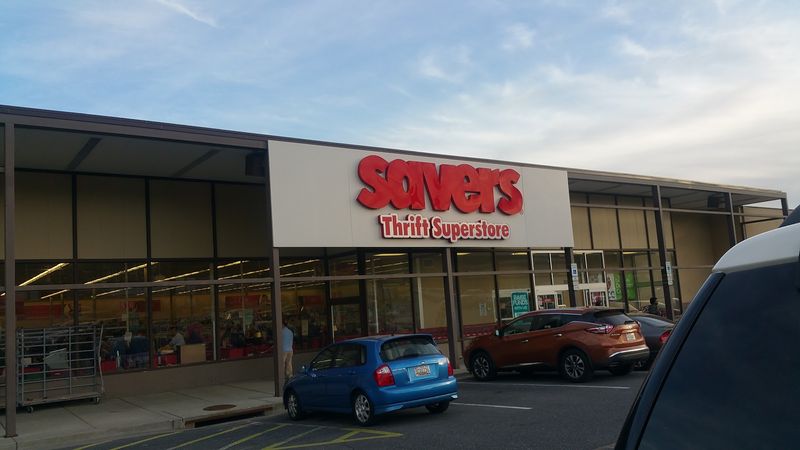
Every rack in this building starts with somebody deciding not to throw something away. That simple choice is the engine behind the whole operation.
Savers works as a for-profit thrift chain that partners with local nonprofit organizations, buying donated goods from them at a bulk rate. At the Parkville store, the Military Order of the Purple Heart Service Foundation is the local nonprofit partner benefiting from that arrangement.
Dropping items at the in-store Community Donation Center is what supports that partner through the payment system.
The donation center keeps the same hours as the store, so drop-offs are easy to fold into a regular errand run. Clothing and household items are both welcome.
The environmental side is hard to ignore. Savers has repurposed over 700 million pounds of goods in a recent year, making it one of the largest textile recyclers anywhere.
Keeping reusable goods out of landfills is the stated goal, and the volume moving through stores like this one shows what that looks like in practice.
Buying secondhand extends the life of things already made, which quietly cuts demand for new production. Nobody needs to make a speech about it.
The shopping cart does the talking.
So a Saturday spent digging through racks in Parkville accomplishes more than filling a closet. It keeps usable stuff in circulation and funds programs at the same time.
Pretty good return on an afternoon and a small pile of cash.
Address: 1925 E Joppa Rd, Parkville, MD 21234.
