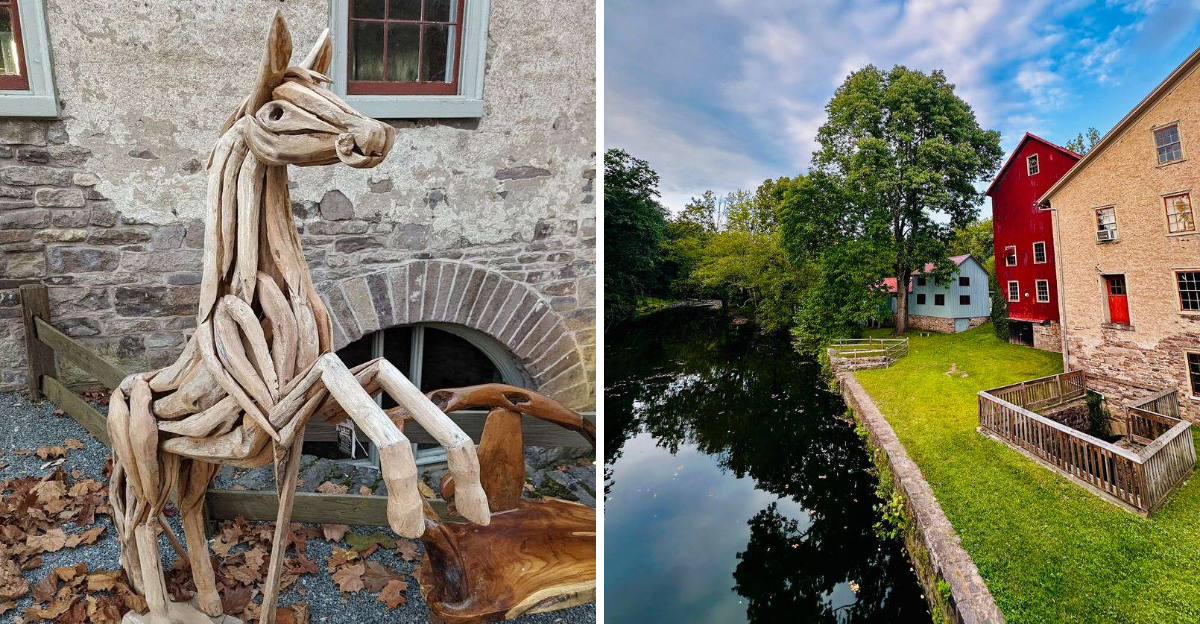
A gristmill. A sawmill. A linseed oil mill.
Ten buildings in total, all clustered along the Delaware River.
You have probably driven past old industrial sites before. Rusty equipment. Broken windows. Silence.
This New Jersey village is different.
The stone walls still hold. The water still flows. And the buildings have found a second life.
Art galleries now fill spaces that once stored grain. Concerts echo where machinery once clattered.
The old grit and character remain, but the energy has shifted. It is a cultural hub disguised as a relic.
Some places are preserved behind glass. This one lives and breathes, with festivals, weddings, and exhibitions weaving new stories into old stone.
A 10-Building Historic Hub on the Delaware
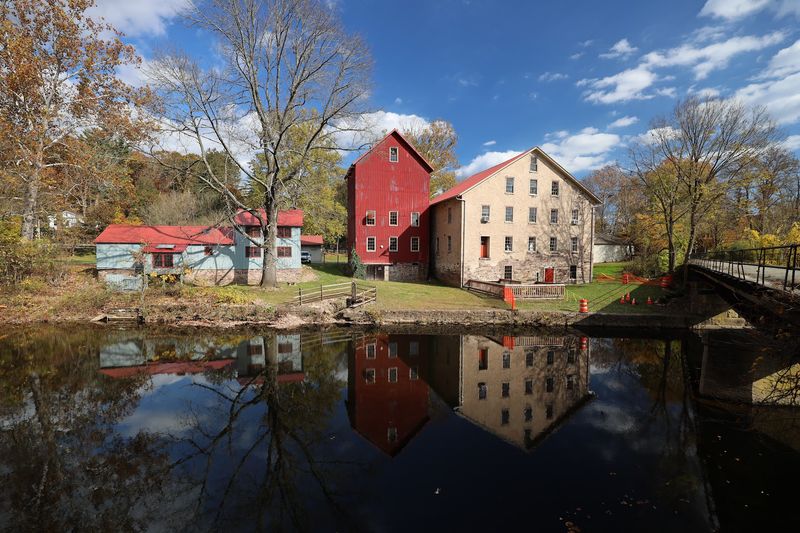
Walking into the Prallsville Mills complex for the first time feels like stepping into a world that somehow existed in parallel to the one you just left behind. Ten buildings, spread across a generous ten-acre site, line the banks of the Delaware River with quiet confidence.
Each structure carries its own personality, from weathered stone facades to sturdy timber frames, all arranged in a way that feels intentional and alive.
The site sits at 33 Risler Street in Stockton, New Jersey, a location that has anchored this stretch of riverfront for generations. What strikes you immediately is how cohesive it all feels, despite the varied architectural styles and centuries of history packed into one place.
This isn’t a single preserved building behind a velvet rope.
It’s a full village, still breathing and evolving with purpose. The Delaware River shimmers in the background, lending the whole scene a kind of natural grandeur that no museum exhibit could replicate.
Prallsville Mills earns its reputation as one of New Jersey’s most compelling historic destinations.
Dating Back to the 1700s, Now Thriving
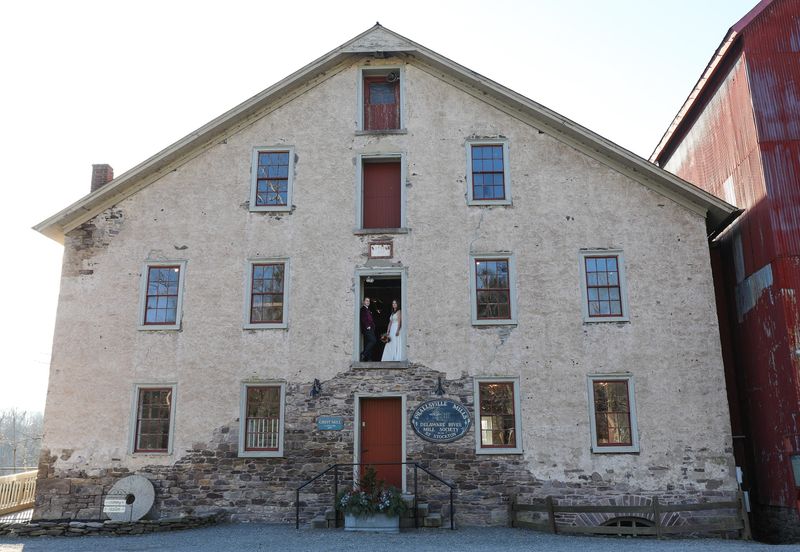
Few places in New Jersey can trace their roots as far back as the early 1700s, and even fewer have managed to remain this relevant centuries later.
The original wooden grist mill on this site was built around 1720 by Daniel Howell, harnessing the power of the Wickecheoke Creek to grind grain for the surrounding community.
That founding moment set a tone of industry and ingenuity that never really left.
John Prall Jr. purchased the property in 1794 and began expanding it into the multi-building complex we see today. His vision transformed a single mill into a thriving industrial village, adding diverse operations that served the region’s growing needs.
The scale of that ambition is still visible in every corner of the site.
Today, Prallsville Mills thrives not through grinding grain but through culture, creativity, and community engagement. The Delaware River Mill Society, formed in 1976, continues to steward this remarkable place with care and dedication.
Centuries have passed, but the energy here feels anything but old.
From Water-Powered Mills to Art Galleries
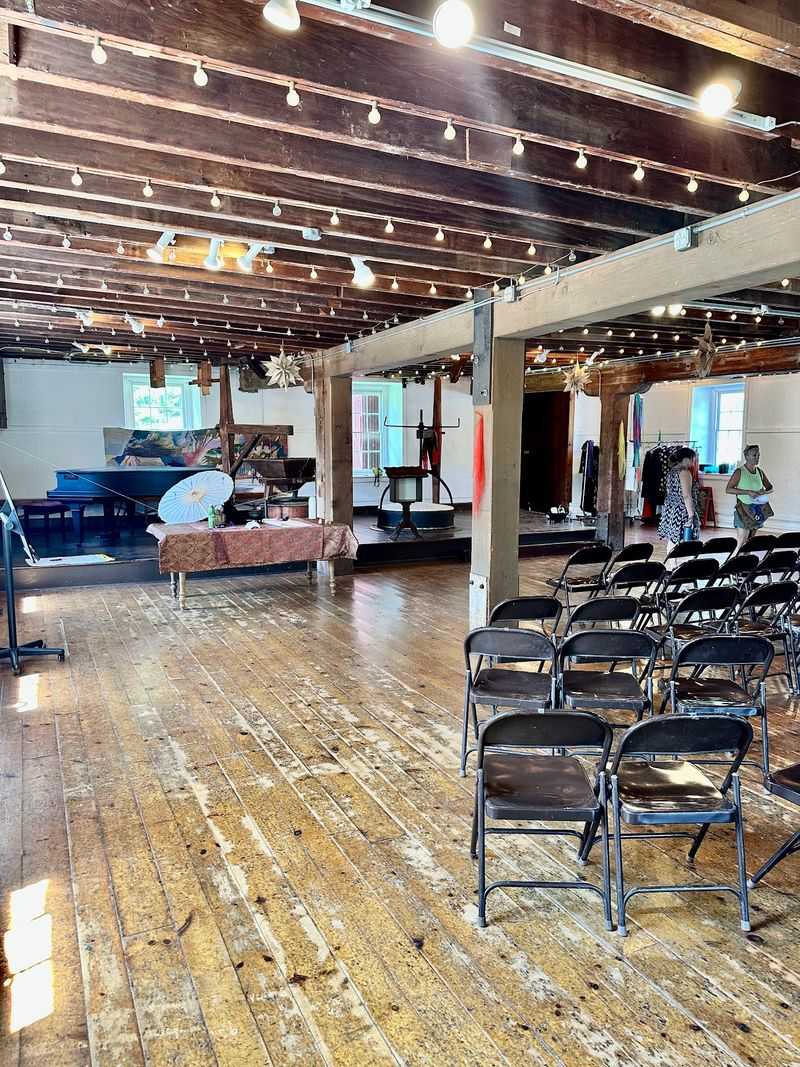
There is something deeply poetic about standing inside a building that once roared with machinery and now hums with the quiet appreciation of art.
The transition at Prallsville Mills from industrial powerhouse to cultural gallery space did not happen overnight, but the result is breathtaking in the most understated way.
The stone walls that once absorbed the vibrations of millstones now frame oil paintings and pastels with equal grace.
The Art Colony Gallery, housed within the complex, is home to The Painters’ Collective, a group of dedicated artists who use this historic setting to display their work.
Landscape paintings, still-life compositions, and abstract pieces share space with the raw architectural beauty of the original mill structures.
The contrast is striking and completely intentional.
Visiting the gallery feels like a layered experience, where the art and the architecture engage in a quiet conversation across centuries. You find yourself looking at a painting of rolling hills and then glancing up at a hand-hewn beam overhead, and somehow both feel equally expressive.
Art and history make surprisingly good roommates here.
A Gristmill, a Sawmill, and a Linseed Oil Mill
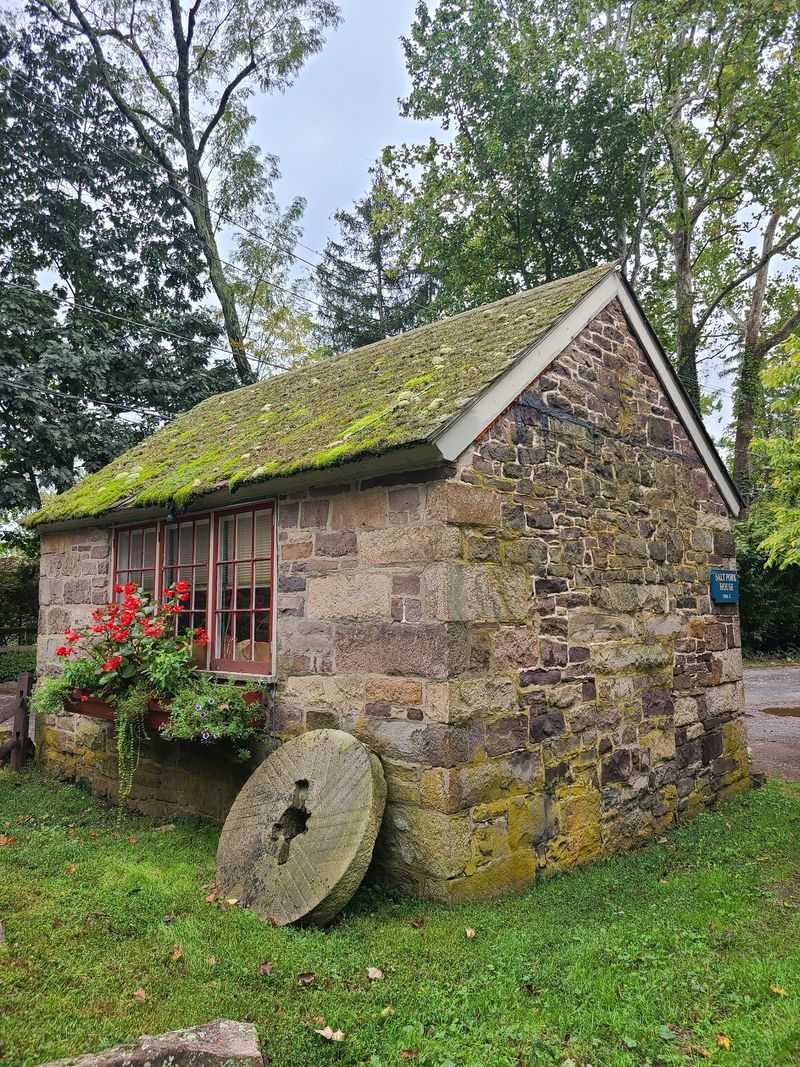
Not every historic site can claim three distinct types of working mills within a single complex, but Prallsville Mills delivers exactly that with remarkable architectural integrity. The 1877 gristmill, rebuilt after a fire in 1874, stands as one of the most visually striking structures on the property.
Its stone construction and generous proportions speak to the ambition of the era and the importance of grain processing to the local economy.
The 1850 sawmill adds a different chapter to the story, its weathered timbers hinting at the lumber operations that once kept the complex buzzing with activity.
Then there is the 1790 linseed oil mill, one of the oldest surviving structures on site, which processed flaxseed oil used in paints and preservatives.
A 1900 grain silo rounds out the industrial quartet, completing a picture of a genuinely self-sufficient village.
Each building tells its own story through its construction materials and layout. Wandering between them feels like flipping through a well-illustrated history book, except the pages are made of stone, timber, and decades of skilled craftsmanship.
The variety here is genuinely impressive.
Listed on the National Register Since 1979
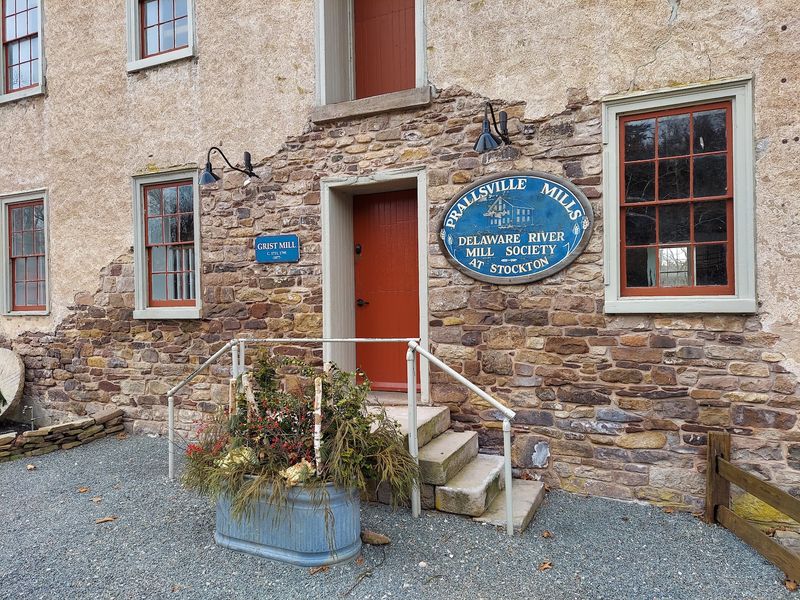
Being listed on the National Register of Historic Places is not something that happens by accident, and Prallsville Mills earned that distinction in 1979 through decades of determined preservation effort.
The designation officially recognizes the complex’s outstanding cultural, architectural, and historical significance to the United States.
It is a formal acknowledgment that what exists here is irreplaceable and worth protecting for future generations.
The path to that recognition began in 1969 when Donald and Beverley Jones purchased the site specifically to restore it after industrial operations ceased. Their commitment sparked a broader preservation movement that led to the state acquiring the property in 1973.
Three years later, the Delaware River Mill Society formed to take on the ongoing mission of managing and interpreting the site.
That sequence of events, from private rescue to state protection to community stewardship, is a model for how historic preservation can actually work when people care enough to act. The 1979 listing cemented the site’s legacy and helped direct resources toward its continued upkeep.
Prallsville Mills stands today as proof that persistence pays off beautifully.
Where History Meets Art, Events, and Community
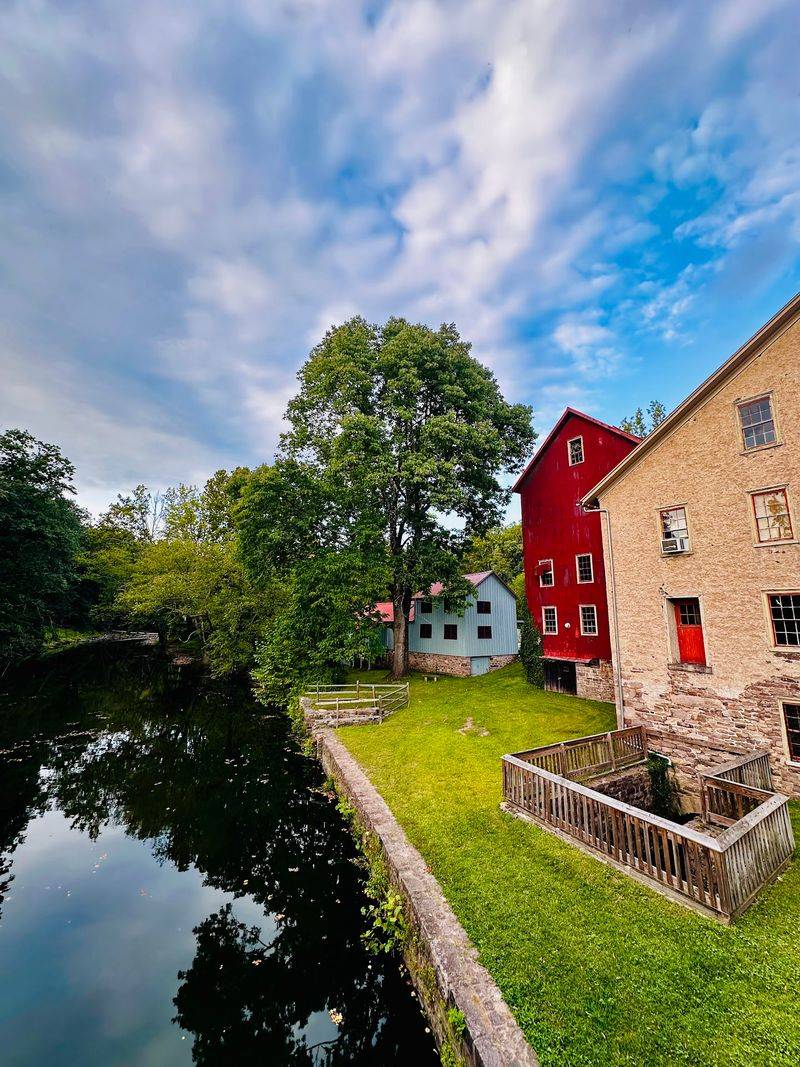
Prallsville Mills has found a way to be many things at once without feeling scattered or unfocused, which is a genuinely rare achievement for any historic site.
Concerts, antique shows, fitness classes, and fine arts exhibitions rotate through the calendar with the kind of variety that keeps the community coming back throughout the year.
The historic buildings serve as natural backdrops for all of it, lending every event an atmosphere that a modern venue simply cannot manufacture.
The site also functions as a premier wedding venue, and it is easy to understand why couples choose it. The Grist Mill alone can accommodate seated dinners for around 120 to 130 guests, while outdoor spaces and the Saw Mill provide beautiful settings for cocktail receptions.
Events held here often feature gourmet catering, with carefully prepared food and desserts that complement the historic surroundings beautifully.
Community fundraisers have spotlighted the culinary side of the mills as well, with progressive dinner events showcasing appetizers and exquisite cuisine served within the historic spaces.
The blend of food, art, history, and celebration gives Prallsville Mills a warmth that lingers long after any visit ends.
Canal-Side Scenery and Cultural Energy
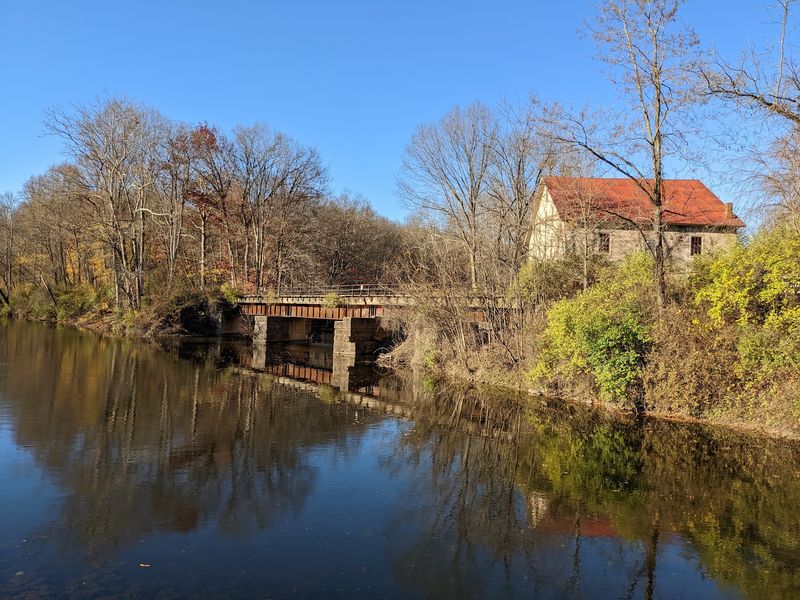
There are places where the setting does half the work for you, and Prallsville Mills is absolutely one of them.
Positioned directly along the Delaware and Raritan Canal, the complex benefits from a natural backdrop that shifts beautifully with the seasons, from the lush greens of summer to the warm amber tones of autumn foliage.
The canal itself, once a vital transportation and power source for the mills, now adds a serene, reflective quality to the entire site.
Visitors frequently walk the historic towpath that runs alongside the property, taking in views of the canal and the Delaware River with the mill buildings framing the scene perfectly.
The gentle sound of moving water provides a natural soundtrack that makes the experience feel grounded and unhurried.
It is the kind of scenery that encourages you to put your phone away and simply look.
During outdoor events, food trucks occasionally set up along the grounds, adding a casual, festive layer to the canal-side atmosphere. The combination of historic architecture, flowing water, and the buzz of a community gathering creates an energy that feels completely unique to this specific place.
A National Scenic Byway and State Park Feature
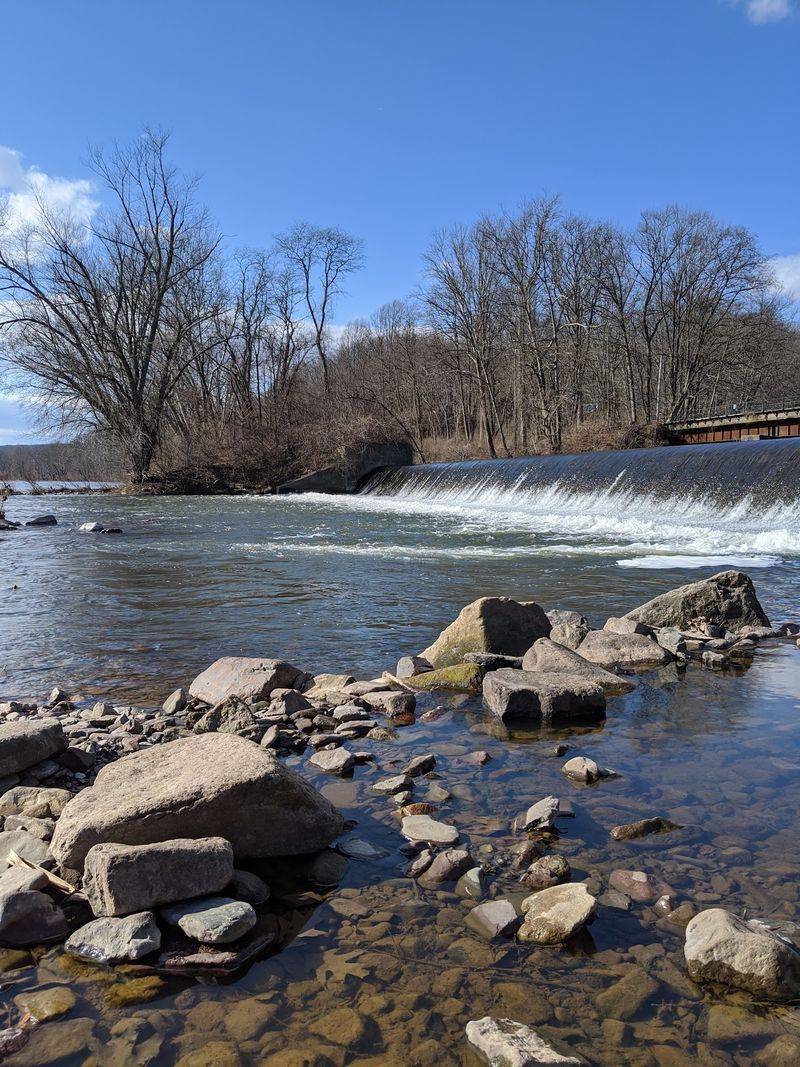
Being part of a National Scenic Byway and a state park simultaneously is the kind of double distinction that most historic sites can only dream about.
Prallsville Mills sits within the Delaware and Raritan Canal State Park, a sprawling recreational corridor that draws hikers, cyclists, and nature lovers from across the region.
The park designation ensures that the natural landscape surrounding the mills remains protected and accessible to the public.
The former railroad line that once served the industrial complex has been thoughtfully converted into a recreational trail, giving visitors a new way to experience the site’s history while enjoying the outdoors.
Walking or cycling along this trail offers changing perspectives on the mill buildings and the river, making the journey as rewarding as the destination.
The National Recreation Trail designation further underscores the route’s significance and quality.
For visitors who want to combine cultural exploration with physical activity, Prallsville Mills delivers both in a single location. The towpath invites leisurely strolls with views that open up unexpectedly around every bend.
Nature and history share the stage here with admirable ease.
More Than Just Mills – Art, Festivals, and Weddings
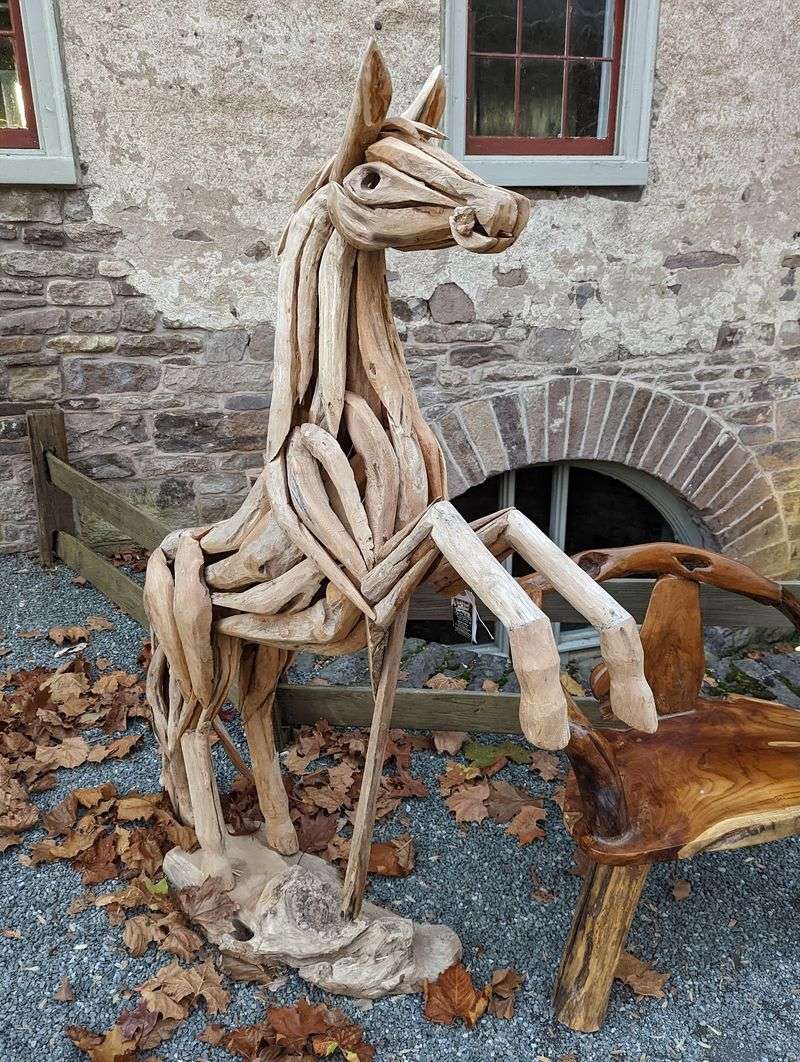
Calling Prallsville Mills simply a collection of old buildings would be like calling a symphony just a bunch of notes. The site operates on multiple levels simultaneously, functioning as a gallery, a festival ground, a wedding venue, and a community anchor all at once.
That range of purpose is what keeps it feeling vital rather than merely preserved.
Weddings held in the Grist Mill are particularly memorable, with sunlight streaming through historic windows during ceremonies and candlelight taking over for evening dinners. The space accommodates seated receptions with a warmth that modern event halls rarely achieve.
Catered meals served within those stone walls carry an ambiance that elevates even the simplest menu.
The Fine Arts and Crafts Shows held seasonally bring a festive marketplace atmosphere to the grounds, with artisans displaying handmade goods alongside paintings and sculptures.
Food options during these events add to the celebratory feel, making a day at the mills a genuinely full sensory experience.
From intimate art viewings to large-scale celebrations, Prallsville Mills consistently delivers something memorable for everyone who walks through its historic gates.
Address: 33 Risler St, Stockton, NJ 08559
