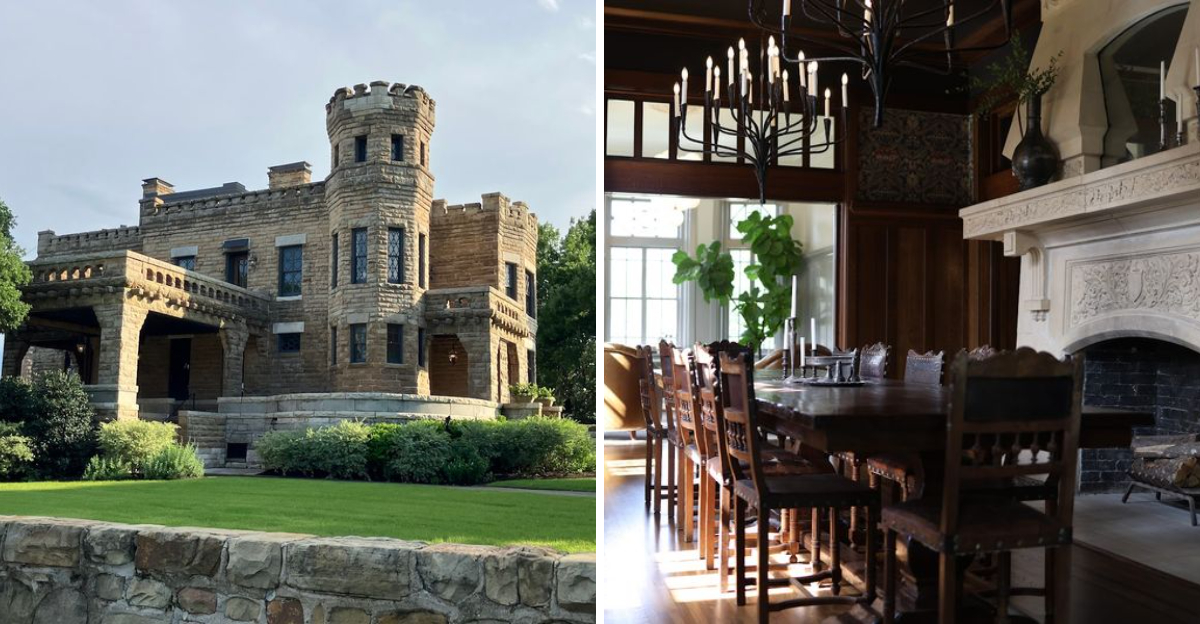
A real castle is not something you expect to come across in Texas, which is exactly why this one catches people off guard.
Stone walls, towers, and old-world details give it a presence that feels completely out of place in the best way. It looks like something pulled from another country and quietly set down here without much explanation.
It has stood for decades without becoming a major tourist stop, which only adds to the appeal. In Texas, hidden gems like this do not stay hidden forever, but for now, it still feels like a discovery.
The Surprising Origins of a Texas Castle
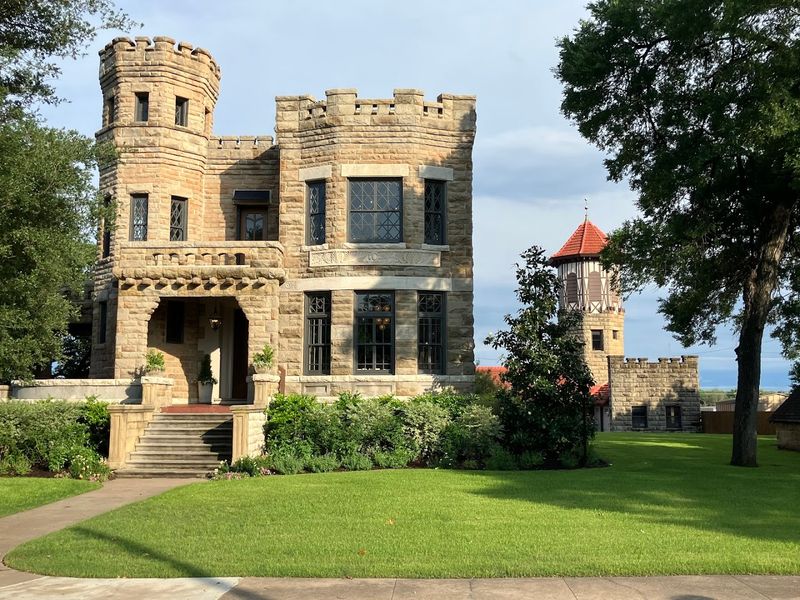
Not every castle starts with a plan. This one began with leftover stone and a stonemason named John Tennant, a British-born craftsman who started building the structure in 1890 using materials left over from another project.
That origin story alone makes it feel more like a folktale than a real estate listing.
Tennant ran into financial trouble before he could finish the job, so he sold the unfinished shell in 1906 to a cotton broker named Ripley Hanrick. The house sat incomplete for years, quietly waiting for someone with a bigger vision.
That someone turned out to be businessman Alfred Abeel, who purchased the property in 1913 and brought in architect Roy E. Lane to finish the transformation.
Lane drew inspiration from a small castle along the Rhine River in Germany, and the result was something Waco had never seen before. A three-story castle with a basement, a tower, and servants quarters rose up on Austin Avenue.
The whole story of how it came together through multiple owners and decades of patience makes the building feel genuinely earned, not just built.
The Architecture That Makes You Look Twice
There is something almost disorienting about seeing a castle on a regular American street. The Cottonland Castle does not ease you in gently.
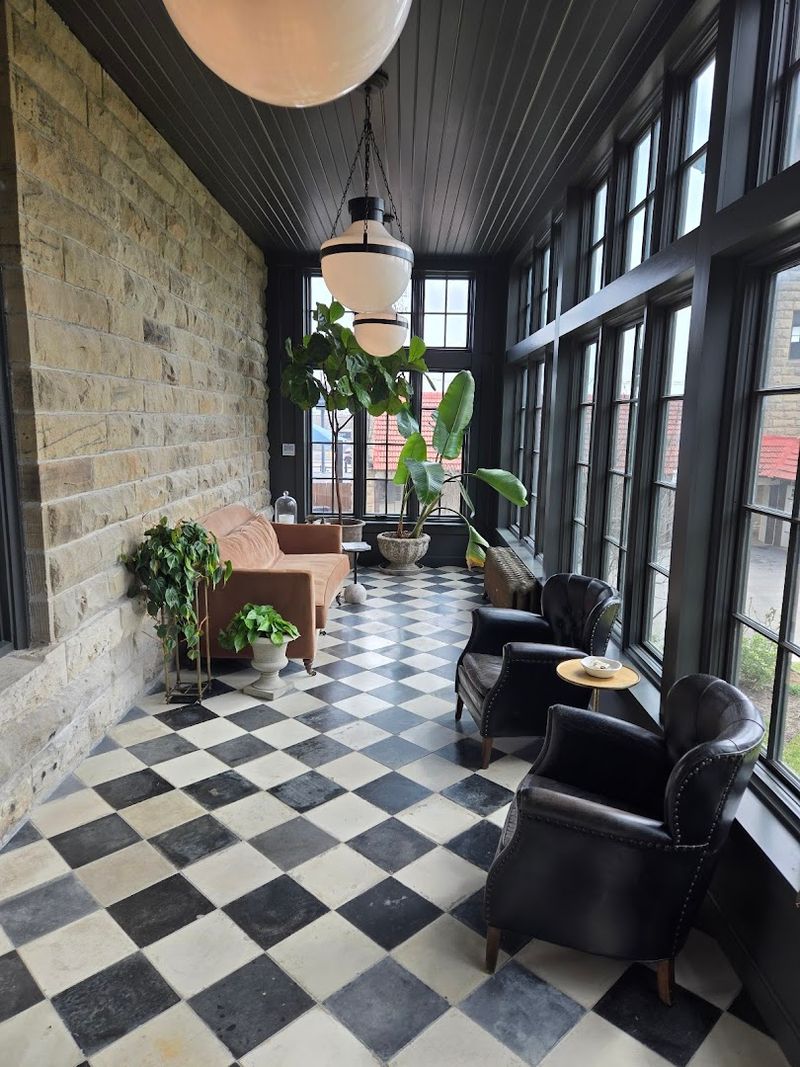
Its limestone exterior, tower, and layered stonework hit you all at once, and your brain takes a moment to catch up with what your eyes are seeing.
Roy E. Lane designed the finished structure to echo the aesthetic of German Rhine River castles, and the details are extraordinary up close.
The exterior features carefully cut limestone blocks, and the overall silhouette has that unmistakable castle profile, complete with a prominent tower that rises above the roofline. It is the kind of building that makes you pull out your phone before you even realize you are doing it.
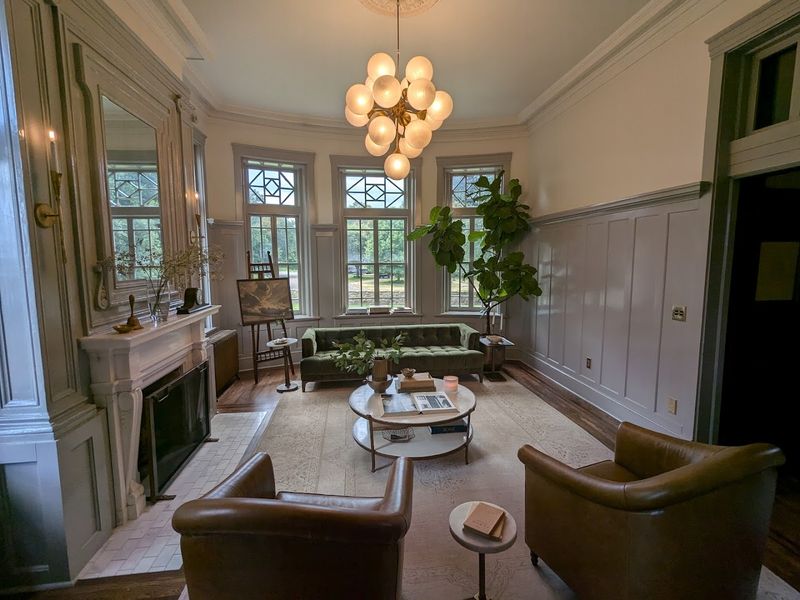
Inside, the craftsmanship gets even more impressive. The original design included Caen stone imported from France, Carrara marble from Italy, and Honduran mahogany paneling throughout the interior.
Eight fireplaces were built into the structure, each one a statement piece in its own right. The combination of imported materials and locally quarried limestone gives the castle a layered richness that feels genuinely luxurious without being overwhelming.
Why Waco Was the Perfect Home for a Castle
Waco has always had more personality than it gets credit for. Sitting right along the Brazos River in Central Texas, the city has a long history of bold architecture, entrepreneurial spirit, and a community that takes pride in its landmarks.
A castle fits here more naturally than you might expect.
During the late 1800s and early 1900s, Waco was a booming cotton trade hub. Wealth was flowing through the city, and ambitious building projects were common.
Alfred Abeel, the man who commissioned the castle’s completion, was part of that prosperous business community, and his decision to build something this grand reflected the optimism of the era.
Today, Waco is known internationally thanks to Magnolia Market and the Gaines family brand, but the Cottonland Castle predates all of that by more than a century. It is a reminder that Waco was already a place worth paying attention to long before television cameras arrived.
The castle sits on Austin Avenue with a quiet confidence, like it has always known the city would eventually catch up to its ambitions.
The Long Years of Neglect and What Was Almost Lost
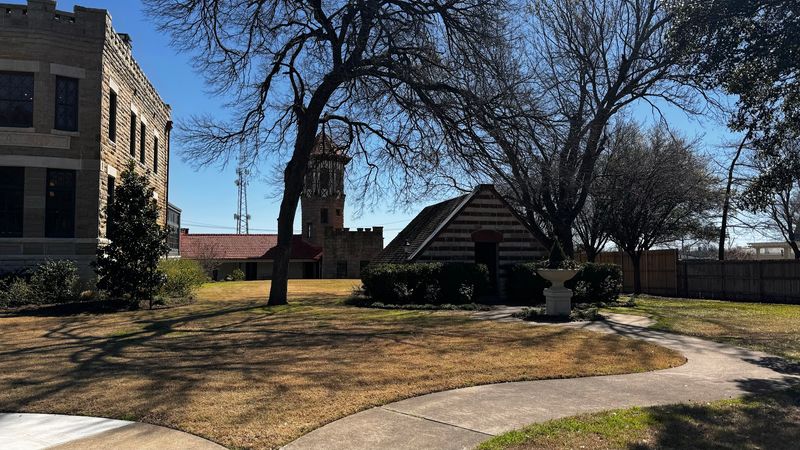
Not every story about a beautiful building has a smooth middle chapter. For decades, the Cottonland Castle passed through different hands and experienced long stretches of neglect that took a serious toll on its structure.
Roofs leaked, interiors deteriorated, and the once-grand spaces fell into disrepair.
It is honestly a little heartbreaking to think about what the castle looked like before restoration began. Historic buildings are fragile in ways that are not always obvious from the outside.
Years of deferred maintenance, exposure to the elements, and a lack of dedicated stewardship can quietly hollow out even the most solidly built structures.
The castle’s survival is not something that should be taken for granted. Many historic properties in similar condition have been demolished rather than saved, lost to the cost and complexity of restoration.
The fact that this one made it through those difficult decades and came out the other side intact is genuinely remarkable. Every guided tour visitor who walks through those restored rooms is experiencing something that very nearly ceased to exist, and that context adds a weight and meaning to the visit that no new construction could ever replicate.
What the Guided Tours Actually Feel Like
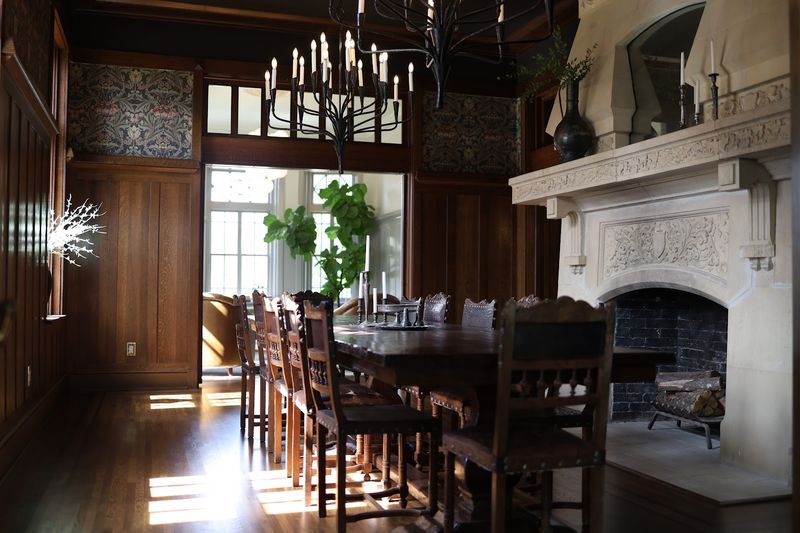
There is a real difference between reading about a historic building and actually standing inside one. The guided tours at the Cottonland Castle are available Monday through Saturday, and they are designed to give visitors a genuine sense of the castle’s layered history rather than just a surface-level walkthrough.
Guides take visitors through rooms that showcase the original imported materials, including the Caen stone walls, the Carrara marble details, and the Honduran mahogany paneling that has survived over a century of use.
Each room tells a slightly different part of the story, from the original construction through the decades of ownership changes and ultimately to the restoration.
The eight fireplaces are a recurring highlight, and each one feels distinct in character.
What makes the tour genuinely engaging is the human scale of it. This was always a home first and a showpiece second, and that comes through in the proportions of the rooms and the personal details that have been preserved.
You leave with a real sense of the people who lived and worked here, not just an appreciation for the architecture. That emotional connection is what separates a memorable visit from just another tourist stop.
The Imported Materials That Set It Apart
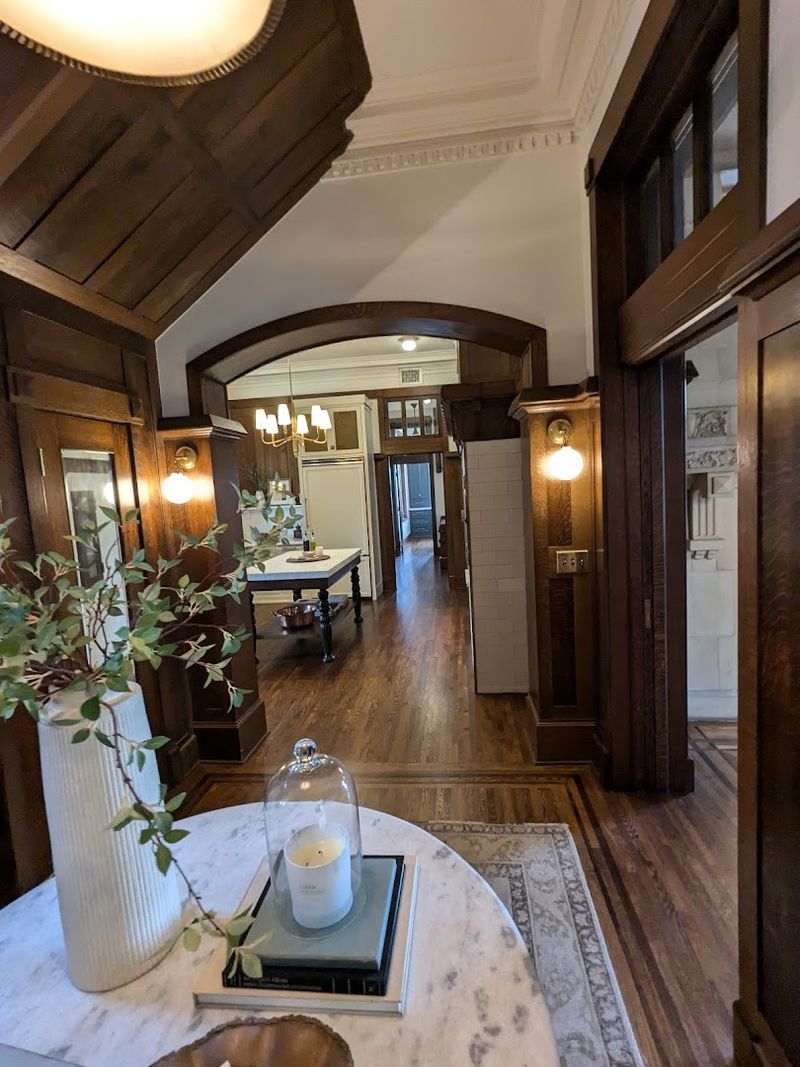
Most houses built in Texas in the early 1900s used local materials and straightforward construction. The Cottonland Castle went in a completely different direction.
Alfred Abeel and architect Roy E. Lane sourced materials from three different continents to create an interior that had no real equivalent in the region.
Caen stone from France lines certain interior walls, bringing a soft, creamy texture that feels almost European in character.
Carrara marble from Italy appears in fireplace surrounds and decorative details, adding a cool elegance that contrasts beautifully with the warmth of the Honduran mahogany paneling used throughout other sections of the castle.
The combination is layered and deliberate.
What is fascinating is how well these materials have aged. Over a century after they were installed, they still carry the quiet authority of genuinely fine craftsmanship.
The restoration team worked carefully to preserve as much of the original material as possible, and in many areas, the original surfaces are still intact.
Running your hand along a wall of Caen stone or pausing in front of a Carrara marble fireplace, you feel connected to a moment in history when someone decided this particular building deserved the very best.
That decision still echoes through every room.
The Tower and Its Commanding Views
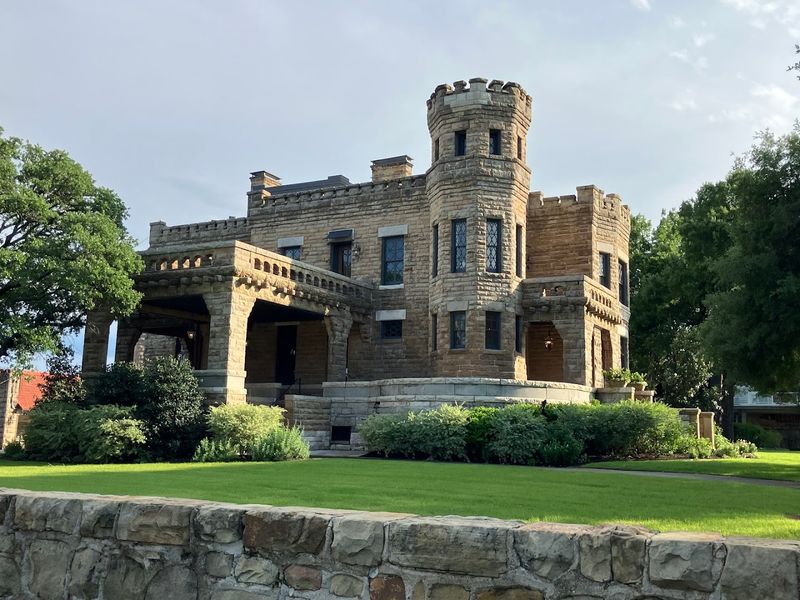
Every proper castle needs a tower, and the Cottonland Castle delivers on that front without any hesitation. The tower rises above the rest of the structure, giving the building its most recognizable silhouette and the kind of visual drama that makes passersby stop and stare from Austin Avenue.
From a practical standpoint, towers in historic castle design served multiple purposes, from lookout points to symbolic demonstrations of status and permanence. In this case, the tower reinforces the Rhine River castle aesthetic that architect Roy E.
Lane was working toward. It grounds the entire design and gives the building a vertical presence that you do not typically associate with Central Texas architecture.
Visitors on the guided tour get to experience the tower up close, and the views from the upper levels offer a perspective on the surrounding neighborhood that feels genuinely removed from the everyday. There is something about gaining even a modest amount of height that changes how a place feels.
The tower at Cottonland Castle earns its keep not just as a decorative feature but as a real, experiential part of visiting the property. It is the kind of detail that stays with you long after the tour ends.
Supporting Local Charities Through Every Visit
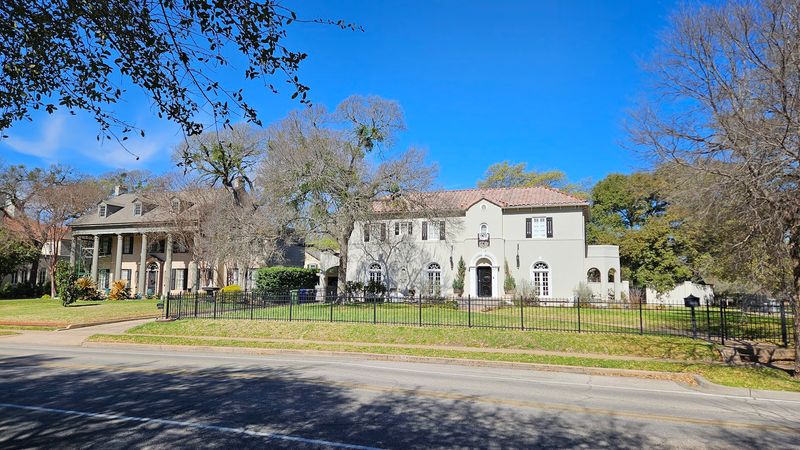
One of the details about the Cottonland Castle experience that genuinely surprised me is what happens with a portion of the tour proceeds. Rather than all revenue flowing back into operations alone, a share of ticket sales goes directly to local charitable organizations, including a nonprofit called The Cove.
The Cove is dedicated to providing a safe and supportive space for homeless youth in the Waco area. It is a meaningful cause, and the connection between a historic landmark and a community-focused nonprofit gives the visit an extra layer of purpose.
You are not just spending an afternoon exploring a beautiful building. You are contributing to something that matters to real people in the city.
That kind of intentional giving is part of what makes the Cottonland Castle feel different from a typical tourist attraction. The Gaines family has always been publicly committed to their community, and this charitable partnership reflects that commitment in a concrete way.
Knowing that your visit supports vulnerable young people nearby adds a warmth to the experience that is hard to manufacture. It turns a sightseeing trip into something that feels genuinely worthwhile, both for the visitor and for Waco itself.
Planning Your Visit to the Cottonland Castle
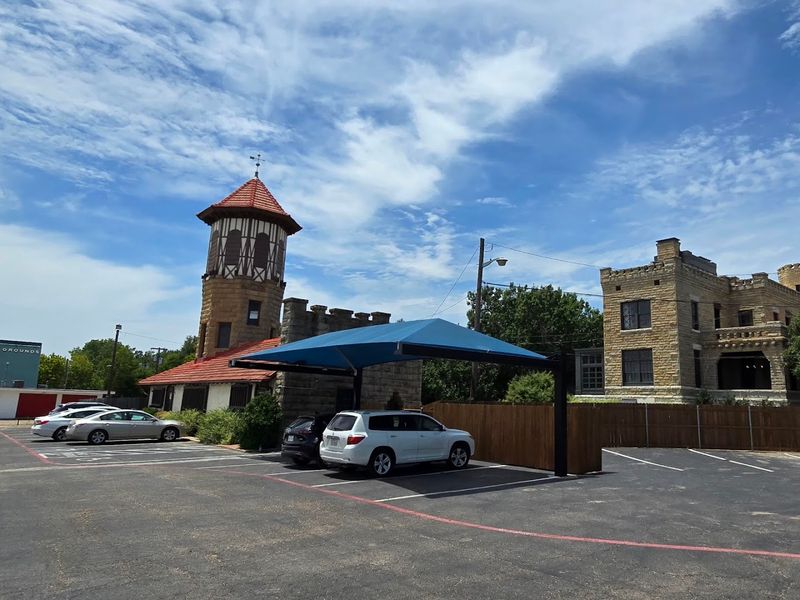
Getting to the Cottonland Castle is straightforward. It sits at 3300 Austin Avenue in Waco, right in a residential neighborhood that makes the castle’s presence feel even more dramatic by contrast.
The surrounding streets are quiet and easy to navigate, and parking in the area is generally manageable.
Tours run Monday through Saturday, so it is worth checking current scheduling before you make the trip. The experience works well as part of a broader Waco visit, since the city has a solid lineup of other attractions within a short drive.
Magnolia Market at the Silos, the Waco Mammoth National Monument, and the Brazos Riverfront are all worth building into your itinerary if you have the time.
The castle is genuinely one of those places that rewards a little advance planning. Booking your tour spot ahead of time is a smart move, especially on weekends when interest tends to be higher.
Bring comfortable shoes since the tour covers multiple floors and the tower. A camera is basically mandatory.
The Cottonland Castle is the kind of place that looks incredible in photos, but the real payoff is standing inside it and feeling the weight of everything it has survived.
Address: 3300 Austin Ave, Waco, Texas
Dear Reader: This page may contain affiliate links which may earn a commission if you click through and make a purchase. Our independent journalism is not influenced by any advertiser or commercial initiative unless it is clearly marked as sponsored content. As travel products change, please be sure to reconfirm all details and stay up to date with current events to ensure a safe and successful trip.
