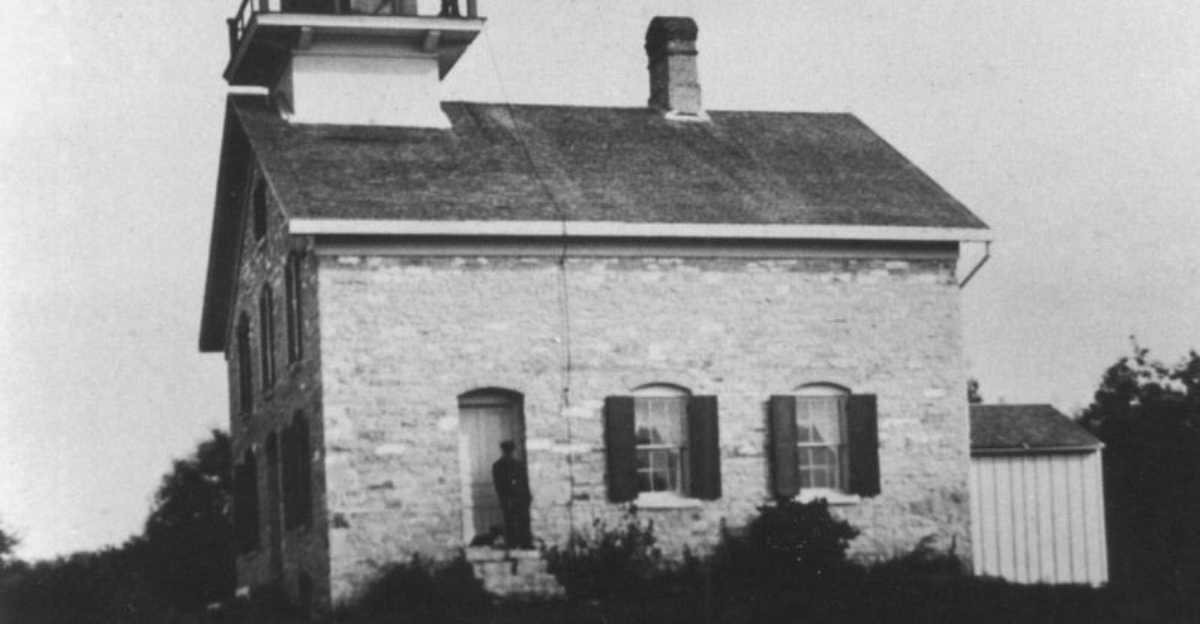
On Rock Island in Door County, Wisconsin, an old beacon still watches the channel and, some say, watches back.
At Pottawatomie Lighthouse, guides whisper about interior doors that swing open on calm days, and visitors swear a cold draft follows after.
While the lighthouse itself is no longer in its original active beacon function, and the ghost stories are unverified, the isolated setting and historic fabric contribute to the atmosphere.
Getting here requires commitment, which only sharpens the mystery the moment your boots hit the island trail.
If you are drawn to history, shoreline light, and a few unsettled questions, this list will lead you through the most curious corners of Wisconsin’s oldest lighthouse.
A Door That Knows the Wind
The interior doors at Pottawatomie Lighthouse are solid, old timber, fitted to thick plaster walls that hold the island’s chill. On quiet afternoons, a latch may lift and the panel eases inward, as though answering a question no one asked. Guides note the wind, yet the motion does not always match the breeze.
Step into the narrow hall and study the seams. You will hear the lake at a distance, but inside it is clock ticks and the faint creak of settled wood. When the door moves, it feels deliberate, chosen by the house itself.
Staff who live on site for short stints keep notes about drafts and temperature. Some find patterns, others find none. Wisconsin visitors leave with their own theories, which they tuck between photographs and ferry schedules.
The strangeness lives in the ordinary. Nothing glows, nothing shouts, only a simple door that acts like it remembers you. That is the mood that follows you outside.
Keeper’s Steps in the North Hall
At the base of the interior stairs, the air changes. The boards carry a faint memory of boots and oil cans, the quiet gravity of work. Visitors pause, because the house seems to listen when your foot hits the first tread.
Docents talk about footsteps that start overhead when the building sits empty. They count paces that stop just as a door clicks open. In this corner, the history feels less like a story and more like a habit that never ended.
Read the wall labels and you learn about the routine that shaped the rooms. Lamps needed tending, windows needed clearing, and the keeper knew each hinge by touch. That rhythm rings through Wisconsin maritime history and lingers here in the wood grain.
If you wait quietly, the house answers with a subtle pop, then a hush. The stairway settles again, and nothing moves. You leave with the sense that something just passed by, intent on its rounds.
The Lantern Room’s Whispering Glass
Climb to the lantern room and the lake spreads out like hammered metal. The glass carries reflections that rearrange as clouds travel, flickering across bolts and railings. Up here, small sounds stretch, so a hinge might sound like a call.
Some visitors claim the door to the service landing shifts without a hand, just a fraction. Others say it taps as if greeting the wind. Each report adds another bead to the chain of stories that encircle this room.
The lens is no longer lit for navigation, but the space keeps its purpose. It is a room built for vigilance and exactness, and that attention seeps into the experience. You become careful too, watching the door, reading the glass.
Wisconsin skies change quickly, and with each change the lantern room speaks a different language. If the door stirs, it is barely a breath. The lake answers with a small pulse against the island rock.
Smokehouse Echo and the Yard Gate
Walk the path to the old smokehouse and the yard opens to lake sky. A modest gate frames the wind, and the hinges lift a metallic note that hangs and fades. Sometimes the latch lifts with no hand on it, and the gate nudges as though invited.
The buildings here show how self-sufficient life once was. A smokehouse, an oil house, a dwelling, each set to a purpose. Practical places gather strong habits, and those habits can feel like residents.
Stand where the wall meets the grass and the quiet adds weight. You can hear waves in the pauses between gull calls. It is a classic Wisconsin shoreline soundscape, strong and spare.
If you see the gate move when the air seems still, note the angle of the light and the posture of the grass. You may decide the island did the talking. You may decide something else leaned in to help.
Docent Diaries and Night Watch
During summer, volunteer docents stay in the lighthouse and keep logs. They record weather, visitors, and the curious moments that do not fit a checklist. The entries often return to doors that do their own thinking after dark.
Night on Rock Island feels lifted away from the mainland. The water walls the place in, and the house sharpens your senses. A soft click from a latch sounds like a message tapped against a glass.
Reading excerpts, you see careful voices, never dramatic. The writers track draft patterns and temperature drops, then conclude with a question mark. Such restraint gives the tales their grip.
Wisconsin travelers who spend a night in the park describe the same stillness. When the lighthouse settles, everyone listens. Then, without ceremony, a door opens and the hallway breathes out.
Shoreline Approach and First Glimpse
The approach begins under cedar and maple, your steps cushioned by needles. The path finally lifts, then the lighthouse appears with tidy walls and a calm roofline. That first sight feels like a reveal staged by trees.
Travelers arrive by ferry and foot, so the pace is slow. Your pulse matches the island’s small clock, and expectations settle into observation. In that quiet, the house’s personality walks out to meet you.
Stand at the edge of the lawn and measure the proportions, door to window to tower. Everything reads practical and direct, which makes the odd stories more striking. A place so orderly should not misplace a latch.
Then the wind turns and the front door mutters against its frame. You notice a faint scuff on the threshold and wonder about the last time it moved alone. Wisconsin welcomes you with a puzzle wrapped in clean light.
Graves on the Island Ridge
A short walk from the lighthouse, simple stones mark the resting places of early keepers and island residents. The ground rises gently, and the lake holds its place on the horizon. It is a small plot with a long view.
People speak softly here, even when alone. The wind pauses behind the tree line, then moves again, a polite visitor leaving. In that shift, you might think of duties that do not end when a post is retired.
Stories connect the ridge to the house below. If a door opens on its own, some say a keeper still makes rounds. Others point to hillside gusts finding seams.
Whichever explanation you favor, the ridge reminds you that this island carries its past in plain sight. Wisconsin history sits in these blades of grass, brushed by lake weather. The lighthouse, just down the slope, still listens.
Oil House Breath and Iron Smell
The oil house stands low and sturdy, built to protect what once fed the light. Its door is heavy, underscored by ironwork that holds the memory of fuel and flame. Step close and the air seems cooler, the stone keeping its own weather.
Visitors sometimes find the door open a sliver, even after a careful close. The hinge talks in a short syllable, then falls silent, like a worker choosing not to explain. These small moments feel like leftover momentum from years of habit.
Read the interpretive notes and you see the practical mind behind each choice. Distance from the dwelling, tight masonry, simple hardware. Nothing here is fanciful.
Yet the experience turns inward. You imagine someone stepping out into the light, closing the door out of reflex, then being called back by a forgotten task. Wisconsin places have a way of blending function and feeling, and this little room holds both.
Windows that Frame the Channel
Inside the keeper’s quarters, windows cut precise scenes from the channel. The light arrives angled and clean, painting stripes on the floorboards. Sit for a minute and the house resolves into its parts, each piece ready for duty.
The door to this room has a habit of easing back from the jamb. Visitors often notice it after a long pause, when the air seems fully still. A brief release, then a small hush.
Framed by glass, the lake becomes a metronome for attention. You notice the slow choreography of clouds and the lean of the cedar outside. Detail by detail, the house earns your trust, then asks a question with a single movement of wood.
Wisconsin light is clear in this corner, and time feels stretched. If the door answers that light, it does so quietly. The room keeps its secrets and lets you keep yours.
Leaving After Last Light
When evening settles, the island’s sounds thin to a thread. Footsteps on the path drift behind you, and the building steps into silhouette. It looks complete, finished, certain of its place.
Then a faint click travels across the lawn. A door has made a choice again, audible but not urgent. You stand still and measure the distance between you and an answer.
On the ferry, the shoreline folds into dark and the lighthouse disappears. The stories ride with you back to the dock and the mainland lights. Wisconsin recedes, but the house does not let go.
Later, you look at photos of hallways and windows. The images hold steady, yet your memory includes movement. That is how this place works, by adding a small shift to whatever you thought was closed.
Dear Reader: This page may contain affiliate links which may earn a commission if you click through and make a purchase. Our independent journalism is not influenced by any advertiser or commercial initiative unless it is clearly marked as sponsored content. As travel products change, please be sure to reconfirm all details and stay up to date with current events to ensure a safe and successful trip.
