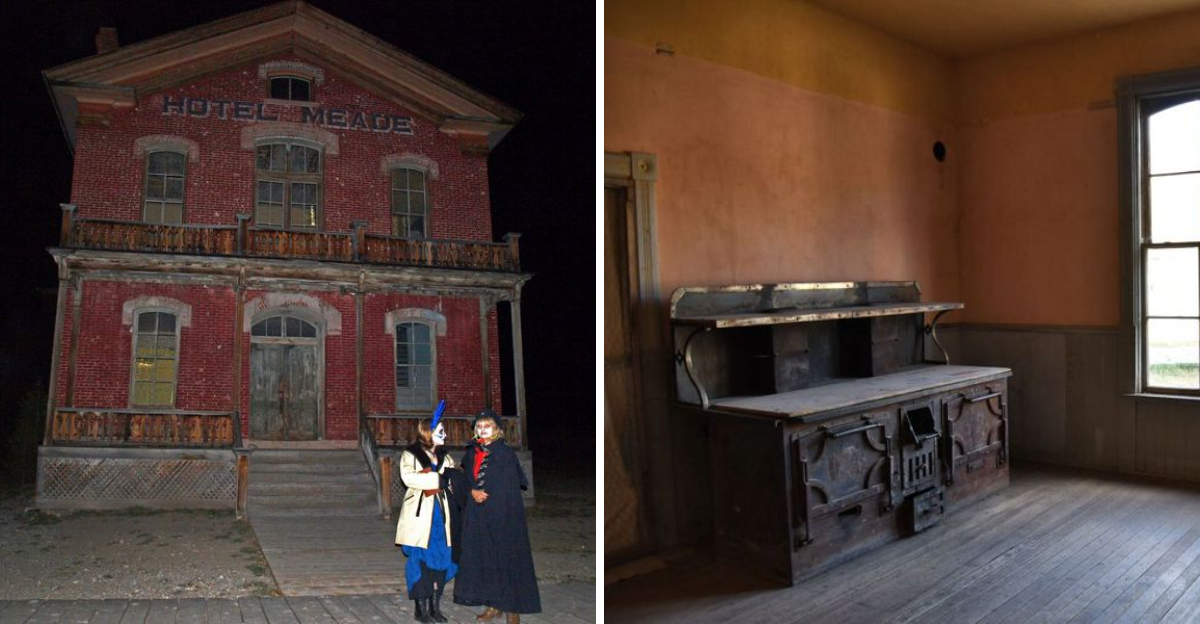
High in the remote mountains of southwestern Montana sits a ghost town frozen in time. Bannack State Park preserves the remnants of what was once a bustling gold rush settlement, and among its weathered buildings stands Hotel Meade, a structure that whispers stories from the 1800s.
This two-story boarding house once welcomed weary miners, hopeful prospectors, and travelers seeking rest after long journeys through rugged terrain. Today, visitors walk its creaky floors and peer into empty rooms where laughter and conversation once filled the air.
The hotel has earned a reputation as one of Montana’s most intriguing historical sites, drawing curious explorers from across the country. Whether you believe in ghostly presences or simply appreciate preserved history, Hotel Meade offers a unique window into frontier life and the colorful characters who shaped the American West.
A Gold Rush Beginning That Changed Everything
Gold fever swept through Montana Territory in 1862 when prospectors discovered precious metal along Grasshopper Creek. Bannack sprang up almost overnight as thousands of fortune seekers flooded the area, transforming wilderness into a thriving community.
The settlement grew so rapidly that it became Montana’s first territorial capital in 1864, complete with businesses, homes, and places for travelers to rest.
Hotel Meade emerged during this exciting period to serve the constant stream of visitors. The building provided much-needed accommodations in a place where shelter meant survival during harsh mountain winters. Guests ranged from wealthy mine owners to humble workers, all seeking a warm bed and hot meal.
The hotel witnessed Bannack’s peak years when the town boasted over 3,000 residents. Stagecoaches rumbled down the main street, and the sounds of hammers and saws filled the air as construction continued.
Hotel Meade stood at the heart of this bustling activity, offering respite to those chasing the American dream through Montana’s rugged landscape.
The Woman Behind the Name
Mrs. Meade ran this establishment with determination and skill during an era when women business owners faced significant challenges. She managed the daily operations, oversaw staff, and ensured guests received proper care regardless of their social standing.
Her reputation for fairness and hospitality made Hotel Meade a preferred stopping point for travelers crossing Montana Territory.
Running a frontier hotel required incredible strength and resourcefulness. Mrs. Meade dealt with supply shortages, difficult weather conditions, and the unpredictable nature of a mining town’s economy.
She kept meticulous records, maintained standards of cleanliness, and created a welcoming atmosphere that stood out in the rough-and-tumble environment.
Her legacy lives on through the building that still bears her name. The hotel represents not just a place to sleep but the entrepreneurial spirit of women who helped build the American West.
Visitors today can appreciate the courage it took to operate such an establishment in a remote location where comfort was scarce and challenges were abundant.
Architecture That Tells a Story
Walking up to Hotel Meade reveals construction methods typical of 1860s frontier buildings. The structure features hand-hewn logs and locally milled lumber, showcasing the craftsmanship of early Montana builders.
Two stories rise from the dusty ground, with simple rectangular windows that once glowed with lamplight on cold evenings.
The exterior displays weathered wood siding that has survived more than 150 Montana winters. Original nails and hardware remain visible, offering clues about construction techniques used when resources were limited and every board counted.
The roof pitch was designed to shed heavy snow, a practical necessity in this mountain climate.
Inside, narrow hallways connect small guest rooms where travelers once unpacked their belongings after long journeys. Low ceilings and modest dimensions reflect the practical approach to building in a place where heated space was precious.
The floorboards still creak underfoot, and doorframes show settling and age, creating an authentic connection to the past that modern reconstructions cannot replicate.
Rooms Where Miners Rested Their Dreams
Each small guest room at Hotel Meade once held a simple bed, washstand, and perhaps a chair or small table. Miners would collapse onto straw mattresses after exhausting days working claims along Grasshopper Creek.
The walls absorbed countless conversations about strikes, losses, and hopes for tomorrow’s fortune.
Imagine the mix of people who passed through these spaces. Successful prospectors might have celebrated their finds here, while others nursed disappointment and planned their next moves.
Traveling merchants displayed samples, families paused during westward journeys, and occasional lawmen tracked criminals through the territory.
Today, these empty rooms invite visitors to imagine frontier life without modern conveniences. No electricity lit the spaces, no running water flowed from taps, and heating came from wood stoves that required constant attention.
The simplicity reminds us how different daily existence was for those who built their lives in remote mining camps, where basic comfort represented luxury and Hotel Meade offered a welcome refuge from the wilderness beyond.
Unexplained Sounds and Mysterious Footsteps
According to local stories and visitor accounts, Hotel Meade experiences unusual activity that defies easy explanation. People report hearing footsteps in empty hallways when no one else is present. Creaking floorboards sound as though someone is walking from room to room, yet investigations reveal no physical cause.
Some visitors claim to hear voices in conversation, as if guests from another era are still discussing their daily concerns. These sounds reportedly fade when approached, leaving only silence and the wind whistling through gaps in the old structure.
Park rangers and tour guides have shared their own experiences of unexplained noises during quiet moments.
Whether these phenomena result from the building settling, wind patterns, or something more mysterious remains open to interpretation. The hotel’s age and construction certainly create natural sounds as temperature changes affect the wood.
Regardless of the cause, these acoustic experiences add to Hotel Meade’s atmosphere and keep visitors listening carefully as they explore the shadowy interior spaces where Montana’s frontier past feels remarkably present.
Bannack’s Decline and the Hotel’s Quiet Years
As gold deposits dwindled in the late 1860s and early 1870s, Bannack’s population began shrinking. Prospectors moved to richer strikes elsewhere, businesses closed their doors, and the territorial capital relocated to Virginia City. Hotel Meade saw fewer guests as the stagecoach traffic slowed and the town’s vibrant energy faded.
By the 1930s, Bannack had become nearly deserted, with only a handful of residents remaining among the empty buildings. Hotel Meade stood silent, its rooms no longer filled with travelers’ voices and footsteps. Weather and time began their slow work on the structure, though the solid construction helped it survive decades of neglect.
The hotel entered a period of suspended animation, neither fully abandoned nor actively used. Occasional visitors might have sought shelter within its walls, but the building primarily stood as a monument to busier times.
This quiet era actually helped preserve Hotel Meade, as minimal human activity meant less alteration or damage to the original structure and features that now provide valuable historical insights.
Preservation Efforts Bring New Life
Montana recognized Bannack’s historical significance in 1954 when the site became a state park. This designation ensured that Hotel Meade and surrounding structures would receive protection and maintenance.
Preservation specialists carefully assessed the buildings, stabilizing foundations and protecting them from further deterioration while maintaining their authentic appearance.
The approach focuses on preservation rather than restoration, meaning the hotel retains its aged, weathered character. Workers repair structural damage without erasing the marks of time that make the building so compelling.
Original materials are conserved whenever possible, and any necessary replacements match historical construction methods.
Thanks to these ongoing efforts, visitors can safely explore Hotel Meade and experience frontier architecture firsthand. The building serves as an educational resource, helping people understand how Montana’s early settlers lived and worked.
Park staff conduct regular inspections and perform maintenance to ensure this irreplaceable piece of history survives for future generations while remaining true to its 1860s origins and the stories it continues to share.
Guided Tours That Bring History Forward
Bannack State Park offers guided tours that include Hotel Meade as a highlight of the visitor experience. Knowledgeable guides share stories about the building’s history, the people who stayed there, and daily life during Montana’s territorial period.
These tours help visitors understand context that might be missed when viewing empty rooms alone.
During summer months, the park sometimes hosts special events where interpreters dress in period clothing and demonstrate frontier skills. These living history presentations make the past feel immediate and accessible, especially for younger visitors learning about Western expansion.
Hotel Meade serves as an atmospheric backdrop for these educational programs.
Self-guided exploration is also possible, allowing visitors to wander through the building at their own pace. Informational signs provide historical details and architectural information.
Photography is encouraged, and many people find Hotel Meade particularly photogenic during golden hour when slanting sunlight illuminates the weathered wood and casts long shadows that enhance the building’s mysterious character and timeless appeal.
A Photographer’s Dream Location
Hotel Meade attracts photographers seeking authentic Western imagery and atmospheric shots of frontier architecture. The building’s weathered textures, aged wood grain, and authentic details provide endless compositional possibilities.
Early morning and late afternoon light creates dramatic effects on the wooden surfaces, highlighting every crack and shadow.
The surrounding landscape adds to the visual appeal, with Montana’s mountains providing a stunning backdrop. Photographers capture the hotel against changing skies, from brilliant blue summer days to dramatic storm clouds rolling over the peaks.
Winter visits offer opportunities to photograph the building dusted with snow, emphasizing its isolation and endurance.
Interior shots present their own challenges and rewards, with dim light filtering through old windows creating moody atmospheres. The empty rooms and hallways allow creative interpretation, and many photographers work to capture the sense of history and presence that permeates the space.
Whether shooting for artistic projects, historical documentation, or travel portfolios, Hotel Meade provides subject matter that resonates with viewers and tells Montana’s frontier story through powerful visual imagery.
Planning Your Visit to Hotel Meade
Bannack State Park is located about 25 miles southwest of Dillon, Montana, accessible via a combination of paved and gravel roads. The park typically opens year-round, though winter conditions may limit access and services. Summer months offer the fullest experience with guided tours, interpretive programs, and all facilities operational.
Visitors should wear comfortable walking shoes since exploring the town involves uneven terrain and wooden boardwalks. The high elevation means weather can change quickly, so layered clothing is recommended. Bring water and snacks, as services within the park are limited, and the nearest town is several miles away.
Hotel Meade is just one of many preserved buildings at Bannack, so plan several hours to explore the entire site. The park charges a modest entrance fee that supports ongoing preservation work. Respectful behavior is essential since these are fragile historic structures.
Photography is welcome, but visitors should not remove anything or mark the buildings. Experiencing Hotel Meade and the surrounding ghost town offers a memorable journey into Montana’s past and the frontier spirit that shaped the American West.
Dear Reader: This page may contain affiliate links which may earn a commission if you click through and make a purchase. Our independent journalism is not influenced by any advertiser or commercial initiative unless it is clearly marked as sponsored content. As travel products change, please be sure to reconfirm all details and stay up to date with current events to ensure a safe and successful trip.
