You arrive in Astoria, Oregon, and the fog greets you first, curling over the Columbia like a friendly secret.
The harbor appears in fragments, then gathers itself, turning steel, wood, and water into a living postcard.
Each corner of town reveals a new angle on the mist, from hilltop lookouts to the quiet creak of riverside piers.
Stay a little longer, and the rhythm of Oregon’s coast starts to feel like your own heartbeat.
A River Mouth Town Shaped by Shifting Fog
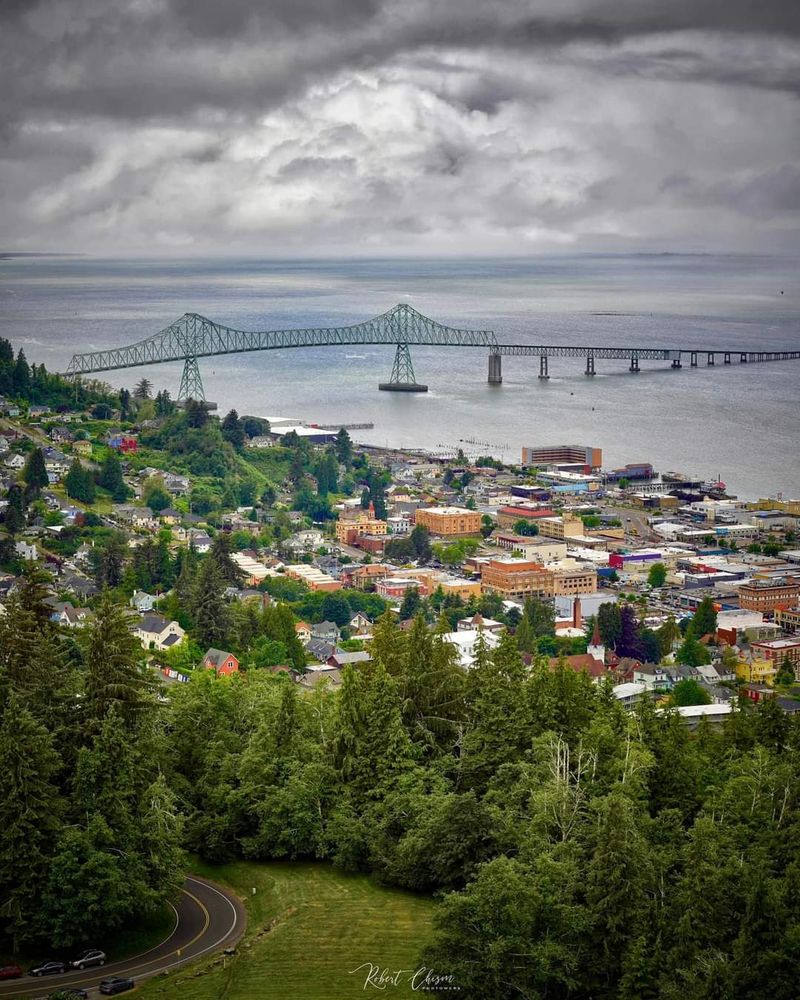
Astoria sits at the meeting place of river and ocean, a hinge where the Columbia turns briny and the horizon breathes in slow silver pulses.
The fog here travels like a storyteller, folding over piers and rooftops until the town looks freshly drawn, then erasing and redrawing the edges again.
Walk near 1095 Duane St, Astoria, Oregon 97103, and the harbor sounds travel through the mist, gull calls layered with the low thrum of distant engines.
The air smells faintly of salt and cedar, and the light falls soft on weathered siding, as if the town asked the day to begin gently.
Every block leans toward the water, and your steps follow without argument, guided by the horizon you half see and fully feel.
On some mornings the fog opens a single window across the channel, a slice of moving steel where a ship glides through like a film cut.
Then it slips shut and the scene becomes suggestion, a theater of outlines that invites you to fill in the details with memory.
Astoria, Oregon rewards patience, and the fog rewards curiosity, matching your pace whether you linger or wander.
Even the streets sound different under this veil, traffic softened, voices closer, footsteps wrapped in cotton.
Keep looking toward the waterfront, because in this town the river writes the day, and the fog edits it in real time.
A Historic Waterfront That Still Works for a Living
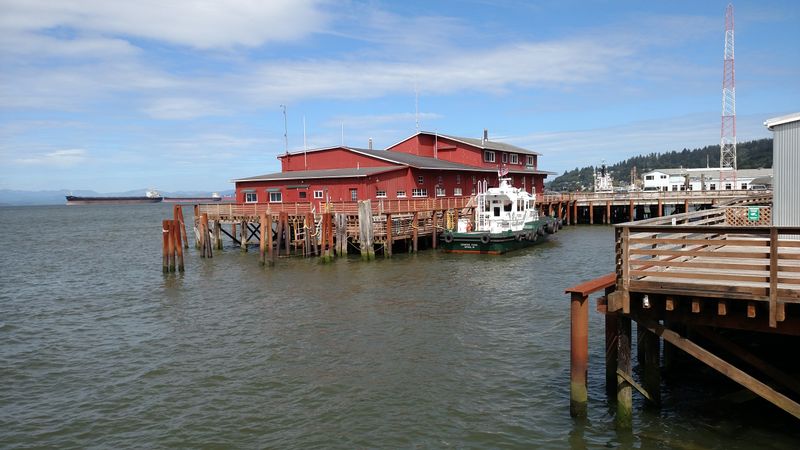
Along the river’s edge, timber pilings hold stories in every groove, and the waterfront keeps doing its job with quiet resolve.
At 1792 Marine Dr, Astoria, Oregon 97103, you can stand where warehouses meet water, and watch forklifts and footsteps share the same rhythm.
Some buildings host museums and shops now, but their bones remember tides of work, and the grain of the wood still faces the river.
The boardwalk planks carry the scent of brine, and the echo underfoot tells you there is empty space beneath and deep water beyond.
You notice signage from longtime operations next to new ventures, each sign weathered into the same muted palette.
Small offices glow like lanterns in the mist, and doors open to rooms that feel prepared for the next shipment or the next story.
When fog drifts in, it equalizes the view, letting old cannery windows and modern galleries share a single soft light.
Barges shoulder upstream, while small crews tend to gear on the docks, moving with the patience that working water demands.
The museums do not feel like afterthoughts, they feel like neighbors, adding context without stealing the waterfront’s purpose.
This is Astoria, Oregon at the waterline, where industry and memory speak the same language, and the river answers in kind.
Victorian Hillsides That Rise Above the Water
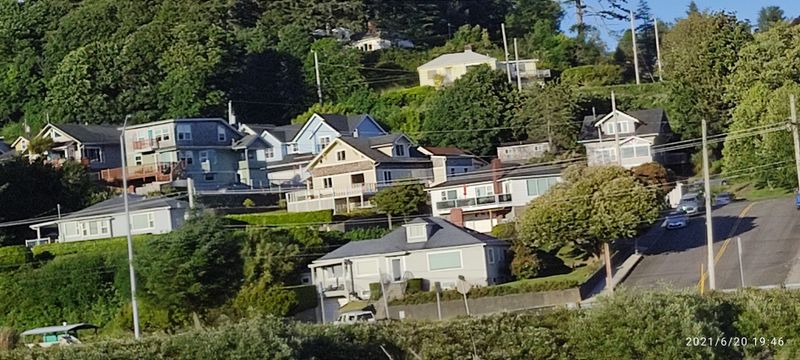
From the harbor, the streets climb quickly, and the houses answer with porches, gables, and trim that turn weather into ornament.
Up near 441 8th St, Astoria, Oregon 97103, the hillside tilts you toward the river, and every block carries its own postcard angle.
Painted details glow whenever the fog thins, then fade to silhouette as clouds regroup along the ridge.
Sidewalks step upwards and driveways lean, but every incline rewards you with another pattern of roofs and chimneys.
Victorian windows hold the day’s shifting tones, glass turning pewter, then pearl, then a pale slice of blue.
The neighborhoods feel lived in, not staged, with gardens tucked into terraces and stair rails polished by use.
On quiet mornings you can hear a buoy bell even this far uphill, its note threading past maples and telephone wires.
Lookouts appear mid block, a gap that frames the Columbia like a painting hung by chance.
When the fog drifts through, details emerge and vanish, so each corner becomes a short story with an unfinished last line.
In Astoria, Oregon, the hills do not just rise above the water, they hold it in view, reminding you where the town began.
The Astoria Riverwalk as a Front Row Seat to the Mist
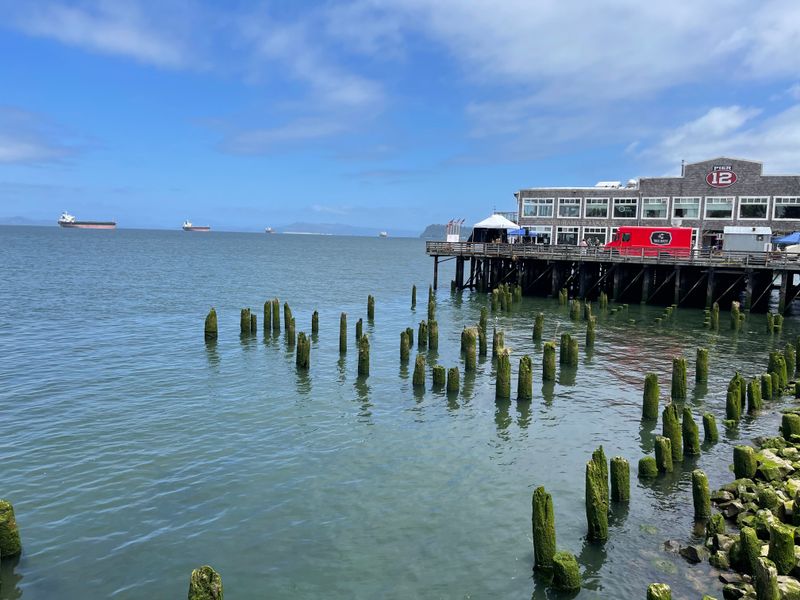
The Riverwalk runs like a promise along the shoreline, giving you a steady line while the fog rewrites the scene.
Start near 441 W Marine Dr, Astoria, Oregon 97103, and follow the planks past old pilings and echoing gull calls.
Every few steps the river changes texture, from glassy gray to rippled slate, as if the channel is breathing.
Benches face the water, and the emptiness between you and the ships feels both near and endless.
Remnants of former fishing operations appear like stage props, ladders and winches softened by damp air.
On winter mornings the path can look silver toned, a corridor that makes your footsteps sound careful and true.
Crossings meet side streets where warehouses keep watch, their windows bright rectangles against the soft blur outside.
Interpretive signs add context, but the fog provides mood, turning facts into scenes as you keep moving.
When the sun presses through, it happens in slices, a single beam hitting a railing or a piling top like a spotlight.
Astoria, Oregon does not rush this walk, it lets the river set the pace, and you fall happily in line.
A River That Moves Like an Extension of the Ocean
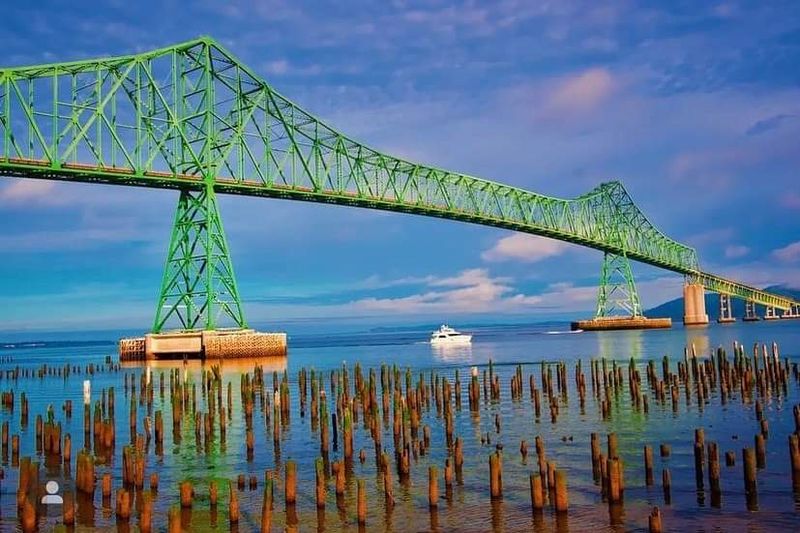
The Columbia widens here until it feels tidal in spirit, a body of water that thinks in swells even when the surface looks calm.
Down by 10 Pier 1, Astoria, Oregon 97103, you can watch the channel carry ships with a steady hand.
Currents tug at buoys, and the shoreline reeds bow in patterns that seem rehearsed but never repeat.
Fog hangs low like a careful ceiling, moving with the vessels and opening just enough space to show direction.
Big traffic takes the mid channel, while smaller craft edge the margins where the water sculpts its own pathways.
Listening helps here, because engines telegraph distance and speed even when the hull disappears.
The river’s color shifts with the sky, and the two often match, a seamless plane of pewter that hides the horizon.
Each passing wake reaches the pilings with a gentle tap that travels through the dock like a quiet knock.
It all adds up to a seascape at a river mouth, a meeting point that gives Astoria its cinematic mood.
In Oregon, this is where river and ocean shake hands, and the grip leaves a lasting impression.
The Astoria Column Watching Through the Clouds
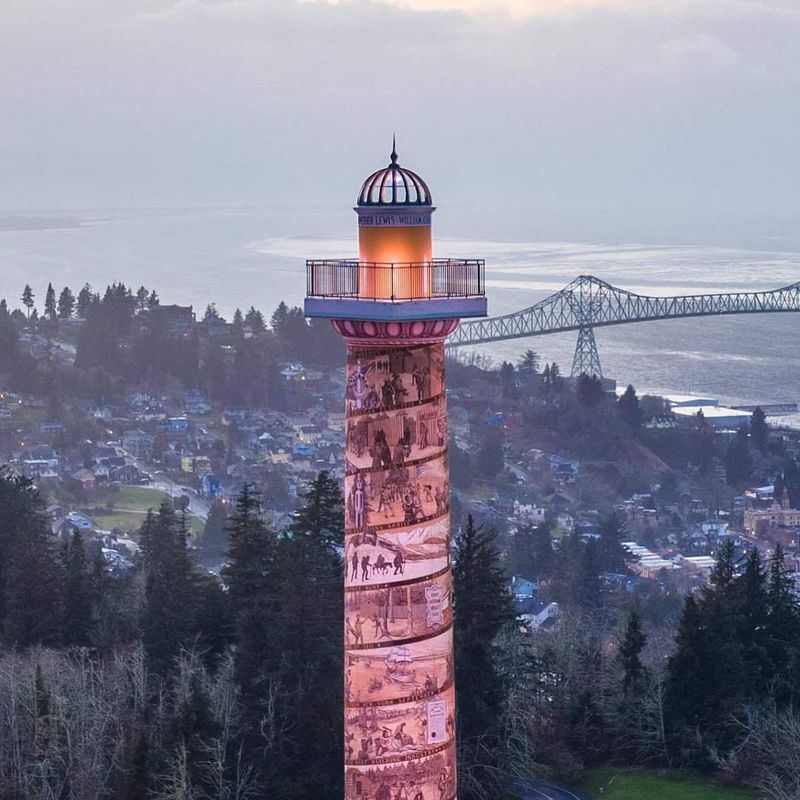
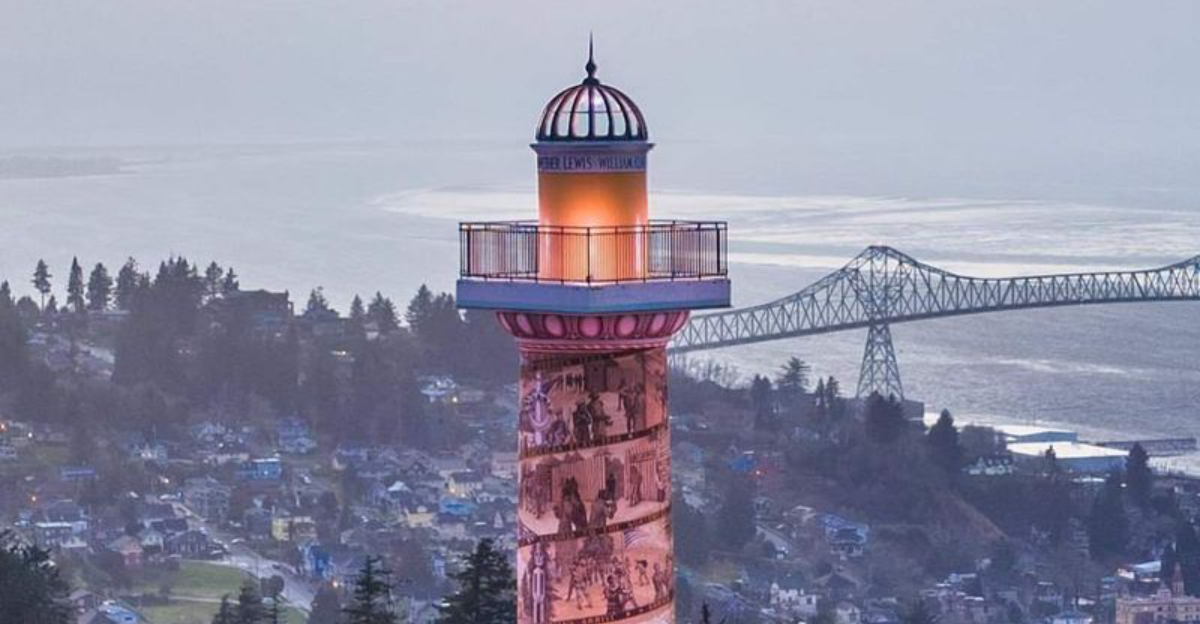
High on Coxcomb Hill, the Astoria Column rises above firs and fog with a quiet sense of authority.
Head to 1 Coxcomb Dr, Astoria, Oregon 97103, and the tower appears and disappears as clouds move through the trees.
The spiral murals look softer in this light, as if history prefers the diffused glow of a coastal morning.
From the overlook, the river becomes a gray ribbon that slides behind the town and out to the horizon.
When the mist parts, rooftops glitter briefly, then dim again as another veil drifts across.
Wind brushes the hilltop and carries a resin scent from the evergreens, grounding the view in the present moment.
Birds circle the column at a steady pace, using invisible currents that you only notice by their graceful turns.
Even the parking loop feels suspended, like a stage set above the daily bustle.
The monument does not shout, it observes, and that calm presence matches the tempo of Astoria, Oregon.
Stand here a little longer, and you start to read the weather the way locals do, with your senses first and your watch second.
A Cannery Past That Still Shapes the Scenery
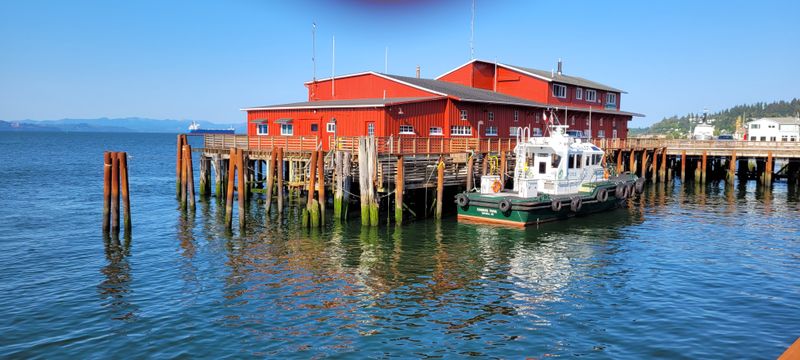
Pieces of the fishing era remain everywhere, from lines of pilings to boardwalks that hover just above the tide.
Near 155 5th St, Astoria, Oregon 97103, preserved structures hint at days when the waterfront clattered from dawn to dusk.
Weathered siding holds the imprint of salt and wind, and metal fittings glow dull and honest in the gray light.
Museums provide context, but the open air exhibits are these fragments, arranged by time rather than curators.
Stairs lead down to platforms that feel provisional, as if crews might return at any moment with baskets and gear.
The fog pulls the scene together, smoothing edges and letting textures do the storytelling.
You read the place by touch and sound, plank by plank, rivet by rivet, gull cry by distant horn.
Boards flex underfoot, and the river answers every step with a small, patient echo.
This layered waterfront teaches you to look twice, then a third time, because details keep surfacing.
Astoria, Oregon carries its past openly, not as nostalgia, but as the framework for what the harbor still is.
A Downtown That Balances Preservation and Quiet Energy
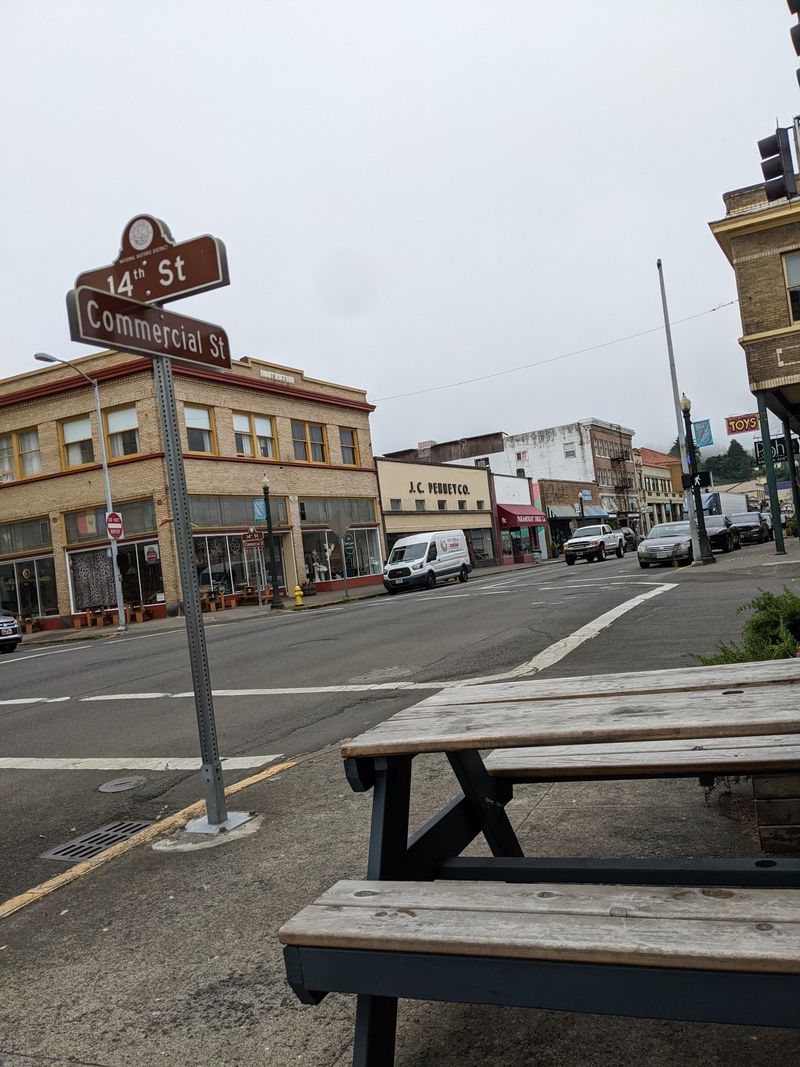
Downtown streets feel walkable and calm, with brick and timber storefronts that hold their age with confidence.
Start around 1203 Commercial St, Astoria, Oregon 97103, where display windows glow like ember boxes in the coastal light.
Small cafés and shops open their doors to the sidewalk, and conversation drifts out in an easy rhythm.
The façades carry intricate cornices and simple lines side by side, a harmony that feels earned over time.
Fog acts like a soft filter, revealing color without glare and giving the street a gentle depth.
Antique shops tug you inside with quiet curiosity, while galleries keep the present tense of the town alive.
Side alleys offer quick shortcuts and a peek at painted signs that survived more than one era.
Public art appears in corners, understated and confident, adding a local voice to the streetscape.
The pace suits Oregon’s coast, friendly without fuss, attentive without hurry.
Here in Astoria, Oregon, preservation is not a museum rule, it is a living choice made building by building.
A Waterfront That Changes by the Minute
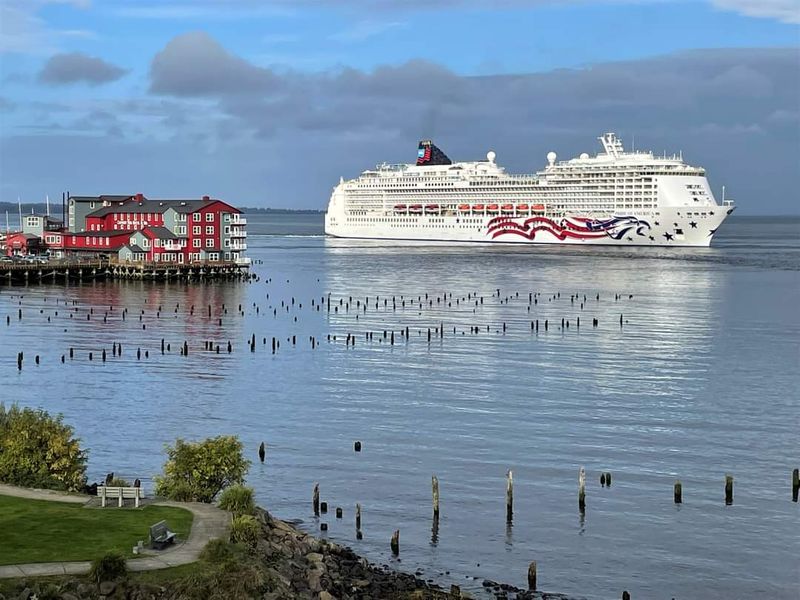
Stand still by the railings and the view refuses to stay put, trading one vignette for another in quiet succession.
At 100 39th St, Astoria, Oregon 97103, the waterfront becomes a stage where fog cues every entrance and exit.
Piers sharpen, then dissolve into pale outlines, while the river keeps its steady pull toward the bar.
A bell rings faintly, then not at all, and you realize the sound moved before your ears caught up.
Markers blink and vanish, then blink again, and you start trusting rhythm more than sight.
The scene returns in new fragments, a piling cap here, a navigation light there, assembled like a puzzle with missing pieces.
Your imagination fills the gaps, and the harbor rewards that participation with a glimpse of something true.
Clouds slide overhead, thinner near the hills, denser over the channel, painting the town in shifting bands.
Every minute feels like a small premiere, a fresh reveal that belongs only to those who stayed.
Astoria, Oregon thrives on this motion, a reminder that coastal weather is not a backdrop, it is the show.
A Seaside Town Where the Harbor Is the Main Character
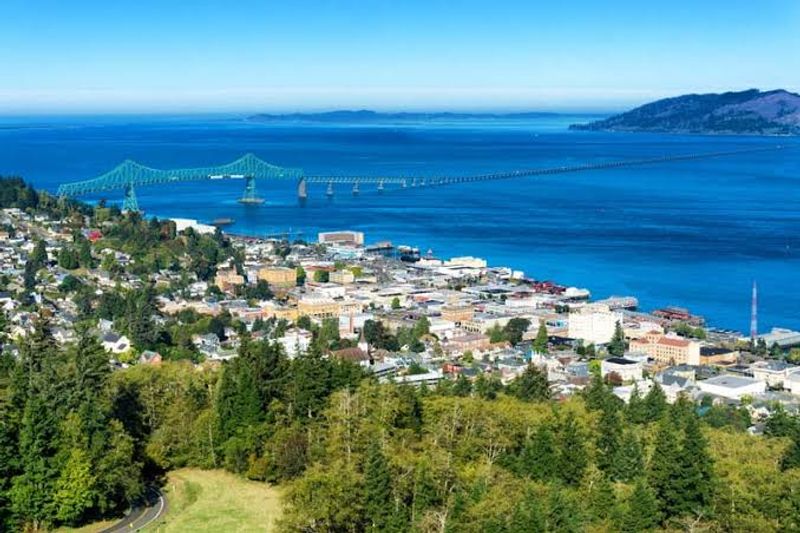
Put every piece together, and the harbor steps forward as the lead, with the town playing perfect supporting roles.
From 20 Basin St, Astoria, Oregon 97103, the view works like a summary, river in front, hills behind, and fog as the narrator.
Ships move like actors crossing the stage, while rooftops hold their marks along the steep streets.
Historic details give texture, and working docks add the tempo that keeps the story grounded.
Light arrives in layers, silver first, then a hint of blue, then a gentle return to gray.
Even quiet hours feel full, because the river never entirely rests, and neither does your attention.
The harbor changes just enough to invite another look, and the fog agrees, reshaping every line with a patient hand.
Hillsides contribute their chorus of porches and stairways, turning vertical space into part of the scene.
Oregon’s coast shows its character here, restrained, resilient, and beautiful without trying.
Astoria, Oregon lets the harbor steal the show, and you leave knowing that was always the point.
Dear Reader: This page may contain affiliate links which may earn a commission if you click through and make a purchase. Our independent journalism is not influenced by any advertiser or commercial initiative unless it is clearly marked as sponsored content. As travel products change, please be sure to reconfirm all details and stay up to date with current events to ensure a safe and successful trip.
