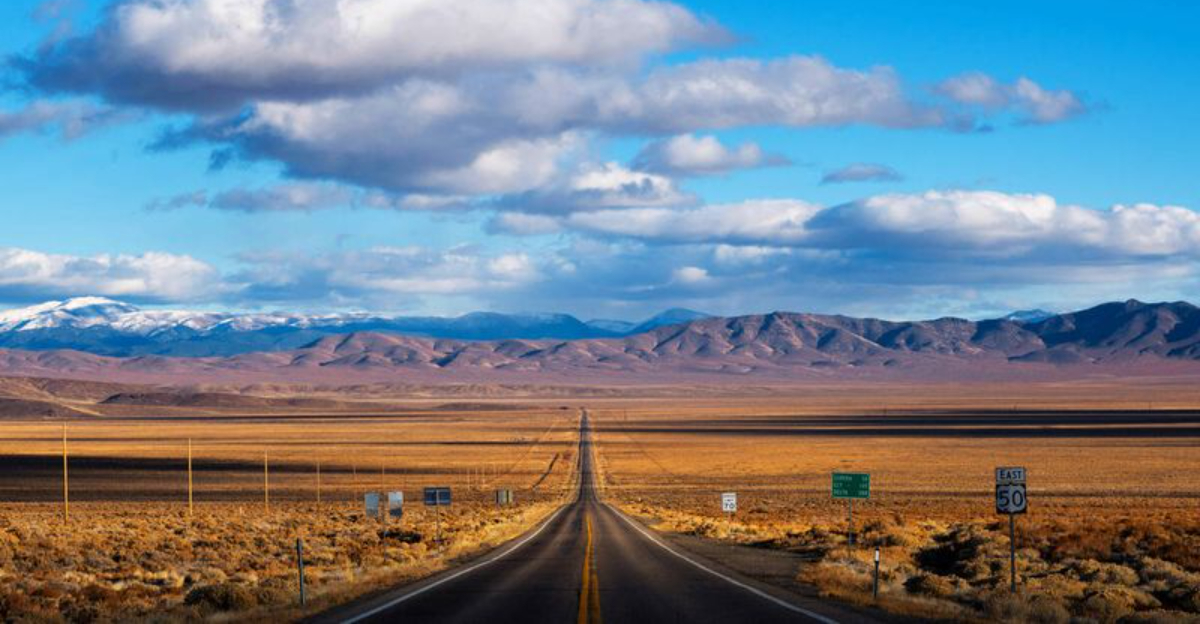
If you’re traveling through Nevada, the desert may tempt you with shortcuts that seem like time-savers. But locals know better: these routes can be risky, and unprepared visitors often pay the price. From harsh conditions to remote roads, here are 10 hidden risks of Nevada’s desert shortcuts that tourists frequently overlook – and tips for staying safe while exploring the Silver State.
Extreme Isolation
Imagine a road that leads to nowhere, surrounded by endless desert. That’s the reality many face in Nevada’s isolated shortcuts. Without cell service, contacting help becomes impossible.
The vast loneliness can be overwhelming, especially if you’re stuck with a vehicle breakdown. Travelers often underestimate how far help might be.
Preparation is key: inform someone of your route and carry a satellite phone for emergencies. These roads, while picturesque, require respect and readiness. Enjoy the beauty safely.
No Gas Stations
A full tank is non-negotiable when venturing into Nevada’s desert. Gas stations are rare, and the distances between them often mislead travelers into taking risks.
Running out of fuel in the hot desert sun can be more than just inconvenient – it can be dangerous. Always fill up at the last available station, even if you think you have enough.
Carry extra fuel if possible, and plan your route to avoid this common pitfall. Safety hinges on smart preparation in these desolate regions.
Harsh Conditions
Nevada’s desert climate is a test of extremes. In summer, temperatures soar, while winter nights bring sudden chills. Visitors often overlook how quickly conditions can change.
A simple car issue can turn life-threatening if you’re not prepared for the heat or cold. Always pack weather-appropriate clothing and enough water to last longer than your journey.
Knowing the forecast and preparing accordingly is crucial. This isn’t just a drive; it’s a venture into nature’s extremes.
Unpaved and Rough Terrain
These desert shortcuts aren’t smooth highways. Many are rocky, unpaved paths that demand more than a regular rental car can handle.
Tires and undercarriages suffer the most on these treacherous tracks. Without the right vehicle – preferably a 4×4 – you’re risking significant damage.
Check your rental’s policy on off-road driving and ensure you have the correct equipment. Taking shortcuts shouldn’t mean cutting corners on safety.
Lack of Amenities
Picture this: miles of nothingness. No rest stops, no food, no water. That’s what many desert shortcuts offer.
Tourists often don’t realize how crucial it is to stock up before entering these zones. A simple oversight can lead to uncomfortable, even dangerous situations.
Bring enough supplies and remember, it’s not just about the journey; it’s about surviving it responsibly. Plan as if you’ll have zero support between start and finish.
Navigation Issues
Without clear signs or reliable GPS, Nevada’s desert can be a maze. Many shortcuts twist and turn unpredictably, leaving tourists disoriented.
GPS devices often lose signal, and cell service is spotty at best. Offline maps and reliable navigation apps become indispensable tools.
Always carry a physical map as backup. Getting lost in the desert isn’t just frustrating – it can be dangerous if you’re unprepared. Plan your route meticulously.
Potential for Flash Floods
Even a seemingly harmless rainstorm can spell disaster. Flash floods can occur without much warning, transforming dry paths into rushing streams.
Tourists often overlook this risk, especially in arid climates. Keep an eye on weather reports and avoid driving in heavy rain.
Knowing local weather patterns and flood zones is critical. It’s not just about the sun; sometimes, it’s the unexpected rain that poses the greatest threat.
Wildlife Encounters
Nevada’s desert is alive with wildlife. At night, animals like deer or wild horses might wander onto roads, surprising drivers.
These encounters can lead to accidents, especially on dark, unlit paths. Tourists should drive slowly and remain vigilant.
Respect for local fauna and cautious driving go hand in hand. The desert’s beauty includes its wildlife, so share the road respectfully.
Vehicle Damage
Sharp rocks and uneven terrain are more than just nuisances – they’re threats to your vehicle. Standard cars often suffer tire or suspension issues.
Tourists, unversed in these conditions, might find themselves stuck or disabled. Always check your vehicle’s capability for such roads, or consider renting a 4×4.
Bringing repair tools and a spare tire can save the day. In Nevada’s desert, a little preparation goes a long way toward avoiding costly fixes.
Lack of Experience
Navigating a desert isn’t intuitive, especially for those unfamiliar with its quirks. Locals know the terrain, but tourists might lack vital survival skills.
Carrying extra water, food, and a first-aid kit should be non-negotiable. Yet, many underestimate these essentials.
Learning from locals and preparing thoroughly can make the difference between an adventure and an ordeal. The desert demands respect and readiness from all who traverse it.
Dear Reader: This page may contain affiliate links which may earn a commission if you click through and make a purchase. Our independent journalism is not influenced by any advertiser or commercial initiative unless it is clearly marked as sponsored content. As travel products change, please be sure to reconfirm all details and stay up to date with current events to ensure a safe and successful trip.
