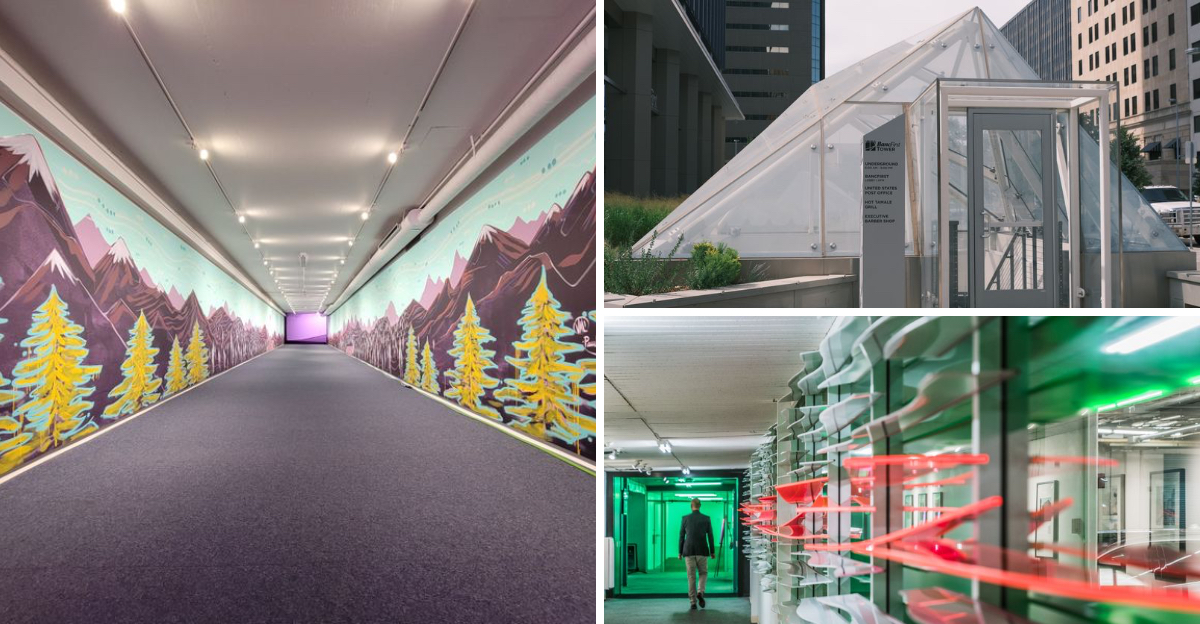
Beneath the busy streets of Oklahoma City lies a network of passageways that most residents don’t even know exists. The OKC Underground stretches across downtown, connecting buildings through climate-controlled tunnels filled with art, history, and an eerie sense of stepping into another world.
Originally built to help pedestrians escape the Oklahoma heat and weather, these tunnels now serve as a hidden attraction that feels more like urban exploration than a typical tourist stop.
Walking through the colored lights and quiet hallways, you’ll discover a side of the city that remains largely unknown, even to locals.
A Network Born from Practical Necessity
Oklahoma summers can be brutal, with temperatures soaring well above ninety degrees and humidity turning sidewalks into outdoor ovens. Back in the mid-twentieth century, downtown workers and shoppers needed relief from the relentless heat.
City planners and building developers came up with a solution that would change the face of downtown Oklahoma City forever.
Underground tunnels began connecting office buildings, banks, and parking garages, creating a climate-controlled alternative to street-level travel. What started as a practical way to move between buildings evolved into a sprawling network spanning several city blocks.
Workers could park their cars, walk to meetings, grab lunch, and return to their offices without ever stepping outside.
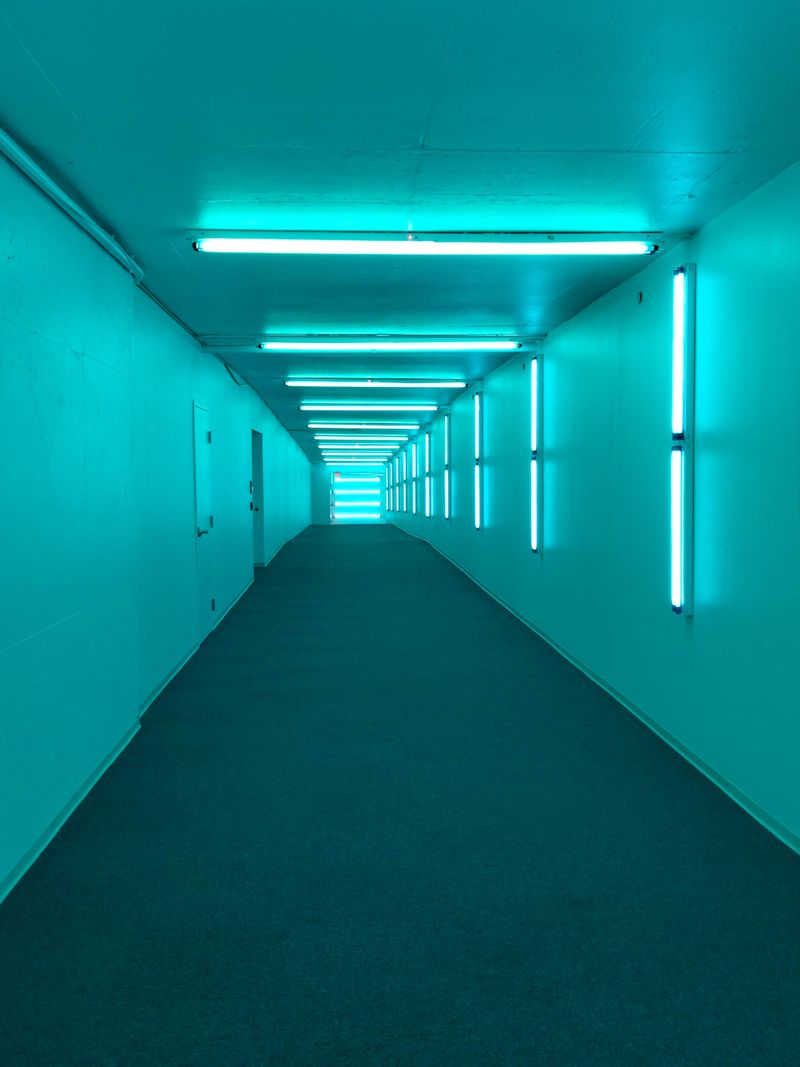
The system grew organically over decades as new buildings joined the network. Each addition brought its own architectural style and purpose, creating an uneven but fascinating underground landscape.
Some sections feel corporate and polished, while others have an industrial, utilitarian vibe that hints at their original function.
Today, the OKC Underground serves a dual purpose. Business professionals still use it for daily commutes, especially during extreme weather.
Visitors, however, see it as something entirely different: a hidden world that offers a glimpse into the city’s past and present. The tunnels represent Oklahoma City’s ingenuity and determination to create comfort in a challenging climate, all while building something unexpectedly intriguing beneath the surface.
Finding Your Way Into the Hidden Passages
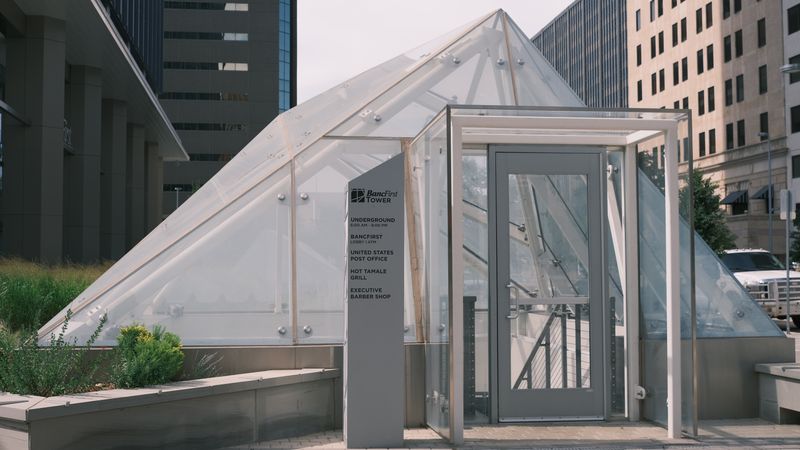
Locating the entrance to the OKC Underground can feel like searching for a secret portal. Unlike tourist attractions with obvious signage and welcoming plazas, these tunnels remain somewhat hidden from casual passersby.
Many visitors report wandering downtown for several minutes before finally discovering the right doorway.
The main public entrance sits at 300 North Broadway Avenue, inside a building that houses the Taxpayer Resource Center. Look for glass doors on the right side of the structure, where small signs indicate the stairway down.
An escalator in the BancFirst building offers another access point, particularly helpful for those who prefer not to use stairs.
Several parking garages throughout downtown also connect to the tunnel system, though these entrances can be even trickier to identify. Local workers know exactly which doors to use, but first-time visitors often need to ask for directions.
Security officers and downtown employees are generally happy to point tourists in the right direction.
The tunnels operate on weekday schedules, opening at six in the morning and closing at eight in the evening Monday through Friday. Weekend visitors will find the system closed, as it primarily serves the business community.
This limited schedule adds to the underground’s mystique, making it feel like an exclusive experience available only to those who know when to visit Oklahoma during the work week.
Colored Lights Create an Otherworldly Atmosphere
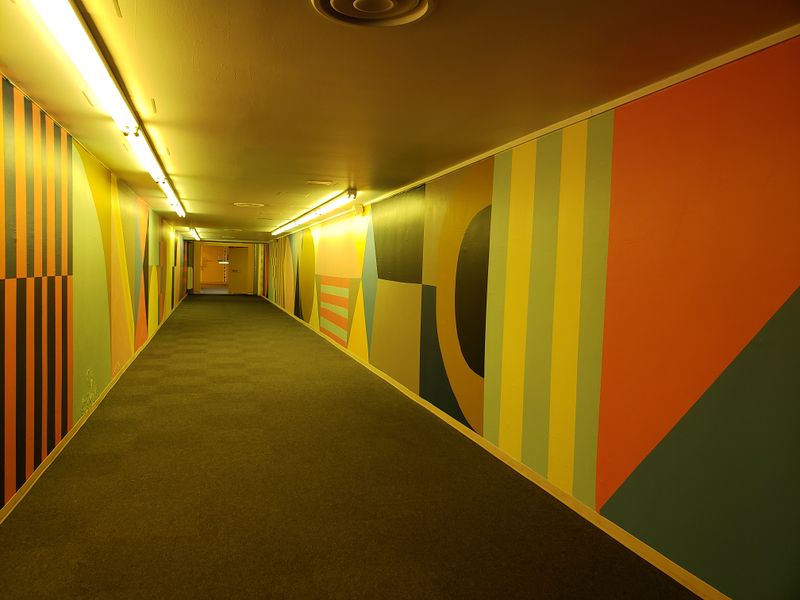
Walking through the OKC Underground feels distinctly different from any street-level experience. Each section of tunnel features its own color scheme, with LED lighting transforming concrete corridors into spaces that feel almost theatrical.
Blue lights give way to purple, then green, then amber, creating visual transitions that mark your progress through the system.
The lighting design serves both practical and artistic purposes. Different colors help visitors orient themselves and remember which sections they’ve already explored.
The shifting hues also break up what could otherwise feel like monotonous institutional hallways, adding visual interest to the journey.
Some visitors find the colored lighting beautiful and Instagram-worthy, perfect for creative photography. Others describe it as unsettling, particularly when combined with the relative quiet and emptiness of certain sections.
The term liminal space appears in several reviews, referring to that eerie feeling of being in a transitional area that exists between destinations.
The lighting can play tricks on your eyes, especially where different colored sections meet. The transition zones create optical effects that some people find disorienting.
This strange visual quality contributes to the underground’s reputation as a place that feels stranger than you’d expect, even when you think you’re prepared for the experience.
Oklahoma City has created something that functions as infrastructure but feels like an art installation, blurring the line between utility and creativity in unexpected ways.
Historical Displays Tell Oklahoma’s Story
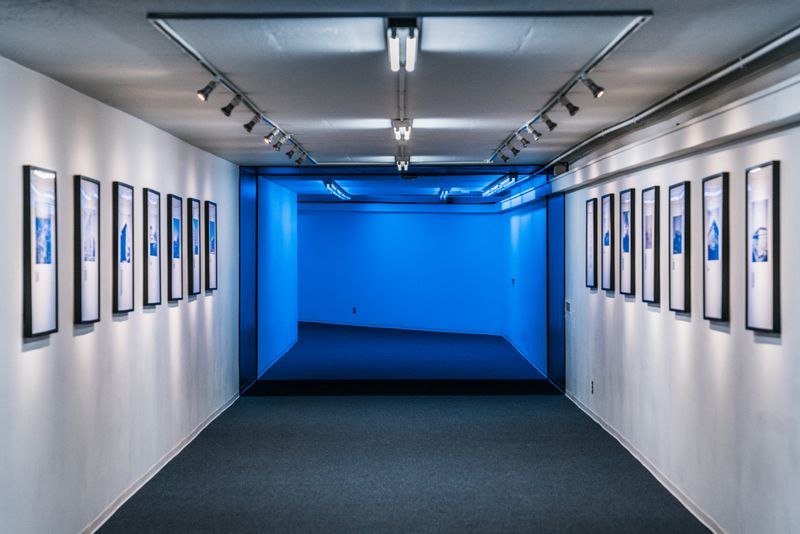
The tunnels function as more than just passageways. Throughout the system, historical photographs and informational displays line the walls, creating an informal museum dedicated to Oklahoma City’s development.
These exhibits offer visitors a chance to learn about the city’s growth from its land run origins to its modern skyline.
Photographs from the late 1800s show the dramatic transformation of the area. One particularly striking pair of images claims to show Oklahoma City on April 22, 1889, and then again on May 13, 1889, just three weeks later.
The difference between the two photos seems almost impossible, with an entire city appearing to materialize in less than a month, complete with additional rail lines and buildings.
Other displays feature quotes and portraits from Oklahoma residents who lived to be one hundred years old. These centenarians share wisdom and memories, providing personal perspectives on a century of change.
Reading their words while standing beneath the modern city creates a powerful connection between past and present.
The historical content varies throughout the tunnel system, with some sections offering more extensive displays than others. Visitors who take time to read the captions and study the photographs will spend considerably longer underground than those simply walking through.
The free educational component adds value to the experience, transforming a simple stroll into an opportunity to understand Oklahoma’s unique history and the forces that shaped this distinctive city in the heart of the Great Plains.
Art Installations Add Creative Dimension
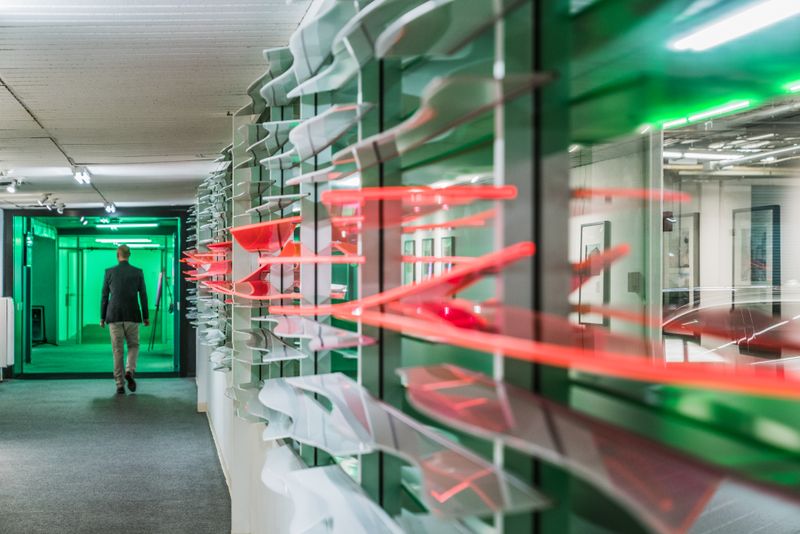
Beyond the historical displays, the OKC Underground features various art installations that add creative energy to the concrete corridors. A particularly memorable piece greets visitors at one entrance: a large, quirky sculpture that reviewers describe as resembling a dodo bird.
This whimsical figure serves as a landmark and conversation starter, immediately signaling that this underground space contains unexpected surprises.
Other artworks appear throughout the tunnel system, ranging from contemporary pieces to community-focused installations. The art breaks up the utilitarian architecture and gives the space cultural significance beyond its practical transportation function.
Some pieces feel professionally curated, while others have a more grassroots, community-driven quality.
The combination of art, history, and architecture creates an environment that shifts between different moods and purposes. One moment you’re reading about Oklahoma pioneers, the next you’re standing beneath a modern sculpture, and then you’re walking through a section that feels purely functional.
This variety keeps the exploration interesting, though it can also feel somewhat disjointed.
Visitors with an appreciation for public art will find more to engage with than those simply seeking a quick underground walk. The installations give photographers additional subjects beyond the colored lights, though the quality and quantity of art varies by section.
As the tunnel system continues to evolve, there’s clear potential for expanding the artistic elements. Oklahoma City has the opportunity to transform these passages into a more cohesive underground gallery that rivals similar systems in other cities.
Navigation Challenges and Getting Lost
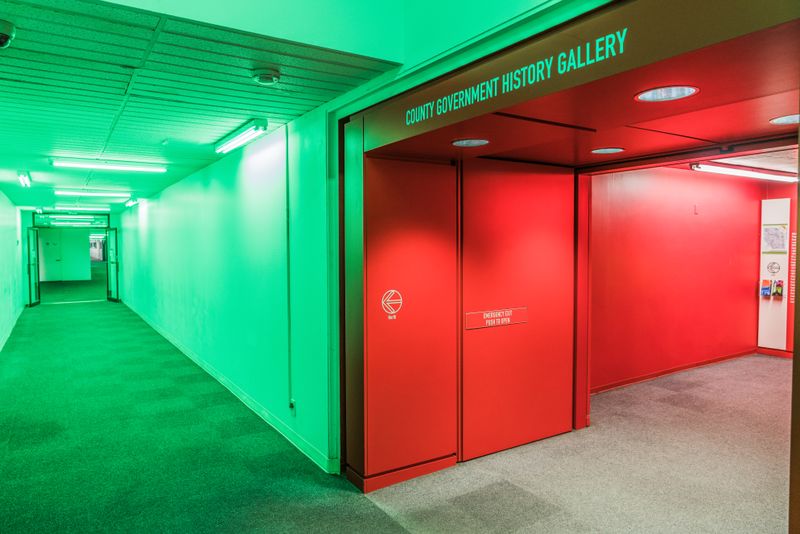
The OKC Underground wasn’t designed as a tourist attraction, and the layout reflects its piecemeal development over decades. Tunnels branch off in multiple directions, connecting to various buildings at different levels.
Without careful attention, visitors can easily lose their bearings and end up confused about which direction leads where.
Free maps are available throughout the system, posted on walls and available to take along. These maps prove essential for anyone wanting to explore thoroughly without retracing their steps repeatedly.
The tunnel network is larger than many first-time visitors expect, covering significant ground beneath downtown streets.
Cell phone service becomes unreliable once you’re underground. Some sections have decent reception, while others leave you completely disconnected.
This spotty connectivity adds to the isolated feeling but can be frustrating for those who rely on phones for navigation or communication. Planning your route before descending helps avoid the frustration of trying to load maps on a phone with no signal.
Some tunnels lead to locked doors or areas restricted to building tenants. Others open into parking garages or building lobbies where you can exit to street level.
The system includes multiple ways to return to the surface, though not all exits are obvious. First-time explorers should expect some trial and error, treating wrong turns and dead ends as part of the adventure rather than frustrations.
The maze-like quality contributes to the sense of urban exploration that makes the Oklahoma City tunnels feel more exciting than a typical underground pedestrian system.
Climate Control and Atmospheric Conditions
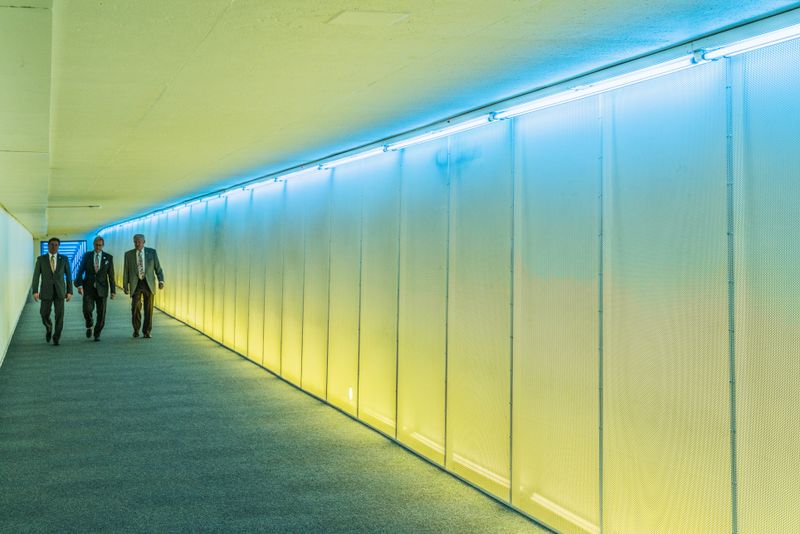
The original purpose of the tunnel system was providing climate-controlled passage through downtown, and modern visitors still benefit from this feature.
Air conditioning keeps the underground space comfortable during Oklahoma’s sweltering summers, offering genuine relief from the heat that can make street-level walking unpleasant.
However, the climate control isn’t perfect throughout the entire system. Some visitors report that the underground temperature feels warmer than expected, particularly in sections farther from main entrances.
The enclosed nature of the tunnels can create a stuffy atmosphere in areas with less air circulation.
Humidity becomes noticeable after rain, with dampness seeping into certain sections. The combination of underground location and Oklahoma weather patterns means moisture management remains an ongoing challenge.
Some reviews mention musty odors in particular areas, though experiences vary depending on recent weather and which sections you explore.
Despite these occasional issues, the tunnels generally provide the temperature relief they were designed to offer. Winter visitors find the underground passages protect them from cold winds and occasional ice storms.
The consistent temperature year-round makes the system practical for daily commuters who use it regardless of season.
The atmospheric conditions contribute to the tunnels’ unusual character. The slightly stale air, the artificial lighting, and the removal from natural weather patterns all create a sense of being in a separate world.
This disconnection from the surface environment is exactly what some visitors find appealing and what others find slightly uncomfortable about spending time in Oklahoma City’s hidden underground realm.
Unrealized Commercial Potential
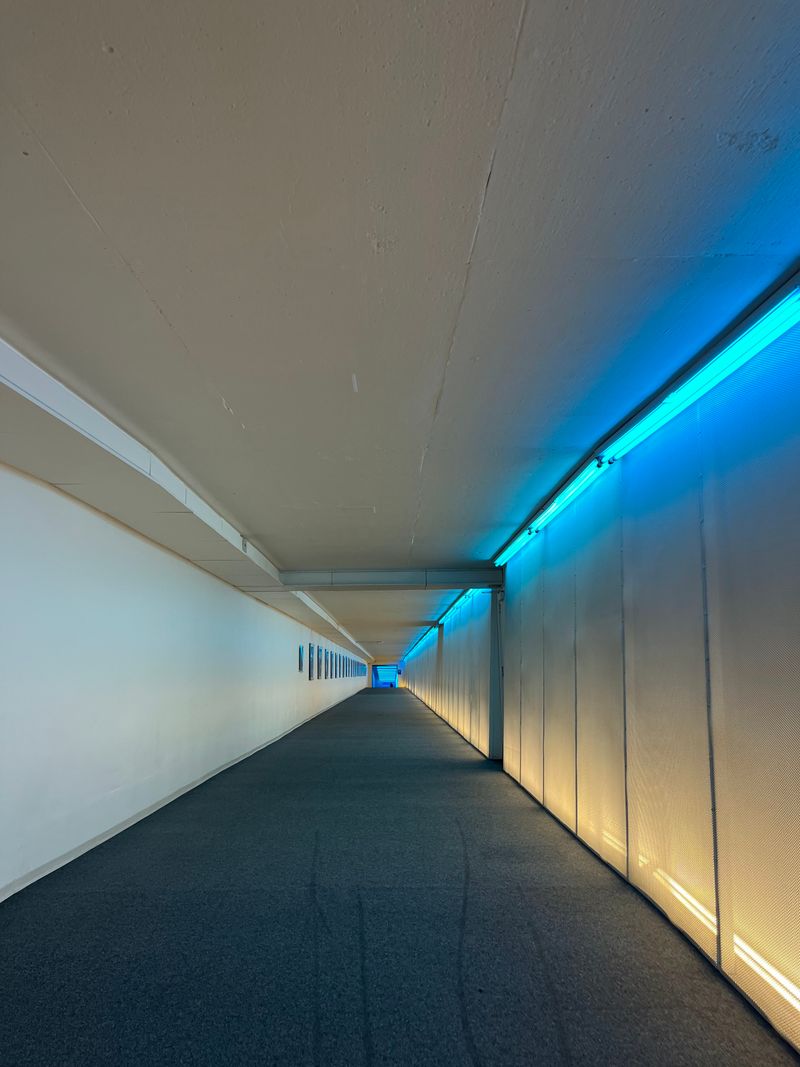
Walking through the OKC Underground, many visitors imagine what the space could become with more commercial development. The tunnels in some cities feature thriving underground shopping districts, restaurants, and entertainment venues.
Oklahoma City’s version remains largely empty of retail activity, creating a somewhat barren feeling in areas that seem designed for more bustling use.
Historical evidence suggests the tunnel system once hosted more businesses. Closed storefronts and empty spaces hint at a more active commercial past.
Current visitors find primarily corridors and connecting passages rather than destinations within the underground itself. This creates an experience focused on transit and exploration rather than shopping or dining.
Some reviews mention seeing storage rooms and supplies visible through windows, breaking the illusion of the tunnels as a finished public space. These glimpses behind the scenes reveal the system’s current state as infrastructure first and attraction second.
Suggestions for window tinting or artwork to cover these utilitarian views appear in multiple visitor comments.
Plans for development seem to be in progress. One reviewer mentioned seeing construction for a bowling alley, suggesting efforts to bring more activity underground.
Whether these developments will materialize and transform the tunnels into a more vibrant destination remains to be seen.
The unrealized potential might actually contribute to the underground’s current appeal. The empty, transitional quality creates that strange liminal feeling that draws urban explorers and photographers.
A fully developed commercial space might be more practical but less intriguing than the current state, where Oklahoma echoes with footsteps through passages that feel suspended between past purpose and future possibility.
The Weekday-Only Schedule
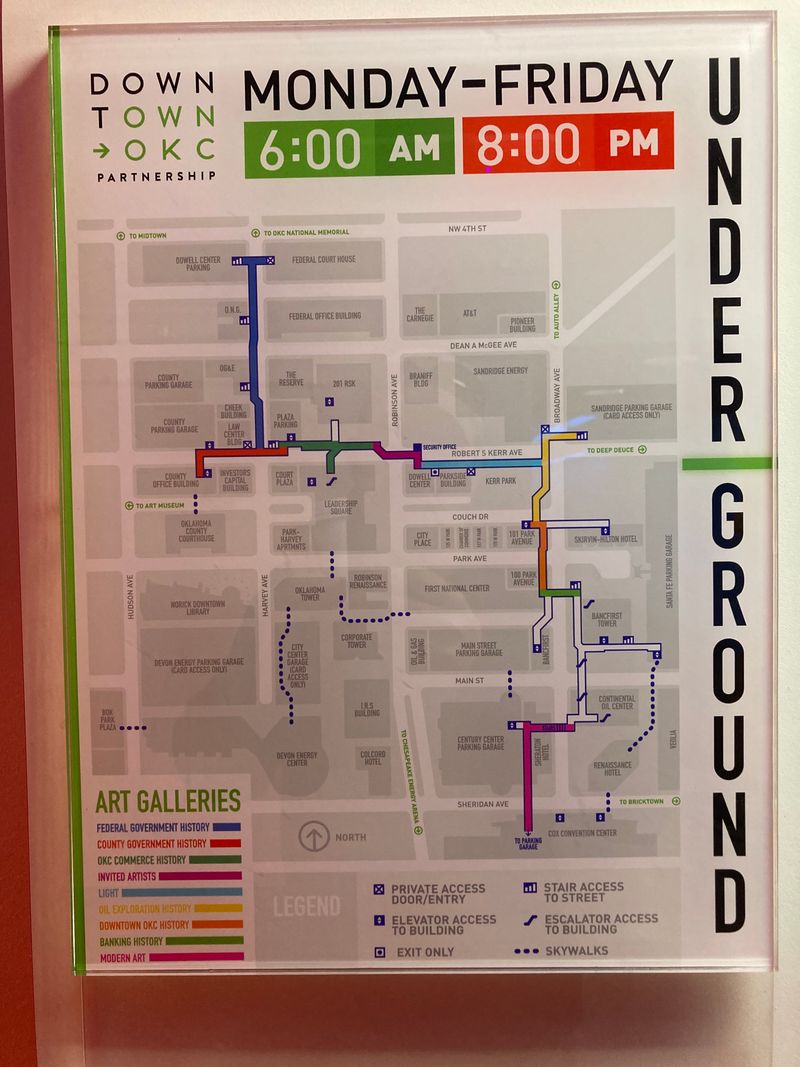
The OKC Underground operates on a schedule that reflects its primary purpose serving downtown workers. Monday through Friday, the tunnels open at six in the morning and remain accessible until eight in the evening.
This window accommodates business hours and after-work activities, providing passage for commuters and professionals throughout the workday.
Weekends tell a different story. The entire system closes on Saturday and Sunday, locked up tight while downtown Oklahoma City quiets down.
Tourists who arrive on weekends hoping to explore the tunnels find themselves out of luck, often learning about the schedule only after making the trip downtown.
This weekday-only access frustrates some visitors but makes sense given the system’s function. The tunnels connect office buildings and serve business travelers primarily.
Without the weekday foot traffic, keeping the system open and monitored on weekends would require additional resources for relatively few visitors.
The limited schedule does create a sense of exclusivity. Experiencing the tunnels requires planning around weekday availability, making it feel less like a standard tourist attraction and more like accessing insider knowledge.
Locals who work downtown have unlimited access during the week, while outsiders must coordinate their visits carefully.
For tourists passing through Oklahoma City, the schedule requires checking hours before planning an underground visit. The tunnels make an excellent activity during a weekday layover or business trip but won’t work for weekend travelers.
This limitation keeps visitor numbers relatively low and maintains the quiet, uncrowded atmosphere that many reviewers appreciate about the current underground experience.
Free Access and Visitor Experience
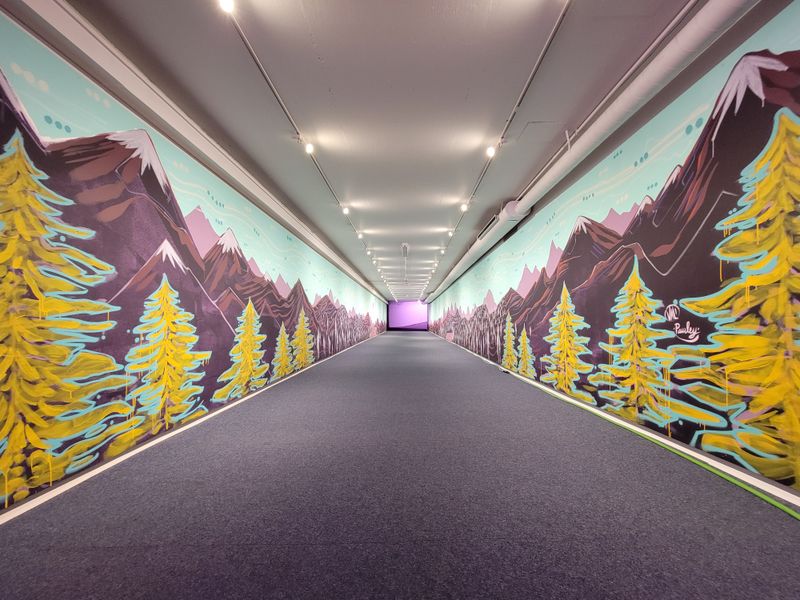
One of the most appealing aspects of the OKC Underground is the complete absence of admission fees. Visitors can explore the entire tunnel system without paying anything, making it an accessible attraction for budget-conscious travelers and locals looking for free entertainment.
No tickets, no turnstiles, no payment required whatsoever.
The free access policy reflects the tunnels’ nature as public infrastructure rather than a commercial attraction. Anyone can walk down the stairs during operating hours and spend as much time as they want wandering through the passages.
This openness creates a welcoming environment, though it also means the experience lacks some polish and amenities found at paid attractions.
Most visitors spend between thirty minutes and two hours underground, depending on their interest level and walking pace. Those who stop to read every historical display and examine all the artwork will need more time than visitors simply walking through to experience the atmosphere.
The self-guided nature means you control the pace entirely.
Families find the free admission particularly attractive, allowing children to explore without parents worrying about ticket costs. The tunnels offer an unusual outing that feels adventurous to kids, like discovering a secret world beneath the city.
Parents should note that the system lacks restrooms and food options, so plan accordingly.
The lack of crowds enhances the experience for many visitors. Without masses of tourists, the tunnels maintain their quiet, slightly eerie character.
You might encounter business professionals walking purposefully to meetings or other curious explorers, but the Oklahoma City underground rarely feels packed or overwhelming, preserving its strange, liminal atmosphere.
Local Secret Most Residents Don’t Know
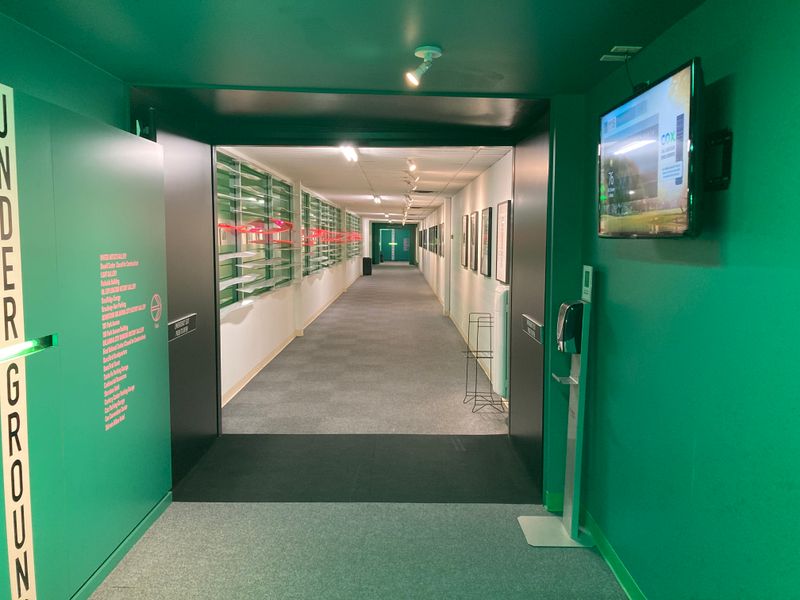
Perhaps the strangest aspect of the OKC Underground is how many local residents have no idea it exists. Multiple reviews mention bringing family members who have lived in Oklahoma City for years without knowing about the tunnel system beneath downtown.
This widespread lack of awareness among locals adds to the underground’s mystique and hidden-gem status.
The tunnels don’t advertise themselves prominently. Without deliberate research or word-of-mouth recommendations, most people simply never learn about the system.
Downtown workers who use the tunnels daily represent one segment of the population, while suburban residents and those who don’t frequent downtown remain completely unaware.
Social media has begun changing this dynamic. TikTok videos and Instagram posts about the underground have introduced the tunnels to younger audiences and out-of-town visitors.
Some travelers now know about the OKC Underground before locals do, creating amusing situations where tourists inform residents about features in their own city.
This hidden quality makes discovering the tunnels feel like uncovering a secret. The experience of descending below street level and finding an entire network of passages unknown to most people creates a sense of adventure and exclusivity.
You’re accessing something that exists in plain sight yet remains invisible to the majority.
As awareness grows, the underground may lose some of its secret status. For now, it remains one of Oklahoma City’s best-kept secrets, a substantial feature of downtown that somehow stays off most people’s radar.
Whether you’re a longtime Oklahoma resident discovering it for the first time or a visitor who learned about it online, the feeling of finding something hidden adds an extra layer of interest to the underground exploration experience.
Address: 300 N Broadway Ave, Oklahoma City, Oklahoma
Dear Reader: This page may contain affiliate links which may earn a commission if you click through and make a purchase. Our independent journalism is not influenced by any advertiser or commercial initiative unless it is clearly marked as sponsored content. As travel products change, please be sure to reconfirm all details and stay up to date with current events to ensure a safe and successful trip.
