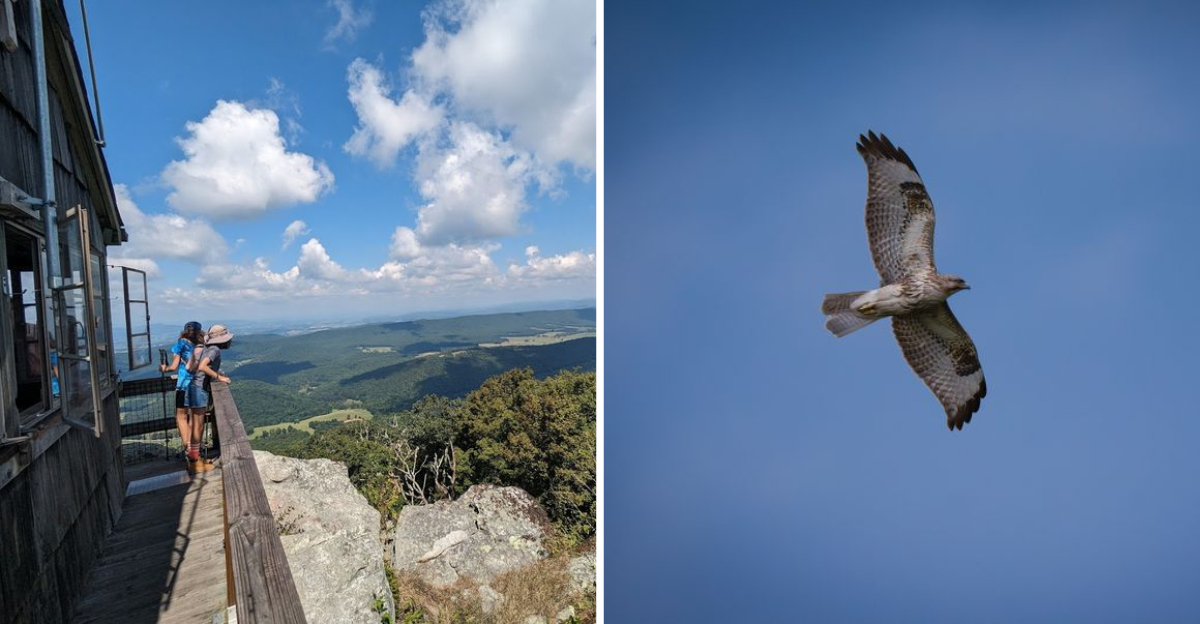
This hike proves that the best things really do come in small packages.
The trail stretches just one mile from the parking area to the top, but do not let the short distance fool you.
The path climbs gently through a peaceful forest, and before you know it, the trees part to reveal a skyline that stretches for miles.
A vintage stone tower awaits at the summit, originally built as a fire lookout decades ago.
Today, it offers a front-row seat to nature’s most spectacular aerial show, with hawks and eagles gliding at eye level.
Imagine standing there with the wind in your hair and the world spread out beneath your feet.
This little slice of paradise is waiting for you in West Virginia.
Where the Adventure Officially Begins
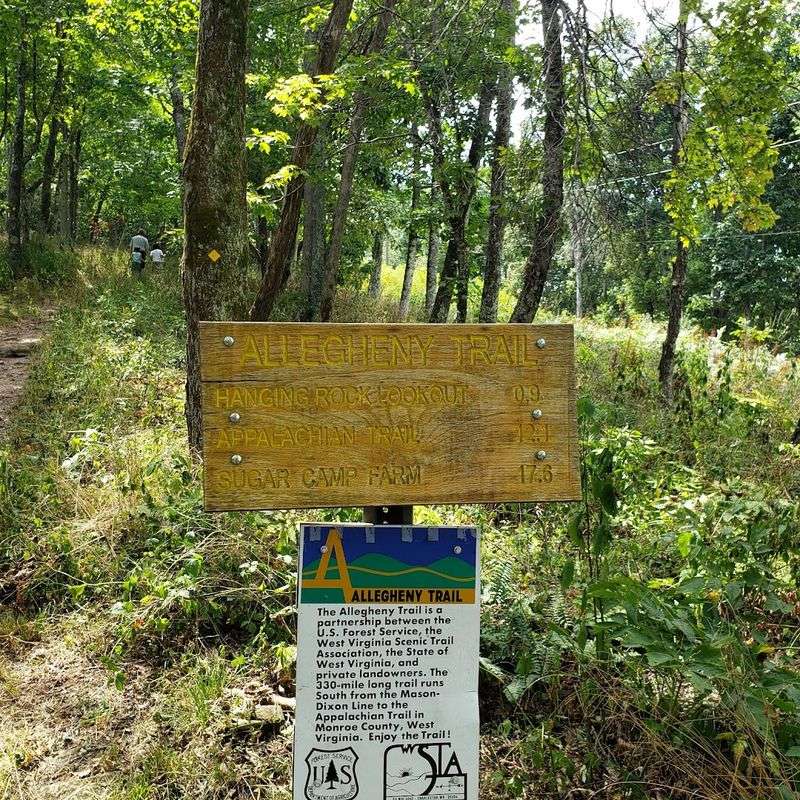
Pulling into the small parking lot perched right on the crest of Peters Mountain already signals that something special is about to happen.
The lot is modest, fitting just enough cars to keep things peaceful, and the surrounding forest sets a calm, woodsy tone before you even lace up your boots.
The trail kicks off with a burst of ambition, throwing a steep incline at you almost immediately. Yellow blazes painted on the trees guide the way along this section of the Allegheny Trail, so navigation is refreshingly straightforward.
A quick scan of the trailhead area confirms you are in good hands.
Packing smart before stepping out makes a real difference here. There is no running water or electricity at the site, so bringing your own water, snacks, and bug spray is genuinely essential.
The drive up to the trailhead involves winding mountain roads, so downloading directions before losing cell service is a move worth making. Starting early on a weekday keeps the trail gloriously quiet.
Following a Trail That Practically Tells a Story

Trail markers might sound like a boring detail until you are standing in dense forest with three paths that all look equally promising.
The yellow blazes along the Allegheny Trail section are well-placed and consistent, making the route feel welcoming rather than puzzling.
About halfway through, a blue-blazed spur trail branches off and points hikers directly toward the observatory. That small shift from yellow to blue feels like a little drumroll before the main event.
Following those painted marks through the trees builds a quiet anticipation that is hard to describe but easy to feel.
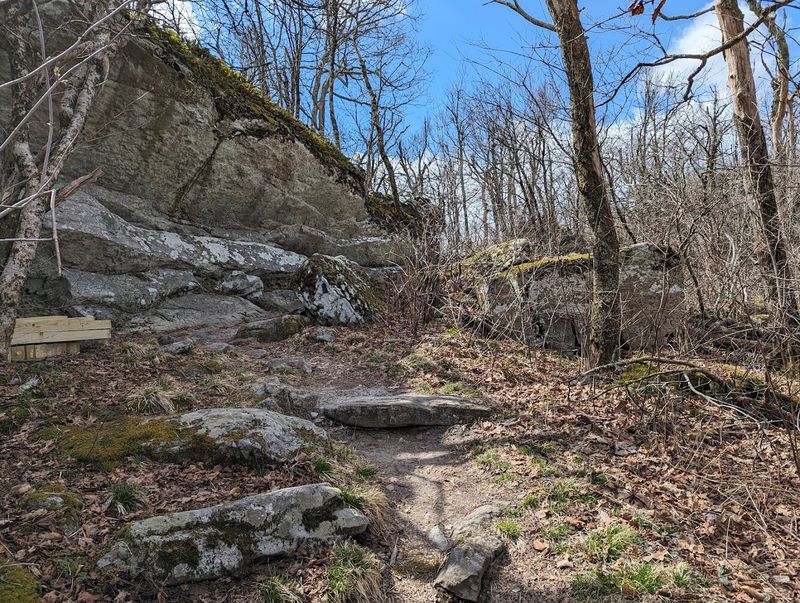
The trail itself is natural terrain, meaning roots, rocks, and uneven ground are part of the deal. Sturdy footwear with ankle support is a genuinely smart choice rather than optional advice.
Two benches placed along the steeper sections offer perfect excuses to pause, catch your breath, and actually look around at the surrounding forest. The trail rewards attention as much as it rewards effort, and that combination makes every step count.
A 465-Foot Climb That Earns Every Bit of the View
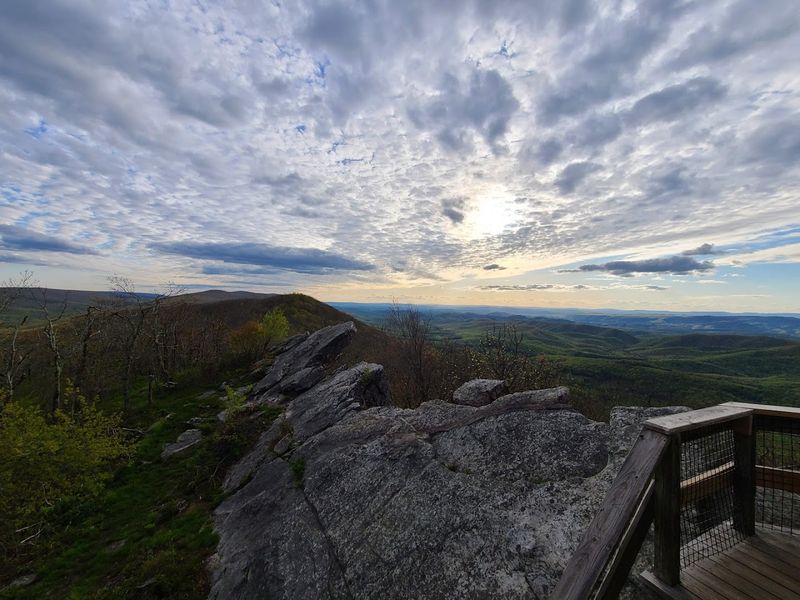
Three hundred fifty to 465 feet of elevation gain packed into roughly one mile is no joke, but it is also not the kind of thing that should scare anyone away.
The climb comes in waves rather than one relentless push, which makes it feel manageable even on a warm afternoon.
The steepest sections hit early in the hike and again just before reaching the observatory, almost like the mountain is testing your commitment twice. Kids between seven and ten years old have tackled this trail with energy to spare, which says a lot about its accessibility for reasonably active families.
Pacing matters more than speed on a trail like this. Stopping at the benches is not a sign of weakness but a genuinely smart strategy.
The views through the thinning trees grow more impressive with every hundred feet gained, giving hikers visual motivation to keep moving forward.
By the time the final steep push delivers you to the top, the effort feels less like exhaustion and more like a well-earned badge of accomplishment.
A Natural Perch With Seriously Dramatic Flair
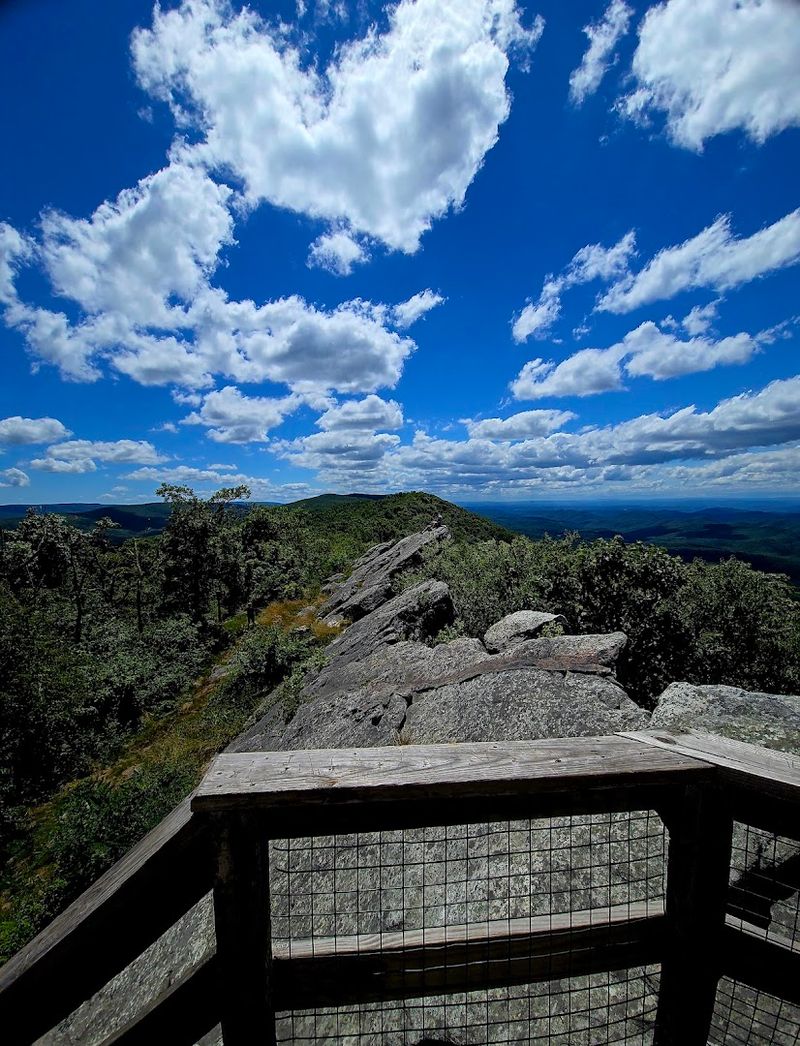
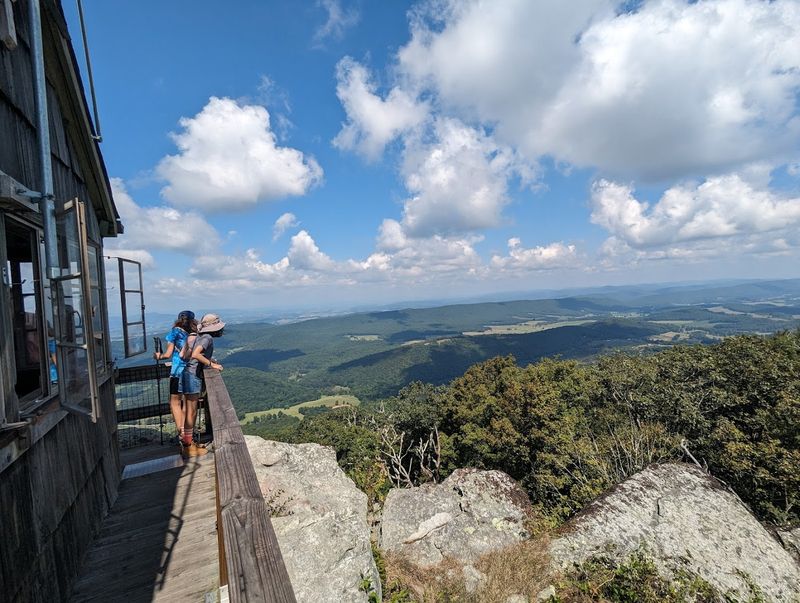
Even with the observatory tower currently closed, the hanging rock formation itself delivers a view that stops conversations mid-sentence.
This massive natural rock ledge juts out along the ridgeline, offering a front-row seat to an uninterrupted sweep of mountains and valleys stretching in every direction.
Standing on it feels a little theatrical in the best possible way. The rock is wide enough to move around comfortably, and the drop in elevation on the open side creates a sensation of floating above the landscape.
On a clear day, the visibility extends so far that the horizon looks almost fictional.
The rock surface is uneven and requires careful footing, especially near the edges, so awareness of surroundings is genuinely important. That said, the reward for stepping out onto it is immediate and overwhelming in the most positive sense.
Autumn is when this spot truly shines, with layers of orange, red, and gold blanketing the ridges below. Bringing a wide-angle camera lens or even just a fully charged phone camera is a decision you will not regret making.
The 360-Degree Panoramic Views
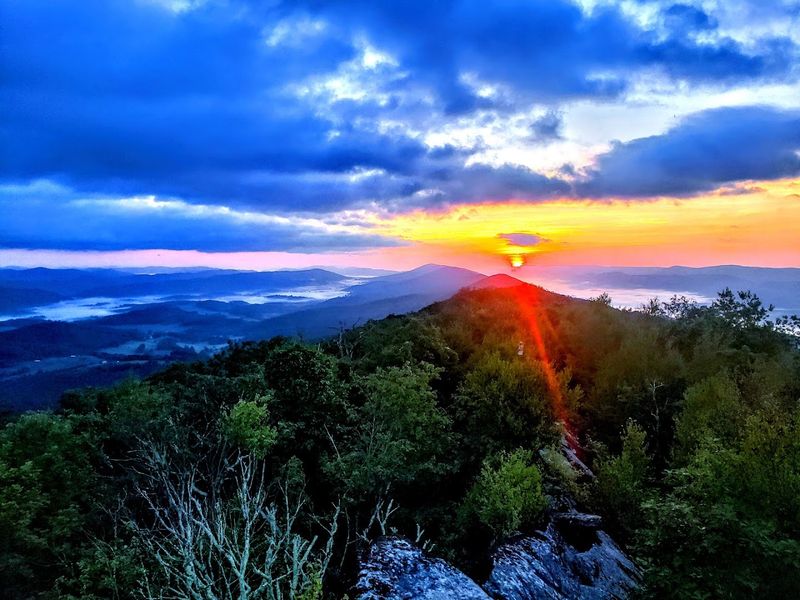
From the top of Peters Mountain at roughly 3,800 feet above sea level, the view does not just impress, it genuinely humbles. On a clear day, the Peaks of Otter on the Blue Ridge Parkway are visible about 50 miles to the east.
Cold Knob in Greenbrier County appears roughly 40 miles to the north.
The Eastern Continental Divide runs right through this spot, which means the landscape on either side flows in completely different directions toward different oceans. That geographical reality adds a layer of meaning to an already stunning visual experience.
Standing at a true continental divide while looking at fifty miles of Appalachian wilderness is the kind of thing that rewires your sense of scale.
Mornings with low fog rolling through the valleys below create a scene that looks more like a painting than real life. Clear October days reportedly deliver visibility that feels close to 100 miles.
Binoculars dramatically enhance the experience, letting distant ridges and birds come into sharp, satisfying focus. The view alone justifies every rocky step of the approach trail without question.
When the Sky Fills With Birds of Prey
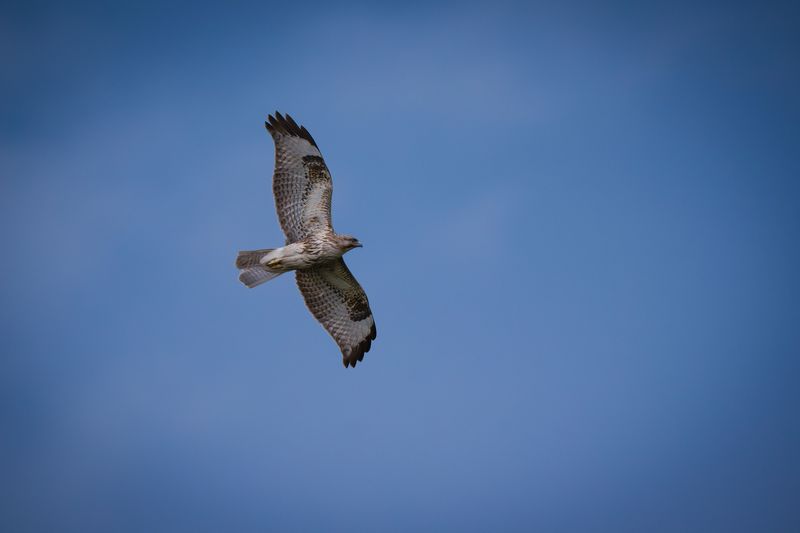
Mid-August through December is when Hanging Rock Raptor Observatory earns its full reputation. The site sits directly along a major migratory corridor, funneling hawks, eagles, falcons, and ospreys past in numbers that can genuinely take your breath away.
On a peak day, over 500 migratory hawks have passed overhead.
Broad-winged hawks reach their migration peak around mid-September, while golden eagles and red-tailed hawks tend to show up in larger numbers by mid-November.
A single record-breaking day in 2020 produced 3,812 broad-winged hawks, which is the kind of statistic that makes bird enthusiasts plan road trips months in advance.
Bird counting at this site dates back to 1952, when professors from Concord College and Marshall University began conducting annual raptor counts. That long history of observation has produced a rich dataset that continues to inform wildlife research today.
In 2021, a Motus Wildlife Tracking System was installed at the observatory, adding modern radio telemetry to the mix. Autumn visits during migration season transform an already beautiful hike into something genuinely extraordinary and memorable.
From CCC Fire Lookout to Raptor Research Hub
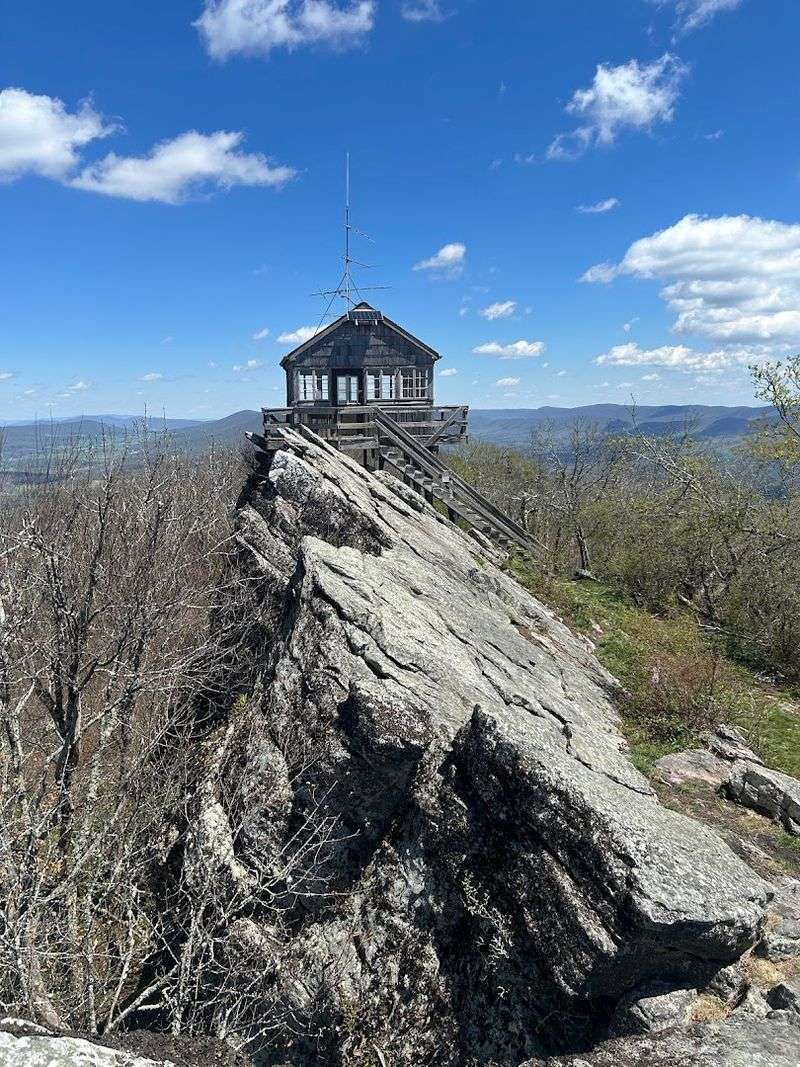
The story behind this observatory is genuinely fascinating and adds real depth to the visit. The original fire tower on this site was built by the Civilian Conservation Corps back in the 1930s and served as an active fire spotting station until the early 1970s.
The U.S. Forest Service acquired the land in 1983 after the tower had been abandoned for about a decade.
Vandals destroyed the original structure in February 1996, which could have been the end of the story. Instead, the community rallied, rebuilt the tower according to the original plans, and dedicated the new structure in June 1997.
That kind of resilience gives the place a spirit that goes beyond just a pretty view.
As of November 2024, the rebuilt tower has been deemed structurally unsafe by engineers and is currently closed to the public. Fundraising efforts are underway to replace it entirely.
The trail itself remains open and fully accessible, and the hanging rock formation still offers the same spectacular views. The observatory’s ongoing story is one of community care and stubborn dedication to preserving something genuinely worth preserving.
Smart Prep Makes the Whole Trip Better
Packing for this hike is less about hauling gear and more about making smart, lightweight choices that keep the experience enjoyable from start to finish. Water is non-negotiable since there is no running water at the site.
Bringing more than you think you need is always the right call on a steep, exposed ridgeline trail.
Binoculars are the single most rewarding optional item to bring along.
Whether the goal is spotting distant mountain peaks or tracking a hawk riding a thermal overhead, a decent pair of binoculars transforms the summit experience from impressive to unforgettable.
Bug spray earns its weight in the warmer months, especially along the forested lower sections of the trail.
Sturdy hiking boots with ankle support handle the rocky, uneven terrain far better than trail runners or casual sneakers. A light snack eaten at the summit while watching the valley below is one of those simple pleasures that travel memories are built around.
Sunscreen and a hat matter more than expected at 3,800 feet of elevation where the sun hits with surprising intensity on clear days.
Why It Deserves a Spot on Your West Virginia Bucket List
This place earns that reputation through a combination of accessible trail length, genuinely spectacular views, rich ecological history, and a quiet atmosphere that feels increasingly rare in popular outdoor destinations.
The one-mile distance makes it approachable for a wide range of hikers, from motivated beginners to seasoned trail veterans looking for a rewarding half-day outing. The elevation gain adds enough challenge to make the summit feel earned rather than handed over.
That balance between effort and reward is what keeps people coming back and recommending it enthusiastically to friends.
Even with the observatory tower temporarily closed pending replacement, the experience at the top remains fully intact and deeply satisfying.
The hanging rock formation, the sweeping views, and the chance to witness raptor migration make this one of the most distinctive natural sites in the entire region.
West Virginia has no shortage of beautiful places, but few combine history, wildlife, and landscape quite this well in a single short hike.
Address: Union, WV 24983, West Virginia.
