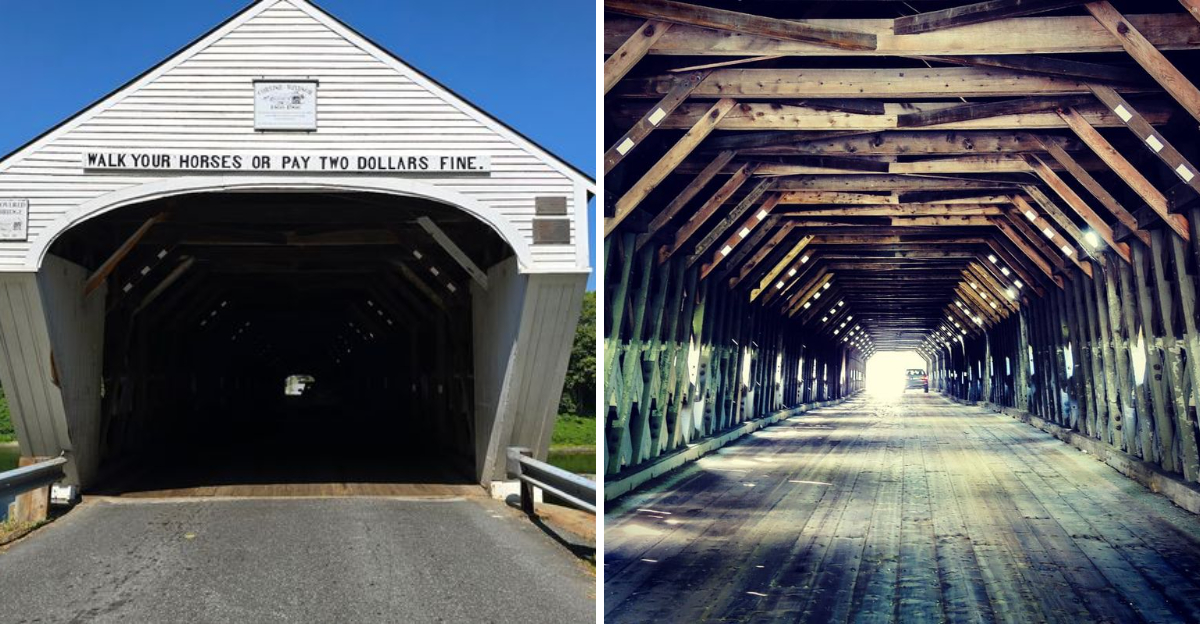
There is something about a covered bridge that feels like a secret handshake between people who have lived in New Hampshire for a long time and everyone else who is just passing through. This one is over four hundred and sixty feet long, which makes it one of the biggest I have ever seen, and yet most tourists drive right past it without having any idea what they are missing.
The wooden sides creak a little when you drive through, and the river below moves slowly like it has all the time in the world. I sat on the other side for a while just watching cars disappear into it one by one.
New Hampshire has plenty of covered bridges, but this one is something special.
A Record-Breaking Span You Have to See to Believe
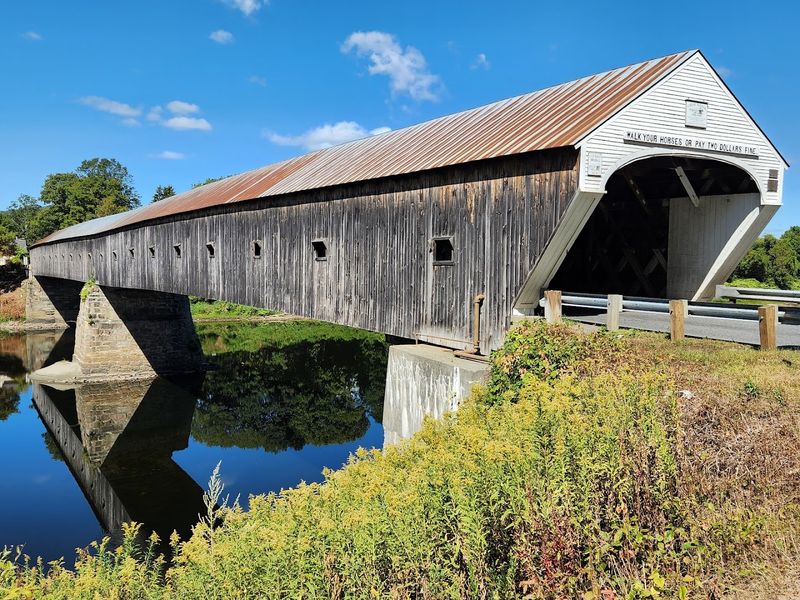
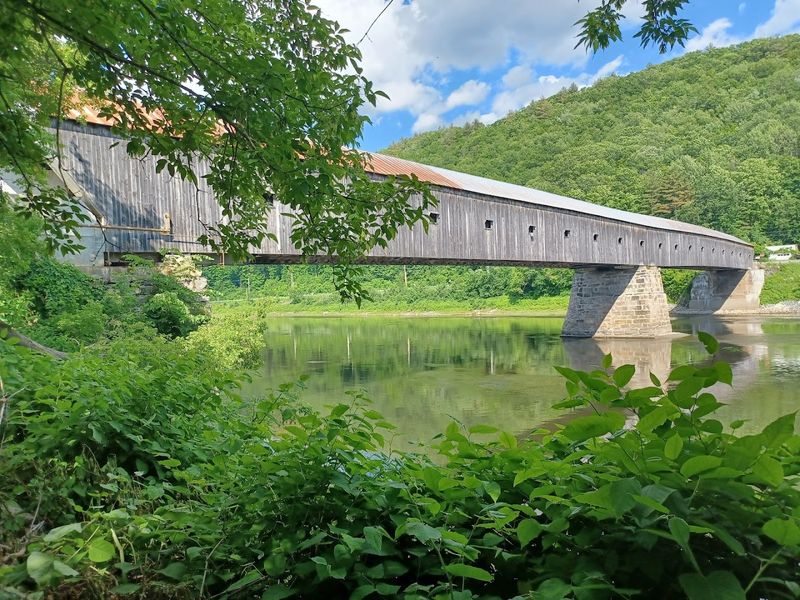
Forget everything you thought you knew about covered bridges being quaint little crossings over babbling creeks. The Cornish-Windsor Covered Bridge is an absolute giant, stretching roughly 460 feet from one riverbank to the other across the wide Connecticut River.
Two massive timber spans work together to carry the structure, each one measuring around 204 feet in length. That is not a small feat of engineering, especially for a bridge built in the 1860s using wooden pegs and hand-selected timber.
For well over a century, this bridge held the title of longest covered bridge in the entire United States. Even today, it remains the longest wooden covered bridge in the country and the longest two-span covered bridge anywhere on the planet.
Driving through it feels like entering a wooden tunnel that somehow connects two completely different worlds. On one end you are standing in New Hampshire, and by the time you exit, Vermont has quietly welcomed you in.
That crossing alone is worth the detour, and the bragging rights are absolutely priceless.
The Remarkable Engineering Behind the Lattice Truss Design
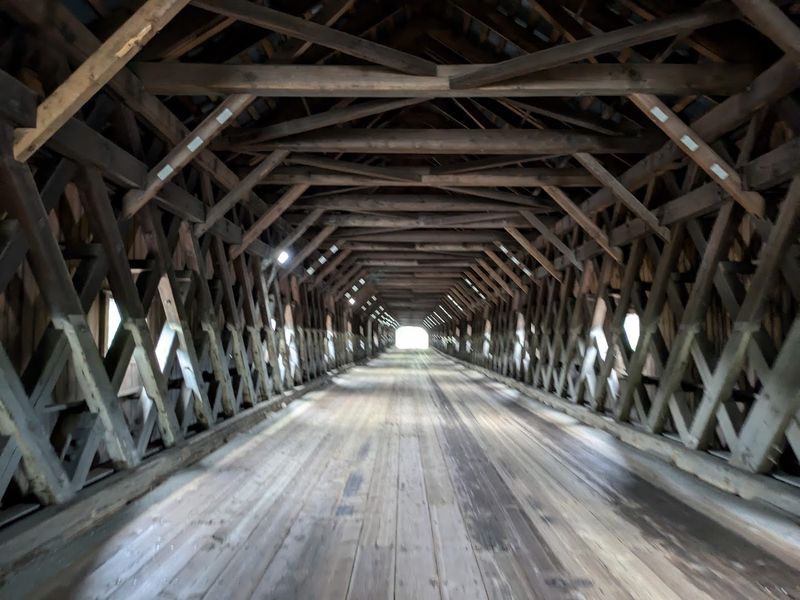
Look closely at the walls inside the bridge and you will notice something genuinely clever. Hundreds of diagonal wooden planks crisscross in an overlapping lattice pattern, creating a rigid framework that distributes weight with surprising efficiency.
This design is known as the Town lattice truss system, patented by architect Ithiel Town in the early 1800s. The genius of the system lies in its simplicity: no heavy iron hardware, no complicated metal joints, just interlocking timber held together with wooden pegs called treenails.
Spruce and pine were the materials of choice for this bridge, selected for their strength and flexibility. Every joint was carefully fastened by hand, making the construction process both labor-intensive and remarkably precise for its era.
The lattice pattern is not just functional, it is genuinely beautiful. Light filters through the wooden walls in narrow slices, creating a dappled, almost theatrical glow inside the tunnel.
Engineers still study this design today as a masterclass in structural efficiency, proving that sometimes the oldest solutions are also the most elegant ones.
Born in 1866, Built to Last Centuries
Most structures from the 1860s have long since crumbled into history books, but this bridge is still very much alive and kicking. Constructed by builders Bela Jenks Fletcher and James Frederick Tasker, the current bridge replaced three earlier crossings at the same site, all of which were claimed by floodwaters.
The first bridge at this location appeared in the late 1700s, followed by two more replacements before the current structure finally proved stubborn enough to survive. Each predecessor was swept away by the unpredictable force of the Connecticut River, making the 1866 construction all the more impressive in hindsight.
Choosing a Town lattice design was a smart move by the builders, as the system had already proven its durability across New England. The covered roof was not just decorative, it protected the timber from rain, snow, and freeze-thaw cycles that would otherwise rot exposed wood within decades.
New Hampshire can genuinely brag about having a bridge that has outlasted wars, floods, and generations of skeptics. Standing beside it today, knowing exactly what it has survived, makes the whole experience feel a little bit electric.
Two States, One Bridge, Zero Borders
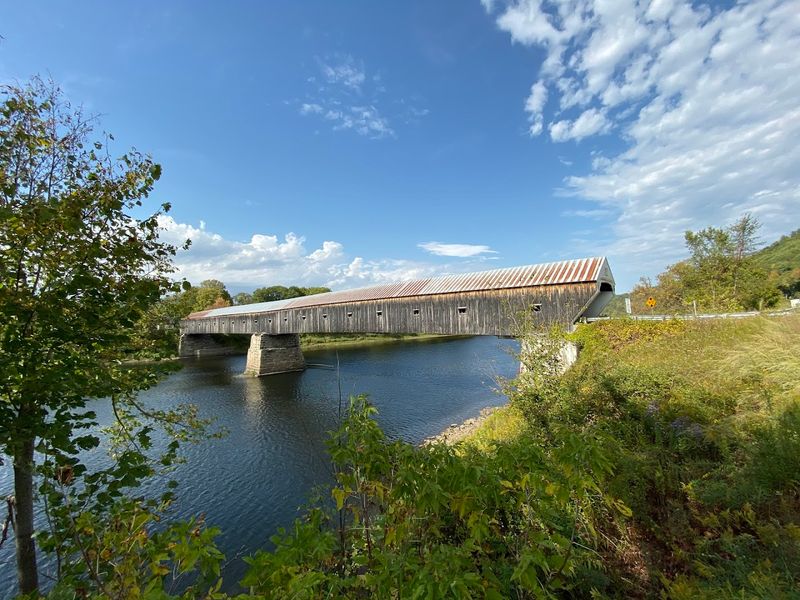
There is something wonderfully quirky about driving across a bridge and landing in a completely different state by the time you reach the other end. The Cornish-Windsor Covered Bridge connects Cornish, New Hampshire, to Windsor, Vermont, with the Connecticut River serving as the official state line running beneath it.
The river itself forms the natural boundary between these two New England neighbors, and this bridge has been the handshake between them for generations. Local commuters use it daily, treating it as casually as any other road crossing, which somehow makes it even more charming.
On the New Hampshire side, a welcome sign stands near the small parking area, making it a popular photo opportunity for anyone arriving from Vermont. The sign is simple and classic, perfectly matching the no-fuss personality of the state itself.
Both states share a quiet pride in this crossing, and rightly so. Vermont and New Hampshire have been connected at this exact spot for hundreds of years, long before covered bridges became Instagram-worthy.
The bridge is less a tourist attraction and more a living piece of two states sharing the same remarkable story.
The National Register and a Well-Earned Historic Status
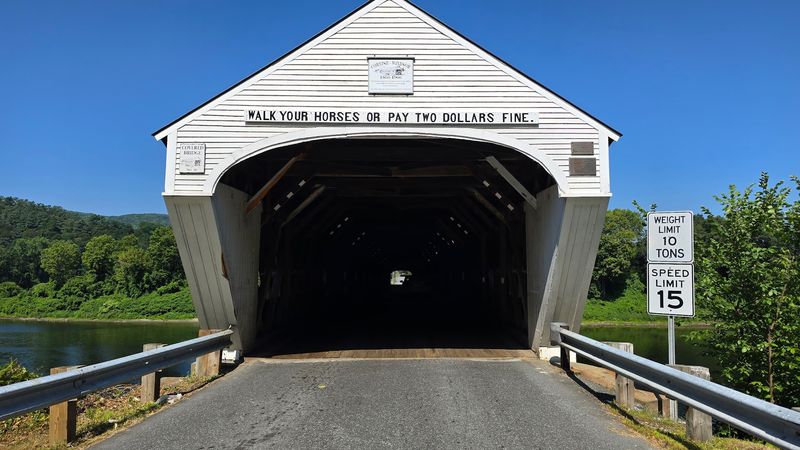
Not every old structure earns a spot on the National Register of Historic Places, but the Cornish-Windsor Covered Bridge made the list back in 1976. That designation is not handed out lightly, and it reflects the bridge’s genuine significance to American architectural and engineering heritage.
Even before that honor, the American Society of Civil Engineers had already recognized the bridge as a National Historic Civil Engineering Landmark, a title awarded in 1970. That puts it in elite company alongside other feats of engineering that shaped how America was built.
Informational plaques near the New Hampshire end of the bridge offer a concise and well-written history of the crossing, covering its construction, past floods, and the toll system that once funded its maintenance. Reading through them takes only a few minutes but adds enormous depth to the experience.
Preservation efforts have kept the bridge not just standing but fully functional. The combination of official recognition and active use makes this landmark feel genuinely alive rather than frozen in time.
New Hampshire takes its historic sites seriously, and this bridge is proof of that commitment.
The Toll Bridge That Charged Until 1943
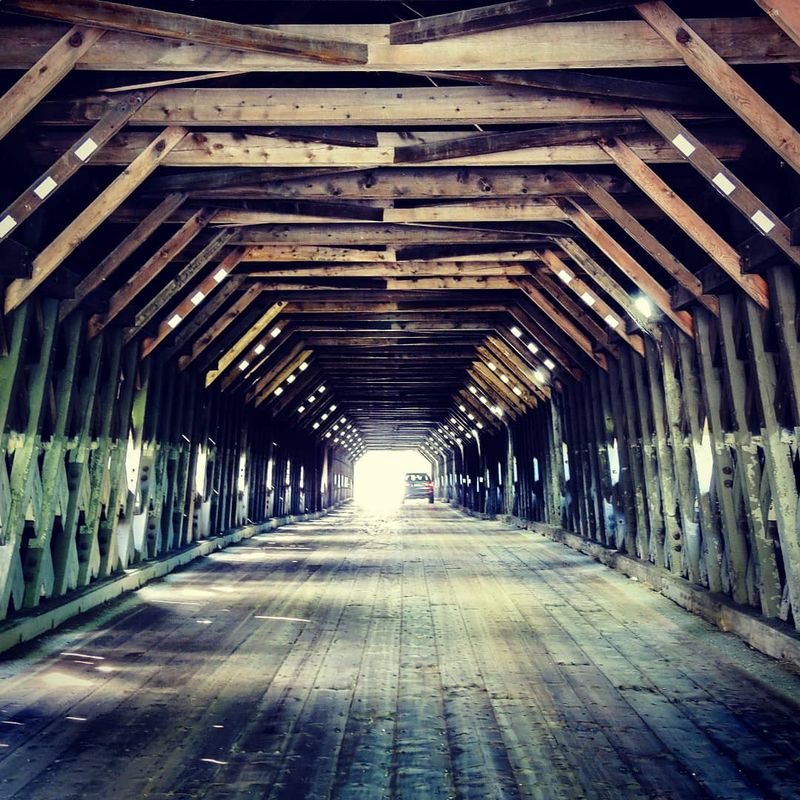
For decades after its completion, crossing this bridge was not free. The Cornish-Windsor Covered Bridge operated as a toll crossing, charging travelers and their horses for the privilege of passing over the Connecticut River without getting their feet wet.
A historic sign inside the bridge still references the old rules, warning that horses must be walked across or a fine would apply. It is a delightful relic of an era when horse traffic was a genuine logistical concern for bridge operators everywhere.
The State of New Hampshire took ownership of the bridge in the 1930s, and within a few years the tolls were officially abolished. That moment marked a shift from private enterprise to public infrastructure, turning a working toll crossing into a community asset open to all.
Imagining the steady parade of horses, wagons, early automobiles, and foot travelers that once paid their fare at this spot adds a wonderful layer of texture to any visit. The bridge stopped collecting money long ago, but it has never stopped collecting memories.
Every crossing today is a small, free gift from history.
The 1989 Restoration That Saved an Icon
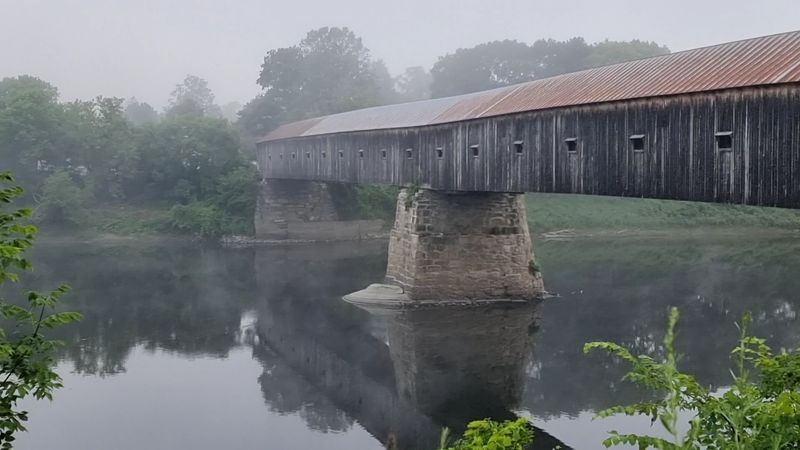
By the late 1980s, the bridge was in serious trouble. Years of hard use, flood damage, and the relentless New England climate had taken a heavy toll on the timber structure, and officials made the difficult call to close it completely in 1987.
What followed was one of the most significant covered bridge restoration projects in American history. Engineers and craftspeople worked meticulously to preserve as much original material as possible while replacing compromised sections with new timber cut to match the historic design.
The project reopened the bridge in December 1989, giving New Hampshire and Vermont back a landmark that both states had sorely missed. The restoration honored the original Town lattice truss design faithfully, ensuring the bridge looked and functioned exactly as its 1866 builders intended.
Careful restoration is what separates a living landmark from a pile of rotting planks, and the team that tackled this project clearly understood the assignment. Decades later, the bridge continues to carry daily traffic, a direct result of that painstaking work.
Next time you drive through, spare a thought for the craftspeople who made sure this story could continue.
Fall Foliage Season Transforms the Bridge Into Pure Magic
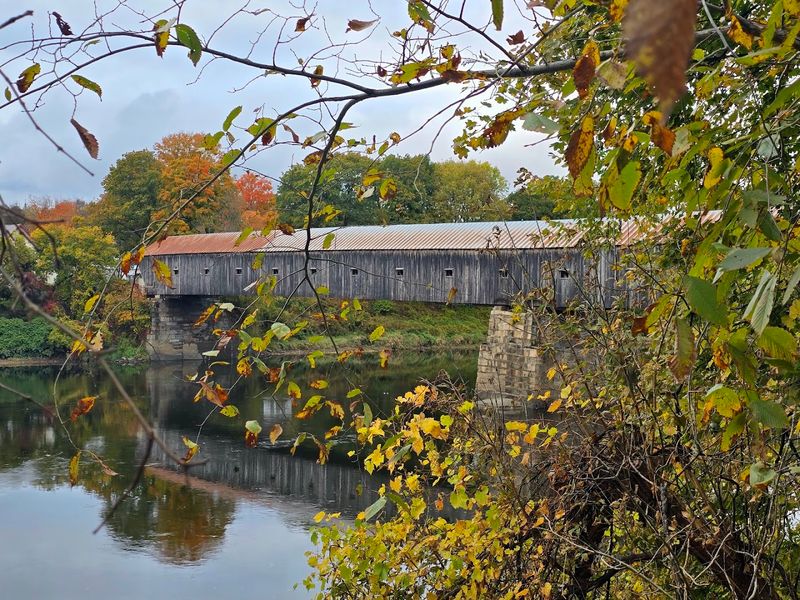
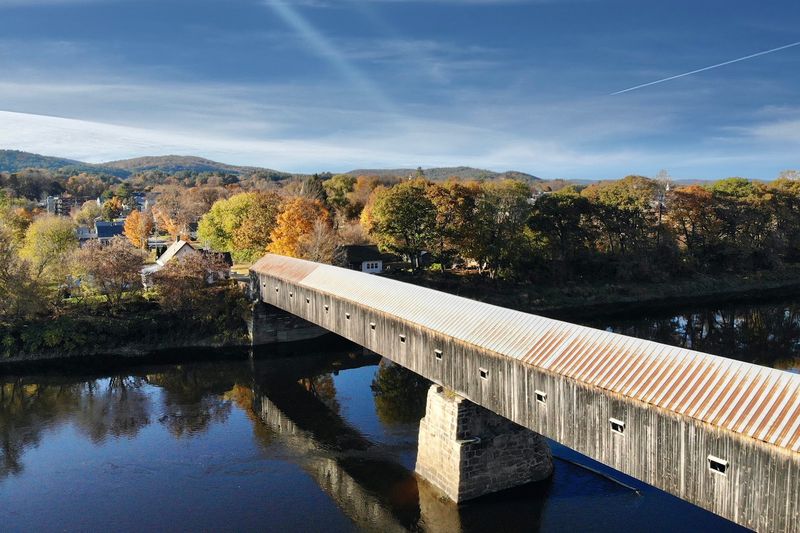
New England fall foliage is already legendary, but seeing it frame the Cornish-Windsor Covered Bridge takes the whole experience to another level entirely. The bridge’s deep red exterior pops dramatically against the explosion of orange, yellow, and crimson that sweeps through the Connecticut River Valley each autumn.
Photographers descend on this spot every October armed with serious camera gear, all chasing that perfect shot of the bridge with mirror-like reflections shimmering on the river surface. It is genuinely one of the most photogenic scenes in all of New Hampshire, and that is saying something in a state full of calendar-worthy landscapes.
The best views of the bridge from the outside come from the riverbanks on either side, where the full length of the structure becomes visible. Morning light and late afternoon golden hour both produce stunning results, so plan your timing accordingly if photography is a priority.
Even without a camera, simply standing by the water and watching the autumn colors reflect off the Connecticut River is its own reward. The bridge has witnessed countless New England autumns, and it wears each season with the quiet confidence of something that knows exactly how good it looks.
Practical Tips for Visiting the Bridge Safely
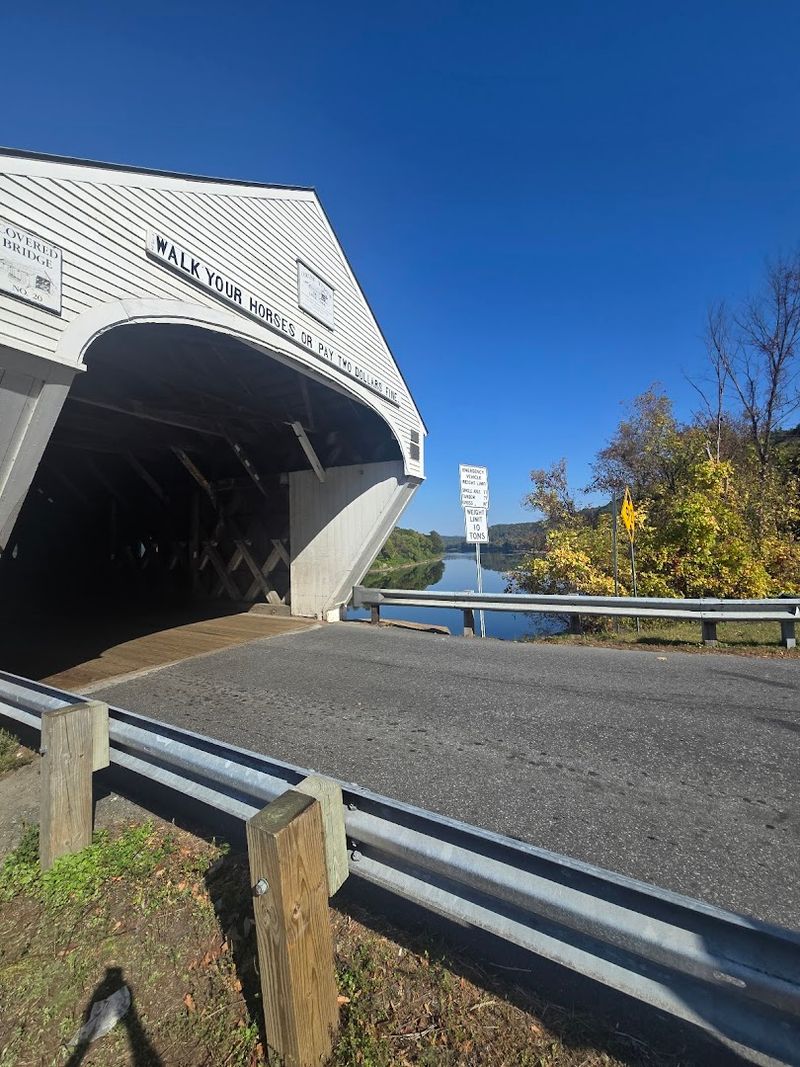
Visiting the Cornish-Windsor Covered Bridge is genuinely easy, but a few practical pointers will make the experience much smoother. The bridge is open around the clock every day of the week, so there is no need to stress about operating hours or ticket windows.
A small parking area sits on the New Hampshire side of the bridge, fitting a handful of cars comfortably. It fills up quickly on busy fall weekends, so arriving early in the morning gives you the best chance of snagging a spot without circling repeatedly.
Walking inside the bridge is technically possible but comes with real caution required. Local traffic moves through at a brisk pace, and the interior has no dedicated pedestrian lane or lighting.
Driving through is honestly the safer and more satisfying option for most people.
For the best exterior photographs, head to the riverbank access points on either side where the full span becomes visible. The New Hampshire side offers informational plaques that are well worth a few minutes of reading time.
Combine the visit with a stop at nearby Saint-Gaudens National Historical Park to make a full and rewarding day out of the trip.
Plan Your Visit to This New Hampshire Masterpiece
The address for the Cornish-Windsor Covered Bridge is Cornish, NH 03745, making it easy to plug into any navigation app for a straightforward visit. The bridge sits right on the state line, so approaching from either New Hampshire or Vermont works perfectly depending on where your road trip begins.
Nearby Windsor, Vermont, offers charming small-town character worth exploring before or after crossing the bridge. The town has its own deep history and sits comfortably close to other attractions that round out a full New England adventure.
Spring and summer visits are peaceful and green, while winter crossings carry a hushed, almost cinematic quality as snow dusts the wooden roof. Every season offers a completely different version of the same spectacular landmark, which is a rare quality for any single destination.
The Cornish-Windsor Covered Bridge is not some dusty relic cordoned off behind velvet ropes. It is a working, breathing piece of American history that you can actually drive through today.
Pack the car, point it toward the Connecticut River Valley, and go experience the longest wooden covered bridge in the United States before the rest of the world catches on. New Hampshire is waiting.
