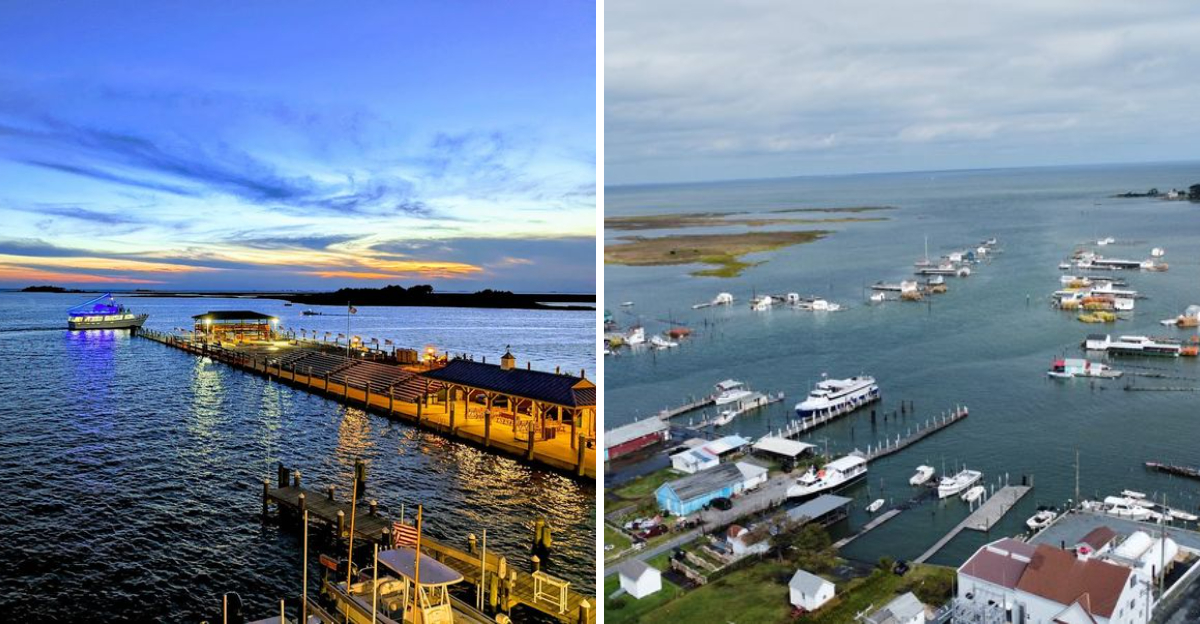
Some places evolve. They add new buildings, new businesses, new energy.
And then there are places that stay the same, content to remain what they have always been. This historic Maryland fishing town falls into the second category.
The docks look like they did decades ago, the boats are still working vessels, and the pace is slow in a way that feels intentional. You can walk along the water, watch the catch come in, and imagine what life was like here fifty years ago.
The town has not tried to reinvent itself for tourism, and that is exactly what makes it special. A place that honors its past by preserving it.
A Legacy Built on Shells
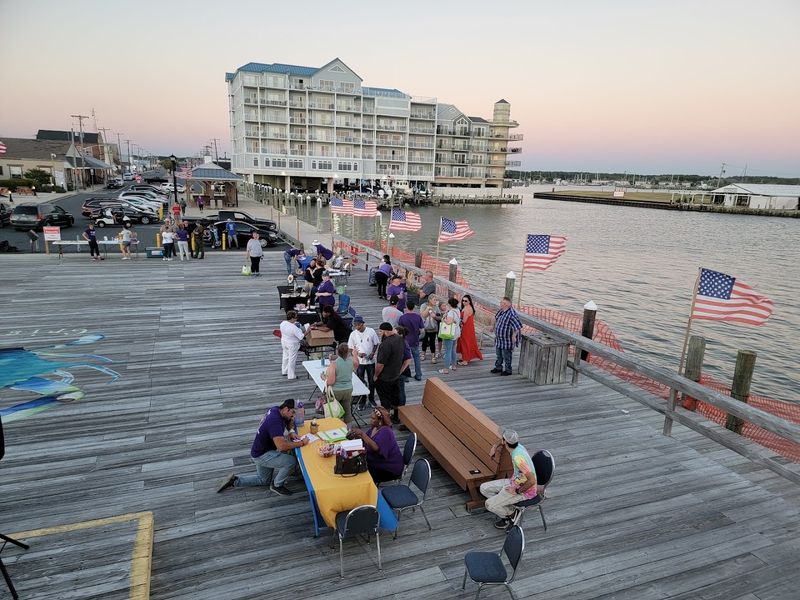
The ground beneath Crisfield is not ordinary earth. It is, quite literally, built on millions of discarded oyster shells, packed together over decades to extend the town’s land out into the surrounding marshes.
That detail alone stopped me in my tracks when I first heard it from a local near the harbor.
Originally called Annemessex Neck, then Somers Cove, this settlement transformed dramatically when the Pennsylvania Railroad arrived in 1866. Attorney John W.
Crisfield helped bring that railroad to town, and his name stuck. What followed was a seafood boom so powerful that by 1904, Crisfield had become the second-largest city in Maryland.
Vast oyster beds in the Tangier Sound drew workers, processors, and entrepreneurs from across the region. Shucking sheds lined the waterfront, and packed trains carried the bay’s bounty to cities up and down the East Coast.
The energy must have been extraordinary.
That prosperity is not just a historical footnote here. You feel it in the architecture, the layout of the streets, and the quiet pride locals carry when they talk about their town’s past.
Crisfield earned the title of Seafood Capital of the World, and nobody here has forgotten it.
Understanding this foundation, both literally and figuratively, changes how you see the entire town. Every cracked sidewalk and salt-stained building becomes part of a longer story, one of ambition, hard work, and a community built from the bottom of the bay up.
The Heartbeat of the Watermen
Before the rest of the town stirs, the watermen of Crisfield are already out on the water. I caught my first glimpse of them just after sunrise, their boats cutting through the morning mist with a quiet confidence that comes from doing something your whole life.
There is no performance in it. It is simply work, and deeply meaningful work at that.
Crisfield proudly carries the nickname Crab Capital of the World, and the watermen are the reason that title still means something. Blue crabs and oysters remain the heart of the local economy, harvested using methods passed down through generations.
Fathers teach sons, and sometimes daughters, the rhythms of the tides and the secrets of the best crabbing grounds.
The working waterfront here is not a backdrop for photos. It is a living, functioning part of daily life, where the smell of salt and diesel mingles in the air and conversations revolve around weather forecasts and catch sizes.
It feels refreshingly real.
What struck me most was the lack of pretense. These are people who measure success in bushels and tides, not social media metrics.
The respect they carry for the bay is genuine and earned through years of reading its moods.
Watching those boats return to the dock in the afternoon, heavy with the day’s haul, felt like witnessing something sacred. The bond between Crisfield and the Chesapeake Bay is not just economic.
It is deeply personal and enduring.
Cruising the Tangier Sound, Gateway to the Islands
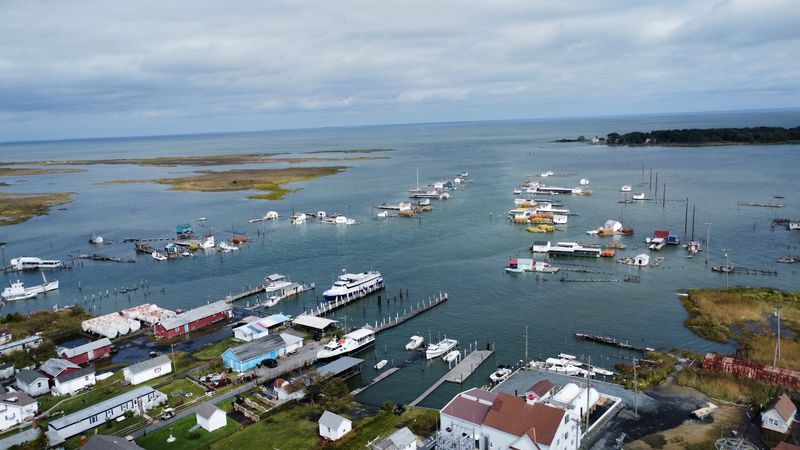
From the Crisfield docks, the open water beckons with a kind of quiet insistence. The town serves as the main departure point for ferries heading out to Smith Island and Tangier Island, two of the most remote and fascinating communities in the entire Chesapeake Bay region.
I bought my ticket and boarded with a small group of curious travelers.
The ride across the Tangier Sound is an experience in itself. As the shoreline faded behind us, wide stretches of open water surrounded the boat on every side.
Herons and egrets waded through the shallow marshes we passed, completely unbothered by our presence.
Smith Island greeted us with golf carts instead of cars and a pace of life that felt genuinely unhurried. The community there maintains traditions that have largely disappeared elsewhere, including a unique dialect and a fierce pride in their isolation.
It is not a museum exhibit. These are real people living real lives.
Tangier Island, across the Virginia border, carries a similar spirit. Both destinations offer a rare glimpse into a Chesapeake culture that has survived modernization largely intact, and Crisfield is your ticket to reach them.
The ferry journey itself is worth the trip even if you only stay briefly on the islands. Watching the mainland shrink in the distance while the open bay stretches ahead gives you a sense of the vast, wild beauty that surrounds this small corner of Maryland.
It is a perspective that is hard to find anywhere else.
Stories Etched in Time at the Tawes Museum
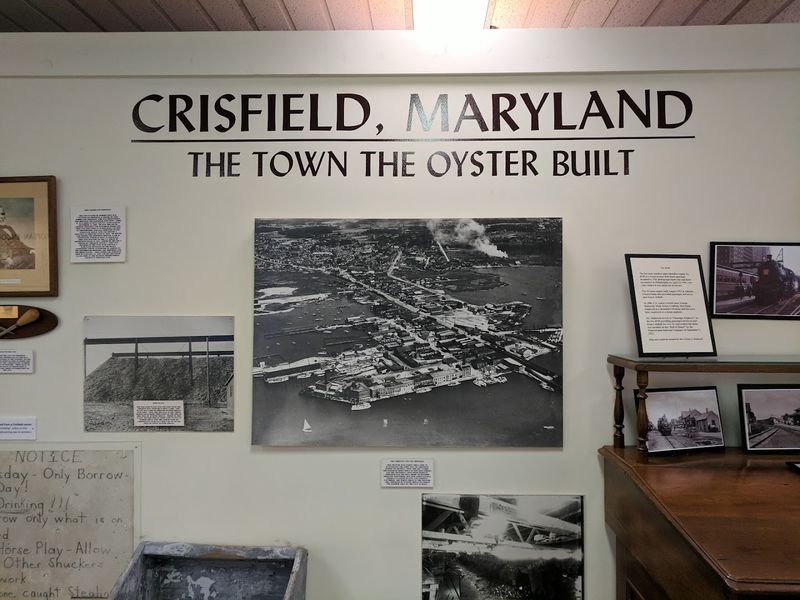
History has a way of feeling abstract until you are standing in front of the actual objects that lived it. The J.
Millard Tawes Historical Museum, hidden inside the Somers Cove Marina complex, does something remarkable with Crisfield’s past. It makes it feel close enough to touch.
The museum is operated by the Crisfield Heritage Foundation and serves as the cultural anchor of the town. Inside, exhibits trace the area’s story from the earliest Native American inhabitants all the way through the booming seafood era and beyond.
Photographs of crowded shucking sheds and bustling docks line the walls, each one a frozen moment from a remarkably vivid past.
I spent longer here than I planned. The exhibits on crabbing and oystering are genuinely detailed, explaining not just the economics but the human side of those industries.
You start to understand what it meant to live in a town where the bay was both provider and employer for nearly everyone.
The museum also highlights the art of decoy carving, shipbuilding traditions, and the political figures who shaped the region. It is a well-rounded portrait of a community, not just a collection of old things.
For first-time visitors, this is honestly the best place to start. Walking out with that context in your head changes the way everything else in Crisfield looks and feels.
The address is 3 Ninth St, Crisfield, MD 21817, right on the marina, and it is easy to find once you reach the waterfront.
Where Carvers Craft History, The Ward Brothers Workshop
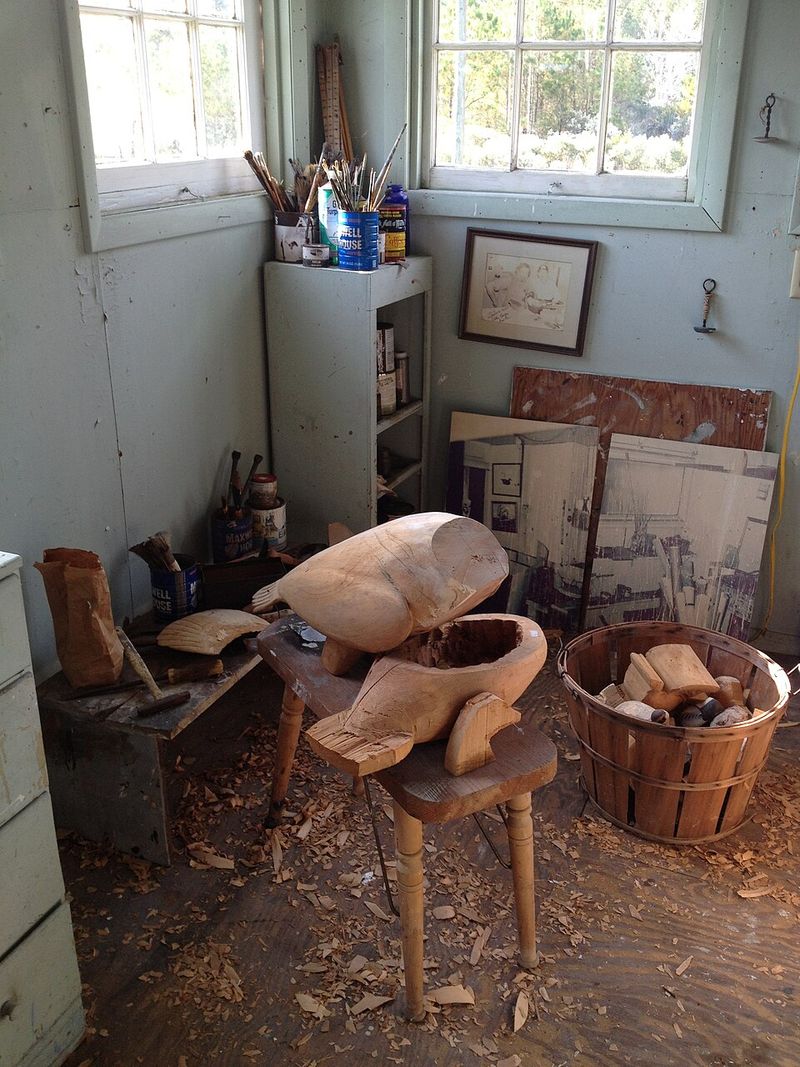
Not many towns can claim to be the birthplace of a genuine American art form. Crisfield can.
The Ward Brothers, Lem and Steve, grew up here and spent their lives transforming blocks of wood into remarkably lifelike waterfowl decoys that collectors and museums now treasure around the world.
They called themselves wildfowl counterfeiters in wood, which is one of the best self-descriptions I have ever come across. Their workshop, still preserved in Crisfield, is a fascinating place.
Original tools sit exactly where they were left. Paint jars, hand-scrawled notes on the rough wooden walls, and the faint smell of wood and old varnish fill the space.
The brothers carved roughly 25,000 decoys over their lifetime, each one reflecting a deep knowledge of the birds they were mimicking. They were not just craftsmen.
They were naturalists and artists who happened to work in a medium rooted in the practical needs of Chesapeake Bay hunting culture.
Though the Ward Museum of Wildfowl Art bearing their name is located in Salisbury, coming to Crisfield to see the actual workshop feels more intimate. This is where the work happened, where the ideas came from, and where the connection to the bay shaped every carving decision they made.
Tours of the workshop can be arranged through the Crisfield Heritage Foundation. It is a quieter attraction, but one that leaves a lasting impression.
Some of the most meaningful things you encounter in a place are the ones you almost walked past.
Somers Cove Marina, A Haven for Boats
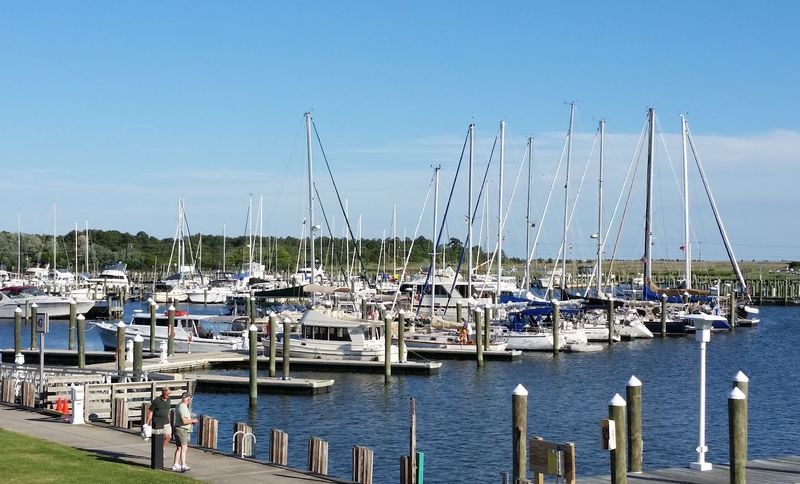
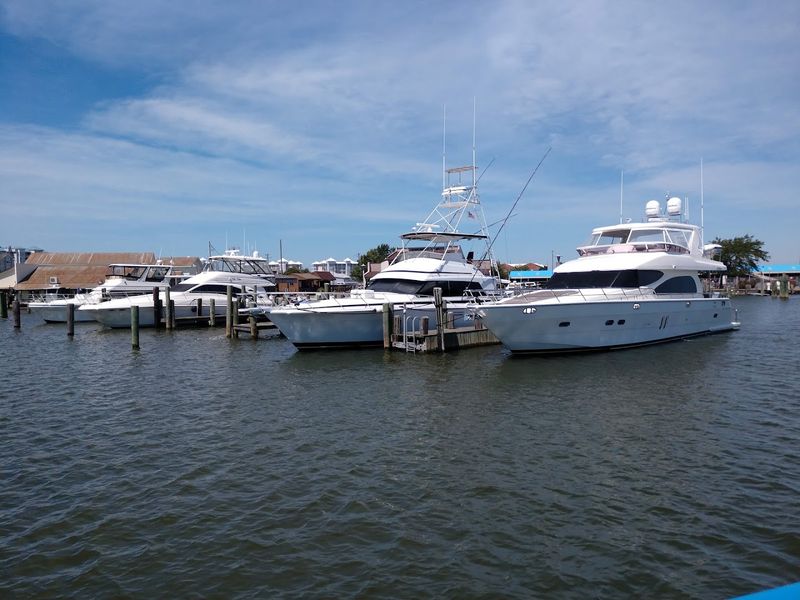
The moment I saw Somers Cove Marina, I understood why boaters plan entire trips around stopping here. As the largest state-owned marina in Maryland, it commands attention.
Rows upon rows of boats stretch across 515 slips, and the whole place hums with a relaxed, purposeful energy that is hard to describe but very easy to feel.
What sets this marina apart is not just its size. It is the setting.
Protected on three sides by land, the marina sits in a naturally sheltered cove that offers immediate access to the Tangier Sound. Whether you arrive by water or by road, the location feels like a reward.
I spent a good hour just walking the docks, watching pelicans glide overhead and chatting briefly with a couple who had motored down from Annapolis. They came back every summer, they said, because nowhere else on the bay felt quite this unhurried.
That kind of loyalty says something.
Transient slips are available for visiting boaters, making this a practical stop as well as a scenic one. The marina also connects directly to the town’s walking areas, the museum, and the ferry terminals, so everything feels within easy reach.
Even if you do not arrive by boat, the marina is worth a visit. Strolling along the waterfront at golden hour, with the boats rocking gently and the sky turning orange over the sound, is the kind of simple pleasure that Crisfield does remarkably well.
No fanfare required.
Savoring the Bay’s Bounty
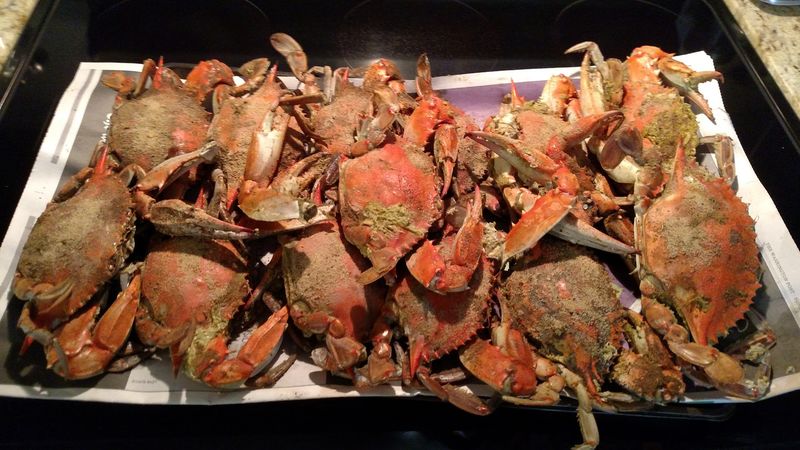
There is something deeply satisfying about eating seafood within sight of the water it came from. Crisfield makes that possible in the most straightforward way imaginable.
The restaurants here are not trying to impress you with elaborate presentations. They are focused on one thing: getting the freshest possible product onto your plate.
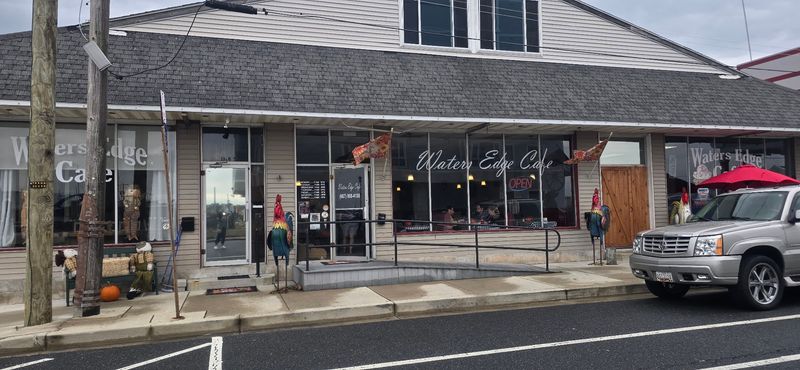
Waters Edge Cafe, located at 1108 W Main St, Crisfield, MD 21817, sits conveniently near the town docks and delivers exactly the kind of meal you hope to find in a town like this.
Soft-shell crab dishes and Maryland crab cakes anchor the menu, prepared with a simplicity that lets the quality of the ingredients do all the talking.
I ordered the crab cake and understood immediately why people drive hours for it.
The Crab Place at 504 Maryland Ave, Crisfield, MD 21817, takes a more festive approach, with all-you-can-eat crab experiences that turn a meal into an event. They even offer crab and cruise combinations, so you can enjoy the bay while you eat.
That is a hard offer to turn down.
Beyond these spots, smaller local eateries scattered around town serve up fried flounder, steamed oysters, and clam chowder with the same unpretentious confidence. Nobody here is trying to reinvent the wheel.
Eating in Crisfield is a reminder that food tied to a place and a community tastes different. Every bite carries context, and that context makes it better.
This is not fast food culture. It is the real thing.
Crisfield’s Festive Spirit
A town that works as hard as Crisfield knows how to celebrate just as hard. The annual National Hard Crab Derby, held every Labor Day weekend, is proof of that.
Crab races are the centerpiece, which sounds absurd until you are actually there cheering for a crustacean with complete sincerity. It happens faster than you’d expect.
The Derby also includes a parade down Main Street, pageants, and boat docking contests that draw serious competitors. The energy during that weekend is genuinely infectious, and the crowd is a mix of locals and visitors who all seem to drop their usual reserve and just enjoy themselves.
That communal looseness is rare and worth experiencing.
The J. Millard Tawes Crab and Clam Bake, held in September and named after the Crisfield-born former governor of Maryland, brings another wave of celebration.
It is an all-you-care-to-eat feast that draws people from across the state, and the atmosphere is warm, loud, and wonderfully unpretentious.
Throughout the rest of the year, Crisfield keeps the calendar lively with events like the Stars and Stripes Fest, the Wheels on the Waterfront car show, and seasonal parades for Halloween and Christmas. These gatherings are not designed to attract tourists.
They exist because this community genuinely enjoys coming together.
That distinction matters. Attending a local event in Crisfield feels like being welcomed into something real rather than watching a performance designed for outsiders.
The town’s festive spirit is organic, rooted, and entirely its own.
Sunsets and Serenity
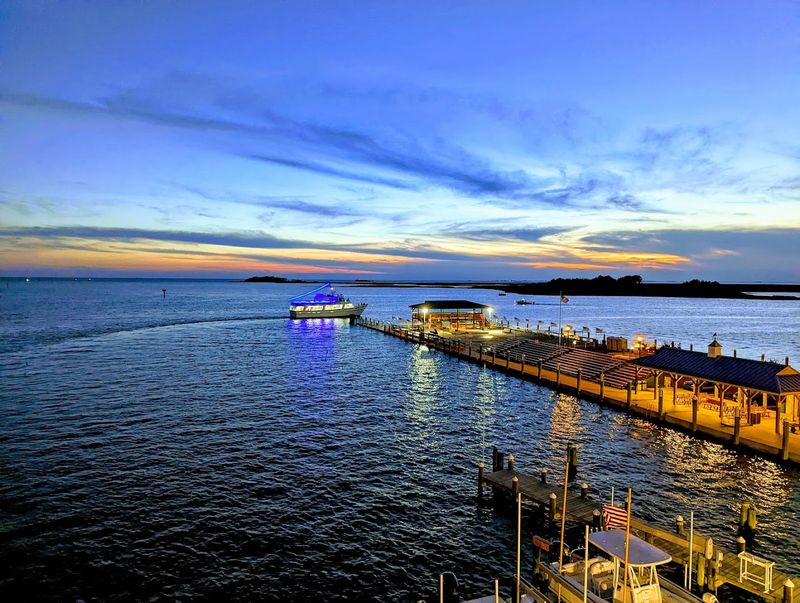
By late afternoon in Crisfield, the pace of the day shifts into something even quieter. The boats have mostly returned, the seafood houses are winding down, and the waterfront takes on a different kind of light.
The sunsets here are the kind that make you stop mid-sentence and just look.
The City Dock is the best spot to catch that evening show. Sitting on the edge of the dock with the Tangier Sound stretching out ahead, the sky goes through a full performance of color before finally settling into dusk.
It is free, it is unhurried, and it is genuinely one of the most beautiful things I experienced during my time here.
Janes Island State Park, located just a short drive from town, adds another dimension to Crisfield’s quieter side. The park is a network of salt marshes and waterways that feels almost prehistoric in its stillness.
Kayaking through those narrow channels, with nothing but marsh grass and bird calls around you, is a genuinely restorative experience.
Birdwatchers find plenty to keep them busy here too. Herons, ospreys, and a wide variety of shorebirds move through the area with impressive regularity.
You do not need to be an expert to appreciate it. Just being present in that landscape is enough.
Crisfield does not shout about itself. It simply exists, steadily and authentically, in a way that feels increasingly rare.
Leaving feels harder than arriving, and that, more than anything, is the truest measure of a place worth visiting.
