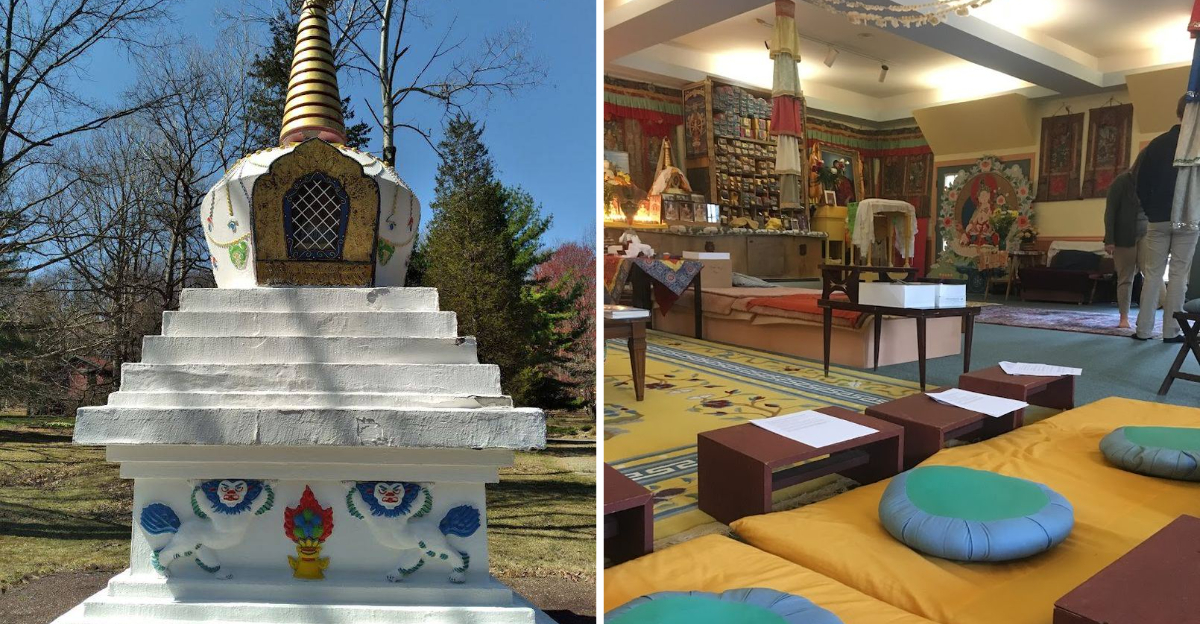
Ever had one of those days where the noise of the world just feels like too much? This place is the antidote.
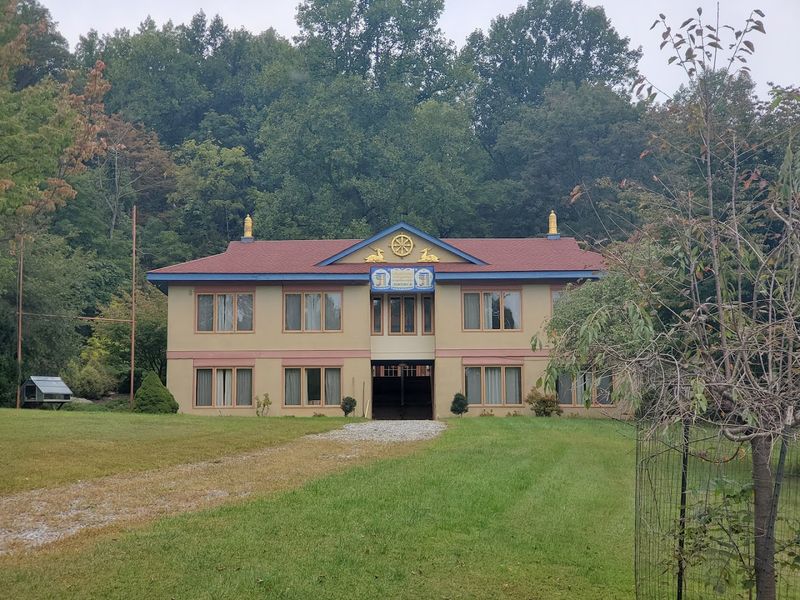
Set on 32 wooded acres in New Jersey, it is a hidden pocket of pure stillness.
A winding gravel path leads you up the mountain, and suddenly, everything changes.
There is a temple, a peaceful garden, and an energy that makes your shoulders drop for the first time all week.
It has been a quiet sanctuary for decades, a place where meditation and calm are the only items on the agenda.
You can wander the grounds, sit in silence, or just breathe deeply without any interruptions.
It is a gentle escape, a reminder that peace is never as far away as it seems.
This New Jersey treasure is waiting when you need it most.
A Retreat Rooted in History Unlike Anything in America
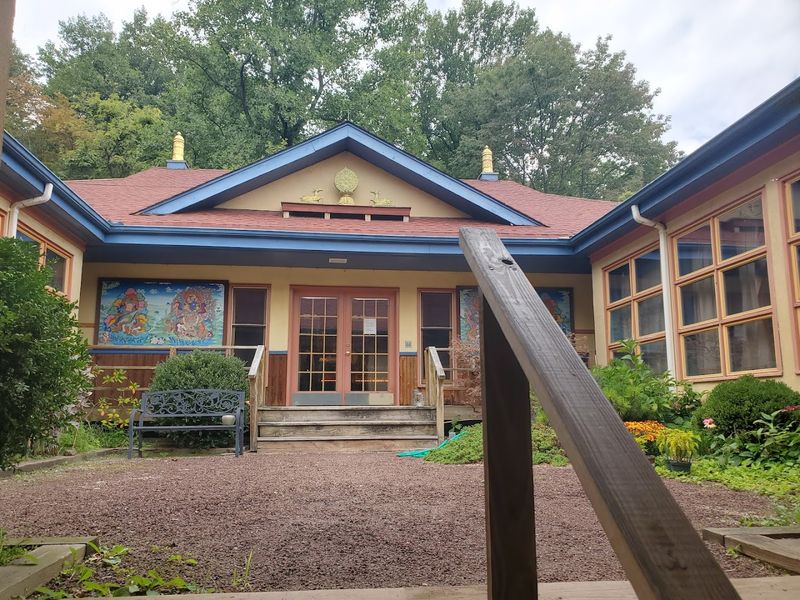
Most places claim to be one-of-a-kind, but the Tibetan Buddhist Learning Center genuinely earns that title.
Founded in 1958 by Geshe Wangyal, a Kalmyk-Mongolian lama, it holds the remarkable distinction of being the first Tibetan Buddhist dharma center established in the entire United States.
That is not a small thing. Long before Tibetan Buddhism became widely known in the West, this quiet corner of New Jersey was already a living center of teaching and practice.
The center was originally called the Lamaist Buddhist Monastery of America before receiving guidance from the 14th Dalai Lama himself to rename it in 1984.
The rename reflected something deeper, a shift toward emphasizing learning and intellectual engagement alongside spiritual practice. Geshe Wangyal’s early students went on to build graduate programs at major universities, planting seeds that grew far beyond this mountain.
Walking these grounds, you feel that history without anyone having to say a word about it.
The Gravel Path That Changes Your Pace Immediately
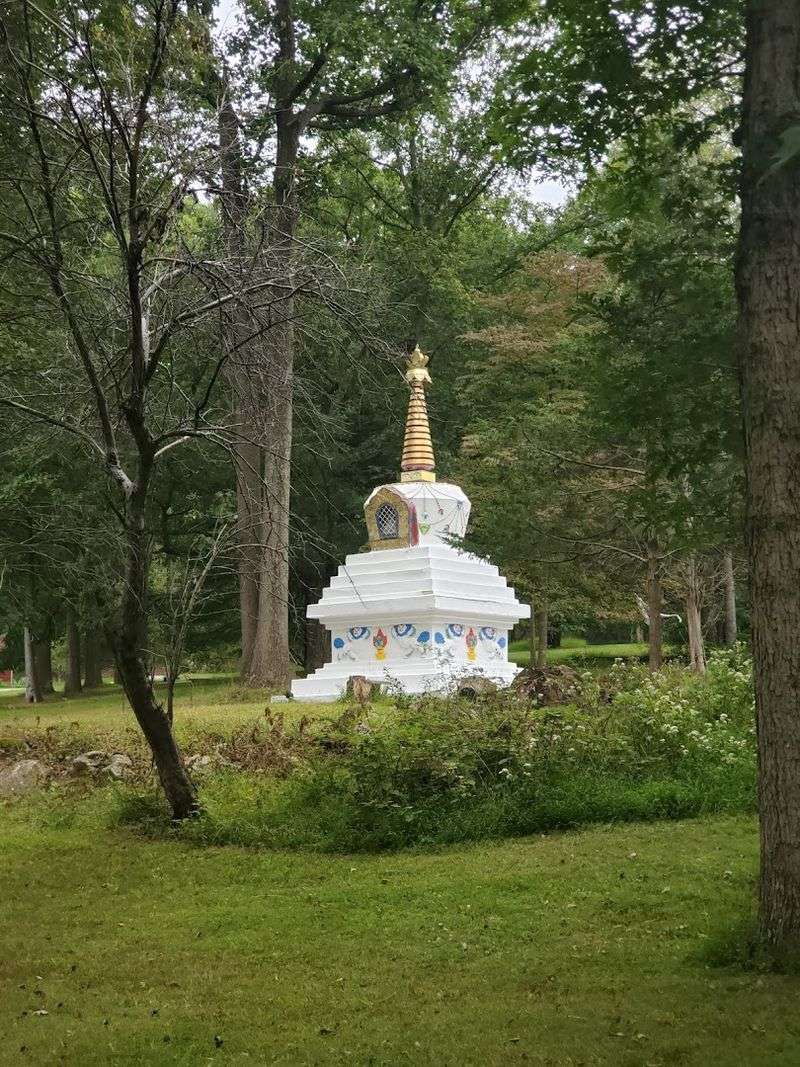
There is something almost deliberate about the long gravel path that leads up to the center. The crunch underfoot forces you to slow down, and that is clearly the point.
You cannot rush on gravel without making noise, and noise feels wrong here almost immediately.
The path winds through several woodsy acres that the center maintains with real care. Lotus plants and small ponds appear along the way, and the birds seem unusually unbothered by visitors.
It is the kind of place where you start paying attention to things you normally walk right past.
The center encourages visitors to mentally “park the world at the door,” and the path itself seems designed to help with exactly that. By the time you reach the main buildings, the transition from ordinary life to something quieter feels genuinely complete.
It is a small design choice with a surprisingly large effect on how you feel once you arrive at the temple.
Monthly Prayer and Meditation Sessions Open to Everyone
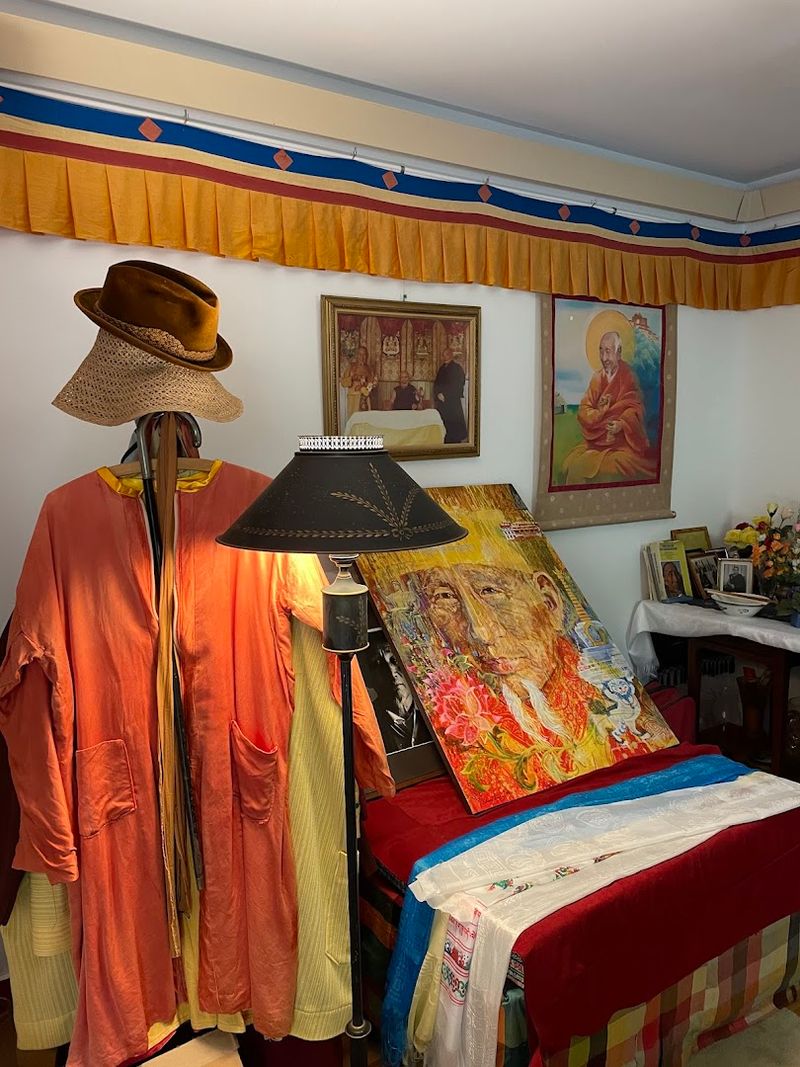
On the first Sunday of each month, the main temple opens for public prayer and meditation sessions, and the welcome is genuinely open. You do not need to be Buddhist, affiliated with any particular tradition, or have any prior experience with meditation to show up.
The sessions are held in the main temple, which carries the kind of atmospheric weight that older sacred spaces tend to accumulate naturally.
After the prayer session, classes continue in the School House, extending the morning into something more educational for those who want to stay.
Sitting in a room where people have been practicing for decades has a particular quality that is hard to describe but easy to feel. The collective intention in the space adds something that a solo meditation app simply cannot replicate.
For anyone curious about Tibetan Buddhist practice but unsure where to start, these monthly gatherings are probably the most accessible entry point the center offers. Showing up is genuinely enough.
Learning Intensives for Those Who Want to Go Deeper
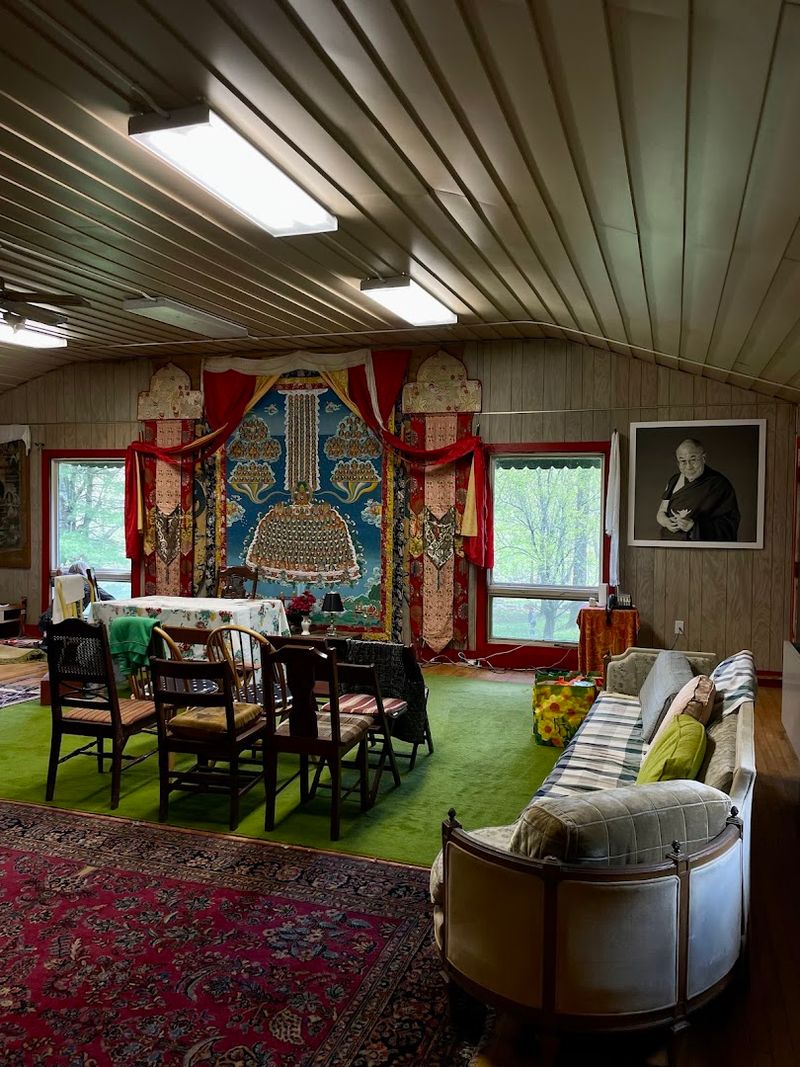
Beyond the monthly sessions, the center runs weekend seminars and what it calls Learning Intensives, which are exactly what they sound like.
These are structured opportunities to spend extended time with core Buddhist texts and teachings in a focused, residential-style setting.
The classes cover foundational Buddhist topics and major treatises, taught in English by resident monastic scholars or visiting teachers who bring both depth and accessibility to the material. That combination of scholarly rigor and practical orientation is something the center has emphasized since its founding.
Geshe Wangyal always believed that intellectual investigation and actual practice had to develop together, and that philosophy still shapes how the programs are designed today.
For someone who has been curious about Buddhist philosophy but found entry points elsewhere too shallow or too esoteric, these intensives offer something genuinely substantive.
Coming here for a weekend of focused study feels completely different from a casual visit. The mountain and the setting deepen the whole experience in ways that are hard to separate from the content itself.
The Dalai Lama Connection That Runs Deep Here
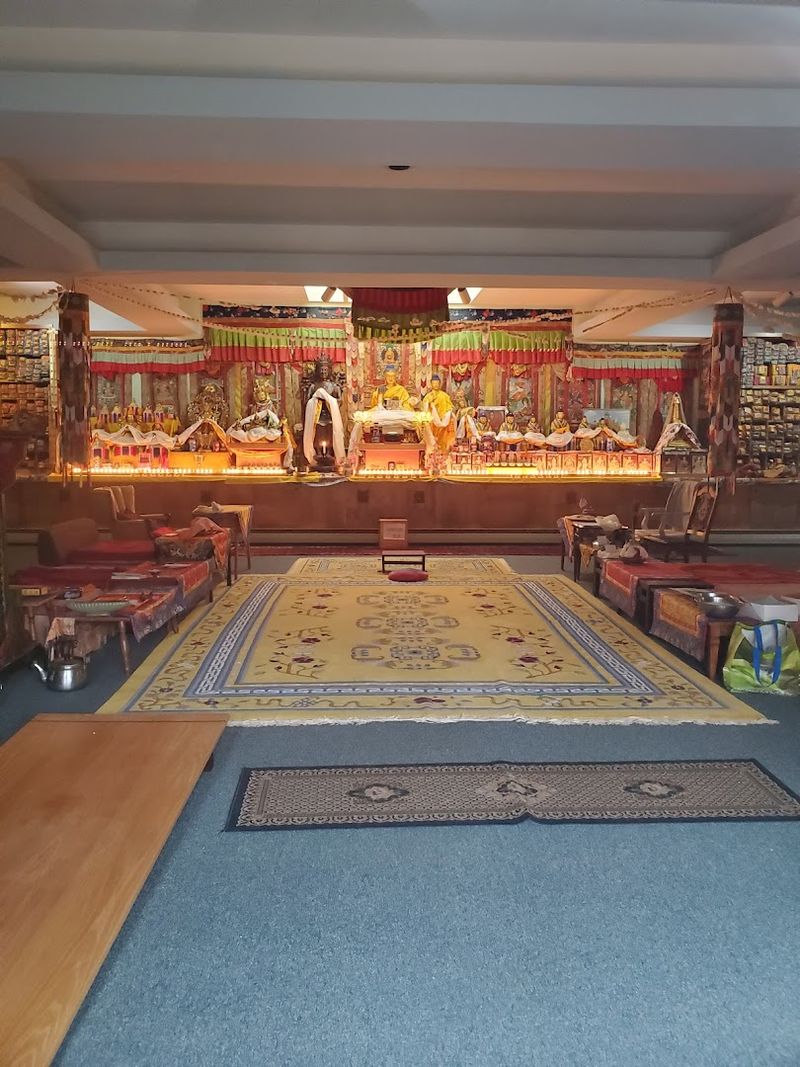
The 14th Dalai Lama is not just a symbolic figure at the Tibetan Buddhist Learning Center. He serves as the spiritual head of the institution and has personally visited the center, drawing large assemblies for his teachings on those occasions.
It was his advisory in 1984 that led to the center’s current name, a suggestion that reflected his emphasis on the teaching mission of the place.
That kind of direct connection to one of the most recognized spiritual leaders in the world gives the center a lineage that is both rare and tangible.
You feel that connection in the way the space is arranged and in the seriousness with which the programs are approached. This is not a wellness retreat that borrows Buddhist aesthetics for atmosphere.
It is a genuine dharma center with a direct line to the tradition it represents. That distinction matters, and it shapes everything from the quality of the teachings to the atmosphere of the grounds themselves.
Joshua and Diana Cutler Keep the Flame Going
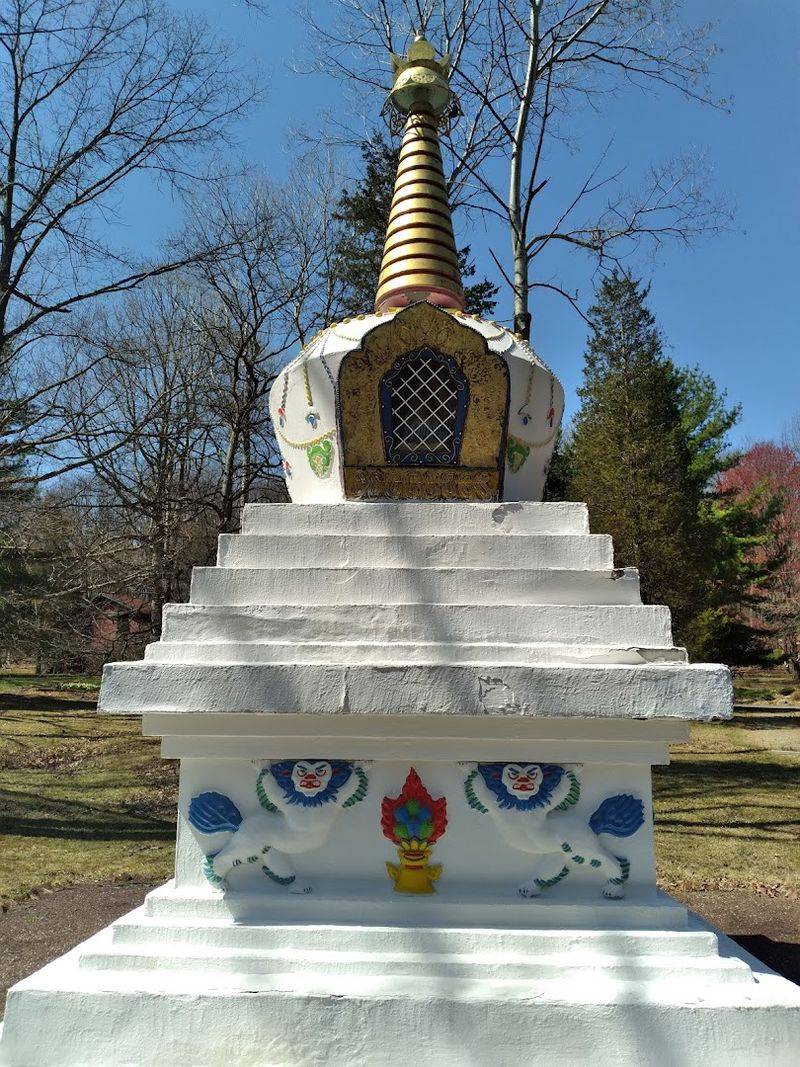
Since Geshe Wangyal passed in 1983, his longtime students Joshua and Diana Cutler have voluntarily administered and coordinated all programs at the center.
They also serve as resident teachers and translators, which means the teaching lineage has stayed genuinely intact.
The word voluntarily is worth sitting with for a moment. Keeping an institution like this running requires enormous sustained effort, and the fact that it has been done out of dedication rather than obligation says something real about the community that has formed around this place.
As translators, the Cutlers have contributed to making Tibetan Buddhist texts accessible to English-speaking audiences, extending the center’s reach beyond its physical location.
Their presence gives the center a continuity and personal warmth that institutional management alone could never provide.
Visiting a place that has been shaped by people who genuinely love what they are doing has a particular feeling to it. The TBLC carries that feeling in a way that becomes obvious pretty quickly once you spend any real time there.
Gardens and Grounds That Invite Slow Wandering
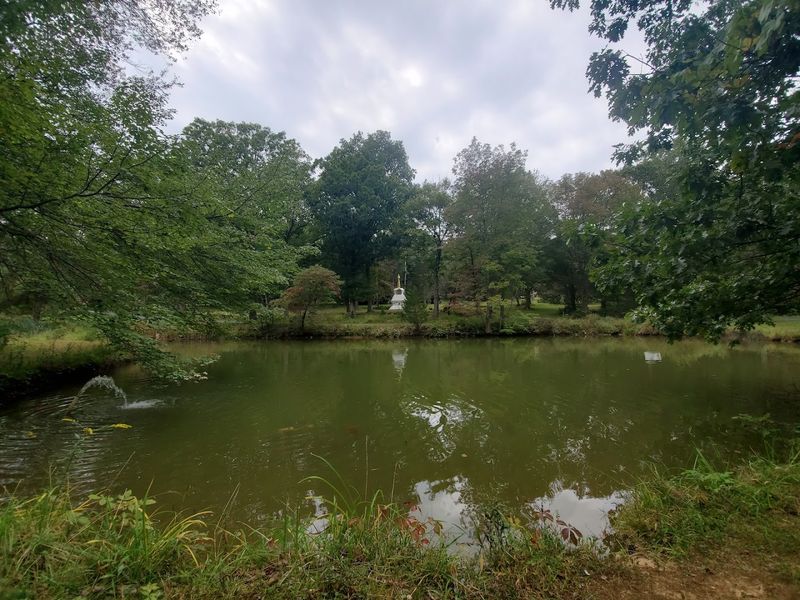
The grounds at the Tibetan Buddhist Learning Center are described as a park-like environment, and that description undersells them a little.
The gardens are tended with genuine attention, and you can feel the care that goes into keeping them this way across all seasons.
Lotus plants float in still ponds, their blooms carrying that particular kind of visual calm that makes you want to just stand there for a while. The trees are tall and established, the kind that took decades to grow, which adds a sense of permanence and rootedness to the whole property.
Wandering the grounds without any particular destination is one of the best things you can do here. There is no pressure to be anywhere or understand anything.
Birds move through the branches overhead, and the gardens hold a kind of organized wildness that feels intentional without being sterile. It is a “little taste of Tibet” as the center itself describes it, and that phrase actually holds up when you are standing in the middle of it.
A Skylands Gem That Rewards the Drive
The Skylands region of New Jersey has a reputation among those who know it as the state’s most underappreciated landscape.
Rolling hills, farmland, and forest roads that feel genuinely rural even though you are never more than a couple of hours from major cities.
Getting to the Tibetan Buddhist Learning Center involves navigating some of that rural landscape, and the drive itself starts to shift your mood before you even arrive. There is something about leaving the highway behind and moving through smaller roads that begins the unwinding process early.
Washington Township is the kind of place that does not try hard to impress you. It just exists quietly, and that quietness turns out to be exactly what makes it the right home for a retreat like this.
The surrounding countryside supports the experience rather than competing with it. For anyone coming from a dense urban environment, the contrast hits hard in the best possible way.
Pack a light bag, leave early, and give yourself extra time to just take in the scenery on the way in.
Why This Place Feels Genuinely Worlds Away
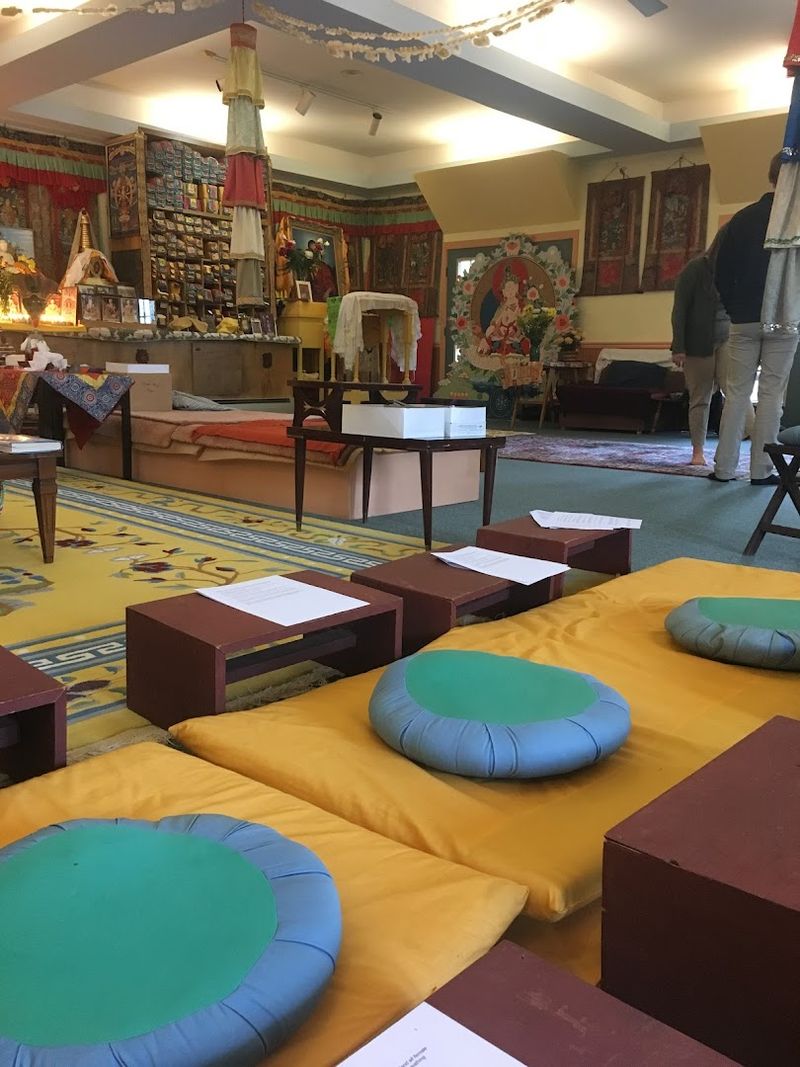
There is a phrase the center uses that sticks with you: “a little taste of Tibet.” It sounds like marketing until you are actually standing there, and then it just sounds accurate.
The combination of the mountain setting, the maintained gardens, the architecture, and the quality of the silence creates something that genuinely does not feel like New Jersey.
Part of what makes it feel worlds away is that nothing about the place is trying to perform tranquility. It simply is tranquil because it has been tended that way for over sixty years by people who meant it.
That kind of accumulated intention is something you absorb without really analyzing it.
For anyone who has been carrying too much noise, too many screens, or too many obligations, a visit here works on you in a way that is hard to explain to people who have not experienced it.
You arrive a little frantic and leave a little lighter.
That is not a small thing.
Address: 93 Angen Rd, Washington, NJ.
