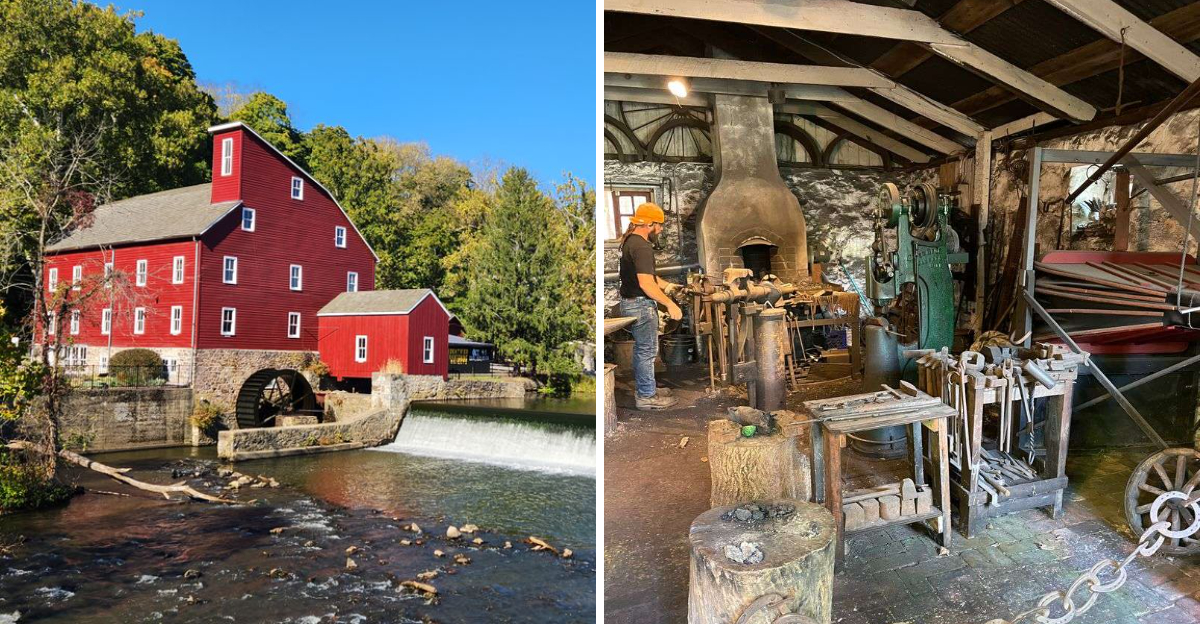
Tucked along the South Branch of the Raritan River in Clinton, New Jersey, stands a striking red building that has captured hearts and camera lenses for generations.
The Red Mill Museum Village isn’t just another dusty historical site gathering cobwebs in the corner of the Garden State.
This beloved landmark has become a symbol of community pride, drawing visitors from across New Jersey and beyond who come to experience a slice of authentic American history.
Locals have fought to preserve this treasure through decades of change, ensuring that future generations can walk the same grounds where millers once worked and blacksmiths hammered iron into useful tools.
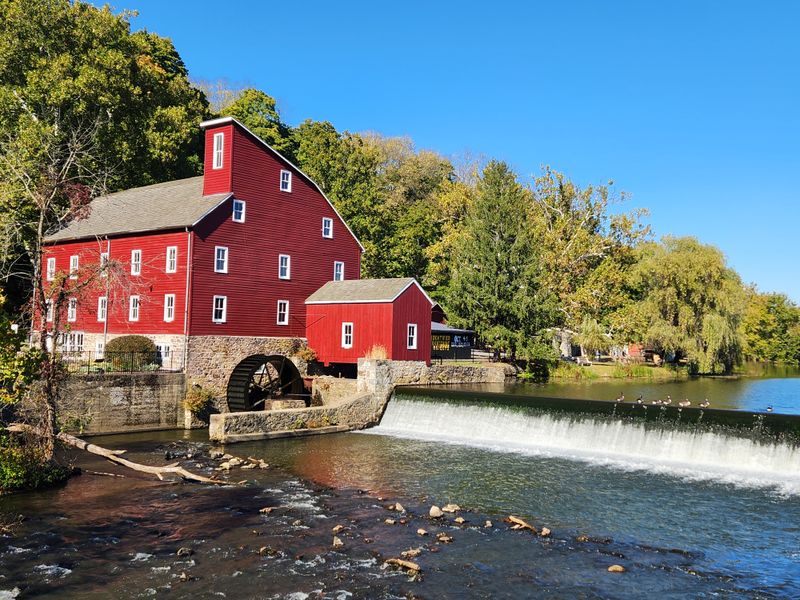
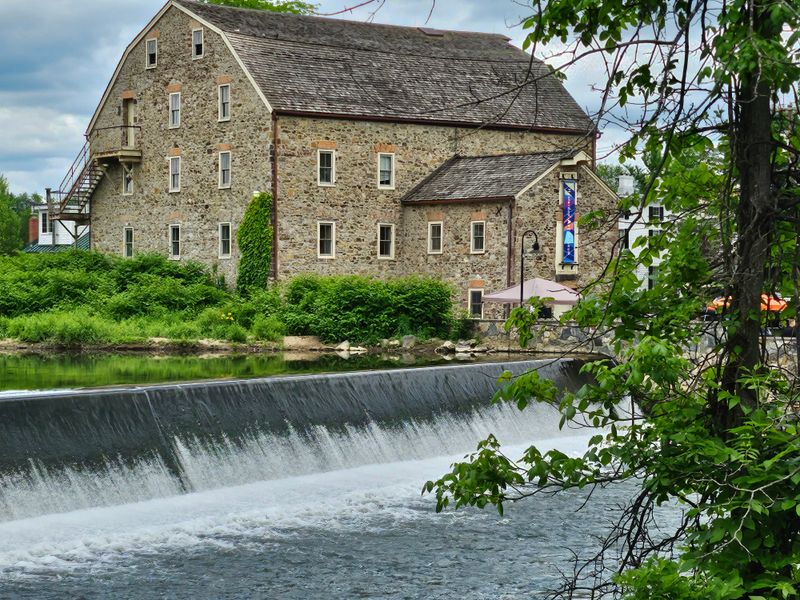
The four-story mill, painted in its signature crimson hue, rises above the rushing water like a scene from a postcard you’d actually want to send.
Ready to discover why this place has everyone from history buffs to thrill seekers absolutely buzzing?
Spoiler alert: it’s not just about pretty pictures, though you’ll definitely snap a hundred of those.
Think haunted happenings that’ll make your heart race, live demonstrations that transport you back two centuries, and seasonal festivals that turn this historic village into the hottest ticket in Hunterdon County.
A Four-Story Wonder Standing Tall Since the 1800s
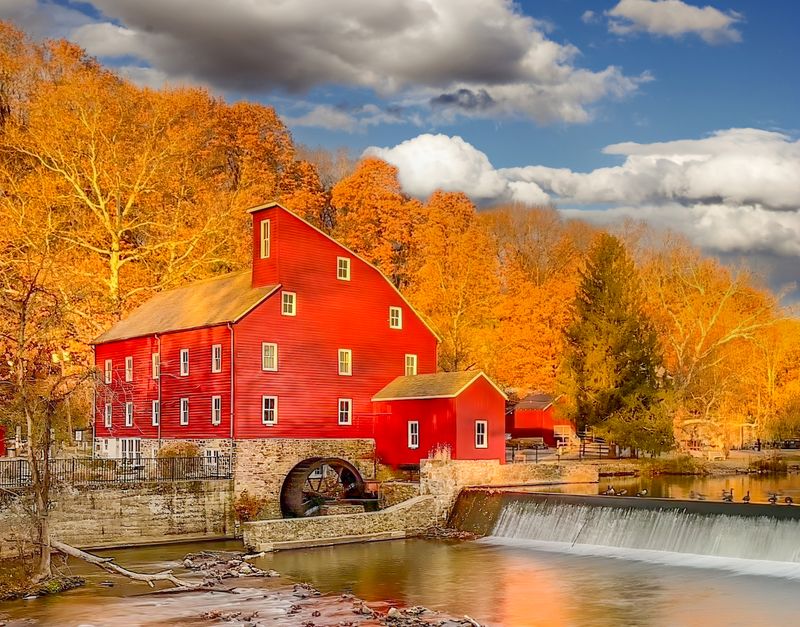
Picture a massive red building perched right over rushing water, its reflection dancing in the river below while water wheels turn with the same rhythm they’ve kept for over a century.
The Red Mill itself stands as the crown jewel of this museum village, rising four stories high with weathered wooden beams and floors that creak with stories from generations past.
Originally built to harness the power of the South Branch of the Raritan River, this mill ground grain, processed wool, and even generated electricity during its working years.
Walking through its levels feels like stepping into a time machine where you can almost hear the grinding stones and smell the fresh-milled flour.
Each floor reveals different chapters of the mill’s fascinating history.
The basement level serves as the main entrance, welcoming visitors with friendly staff who share infectious enthusiasm for the site’s heritage.
Climb to the upper floors and you’ll discover exhibits showcasing the machinery that once powered this industrial marvel, from massive gears to intricate belt systems that moved energy throughout the building.
The attic space on the third floor offers unique perspectives on how workers operated in tight quarters to keep production flowing.
Some areas feature hands-on displays where kids can turn cranks and pull levers to understand how water power translated into mechanical motion.
The operational water wheel outside remains one of the most photographed features, especially when sunlight catches the droplets cascading from each paddle.
Visiting the Red Mill Museum Village at 56 Main St, Clinton, NJ 08809 gives you access to this architectural treasure and so much more.
The mill opens its doors on Saturdays and Sundays from 11 AM to 5 PM, making it a perfect weekend destination for families and history enthusiasts alike.
A Living History Village With Multiple Historic Buildings
Most visitors arrive expecting to see just the famous red mill, then their jaws drop when they discover an entire village of authentic historical structures scattered across the ten-acre property.
This isn’t some Hollywood movie set with fake facades propped up by two-by-fours.
Every building here tells genuine stories of how people lived, worked, and survived in 19th-century New Jersey.
The tenant house showcases domestic life with period furnishings and household items that make you grateful for modern dishwashers and washing machines.
A one-room schoolhouse stands ready to transport you back to the days of slate tablets and strict teachers who expected perfect penmanship.
Wooden desks line up in neat rows, and educational materials from bygone eras remind us how much learning has evolved.
The log cabin represents even earlier settlement patterns, demonstrating the frontier building techniques that sheltered New Jersey’s earliest European inhabitants.
Wandering the gravel paths between buildings feels like exploring your own private historical theme park without the crowds or commercialization.
Each structure has informational signage explaining its purpose and significance, though some buildings have limited interior access depending on ongoing preservation work.
The screen house and other outbuildings add layers to the story of rural American life.
The museum grounds also feature remnants of the limestone quarrying industry that once thrived here.
Large lime kilns stand as silent monuments to the backbreaking labor that extracted valuable minerals from the earth.
These industrial ruins contrast beautifully with the pastoral setting, reminding visitors that this peaceful riverside spot once buzzed with intense commercial activity and hard physical labor.
Live Blacksmithing Demonstrations That Spark Imagination
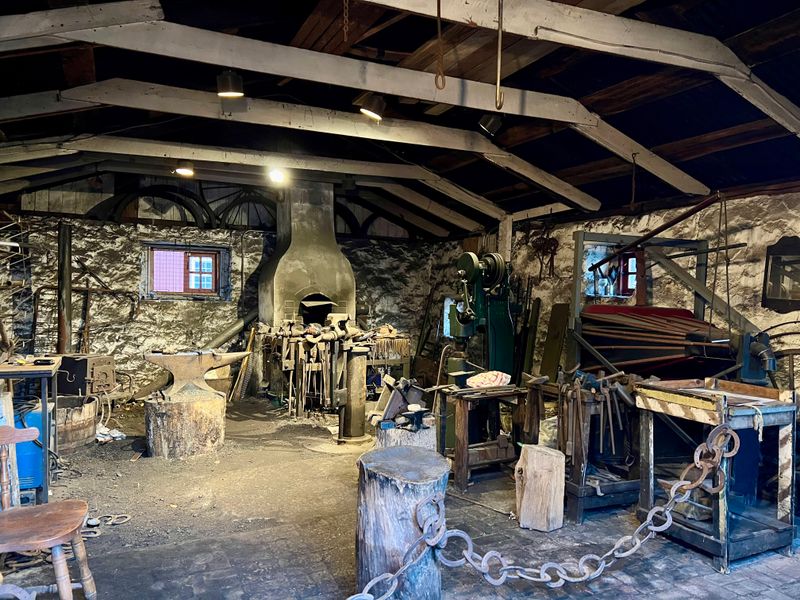
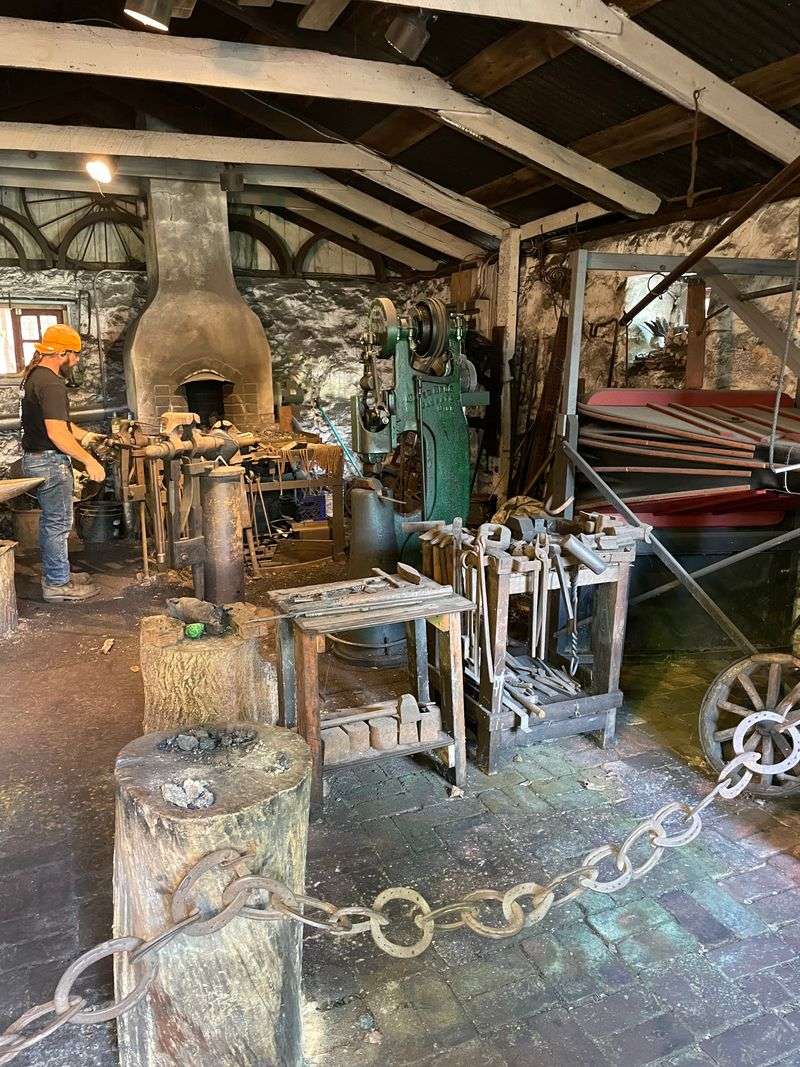
The clang of hammer on anvil rings out across the museum grounds as sparks fly in golden arcs from red-hot metal.
Watching a skilled blacksmith transform a mundane piece of iron into a useful hook or decorative piece feels absolutely magical, especially in our age of mass-produced everything.
The blacksmith shop at Red Mill Museum Village hosts live demonstrations that captivate audiences of all ages, proving that some crafts never lose their power to amaze and inspire.
Paul, one of the talented blacksmiths mentioned in visitor reviews, can create a functional hook from a grill rack in about five minutes flat.
His hands move with practiced confidence as he heats metal to glowing temperatures, then shapes it with precise hammer strikes.
The process looks simple when performed by an expert, but the skill required becomes obvious when you consider the coordination of heat, timing, and force needed for each piece.
These demonstrations aren’t just performances for tourist entertainment.
They represent living history education at its finest, showing how communities once depended on skilled tradespeople for essential tools and hardware.
Before hardware stores lined every suburban strip mall, blacksmiths served as the backbone of rural economies, repairing farming equipment, shoeing horses, and crafting custom metalwork for countless applications.
Kids stand mesmerized by the glowing forge and the transformation of solid metal into malleable material.
Adults appreciate the artistry and the connection to simpler times when things were built to last and craftspeople took pride in every piece.
The blacksmith shop experience alone makes the twelve-dollar admission fee worthwhile, offering something you simply cannot replicate through books or videos.
Haunted Red Mill Experience That Delivers Spine-Tingling Thrills
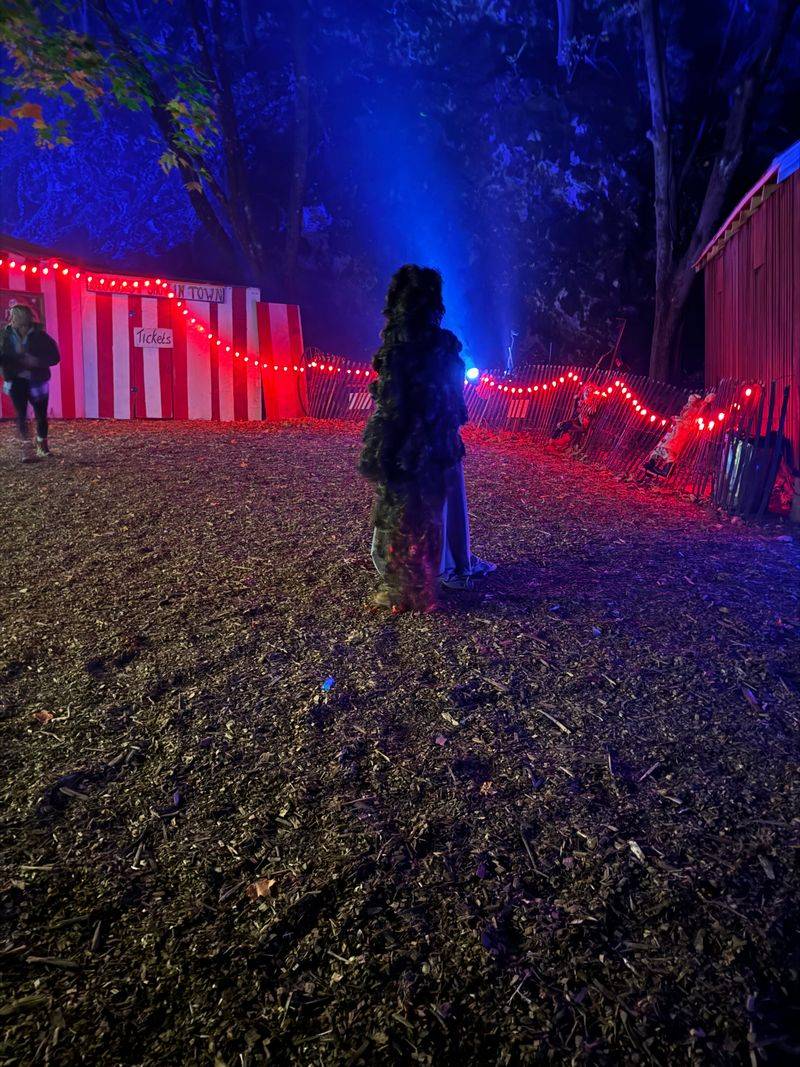
When October darkness falls over Clinton, the Red Mill Museum Village transforms into one of New Jersey’s most talked-about haunted attractions.
This isn’t your typical seasonal haunted house thrown together with store-bought decorations and amateur actors stumbling through dark hallways.
The Haunted Red Mill represents a masterclass in immersive horror entertainment, with attention to detail that rivals professional theatrical productions.
Visitors consistently rank it among the best haunted experiences they’ve encountered anywhere, praising everything from the lighting design to the committed performances of volunteer actors.
Every room tells its own terrifying story, with unique energy and carefully choreographed scares that never feel repetitive or cheap.
The actors remain in character throughout, delivering intense and believable performances that blur the line between entertainment and genuine fright.
Sound design, timing, and set decoration work together to create an atmosphere that starts building tension from the moment you arrive at the property.
The entire operation runs with impressive efficiency despite being volunteer-staffed.
Groups move through at a pace that maximizes both thrills and throughput, ensuring everyone gets the full experience without feeling rushed.
Even the waiting areas maintain the spooky atmosphere, with costumed characters entertaining the lines so the anticipation builds rather than boredom setting in.
One clever tip from seasoned visitors: spend seventy-five dollars or more at participating local restaurants to access the faster line option.
Many guests recommend dining at River Mill View or other Clinton eateries to earn this perk, which significantly enhances the evening by reducing wait times.
The Haunted Red Mill demonstrates how historic sites can innovate and create programming that appeals to contemporary audiences while raising funds for preservation efforts.
Festival of Trees and Winter Village Holiday Magic
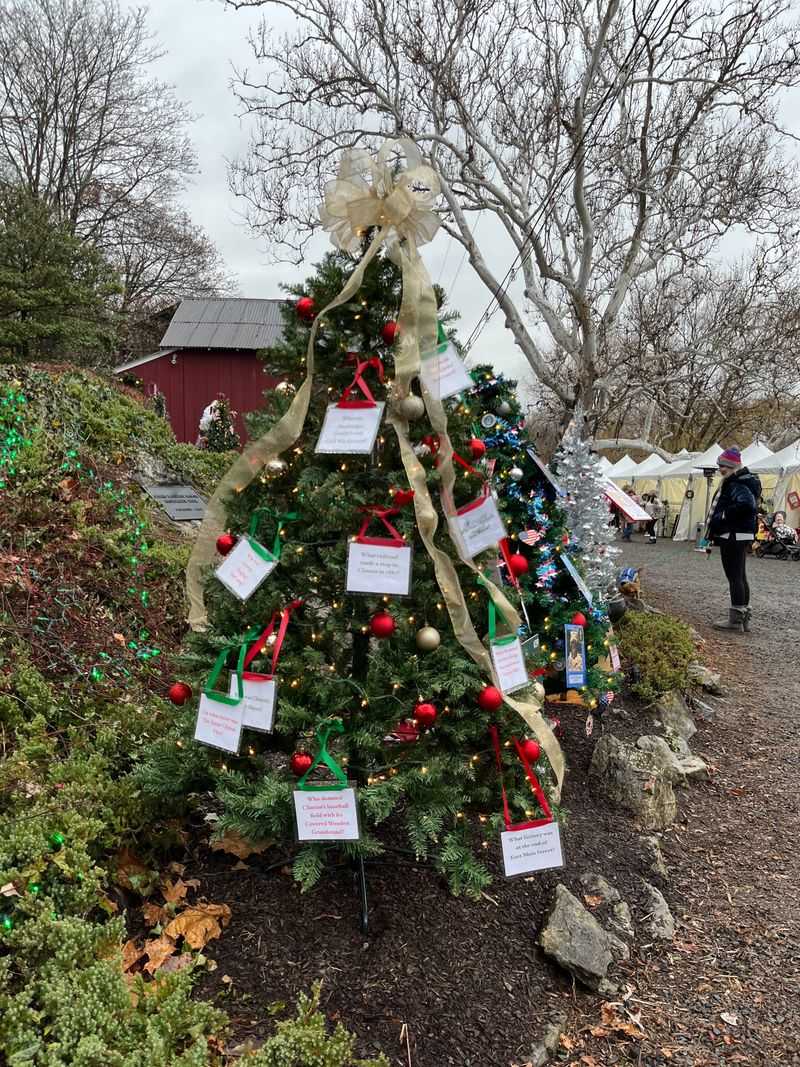
When December arrives in Clinton, the Red Mill Museum Village undergoes another spectacular transformation, this time into a winter wonderland that rivals any holiday movie set.
The Festival of Trees and Winter Village event has become such a beloved tradition that parking becomes the biggest challenge, with visitors flooding in from across the region to experience the seasonal magic.
Dozens of beautifully decorated trees fill the historic buildings, each one uniquely themed and adorned by local businesses, organizations, and creative individuals who pour their hearts into the displays.
Food trucks line up offering hot chocolate, seasonal treats, and warming comfort foods that taste even better in the crisp winter air.
Local vendors set up booths selling handcrafted gifts, decorations, and unique items you won’t find at any shopping mall.
The atmosphere buzzes with holiday cheer as families stroll through the village, children’s eyes wide with wonder at the twinkling lights and festive decorations transforming the historic site.
This event serves as one of the museum’s two biggest fundraisers of the year, helping generate crucial revenue for maintaining the twelve historic buildings and ten-plus acres of grounds.
The admission fee supports preservation efforts that keep this treasure accessible to the public year-round.
Museum members enjoy free admission as one of their membership perks, making the annual membership a smart investment for locals who visit multiple times throughout the year.
The Winter Village component adds even more attractions, though it does increase crowding on peak weekends.
Some visitors recommend attending the Festival of Trees during weekends when Winter Village isn’t running simultaneously, as this provides easier parking and a slightly more relaxed pace for viewing the spectacular tree displays and soaking in the holiday spirit.
Picture-Perfect Setting That Photographers Dream About
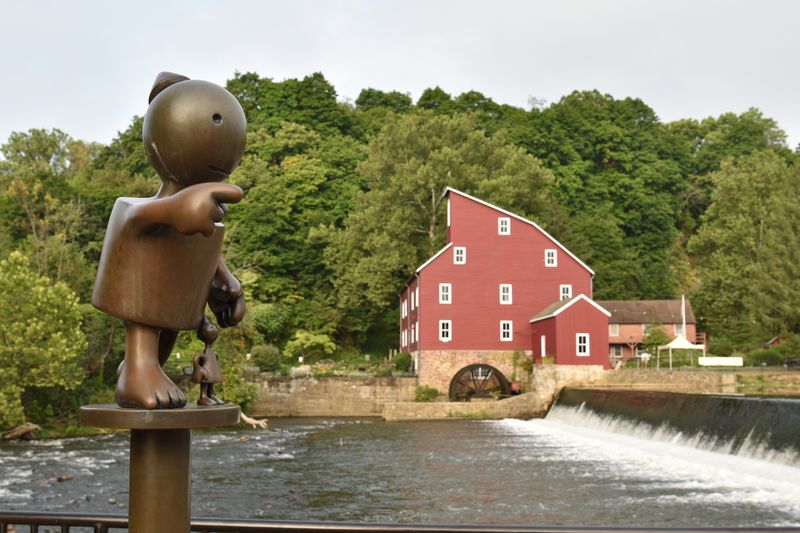
Social media feeds across New Jersey overflow with images of the Red Mill, and for good reason.
This location ranks among the most photographed spots in the entire state, offering compositions that work beautifully at any time of day or season.
The iconic red building reflected in the calm waters of the millpond creates mirror images that look almost too perfect to be real.
Photographers arrive at dawn to catch the soft morning light painting the mill in golden hues, while sunset seekers return for dramatic silhouettes against colorful skies.
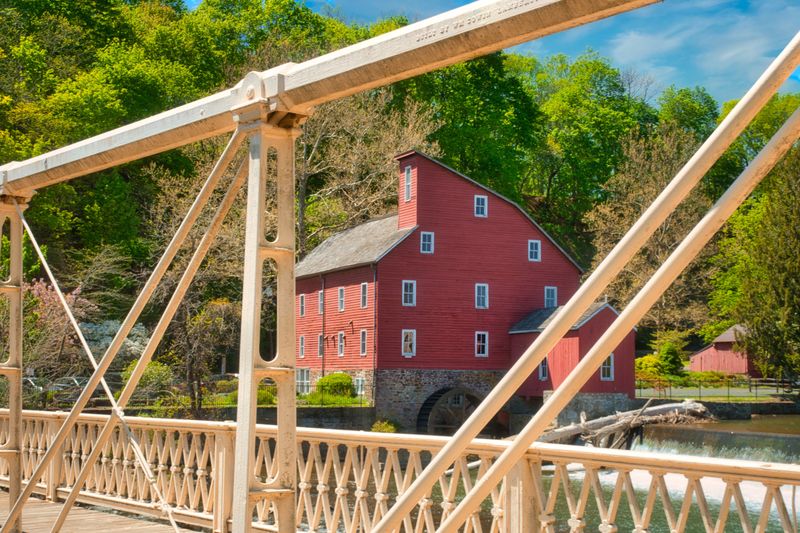
The historic white bridge spanning the river provides another classic vantage point, its 1870 construction adorned with flowers that add pops of color to architectural photographs.
Standing on this bridge gives you perspectives of both the Red Mill and the spillway where water cascades over the dam in sheets of white foam.
The sound of rushing water adds an extra sensory dimension that makes visiting in person far more impactful than any photograph can convey.
Every season brings new photographic opportunities that keep the location fresh and interesting.
Spring arrives with blooming trees and vibrant green foliage framing the red structure.
Summer brings kayakers paddling the river and ducks swimming in the millpond, adding life and movement to compositions.
Autumn transforms the surrounding trees into blazes of orange, red, and yellow that contrast magnificently with the mill’s painted exterior.
Winter scenes take on a serene, almost magical quality when snow blankets the grounds and ice forms along the riverbanks.
The Memorial Garden near the mill offers additional photo opportunities with its thoughtful landscaping and peaceful atmosphere.
Whether you’re a professional photographer with expensive equipment or just someone with a smartphone looking for great Instagram content, the Red Mill Museum Village delivers visual gold.
Hands-On Exhibits That Make History Touchable
Forget those stuffy museums where stern guards glare if you dare breathe too close to the exhibits.
Red Mill Museum Village embraces a refreshingly interactive approach that invites visitors, especially children, to engage directly with history through hands-on displays and touchable artifacts.
This tactile learning style transforms abstract historical concepts into concrete experiences that stick in memory far longer than any textbook passage ever could.
Throughout the mill’s four floors, interactive stations let curious minds turn cranks, examine tools, and manipulate replicas of historical equipment.
Kids can feel the weight of implements that workers once wielded daily, gaining appreciation for the physical demands of pre-industrial labor.
These hands-on elements prove particularly valuable for kinesthetic learners who understand concepts better through physical interaction than passive observation.
Beyond the mill itself, demonstrations of period crafts like candle making and weaving allow visitors to try their hand at skills that were once essential household tasks.
Watching someone else weave fabric or dip candles is interesting, but actually attempting these crafts yourself creates a much deeper understanding of the patience and skill they required.
Suddenly that hand-woven blanket or set of tallow candles seems far more impressive when you realize how much work went into producing them.
The museum’s approach makes it an ideal destination for families with children who might squirm through traditional museum visits.
When kids can touch, turn, and explore rather than just look with hands behind their backs, they stay engaged and actually absorb the educational content.
Parents consistently praise this aspect in reviews, noting how their children remained interested and asked thoughtful questions throughout their visits to this fascinating New Jersey historical site.
Knowledgeable Staff Who Bring History to Life
Historical facts printed on plaques can only do so much to make the past feel real and relevant.
The true magic happens when passionate, knowledgeable people share stories with infectious enthusiasm that transforms dates and events into vivid narratives.
Red Mill Museum Village benefits enormously from staff members and volunteers like Jim, who visitors specifically mention in glowing reviews for making their experiences memorable and educational beyond expectations.
These aren’t just employees punching a clock and counting down minutes until closing time.
The people working at the Red Mill genuinely care about the site’s history and preservation, and that authentic passion shines through in every interaction.
They answer questions with detailed knowledge rather than vague generalities, share fascinating anecdotes that don’t appear in the written materials, and connect historical events to modern life in ways that make history feel relevant rather than dusty and distant.
The front desk staff greet visitors with warmth and friendliness that sets a welcoming tone from the moment you arrive.
They offer helpful suggestions about which buildings to visit first, point out any special demonstrations happening that day, and provide context that enhances your self-guided tour.
Their enthusiasm proves contagious, often inspiring visitors to explore more thoroughly than they initially planned.
Volunteers who staff the various buildings and demonstrations represent another treasure.
Many have spent years, sometimes decades, involved with the museum and possess deep knowledge about specific aspects of the site’s history.
They love sharing what they know with genuinely interested visitors, often going far beyond basic tour-guide scripts to answer detailed questions and discuss historical nuances.
These human connections transform a simple museum visit into an engaging educational experience that visitors remember and rave about long after returning home.
Special Events Throughout the Year Keep Things Fresh
Beyond the headline attractions like the Haunted Red Mill and Festival of Trees, this museum village hosts a rotating calendar of special events that give locals excellent reasons to return multiple times annually.
British car shows bring vintage automobile enthusiasts together to display gleaming classic vehicles against the picturesque backdrop of the historic mill and river.
The contrast between old-world architecture and mid-century automotive design creates fascinating visual interest and appeals to collectors and casual admirers alike.
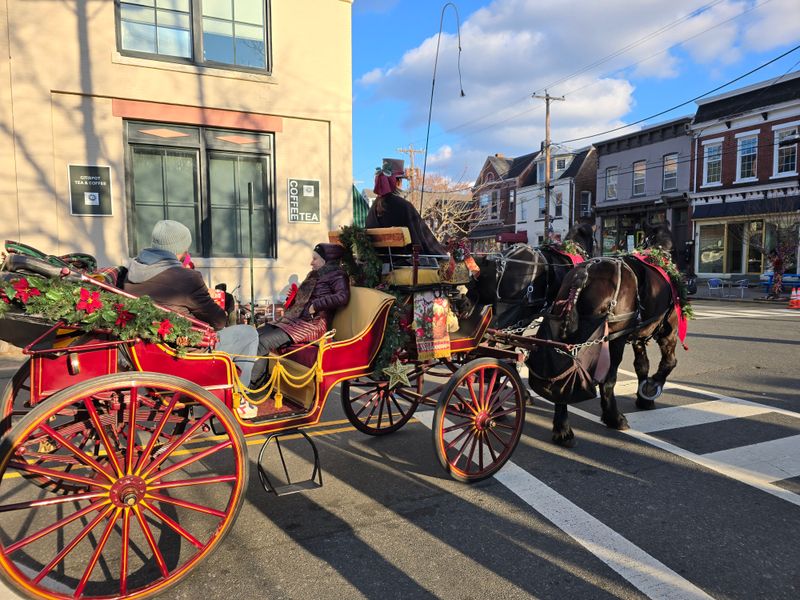
Dickens Days transforms Clinton into a Victorian-era celebration each Christmas season, with the Red Mill Museum Village serving as a centerpiece for the festivities.
Period costumes, carolers, and themed activities transport visitors back to 19th-century England, offering family-friendly entertainment that has become a cherished tradition for many area residents.
The event draws such large crowds that parking becomes challenging, but most agree the magical atmosphere justifies the hassle.
Seasonal programming adapts to take advantage of each time of year’s unique appeal.
Spring might feature demonstrations of traditional farming and gardening techniques relevant to planting season.
Summer events often incorporate the river setting with activities that celebrate the waterway’s importance to the community’s development.
Fall harvest themes connect visitors to agricultural traditions that sustained earlier generations.
These varied events serve multiple purposes beyond simple entertainment.
They attract different audience segments throughout the year, introducing new visitors to the museum who might return for regular visits.
The programming generates revenue that supports ongoing preservation and operational costs.
Perhaps most importantly, the events keep the Red Mill Museum Village feeling vibrant and relevant to contemporary audiences while maintaining its historical integrity and educational mission that locals refuse to let fade away.
A Charming Town Setting That Extends the Experience
Clinton itself deserves recognition as part of what makes visiting the Red Mill Museum Village such a delightful experience.
This isn’t some isolated historical site surrounded by strip malls and highways where you snap a few photos then wonder what to do next.
The charming downtown area sits right across the bridge from the mill, offering excellent restaurants, cozy coffee shops, unique boutiques, and that small-town atmosphere that feels increasingly rare in modern New Jersey.
Visitors consistently mention combining their museum visit with strolling through town, perhaps grabbing coffee at the shop right across the bridge or enjoying a meal at one of several well-regarded restaurants.
This integration between historical attraction and living community creates a richer, more complete day trip experience than you’d get at an isolated museum.
You can easily spend several hours exploring the museum village, then transition to browsing shops and dining without getting back in your car.
The town’s walkability enhances the appeal, especially on pleasant weather days when strolling along the river and through downtown streets becomes part of the adventure.
Public parking is available in town, though spaces fill quickly during popular events and peak seasons.
Some visitors choose to park in the downtown area and walk to the mill, enjoying the brief walk as an opportunity to appreciate the scenic setting.
Local restaurants like River Mill View offer quality dining experiences that complement a museum visit perfectly.
The synergy between the Red Mill Museum Village and Clinton’s business community benefits everyone involved.
Tourists get a complete destination rather than a single attraction, while local businesses enjoy the steady stream of visitors drawn by the iconic mill.
This relationship exemplifies how historic preservation and modern commerce can coexist beautifully, creating vibrant communities that honor their past.
Dear Reader: This page may contain affiliate links which may earn a commission if you click through and make a purchase. Our independent journalism is not influenced by any advertiser or commercial initiative unless it is clearly marked as sponsored content. As travel products change, please be sure to reconfirm all details and stay up to date with current events to ensure a safe and successful trip.
