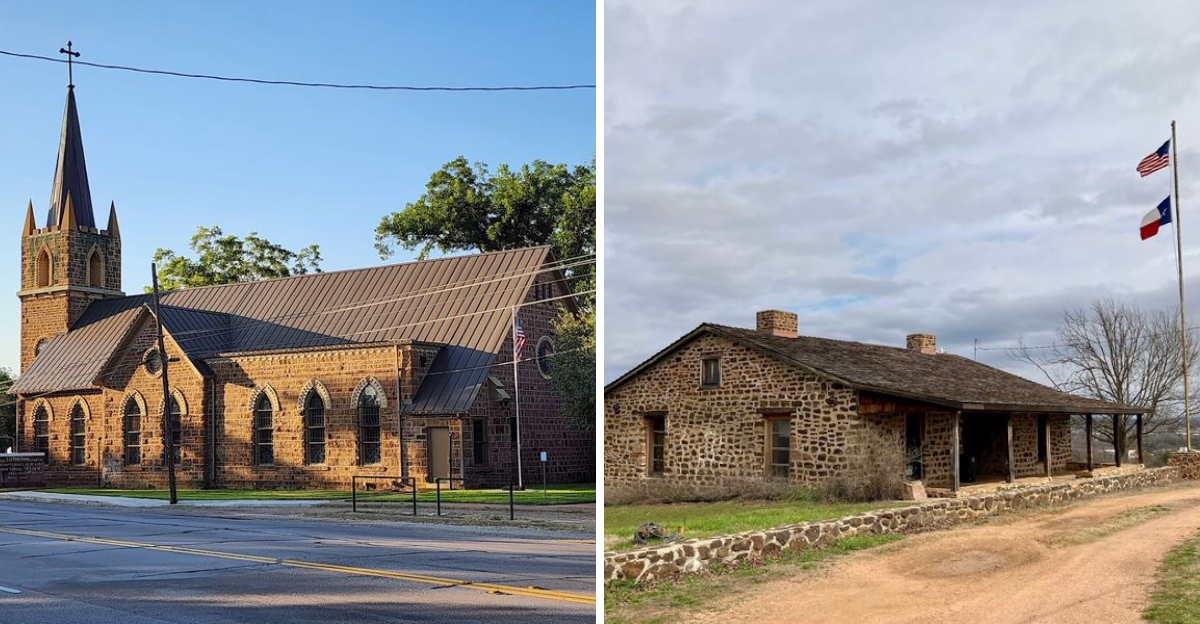
No brick. No wood.
Just limestone, everywhere you look. That is what makes Mason different.
The town built itself from the native stone, and the result is a downtown that feels carved from the earth itself. The courthouse catches the afternoon light, the storefronts have a warm, textured look that modern buildings cannot replicate.
A person could walk these streets and feel like they are stepping back in time. This is not a manufactured historic district, it is the real thing.
Texas has plenty of towns that look old, but Mason actually is old, and the buildings prove it.
The Mason Historic District and Its Place on the National Register
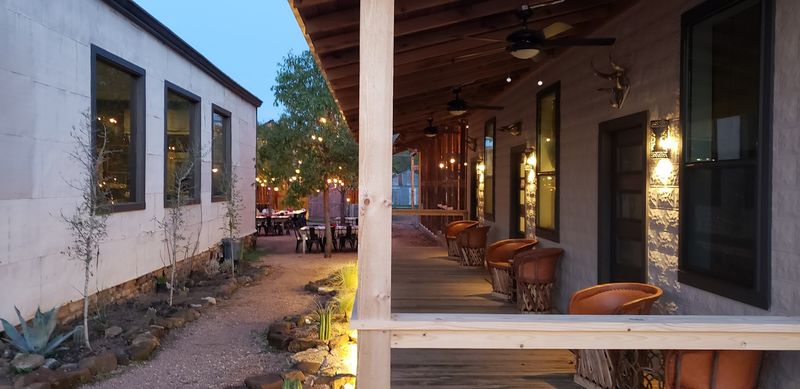
Few small Texas towns can claim a historic district first recognized by the National Register of Historic Places back in 1974, but Mason is one of them. The original designation covered 230 acres and included 186 contributing buildings, which is a remarkable number for a town this size.
The district was expanded again in 1991, pulling in even more of the surrounding architectural legacy.
What makes this place feel different from other preserved Texas towns is the texture. The stone walls are not polished or prettied up for tourists.
They are rough, honest, and clearly built by people who intended them to outlast everything around them. You can run your hand along a building facade and feel the grain of material pulled straight from the Texas earth.
German and Czech settlers who arrived in the Hill Country brought strong masonry traditions from Europe. That knowledge showed up in every corner joint, every window arch, and every foundation laid in Mason during the second half of the 1800s.
By 1890, nearly all buildings in town were made of stone, which tells you everything about the community’s values and ambitions.
Wandering through the district today, you get a genuine sense of what 19th-century Texas looked like at its most settled and serious. There are no gimmicks here, no manufactured charm.
The architecture does all the talking, and it speaks with a confident, unhurried voice that only real age can produce.
Mason County Courthouse, the Heart of the Town Square
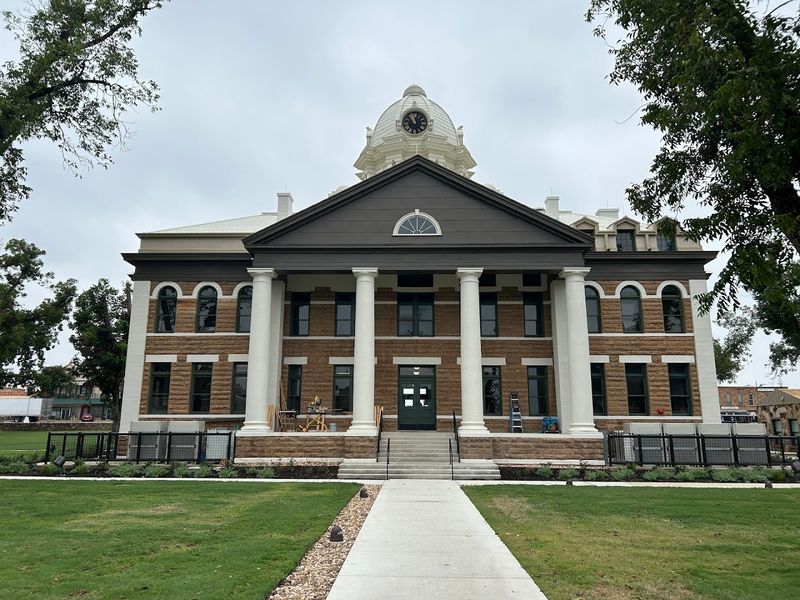
The Mason County Courthouse sits at the center of a two-block town square and commands attention the way only a well-built public building can.
Constructed between 1909 and 1910 in Classical Revival style, it used local limestone paired with Fredericksburg granite to create something that felt both grand and grounded at the same time.
I noticed right away how the stone exterior carries a warmth that concrete or brick simply cannot replicate.
In February 2021, a devastating arson fire tore through the interior of the building. It was a painful moment for the whole community.
But here is the thing about limestone construction: the exterior walls held. They were structurally sound after the blaze, which speaks volumes about the material choices made more than a century ago.
Restoration work followed, and the courthouse reopened in 2024 after careful reconstruction. The community’s determination to bring it back says a great deal about Mason’s relationship with its own history.
This was never just a government building to the people here.
Sitting on a bench near the square and looking up at the courthouse, you feel the weight of everything it has witnessed. Generations of families have walked past those stone columns for court dates, county fairs, and ordinary Tuesday errands.
The building has absorbed all of it. Visiting the square is genuinely one of the most grounding experiences the Texas Hill Country has to offer, and the courthouse is the reason why.
Address: 201 Fort McKavitt St, Mason, TX 76856
Fort Mason, the Source of Stone That Built a Town
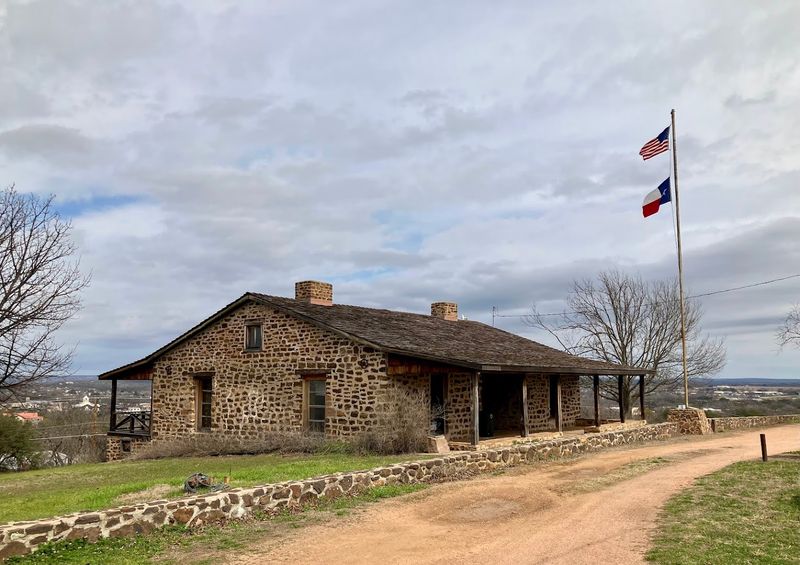
Before Mason was a proper town with courthouses and hotels, it had a fort. Fort Mason was established in the 1850s as a U.S.
Army post in the Texas Hill Country, and it served as an important frontier outpost during a turbulent period in the region’s history. The fort’s most famous resident was Robert E.
Lee, who was stationed there before the Civil War changed everything.
After the war ended and the military moved on, the fort was vacated. The buildings were left behind, and Mason’s early settlers made a very practical decision: they took the limestone.
Those carefully cut stones were repurposed into homes, commercial buildings, and civic structures throughout town. It was resourceful thinking that ended up shaping the visual character of Mason for generations.
That recycled stone is now embedded in some of Mason’s oldest surviving structures, which gives the town a layered kind of history. You are not just looking at an old building when you walk downtown.
You might be looking at material that once formed the walls of a frontier military post more than 170 years ago.
The Fort Mason site today is a small park that offers a quiet place to reflect on all of this. There is something poetic about standing near where the fort once stood, knowing that its stones are still holding up the town around you.
History here is not linear. It folds back on itself in the most tangible way possible.
Address: 304 Spruce St #302, Mason, TX 76856
The Reynolds Seaquist House, a Three-Story Hill Country Mansion
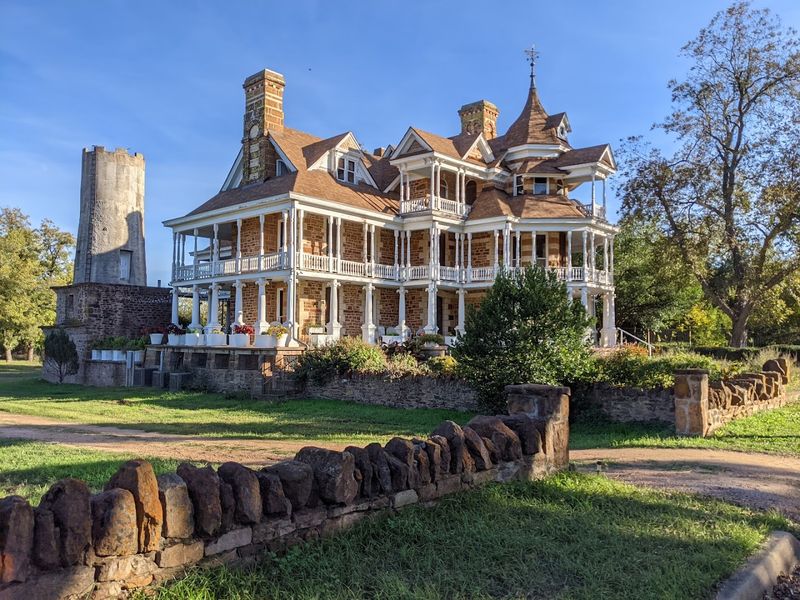
Not many small Texas towns have a three-story mansion sitting quietly near the town center, but Mason does.
The Reynolds Seaquist House, begun in 1887, is a striking piece of Italianate architecture that blends limestone, sandstone, and white Victorian trim into something that feels almost out of place in the best possible way.
It is listed on the National Register of Historic Places, and once you see it, you understand exactly why.
The house was built during a period when Mason’s prosperous ranching families were asserting their success through architecture. A three-story stone mansion in a small Hill Country town sent a clear message about permanence and prosperity.
The craftsmanship visible in the stonework reflects the skilled masonry traditions that German settlers brought to the region.
I found myself circling the building slowly, noticing how the different stone types interact with each other. The darker sandstone against the lighter limestone creates a layered effect that changes slightly depending on the time of day and the angle of sunlight.
In the late afternoon, the whole structure takes on a reddish-gold tone that is genuinely hard to photograph well.
The house is also known locally as the Seaquist House and remains one of Mason’s most photographed landmarks. It stands as proof that the Hill Country’s early settlers were not just surviving on the frontier.
They were building lives of real substance and beauty, using materials drawn directly from the land beneath their feet.
Address: 405 Broad St, Mason, TX 76856
The Mason House, an Early Hotel and Stage Stop From 1876
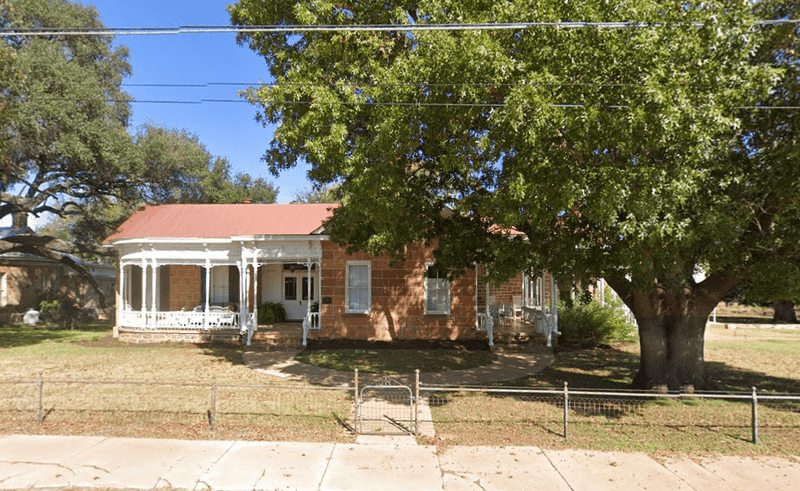
Before reliable roads and automobiles changed the rhythm of Texas travel, stage stops were the lifeline of frontier towns. The Mason House, built around 1876, served as one of Mason’s earliest hotels and a stop along the stagecoach routes that threaded through the Hill Country.
Its two-story vernacular limestone construction made it both practical and presentable for weary travelers arriving after long, dusty journeys.
Vernacular architecture is a term that gets used a lot in historical circles, but what it really means in Mason’s context is: built by local people, using local materials, according to local needs. There were no architects flying in from Austin or San Antonio.
The people who built the Mason House knew the land, knew the stone, and knew what travelers needed after a hard day on the road.
The building’s survival into the present day is not accidental. Limestone structures like this one were built to handle the extremes of Texas weather, from blistering summer heat to sudden winter cold snaps.
The thermal mass of thick stone walls kept interiors cooler in summer and retained warmth in winter, which was a genuine practical advantage before modern climate control existed.
I appreciate buildings like the Mason House because they tell a story without any plaques or guided tours. The proportions, the window placement, the worn stone steps all communicate something about daily life in 1876 Mason.
It is the kind of quiet history that rewards slow, attentive visitors more than rushed ones.
Address: 524 Austin St, Mason, TX 76856, United States
The Mildred Inn and Guest House, One of Mason’s First Stone Residences
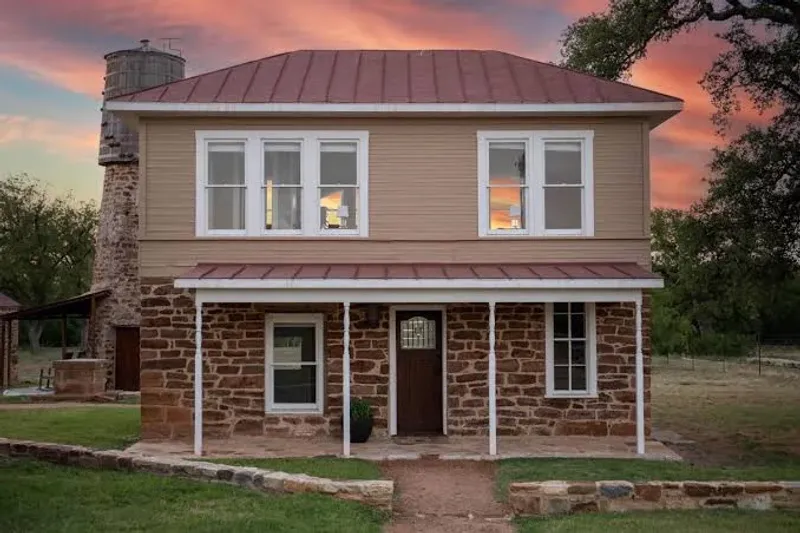
Built in 1872, the Mildred Inn and Guest House holds a special place in Mason’s architectural story as one of the town’s first stone residences. Early settlers in the Hill Country often built quickly and cheaply, using whatever timber was close at hand.
Choosing stone instead was a deliberate statement about putting down real roots. The families who built in limestone were saying, plainly and physically, that they planned to stay.
The inn sits as a reminder that Mason’s residential architecture was evolving at the same pace as its commercial and civic buildings. By the early 1870s, the town’s identity as a permanent, serious settlement was taking shape in stone across every category of construction.
That consistency is part of what makes the historic district feel so cohesive today.
As a guest house, the Mildred Inn offers visitors the rare chance to actually sleep inside a piece of 19th-century Mason history. There is a meaningful difference between photographing an old building from the sidewalk and spending a night inside one.
The thick stone walls muffle outside noise in a way that modern construction rarely achieves, and the rooms carry an atmosphere that no amount of vintage decor can fully fake.
Staying somewhere like this changes how you see the rest of the town. You wake up already inside the story, and the rest of Mason’s limestone streets feel like a natural extension of where you spent the night.
It is the kind of travel experience that actually sticks with you.
Address: 122 Fort McKavitt St, Mason, TX 76856
German and Czech Masonry Traditions That Left Their Mark on Mason
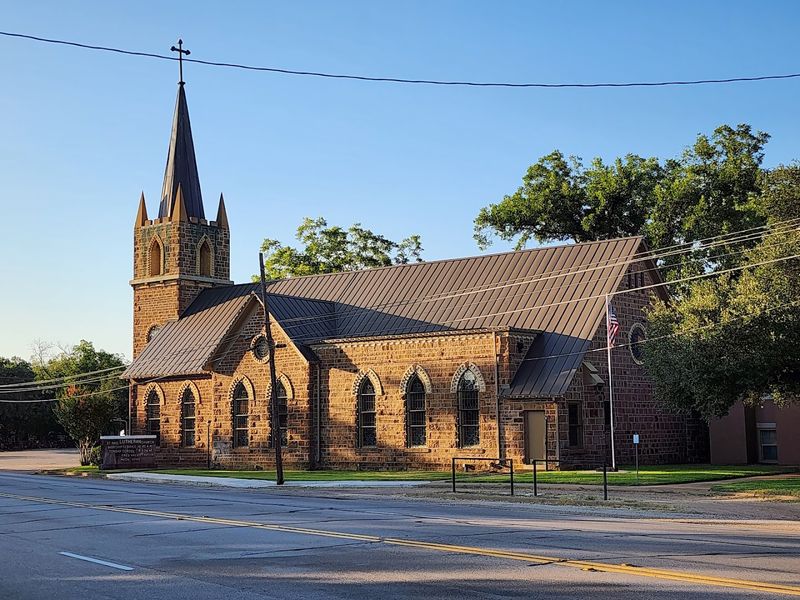
Mason’s limestone streetscape did not appear by accident. It grew directly from the skills and traditions that German and Czech settlers carried with them when they arrived in the Texas Hill Country during the mid-1800s.
These communities came from regions of Europe where stone construction was the norm, where masonry was a respected trade passed from one generation to the next. When they reached Mason County, they found the raw materials they needed already waiting in the ground.
The influence of these settlers shows up in the details that casual visitors sometimes overlook. The way lintels are cut and placed above doorways, the careful coursing of stone rows, the slight variations in color chosen to create visual rhythm in a facade, these are all marks of experienced hands.
Mason’s vernacular stone buildings are essentially a library of Central European masonry techniques transplanted into a Texas setting.
That cultural layering gives Mason a character distinct from other Hill Country towns. Fredericksburg, settled by similar German communities, favors a lighter white limestone.
Mason’s buildings lean toward the darker reddish sandstone mixed with cream limestone, producing a warmer, earthier palette. The difference is subtle but real, and it reflects the specific geology of Mason County as much as the preferences of its builders.
Appreciating this history adds a whole new dimension to a walk down Mason’s main streets. Every building becomes a conversation between the land and the people who learned to read it.
That relationship, between geology and culture, is what makes Mason genuinely worth the drive out to the Hill Country.
