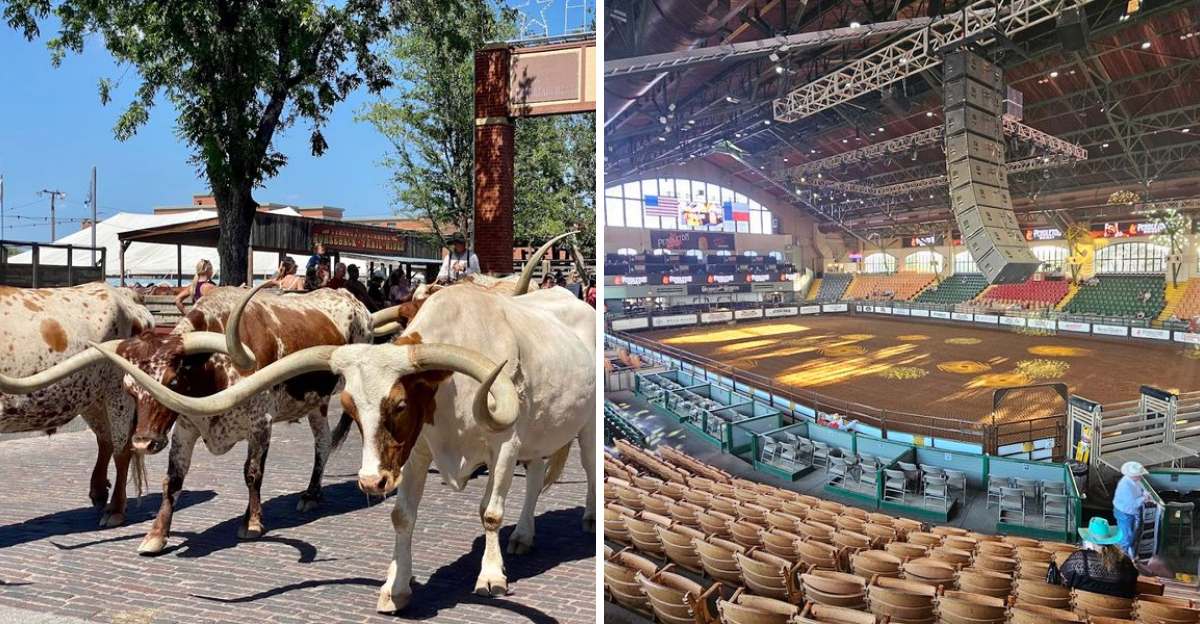
The Wild West still feels alive in this part of Texas every single day. Cattle drives, wooden storefronts, and the sound of boots on brick streets set the scene.
It feels less like a tourist stop and more like stepping into a different era. The district stays active with daily routines that reflect its western roots, from longhorns moving through the streets to shops and saloons that carry the same rugged character.
The mix of history and everyday activity gives the entire area a sense of authenticity.
What makes it memorable is how natural it all feels. Instead of being preserved behind glass, the history here continues to play out in real time, making each visit feel like a living snapshot of Texas heritage.
The Fort Worth Herd: A Cattle Drive You Can Watch Twice a Day
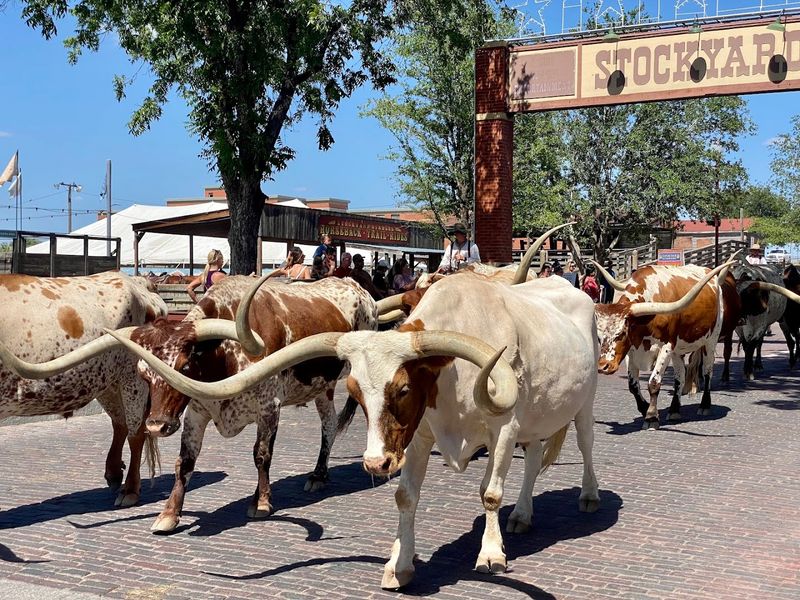
Nothing quite prepares you for the moment a dozen longhorn cattle come lumbering down Exchange Avenue with cowboys riding alongside them. The Fort Worth Herd is the world’s only twice-daily cattle drive, and it runs at 11:30 AM and 4:00 PM every single day.
That kind of consistency is rare for something this theatrical.
The longhorns are enormous up close. Their horns stretch wide, their hooves click on the brick pavement, and the whole scene unfolds in about five minutes of pure, unscripted history.
It is not a performance in the traditional sense because these cattle are genuinely being moved from one end of the street to the other, just like they were over a century ago.
Families line up along the fences early to get a good spot. Kids press against the rails with wide eyes, and even seasoned visitors pull out their cameras.
The tradition dates back to the district’s livestock market roots, giving the drive a weight that feels earned. It is one of those rare travel moments that does not need any explanation.
You just watch and feel the history move right past you.
Cowtown Coliseum: Where Rodeo History Was Made
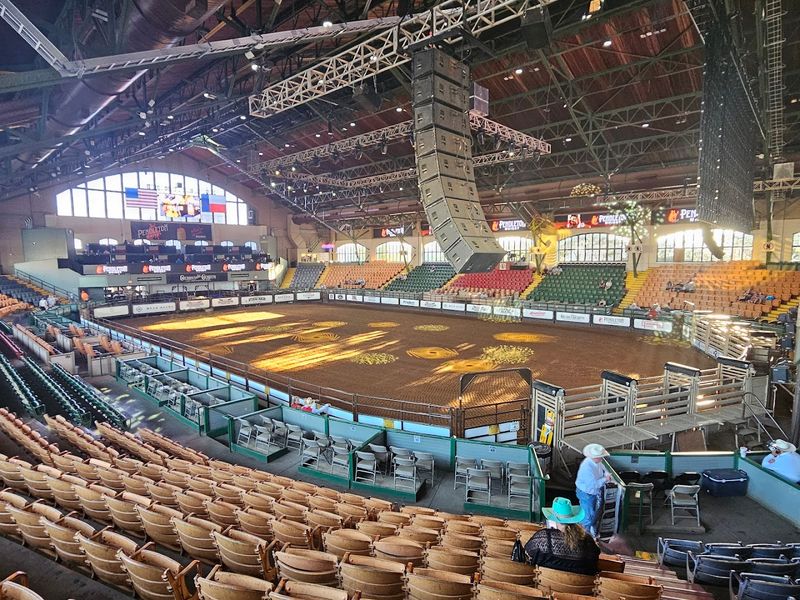
Built in 1908, Cowtown Coliseum holds the title of the first indoor rodeo arena in the United States. That alone makes it worth stepping inside.
The moment you walk through those old doors, the smell of sawdust and leather hits you like a friendly reminder that you are somewhere genuinely historic.
The coliseum seats around 2,400 people and still hosts the Stockyards Championship Rodeo on Friday and Saturday nights. Events include tie-down roping, breakaway roping, team roping, and barrel racing.
The crowd energy is electric, and the skill on display from both riders and animals is honestly humbling to witness.
On Thursday nights, the PBR Stockyards Showcase brings bull riding to the arena, drawing serious rodeo fans from across the state. The building itself has been carefully preserved, so the wooden bleachers and exposed beams still give off that early 20th-century character.
Sitting inside it feels less like attending an event and more like being let into a piece of living American sporting history. Whether you are a rodeo fan or a first-timer, the coliseum delivers an experience that is hard to replicate anywhere else in the country.
The Stockyards Museum: Stories Carved in History
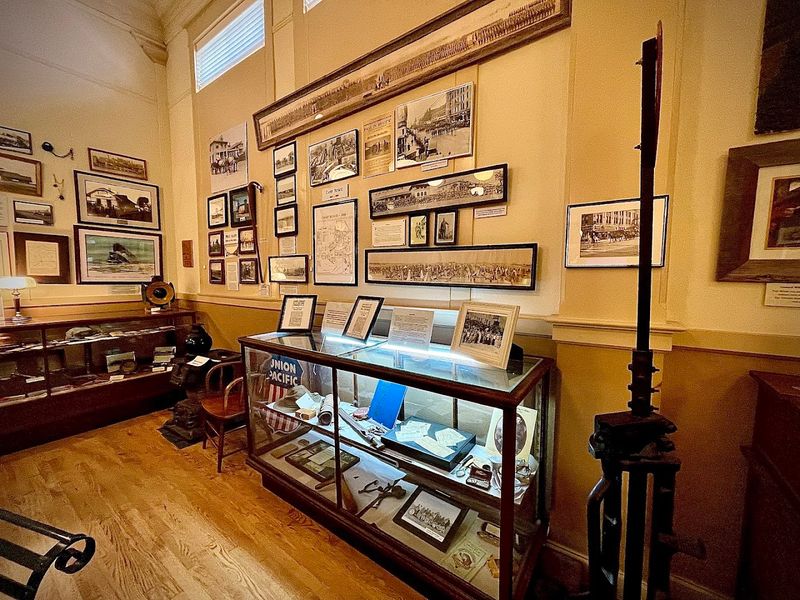
Tucked inside the Livestock Exchange Building, the Stockyards Museum is the kind of place where you slow down without anyone asking you to.
The exhibits are packed with artifacts, old photographs, and documents that piece together how this district shaped the cattle industry across the entire American Southwest.
You will find stories about the Chisholm Trail, the Native American communities connected to the land, and the rise of Fort Worth as a major livestock hub. The museum does a thoughtful job of presenting multiple layers of history without oversimplifying any of them.
Each display case feels curated with genuine care rather than just stuffed with old things.
The building itself is part of the story. The Livestock Exchange Building once served as the nerve center for millions of cattle transactions, and that legacy is woven into every hallway.
Admission is affordable, with children twelve and under entering free, making it a great stop for families. The museum is open Monday through Saturday, though it is closed on Tuesdays.
Plan to spend at least an hour here if you want to absorb what this district really meant to Texas and to the broader American West. It earns every minute of your time.
Mule Alley: Old Bones, New Energy
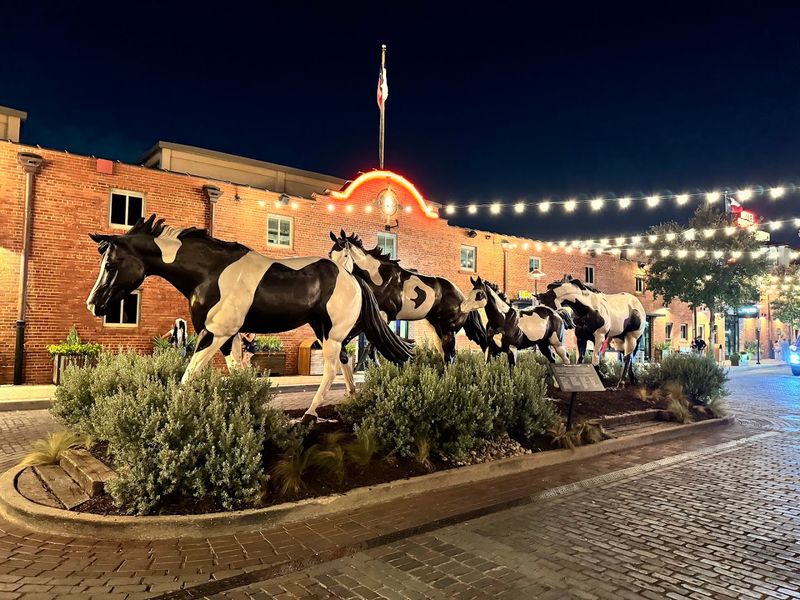
Mule Alley used to be where working mules were housed and traded during the Stockyards’ peak years. Today it has been transformed into one of the most charming stretches of the entire district, blending preserved historic architecture with modern shops, restaurants, and entertainment.
The renovation was done with real respect for the original bones of the buildings.
Brick walls, exposed beams, and original hardware sit alongside contemporary storefronts that feel right at home in the setting. It never feels forced or overly polished.
The mix of old and new here works because neither side tries to outshine the other.
Spending an afternoon wandering through Mule Alley is genuinely enjoyable even if you are not shopping for anything specific. There is a relaxed pace to the foot traffic, and the architecture gives you plenty to look at between storefronts.
Local vendors, Texas-made goods, and dining options make it easy to linger far longer than planned. It is also a great spot to people-watch, since the crowd here tends to be a lively mix of tourists, locals, and the occasional working cowboy passing through.
Mule Alley is proof that historic preservation and modern life can share the same street without either one suffering for it.
Exchange Avenue: The Heartbeat of the Stockyards
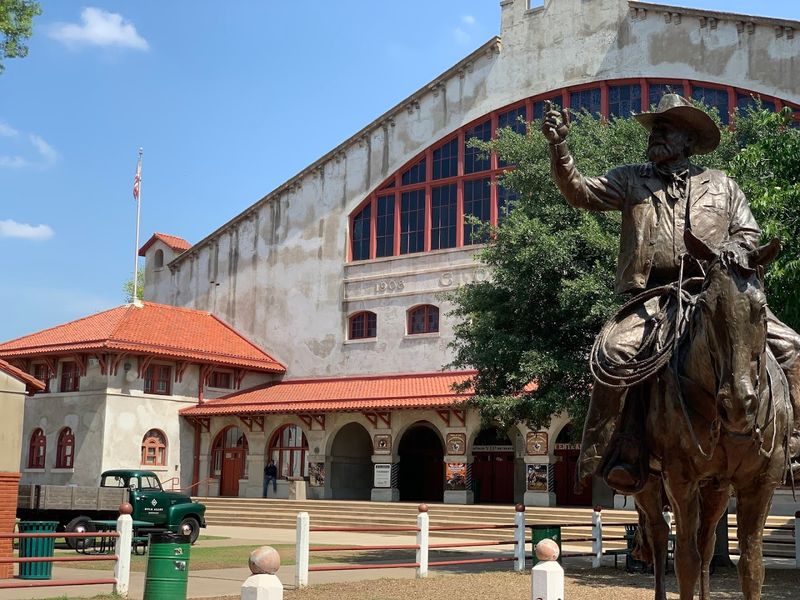
Exchange Avenue is the main artery of the Stockyards, and everything worth seeing eventually connects back to it. The street is paved with brick and lined with storefronts that have kept their Western facades intact.
It feels less like a tourist strip and more like a working main street that just happens to be over a hundred years old.
Cowboys in full gear pass you on the sidewalk without a second glance. Storefront signs are hand-painted.
The architecture is low and wide and built for function, which gives the whole avenue a no-nonsense personality that suits the district perfectly.
The address 131 E Exchange Ave sits at the center of all of this, and once you arrive, you understand why locals are so protective of this place. It has not been sanitized or turned into a theme park version of itself.
The grit is real. The history is real.
Even on a quiet weekday morning, the street has a pulse that you can feel underfoot. If you only have a couple of hours in the Stockyards, spend most of them on Exchange Avenue and let the street take you where it wants.
You will not run out of things to notice.
Cowboy Culture and Western Wear: Dressing the Part
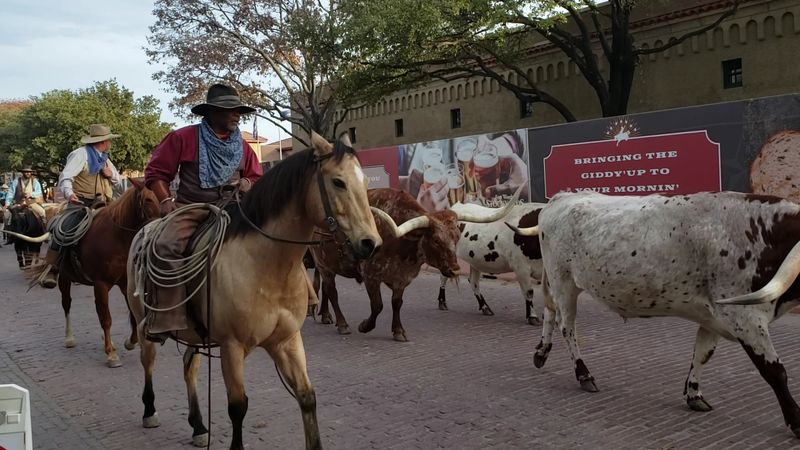
One of the unexpected joys of visiting the Stockyards is realizing how seriously people take their Western wear here. This is not costume shopping.
The boots, hats, and belts sold along Exchange Avenue are the real thing, made to be worn on ranches and at rodeos, not hung on a wall as souvenirs.
Several long-established shops in the district carry handmade boots crafted from exotic leathers and fitted to your foot specifically. Hatters will shape a brim to your preference right in front of you.
The craftsmanship on display in these stores is something you genuinely do not see in many places anymore.
Even if you are not in the market for a full cowboy outfit, browsing these shops is an experience on its own. The staff tend to be knowledgeable and unpretentious, happy to explain the difference between a working boot and a show boot without making you feel out of place for asking.
There is a practicality to Western fashion that I found refreshing. Every piece serves a purpose.
The wide brim keeps the Texas sun off your neck. The thick leather sole handles rough terrain.
It all makes sense once you are standing in the middle of cattle country with the wind picking up.
The Architecture and Historic Preservation: Built to Last
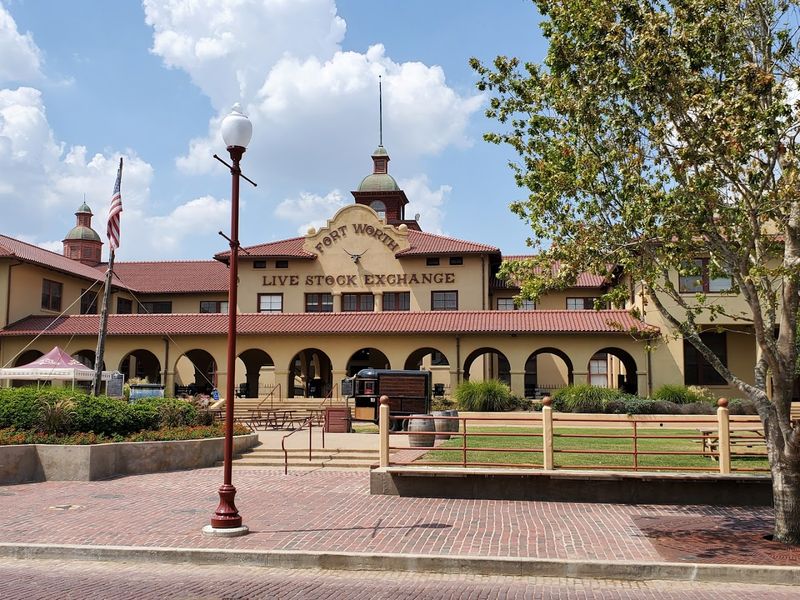
The built environment of the Stockyards is one of its most underappreciated qualities. The Livestock Exchange Building, completed in 1902, anchors the district with its red brick facade and arched windows.
It was designed to project authority and permanence, and a century later, it still does exactly that.
What makes the architecture here special is that it was never built for aesthetics alone. Every structure served a clear commercial purpose, from the auction pens to the administrative offices.
That functional honesty gives the buildings a character that purely decorative historic districts often lack.
Preservation efforts over the decades have kept much of the original masonry, ironwork, and signage intact.
Walking through the district, you notice details that most modern construction would never bother with, carved stonework above doorways, original tile floors inside lobbies, and wrought iron railings that have been repaired rather than replaced.
The Stockyards has never tried to look newer than it is, and that decision has paid off enormously. The patina of age is part of the appeal.
It tells you that this place was built by people who expected it to still be standing long after they were gone. They were right, and visitors today are the direct beneficiaries of that foresight.
Live Music and Texas Entertainment: Sound of the South
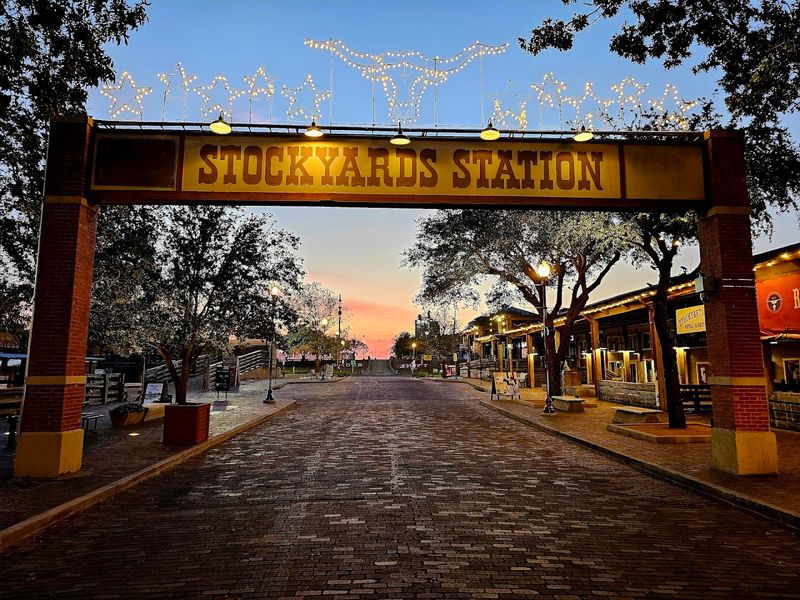
Music is woven into the fabric of the Stockyards in a way that feels completely natural rather than staged. Honky-tonk sounds drift out of open doorways on weekend afternoons, and by evening, the energy on the street picks up considerably.
The district has always had a strong connection to Texas country music, and that tradition is alive in every note you hear.
Several venues along and near Exchange Avenue feature live performances from local and regional musicians. The style leans toward traditional country, Western swing, and Texas blues, genres that feel right at home in a district built on cattle drives and cowboy culture.
You do not need to be a country music fan to appreciate the atmosphere these performances create.
The sound of a steel guitar echoing off old brick walls at dusk is one of those sensory details that stays with you long after you leave.
Music here is not background noise. It is part of the identity of the place, as much as the cattle drive or the rodeo.
If you time your visit for a Friday or Saturday evening, the combination of live music, the rodeo at Cowtown Coliseum, and a full street of visitors creates an atmosphere that is genuinely hard to describe without sounding like you are exaggerating.
You just have to be there.
Dining in the Stockyards: Texas Flavor on Every Plate
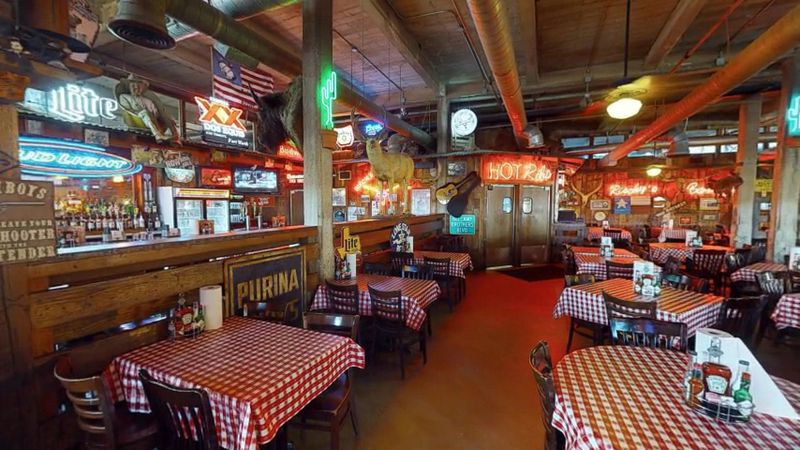
Eating in the Stockyards is a genuine pleasure, and not just because the food is good. The restaurants here carry the same character as the rest of the district, with exposed brick, wooden booths, and menus that take Texas barbecue seriously.
Brisket, ribs, and smoked sausage show up in forms that remind you why Texas is famous for this stuff.
Beyond barbecue, the dining scene has expanded considerably in recent years, especially with the development of Mule Alley. You will find options ranging from casual tacos to sit-down Texas steakhouses, all within easy walking distance of the main attractions.
The variety means you are not locked into one style of eating for the whole visit.
What I appreciated most about eating here was the lack of pretension. The food is hearty, the portions are honest, and the service tends to be friendly without being performative.
Several spots source their beef locally, which adds a satisfying layer of authenticity to the whole experience given where you are sitting. There is something fitting about eating a well-prepared Texas steak just a short walk from where cattle were once traded by the thousands.
The context makes every bite taste a little more meaningful, which is not something most restaurants can claim.
Planning Your Visit: Making the Most of the Stockyards
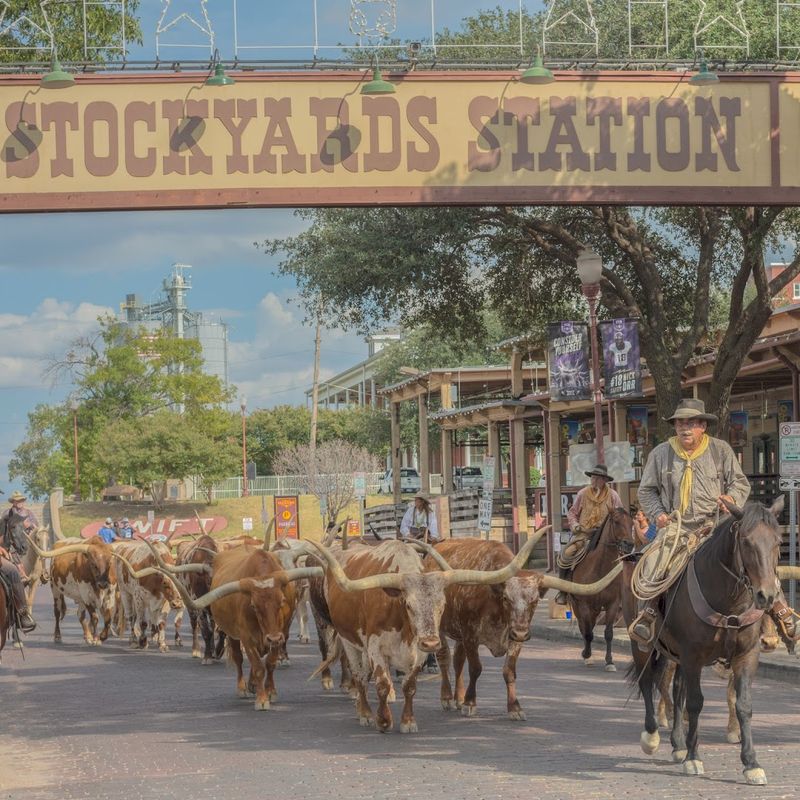
Getting the most out of a Stockyards visit comes down to timing. Arriving before the 11:30 AM cattle drive gives you time to explore the museum, grab a coffee, and find a good spot along Exchange Avenue before the longhorns come through.
The afternoon drive at 4:00 PM works well if you plan to stay into the evening for live music or the rodeo.
Weekends are busier, which adds energy but also means longer waits at popular restaurants and tighter crowds along the main street. A weekday visit offers a more relaxed pace and easier access to the museum and shops.
Both experiences have their own appeal, honestly.
Comfortable shoes are a must since the brick pavement is uneven in places and you will cover more ground than you expect. The district is walkable, so you rarely need to move your car once you are parked.
Weather in Fort Worth can shift quickly, so layering is smart regardless of the season. The Stockyards is open year-round, and each season brings its own version of the experience.
Spring and fall tend to offer the most comfortable temperatures for spending a full day outdoors. Check the official Fort Worth Stockyards website before your trip for updated event schedules and any special programming happening during your visit.
Address: 131 E Exchange Ave, Fort Worth, TX 76164
Dear Reader: This page may contain affiliate links which may earn a commission if you click through and make a purchase. Our independent journalism is not influenced by any advertiser or commercial initiative unless it is clearly marked as sponsored content. As travel products change, please be sure to reconfirm all details and stay up to date with current events to ensure a safe and successful trip.
