New York has a way of turning stages into legends, and the Palace Theatre sits at the center of that magic.
Locals talk about it with the care you reserve for a family heirloom, while visitors frame it in photos like a timeless postcard.
If you are planning a theater walk in New York State, this is the one that pulls you close and whispers history.
Step inside this guide and you will see why New Yorkers guard it fiercely and why your camera will not look away.
A grand old palace in the heart of Broadway
The Palace Theatre anchors the energy of Times Square and the pulse of Broadway with rare dignity. Standing at 1564 Broadway, it opened its doors to vaudeville legends and later to blockbuster musicals that shaped the city’s cultural identity. The building feels like a compass for theater lovers, guiding them toward stories that still echo beyond the curtain call.
New Yorkers prize this address because its stage condensed eras of performance into one enduring home. While the district continues to evolve, the Palace remains a touchstone that steadies the streets around it. Visitors find themselves drawn to the sweep of the marquee and the gravity of the entrance, then linger to imagine the roar of the crowd inside.
For anyone exploring New York State through the lens of performance, the Palace acts as a living archive. It links the clamor of daily life to the quiet craft of rehearsal and design. That mix of spectacle and substance keeps the theater firmly fixed in local memory and visitor itineraries alike.
Architectural elegance worth protecting
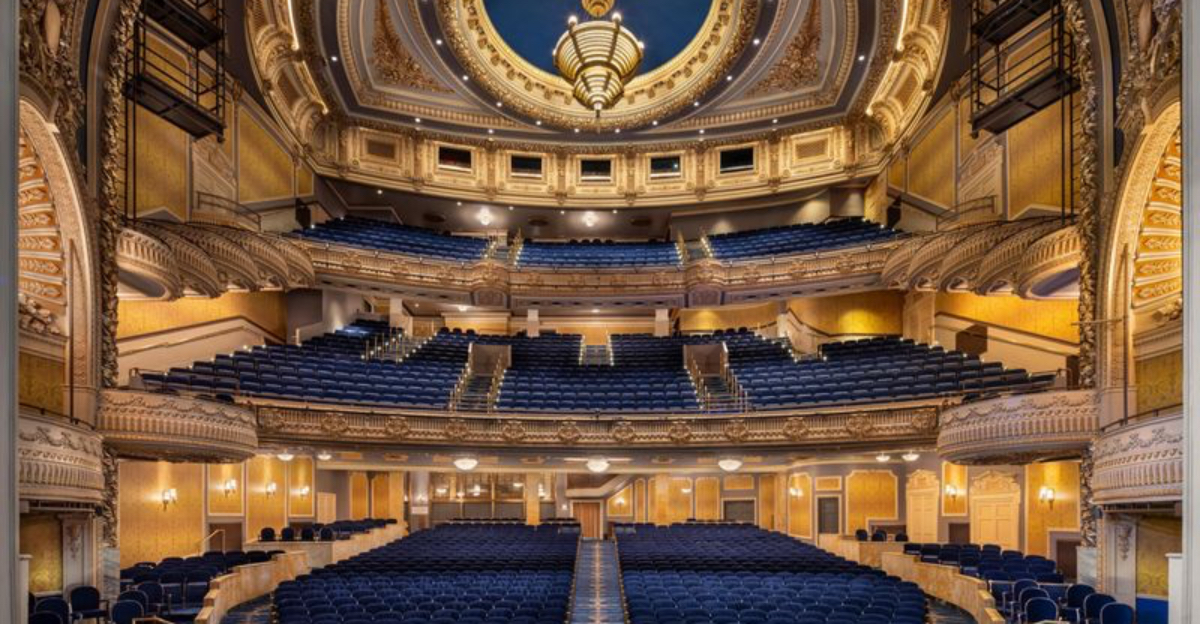
Step into the auditorium and the ornament pulls your gaze upward, from plaster scrolls to painted panels and delicate moldings. Box seats frame the room like balconies in a jewelry case, while the proscenium concentrates light and attention in a gentle curve. Every surface seems tuned to carry voices cleanly and to hold stillness when it matters most.
Preservationists in New York State have rallied around these features because they express a craft that modern builds rarely replicate. The detailing is not nostalgia for its own sake, it is a working acoustic and visual design that still serves audiences. When locals speak of safeguarding the theater, they mean protecting function and beauty in equal measure.
Visitors who pause to study the ceiling and balcony lines usually leave with more than a quick snapshot. Texture reveals itself slowly, layer by layer, as your eyes adjust to the room’s soft glow. The space teaches patience, and in that quiet lesson, the city’s fast rhythm briefly loosens its grip.
Landmark status keeps it alive in memory
The Palace Theatre’s interior landmark designation in New York City formalized what audiences already felt, that the room itself holds cultural weight. Landmark status created a framework for care, guiding what can change and what must remain. It turned maintenance into stewardship, aligning daily operations with long term protection.
For locals, that decision acknowledged a civic truth. The theater is more than a venue, it is a repository for countless performances that shaped Broadway’s identity. With the designation in place, each renovation must respect the character that drew generations through these doors.
Visitors often sense that stability without knowing the policy behind it. They notice the continuity, how chandeliers still glow the way old photographs suggest they should. In New York State, where rapid reinvention is the norm, this codified memory offers a rare promise, that art can evolve while its container retains a recognizable soul.
Visitors flock to photograph the façade and marquee
The street view does the heavy lifting, drawing phones from pockets the moment the blade sign flickers on. The marquee, set against the churn of Broadway, turns light into a welcoming arch for pedestrians. Photographers chase reflections in nearby glass, catching the theater twice in one frame.
Even in daylight, the geometry reads clearly. Lettering, bulbs, and trim create a graphic composition that stands out among neighboring signs. It feels both historic and current, a rare combination that persuades passersby to pause.
Travelers mapping a New York State photo walk usually anchor their route here, then fan out to nearby stages. The Palace rewards wide shots and tight crops, offering textures that hold up at any distance. Capture the entrance, then tilt up for the blade, and you will understand why the façade became a rite of passage for camera carriers.
Locals treat it as more than a tourist spot
Ask a New Yorker who works backstage and you will hear stories about mentorship, craft, and community. The Palace stands as a workplace as much as a landmark, a site where careers begin and traditions continue. That bond produces a protective instinct, the kind that mobilizes when repairs or policy changes threaten the building’s character.
Neighborhood advocates also value the theater’s steadying presence in a district that never stops shifting. They see it as a cultural anchor that keeps Broadway focused on craft, not only spectacle. The pride is quiet, grounded in the day to day rhythm of shows loading in and audiences filing out.
Visitors picking up on this mood often adjust their expectations. They arrive for a photo, then stay to respect the pace of crews and staff. In New York State’s busiest entertainment corridor, that mutual regard keeps the Palace humane and resilient.
Renovation while preserving the soul
Recent years brought significant reconstruction as part of the TSX Broadway development, a complex project that lifted the theater within the new structure. The work balanced engineering with conservation, protecting historic interior elements while creating improved circulation and systems. It was a careful choreography, matching old finishes with new infrastructure.
Preservation teams documented molding profiles, seating layouts, and decorative details before changes began. That record guided restoration, helping artisans retain the room’s original voice. The result is a space that functions for modern productions yet still looks and sounds like the Palace audiences remember.
For travelers, this story enriches a visit. You are not just seeing a pretty room, you are witnessing the outcome of meticulous planning in New York State’s most demanding building environment. The achievement is visible in the seams you do not notice, the quiet continuity of light, proportion, and sound.
A stage that spans eras
The Palace first built its reputation on vaudeville, then carried that spirit forward into musical theater and special events. Artists returned here because the room amplifies personality, turning small gestures into shared moments. Audiences felt part of a lineage, not just a single night out.
Continuity matters to New Yorkers who measure time in shows and seasons. The stage has welcomed styles that changed with each decade while keeping a clear identity. That persistence lets the city track its evolving tastes without losing the thread.
Visitors who attend a performance will notice how the space rewards attention. Quiet scenes carry, musical textures bloom, and applause lands with a pleasing warmth. In New York State, where stages compete for notice, the Palace wins by staying itself and by honoring the flow from past to present.
Hidden features for the attentive
Beyond public sightlines, the building holds corners that spark curiosity, including a backstage route often linked in lore to Judy Garland’s history at the theater. Details like stair runs, dressing room doors, and period hardware preserve the patina of working life. Crew members navigate these pathways with a familiarity that newcomers find captivating.
Such features are not always accessible, yet their presence shapes how the theater feels. Knowing they exist adds dimension to a visit, like reading footnotes that enrich the main text. Locals keep these stories close because they mark continuity behind the curtain.
For travelers, simply recognizing the theater’s layered spaces deepens respect. You are seeing both a performance venue and a practical machine for making shows. That dual identity, common across New York State’s historic theaters, gives the Palace a personality that photographs only begin to capture.
The balance of spectacle and preservation
Times Square rewards brightness, yet the Palace must shine without erasing its age. Managers, technicians, and preservation experts coordinate choices about lighting, signage, and finishes with care. Each update considers the line between drawing crowds and safeguarding history.
New Yorkers monitor this balance because they live with the results every day. A theater that leans too far into flash risks losing texture, and one that ignores visibility fades from public view. The Palace threads that needle, keeping its surface inviting while its bones remain intact.
Visitors benefit from the clarity of this approach. You can enjoy the glow of the marquee, then step inside a room that still feels authentic. Across New York State, few venues manage this equilibrium as gracefully, which explains the steady stream of cameras and the steady chorus of local support.
Why it matters for your visit
If your itinerary includes iconic corners of New York State, place this theater near the top. Start with the façade, capture the marquee, then consider booking a seat to experience the room as intended. The steps between street and stage will teach you how design, history, and community intersect here.
Respect the flow of staff and patrons, and you will notice how smoothly the building operates. Wayfinding, acoustics, and sightlines all reflect careful planning layered over time. The result is an experience that feels both polished and personal.
Leave with photos, but carry a mental map of textures and proportions that make the Palace unique. That memory will change how you see other venues across the city. You will understand why locals speak of protection, and why visitors return to photograph the glow again and again.
Dear Reader: This page may contain affiliate links which may earn a commission if you click through and make a purchase. Our independent journalism is not influenced by any advertiser or commercial initiative unless it is clearly marked as sponsored content. As travel products change, please be sure to reconfirm all details and stay up to date with current events to ensure a safe and successful trip.
