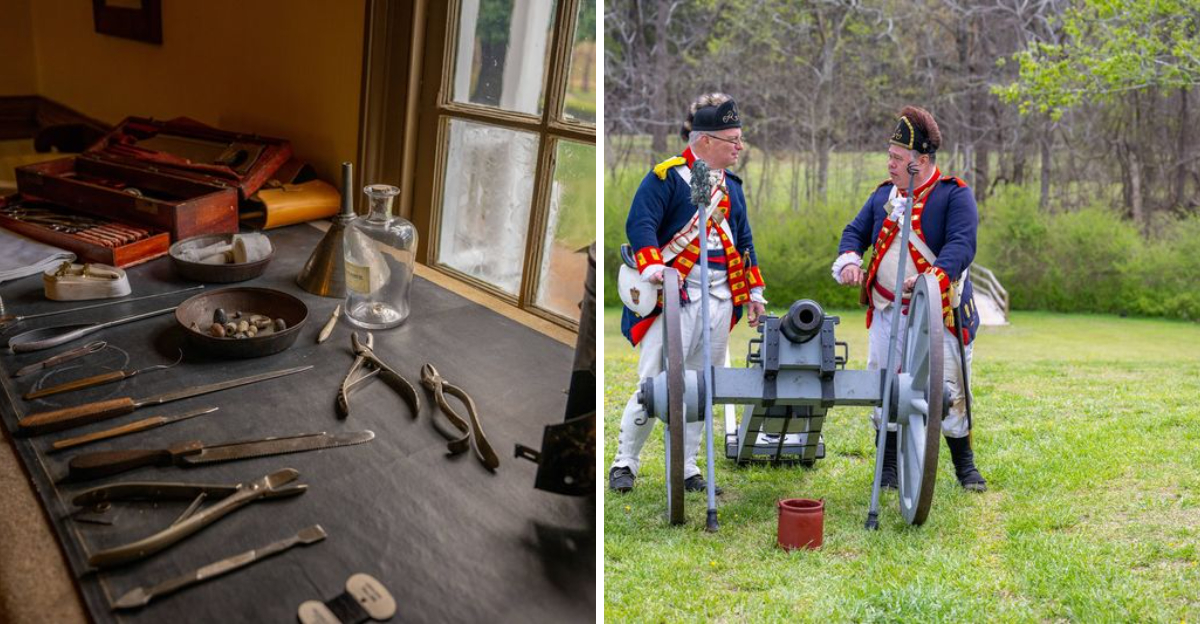
The bullet holes are still in the walls. The floorboards still carry stains that tell a story.
This historic Virginia plantation is where you can still see Revolutionary War damage and the remnants of a field hospital from 1781. I walked through the rooms, touching the wood and imagining the chaos of war.
The plantation was used as a hospital during the Siege of Yorktown, and the artifacts are a haunting reminder of what happened here. The building is preserved, not restored, which means the history is visible in every crack and scratch.
The grounds are beautiful, but the house holds the story. Virginia has plenty of plantations, but this one is a witness to war.
Stepping Back to 1769 and the Birth of a Georgian Masterpiece
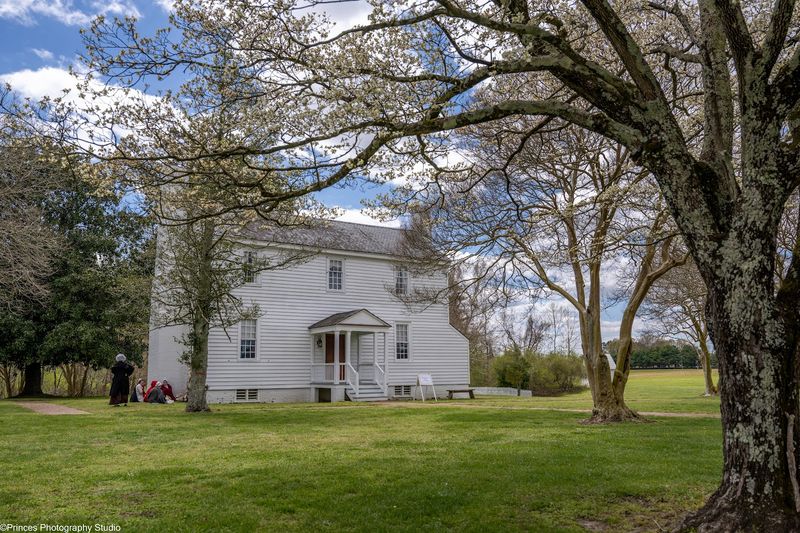
Long before the United States had a flag to fly, a Virginia planter named William Harwood was busy raising something extraordinary on the banks of the Warwick River. The result was a stunning Georgian-style house that still stands today, its clean symmetrical lines and handcrafted woodwork whispering stories of colonial ambition and craftsmanship.
Walking through the front door of Endview Plantation feels like crossing a threshold into another century entirely. The wide-plank floors creak with satisfying authenticity, and the period-correct furnishings make it almost impossible not to imagine powdered wigs and candlelit suppers.
Virginia was a very different world back then, full of tobacco fields, stagecoach routes, and families carving out legacies from raw land. This house captures all of that energy brilliantly.
Every room tells a layered story, from the domestic routines of the Harwood family to the colony-wide tensions that would eventually boil over into revolution. My first visit left me completely awestruck by how intact and alive the whole place feels.
Where Virginia Militia Paused Before the Siege of Yorktown
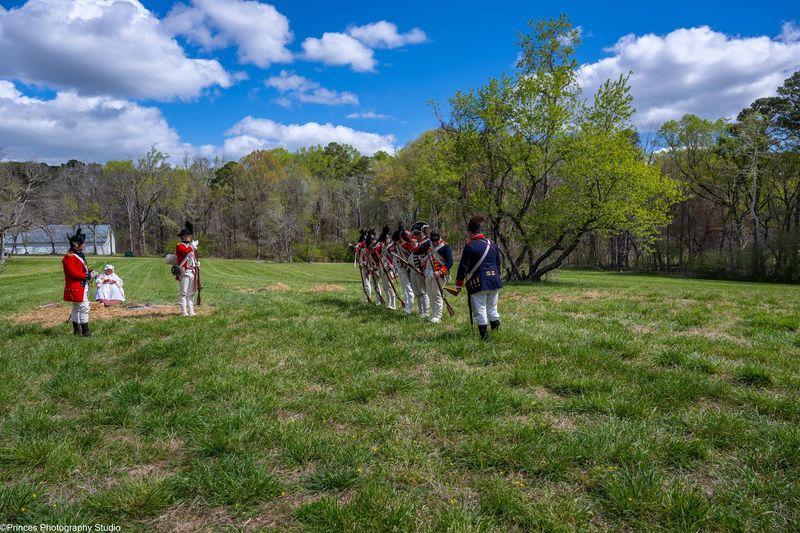
Picture this: it is September 1781, and General Thomas Nelson Jr.’s Virginia militia is marching toward one of the most consequential battles in American history. Their route took them right past this very property, and records confirm the soldiers stopped here before pressing on to the Siege of Yorktown, the engagement that effectively ended the Revolutionary War.
Standing on the front lawn of Endview Plantation, I could almost hear the rhythmic thud of boots on packed earth. The idea that men who changed the course of history once rested under these same trees is genuinely spine-tingling.
Virginia played an absolutely pivotal role in securing American independence, and this site puts that contribution into sharp, personal focus. The property sits close to the historic road network used by Continental forces, making it a natural waypoint during that dramatic autumn campaign.
Knowledgeable tour guides here bring these military movements to life with impressive detail, connecting the grand sweep of history to the very specific ground beneath your feet. It is one of those rare moments where a history lesson actually gives you goosebumps.
The Bullet Holes and Physical Scars Left by War
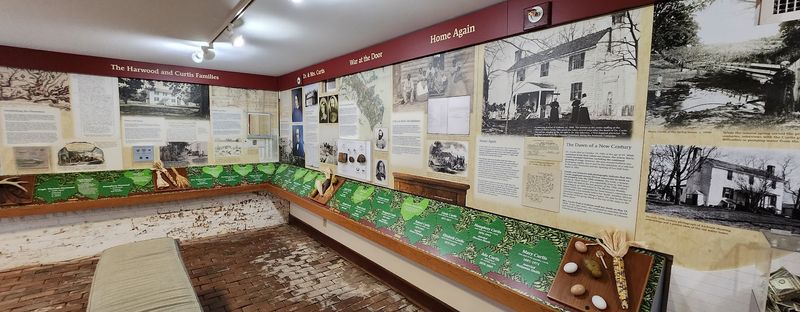
Most historic sites tell you about the damage wars caused. Endview Plantation actually shows you.
Physical evidence of Revolutionary War-era conflict is preserved right on the property, making the violence of that period tangible in a way that no textbook illustration ever could.
My heart genuinely skipped a beat when a tour guide pointed out the marks left by the chaos of wartime. There is something profoundly moving about seeing real, unrestored evidence of conflict on a structure that has stood for over two and a half centuries.
The preservation team here has made a conscious and commendable decision to keep these scars visible rather than covering them up with a fresh coat of paint and a cheerful historical marker. That choice transforms the house from a pretty period piece into a genuine witness to American struggle.
Virginia has many beautifully restored colonial homes, but few have the raw, unfiltered honesty that you find here. Every nick and mark is a data point in a larger story about sacrifice, proximity to conflict, and the unpredictable geography of war.
Honestly, it makes the whole experience feel deeply, uncomfortably real.
The Civil War Hospital That Operated Within These Walls
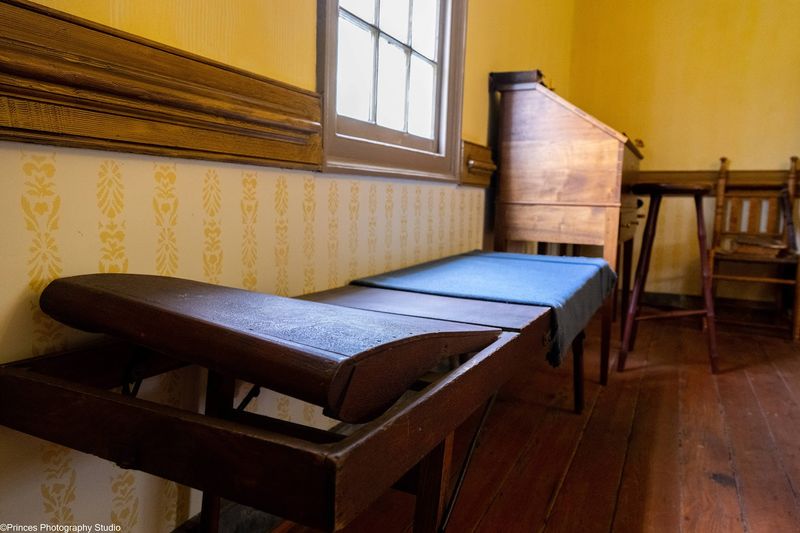
If the Revolutionary War connections were not enough to knock your socks off, Endview Plantation has a second act that is equally jaw-dropping. During the intense Peninsula Campaign of 1862, the house was pressed into service as a Confederate hospital, its elegant rooms transformed into wards for the wounded.
Imagining those parlors filled with injured soldiers rather than family gatherings is a powerful mental shift. The house absorbed all of that suffering and still stands, which feels almost miraculous when you think about it seriously.
The medical history angle here is genuinely fascinating and sets this plantation apart from nearly every other historic property in the region. Exhibits inside recreate field hospital conditions with striking authenticity, giving a clear picture of how Civil War medicine actually worked under battlefield pressure.
My tour through these rooms was one of the most emotionally resonant historical experiences I have had anywhere in Virginia. The combination of beautiful Georgian architecture and grim wartime purpose creates a tension that keeps you absolutely riveted throughout the entire visit.
This is history that hits you right in the chest.
Hospital Artifacts That Survived More Than Two Centuries
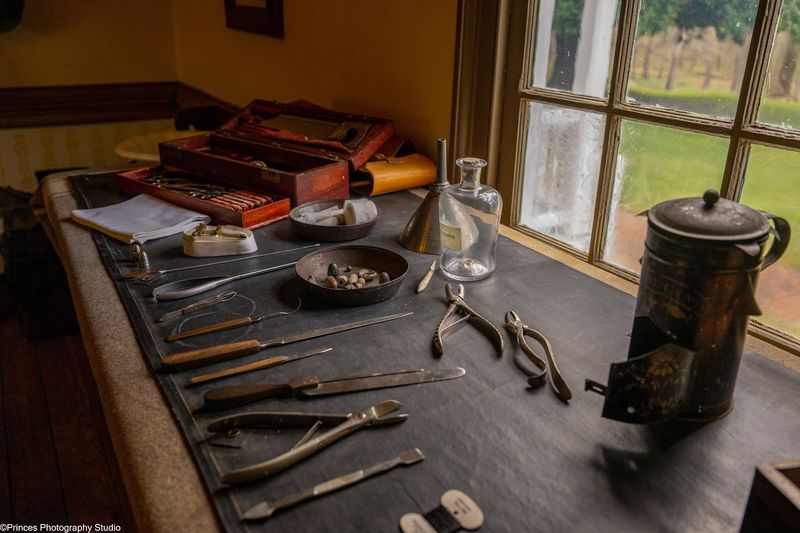
Archaeology has a funny way of making the past feel suddenly, uncomfortably present. At Endview Plantation, items unearthed on the property confirm its wartime medical role in the most direct way possible, through actual objects that were handled by actual people in the middle of actual crises.
Surgical tools, medicine bottles, and other medical implements recovered from the site are displayed with thoughtful context, letting you connect the physical objects to the human stories behind them. I found myself leaning in close to each display case, completely absorbed.
What makes these artifacts so compelling is not just their age but their specificity. Each item represents a real decision made under pressure, a doctor reaching for a tool, a nurse preparing a remedy, a soldier enduring something unimaginable.
The exhibit design here does an excellent job of framing these objects within the broader context of 19th-century medical practice. Virginia was a major theater of Civil War conflict, and this collection represents a small but deeply personal slice of that larger story.
For anyone interested in medical history, military history, or just genuinely extraordinary objects, this section of the plantation is absolutely unmissable.
Living History Reenactments That Bring Every Era Roaring Back
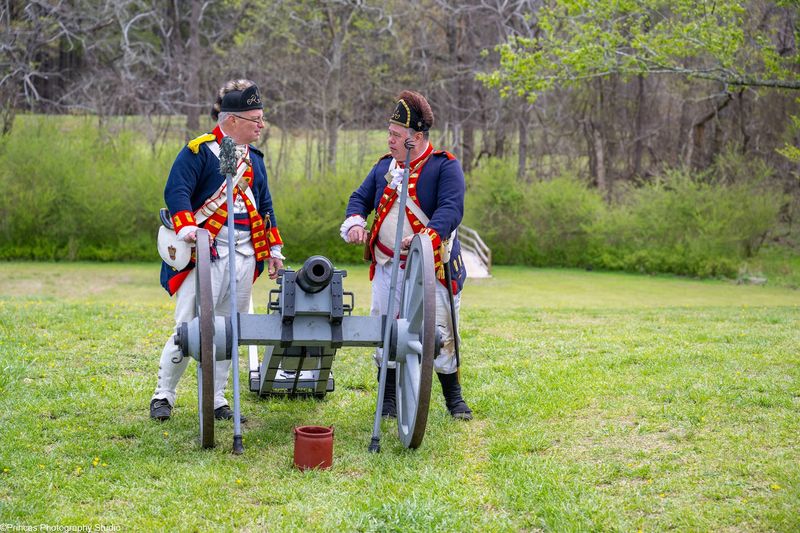
Forget passive museum experiences where you shuffle past roped-off furniture and read plaques in hushed tones. Endview Plantation operates on a completely different level, regularly hosting living history reenactments that transform the grounds into a fully immersive time machine.
Costumed interpreters drill, demonstrate period crafts, and explain historical context with infectious enthusiasm. Watching a Civil War reenactment unfold across the open fields behind the main house is genuinely thrilling, the kind of experience that makes you forget your phone exists.
The annual events calendar here is impressively varied, covering everything from colonial domestic life to Napoleonic-era military demonstrations. My personal highlight was watching a field artillery demonstration that rattled windows and startled birds out of trees for what felt like half a mile.
The team behind these events clearly cares deeply about historical accuracy and audience engagement in equal measure. Virginia has a proud tradition of living history programming, and Endview Plantation sits comfortably at the top of that tradition.
Check the schedule before your visit because some of the most spectacular events fill up quickly and you absolutely do not want to miss them.
The Medicinal Herb Garden and Its Surprisingly Fascinating Story
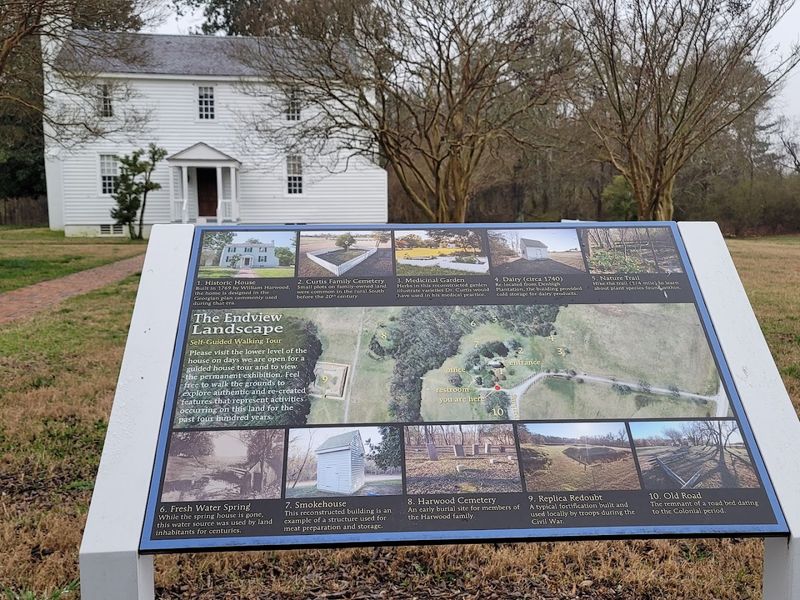
Tucked beside the main house is one of the most underrated attractions at Endview Plantation: a beautifully maintained medicinal herb garden that connects directly to the property’s wartime medical history. Colonial and Civil War-era healers relied heavily on plant-based remedies, and this garden makes that dependence tangible and surprisingly interesting.
Rows of labeled herbs sit in carefully tended beds, each one linked to a specific historical use that ranges from the sensible to the genuinely eyebrow-raising. My tour guide here had me completely hooked within about thirty seconds of explaining what each plant was used for.
The garden adds a gentler, more contemplative dimension to a site that can feel quite intense given all the military history packed into it. Strolling among the herbs after absorbing the hospital exhibits offers a natural breathing space, a moment to process everything you have just learned.
Virginia’s rich horticultural heritage is woven throughout this garden, connecting the plantation’s domestic past to its medical present. For families with kids, this is also a fantastic hands-on learning opportunity that sparks genuine curiosity about how people managed health and healing before modern medicine arrived on the scene.
Nature Trails Through Ancient Bottomland and Towering Trees
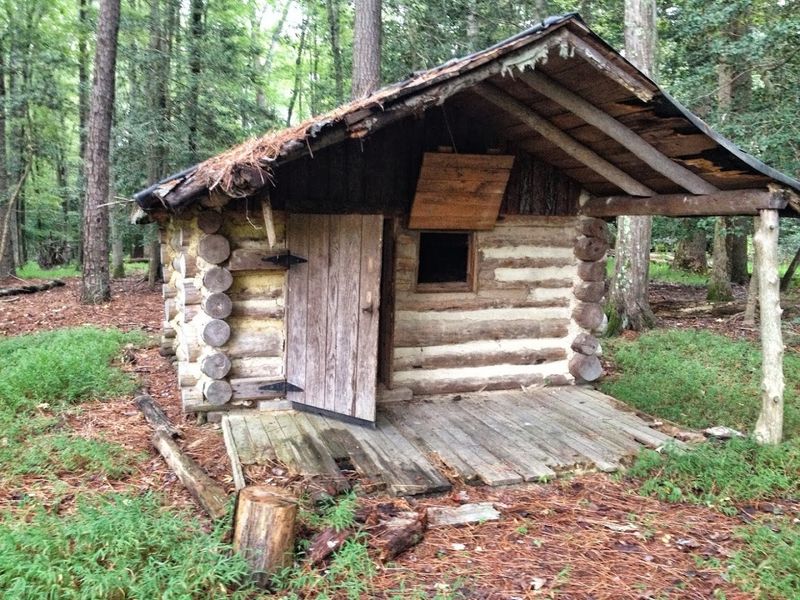
History is not the only reason to spend a full afternoon at Endview Plantation. The nature trail running behind the main house leads into a stretch of bottomland forest so spectacular that it stops even the most history-obsessed visitors right in their tracks.
Towering tulip poplars with enormous girths line the path, their canopies forming a cathedral ceiling that feels ancient and humbling. I genuinely gasped the first time I rounded a bend and encountered one of these giants up close.
The Virginia Master Naturalists Peninsula chapter maintains the trail, which means it is well-marked, thoughtfully interpreted, and genuinely enjoyable even for casual walkers. The gentle terrain with soft rolling hills makes it accessible for most fitness levels, and the constant soundtrack of birdsong adds an almost meditative quality to the whole experience.
This is the kind of forest that makes you understand why early settlers chose this particular patch of Virginia to put down roots. The combination of natural grandeur and historical context creates a uniquely layered experience that you simply cannot replicate anywhere else.
Bring comfortable shoes and plan to linger much longer than you originally intended.
The On-Site Cemetery and Its Centuries of Quiet Stories
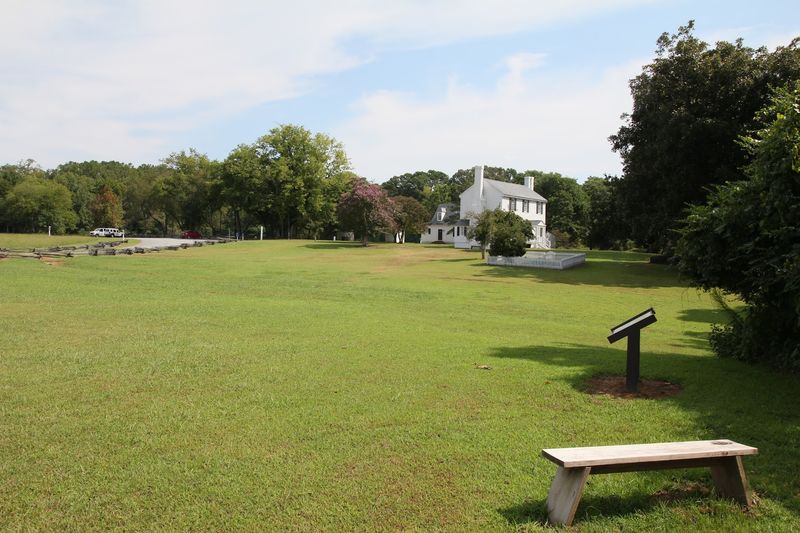
Few features at any historic property carry as much quiet power as an on-site cemetery, and the burial ground at Endview Plantation is genuinely extraordinary. Headstones here mark graves stretching back nearly four centuries, connecting the modern visitor to an almost incomprehensible span of human experience on this single piece of Virginia earth.
My first walk through this cemetery was one of the most reflective experiences I have ever had at a historic site. The combination of ancient trees, weathered stone, and absolute silence creates an atmosphere that feels both eerie and deeply peaceful at the same time.
Taking time to actually read the inscriptions and contemplate the lives behind them transforms a quick walkthrough into something much more meaningful. The cemetery grounds are well-maintained, and the surrounding grove amplifies the sense of standing at the intersection of past and present.
Virginia’s landscape is dotted with historic burial grounds, but this one has an intimacy and an authenticity that feels genuinely rare. Sitting quietly in that grove, as one particularly thoughtful past visitor described it, really does allow the weight of history to settle into you in a way that guided tours alone cannot quite achieve.
Planning Your Visit to Endview Plantation in Newport News
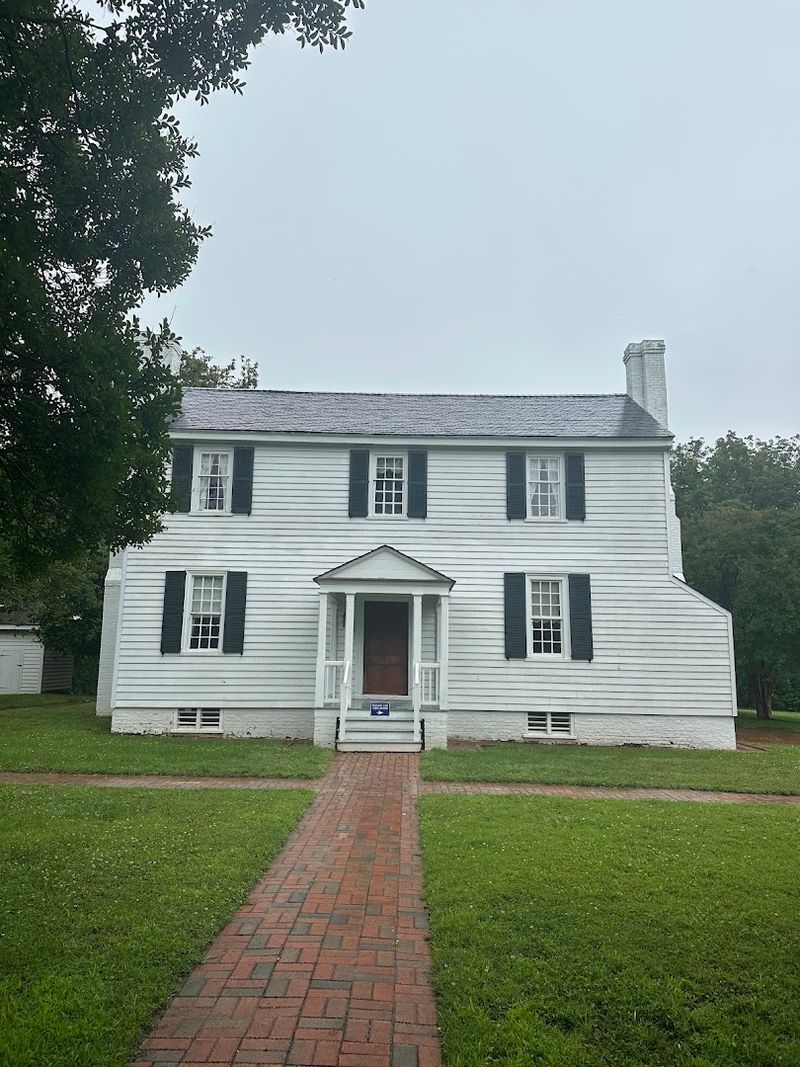
Getting to Endview Plantation is straightforward, and the experience rewards every ounce of effort you put into planning. The site is open Wednesday through Saturday, so a little schedule-checking before you go will save you a wasted trip.
The address is 362 Yorktown Road, Newport News, Virginia, and the location sits conveniently close to the broader Colonial National Historical Park corridor.
Arriving early gives you the best shot at a relaxed, unhurried tour of the house before the grounds fill up, especially on days when special events are scheduled.
My personal recommendation is to budget at least half a day, because the combination of the house tour, herb garden, cemetery, and nature trail adds up fast.
Special events like the annual Paw Paw Festival and the popular October Haunted Trail bring a completely different energy to the property and are worth planning a trip around specifically. The knowledgeable guides here consistently make the experience richer, so do not skip the formal tour in favor of a solo wander.
Virginia has given the country so much of its foundational history, and this plantation distills that legacy into one remarkably concentrated, utterly captivating destination. Go soon, go often, and bring everyone you know.
