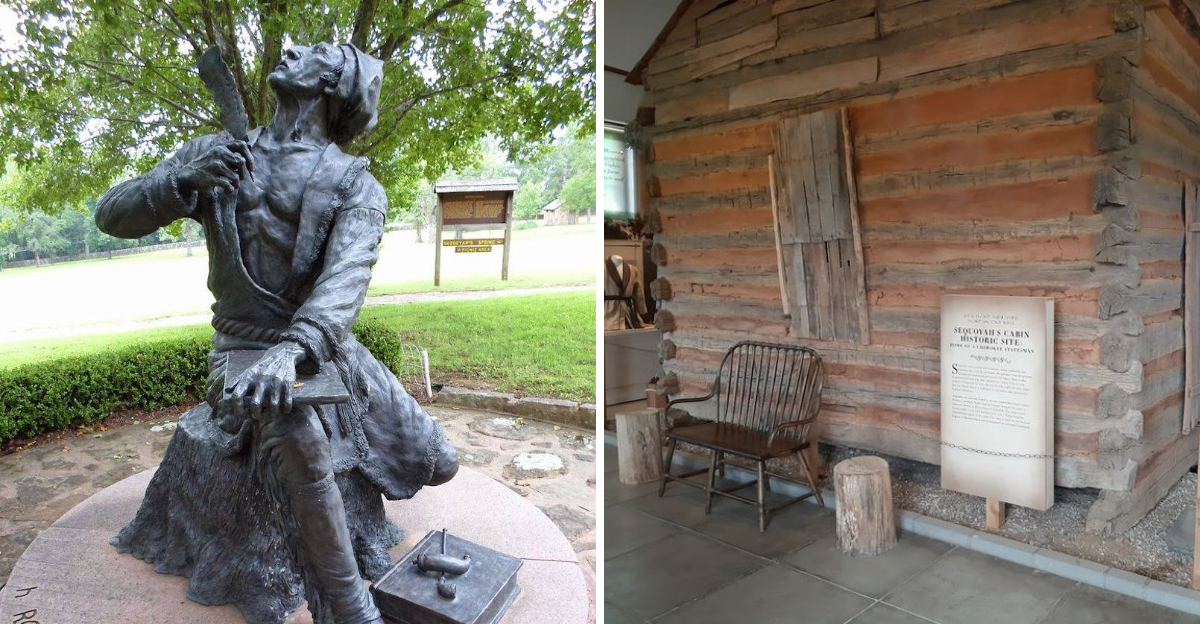
Somewhere along a quiet stretch of road near Sallisaw, Oklahoma, there stands a small log cabin that changed the course of history.
Inside those rough-hewn walls, a man named Sequoyah spent years developing a written language for the Cherokee people entirely on his own, with no formal training and no blueprint to follow.
That kind of story deserves more than a roadside marker. What struck me most was how quiet this place feels. No crowds, no over-the-top displays, just a simple space holding a story that completely reshaped a culture.
I walked in thinking I would spend a few minutes looking around, and instead found myself slowing down, taking it all in, and realizing this was not just another stop on the map.
The Man Behind the Cabin
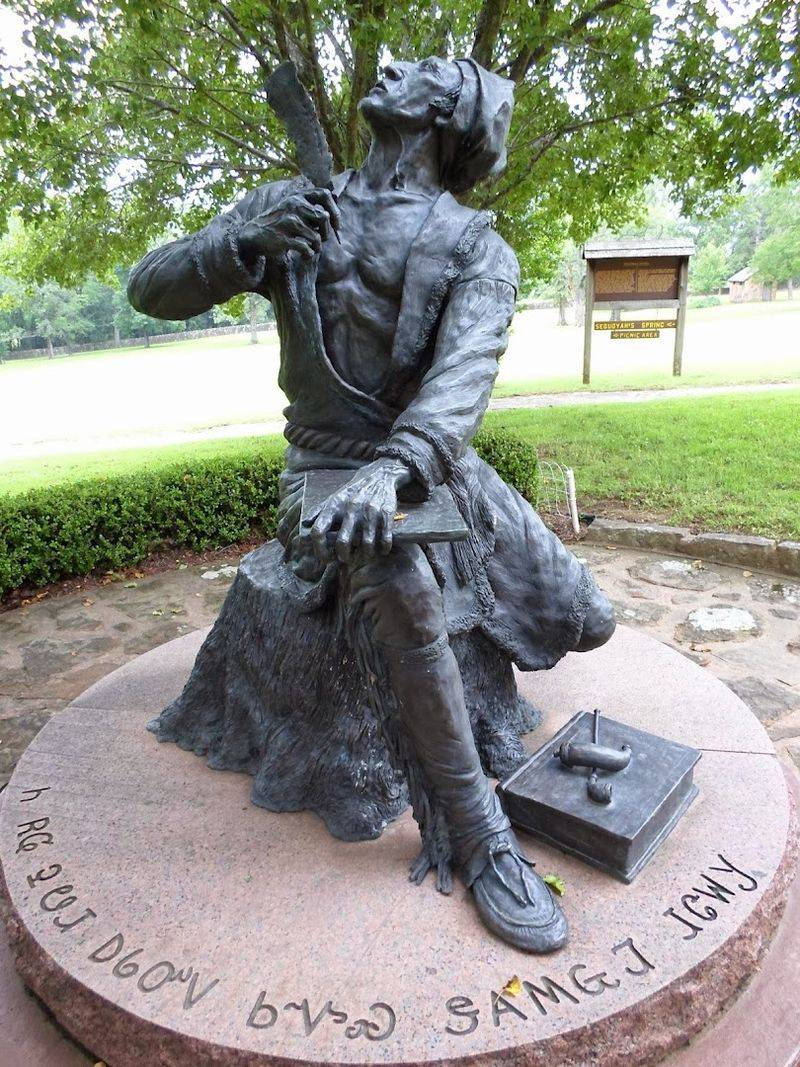
Before the cabin, before the syllabary, there was a man who simply refused to believe something was impossible. Sequoyah was a Cherokee silversmith born around 1770, and he grew up in a world where the Cherokee language had no written form at all.
He became fascinated by the idea that written marks could carry spoken words, and he spent over a decade working to make that idea real for his own people. His family and neighbors thought he had lost his mind.
Some even destroyed his early work out of fear or frustration.
He kept going anyway. By around 1821, Sequoyah completed an 86-character syllabary that represented every sound in the Cherokee language.
Within just a few years, thousands of Cherokee people had learned to read and write using his system.
No other person in recorded history is known to have single-handedly created a complete writing system for a language. That fact alone makes this Oklahoma cabin one of the most quietly remarkable places you can visit in the entire country.
The Cabin Itself Is the Star
Log cabins are not rare in Oklahoma. But this one is different in a way you feel the moment you approach it.
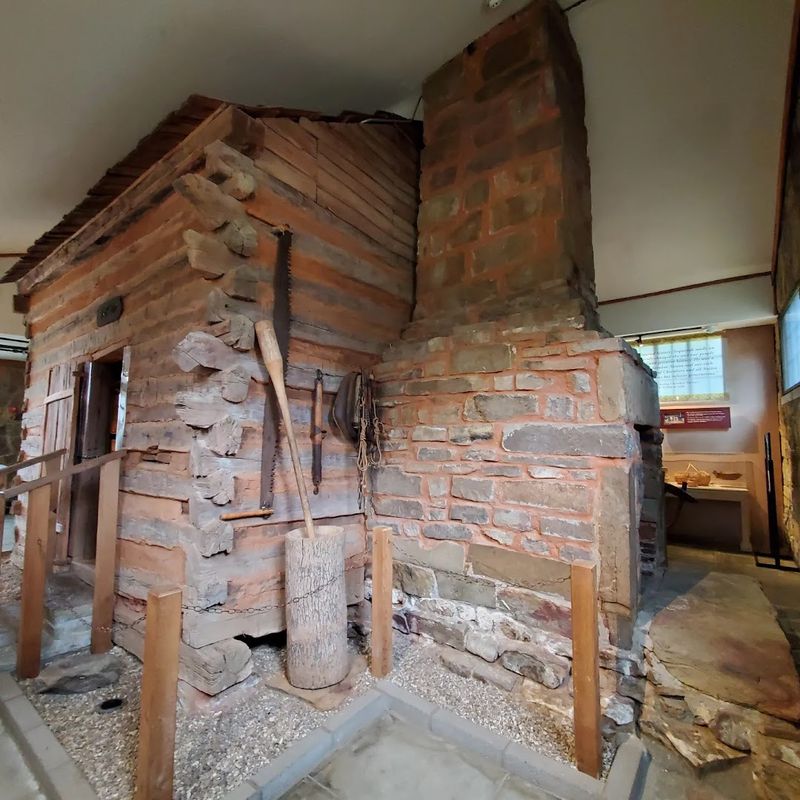
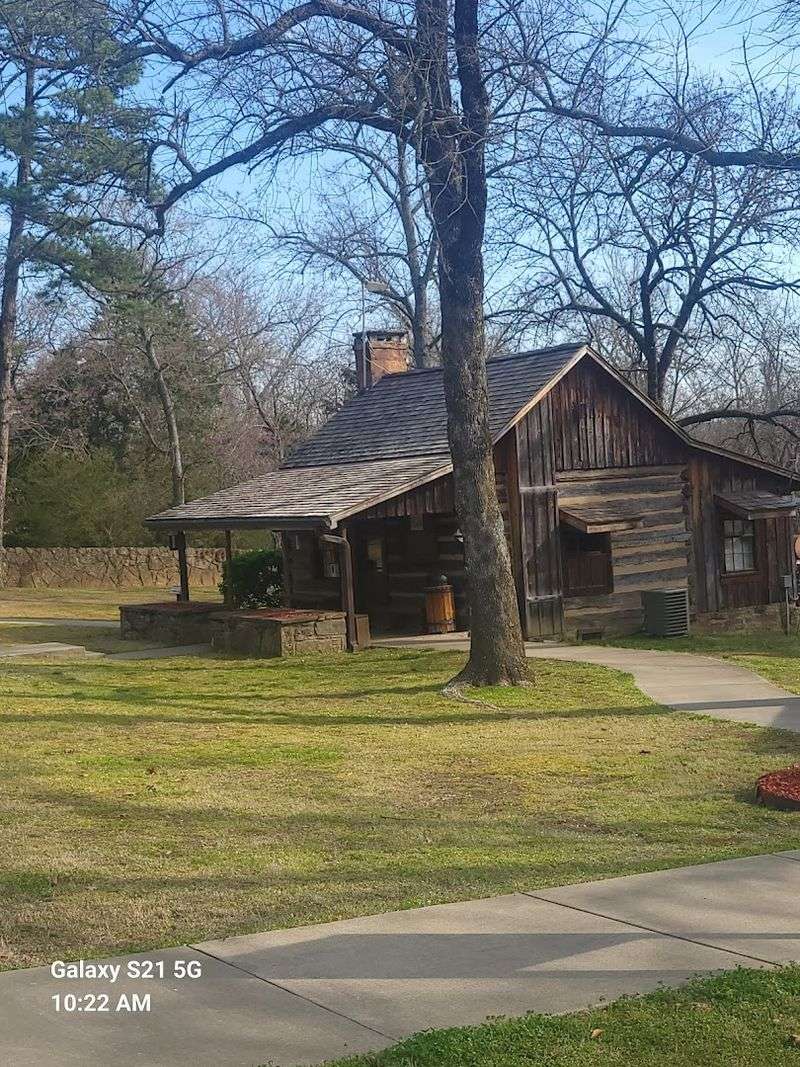
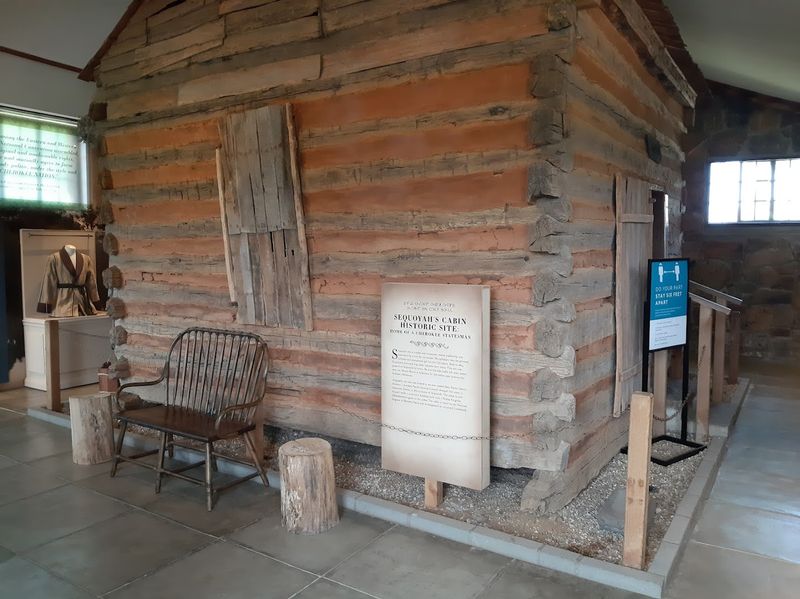
Built by Sequoyah himself around 1829, the structure is a single-room cabin made from hand-hewn logs, and it has survived nearly two centuries of weather, neglect, and history.
What makes the visit especially striking is that the cabin now sits inside a larger protective building, which shields it from the elements while still allowing you to walk right up and study the original logs, the construction methods, and the sheer simplicity of the space.
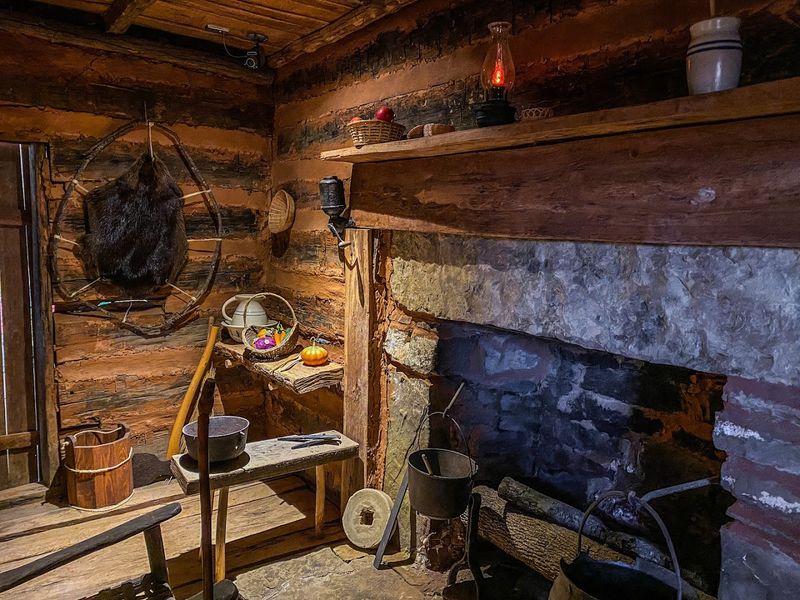
Standing in front of it, you start to understand that this was not just a home. It was a workshop, a study, a place of deep creative labor.
The walls are low and the rooms are small, but the ideas that grew inside them were enormous.
A place this modest producing something this world-changing is the kind of contrast that sticks with you long after you leave the grounds. The cabin earns every bit of the attention it receives, and then some.
The Cherokee Syllabary on Display
One of the most jaw-dropping moments of any visit here is getting a good look at the Cherokee syllabary itself. The museum displays the full system of 86 characters, each one representing a distinct syllable sound in the Cherokee language.
What makes this so astonishing is that Sequoyah invented every single symbol. He did not borrow an existing alphabet or adapt another writing system directly.
He created something entirely original, shaped by his own thinking over more than a decade of focused effort.
The syllabary spread with remarkable speed once it was introduced. Cherokee people who had never had access to written language before could learn to read and write in just a matter of days or weeks.
That kind of rapid adoption speaks to how perfectly the system fit the language it was designed for.
Seeing the characters laid out in the museum brings a new level of respect for what Sequoyah accomplished. It is one thing to hear about it, and quite another to stand there and look at the actual symbols that transformed an entire nation’s relationship with literacy.
The Grounds Are Genuinely Beautiful
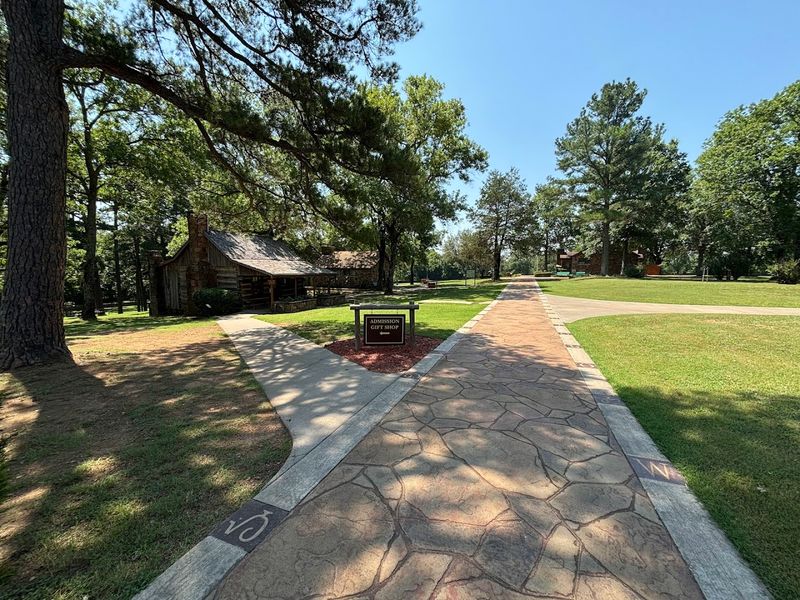
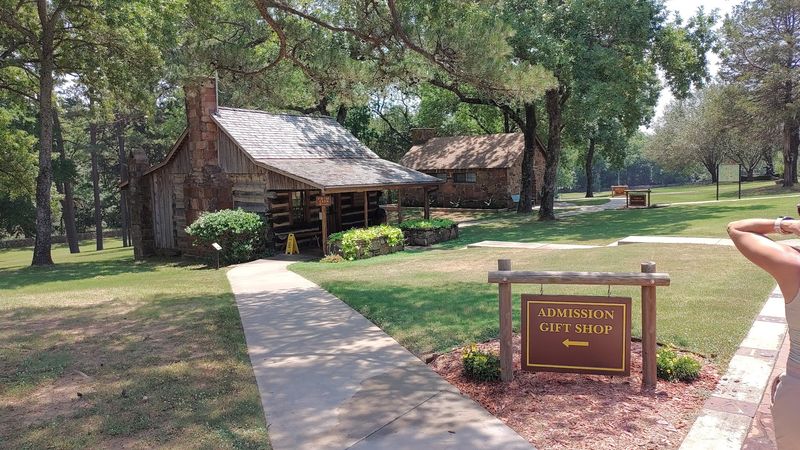
History aside, the property itself is a pleasure to spend time on. The grounds surrounding the cabin are carefully maintained, with mature trees providing real shade and open grassy areas that invite you to slow down and breathe for a moment.
There is a picnic area on the property that works well for a relaxed midday stop. Families traveling through eastern Oklahoma often use it as a natural break point, and it has the kind of calm, unhurried atmosphere that makes an hour feel like a genuine rest rather than just a pause.
The setting feels intentional, like the people who care for this place understand that the story of Sequoyah deserves a peaceful backdrop. Nothing here feels rushed or commercial.
The landscaping is thoughtful without being overdone, and the overall feeling is closer to a nature sanctuary than a roadside attraction.
Spring and early fall are probably the best times to visit if you want the grounds at their most photogenic. The light filters through the trees in a way that makes the whole site feel almost cinematic, and you will want to take your time walking every corner of it.
Free Admission Makes It Even Better
Here is something that genuinely surprises most people pulling up to the site: admission is completely free. The Cherokee Nation maintains Sequoyah’s Cabin Museum as a public resource, and there is no ticket booth, no entry fee, and no catch.
That kind of open-door policy says something meaningful about the purpose behind the place. This is not a site designed to generate revenue.
It exists to share a story, preserve a legacy, and make Cherokee history accessible to anyone willing to make the drive.
Free admission also means there is no pressure to rush. You can spend twenty minutes or two hours, wander the grounds at your own pace, linger over the exhibits, and sit outside under the trees without feeling like the clock is running on a paid ticket.
For road-trippers, families on a budget, or anyone who simply values history being treated as a public good rather than a commodity, this place checks every box.
The Cherokee Nation’s decision to keep it free is one of the best things about the entire experience, and it makes the visit feel genuinely generous from start to finish.
Getting There Is Part of the Adventure
The address is 470288 OK-101, Sallisaw, OK 74955, and the drive to get there is worth mentioning on its own. The cabin sits off the main highway on a quiet rural road in eastern Oklahoma, and the approach through the surrounding countryside is genuinely scenic.
Coming from Interstate 40, you follow state roads through rolling green hills and past small farms, and the landscape gradually shifts into something that feels quieter and older than the highway world behind you. It is the kind of drive that puts you in the right frame of mind before you even arrive.
Navigation apps will get you there without much trouble, though the last stretch of road is rural enough that you should keep an eye on your signal. The parking area is spacious and easy to manage even with larger vehicles, which is a practical bonus for anyone traveling with an RV or trailer.
The slight off-the-beaten-path quality of the location actually adds to the experience. Arriving somewhere that requires a little effort makes the destination feel more like a discovery, and Sequoyah’s Cabin Museum absolutely rewards that sense of having sought something out.
The Museum Exhibits Tell a Layered Story
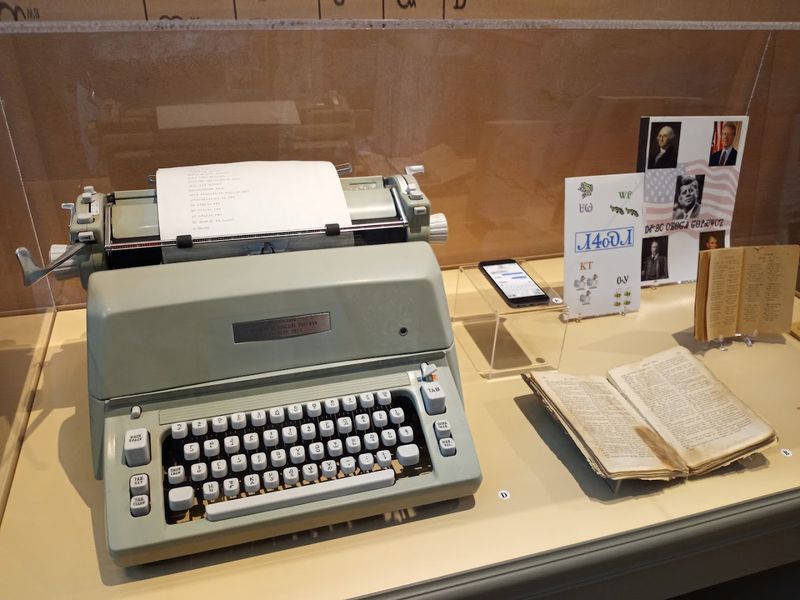
Beyond the cabin itself, the museum building holds exhibits that fill in the full picture of Sequoyah’s life and legacy. The displays cover his early years, his work as a silversmith, his long obsessive project to create the syllabary, and the impact that written Cherokee had on the nation’s culture and identity.
What stands out about the exhibits is how well they contextualize the achievement. You learn not just what Sequoyah did, but why it mattered so deeply.
The Cherokee Nation used the syllabary to publish newspapers, maintain legal records, and communicate across distances in ways that had never been possible before.
The exhibit design is clear and accessible without being dumbed down. There is enough depth here to satisfy someone with a serious interest in Native American history, but the layout is also welcoming to younger visitors who are encountering this story for the first time.
Walking through the exhibits in order feels like following a narrative arc, and by the time you reach the end, the weight of what one person accomplished in one small cabin in Oklahoma lands with real force. It is a well-crafted telling of an extraordinary story.
Hours and Planning Your Visit
Planning ahead for this one is worth it. The museum is open Tuesday through Saturday from 10 AM to 4 PM, and it is closed on Sundays and Mondays.
If you are planning a road trip through eastern Oklahoma, those hours are easy to work around, but showing up on a Sunday will mean a locked gate and a missed opportunity.
The site is managed by the Cherokee Nation, and the contact number is 918-775-2413 if you want to call ahead or confirm any seasonal changes to the schedule. There is also an official website through the Cherokee Nation’s tourism arm where you can find current information before making the drive.
Arriving closer to the opening time of 10 AM gives you the best chance of having the grounds to yourself for a while, which makes the experience feel even more personal and unhurried. Midweek visits tend to be quieter than Saturdays, which occasionally draw larger groups.
Bringing water and a snack is a smart move if you plan to use the picnic area. The nearest town amenities are a short drive away, so a little preparation turns what might be a quick stop into a proper half-day outing.
Cherokee History Lives Here
The story of Sequoyah does not exist in isolation. It unfolds against a much larger backdrop of Cherokee history, and the museum does an honest job of connecting those threads.
Visiting here means encountering not just one man’s genius, but an entire nation’s resilience and cultural richness.
The Cherokee people had a sophisticated society long before European contact, and the syllabary became one of the tools that helped them maintain that sophistication even as enormous pressures worked against them. The museum presents that history with respect and without oversimplification.
There is something grounding about being in eastern Oklahoma and understanding that this land has deep layers of human story beneath it. The cabin and the museum are physical anchors for that understanding, and they make the history feel real in a way that textbooks rarely manage.
For anyone with Cherokee heritage, this site carries obvious personal significance.
But even for visitors with no direct connection to the nation, the experience of learning this history in the place where it happened creates a kind of empathy and appreciation that genuinely changes how you see the broader American story.
A Closing Thought on Small Places and Big Ideas
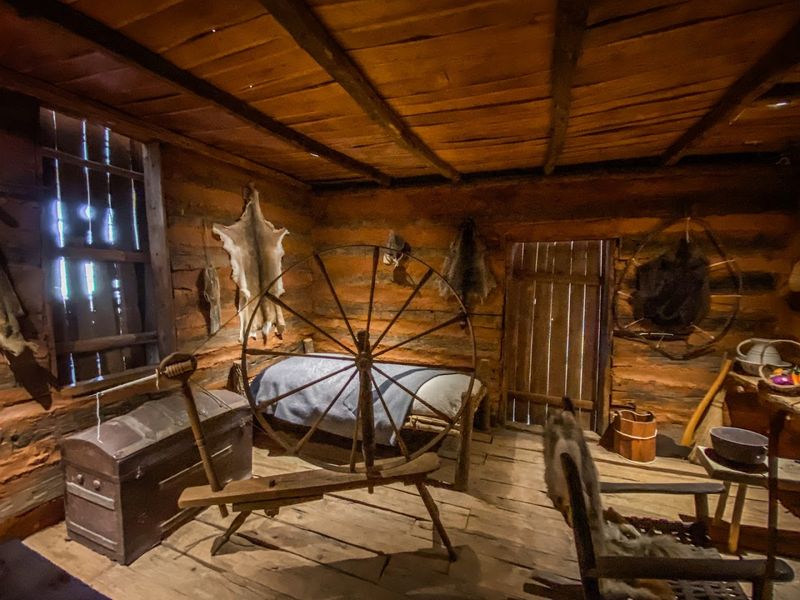
There is a particular kind of humility that comes from standing in front of a small, weathered cabin and knowing that something world-changing happened inside it. Sequoyah’s Cabin Museum in Oklahoma delivers that feeling cleanly and without any theatrical flourish.
The site does not need dramatic presentation because the story is dramatic enough on its own. One person, working alone in a modest home, created something that had never existed before and gave an entire people the gift of literacy in their own language.
That is the whole story, and it is more than enough.
Coming here is a reminder that history does not always happen in grand buildings or famous cities. Sometimes it happens in a one-room log cabin on a quiet road in eastern Oklahoma, built by hands that also knew how to shape silver and who simply refused to stop asking what was possible.
Whether you are a history enthusiast, a road tripper looking for something real, or someone who just needs a reminder that one determined person can genuinely change the world, this place will leave you with something worth carrying home.
Dear Reader: This page may contain affiliate links which may earn a commission if you click through and make a purchase. Our independent journalism is not influenced by any advertiser or commercial initiative unless it is clearly marked as sponsored content. As travel products change, please be sure to reconfirm all details and stay up to date with current events to ensure a safe and successful trip.
