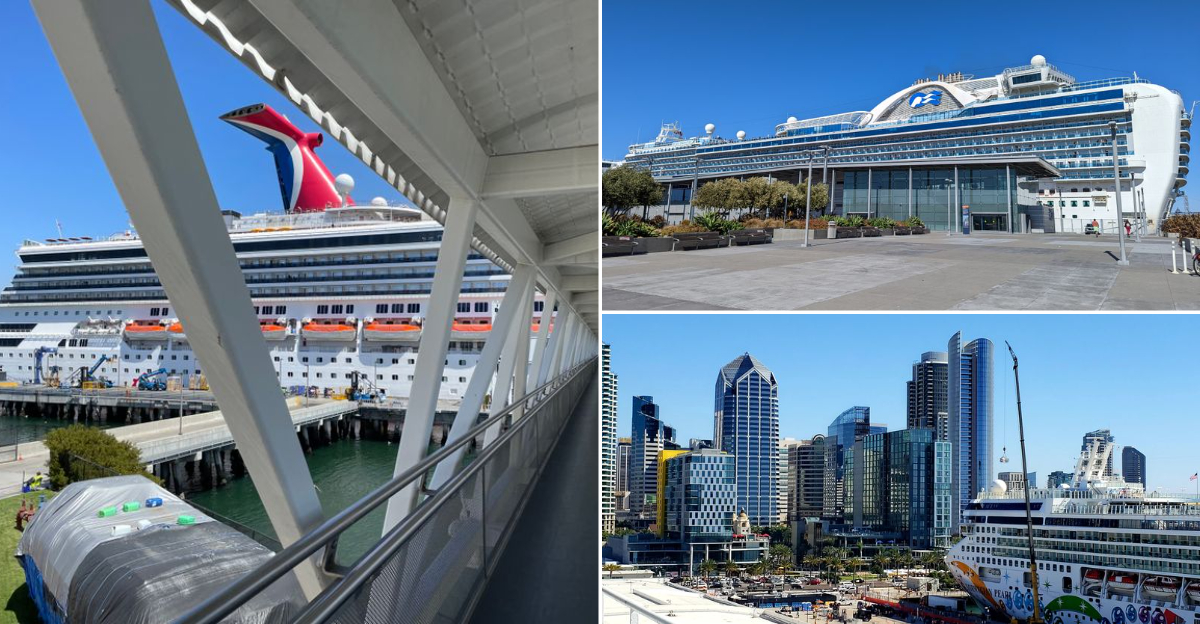
You know how a day can feel normal until the ocean decides to send a floating city to town, and suddenly everything tilts a little? That is how it feels along California’s coast when the mega ships roll in, like someone quietly turned up the volume on the whole shoreline.
You see it in the streets, the piers, even the way the air moves when thousands of people step onto land at once. It is not bad or good by default, but it is big, and it shapes the day.
If you have not watched a ship dock in San Pedro or San Diego, the scale alone will make you pause. Let me walk you through the ripple effects, the visible ones and the subtle ones, the parts you notice and the parts you only feel later.
Mega Ships Arrive In Concentrated Waves
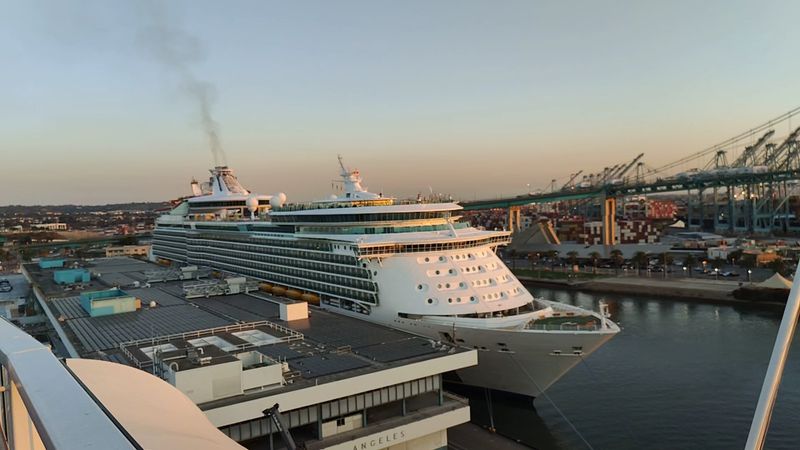
You can spot the pattern from the first minute a mega ship noses toward the breakwater. The energy tightens around the harbor like a rubber band, and everything starts moving in a coordinated rush.
At the Port of Los Angeles, you feel the city inhale.
The terminals hum, shuttles shuffle, and the pier seems to widen to make room.
It is not just the size, it is the timing. Arrivals bunch up, and the day condenses into a burst of motion that bleeds into nearby streets.
San Pedro feels like a stage while the ship is the surprise headliner. You look up at the balconies and understand how many bodies will soon be crossing crosswalks.
California has learned to ride these waves, but each one feels slightly different. Wind, traffic, and shore schedules all nudge the rhythm.
Down the coast at Port of San Diego, the pattern repeats.
Only the backdrop shifts from breakwater cranes to a bright skyline and quiet marinas.
Do you feel the countdown when the gangways swing out? That is the moment everything on land accelerates by a notch.
The wave is temporary, but it is intense. Then, just as quickly, the harbor exhales and resets for the next one.
Harbor Areas Absorb Sudden Visitor Surges
The first thing you notice is footsteps, so many footsteps at once that the pavement has a pulse. It rolls through the harbor district like a tide that skips the beach and heads straight for the sidewalks.
Over by Outer Harbor Green the benches fill fast.
You can hear rolling suitcases clicking like metronomes in sync.
San Diego County Waterfront Park catches the same rush. Families fan out, maps unfold, and the shade trees turn into little rest stations.
What surprises me is how quickly the surge organizes itself. Rideshare zones grow new lines, and curbside staff start directing traffic like conductors.
California coastal towns are good at absorbing people, but this is a different density. It is compressed time, compressed space, and compressed attention.
Near the Cruise Terminal, the walkways become moving streams.
You do not push through, you just join and float with it.
Is it overwhelming? It can be for a minute, and then your brain adjusts to the new tempo.
Shore excursions whisk folks away, which drains the surge in quick pulses. By afternoon, the waterfront feels like a long exhale with a few lively pockets still buzzing.
Port Infrastructure Faces Growing Pressure
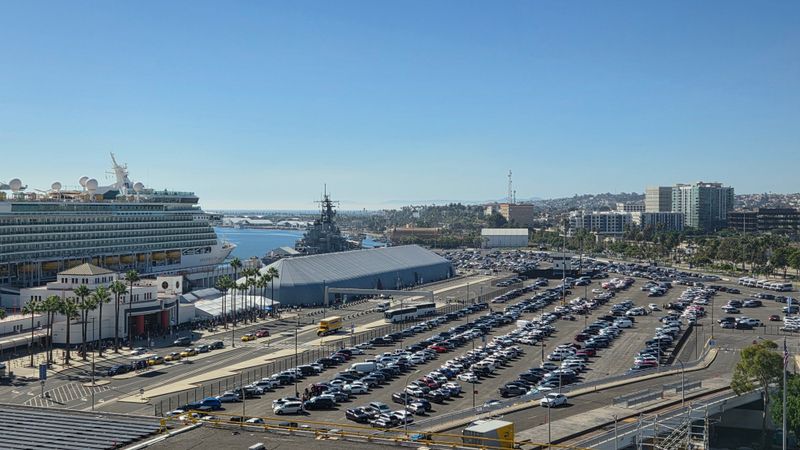
Big ships are basically stress tests for every bolt and lane around the port. You see where the system flexes and where it creaks.
At the World Cruise Cente, staging areas fill quickly. The choreography of buses, shuttles, and luggage carts demands space that regular days do not require.
Over in Long Beach, the access ramps become the tell.
A tiny delay upstream echoes into a long queue downstream.
California ports plan for this, but planning has a way of meeting reality. And reality is a lot of people with different clocks and different thresholds for waiting.
Simple things become pressure points, like crosswalk timing and restroom capacity. If those slip, the vibe slips with them.
Signage carries a lot of weight near Pier 27. Clear arrows and visible staff turn confusion into flow.
Are we talking catastrophe? Not at all, more like a stress check that happens in public at full volume.
Some days the infrastructure looks calm under load. Other days you can hear the seams groan, and that is the cue for upgrades to move from paper to pavement.
Coastal Traffic Patterns Shift On Arrival Days
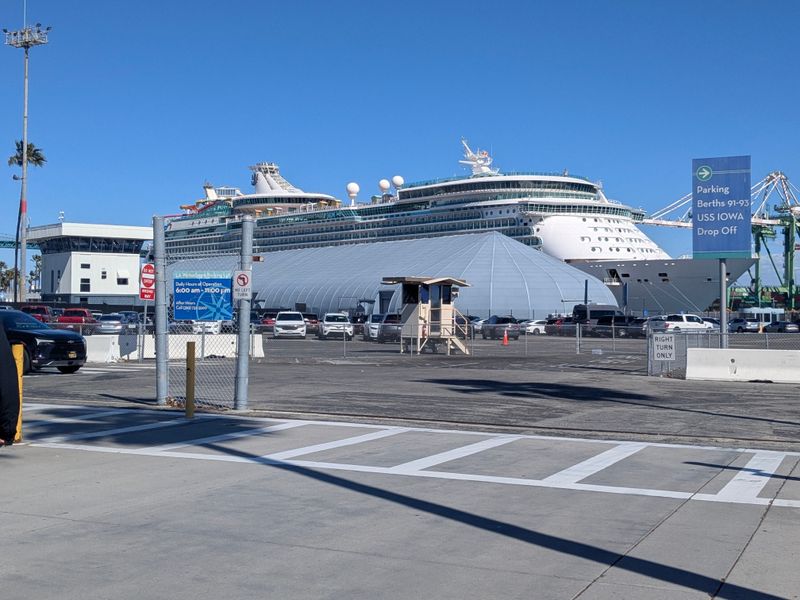
You think you know the morning drive, and then a ship docks and the map redraws itself. Lanes that usually feel sleepy suddenly have opinions.
North Harbor Boulevard takes on a new personality. Signals feel shorter and patience feels thinner.
In San Diego the curb lanes become hot property.
Drivers circle, watchers wait, and the loop needs a wider loop.
California drivers adapt fast, but the learning curve resets every arrival. Locals start cutting through side streets they have not used in months.
Transit picks up a lifeline role. By the time a streetcar glides in, you can almost hear the collective thank you.
What helps most is clear wayfinding and gentle patience.
The two together smooth the sharp edges of the surge.
Do you time your errands around harbor schedules? It is a very local habit now, like checking surf before a coastal hike.
By late afternoon the roads unclench, and the old patterns return. Then everybody forgets until the next bright white hull appears on the horizon.
Local Businesses Adjust To Short Stay Crowds
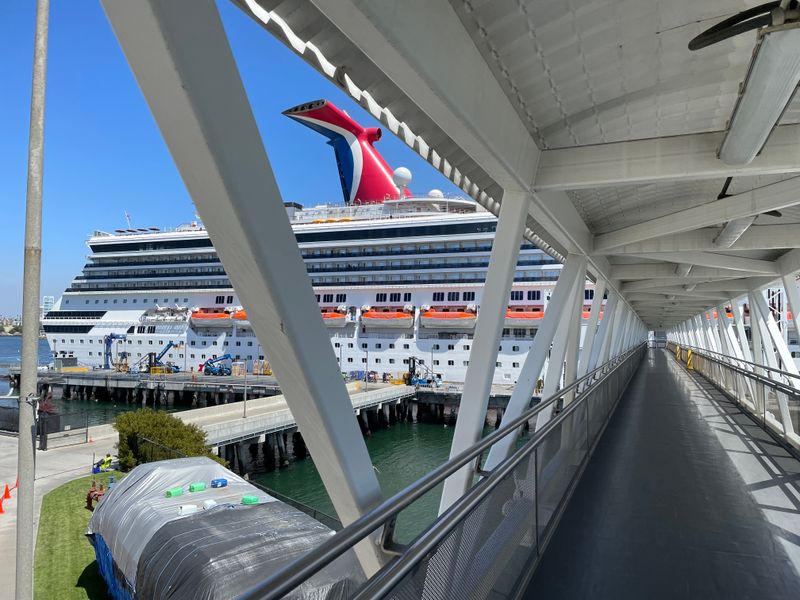
Shops near the pier learn to talk in quick bursts because short stays are the name of the game. You hear the rhythm in greetings that move fast but still feel friendly.
Around Shoreline Village doors open early.
Staff shift displays toward items you can carry without thinking.
San Diego’s Seaport Village plays the same tune. The boardwalk hums while clocks tick louder than usual.
California coastal small businesses are nimble when they have to be. They tweak hours and restock in tighter cycles during ship days.
Over by Fisherman’s Wharf, performers anchor little pockets of movement. The crowd lingers just long enough to tip and drift onward.
Retail sees quick wins, while services lean into speed.
It is less about loyalty and more about a friendly first impression.
Do these visitors come back later for a longer trip? Some do, especially after a relaxed hour on the water or a quiet bench with a view.
The trick is meeting them where they are without feeling rushed. When it works, you can feel a neighborhood smile in real time.
Public Waterfront Spaces Feel Temporarily Overrun
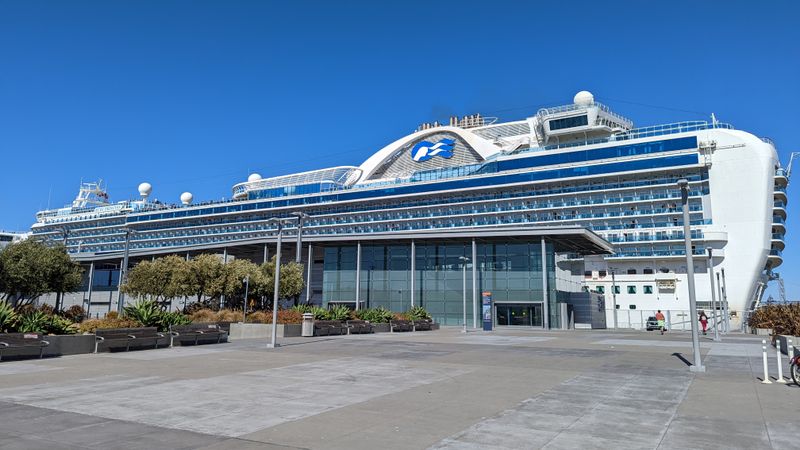
Some days the promenade feels like a festival you did not RSVP for, only there is no stage and everyone is the crowd. The mood is friendly, but the space gets tight.
Near Cabrillo Beach Coastal Park benches vanish fast.
A line forms for viewpoints you usually have to yourself.
Embarcadero Plaza joins the chorus when multiple tour coaches unload. The plaza turns into a moving postcard with extra corners.
California waterfronts are built for people, yet capacity has a ceiling you feel with your shoulders. That is when locals slip to parallel streets and quieter piers.
Embarcadero Marina Park South absorbs strollers and cameras.
The skyline acts like a magnet while joggers weave a careful path.
It is not forever, just a high tide of people. The air softens again once the first excursions leave the dock.
Do you bail out or linger to watch the buzz? I split the difference and follow the wind along the railings.
The moment the crowd thins, the water gets louder, and you can hear gulls again. That is the cue that the shoreline has reset itself.
Environmental Concerns Follow Increased Ship Size
The bigger the ship, the bigger the questions that follow it through the channel. You can almost hear the conversations riding the breeze.
At the Port of Long Beach shore power is the quiet hero when it is used.
Cutting the engines dockside lowers the rumble you feel in your bones.
Over in San Diego Bay, the air feels different on low traffic days. You notice the clarity the way you notice a newly washed window.
California ports track emissions and push cleaner operations. It is progress, but it needs steady pressure and steady investment.
Marine mammal routes and sensitive habitats factor into route planning. The ocean is busy even when it looks still from the pier.
Along The Embarcadero, monitoring stations quietly take their notes.
The numbers help steer the next round of upgrades.
Do visitors think about all this while snapping photos? Some do, especially when a volunteer points out distant spouts on the horizon.
The takeaway is simple without being easy. Big ships can coexist with cleaner habits if we keep turning good ideas into normal ones.
Neighborhood Routines Change Near Ports
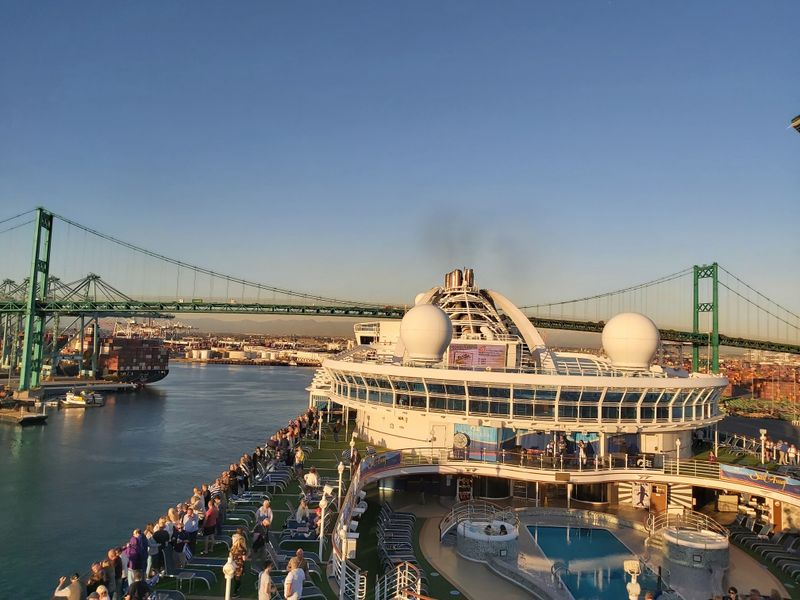
If you live within a few blocks of the terminal, ship days color your calendar. It is like having a neighbor who hosts lively guests now and then.
In San Pedro morning walks pivot to avoid bus clusters.
School drop-offs get a little earlier, errands slide later.
Downtown waterfront San Diego has its own script. Garage spaces turn precious, and bikes become gold.
California neighborhoods learn the rhythms with gentle humor. You trade tips with friends like you would about tide charts.
Over in Dogpatch, deliveries time themselves to the lull. Couriers know the back ways better than any app.
A good neighbor policy goes both directions on these blocks.
Visitors get clear signs, and locals get clear lanes.
Do you notice the quiet after the last shuttle leaves? It lands like a soft blanket over the street.
By evening, porch conversations return to normal volume. You remember that the harbor is both workplace and welcome mat.
Economic Benefits Remain Unevenly Distributed
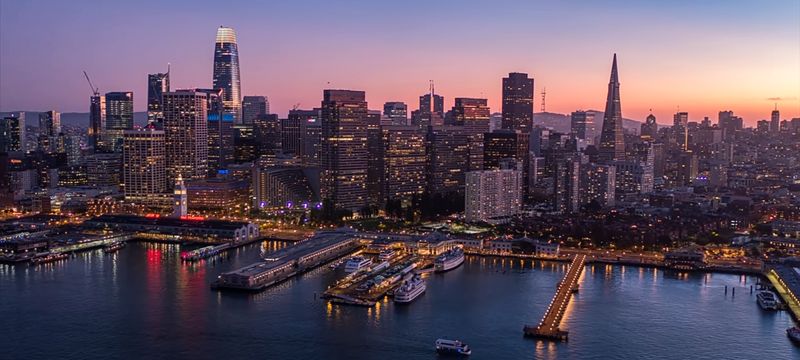
The money does arrive with the passengers, but it does not land evenly. You can see who catches the wave and who watches it roll by.
On Pine Avenue foot traffic spikes when schedules sync.
A block away, it can still feel like any other Tuesday.
San Diego’s Little Italy sees quick bumps on ship days. Meanwhile midtown shops wait for a second ripple that sometimes never comes.
California coastal economies are patchworks, and tides do not lift every slip. The businesses closest to the shoreline turn over faster.
Along The Embarcadero short interactions drive revenue. Deeper services thrive only when visitors return later with time.
Local chambers push wayfinding and shuttle loops to spread the love.
When routes branch wider, the map of benefits gets fairer.
Do loyalty and memory kick in after a single brisk visit? Occasionally, especially when a small kindness sticks in someone’s head.
The longer game is nudging first timers into future travelers. That is where a quick hello can grow into a steady hello.
Communities Search For Long Term Balance
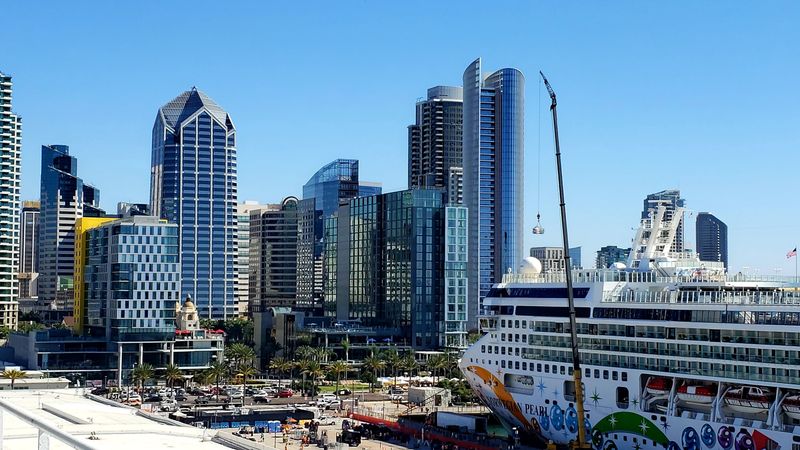
Everyone I talk to wants the harbor to stay lively without swallowing daily life. Balance sounds abstract until you try living near the gangway.
In San Pedro community meetings fold in port updates.
People show up with real questions and real patience.
San Diego keeps feedback loops open around the terminal. You can feel the tone shift when residents see adjustments happen.
California has a long memory for coastal stewardship. The coastline is not just scenery, it is a living neighbor that needs rest.
Up in San Francisco conversations spill into the plaza. You hear ideas that blend transit fixes with shoreline care.
Small steps matter, like clearer routes and quieter equipment.
When those stack up, ship days feel less like disruption and more like routine.
Do you get there by arguing or by tinkering? Probably both, plus a lot of listening with the water in view.
The coast holds us all, travelers and locals alike. That shared truth is where a workable balance usually starts.
