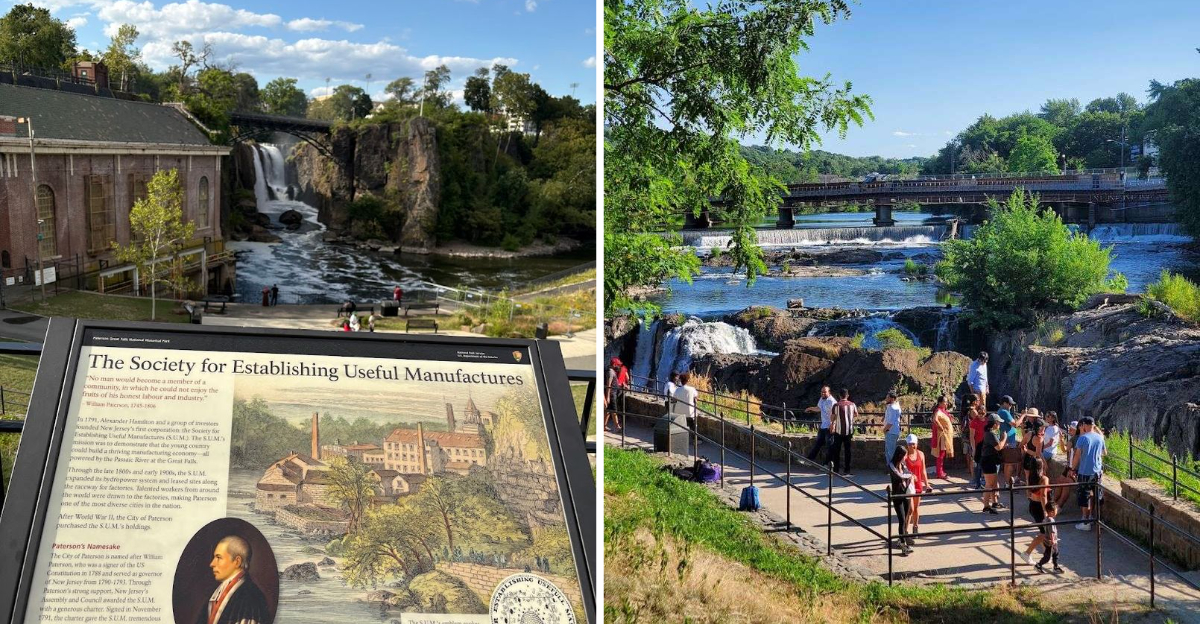
Stand at the edge of New Jersey’s Great Falls and you’ll feel the roar of history itself.
The water plunges with a force shaped by glaciers thousands of years ago, yet the surrounding mills whisper stories of America’s industrial rise.
I remember the first time I visited, I couldn’t decide if I was more awed by the natural spectacle or the brick relics that framed it.
The spray catches the sunlight, turning the whole scene into something almost cinematic.
It’s a place where nature and human ambition meet in one breathtaking panorama.
It really feels so rare to find a spot where geology and industry collide this beautifully.
The 77-Foot Waterfall That Stops You Cold
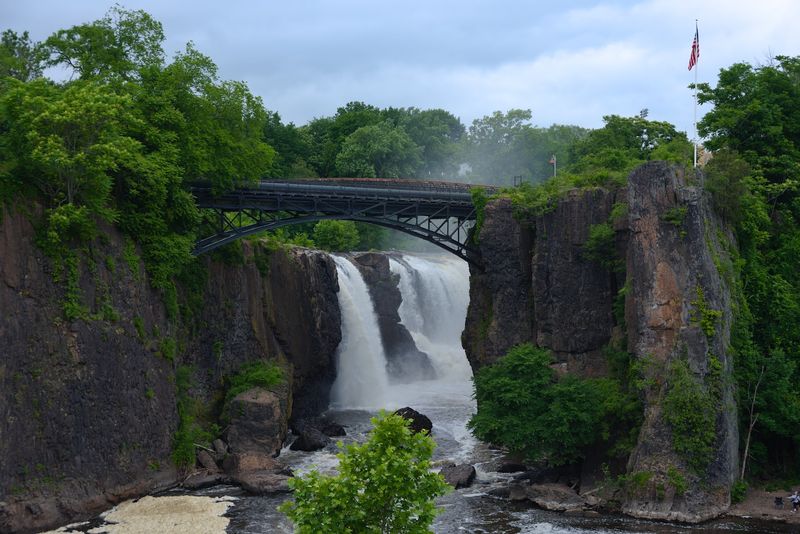
Standing at the overlook for the first time, the sheer scale of these falls genuinely catches you off guard. Water crashes 77 feet down into a 300-foot-wide gorge, and the sound alone is enough to make conversation impossible.
It ranks as the second most powerful waterfall east of the Mississippi, trailing only Niagara Falls in volume.
After a heavy rain, the surge transforms the falls into something almost violent in the best possible way. Foam churns at the base, mist floats upward, and the whole gorge fills with a low, satisfying thunder.
The viewing platform gives you a front-row seat without any railing blocking your camera shot.
Visiting in winter adds an entirely different dimension. Ice formations cling to the basaltic cliffs, and snow on the surrounding ground makes the rushing dark water look even more dramatic by contrast.
No matter the season, the falls deliver something memorable. This is not a polished tourist attraction; it feels genuinely raw and alive in a way that surprises most first-time visitors completely.
Glacial Origins Written In Stone
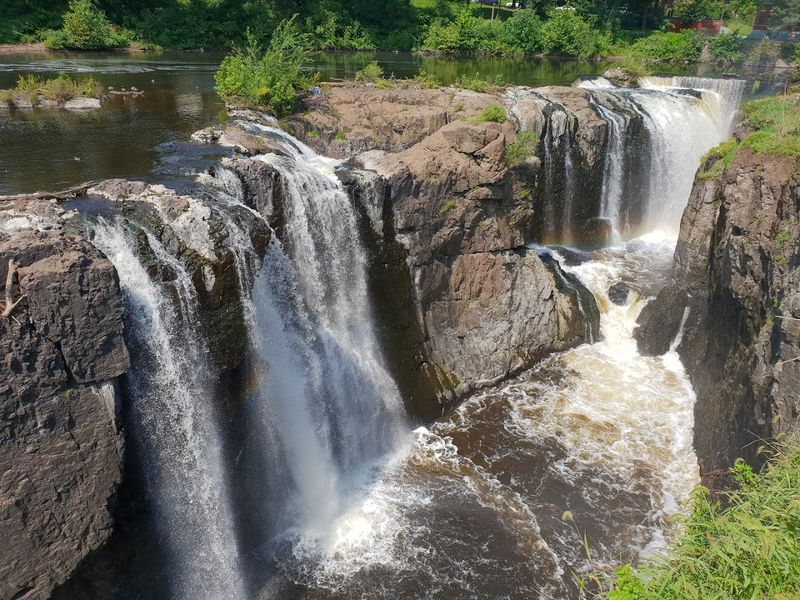
Long before any factory or raceway existed here, volcanic activity millions of years ago created the basaltic lava flows that now form the dramatic cliffs framing the falls. Slow-cooling lava hardened into the dark, columnar rock you can see exposed along the gorge walls today.
It is basically a geology textbook you can walk through.
Then came the glaciers. During the last Ice Age, massive sheets of ice advanced across this landscape and carved the Passaic River valley into its current shape.
Meltwater from those retreating glaciers helped establish the river channel that eventually created the falls as we know them.
Reading the interpretive signs near the overlook, you start to piece together a timeline that stretches back hundreds of millions of years. There is something genuinely humbling about standing on ground that has been shaped by forces so much larger than human history.
The geology here is not just background scenery; it is the entire reason this place exists and why it became so important to the story of American industry.
Alexander Hamilton’s Industrial Dream Come True
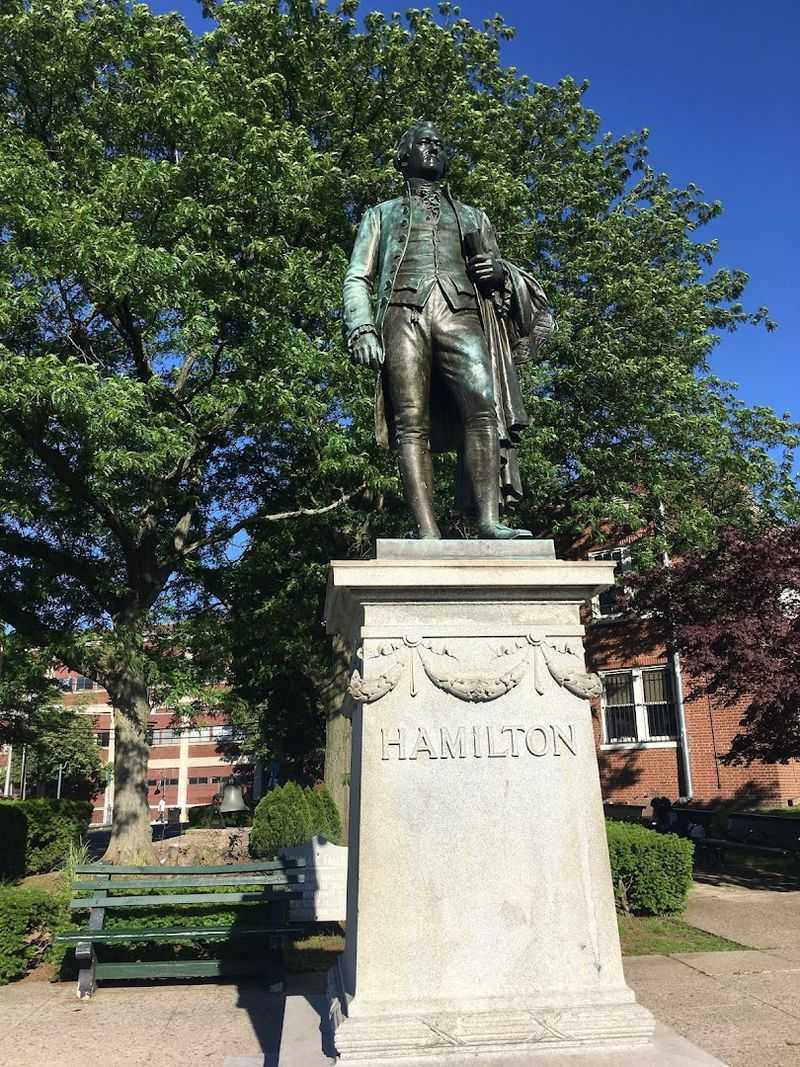
Few places in the country carry Hamilton’s fingerprints quite like Paterson. In 1791, he co-founded the Society for Establishing Useful Manufactures, known as S.U.M., with a very specific vision: harness the power of the Great Falls to build America’s first planned industrial city.
The plan worked spectacularly.
Hamilton saw the falls not as scenery but as an engine. He understood that falling water could drive machinery, and machinery could drive a national economy.
Paterson became the proving ground for that theory, producing cotton textiles, silk, and eventually locomotives that helped build the expanding country.
A monument honoring Hamilton stands near the falls today, and it draws a steady stream of visitors who want to connect the musical, the ten-dollar bill, and the actual historical figure to a real place. Standing next to it with the roar of the falls in the background, the vision suddenly feels less like a history lesson and more like something tangible.
The little clock nearby, mentioned by many visitors, adds an unexpectedly charming detail to the whole scene.
The Raceway System: Engineering Genius Underground
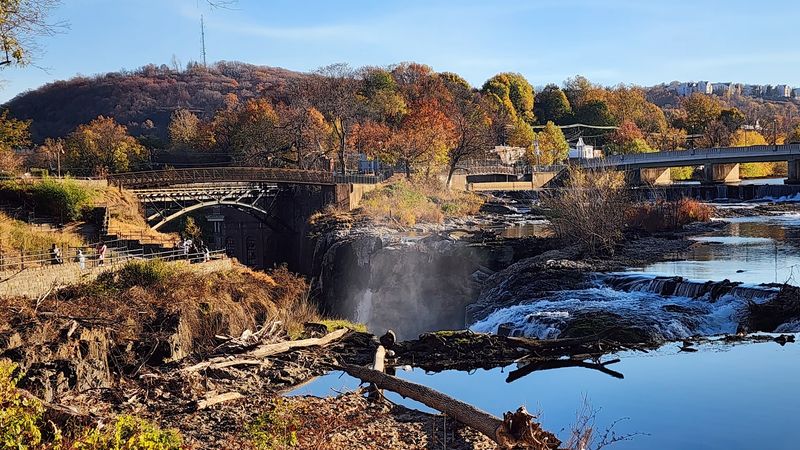
One of the most underappreciated features of this park is the raceway system, a network of channels built to redirect water from the falls and send it flowing through the industrial district to power mills and factories.
The engineering involved is genuinely impressive for the late 18th century.
Water entered the raceways at the top, flowed downhill through three levels of channels, powered the machinery in the factories along the way, and then returned to the river below. The whole system worked like a carefully designed machine, and it ran continuously for over a century.
Walking along the preserved raceways today, you get a real sense of how clever and ambitious the original designers were.
Some sections of the raceways are still visible and accessible, giving visitors a ground-level look at the infrastructure that powered American manufacturing. The brick construction has held up remarkably well.
Pausing here between views of the waterfall and the mill buildings, the full picture of what made Paterson so significant to American industrial history starts clicking into place in a very satisfying way.
Mill Buildings That Still Whisper Their Stories
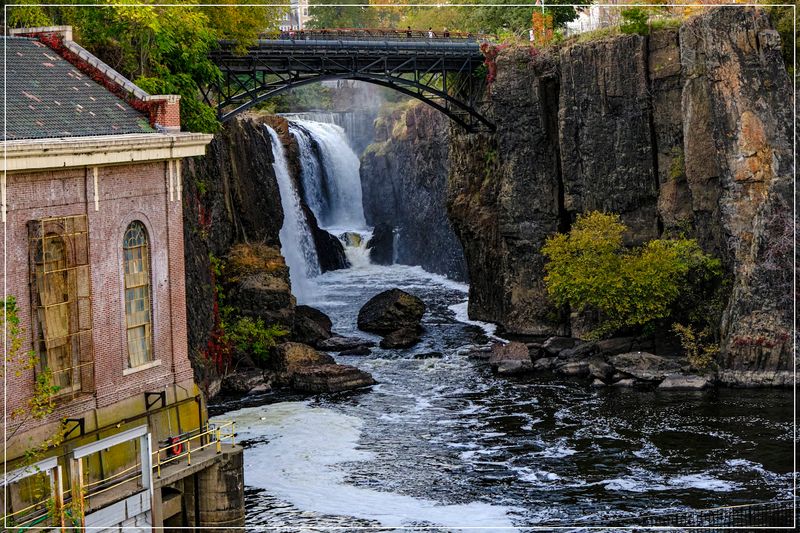
Wandering through the historic district surrounding the falls, the old mill buildings feel like they are still holding their breath. Brick facades, wide multi-pane windows, and thick wooden floors speak to a time when these structures ran 24 hours a day producing silk, cotton, and eventually Colt firearms.
Paterson was not just an industrial experiment; it was an industrial powerhouse.
The mills represent several different eras of construction, and you can spot the architectural differences if you pay attention. Earlier buildings tend to be simpler and more utilitarian, while later structures show more confidence and permanence.
Several have been repurposed over the years, and the mix of old and renewed adds an interesting texture to the neighborhood.
Exploring this area on foot is the best approach. The scale of the buildings only becomes apparent when you are standing directly beneath them, craning your neck upward.
Combined with the sound of the falls not far away, the whole experience creates a kind of layered atmosphere that is part nature walk, part history tour, and part urban exploration all rolled into one genuinely rewarding afternoon.
Local Food Scene Around the Falls
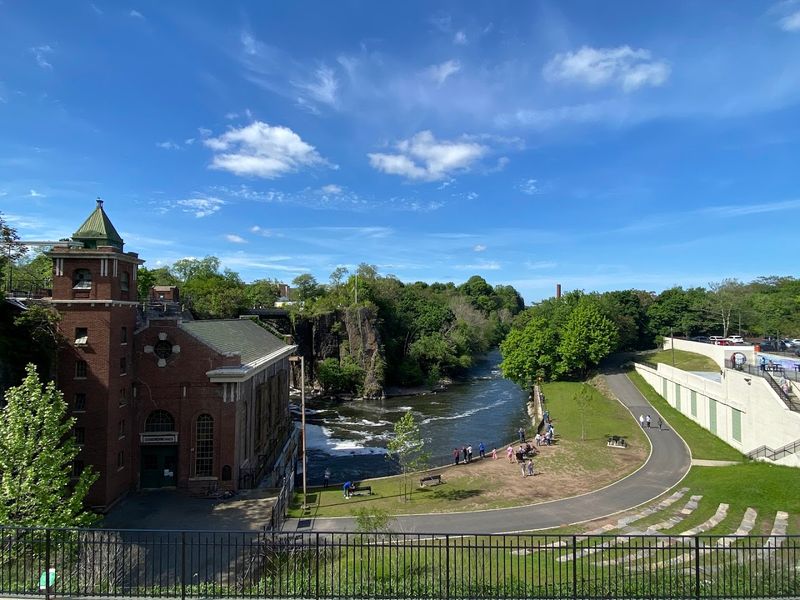
Paterson has one of the most diverse food cultures in New Jersey, and the neighborhoods surrounding the falls reflect that beautifully.
The city is well known for its Middle Eastern bakeries, Dominican lunch spots, and Peruvian restaurants tucked into storefronts that look deceptively humble from the outside.
After a morning at the falls, the appetite is real. The walk, the mist, the sensory overload of the waterfall all somehow work up a genuine hunger.
A short drive or walk from the park puts you in the middle of streets lined with places serving freshly baked bread, strong coffee, and plates piled generously with food that costs far less than it should.
During the annual Labor Day festival at the park, food vendors set up directly on the grounds, filling the air with the smell of grilled food and fresh pastries alongside live music. That combination of outdoor eating, waterfall backdrop, and community energy is something genuinely hard to replicate anywhere else.
Coming to the falls without exploring the surrounding food neighborhood is honestly leaving the best part of the trip on the table.
The Footbridge and Its Spectacular Comeback
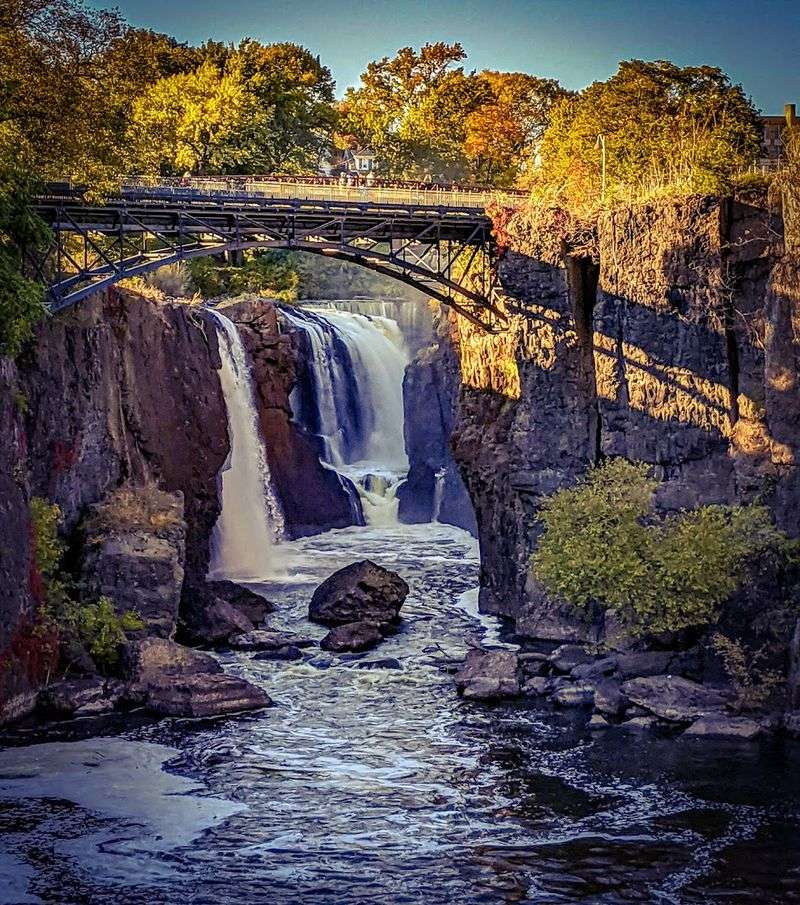
The walking bridge over the Passaic River gorge has become something of a celebrity in its own right among regular visitors. After a lengthy renovation period that frustrated many who came expecting that close-up view, the bridge reopened to considerable excitement.
The photos people have shared of standing directly above the falls are genuinely breathtaking.
Crossing the bridge puts you in a position that feels almost too good to be real. Water rushes below your feet, the mist rises around you, and the gorge walls stretch out on both sides.
On a clear morning, a rainbow often forms in the spray, arcing across the gorge in a way that makes every single photo look professionally edited.
The bridge also provides a completely different perspective on the falls from the overlook view. From the overlook you see the full width and power of the waterfall; from the bridge you feel it.
Both views are worth experiencing on the same visit. Checking current conditions before arrival is smart, since renovation work has occasionally required temporary closures, but when it is open, this bridge is an absolute highlight of the entire park experience.
Mary Ellen Kramer Park: The Other Side of the Story
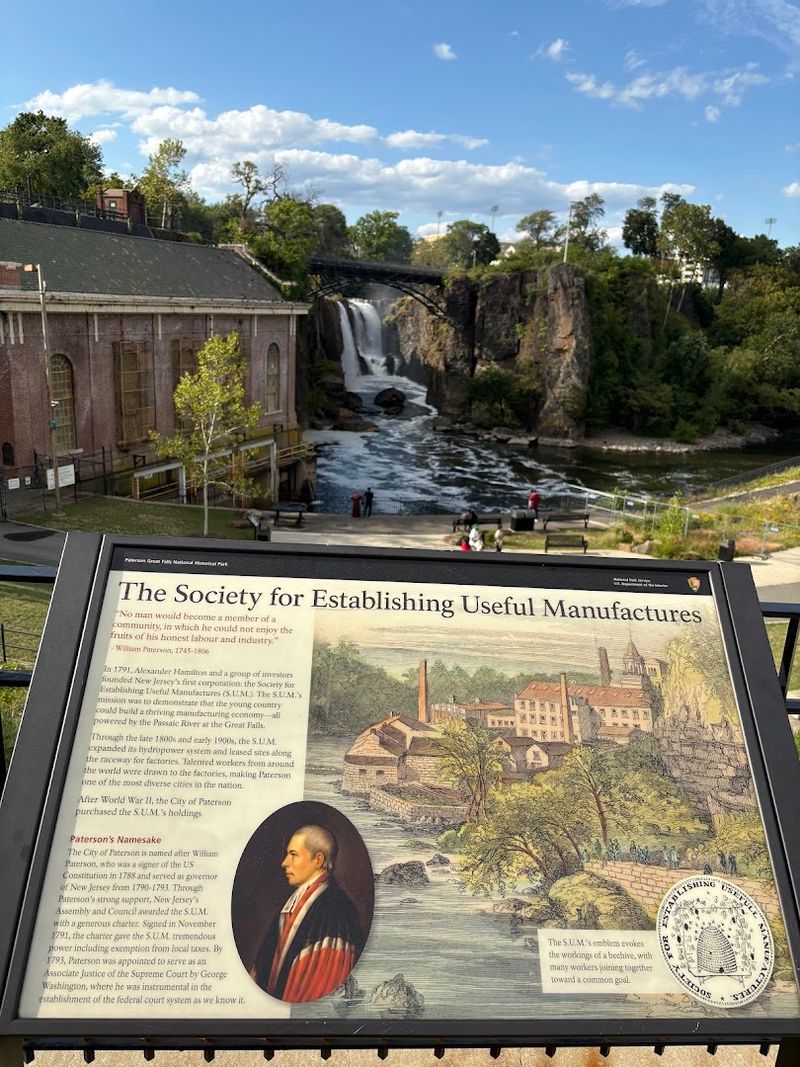
Most visitors arrive at the main overlook and call it a day, but crossing over to Mary Ellen Kramer Park on the opposite side of the falls reveals a completely different and arguably more intimate view.
From here, the falls fill your entire field of vision and the sound wraps around you from a different angle entirely.
The park sits at a lower elevation relative to the falls, which means you get a perspective that emphasizes the height and the sheer volume of water coming over the edge. It is the kind of view that makes photographers immediately start adjusting camera settings and everyone else just stand quietly for a moment.
Getting there requires a short detour by car or a walk depending on your route, but the effort is minimal compared to the reward. Rangers on the main side often point visitors toward this spot as a worthy addition to any visit.
Spending time on both sides of the falls transforms what could be a quick 30-minute stop into a full, richly layered experience that makes the trip feel genuinely complete.
Practical Tips for Getting the Most Out of Your Visit
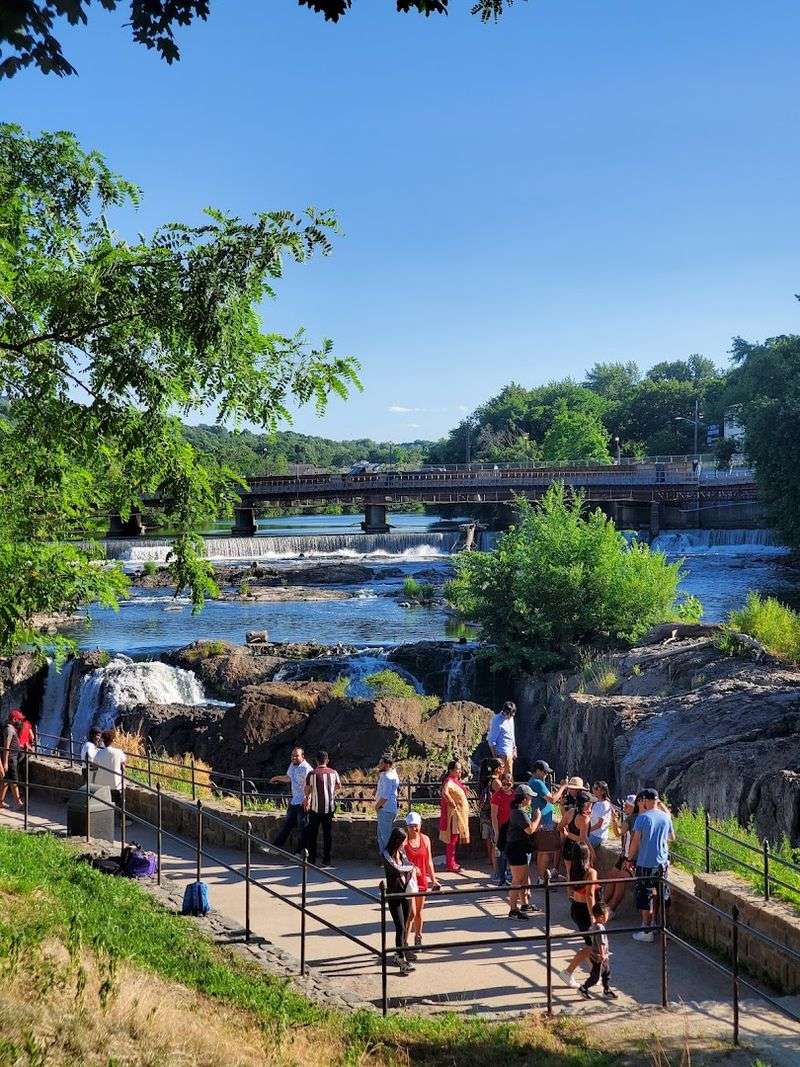
Arriving early on weekends is genuinely good advice here. The main parking lot is small, and on a warm Saturday it fills up faster than you might expect.
Street parking exists near the other side of the falls, which also happens to put you closer to Mary Ellen Kramer Park for that alternate view.
The park is open 24 hours, which means sunrise and late afternoon visits are both completely viable options. Early morning light hitting the mist creates some of the most photogenic conditions, especially in spring and fall when the surrounding foliage adds color to the scene.
Winter visits are stunning but require sensible footwear since icy paths are a real consideration.
Bringing snacks is smart, since there are picnic benches above the falls where lingering feels natural and unhurried. The park is free to enter, which makes it one of the most accessible national parks anywhere on the East Coast.
After exploring the falls and the historic district, heading into the surrounding Paterson neighborhoods for a meal turns a good visit into a genuinely great one. Address: 72 McBride Ave Ext, Paterson, NJ.
Dear Reader: This page may contain affiliate links which may earn a commission if you click through and make a purchase. Our independent journalism is not influenced by any advertiser or commercial initiative unless it is clearly marked as sponsored content. As travel products change, please be sure to reconfirm all details and stay up to date with current events to ensure a safe and successful trip.
