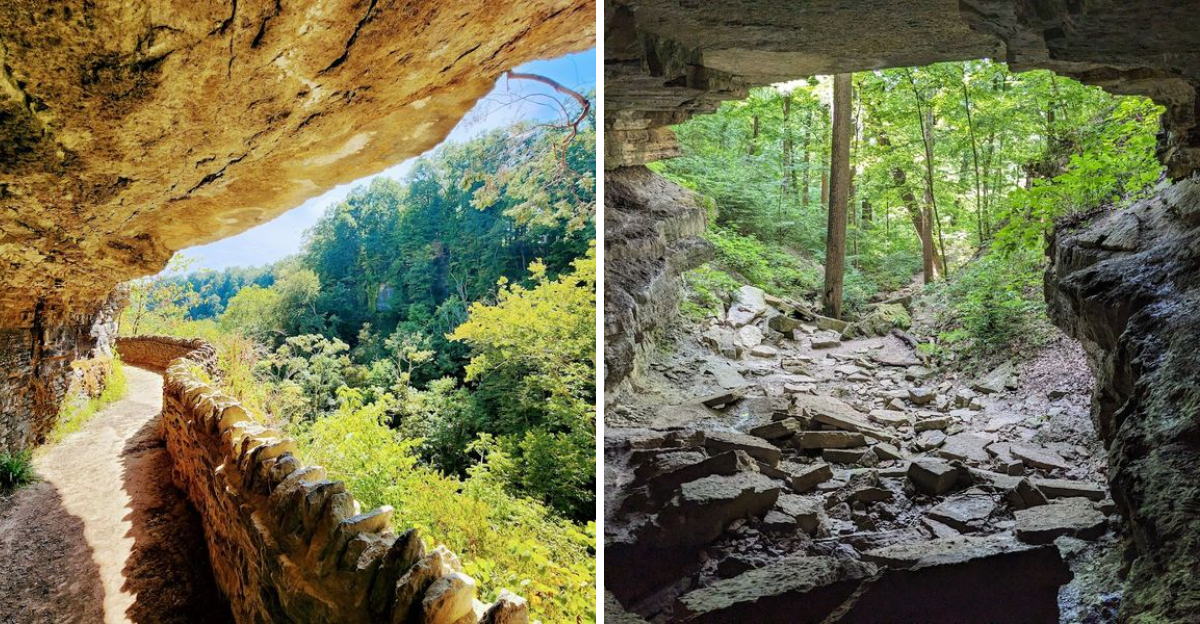
Some places feel like they belong in another world entirely. These canyon trails in Madison, Indiana are one of those rare landscapes where steep rock walls, rugged ravines, and rushing water completely change the feeling of the surrounding forest.
Carved through the terrain over thousands of years, the canyon creates dramatic elevation changes and narrow passages that make the area feel far larger and wilder than most people expect from Indiana. Waterfalls spill through the rocky landscape, while winding trails lead hikers across cliffs, creek beds, and dense woodland.
What makes it especially memorable is the sense of scale once you are inside the canyon itself. The stone walls rise around you, the sound of water echoes through the ravines, and for a while it stops feeling like the Midwest altogether.
Four Named Waterfalls Hidden Inside the Gorge
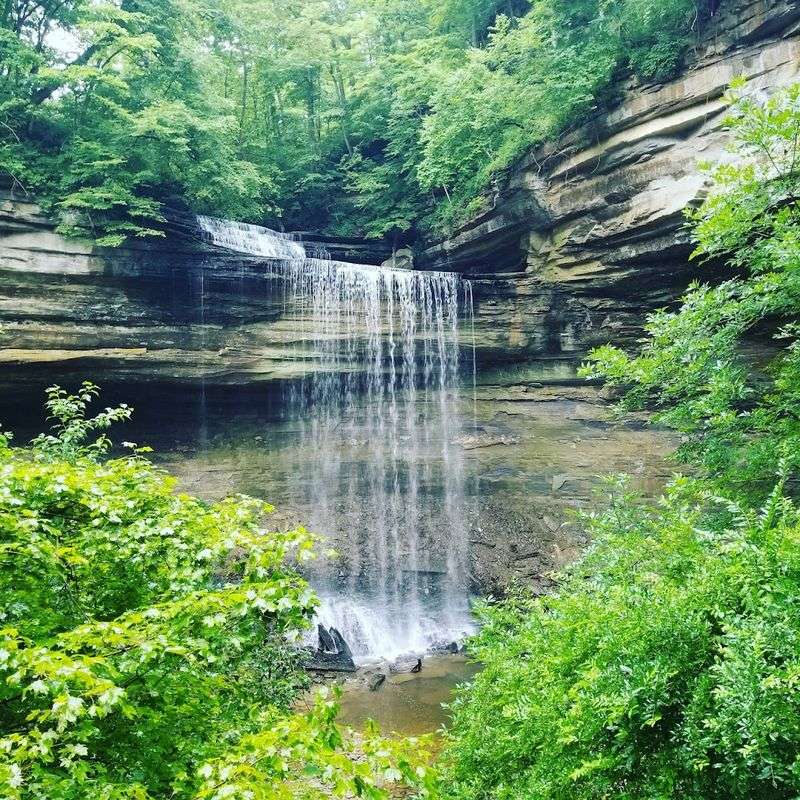
Not every Indiana park can claim four named waterfalls, but Clifty Falls State Park earns that distinction without question. Clifty Falls, Little Clifty Falls, Tunnel Falls, and Hoffman Falls each have their own character, and each rewards the effort it takes to reach them.
The waterfalls drop dramatically over the ancient stone cliffs, and the sound of rushing water bouncing off canyon walls creates an atmosphere that feels completely removed from everyday life.
Timing matters a lot when visiting these falls. Winter and early spring tend to bring the most powerful flows, and after heavy rainfall, the plunges become genuinely roaring.
During drier months like late summer, some of the falls slow to a trickle or go quiet altogether, which is worth knowing before you plan your trip. Still, even a reduced flow reveals the beauty of the rock formations underneath.
Tunnel Falls is particularly special because of the way it drops in a narrow column through a notch in the canyon wall, creating a misty, almost enclosed feeling around the viewing area. Hoffman Falls sits in a quieter corner of the park and tends to draw fewer visitors, making it feel like a more personal discovery.
Completing the Four Falls Challenge, which takes you past all four in a single hike, involves close to 1,000 feet of elevation change and some seriously rugged terrain. It is a real accomplishment worth chasing at Clifty Falls State Park, located at 2221 Clifty Dr, Madison, IN 47250.
Trail 2 Runs Directly Along the Creek Bed
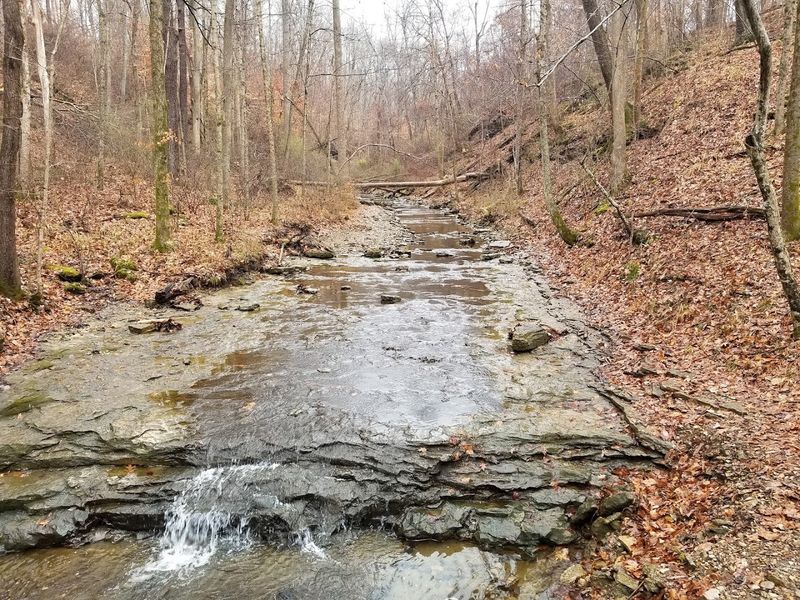
Trail 2 at Clifty Canyon is not your average footpath. For most of its length, the trail literally is the creek bed of Clifty Creek, meaning you walk directly across exposed stone, through shallow water crossings, and between canyon walls that press in close on both sides.
It is one of the most immersive hiking experiences in Indiana, and it earns its reputation as a hard rock scramble across roughly three miles of genuinely challenging terrain.
Water shoes or trail shoes you do not mind getting wet are strongly recommended here. The creek water is clear and cold, and on a hot summer day, wading through it is actually one of the highlights of the experience.
The stone underfoot is ancient and uneven, shaped by millions of years of water flow, and the canyon walls rise sharply above you as you move deeper into the gorge.
What makes Trail 2 unforgettable is the sense of being fully inside the landscape rather than just passing through it. You are not observing the canyon from a distance.
You are in it, at creek level, surrounded by rock that has been standing since before dinosaurs walked the Earth. The trail connects to other routes within the park, so experienced hikers can build longer loops that combine the creek bed with ridge-top views.
Just make sure to check water levels before heading in, especially after heavy rain, as the creek can rise quickly inside the narrow canyon walls.
The Canyon Walls Reach Back 425 Million Years
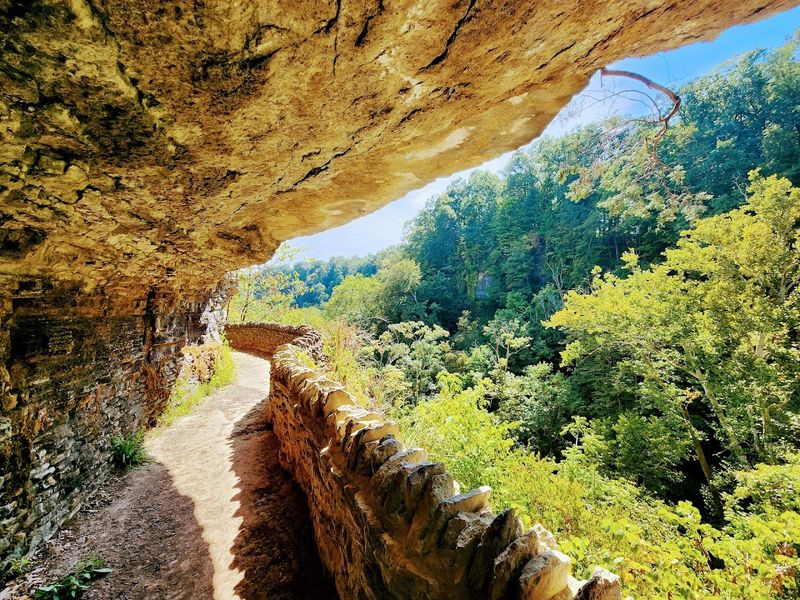
Standing at the base of Clifty Canyon and looking up at those massive stone walls, it is hard to believe the rock around you formed nearly half a billion years ago. The shale and limestone exposed throughout the canyon date back 425 to 444 million years, making them among the oldest bedrock exposures in all of Indiana.
These are not just rocks. They are a record of a shallow inland sea that once covered this entire region during the Ordovician and Silurian periods.
The layers you see stacked in the canyon walls include formations like the Dillsboro and Saluda, each one representing a different chapter in Earth’s deep history. Geologists and curious visitors alike find the exposed cross-sections genuinely fascinating.
You do not need a science background to appreciate the scale of time written into those cliffs.
The canyon itself runs the full north-south length of Clifty Falls State Park, with the upper rim sitting around 800 feet above sea level and the valley floor dropping toward the Ohio River at about 500 feet. That elevation change is dramatic and visible as you hike deeper into the gorge.
The walls close in, the light shifts, and the whole atmosphere changes. For anyone who has ever wondered what the Midwest looked like before humans arrived, Clifty Canyon offers a genuinely humbling answer carved right into the hillside.
Marine Fossils Embedded Right in the Rock
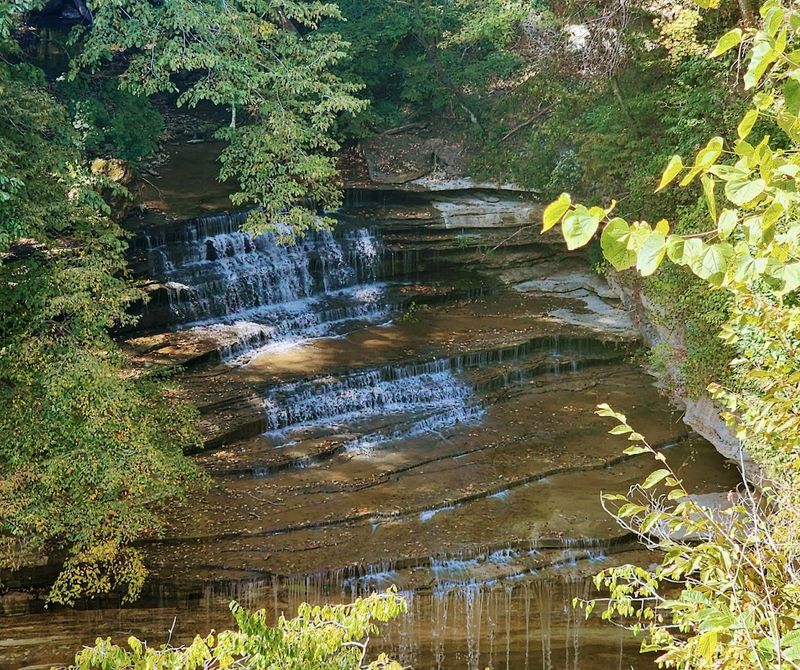
One of the quieter surprises waiting inside Clifty Canyon is the sheer number of marine fossils embedded in the creek bed and canyon walls. Ancient corals, brachiopods, crinoids, and ancestral squids left their marks in the stone here hundreds of millions of years ago, and those impressions are still visible today if you know where to look.
Running your hand along a flat section of limestone and finding the outline of a sea creature is a genuinely strange and wonderful moment.
The fossils date to the Ordovician and Silurian periods, when this entire region sat beneath a warm, shallow sea. The marine life that thrived in those waters eventually became part of the sediment, which hardened over time into the rock layers now exposed throughout the canyon.
It is a natural history lesson you can see and touch rather than read about in a textbook.
Fossil collecting is prohibited within the park, and that rule exists for good reason. These specimens are part of a living geological record that belongs to everyone who visits.
The right approach is to observe, photograph, and appreciate without disturbing anything. Bringing a field guide to Ordovician fossils can turn a regular hike into something closer to a treasure hunt, especially for kids who are old enough to understand what they are looking at.
The sheer density of fossil material in some sections of the creek bed is remarkable even by the standards of dedicated geology enthusiasts.
Brough’s Tunnel Carries a Story From the 1800s
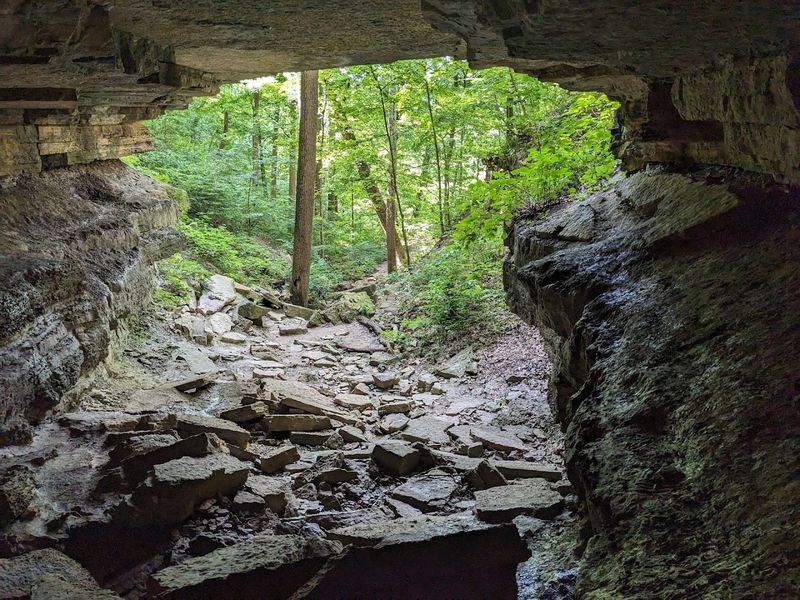
History does not always come in the form of museums and plaques. Sometimes it shows up as a 600-foot tunnel carved into a canyon wall by workers who never got to see their project finished.
Brough’s Tunnel is one of the most fascinating and overlooked features of Clifty Falls State Park, a remnant of a mid-1800s railroad venture that went bankrupt before a single train ever passed through it.
The tunnel was cut through solid rock as part of an ambitious plan to run a rail line through the canyon. The company behind the project ran out of money before completing the route, leaving behind the tunnel, stone foundations, and visible drill marks in the rock as permanent evidence of a dream that collapsed.
Walking past these remnants adds a layer of human history to a landscape that is mostly defined by geological time.
Currently, the tunnel is closed indefinitely due to rockslides and seasonal bat hibernation, which means you cannot enter it. But the exterior is still visible from the trail, and the story behind it is worth knowing before you visit.
Bats that hibernate inside the tunnel are a protected species, and the park takes their conservation seriously. For history lovers, the combination of industrial ambition, financial failure, and natural reclamation happening all in the same small space makes Brough’s Tunnel one of the most thought-provoking stops along the entire trail system at Clifty Falls State Park.
Year-Round Scenery That Changes With Every Season
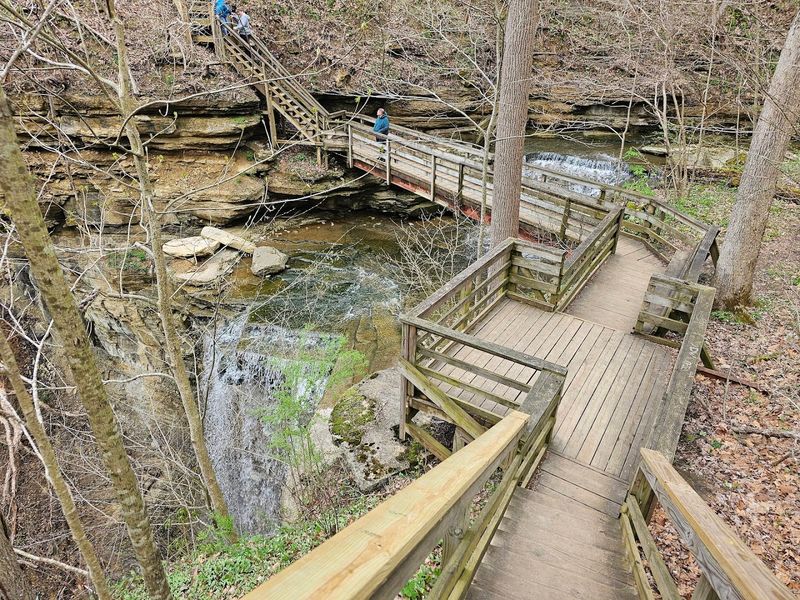
Clifty Canyon does not have a bad season. Spring brings wildflowers pushing up through the canyon floor and waterfalls running at their strongest after winter snowmelt.
Summer cools down noticeably inside the gorge, where the shade of the canyon walls and the cold water of Clifty Creek offer real relief on hot days. Autumn turns the ridgeline trees into a canvas of orange, red, and gold that reflects off the pale stone walls below in a way that feels almost theatrical.
Winter might actually be the most dramatic time to visit. With the leaves gone, the full geological structure of the canyon becomes visible in a way that summer obscures.
Ice formations build along the cliff faces, and the waterfalls sometimes freeze into glittering columns that look completely unlike anything else in the Midwest. The trails are quieter too, which gives the whole place a more solitary and contemplative feel.
Each season also brings different wildlife activity. Spring migrations bring songbirds through the tree canopy above the canyon.
Summer evenings fill with the sounds of frogs and insects along the creek. Fall draws deer down to the water.
Winter reveals animal tracks across snow-dusted rock shelves. The park stays open daily from 7 AM to 11 PM year-round, so there is genuinely no wrong time to visit.
The canyon simply changes its mood and invites you to experience it differently each time you return.
Madison Town Adds the Perfect Finish to Any Trail Day
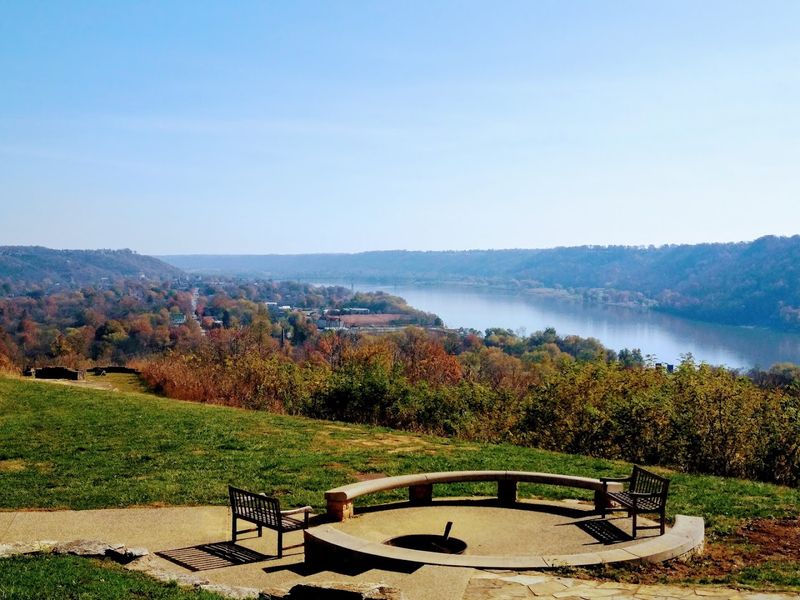
After a long day navigating canyon trails and creek crossings, the town of Madison, Indiana, is the kind of place that makes the whole trip feel complete. Sitting along the Ohio River just below the park, Madison is one of the best-preserved 19th-century towns in the entire Midwest, with a historic downtown full of brick storefronts, river views, and a genuinely unhurried pace that feels like a reward after hours of rugged hiking.
The Madison Historic District stretches along the riverfront and includes architecture that dates back to the early 1800s, when Madison was one of Indiana’s most important river trade cities. Walking the main streets after a hike gives you a strong sense of how much history this small town holds.
The contrast between the raw geological drama of the canyon and the quiet, human-scaled charm of downtown Madison is one of the more unexpected pleasures of visiting this area.
For a meal after your hike, The Hanger Restaurant at 408 W 1st St, Madison, IN 47250, offers a reliable stop close to the riverfront. The Madison Area Convention and Visitors Bureau at 601 W 1st St, Madison, IN 47250, can point you toward local events and attractions worth exploring.
Clifty Inn, located inside the park itself, provides panoramic Ohio River views from its dining room and makes an excellent base for a full weekend stay in the area.
