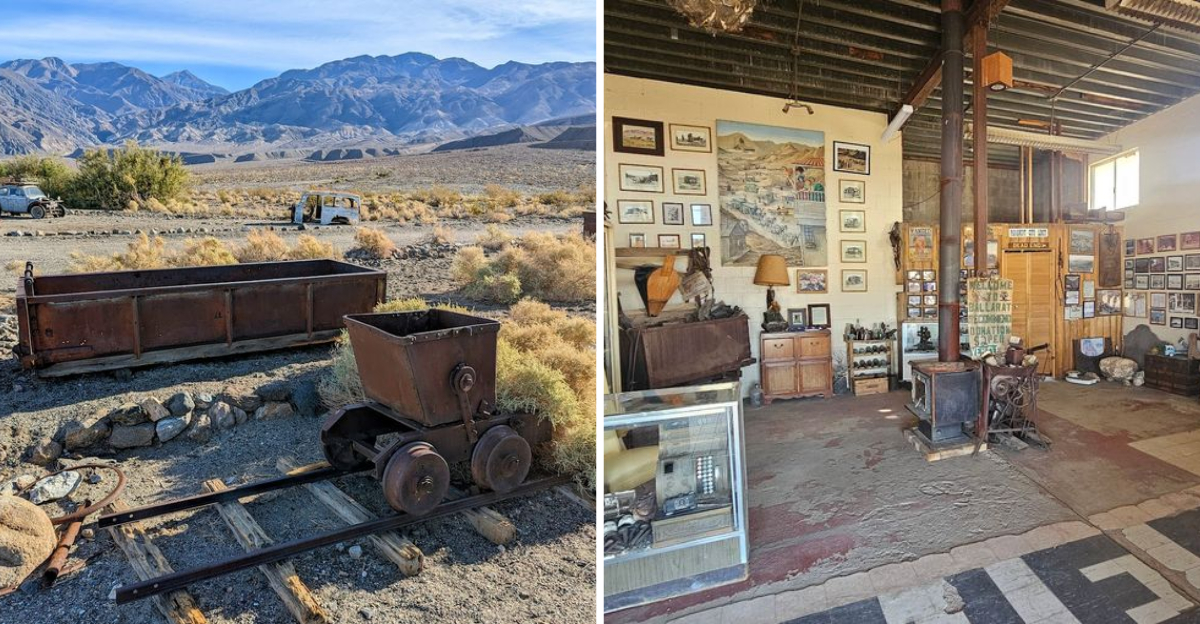
Time stopped in the California desert and nobody bothered to restart it. This ghost town sits in a dusty valley, surrounded by mountain ranges and a silence so thick you can almost hear the past breathing. No manicured trails, no gift shops with overpriced magnets.
Just crumbling adobe walls and rusted machinery baking under the sun. What makes it unforgettable is not just the decay but the human stories. Gold rush prospectors, outlaws, and one of America’s most infamous criminals all passed through here.
More drama than most cities ten times its size.
How Ballarat Was Born From Gold and Grit
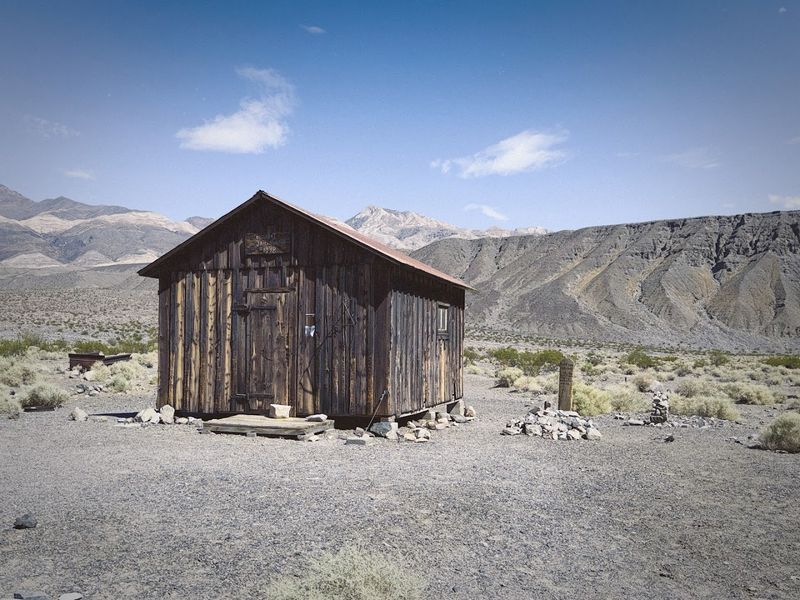
Not every town gets named after a gold rush on the other side of the world, but Ballarat, California is not every town. An Australian immigrant named George Riggins founded the settlement in 1897 and named it after Ballarat, Victoria, the gold-mining heartland of Australia.
He must have seen something familiar in those rugged Panamint Range canyons.
The town was not built for dreamers. It was built for workers.
Ballarat existed primarily as a supply point for the mines tucked into the surrounding canyon walls, a place where miners could restock, rest, and spend their earnings before heading back into the hills.
At its peak, somewhere between 1897 and 1905, Ballarat held a population of 400 to 500 people. That is a serious crowd for a desert valley.
The town had seven saloons, three hotels, a Wells Fargo station, a post office, a school, a jail, and even a morgue. Notably absent from that list?
A church. That detail alone tells you something about the spirit of the place.
The Ratcliff Mine in Pleasant Canyon was the main economic engine keeping Ballarat alive. When it suspended operations around 1905, the town started bleeding residents fast.
Other nearby mines followed suit, and by 1917, the post office closed for good. What had been a buzzing desert hub became a shell almost overnight.
The bones of that original town are still visible today, slowly dissolving back into the earth from which they came.
The Legends Who Refused to Leave
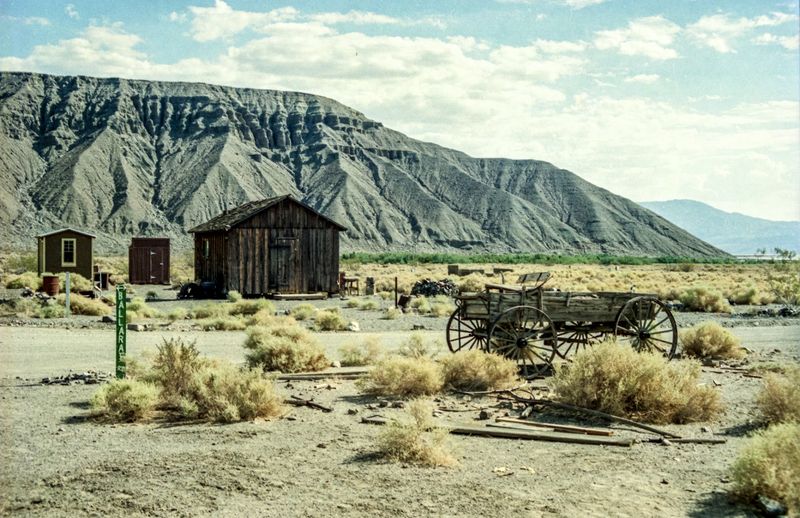
After the mining rush faded and the crowds cleared out, a particular kind of person stayed behind. They were called diehard prospectors and desert rats, and that description fits perfectly.
These were people who had made peace with isolation in a way most of us never will.
The most famous of them all was a man known as Seldom Seen Slim, whose real name was Charles Ferge. He drifted into Ballarat after the boom and essentially never left.
From around 1918 until his passing in 1968, he was the sole full-time resident of the ghost town. Fifty years, alone in a dying desert settlement.
That is either deeply poetic or completely wild, depending on how you look at it.
Seldom Seen Slim became a legendary Death Valley figure, known for prospecting the surrounding hills and living on almost nothing. He reportedly claimed he had not bathed in twenty years, largely because water in that part of the desert was simply too scarce to spare.
His grave sits in the Ballarat cemetery, which is somehow both sad and fitting.
Another well-known figure, prospector Shorty Harris, also called Ballarat home on and off until his passing in 1934. These men were not failures who got left behind.
They were people who genuinely preferred the desert’s brutal honesty over the noise of modern life. Their stubbornness became legend, and Ballarat became their monument.
The Manson Family Shadow That Still Lingers
There is one chapter of Ballarat’s history that casts a longer, darker shadow than all the others. In the late 1960s, Charles Manson and his followers made the Panamint Valley area part of their territory.
The Manson Family frequently visited Ballarat while camping at Barker Ranch, located south of the ghost town in the Panamint Mountains.
Their presence was not subtle. Members of the Manson Family left graffiti inside the Ballarat jail, marks that connected this already eerie place to one of the most disturbing chapters in American criminal history.
That jail still stands, and knowing what happened there adds a layer to the silence that is hard to shake.
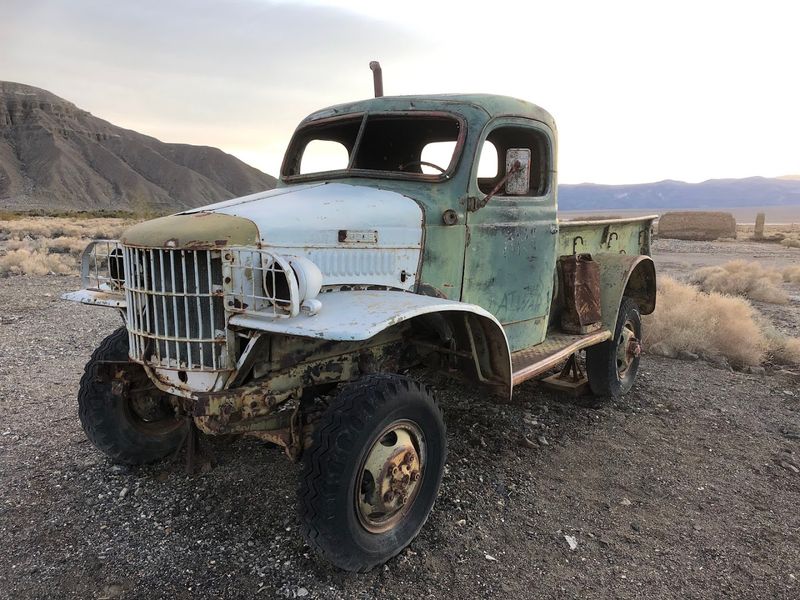
Perhaps the most tangible reminder of that era is still parked in Ballarat today. A 1942 green Dodge power wagon sits rusting in the desert heat, believed to have belonged to Tex Watson, one of the Manson Family’s most notorious members.
According to accounts, Watson used the truck to flee Barker Ranch following a police raid in 1969.
Visitors stop and photograph that truck constantly, and honestly, I get it. There is something deeply strange about seeing a vehicle connected to such dark history just sitting there in the open air, unguarded, weathered by decades of desert sun.
Ballarat does not try to sensationalize it. The truck just exists, like everything else here, as a quiet and unsettling reminder of what once passed through this valley.
Rocky Novak and the Weight of Being the Last One
Some people inherit a legacy. Rocky Novak chose one.
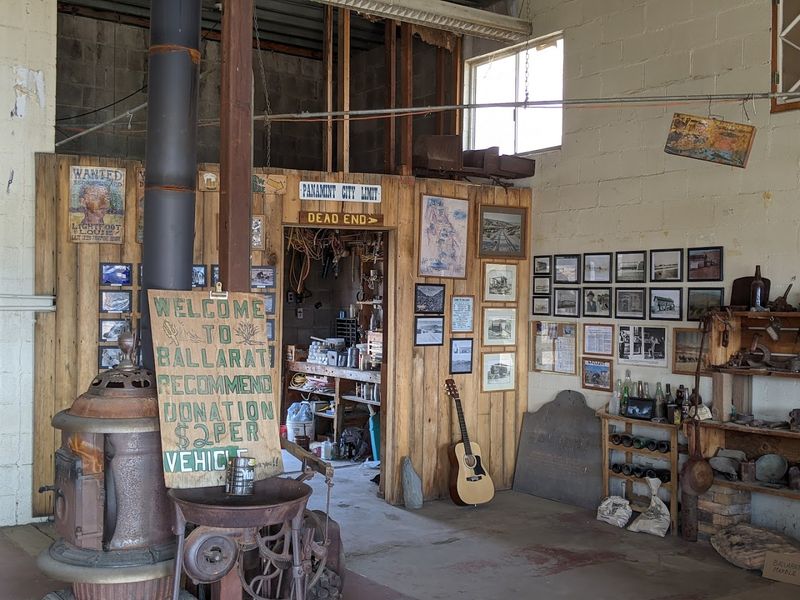
He and his father George moved to Ballarat in 2004 to serve as caretakers of the ghost town, stepping into a role that was equal parts historical preservation and pure desert survival. George passed away in 2011 at the age of ninety, leaving Rocky as the sole full-time resident.
For years after that, Rocky ran the general store, maintained what little infrastructure existed, and became the unofficial ambassador of Ballarat to every visitor who rolled down that dusty road. He had a way of describing his role that captured the whole absurdity and beauty of his situation.
He called himself the caretaker, the mayor, the sheriff, the judge, and the undertaker, all rolled into one person living in a town of one.
Visitors who passed through during those years often described conversations with Rocky as the highlight of their trip. He knew the stories, the dark ones and the fascinating ones, and he shared them freely.
His life in Ballarat was documented in a 2018 film vignette called “The Mayor of Ballarat,” a title that somehow manages to be both funny and deeply moving at the same time.
Around 2020, Rocky moved to Trona, a nearby community, and the general store has since been managed by other local residents. The town reportedly had about two full-time residents around that time.
The era of Rocky as sole caretaker ended quietly, the way most things in Ballarat do.
What It Actually Feels Like to Visit Today
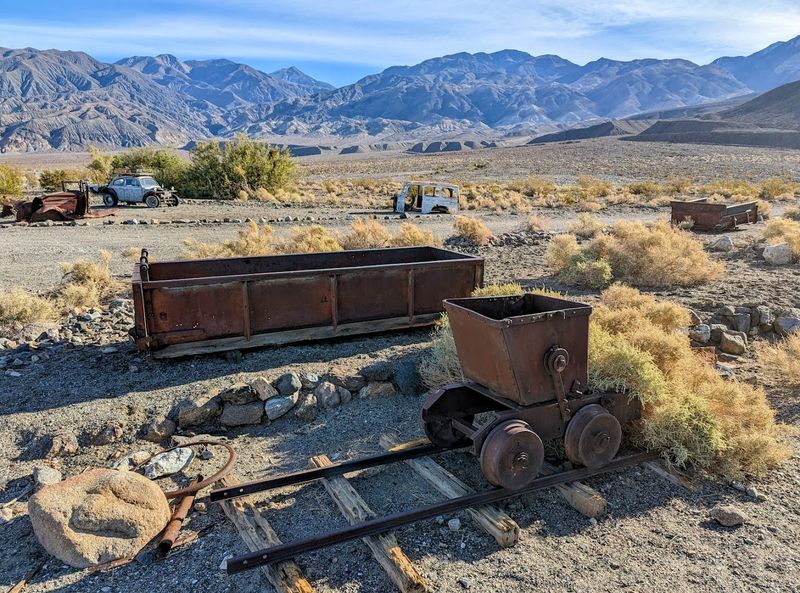
Pulling off the main road onto Ballarat Road, the pavement disappears and the desert takes over. The last couple of miles are unpaved, but most regular vehicles handle it just fine as long as you take it slow.
There is something about that bumpy approach that mentally prepares you for what is coming: a place that has not tried to be anything other than itself.
The general store is still there and still operating, stocked with basic snacks, cold drinks, maps, and souvenirs. A clean restroom is available around the clock, which is genuinely appreciated given how far from everything this place sits.
Visitors are encouraged to leave a small donation, a tradition that feels right given how much effort goes into keeping even this much of Ballarat intact.
Beyond the store, the landscape opens up into something harder to describe. Crumbling adobe walls, rusted machinery, old vehicles half-swallowed by the earth, and the occasional sound of a wild donkey somewhere in the distance.
The silence is not empty. It feels full of something, memory maybe, or just the particular weight of a place that has outlasted everyone who built it.
Camping is available right on site, and spending a night here is a completely different experience from a quick daytime stop. The stars over Panamint Valley are extraordinary.
I have heard people describe it as peaceful. Others use words like haunting.
Both are accurate, and somehow neither one is enough.
Why Ballarat Stays With You Long After You Leave
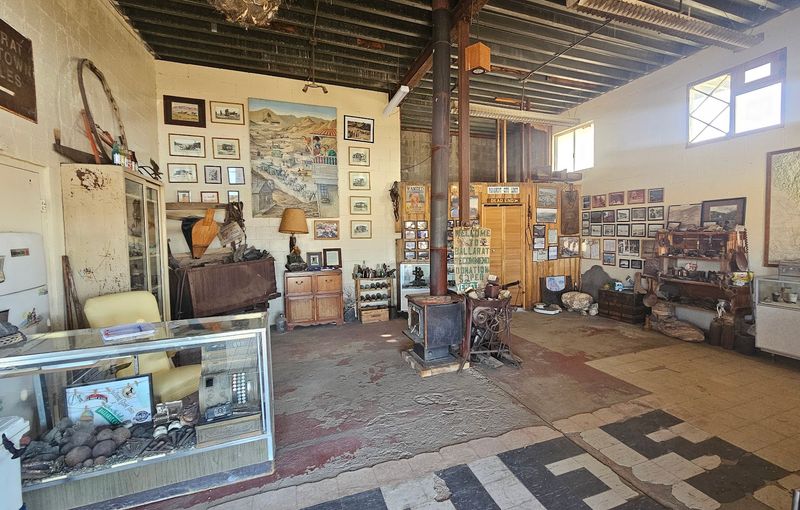
Most tourist stops are easy to forget by the time you hit the highway. Ballarat is not one of them.
There is something about the combination of extreme isolation, layered history, and raw physical decay that makes it stick in your mind in a way that polished destinations rarely do.
The Manson connection alone would be enough to make most places famous. But Ballarat also carries the quieter stories, Seldom Seen Slim living out half a century alone in the desert, a prospector named Shorty Harris wandering in and out until the end of his life, and Rocky Novak holding the whole thing together with sheer stubbornness and genuine affection for the place.
These are not manufactured legends. They are real people who made real choices in a real, unforgiving landscape.
There is also something refreshing about a place that makes no promises. Ballarat does not claim to be a must-see attraction or a bucket list destination.
It just exists, open twenty-four hours, free to explore, honest about what it is and what it is not. That kind of straightforwardness is rare.
If you find yourself driving through Panamint Valley, even if Ballarat is slightly out of the way, the detour is worth every dusty mile. You might spend thirty minutes there or three hours.
Either way, you will drive out knowing something you did not know before, about the desert, about human endurance, and maybe about yourself.
Address: Ballarat Rd, Trona, California 93592
